

Structural Film Faced Plywood — Engineered to Defined Load-Bearing Performance
Bending strength, modulus of elasticity, and shear strength tested and documented against EN 13986. The specification for engineered formwork systems, infrastructure projects, and buyers whose downstream customers require more than a certification claim.
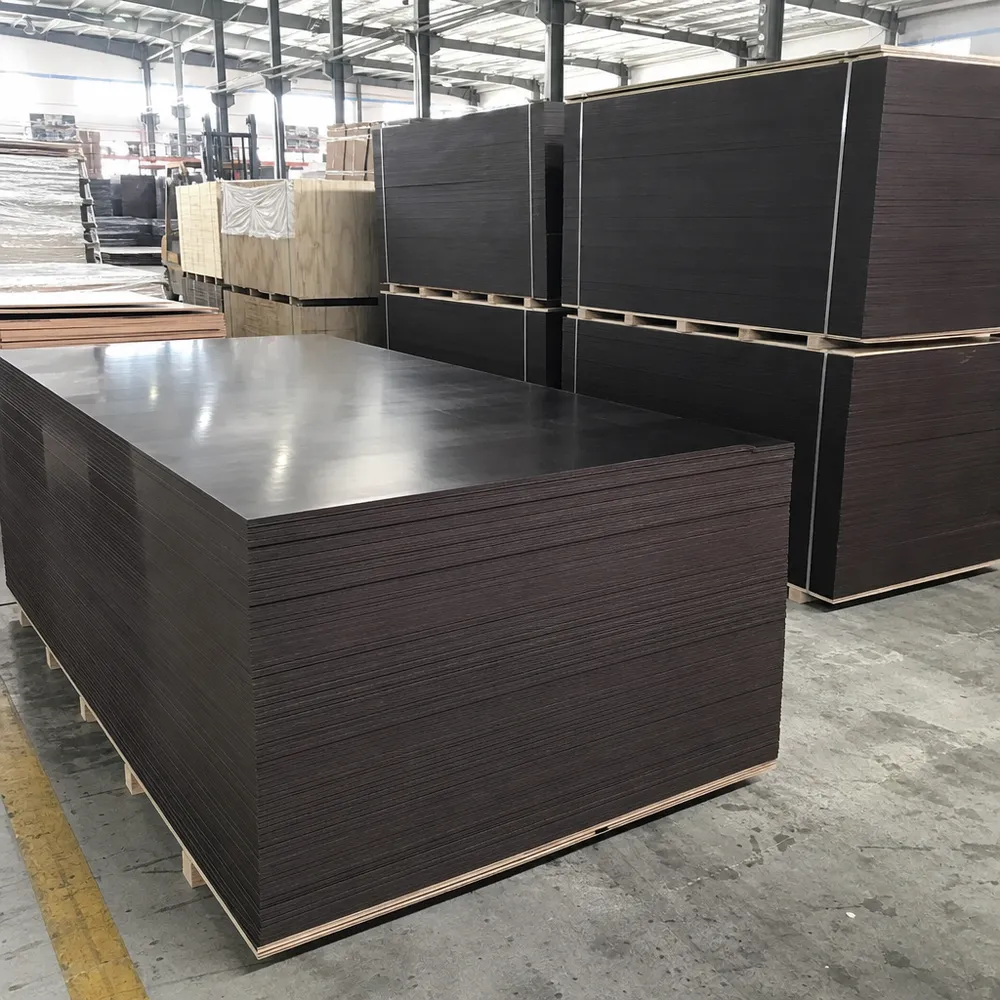
What Makes This a Structural Specification — and Why That Distinction Matters Commercially
Most film faced plywood is sold on surface characteristics: film weight, film color, reuse cycle claims. Structural film faced plywood is a different product category. The "structural" designation means the panel has been engineered and tested to defined mechanical performance values — bending strength (MOR), modulus of elasticity (MOE), and shear strength — and those values are documented in test reports that your buyers can hand to a structural engineer or project specification team.
That documentation is the commercial differentiator. When a contractor is building an engineered formwork system — a climbing form, a table form, a proprietary shoring system — the panel is a structural component in a calculated load path. The engineer designing that system needs actual performance numbers, not a general claim that the panel is "construction grade." Without test reports, the panel can't be written into the structural calculation. With them, it can. That's the difference between winning a specification and being excluded from it.
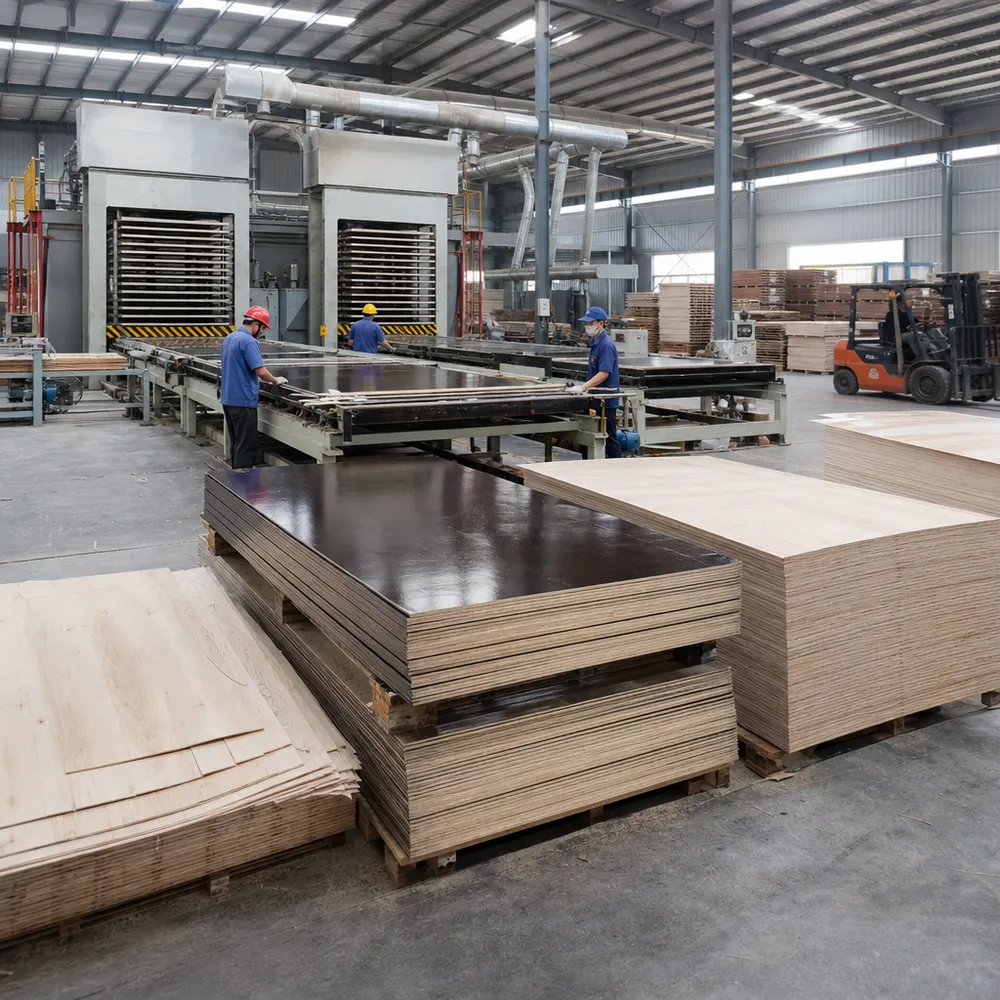
We produce structural film faced plywood at our 18,000 m² facility in Xuzhou, Jiangsu Province, where we've been manufacturing export-grade plywood since 2008. The structural specification requires tighter control at every stage of production — veneer selection, layup sequence, press parameters, and post-press testing — compared to standard formwork panels. The process decisions that make this product work are covered in detail below.
Test Reports, Not Just Claims
MOR, MOE, and shear strength values are documented in test reports your buyers can hand directly to a structural engineer or project specification team — not a general "construction grade" assertion.
Written Into Structural Calculations
Engineered formwork systems — climbing forms, table forms, proprietary shoring — require panels that can be written into a calculated load path. Without documented performance values, the panel is excluded from the specification.
Tighter Production Control at Every Stage
Veneer selection, layup sequence, press parameters, and post-press testing are all held to tighter tolerances than standard formwork panels. The structural specification is a manufacturing discipline, not a marketing label.
EN 13986 — The Standard That Matters
Performance values are tested and documented against EN 13986 and EN 636. CE declaration of conformity is included. This is the standard infrastructure project specifications and European import requirements reference.
Technical Specifications
These are the parameters for our standard structural film faced plywood. Custom thickness, panel dimensions, and film specifications are available on confirmed orders — contact us with your project requirements.
Mechanical Performance Values
Parallel to face grain
Parallel to face grain
Typical
Mechanical values shown are industry-typical for structural-grade hardwood or birch core film faced plywood. Actual values vary by core species, ply count, and thickness. Contact us for product-specific test reports before writing specifications.
| Parameter | Specification |
|---|---|
| Thickness | 15mm, 18mm, 21mm (custom available) |
| Panel Size | 1220×2440mm standard; custom dimensions on confirmed orders |
| Core Species | Hardwood or birch (buyer-specified) |
| Ply Count | 9-ply (18mm typical); 11-ply (21mm typical) |
| Film Type | Phenolic resin, 220 g/m² (standard structural spec) |
| Film Color | Brown or black |
| Glue Bond | WBP (Weather and Boil Proof) throughout all plies |
| Bending Strength (MOR) | ≥ 24 N/mm² (parallel to face grain, typical) |
| Modulus of Elasticity (MOE) | ≥ 6,500 N/mm² (parallel to face grain, typical) |
| Shear Strength | ≥ 1.0 N/mm² (typical) |
| Density | 600–750 kg/m³ (core species dependent) |
| Moisture Content | 8–12% (export standard, pre-press controlled) |
| Thickness Tolerance | ±0.2mm (calibrated sanding) |
| Formaldehyde Emission | CARB P2 / E1 (specification-dependent) |
| Certifications |
ISO 9001:2015 CE FSC CARB P2
|
| Standards Reference | EN 13986 / EN 636 / GB/T 17657 |
| Re-use Cycles | 20–30+ cycles (concrete formwork, maintained) |
| Edge Treatment | Sealed with waterproof paint (standard); aluminum edge banding available |
Custom Specifications
Standard panels cover most project requirements. For non-standard thickness, oversized panels, alternative film weights, or specific mechanical performance targets, we work directly with your engineering team.
- Thickness from 9mm to 30mm
- Panel sizes up to 1525×3050mm
- Film weights from 120 to 400 g/m²
- Birch, hardwood, or combi-core
- Product-specific test reports on request
Dimensional Tolerances
Technical Documentation
Full test reports, CE declaration of conformity, and product data sheets are available on request. Provide your project name and specification requirements when contacting us.
Request DocumentationApplications
Structural film faced plywood is specified where load-bearing performance, dimensional consistency, and surface quality all matter at the same time. These are the primary application categories.
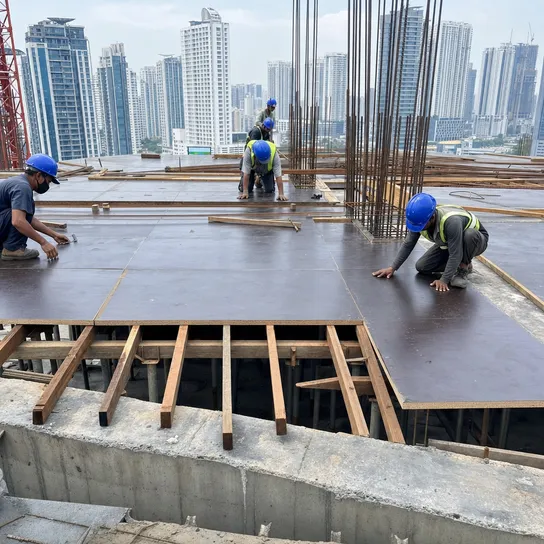
Concrete Formwork
The primary application. Structural panels carry the hydrostatic pressure of wet concrete across standard joist spacings without deflection that would compromise slab geometry. The phenolic film releases cleanly and survives repeated concrete contact cycles.
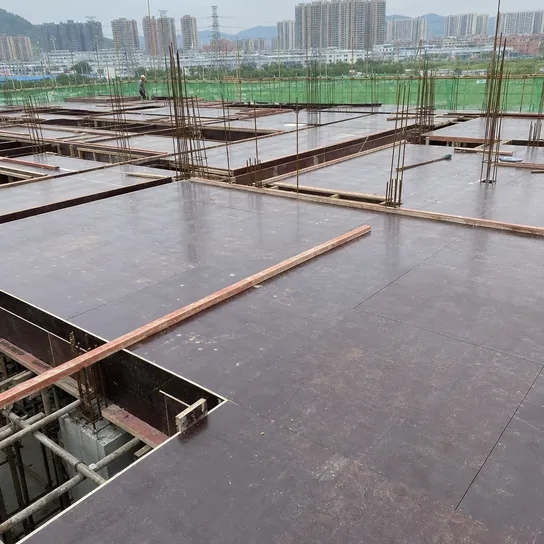
Slab Decking Systems
Used as the deck panel in proprietary and site-built slab formwork systems. Consistent thickness and stiffness allow the system designer to calculate deflection and bearing loads with confidence. Panels are interchangeable within a pour sequence.
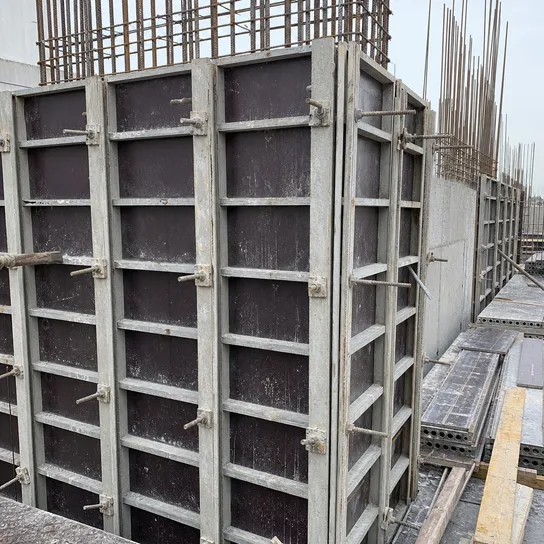
Wall Formwork
Vertical wall pours impose lateral pressure that requires panels with documented bending resistance. Structural grade panels are specified by tie spacing and pour rate — parameters that cannot be calculated without known MOR and MOE values.
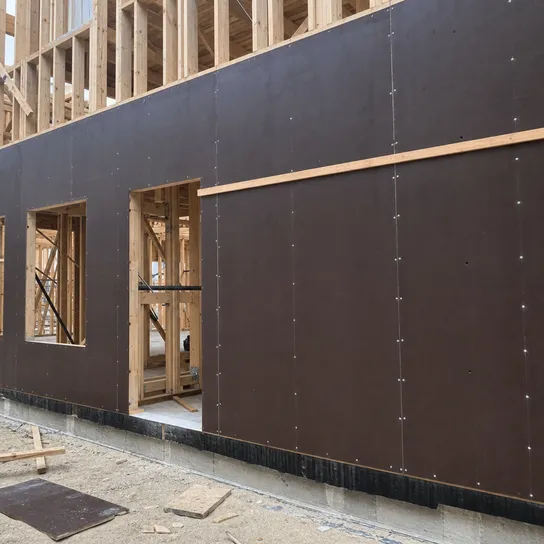
Shear Walls & Structural Sheathing
In timber frame and engineered wood construction, structural plywood sheathing contributes to lateral load resistance. The panel must meet shear strength and stiffness requirements that are written into the structural calculation — standard formwork panels do not qualify.
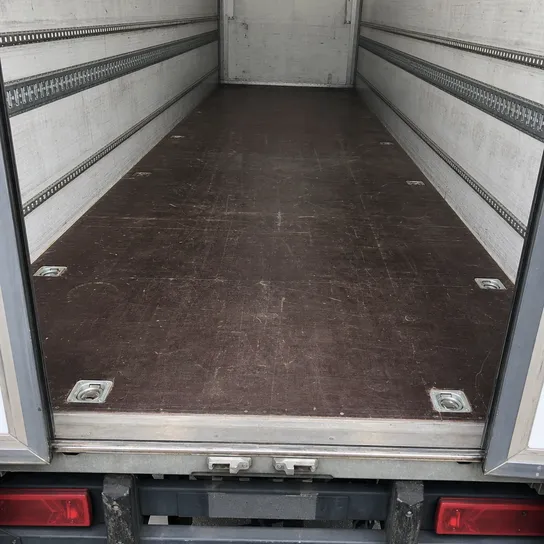
Heavy Transport Flooring
Truck trailer and container flooring requires panels that resist point loads, repeated flexing, and moisture exposure simultaneously. Structural grade panels with high-density hardwood core and 220 g/m² phenolic film are the standard specification for this application.
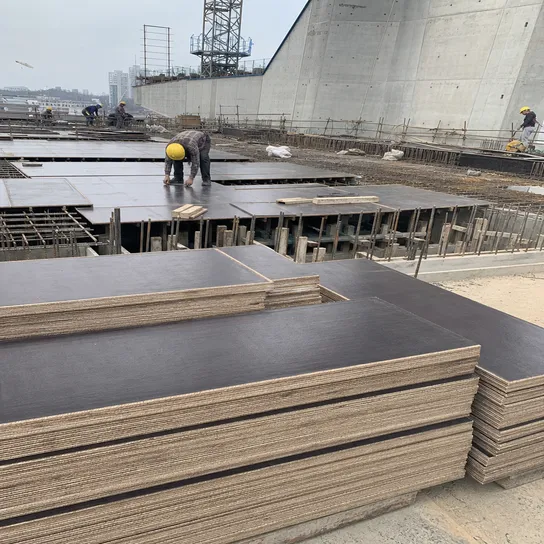
Bridge & Civil Infrastructure
Bridge deck formwork, culvert shuttering, and tunnel lining forms operate under conditions where panel failure has serious consequences. Infrastructure project specifications routinely require documented mechanical values, CE marking, and third-party test reports.
Sourcing & Supply Chain
Structural plywood for export projects requires more than a competitive price. Lead time predictability, documentation completeness, and consistent panel quality across repeat orders are the factors that determine whether a supply relationship works on a live construction programme.
Direct Factory Supply
We manufacture at our own 18,000 m² facility in Xuzhou, Jiangsu Province. There is no trading company layer between the production line and your order. Specification changes, production scheduling, and quality hold decisions are made at the factory level.
Lead Times & Production Scheduling
Standard structural panels: 15–25 days production lead time from confirmed order. Custom specifications add 5–10 days for press parameter adjustment and first-article inspection. We provide a production schedule with milestone dates on order confirmation.
Export Documentation
Standard export package includes: commercial invoice, packing list, bill of lading, certificate of origin, phytosanitary certificate, and CE declaration of conformity. Test reports and material certificates are provided on request. We are experienced with EU, UK, Australian, and Middle East import requirements.
Minimum Order & Container Loading
Minimum order is one 20' FCL container. A standard 20' FCL holds approximately 600–700 sheets of 18mm 1220×2440mm panels depending on packing configuration. Mixed thickness orders are accommodated. We provide container loading plans and packing specifications with each shipment.
Port of Loading
Primary export port is Qingdao. Shanghai and Lianyungang are available for specific routing requirements. Transit times to major destination ports: Rotterdam 28–32 days, Felixstowe 30–34 days, Dubai 18–22 days, Sydney 22–26 days, Los Angeles 14–18 days.
Pre-Shipment Inspection
Third-party pre-shipment inspection (SGS, Bureau Veritas, or buyer-nominated inspector) is supported and encouraged for first orders and large-volume contracts. We provide full factory access and documentation for inspection. Inspection costs are for buyer's account unless otherwise agreed.
Repeat Order Consistency
Structural specifications require that panels from repeat orders perform identically to the first order. We maintain production records by order batch, including press parameters, veneer source, and test results. Buyers can request batch traceability documentation for any shipment.
Incoterms Available
Frequently Asked Questions
Questions we receive regularly from structural engineers, procurement managers, and construction contractors sourcing structural film faced plywood for the first time.
What makes a panel "structural grade" vs standard formwork grade?
Structural grade means the panel has documented, tested mechanical values — bending strength (MOR), modulus of elasticity (MOE), and shear strength — that can be written into a structural calculation. Standard formwork panels are manufactured to appearance and durability criteria only. The core difference is whether the panel has a performance specification that an engineer can rely on.
Which standard should I reference in my specification?
For European and international projects, EN 13986 (wood-based panels for use in construction) and EN 636 (plywood — specifications) are the primary references. CE marking under EN 13986 is the declaration that the panel meets the standard. For projects in Australia and New Zealand, AS/NZS 2269 is the relevant standard. We can supply panels to either reference.
Can I get product-specific test reports before ordering?
Yes. We provide test reports for the specific product configuration you are specifying — thickness, core species, and ply count. Generic test reports covering a product family are available immediately. Product-specific reports from an accredited third-party laboratory can be arranged for large orders or where the specification requires it.
What is the difference between hardwood core and birch core for structural applications?
Birch core panels typically achieve higher MOR and MOE values due to birch's density and consistent grain structure. Hardwood core panels (using tropical hardwood species) offer competitive mechanical performance at a lower cost and are the standard specification for most formwork and transport flooring applications. Birch is preferred where maximum stiffness-to-weight ratio is required, such as in precision formwork or aerospace-adjacent applications.
How do I verify CE marking on panels I receive?
CE marking must be accompanied by a Declaration of Performance (DoP) document that references the notified body number, the harmonised standard (EN 13986), and the declared performance values. Check that the DoP matches the product description on your order. The notified body number on the CE mark can be verified against the EU NANDO database. Physical panels should carry the CE mark on the panel face or edge stamp.
What formaldehyde emission class should I specify?
For occupied buildings and enclosed spaces, specify E1 as a minimum. E1 limits formaldehyde emissions to ≤0.1 ppm under EN 717-1 testing. For projects in California or where CARB compliance is required, specify CARB Phase 2. Our panels are available in E1 and E0 (≤0.05 ppm) classes. E0 is recommended for interior applications with limited ventilation.
Can panels be cut to non-standard sizes at the factory?
Yes. We can supply panels cut to custom dimensions within our press capacity. Custom cutting adds 3–5 days to production lead time and requires a minimum quantity per size to be economical. Standard sheet sizes (1220×2440mm, 1250×2500mm, 1500×3000mm) are held in stock and available for immediate production scheduling. Provide your cut list at the time of enquiry.
What happens if panels arrive damaged or out of specification?
Document the discrepancy with photographs and a written count before unloading is complete. Notify us within 7 days of delivery with the documentation. We investigate against our production and packing records. Remedies include replacement panels in the next available shipment, credit against future orders, or partial refund depending on the nature and extent of the issue. Pre-shipment inspection significantly reduces the likelihood of arrival discrepancies.
Is the film face suitable for exposed architectural concrete finishes?
Our standard 120 g/m² phenolic film produces a smooth, consistent concrete face suitable for most architectural concrete applications. For high-specification fair-faced concrete requiring very low surface roughness and minimal joint lines, specify our 220 g/m² film with sealed edges. Panel reuse count and release agent application also affect final concrete surface quality — we can provide guidance on both.
Do you supply to distributors or direct to contractors only?
We supply to both. Distributors and merchants purchasing for resale receive volume pricing and can be set up with a standing product specification for repeat orders. Direct contractor supply is available for project-specific orders meeting the minimum FCL quantity. We do not supply retail quantities. All buyers receive the same documentation and certification package regardless of channel.
Request a Specification Pack or Price Enquiry
Send us your project specification or product requirements and we will respond with a detailed quotation, relevant test reports, and a production schedule. Typical response time is one business day.
Product-specific test reports and CE declarations provided with every quotation
Production schedule with milestone dates confirmed on order placement
Samples available for first-time buyers prior to order commitment
Third-party pre-shipment inspection supported and facilitated
Send an Enquiry
The Production Decisions That Deliver Structural Performance
Standard film faced plywood and structural film faced plywood can look identical on the surface. The difference is in what happens before the panel reaches the press — and in the testing that happens after.
Veneer Selection
For structural specification, we tighten core veneer requirements: hardwood species with defined density ranges, no core gaps wider than 2mm, and veneer thickness tolerance held to ±0.1mm across the layup. A core gap that's acceptable in a standard formwork panel creates a stress concentration point in a structural application — under repeated load cycling, that's where delamination initiates.
Layup Sequence and Ply Orientation
For structural applications, we specify the layup to optimize bending performance in the primary load direction while maintaining adequate cross-grain strength. The 9-ply construction we use for 18mm structural panels gives a higher ply count than the 7-ply construction common in standard 18mm formwork panels — more glue lines, more uniform stress distribution, better performance under point loads.
Press Parameters: Logged, Not Assumed
We run multi-daylight hydraulic hot presses with logged temperature, pressure, and dwell time per batch. If a structural panel fails a bonding test downstream, we can trace it to the specific production run and identify whether it was a process deviation or a material issue. Buyers can request this traceability data as part of their supplier qualification process — we can provide it.
Post-Press Testing: Not Optional
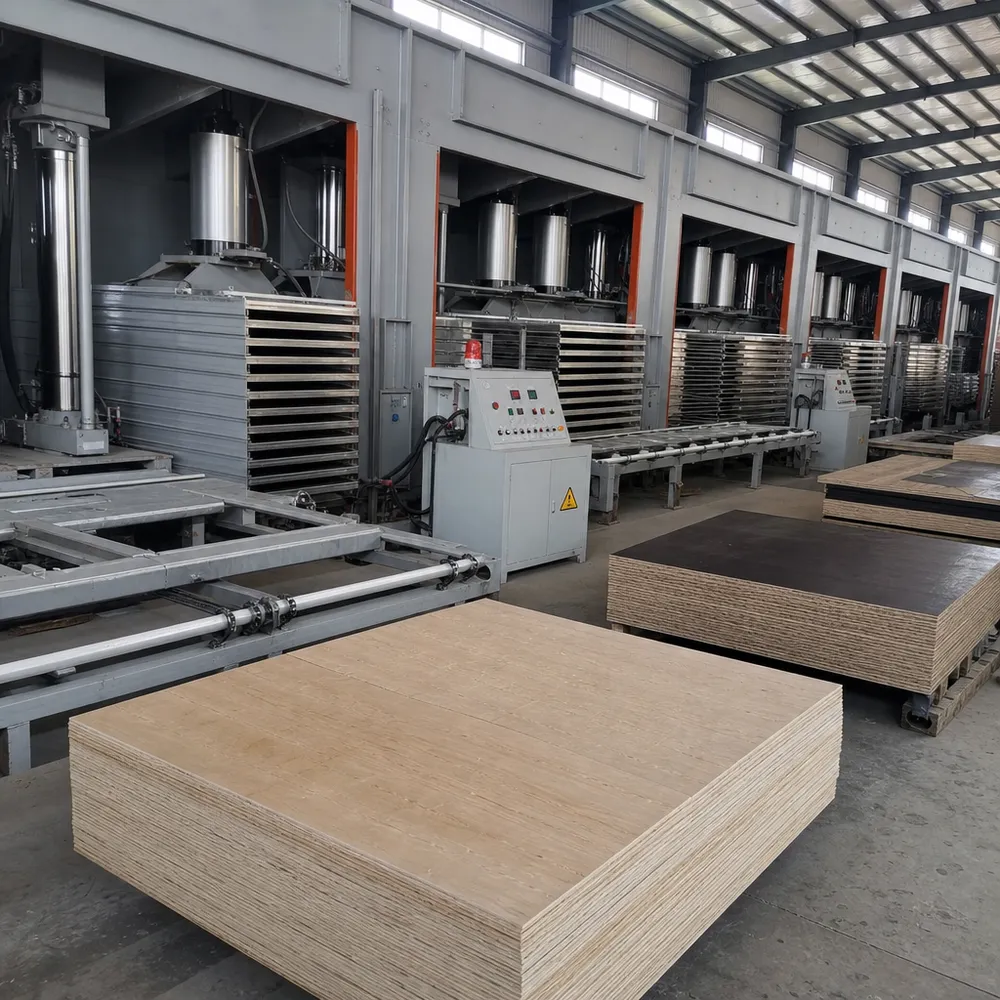
Every structural export batch goes through mechanical testing before it ships: bending strength and MOE tested on a sample from the batch, film adhesion tested by cross-cut and peel, and thickness verified at multiple points across the panel. The test reports travel with the shipment. This is the documentation your buyers need to write the panel into a structural calculation — and it's what separates a structural specification from a standard panel with a structural label on it.
18mm Structural vs. Standard: Key Differences
Where Structural Film Faced Plywood Moves — and the Commercial Logic Behind Each Segment
Four distinct buyer segments drive demand for structural-grade panels. Each has different procurement logic, documentation requirements, and commercial entry points.
Engineered Formwork System Manufacturers
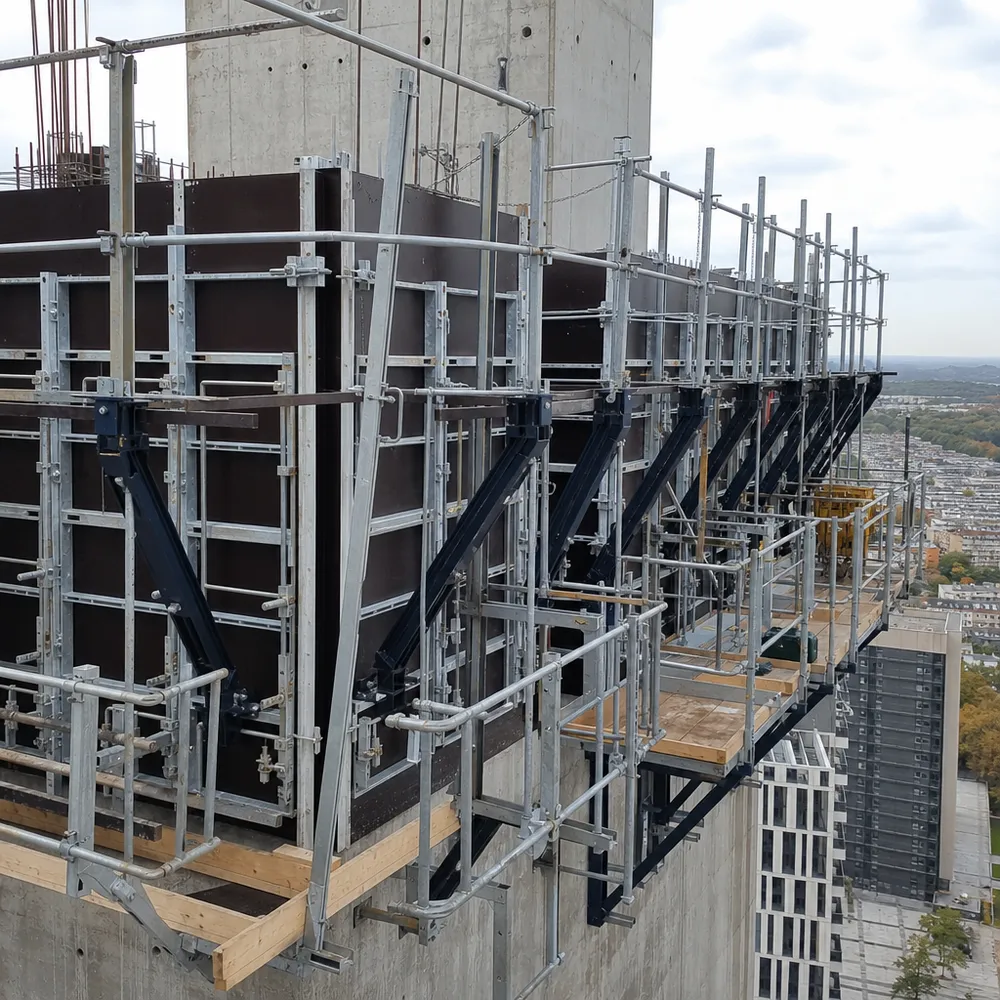
The primary market for structural film faced plywood. Companies that design and sell proprietary formwork systems — climbing forms, table forms, column forms, tunnel lining systems — use film faced plywood as the panel component in a calculated structural system. These buyers specify to tight tolerances, require documented mechanical performance, and often need OEM panel dimensions that match their system geometry.
Infrastructure and Civil Engineering Projects
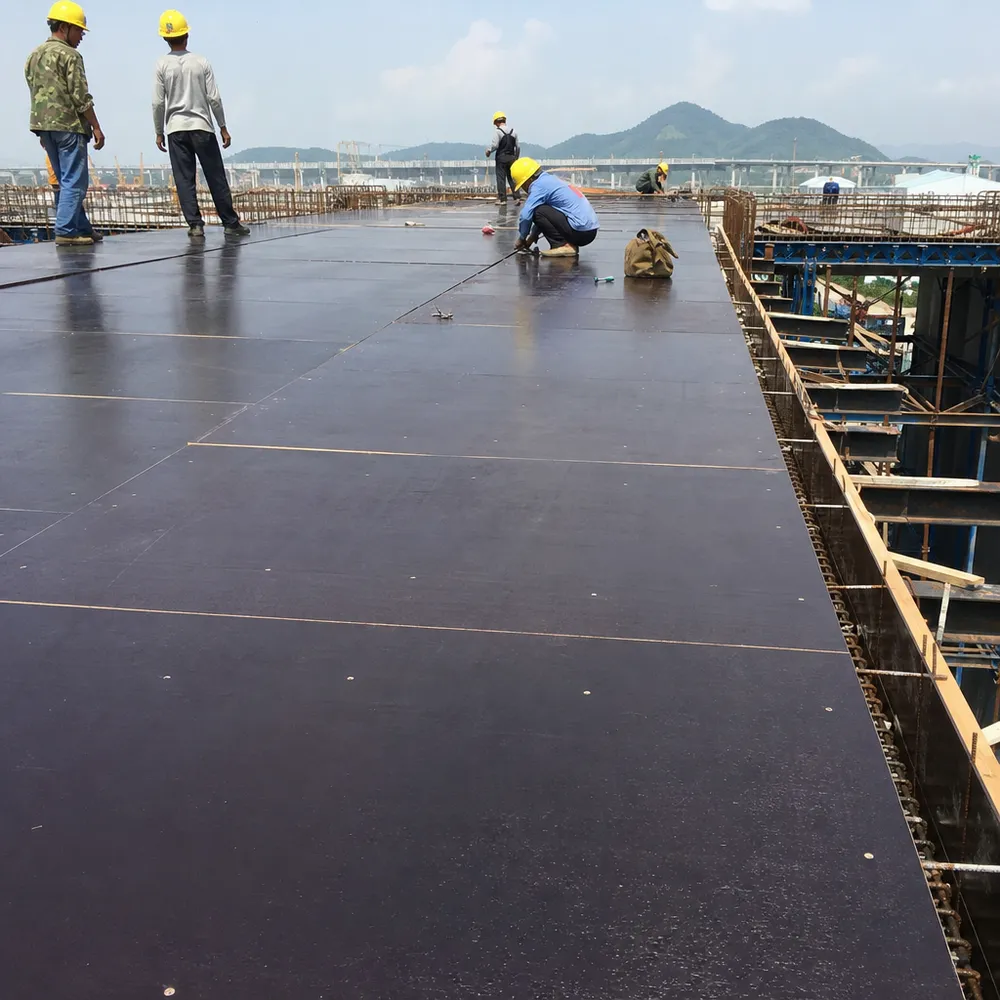
Bridge deck formwork, tunnel lining, retaining wall construction, dam formwork — these projects specify structural-grade panels because the structural engineer on the project requires documented performance values. Projects run large panel volumes over extended timelines, and the specification is typically locked in at the design stage.
Precast Concrete Manufacturers
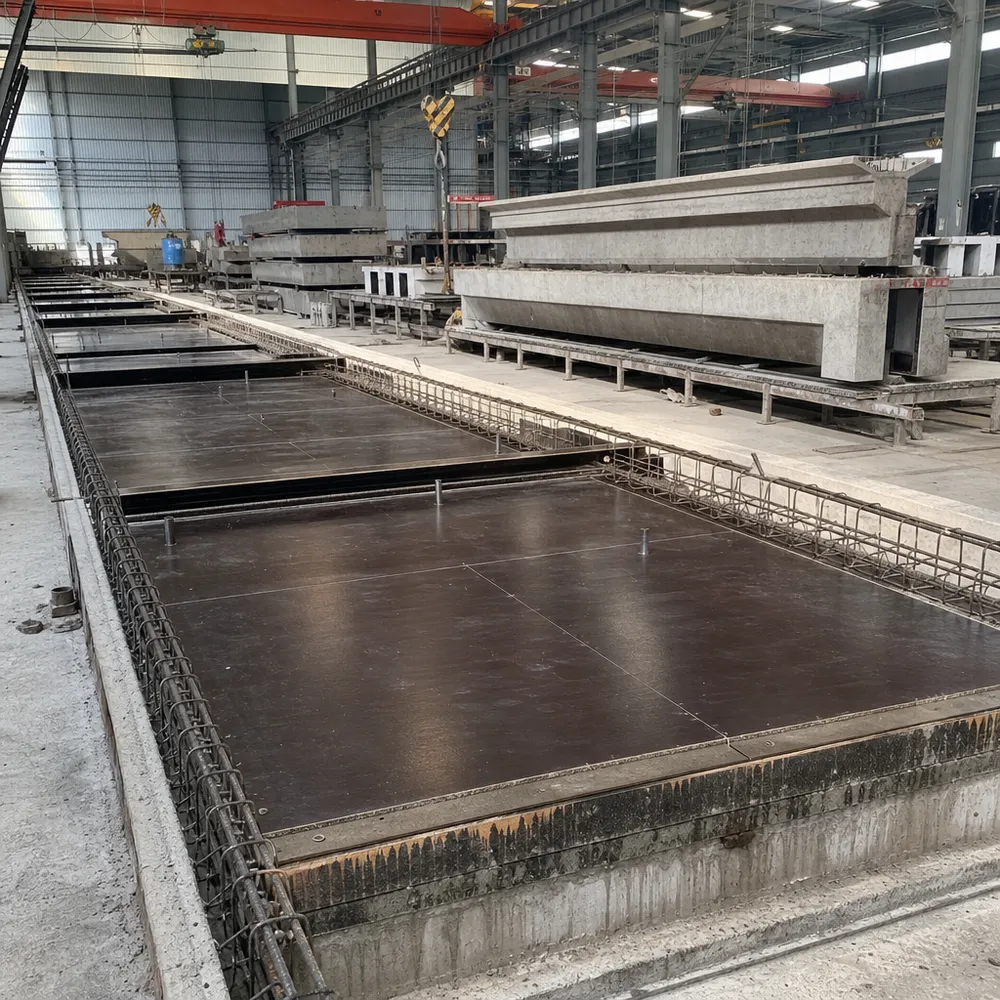
High-volume production of structural precast elements — wall panels, beams, stairs, bridge components — uses film faced plywood as the form surface. In a controlled factory environment, reuse cycles are higher than on a construction site (20+ cycles is achievable with proper handling), and structural integrity matters because a panel failure mid-pour creates a production stoppage, not just a rework cost.
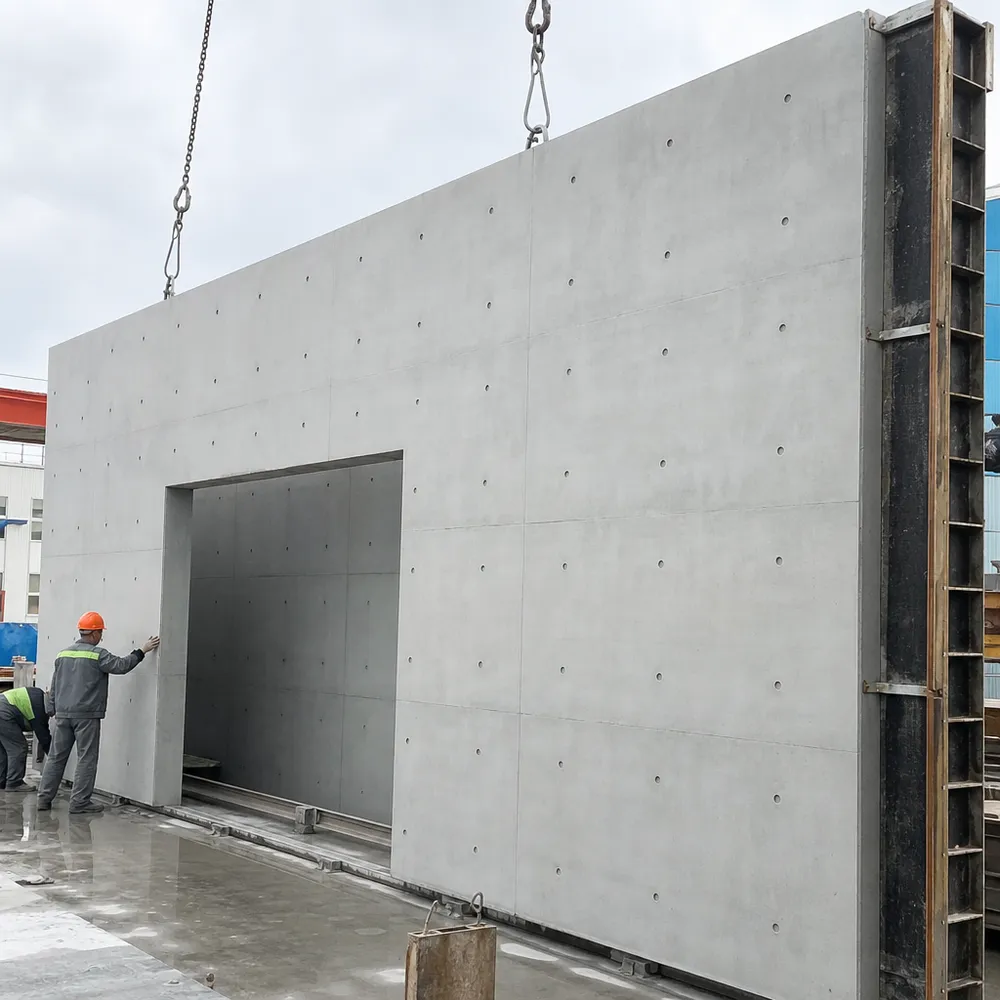
High-Specification Architectural Concrete
Exposed concrete facades, feature walls, complex curved forms — these applications require panels that hold their geometry under pour pressure and release cleanly without surface defects. The structural specification ensures the panel doesn't deflect under load in a way that telegraphs through to the concrete face.
Ready to Discuss Your Structural Specification?
Whether you're qualifying a new panel source, writing a structural specification, or sourcing for an ongoing supply agreement — we can provide the documentation, test reports, and technical data your buyers require.
High Density Film Faced Plywood: Core Species and Density Decisions
The "high density" designation refers to the core construction — specifically, the use of hardwood or birch core veneers rather than poplar. Density matters structurally because higher-density wood species have higher inherent bending strength and stiffness, which translates directly to panel mechanical performance.
Hardwood Core
Standard Structural Specification
Tropical hardwood species — typically eucalyptus or mixed tropical hardwood. This is the standard structural specification for most markets. The hardwood core delivers the mechanical performance values required for EN 13986 structural classification at a cost point that works for most infrastructure and formwork applications.
Birch Core
Highest Performance Specification
Baltic or Russian birch veneer. Birch delivers higher and more consistent mechanical performance than tropical hardwood, with tighter grain and better screw-holding. It's the specification for European markets and for engineered formwork system manufacturers who need the highest available performance-to-weight ratio.
Practical Sourcing Decision
Buyers in Europe or supplying European-specification projects: specify birch core. The birch specification is what gets written into the tender documents.
Buyers in the Middle East, Southeast Asia, or Australia: hardwood core structural specification covers the requirement at a better landed cost.
We can produce both hardwood core and birch core on the same order if you're supplying multiple markets. Specify per-destination requirements when requesting a quote.
Structural Formwork Plywood: Documentation Package for Your Import and Specification Needs
The documentation package is what makes structural film faced plywood usable in engineered applications. Here's what we include as standard with structural specification orders.
CE Declaration of Conformity
Standard — EU shipmentsRequired for film faced plywood sold into EU construction projects under EN 13986. The CE marking covers the panel's performance characteristics as a construction product. Included with every EU-bound structural shipment.
Mechanical Test Reports
Batch-specificBending strength (MOR), modulus of elasticity (MOE), and shear strength — tested on samples from the production batch. These are the numbers your buyers' structural engineers need to write the panel into a load calculation.
Reports correspond to the specific production run in your shipment — not generic reference-batch data.
ISO 9001:2015 Certificate
Standard — all ordersQuality management system certification covering our production processes and QC procedures. Relevant for buyers whose procurement policies require certified suppliers.
FSC Chain of Custody Certificate
Available on requestRequired if your buyers have sustainability sourcing policies or if you're supplying into markets where deforestation-linked supply chains create regulatory or reputational risk.
CARB P2 Documentation
Standard — US shipmentsThe most stringent formaldehyde emission standard in our export markets. We formulate to CARB P2 as the baseline across our product range — US-bound documentation prepared as standard.
Phytosanitary Certificate
Standard — all export shipmentsRequired for wood products entering most markets. Prepared as standard for all export shipments.
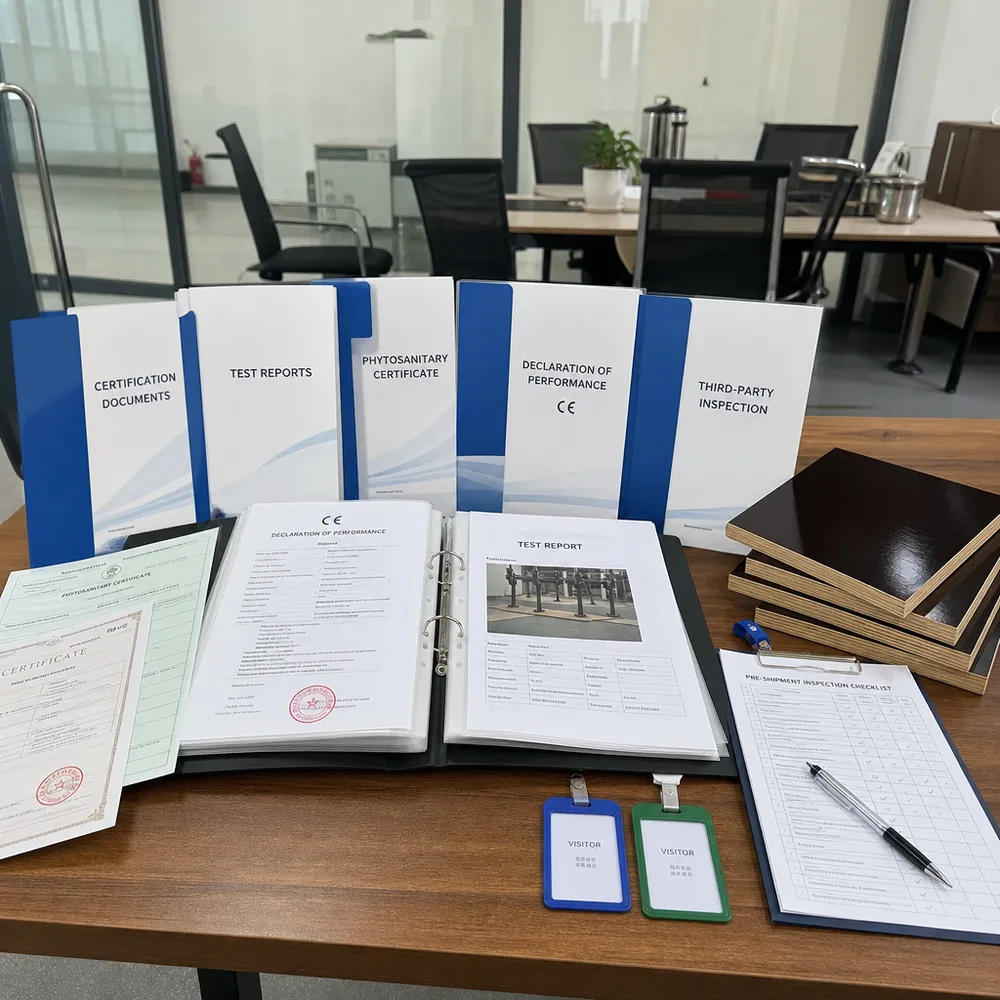
Third-Party Inspection
Pre-shipment access available
For buyers who need third-party inspection before shipment, we work with SGS, Bureau Veritas, and similar agencies. Arrange through your preferred agency and we'll coordinate access.
View our complete certification portfolio, including scope of coverage and issuing bodies.
View CertificationsCustomization Parameters for Structural Specification
Structural film faced plywood is frequently ordered to custom specifications — formwork system manufacturers in particular need panels built to their system geometry. Here's what we can customize and what the constraints are.
| Dimension | Standard Options | Custom Range | Notes |
|---|---|---|---|
| Thickness | 15mm, 18mm, 21mm | 12mm–25mm | Structural performance values vary by thickness; confirm with test reports |
| Panel Size | 1220×2440mm | Up to 1525×3050mm | Custom dimensions on confirmed orders; no tooling cost |
| Core Species | Hardwood, birch | Hardwood or birch only | Poplar core does not meet structural mechanical requirements |
| Film Weight | 220 g/m² standard | 120–300 g/m² | Higher film weight for extended reuse; confirm with application requirements |
| Film Color | Brown, black | Custom colors available | Custom film color requires minimum run volume |
| Glue Bond | WBP throughout | WBP only | MR bond not available on structural specification |
| Formaldehyde | CARB P2 / E1 | E0 available | E0 specification adds lead time for resin sourcing |
| OEM Marking | Available | Panel stamping, edge marking, custom packaging | Minimum run volume applies |
Lead Time from Specification Confirmation
Standard structural specification: 15–20 working days to production. Custom dimensions or non-standard film specifications add 5–10 working days for material sourcing.
Lead time clock starts from specification confirmation, not from initial inquiry.
Production Sample Before Full Run
For new OEM programs, we provide a production sample for approval before full-run production. This applies to custom dimensions, non-standard film specifications, and new OEM marking programs.
Sample approval step is built into the lead time estimate above.
Container Loading and Export Logistics
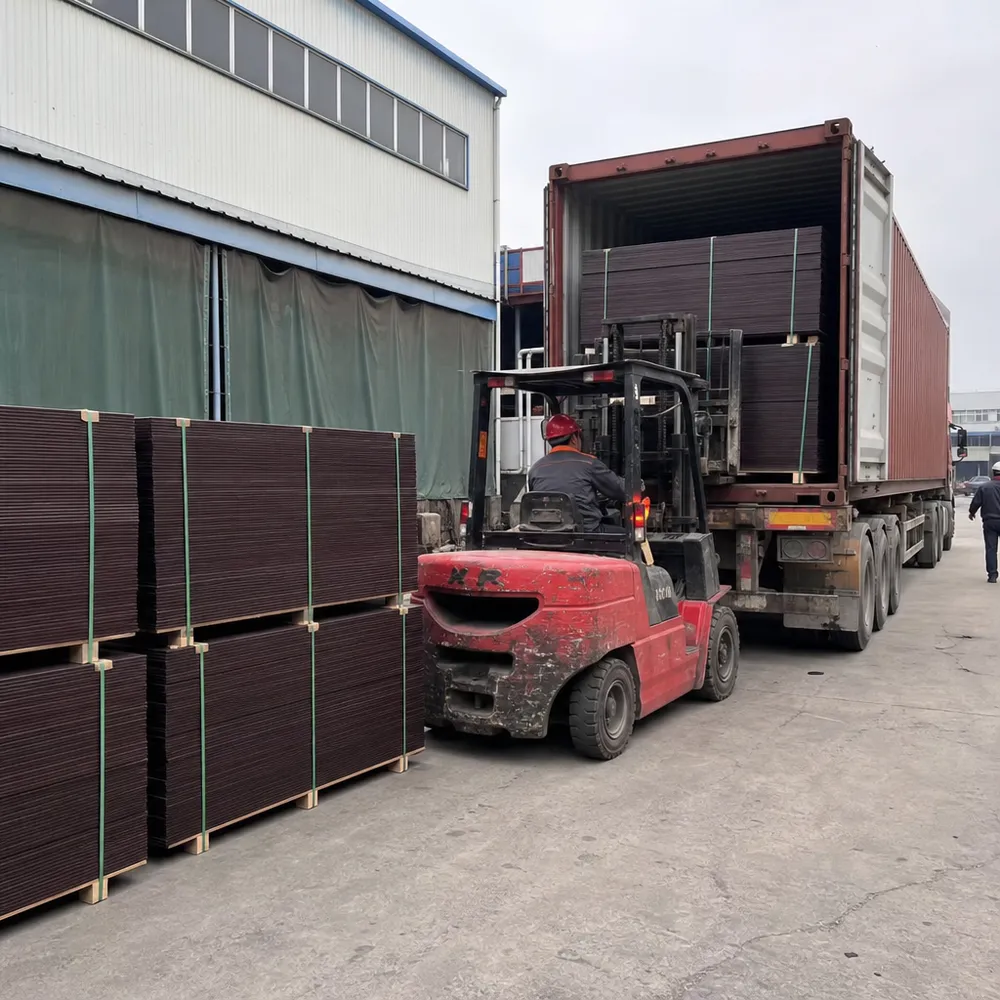
Structural film faced plywood ships in standard 20GP and 40HQ containers. Standard 1220×2440mm panels stack flat and load efficiently — a 40HQ container holds approximately 20–22 m³ depending on thickness and stacking configuration. We provide loading plans with each shipment.
Packaging for Structural Specification
Every bundle ships with full documentation
- Panels bundled and strapped, edge-protected with corner boards
- Wrapped in moisture-resistant film for transit protection
- Each bundle marked: product specification, thickness, ply count, batch number, mechanical performance class, destination port
- Test reports and certification documents packed with shipment documentation — not sent separately
Port Routing from Xuzhou
We route through Qingdao, Shanghai, or Lianyungang based on schedule and freight cost for your destination.
Coordinating Delivery with Project Schedules
For buyers who need to coordinate structural panel delivery with project schedules, we can discuss production scheduling and shipment timing on confirmed orders. Infrastructure projects in particular often have tight delivery windows tied to formwork installation sequences.
Tell us your project timeline and we'll work backward from your required delivery date.
How Structural Film Faced Plywood Compares to Other Variants in the Range
Structural specification is one of nine film faced plywood variants we produce. Here's how it positions relative to the variants buyers most often compare it against.
Comparison 01
Structural vs. Standard 18mm Film Faced Plywood
Standard 18mm is the volume formwork panel: phenolic film, WBP bond, suitable for most residential and commercial construction applications. Structural specification adds documented mechanical performance values and tighter core construction requirements.
Use standard 18mm if the panel is a standard form face without a structural calculation behind it — lower cost, right specification.
Use structural specification if the panel is a structural component in an engineered system — documented mechanical performance is the requirement.
Comparison 02
Structural vs. Marine Film Faced Plywood
Marine specification focuses on core void elimination and BS 1088 or equivalent core construction standards — the specification for applications where a core void would create a structural failure point: marine construction, bridge decking formwork, high-specification architectural concrete.
Marine specification — no core voids, BS 1088 or equivalent core construction.
Structural specification — documented mechanical performance values.
For infrastructure applications requiring both — no core voids AND documented mechanical performance — we can produce a marine-structural hybrid specification on confirmed orders.
Comparison 03
Structural vs. Phenolic Film Faced Plywood
Phenolic film faced plywood covers the film performance side: 120–220 g/m² phenolic resin overlay, WBP bond, optimized for reuse cycles and concrete release. Structural specification adds the core construction and mechanical testing requirements on top of phenolic film performance.
Phenolic film faced — optimized film performance, reuse cycles, concrete release. No structural documentation required.
Structural specification — phenolic film performance plus core construction and mechanical testing. Most structural panels use phenolic film as standard.
Quick Specification Decision Guide
Match your project requirement to the right variant.
Need
Phenolic film performance, no structural docs
Optimized reuse cycles and concrete release
Need
Birch core for European markets
European specification and market requirements
Explore the Full Film Faced Plywood Range
Nine variants covering standard formwork, marine, phenolic, birch, shuttering, waterproof, and structural specifications — all produced at our Xuzhou factory.
Frequently Asked Questions
Technical and commercial questions we receive from importers, distributors, and procurement teams specifying structural film faced plywood.
What standards does structural film faced plywood need to meet for European construction projects?
EN 13986 is the primary standard for wood-based panels used in construction in the EU — it covers the performance requirements and testing methods for structural classification. Within EN 13986, EN 636 defines the plywood-specific requirements.
For structural film faced plywood sold into EU construction projects, CE marking under EN 13986 is required, and the CE declaration must reference the panel's structural performance class. We produce to EN 13986 structural classification and include the CE declaration of conformity with EU-bound shipments.
If your buyers' projects reference specific structural performance classes — for example, EN 636-3 for exterior structural applications — confirm the required class when placing your order and we'll ensure the test reports match.
What is the difference between structural film faced plywood and standard formwork plywood?
The core difference is documentation. Standard formwork plywood is specified on surface characteristics — film type, film weight, reuse cycle expectations. Structural film faced plywood is specified on mechanical performance values: bending strength (MOR), modulus of elasticity (MOE), and shear strength, tested and documented per batch.
The structural specification also requires tighter core construction — higher-density core species, controlled core gap limits, and higher ply counts — because the panel is a structural component in a calculated load path, not just a form surface. If a structural engineer needs to sign off on the formwork design, they need the test reports. Standard formwork panels don't come with them.
The structural engineer on the project should confirm the specification — but as a reference point, 18mm structural film faced plywood with MOR ≥ 24 N/mm² and MOE ≥ 6,500 N/mm² covers most standard slab formwork applications up to 300mm concrete depth with typical shoring spacing.
For deeper pours, higher concrete pressures, or extended shoring spans, the structural calculation may require higher performance values. In those cases, specify 21mm or birch core, which delivers higher MOE.
Send us the project's formwork design loads and we'll recommend the appropriate specification and provide the relevant test data.
Structural engineer confirmation required. These values are reference points only — final specification depends on project-specific formwork design loads.
The test reports we provide correspond to the specific production batch in your shipment — they're not generic reference documents. Each bundle is marked with a batch number that ties back to the production records and test reports.
For buyers who need independent verification, we support third-party pre-shipment inspection through SGS, Bureau Veritas, or your preferred agency. The inspector can pull samples from the production batch for independent mechanical testing before the container is loaded.
This is standard practice for infrastructure project procurement and we're set up to accommodate it.
Every bundle carries a batch number linked to production records and test reports — not generic documentation.
SGS, Bureau Veritas, or your preferred agency. Inspector pulls samples from the production batch before the container is loaded.
Samples tested independently against the declared MOR, MOE, and shear values before shipment is released.
Standard structural specification (18mm, hardwood core, brown phenolic film, 1220×2440mm) is available from one container load. Custom dimensions, birch core specification, or OEM-marked panels require confirmed orders of sufficient volume to justify the production run — typically 2–3 containers minimum for custom specifications.
For buyers evaluating the product for a new project or market, we can arrange sample panels before committing to a container order. Contact us with your specification and destination market and we'll confirm the MOQ and lead time.
Structural film faced plywood is engineered and tested for formwork applications — temporary structural use during concrete construction. The phenolic film surface is optimized for concrete release and reuse, not for permanent exposure.
For permanent structural applications (roof sheathing, floor decking, wall bracing), structural plywood without film overlay is the appropriate specification.
If your buyers are asking about permanent structural use, the relevant product is structural plywood — we produce that as well under our commercial plywood range. View structural plywood →
Have a question not covered here? Our technical team responds within one business day.
Get a Quote for Structural Film Faced Plywood
Send us your specification and we'll come back with a detailed quote, test reports, and full certification documentation for your import requirements.
What to Include in Your Specification
The more detail you provide upfront, the faster we can return an accurate quote with the right documentation package.
-
Thickness
Nominal panel thickness in mm — e.g. 12mm, 15mm, 18mm, 21mm
-
Core Species
Hardwood core or birch core — affects density, bending strength, and price point
-
Panel Dimensions
Standard 1220×2440mm or custom dimensions for your formwork or structural system
-
Destination Market
Determines which certification documentation applies — EU, US, AU, or other
-
Required Certifications
EN 13986, CE marking, FSC, CARB P2, ISO 9001 — specify what your project or import process requires
-
Estimated Volume
Container quantity or m³ per order — helps us confirm lead time and production scheduling
Qualifying a New Structural Panel Supplier?
If you're qualifying a new structural panel supplier for an infrastructure project or formwork system program, we can provide sample panels and a full documentation package for your technical review before you commit to a production order.
Most buyers in this segment start with a sample evaluation before placing their first container order — that's a reasonable process and we support it.
Contact Us Directly
Xuzhou QD Wood Industry Co., Ltd.
ISO 9001 · CE · FSC · CARB P2 Certified Manufacturer
Explore More Film Faced Plywood Variants
Other specifications in the film faced plywood range — each with its own documentation and application profile.