

Masonite Hardboard
Manufacturer
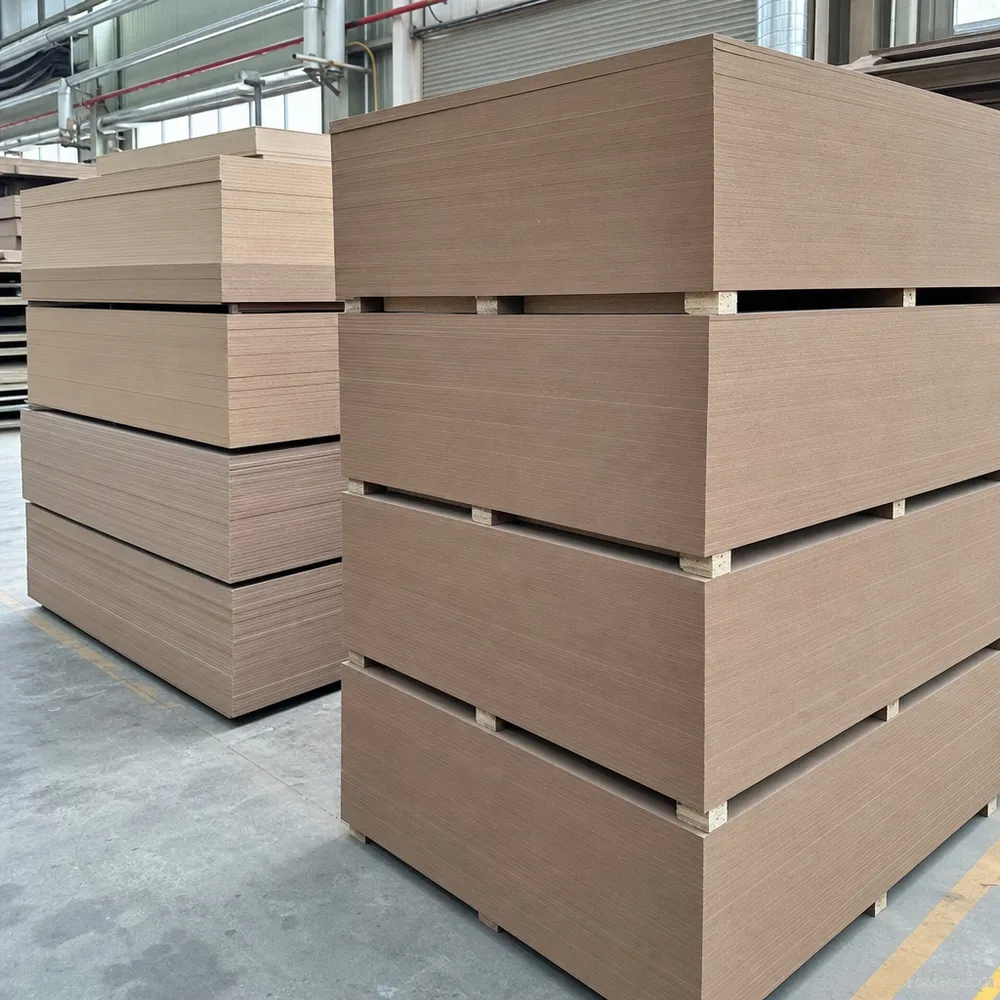
Masonite hardboard manufactured to the dimensional and density specifications buyers actually specify — not a generic hardboard relabeled. Tempered and standard grades, S1S and S2S surface configurations, CARB P2 compliant as standard.
Full certification documentation included for US, EU, and Australian import markets. 18+ years manufacturing. Exported to North America, Europe, Middle East, Southeast Asia, Australia.
What "Masonite" Means in a Procurement Context — and What We Manufacture
Masonite started as a brand name — the original Masonite Corporation's tempered hardboard product — and became the generic term that stuck in North American and Australian procurement. When a buyer specifies "masonite board," they typically mean a standard-format high-density fiberboard panel: smooth one or both faces, 3mm to 6mm thickness range, suitable for painting, laminating, or direct use as a backing or substrate panel.
The term doesn't carry a precise technical standard the way "CARB P2" or "E1" does — it's a market descriptor that signals a product category.
We manufacture masonite hardboard to the specifications that buyers using this terminology actually need: density in the 800–1000 kg/m³ range, calibrated surface smoothness for downstream finishing, and dimensional accuracy that holds through automated cutting and processing. The parent category page covers the full hardboard range — view all hardboard products — but this page is specifically about the masonite-spec format: what it is, what it's suited for, and what we can do with it.
The Commercial Distinction That Matters
Masonite hardboard sits between standard hardboard sheet and specialty-finished formats like primed hardboard. It's the format buyers specify when they need a clean, dense, dimensionally stable panel that their downstream customers or production lines will finish themselves. If your buyers are furniture manufacturers, cabinet shops, or interior fit-out contractors who apply their own paint or laminate, masonite board is the format they're asking for.
Market Term
Generic descriptor in North American and Australian procurement — not a formal technical standard.
Density Range
800–1000 kg/m³ — the high-density fiberboard range buyers expect when specifying masonite.
Finish-Ready
Supplied unfinished for downstream painting, laminating, or direct use as backing substrate.
Masonite Hardboard Specifications
Standard production parameters for our masonite hardboard. Buyers building comparison sheets or writing procurement specifications can use these as the baseline. Contact us to confirm exact values for your order.
Standard Production Parameters
| Parameter | Standard Value / Range |
|---|---|
| Thickness | 3mm, 3.2mm, 4mm, 5mm, 6mm |
| Standard Sheet Size | 1220 × 2440mm (4×8 ft) |
| Custom Sizes | Available on confirmed orders |
| Density | 850–1000 kg/m³ Masonite-spec range |
| Surface Configuration | S1S S2S |
| Core Material | Eucalyptus and poplar wood fiber, refined and blended |
| Moisture Content at Dispatch | 5–9% |
| Formaldehyde Emission | CARB P2 compliant (standard) E1 / E0 available |
| Thickness Tolerance | ±0.2mm across the panel Calibrated sanding |
| Certifications |
CARB P2 FSC ISO 9001 CE
|
| Tempered Grade | Available — resin-treated for increased hardness and moisture resistance |
| Standard (Untempered) Grade | Available — standard density, suitable for interior dry applications |
Specifications shown are standard production values. Actual specifications may vary by order. Contact us for a detailed data sheet and confirmation of exact parameters for your application.
Why ±0.2mm Tolerance Matters
For automated processing lines
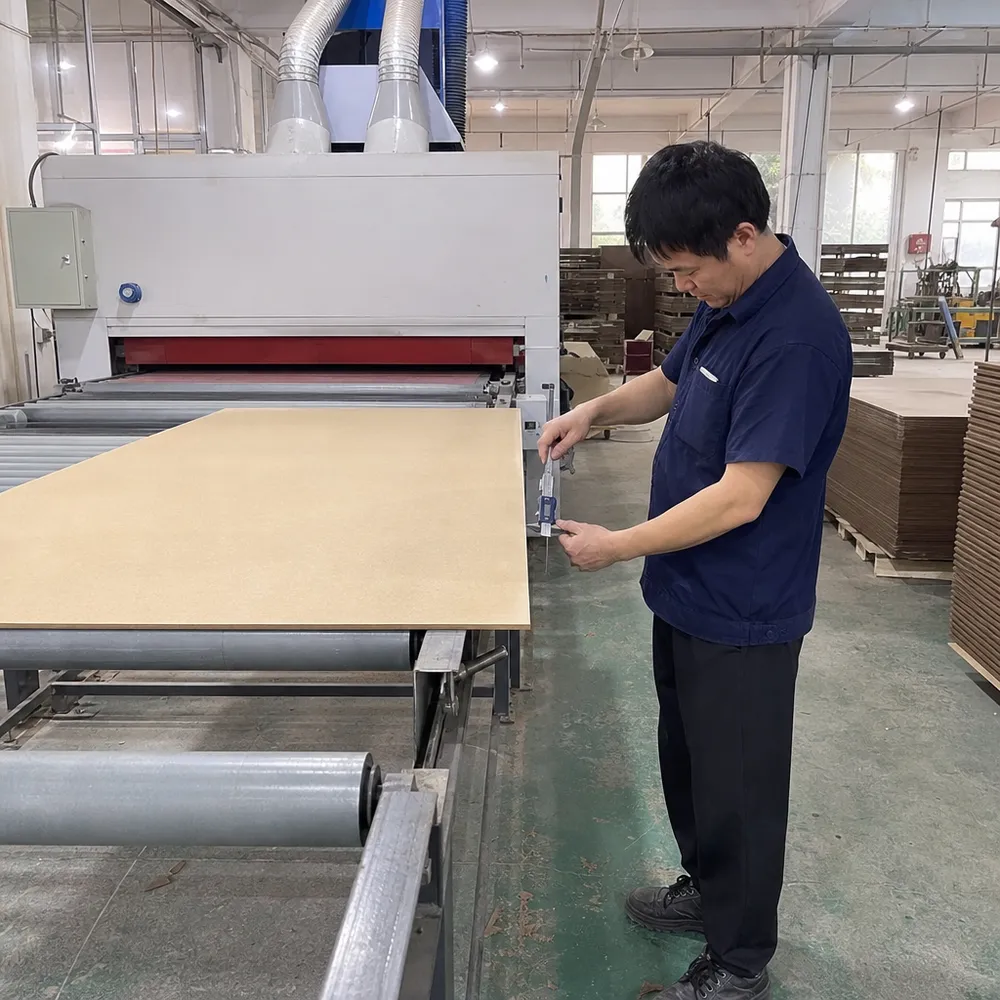
The ±0.2mm thickness tolerance is worth noting specifically. Buyers whose downstream customers run masonite panels through automated laminating or cutting equipment will see this tolerance in their output consistency.
Panels that vary by 0.5mm or more across a batch cause feed adjustments and waste.
We hold this tolerance through calibrated wide-belt sanding, measuring at multiple points across the panel — not just at the center.
Edge-to-center variation is the failure mode that shows up in automated processing — and the one most factories don't measure for.
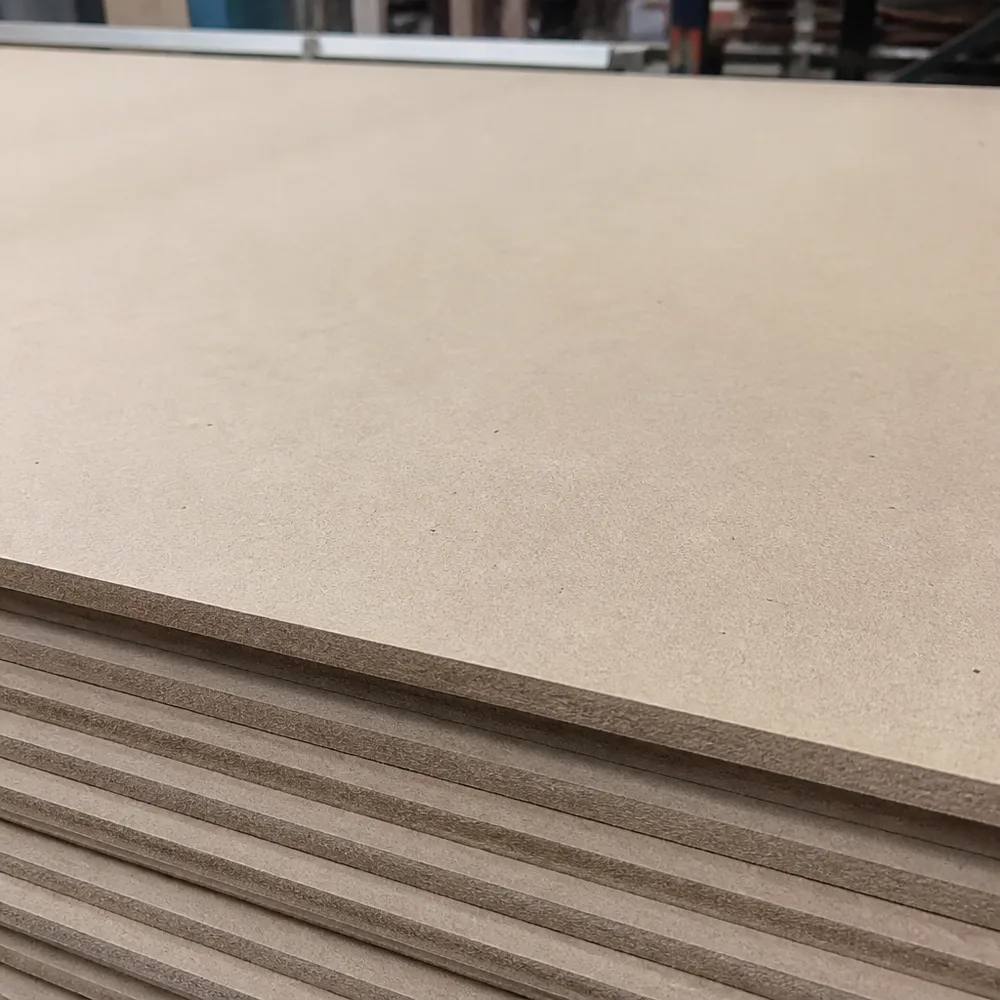
S1S
One smooth face, textured reverse
S2S
Both faces smooth, sanded
Tempered vs Standard Grade Masonite
The grade decision affects downstream performance more than most buyers expect. Here is what actually differs between the two, and which applications each grade is suited for.
Tempered Grade
Resin-treated, oil-tempered under heat
Higher surface hardness — resists denting and abrasion in high-contact applications
Improved moisture resistance — suitable for semi-humid environments and exterior-adjacent uses
Better dimensional stability under humidity cycling
Preferred for pegboard, flooring underlayment, and concrete forming applications
Tempered panels have a slightly darker surface tone due to the oil-tempering process. Factor this in if surface appearance is critical.
Standard Grade
Untempered, natural fiber compression
Lighter weight per panel — easier handling in high-volume furniture and cabinet production
Accepts paint, primer, and laminate adhesives more readily than tempered surface
Lower cost per unit — preferred where moisture resistance is not a requirement
Suitable for interior dry applications: cabinet backs, drawer bottoms, display boards
Standard grade is not recommended for applications with sustained humidity exposure or direct water contact.
Application-to-Grade Reference
| Application | Recommended Grade | Reason |
|---|---|---|
| Cabinet backs & drawer bottoms | Standard | Interior dry use; cost efficiency matters at volume |
| Pegboard / tool boards | Tempered | Repeated hook insertion requires surface hardness |
| Laminate substrate / backing board | Standard | Better adhesive bonding on untempered surface |
| Concrete forming panels | Tempered | Moisture exposure during pour requires tempered grade |
| Display & exhibition boards | Standard | Paintable surface; controlled indoor environment |
| Flooring underlayment | Tempered | Load-bearing and subfloor moisture exposure |
| Picture frame backing | Standard | Lightweight, clean cut edge, interior use |
Where Masonite Hardboard Is Used
Masonite hardboard serves a wide range of industries. The common thread is the need for a flat, dense, consistent panel at a cost point that makes volume purchasing viable.
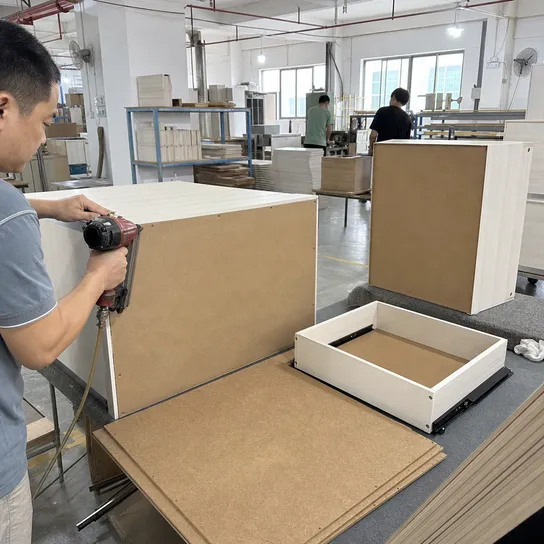
Furniture & Cabinetry
Cabinet backs, drawer bottoms, and furniture panel backing. Standard grade is the default choice — flat, consistent, and cost-effective at the volumes furniture manufacturers run.
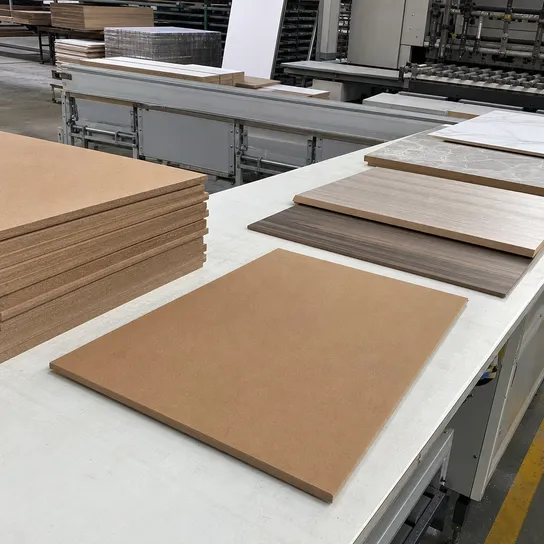
Laminate & Surface Finishing
Used as a substrate for HPL, melamine, and decorative laminates. The smooth, dense surface provides a stable base that does not telegraph texture through the laminate layer.
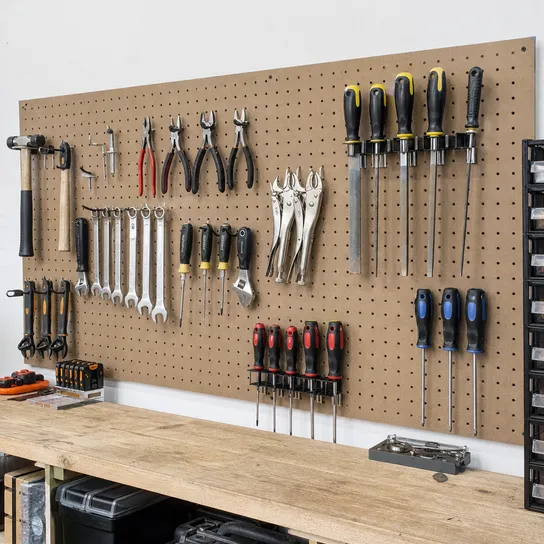
Pegboard & Tool Storage
Tempered grade is the standard for pegboard. The hardened surface holds hook insertions without crumbling at the hole edge — a failure mode that shows up quickly with standard grade.
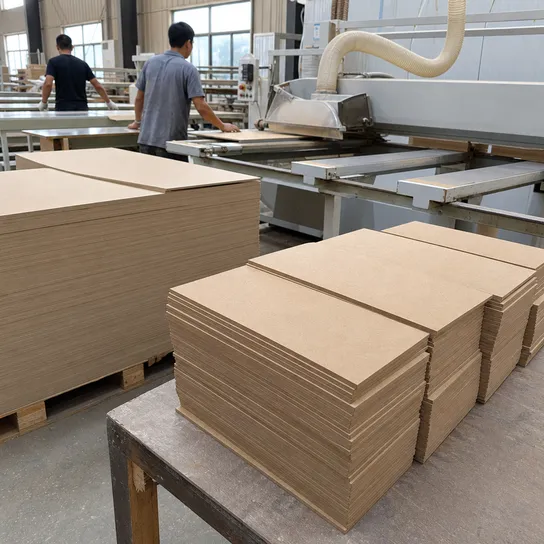
Picture Frame Backing
A high-volume application for standard grade. Frame manufacturers need consistent thickness, clean cut edges, and a surface that does not warp in controlled indoor environments.
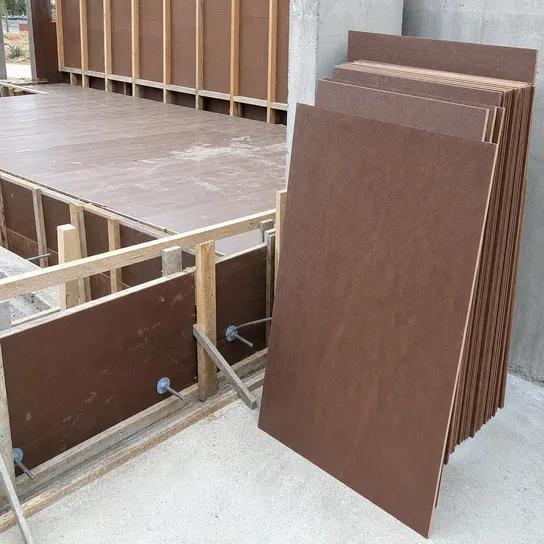
Construction & Forming
Tempered grade is used in concrete forming, flooring underlayment, and wall sheathing applications where moisture exposure and load are factors.
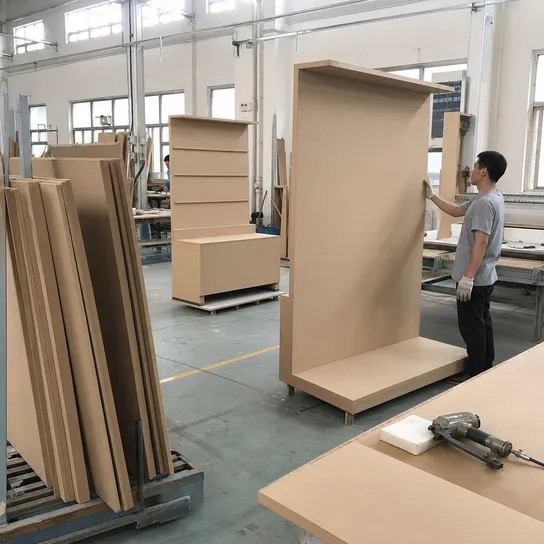
Display & Exhibition
Standard grade is used for display boards, exhibition stands, and retail fixtures. Accepts paint and print-ready coatings well, and the flat surface holds graphics without distortion.
Not sure which grade fits your application?
Send us your application details and we will confirm the right grade, thickness, and surface configuration. Most buyers get a recommendation within one business day.
Describe your applicationTempered vs. Standard Grade: Which Specification Fits Your Market
This is the selection question that comes up most often with masonite hardboard buyers. The answer depends on what your downstream customers are doing with the material.
Tempered Masonite Hardboard
950–1,000 kg/m³ density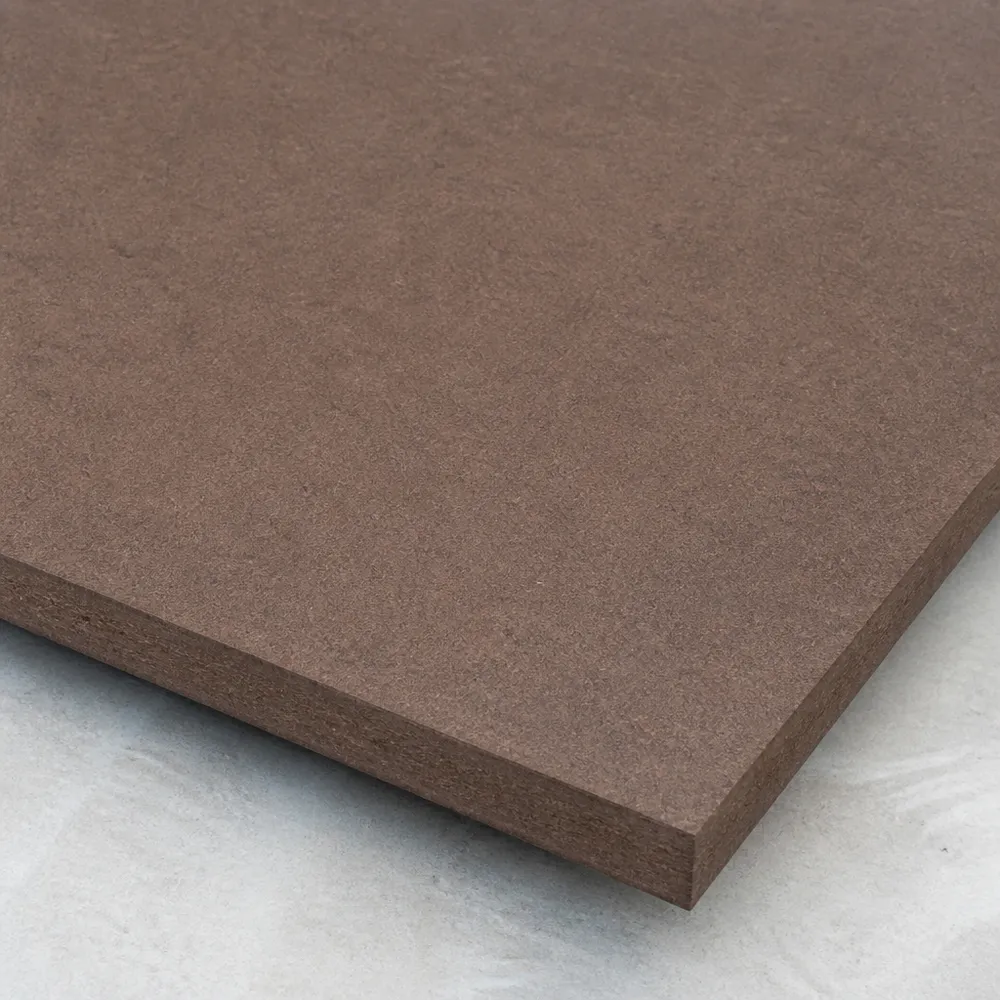
Treated with linseed oil or a similar resin system and heat-cured after pressing. The tempering process increases surface hardness, reduces moisture absorption, and improves resistance to surface abrasion.
Best-fit applications
Standard (Untempered) Hardboard
850–950 kg/m³ density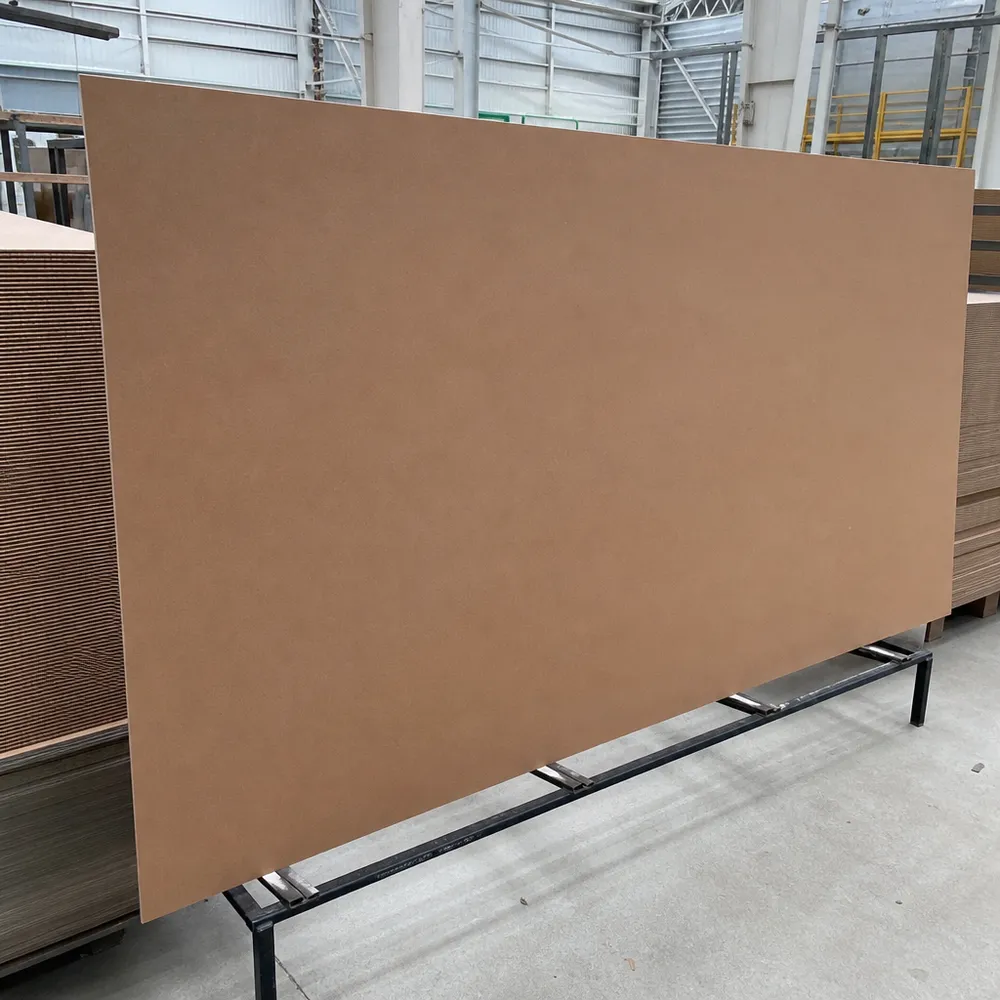
The surface is smooth and mechanically active — it takes paint, primer, and adhesive without surface preparation. This is the format that furniture manufacturers, cabinet shops, and interior fit-out contractors specify.
Best-fit applications
Quick Comparison
| Property | Tempered | Standard |
|---|---|---|
| Density | 950–1,000 kg/m³ | 850–950 kg/m³ |
| Surface treatment | Linseed oil / resin, heat-cured | Untreated, mechanically active |
| Moisture resistance | Higher | Standard |
| Paint / adhesive adhesion | Requires light sanding first | Direct application, no prep |
| Primary markets | Display, industrial, underlayment | Furniture, fit-out, NA & AU distribution |
Not sure which grade your market uses?
We produce both grades. Most of our North American and Australian buyers specify standard grade for furniture and fit-out supply chains; tempered grade moves in display, industrial, and underlayment applications. Tell us your downstream customer profile and we'll advise based on what we're shipping to similar markets.
Market Segments Where Masonite Board Moves Volume
The commercial logic for stocking masonite hardboard is straightforward: it's a high-reorder, specification-stable product that fits naturally into distribution businesses serving furniture, fit-out, and building products channels.
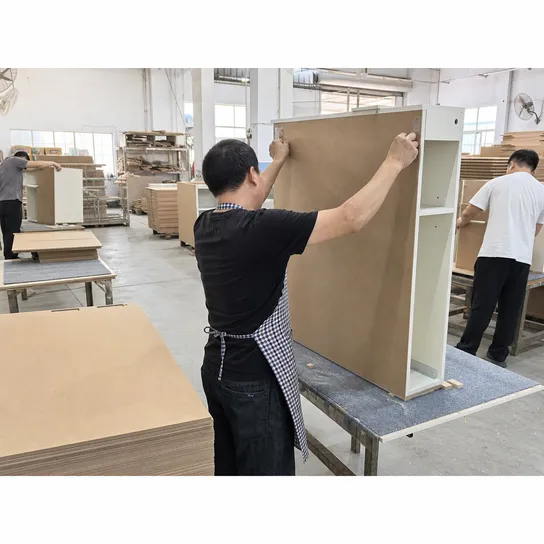
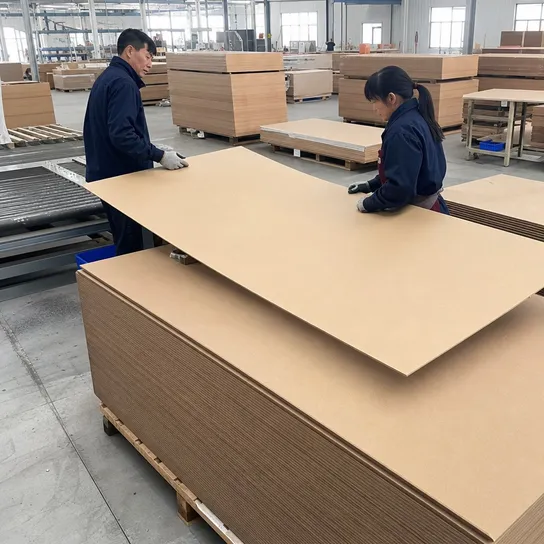
Furniture Manufacturing & Flat-Pack Supply Chains
Largest volume segmentCabinet backs and drawer bottoms are the primary applications. Furniture OEMs specify masonite hardboard because it's lighter and cheaper than plywood alternatives while meeting the surface and structural requirements for these non-load-bearing components.
Volume reference: A mid-size furniture manufacturer running 500 cabinets per week consumes roughly 1,000 masonite panels per week in cabinet backs alone.
For distributors supplying furniture OEMs, masonite board is a predictable, high-frequency reorder item — the kind of SKU that anchors a supply relationship because the manufacturer needs it consistently and doesn't want to qualify multiple suppliers for a commodity component.
Interior Fit-Out & Renovation Contractors
Project-based ordersUsed as a substrate for wall panels, ceiling tiles, and decorative overlays. The commercial pattern here is project-based: a contractor wins a fit-out contract, specifies materials, and places a single large order.
Surface quality matters: Contractors painting or laminating over masonite need a defect-free surface. Inconsistent sanding leaves marks through the finish — we've had buyers come to us specifically because their previous supplier's panels had visible sanding lines under paint. That's a warranty claim waiting to happen on a fit-out project.
Distributors who can supply consistent quality with short lead times capture this segment reliably.
Building Products Distribution — North America & Australia
Mature channelA mature channel with decades of established use in residential renovation — wall paneling, underlayment, and substrate applications. The distribution infrastructure is well-developed and the product is specified by name in renovation guides and contractor reference materials.
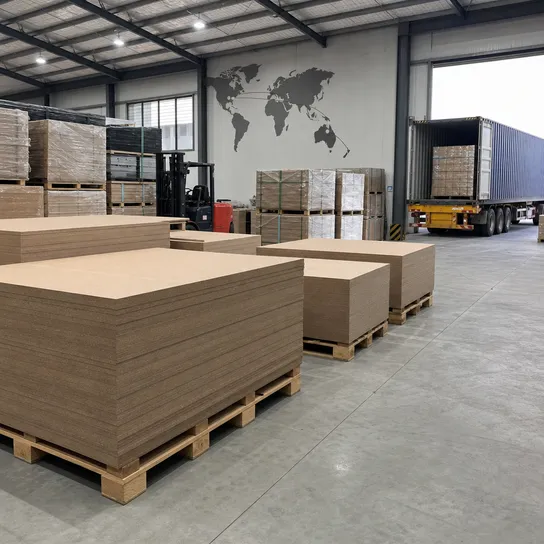
Order pattern: Buyers in this channel typically order in container quantities and turn inventory quickly because demand is predictable and specification-stable.
If you're entering or expanding in this channel, masonite board is a low-risk SKU with predictable demand.
Display, Retail Fixture & Point-of-Sale Manufacturing
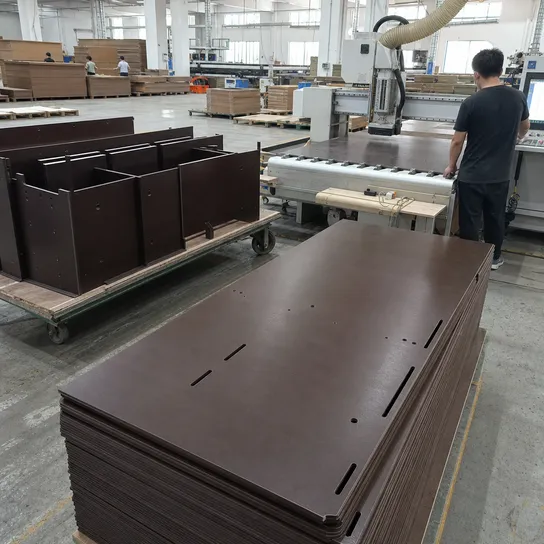
Tempered grade preferredUsed for backing panels, lightweight panel structures, and substrate layers in composite display units. Display manufacturers value the material's machinability — it cuts cleanly on CNC routers and holds a clean edge at thin gauges where MDF tends to chip.
Grade note: Tempered grade is the preferred specification for this segment because the harder surface resists denting and abrasion in display environments.
Display manufacturers typically order in smaller quantities than furniture OEMs but at higher frequency — a good fit for distributors who can supply mixed-pallet orders.
How We Produce Masonite Hardboard: The Process Details That Protect Your Margin
The category page covers our general hardboard manufacturing process — read the full process overview. Here's what's specific to masonite-spec production and why it matters for the quality your buyers receive.
Fiber Selection and Consistency
Stage 01 — RefiningWe use eucalyptus and poplar fiber, refined to a consistent fiber length before the forming stage. Masonite-spec panels require tighter fiber consistency than lower-density hardboard because the higher pressing density amplifies any variation in the fiber mat — a patch of coarser fiber in the mat produces a visible density variation in the finished panel that shows through paint or laminate. We run continuous fiber quality checks at the refining stage to catch this before it reaches the press.
Pressing Parameters and Batch Logging
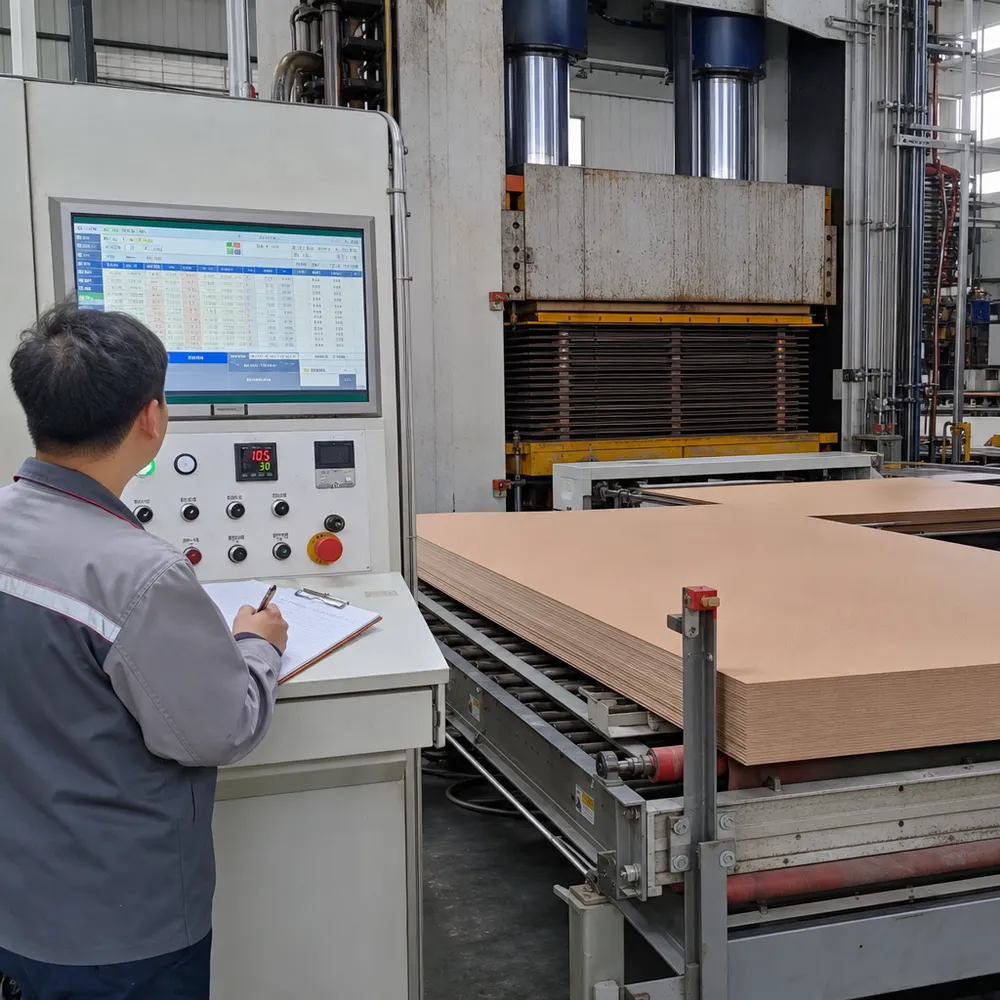
Stage 02 — Hot PressThe pressing parameters for masonite-spec hardboard run at higher pressure and temperature than standard hardboard to achieve the target density range. We log press parameters per batch — temperature, pressure, and dwell time — so if a density or surface quality issue surfaces downstream, we can trace it to the specific production run and identify whether it was a process deviation or a material issue. Most factories don't log at this level of detail; we do because it's the only way to run a meaningful corrective action process when something goes wrong.
Tempered Grade: Oil Treatment and Curing
Stage 03 — TemperingFor tempered grade, the oil treatment and curing step runs after pressing and initial sanding. The resin is applied uniformly across the panel surface and heat-cured in a controlled oven. Uneven resin application produces panels with inconsistent surface hardness — the failure mode that shows up when a buyer's customer reports that some panels in a batch are harder than others. We apply the resin by roller with calibrated application weight and verify cure temperature across the oven width.
Sanding, Trimming, and Outgoing Inspection
Stage 04 — FinishingSanding runs on calibrated wide-belt sanders targeting ±0.2mm thickness tolerance. After sanding, panels are trimmed to final dimensions and inspected before packing. Outgoing inspection covers:
- Thickness at multiple points
- Surface defect assessment
- Density verification by weight
- Formaldehyde emission testing for CARB P2 compliance
Every export batch ships with the CARB documentation package as standard for US-bound orders.
Production Traceability: Why Batch Logging Matters for Your Supply Chain
When a quality issue surfaces at your customer's site, the question is always: was it a process deviation or a material issue? Without per-batch logging of temperature, pressure, and dwell time, that question has no answer. With it, we can isolate the production run, review the parameters, and give you a root-cause response — not a generic apology. That's the difference between a supplier who can support your quality process and one who can't.
Customization Parameters: What We Can Adapt for Your Order
Standard masonite hardboard covers most commercial applications, but buyers building private-label supply chains or supplying into specification-driven markets often need adjustments. Here's what we can work with.
Custom Dimensions
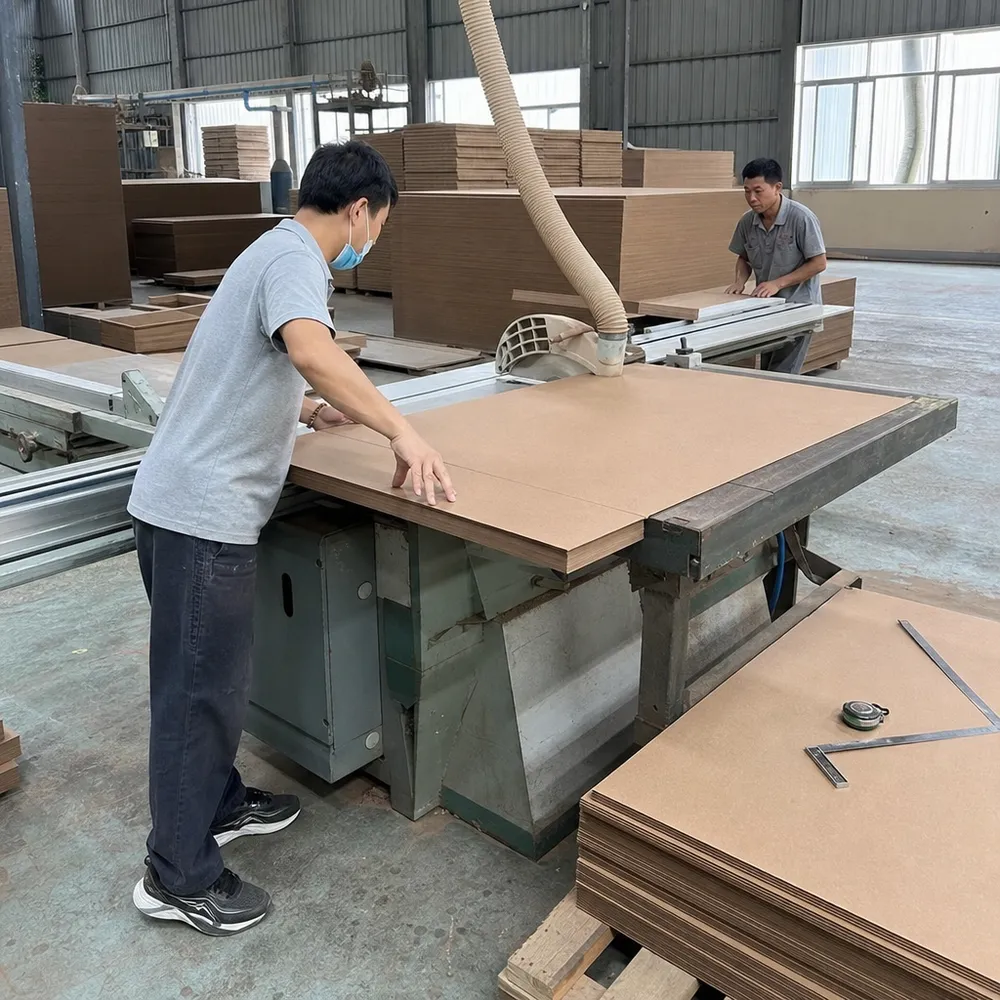
We cut to non-standard sizes on confirmed orders. Common requests include half-sheet formats (1220×1220mm), long panels for specific paneling applications, and narrow strips for furniture component supply.
No tooling cost — custom cutting is a scheduling and yield question. Minimum order quantities apply and vary by specification.
Custom Thickness
Beyond the standard range, we can produce to specific thickness targets within the practical hardboard range of 2.5mm to 8mm.
Surface Treatment Options
Beyond raw S1S and S2S, we can supply masonite board with a factory-applied primer coat for buyers whose downstream customers need a paint-ready surface. Primed masonite reduces on-site labor for contractors and furniture manufacturers — your customers skip the priming step, which on large panel quantities adds up to meaningful time savings.
Minimum quantities apply for primed surface treatment. See also: Primed Hardboard.
Formaldehyde Specification
CARB P2 is our standard baseline. E1 and E0 specifications are available for buyers supplying into markets with stricter indoor air quality requirements.
Japan, Germany, and Scandinavian markets frequently specify E0. The resin system is adjusted at the production stage — this isn't a post-production treatment.
Private Label and OEM Marking
Bundle marking, custom packing lists, and private-label documentation are available for buyers building their own brand around our production.
We've run OEM programs for distributors in North America and Europe who supply masonite board under their own brand.
Tempered Grade on Custom Specifications
Tempered masonite hardboard can be produced to custom dimensions and thickness targets.
Discuss Your Customization Requirements
Most customization requests come down to dimensions, thickness, surface treatment, and emission specification. If your requirement falls outside the parameters above, tell us what you're trying to achieve — we'll tell you whether it's feasible and what the production implications are.
OEM and private-label programs are handled directly with our export team. We've run these programs for buyers in North America and Europe and can walk you through the documentation and marking process.
Compliance Documentation for Your Import Market
Masonite board moves into markets with specific import documentation requirements, and documentation gaps cause customs delays that cost you time and margin. Here's what we include as standard and what's available on request.
US Market
CARB Phase 2 compliance documentation is included as standard with all US-bound shipments. The compliance is built into the resin system at the production stage — not tested at the end and certified after the fact. Third-party test reports from SGS or Bureau Veritas are available on request if your buyers require independent verification.
EU Market
CE declaration of conformity is included for EU shipments. E1 formaldehyde emission specification is available as a production option for buyers supplying into EU markets where E1 is the standard requirement. E0 is available for buyers supplying into markets with stricter requirements.
Australian Market
Australia's AS/NZS 1859 standard for reconstituted wood-based panels covers formaldehyde emission requirements. Our CARB P2 compliance meets the emission limits required for Australian import — buyers supplying into the Australian market can use the CARB documentation as the basis for compliance confirmation.
FSC Chain-of-Custody
FSC documentation is available for buyers with sustainability sourcing requirements or buyers supplying into markets where FSC certification is a procurement gate. The FSC chain-of-custody covers the wood fiber in our panels back to certified forest sources.
Quality Management System
Our quality management system certification covers the production process. Audit reports are available on request.
Exporting since 2008
We've been exporting to these markets since 2008 and know what documentation gaps cause delays at customs. The paperwork is prepared to market standard — you don't need to chase it.
Standard Export Documentation — Included with Every Shipment
Container Loading and Export Logistics
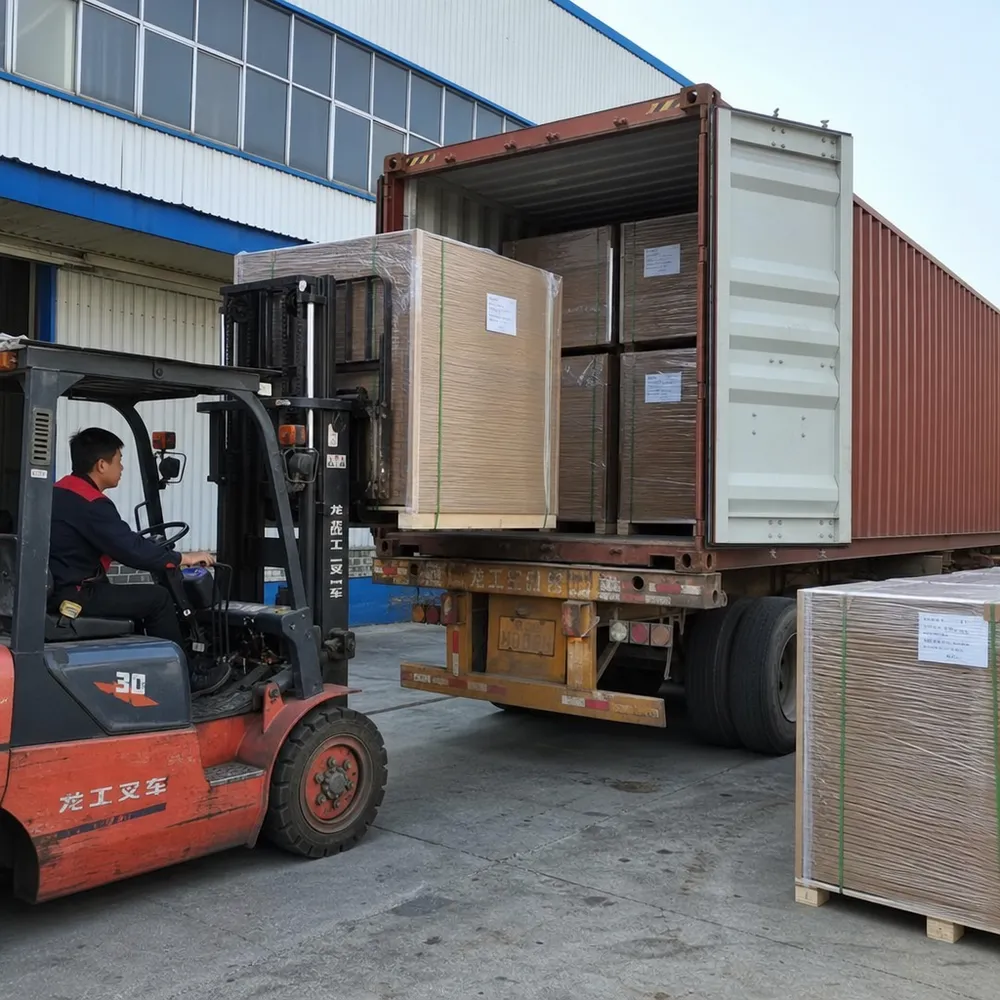
Masonite hardboard ships efficiently in standard containers. Standard 1220×2440mm panels stack flat and load to high cubic utilization in 20HQ and 40HQ containers. We provide loading plans with each shipment so your receiving team knows the bundle configuration and stack count before the container arrives.
Packaging for Ocean Transit
- Panels bundled and strapped, edge-protected with corner boards, wrapped in moisture-resistant film
- Each bundle marked with product specification, quantity, batch number, and destination port
- Target 5–9% moisture content at dispatch — panels that arrive within that range and are stored flat in covered conditions will stay flat
- Loading plans provided with each shipment — your receiving team knows bundle configuration and stack count before the container arrives
Transit Times from Xuzhou
We route through Qingdao, Shanghai, or Lianyungang depending on your destination and schedule.
Mixed-Product Consolidated Loads
For mixed-product orders — masonite hardboard combined with other panel types from our range — we coordinate consolidated loads to reduce your per-unit freight cost.
Most buyers who start with masonite hardboard expand their sourcing to standard hardboard sheet, primed hardboard, or other panel categories once they've seen how we handle documentation and logistics.
Standard Export Documentation
Every shipment includes the full documentation set required for your destination market. No chasing paperwork — it's prepared to market standard before the container leaves.
Masonite Hardboard vs. Sibling Products: Choosing the Right Format
Masonite hardboard is one of six formats in our hardboard range. Here's how it positions relative to the others so you can confirm you're looking at the right product — or find the format that better fits your application.
Hardboard Sheet
Same material, same density range, but without the masonite-spec surface quality emphasis. If your buyers aren't specifying "masonite" by name and just need a standard hardboard panel, hardboard sheet is the right starting point.
Primed Hardboard
Masonite-spec hardboard with a factory-applied primer coat. If your downstream customers are painting the panels, primed hardboard saves them the priming step and reduces their labor cost — a margin argument you can make when selling to contractors or furniture manufacturers.
3mm Hardboard
The thin-sheet format. If your application is specifically 3mm — drawer bottoms, display fixtures, substrate laminating — the 3mm product page has the specific parameters for that thickness.
Hardboard Paneling
Cut to paneling dimensions for interior cladding. If your buyers are fit-out contractors or building products distributors supplying wall systems, paneling is the right format.
Hardboard Furniture Board
Optimized for furniture OEM supply — cabinet backs and drawer bottoms at the thicknesses and surface specifications furniture manufacturers specify.
Not Sure Which Format Fits?
Send us your downstream customer profile and the applications they're running — we'll recommend the format and specification that matches what we're shipping to similar buyers today.
Frequently Asked Questions
Answers to the specification and procurement questions we hear most often from importers, distributors, and OEM buyers.
Masonite is a trade name that became a generic descriptor for a specific type of hardboard — typically a smooth-faced, high-density fiberboard panel in the 3mm to 6mm thickness range, suitable for painting, laminating, or direct use as a backing panel. In practice, masonite hardboard and standard hardboard are the same material category; the distinction is in the surface quality specification and the market terminology. Buyers in North America and Australia who specify "masonite board" are typically asking for a smooth-faced hardboard panel meeting the density and surface quality standards associated with the original Masonite product. We manufacture to those specifications.
Tempered masonite hardboard is treated with a resin (typically linseed oil-based) and heat-cured after pressing. The tempering process increases surface hardness, reduces moisture absorption, and improves abrasion resistance — density typically runs 950–1000 kg/m³. The trade-off is that the dense, oil-treated surface requires light sanding or surface preparation before painting or adhesive bonding.
Untempered (standard) grade runs at 850–950 kg/m³ and has a more porous surface that takes paint and adhesive without preparation.
Yes. CARB P2 compliance is our standard baseline across the masonite hardboard range — it's built into the resin system at the production stage. We include the CARB documentation package as standard with US-bound shipments. Third-party test reports from SGS or Bureau Veritas are available on request if your buyers require independent verification.
3mm and 3.2mm are the standard thicknesses for cabinet backs in flat-pack and assembled furniture. 3mm is the most common in cost-sensitive applications; 3.2mm is specified where slightly more rigidity is needed or where the cabinet back is visible and needs to resist flex under load. For drawer bottoms, 3mm is standard for most residential furniture; commercial or heavy-duty applications sometimes specify 4mm.
We hold 3mm, 3.2mm, and 4mm as standard production thicknesses with shorter lead times than non-standard dimensions.
Standard MOQ is one 20HQ container for standard specifications. For custom dimensions, custom surface treatments, or non-standard thicknesses, MOQ is higher — the specific quantity depends on the specification. Contact us with your target specification and we'll confirm the MOQ and lead time.
Standard masonite hardboard is not suitable for exterior or high-humidity applications — it will absorb moisture and swell. Tempered grade has better moisture resistance than standard grade but is still not rated for exterior exposure. For exterior or wet-area applications, film-faced plywood or exterior-grade panels with moisture-resistant resin are the appropriate materials.
If your project requires a hardboard-format panel for a semi-exposed application, contact us to discuss moisture-resistant surface treatment options.
Source Masonite Hardboard Direct from the Factory
Manufacturing hardboard and engineered wood panels since 2008 — factory-direct pricing, consolidated procurement, and complete documentation for your import market.
Xuzhou QD Wood Industry Co., Ltd.
Manufacturing since 2008 · Tongshan District, Xuzhou, Jiangsu Province
The masonite hardboard range is part of a broader panel portfolio. Most buyers who source masonite board from us also run standard hardboard sheet, primed hardboard, or other panel categories through the same supply chain — which simplifies procurement and consolidates your documentation requirements.
Direct Contact
What to Include in Your Quote Request
If you're evaluating masonite hardboard suppliers, send us your target specification and we'll come back with a detailed quote, the relevant certification documentation, and a loading plan so you can calculate your landed cost accurately before committing.
Tempered or standard; S1S or S2S; smooth or textured face
Standard range 2mm–12mm; specify tolerance requirements if critical
CARB P2, E0, E1, or E2 — specify your destination market requirement
Determines applicable certifications and documentation package
Enables accurate pricing tiers and loading plan calculation
Building Out a Distribution SKU Mix?
New to this product category or building out a distribution SKU mix? Tell us your target market and the applications your customers are running — we'll suggest the formats and thicknesses that move in that segment based on what we're shipping to similar markets today.
Ready to Request a Quote?
Send your specification, destination market, and volume estimate. We'll respond with a detailed quote, certification documentation, and a loading plan for accurate landed cost calculation.
Related Hardboard Products
Other panel formats in the hardboard range — most buyers consolidate multiple SKUs through the same supply chain.
Hardboard Sheet
Standard hardboard sheet in full panel dimensions for general industrial and construction applications.
View productHardboard Paneling
Hardboard paneling formats for wall lining, decorative interior applications, and retail display systems.
View productPrimed Hardboard
Factory-primed surface finish for direct-to-paint applications — reduces downstream processing steps for your customers.
View product3mm Hardboard
Thin-gauge 3mm hardboard for drawer bottoms, cabinet backs, and lightweight panel applications requiring precise thickness.
View product