

HPL Plywood Cabinet Board — Factory-Direct from QDPlywood.com
HPL plywood cabinet board built for commercial cabinet production — plywood structural core, high-pressure laminate face, ready for your downstream cutting and assembly line.
Consistent thickness tolerance (±0.2mm), CARB P2 and FSC certified, custom HPL decors and panel dimensions available on confirmed orders. No trading company markup.
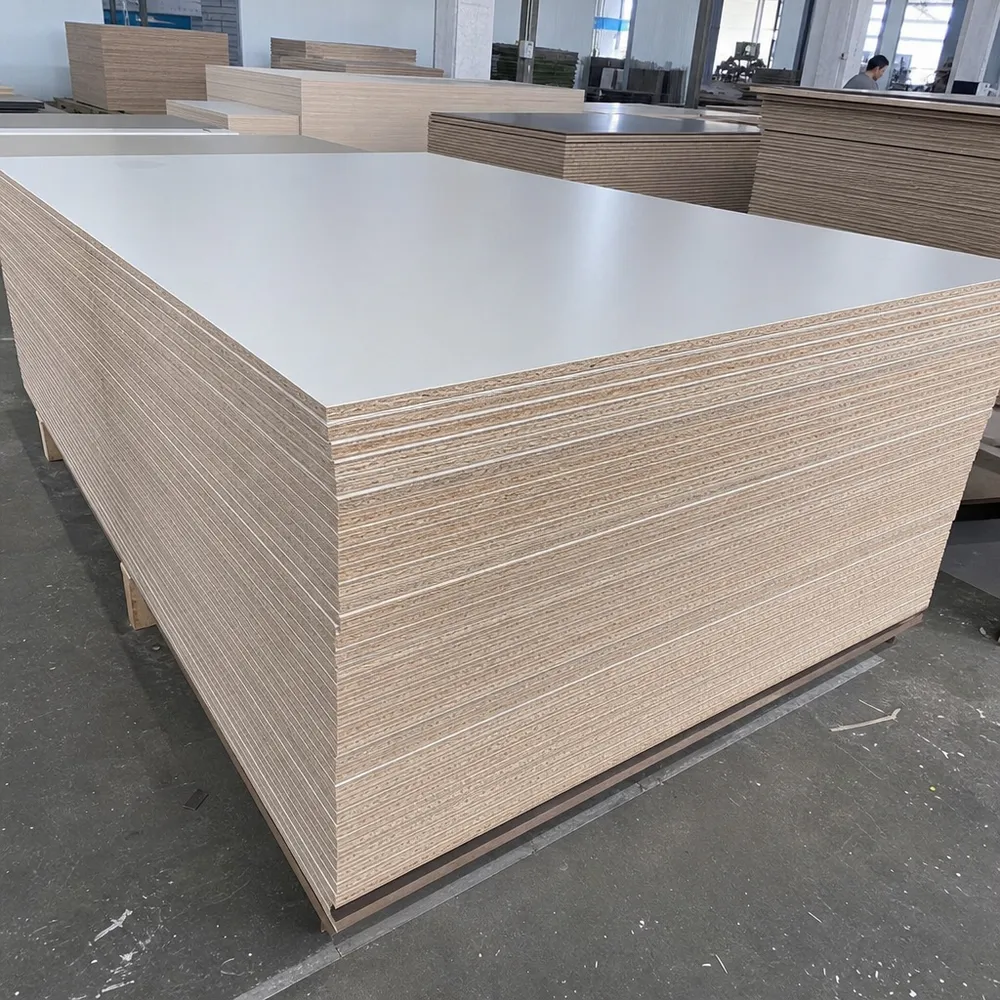
What HPL Plywood Cabinet Board Is — and Where It Sits in the HPL Range
HPL plywood cabinet board is a composite panel: a multi-layer plywood core bonded under heat and pressure with a high-pressure laminate (HPL) face on one or both sides.
The plywood core gives you the structural rigidity and screw-holding strength that cabinet carcasses need. The HPL face delivers the surface hardness, scratch resistance, and moisture resistance that cabinet interiors and exteriors demand in commercial use environments.
Where This Product Sits in Our HPL Range
The distinction matters because cabinet board and countertop board carry different structural requirements. Cabinet carcasses typically run 16–18mm panels with balanced construction to prevent bow — a panel that's HPL-faced on one side only will cup over time if the core moisture content isn't controlled tightly.
Single-Face HPL
HPL face on one side with a balancing backer on the reverse. Backer is not optional — skipping it causes warped cabinet boxes over time.
Double-Face HPL
HPL on both surfaces. Used for applications where both faces are visible — open shelving, glass-door cabinets, and exposed interior panels.
Buyer note: We've seen buyers skip the backer to save cost and then deal with warped cabinet boxes six months after installation. The backer is not optional if you're building for longevity.
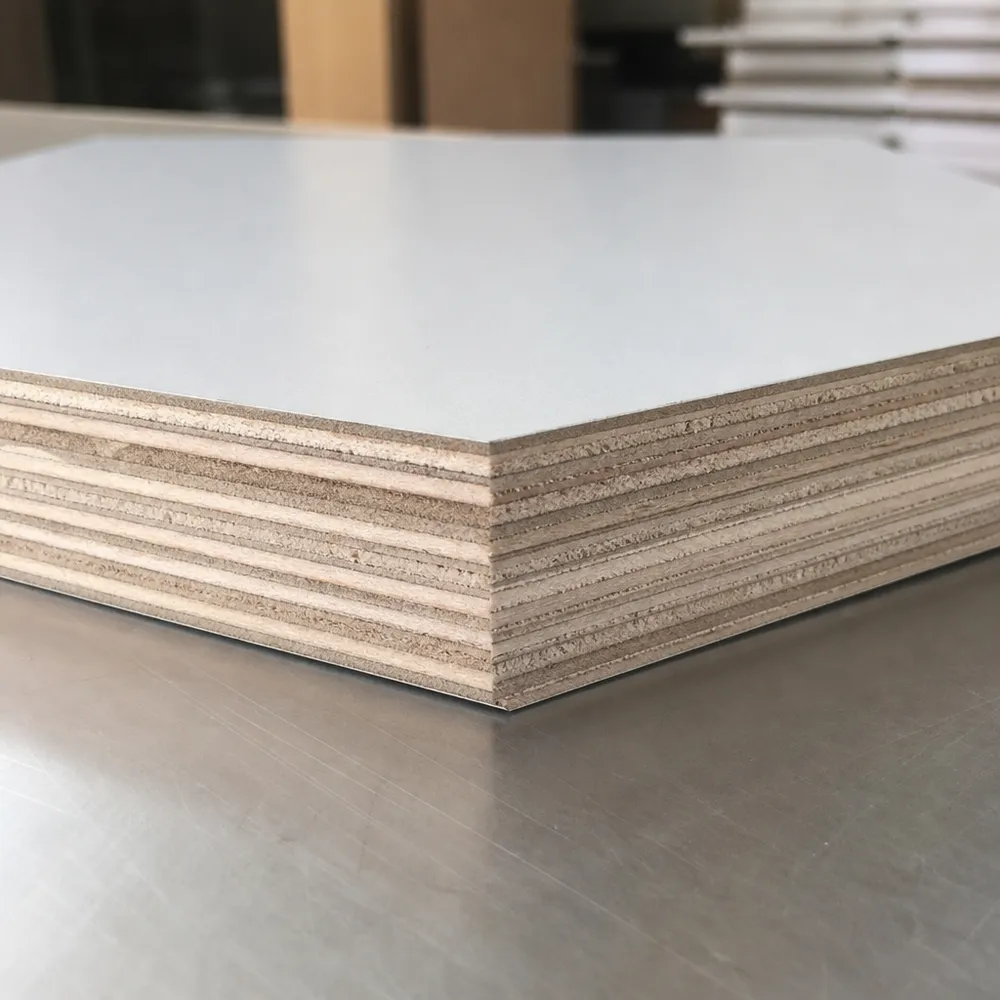
Calibrated for these applications
Related HPL Plywood Products
HPL Cabinet Board Specifications
The table below covers the standard production parameters for our HPL plywood cabinet board. Actual specifications are confirmed at order stage — contact us with your target application and we'll specify the right configuration.
Standard Production Parameters
Specifications shown are industry-standard values for this product type. Actual specifications may vary by order configuration. Contact us for detailed product data sheets and sample confirmation.
Thickness Tolerance ±0.2mm
CNC cabinet assembly requires consistent panel thickness. Our ±0.2mm tolerance means your dado joints, dowel holes, and cam-lock fittings align without shimming or rework.
Core Veneer Count by Thickness
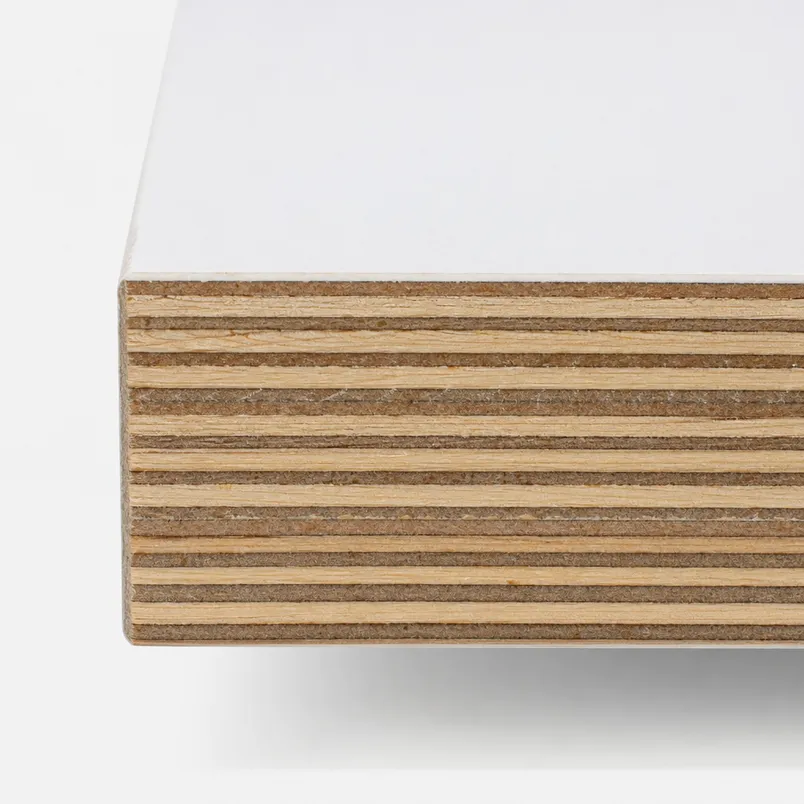
More plies means better screw-holding and reduced telegraphing. Our 18mm cabinet board runs 9-ply; 25mm runs 11-ply. Thinner cores use fewer plies but maintain cross-grain balance.
Glue Grade: MR vs WBP
MR glue is standard for interior dry environments. Specify WBP if the cabinet will be installed in kitchens with steam exposure, laundry rooms, or any area with intermittent moisture contact.
Emission Standards: E0 / E1 / CARB P2
For residential cabinetry in North America, CARB P2 is the minimum. E0 is required for projects with strict indoor air quality specs. Specify your target market at order stage so we configure the correct adhesive system.
Custom thickness and panel size
We produce non-standard thicknesses (e.g., 12mm, 20mm) and oversized panels on confirmed orders. Minimum order quantities apply. Contact us with your project specs for a feasibility check.
HPL Surface Finishes for Cabinet Boards
The HPL face is where the design lives. We supply cabinet boards with a wide range of surface finishes — from flat matte solids to deep woodgrain textures. All finishes are bonded under heat and pressure, not applied as a coating, so they won't peel or delaminate under normal cabinet use.
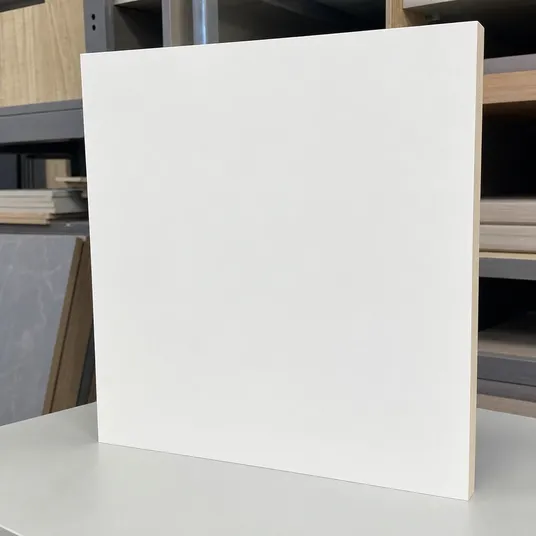
Matte Solid
Low-sheen, fingerprint-resistant surface. The most common choice for modern kitchen and office cabinetry. Available in white, grey, black, and custom RAL colors.
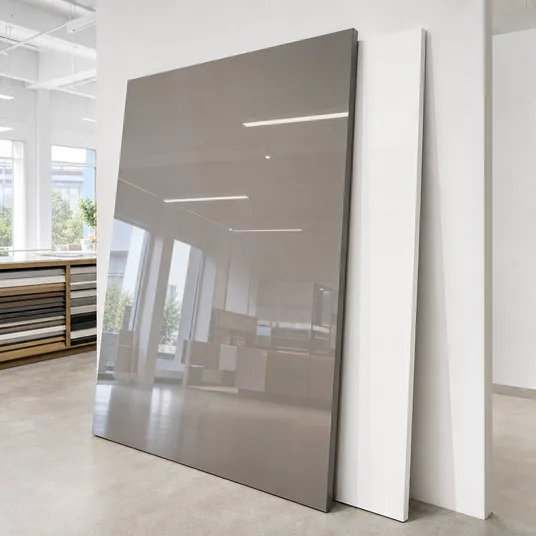
Gloss Solid
High-reflectance finish that mimics lacquered cabinetry at a fraction of the cost. Requires careful handling during installation to avoid micro-scratches.
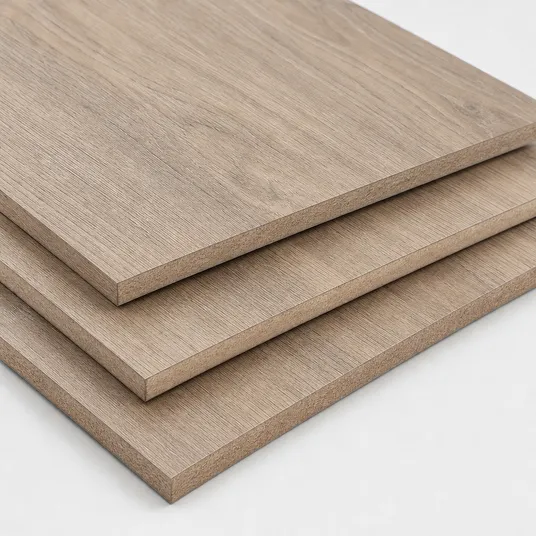
Woodgrain Texture
Embossed grain pattern synchronized with the printed wood decor. Available in oak, walnut, teak, wenge, and other species. Consistent repeat across panels.
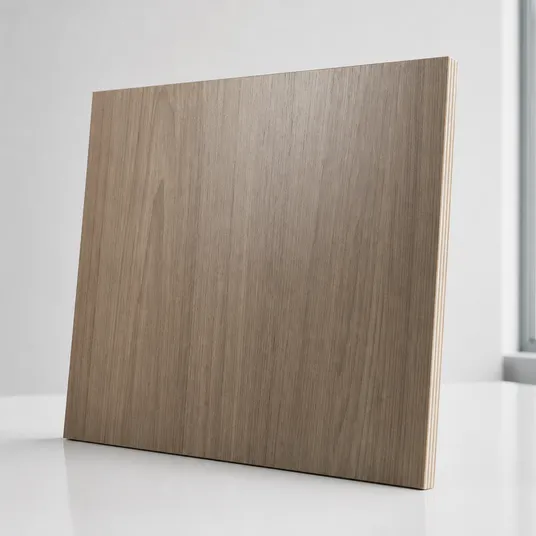
Satin / Silk
Mid-point between matte and gloss. Soft sheen that reads as premium without the maintenance demands of full gloss. Popular in hospitality and high-end residential fit-outs.
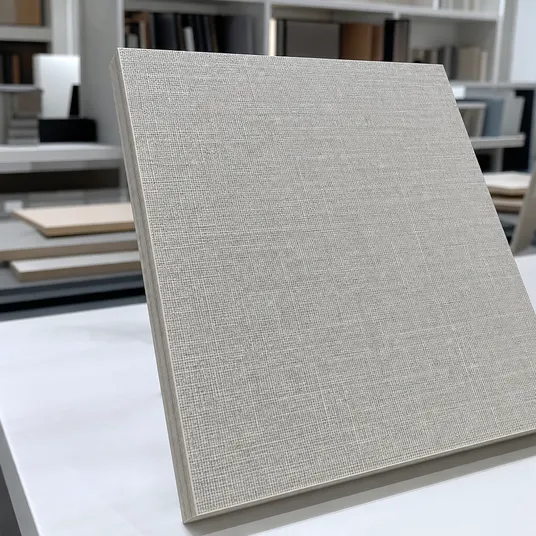
Textured / Linen
Tactile surface with a woven or linen-like emboss. Hides minor surface marks well and adds visual depth. Common in commercial cabinetry and retail display units.
Custom Decor Available
Custom / Bespoke Decor
Brand-specific colors, proprietary patterns, or matched decors available on volume orders. We work with HPL suppliers to source or produce custom laminates for large projects.
Choosing the Right Surface Finish
For kitchens
Matte or satin finishes are the practical choice — they handle daily contact, steam, and cleaning without showing wear. Gloss is viable for door fronts only, not carcass interiors.
For commercial fit-outs
Textured and woodgrain finishes perform well in high-traffic environments. They conceal minor surface damage and maintain appearance over longer service cycles.
For design-led projects
Satin and custom decors give designers the most flexibility. Consistent color and texture across large panel runs is achievable when sourced from a single production batch.
Why HPL Plywood Outperforms Other Cabinet Substrates
Cabinet builders have options: MDF, particleboard, melamine-faced board, and HPL plywood. Here's how HPL plywood stacks up on the metrics that matter for cabinet longevity and production efficiency.
| Property | HPL Plywood | MDF | Particleboard | Melamine Board |
|---|---|---|---|---|
| Screw-holding strength | Excellent | Good | Poor | Poor–Fair |
| Moisture resistance | High (WBP option) | Low–Medium | Very low | Low |
| Surface durability | Very high | Medium | Low | Medium |
| Weight (per panel) | Light–Medium | Heavy | Medium | Medium |
| Edge machining | Clean, stable | Good but heavy | Chips easily | Chips at edges |
| Warp resistance | High (with backer) | Medium | Low | Low–Medium |
| Surface finish options | Wide range | Paintable | Limited | Limited |
| Cost | Medium–High | Medium | Low | Low–Medium |
Ready to machine
HPL plywood arrives pre-finished. No painting, no post-processing. Cut, edge-band, drill, and assemble. That's the full production sequence.
Surface that lasts
HPL is rated for 10,000+ abrasion cycles. Cabinet interiors and door fronts see daily contact — HPL handles it without surface degradation over the product's service life.
Lighter than MDF
A standard 18mm HPL plywood panel weighs roughly 25–30% less than equivalent MDF. For tall cabinet runs and upper wall units, that weight difference matters for installation and hardware load.
Screw retention at edges
Plywood's cross-grain structure holds screws and cam-locks at panel edges — the weakest point in particleboard and MDF. Cabinet joints stay tight over years of use.
The Core Construction Decision: Why Plywood, Not MDF or Particle Board
Cabinet manufacturers sourcing HPL-faced panels have three substrate options: plywood core, MDF core, or particle board core. Each has a different commercial profile, and the choice affects your downstream customer's experience and your warranty exposure.
Fastener Retention at Critical Points
Plywood core holds screws and cam locks significantly better than MDF or particle board — the cross-grain veneer construction distributes fastener load across multiple layers rather than concentrating it in a single fiber direction. In cabinet assembly, this matters at hinge mounting points and drawer slide attachment points, which are the two locations where cabinet failures most commonly originate.
Disassembly and Reinstallation Tolerance
A plywood-core cabinet box that's been assembled and disassembled twice — common in commercial fit-out projects where cabinets are installed, adjusted, and re-installed — still holds its fasteners. An MDF-core panel in the same situation starts to show fastener pull-through on the second disassembly.
Moisture Performance in Kitchen and Bathroom Applications
Plywood core, with its veneer construction and WBP glue option, handles humidity cycling better than MDF. MDF swells at the edges when moisture penetrates — and in a kitchen environment, moisture penetration at the cabinet base and around the sink area is not a hypothetical.
Glue Specification by Application
Choosing the Right Core for Your Market Segment
Commercial & Hospitality Projects
Commercial kitchen fit-outs, hospitality projects, or laboratory furniture — where the cabinet is expected to perform for 10–15 years under daily use. The plywood core is the right call.
Kitchen & Bathroom Cabinetry
Any application near water or humidity cycling. WBP phenolic glue is standard on these orders. Plywood's edge moisture resistance outperforms MDF in real-world kitchen environments.
Budget Residential Cabinetry
Where the end customer is price-sensitive and the warranty period is short, MDF-core HPL may be the better commercial fit. We manufacture both — the right answer depends on your market segment.
HPL Face: Surface Performance That Protects Your Downstream Margin
The HPL face is where the commercial value of this product lives for your downstream customers — and where your warranty exposure concentrates. We source HPL from qualified laminate suppliers and run the bonding process through our hot press system with controlled temperature and pressure profiles specific to HPL lamination.
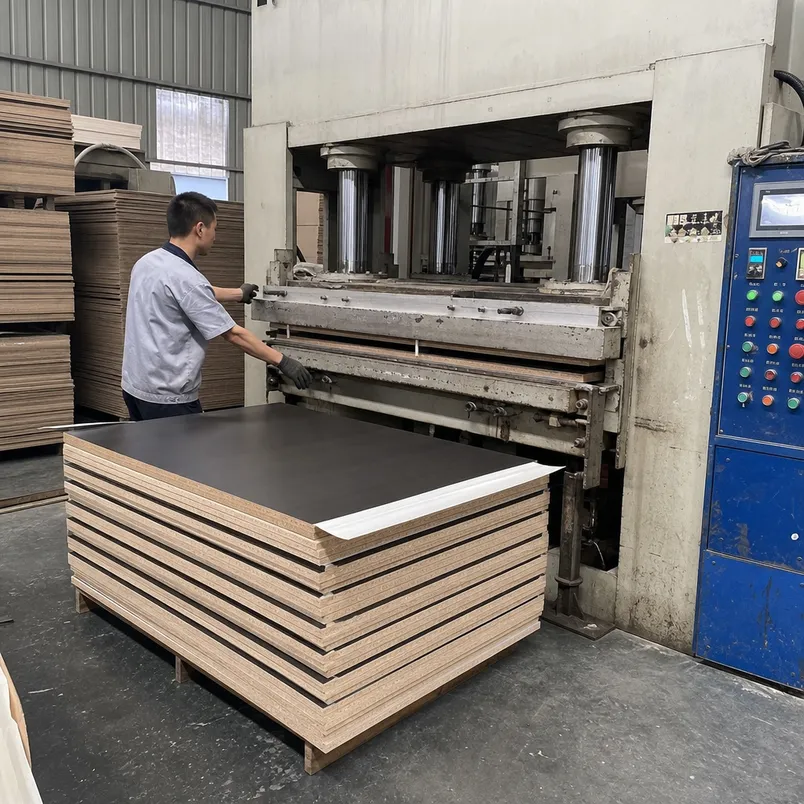
Why Delamination Happens — and How We Prevent It
HPL delamination from the substrate is the most common failure mode in HPL cabinet panels, and it almost always traces back to one of three causes:
HPL Face Thickness Options
Suitable for vertical surfaces and interior cabinet faces. Lighter weight, lower cost per panel.
Common choice for kitchen cabinet doors — enough surface hardness to resist daily contact without the weight penalty of compact grade.
Used for horizontal surfaces, door panels, and applications with higher impact exposure. Maximum surface durability.
Surface Finish Options
For buyers building a branded cabinet line, we can source specific HPL decors from major laminate manufacturers to match your design specifications.
Scratch & Abrasion Resistance
HPL passes standard abrasion resistance tests (Taber abrasion, EN 438 surface quality standards). These are the properties that reduce warranty claims and support premium pricing in your downstream market.
Chemical Resistance
Resists common household chemicals — relevant for kitchen environments where cleaning agents, cooking oils, and moisture are daily realities. Tested to EN 438 chemical resistance standards.
Ready to Specify Your HPL Surface Finish?
Tell us your target application, thickness requirement, and decor preference. We'll confirm availability and lead time from our qualified laminate supplier network.
Market Segments Where HPL Cabinet Board
Generates Repeatable Volume
Three buyer segments account for the majority of HPL cabinet board volume. Each has distinct specification requirements, order patterns, and price sensitivity — understanding the differences helps you position the product correctly in your market.
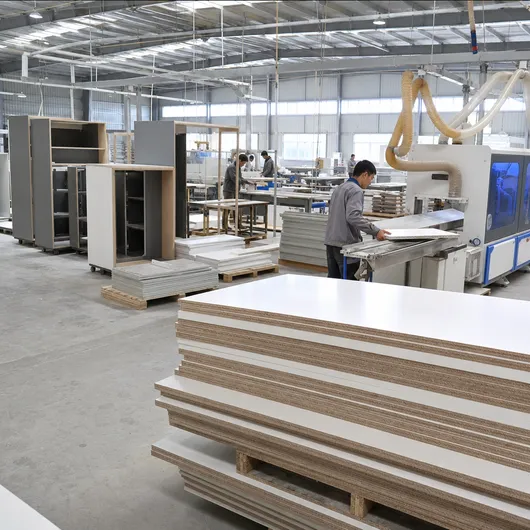
Kitchen Cabinet Manufacturing and Distribution
Kitchen cabinet manufacturers are the primary buyer segment for HPL plywood cabinet board. A mid-size factory running 50–100 kitchen sets per month consumes significant panel volume — carcass panels, door panels, shelving, and drawer boxes all draw from the same panel stock. For distributors supplying cabinet manufacturers, HPL cabinet board is a high-frequency reorder SKU: once a manufacturer qualifies a panel specification, they reorder consistently as long as the quality holds.
The kitchen segment also drives the most customization demand. Cabinet manufacturers want specific HPL decors that match their door face materials, specific panel dimensions that minimize cut waste on their CNC lines, and specific formaldehyde emission certifications for the markets they sell into.
Certification coverage for this segment:
CARB P2 is the gate for the US market; E1 or E0 covers European and Australian requirements. We carry both certifications — your customers can source a single panel specification that clears customs in multiple markets.
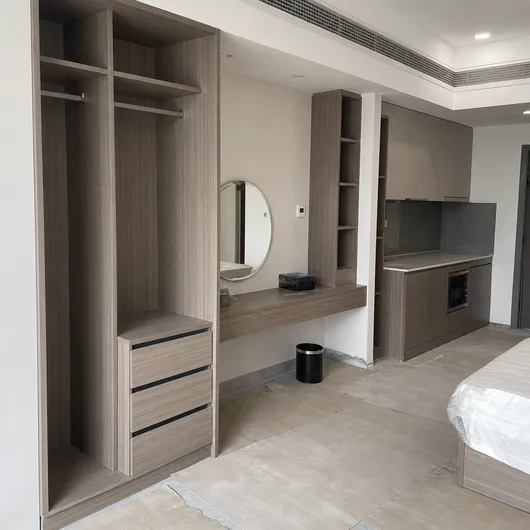
Commercial Fit-Out and Contract Furniture
Commercial fit-out projects — office kitchens, hotel room furniture, retail display fixtures, healthcare cabinetry — generate large single-order volumes with defined specifications. A hotel room furniture package for a 200-room property might specify 18mm HPL cabinet board for all wardrobe and vanity carcasses, with a specific HPL decor matched to the interior design scheme. That's a substantial panel order with a clear specification, and it repeats across the property developer's portfolio if the product performs.
The commercial fit-out segment values consistency above price. A contractor who has specified a particular HPL decor and panel thickness for a project cannot substitute a different product mid-installation — the visual and dimensional consistency has to hold across the entire order.
Our batch-controlled production process and ±0.2mm thickness tolerance are directly relevant here: your contractor customers can run panels through their CNC cutting equipment without recalibrating between bundles.
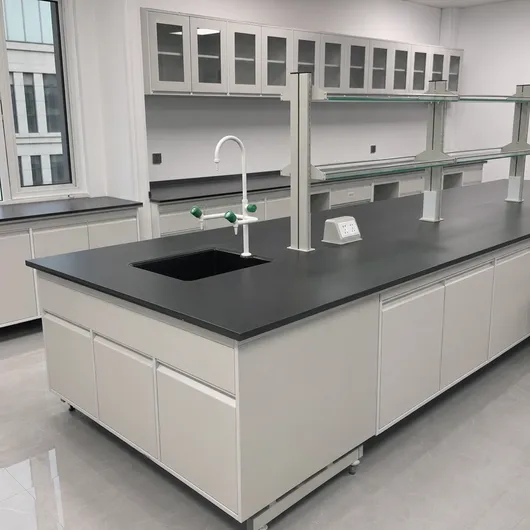
Laboratory and Institutional Furniture
Laboratory furniture — workbenches, storage cabinets, fume hood surrounds — uses HPL cabinet board for its chemical resistance and cleanability. The specification for laboratory furniture typically calls for compact HPL (1.0mm face) on horizontal surfaces and standard HPL on vertical surfaces, with WBP core construction throughout.
This is a smaller volume segment than kitchen cabinetry, but it commands premium pricing and has low price sensitivity — laboratory furniture buyers are specifying for performance, not for cost.
Institutional applications (school furniture, healthcare storage, government office fit-outs) follow a similar pattern: defined specifications, procurement through tender processes, and multi-year supply relationships once a supplier is qualified.
This segment has grown steadily for our HPL product line over the past several years — worth building into your product range if you're targeting institutional buyers.
Customization Parameters for
HPL Cabinet Board Orders
HPL plywood cabinet board is one of the more customizable products in our range because the two main components — the plywood core and the HPL face — can each be specified independently. Below are the parameters you can define at order stage.
Core Customization
15mm, 16mm, 18mm, 25mm standard. Other thicknesses available on confirmed orders with minimum volume.
Standard 1220×2440mm. Custom sizes available — specify your CNC cutting layout and we'll optimize panel dimensions to minimize your cut waste.
CARB P2, E1, or E0. Specify the target market and we'll confirm the appropriate certification.
HPL Face Customization
We can source specific HPL decors from major laminate suppliers to match your design specifications. Send us the decor reference and we'll confirm availability and lead time.
Custom HPL decors require a minimum order to justify the laminate sourcing and press setup. Standard decors (solid whites, grays, woodgrain basics) are available at lower minimums. Contact us with your target volume and decor requirements — we'll confirm what's achievable at your order size.
OEM and Private-Label Options
If you're building a branded cabinet panel line, we can produce panels with your brand marking on the packaging and documentation. OEM and private-label options are available for qualified buyers.
Lead time from specification confirmation to first production sample: 15–20 working days
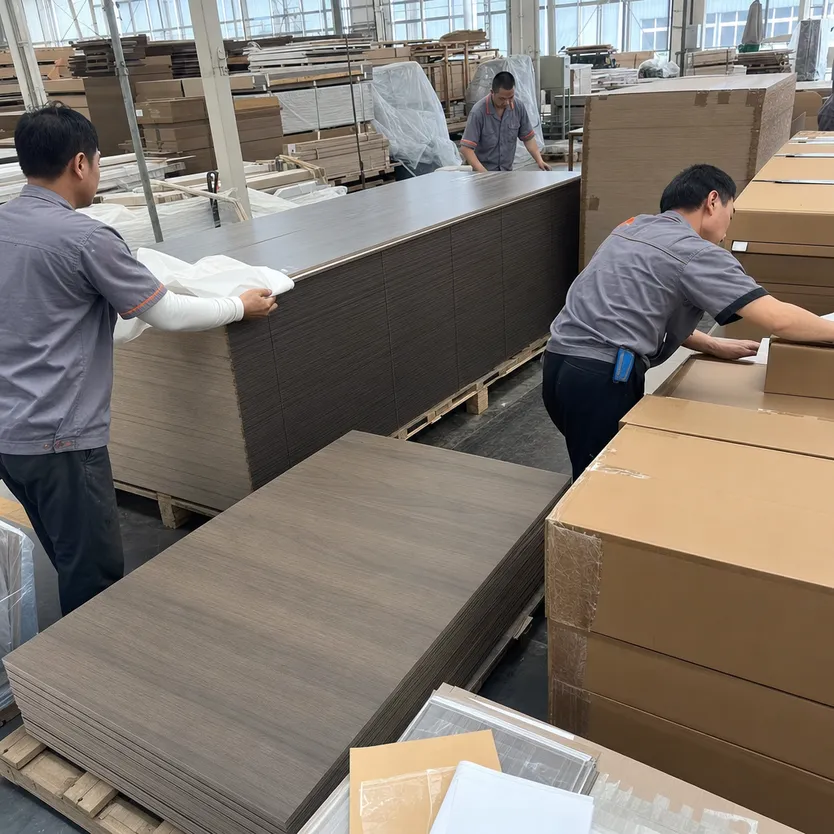
Production Process: How We Bond HPL to Plywood Without Delamination Risk
The manufacturing sequence for HPL cabinet board involves more steps than standard plywood production, and each step has a specific failure mode it's designed to prevent.
Plywood Core Production
The plywood core is produced through our standard veneer layup and hot press process — the same process used for all our commercial plywood. Core panels are sanded to calibrated thickness (±0.2mm) before moving to the HPL lamination line. The sanding step is not just for flatness; it opens the wood fiber surface to improve adhesive penetration.
Moisture Content Verification
We check moisture content of the core panel before lamination. A core panel that's outside the 8–12% moisture range goes back to conditioning, not forward to the press. Bonding HPL to a panel that's too wet or too dry produces a panel that looks fine at the factory but develops stress at the glue line over time.
HPL Lamination Press
The HPL lamination press runs at controlled temperature and pressure with a defined dwell time calibrated to the HPL thickness and adhesive system. We use a urea-formaldehyde or melamine-formaldehyde adhesive system depending on the emission specification — the CARB P2 and E0 specifications require the lower-emission melamine system. Press parameters are logged per batch.
Conditioning Hold Before Trimming
After pressing, panels go through a conditioning period before trimming and sanding. Releasing panels from the press immediately and cutting them right away is a shortcut that causes edge delamination as the panel stress equalizes.
Learned from experience: A batch of panels that looked perfect off the press showed edge lifting within two weeks. The fix was adding a 24-hour conditioning hold before trimming, which we've run as standard ever since.
Final Inspection
Final inspection covers HPL adhesion (cross-cut test and visual inspection for edge lifting or blistering), surface quality (scratch, stain, and visual defect assessment), thickness measurement at multiple points, and formaldehyde emission testing for certified orders. Panels that don't pass the adhesion check are pulled — they don't get downgraded and shipped, they get rejected.
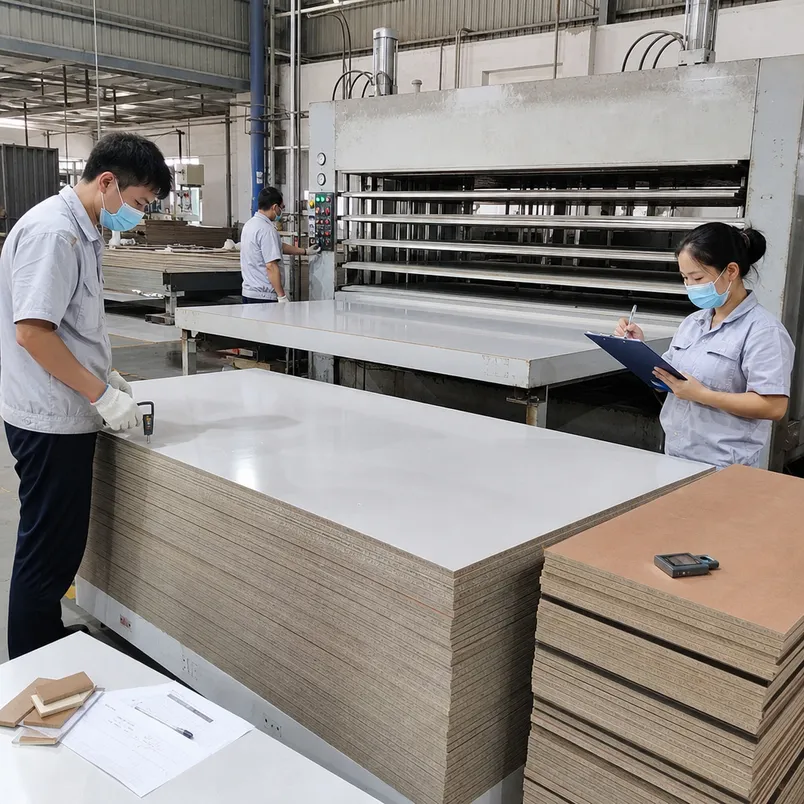
Inspection Checklist
-
HPL Adhesion
Cross-cut test and visual inspection for edge lifting or blistering
-
Surface Quality
Scratch, stain, and visual defect assessment
-
Thickness Measurement
Multi-point measurement across the panel surface
-
Formaldehyde Emission Testing
Required for all certified orders — CARB P2 and E0
Rejection policy: Panels that don't pass the adhesion check are pulled. They don't get downgraded and shipped — they get rejected.
Adhesive System by Specification
Press parameters are logged per batch. Certification orders use the lower-emission melamine-formaldehyde system as required.
Certification Coverage for Your Import Markets
HPL plywood cabinet board from QDPlywood.com carries the certification stack that covers the major import markets where cabinet board is sold.
CARB P2
US MarketCalifornia Air Resources Board — Phase 2
Required for California and broadly adopted across the US market as the de facto formaldehyde emission standard for composite wood products. Our CARB P2 certification covers the plywood core construction and the adhesive system — the full panel, not just the substrate.
Scope: Full panel certification — plywood core and adhesive system both covered. CARB documentation package prepared as standard for US-bound shipments.
FSC Chain of Custody
SustainabilityForest Stewardship Council — CoC Certified
The wood fiber in our panels traces back to FSC-certified forests. Relevant if your buyers have sustainability sourcing policies or if you're supplying into markets where deforestation-linked supply chains carry reputational or regulatory risk.
Relevance: Buyers with ESG sourcing requirements, EU deforestation regulation exposure, or sustainability-branded product lines.
CE Marking
EU MarketEuropean Conformity — Construction Products
Covers European construction and building material applications. Relevant for buyers supplying into EU markets where CE marking is required for cabinet and furniture components.
Documentation: CE declaration of conformity included as standard for EU-bound shipments.
ISO 9001:2015
Quality SystemQuality Management System Certification
Our quality management system certification — the process controls, inspection protocols, and documentation systems that produce consistent output across batches.
Scope: Covers the full manufacturing process — from incoming material inspection through final panel release.
Documentation by Destination
CARB documentation package prepared as standard. No additional request required.
CE declaration of conformity included as standard.
Available on request for all markets. We don't make buyers chase paperwork.
Certification Coverage at a Glance
Container Loading and Export Logistics
HPL cabinet board ships in standard 1220×2440mm panels, which load efficiently into 20HQ and 40HQ containers. Here's what to expect from panel counts through to port transit times.
Typical Loading Quantities
| Container Type | 18mm Panels | 25mm Panels |
|---|---|---|
| 20HQ | ~600–700 panels | ~450–500 panels |
| 40HQ | ~1,300–1,500 panels | ~950–1,100 panels |
Loading quantities are approximate and depend on panel dimensions and stacking configuration. We provide a loading plan with each shipment.
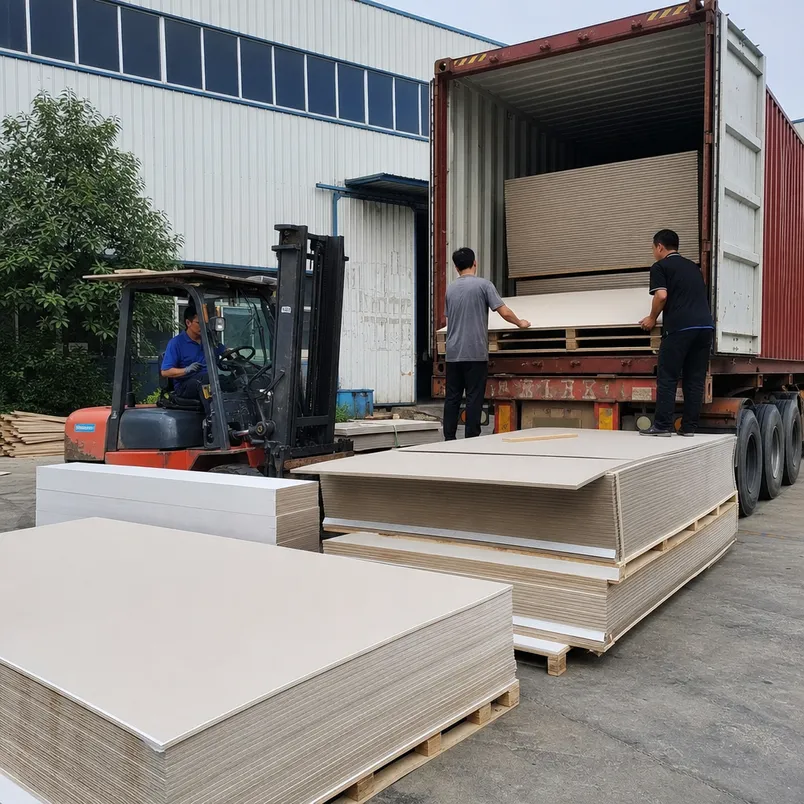
Panel Protection
Panels are bundled and strapped, edge-protected with corner boards, and wrapped in moisture-resistant film. The HPL face is protected with PE film or kraft paper interleave between panels to prevent surface scratching during transit.
Bundle Marking
Each bundle is marked with product specification, quantity, batch number, and destination port — giving your receiving team full traceability from factory to warehouse.
Port Access & Transit
Xuzhou connects to Qingdao, Shanghai, and Lianyungang ports. Transit times to major destination ports run 18–35 days depending on routing and destination.
Export Destinations
Mixed-Product Consolidation
For buyers ordering mixed HPL product types — cabinet board plus countertop board, for example — we coordinate consolidated loads to reduce your per-unit freight cost. Ask about consolidation options when requesting a quote.
HPL Plywood Cabinet Board vs. Sibling Products: Choosing the Right Panel
The HPL plywood range covers five products, each optimized for a different application. Here's how to navigate the range and confirm you're sourcing the right panel for your end use.
Cabinet carcasses, door panels, shelving
General fabrication, wall cladding, partitions
Broader thickness range, less cabinet-specific optimization
Kitchen-specific applications, higher moisture exposure
Kitchen-grade HPL face, WBP core as standard
Worktops, benchtops, horizontal surfaces
Compact HPL face (1.0mm+), higher impact and heat resistance
General furniture production, decorative panels
Broader decor range, furniture-grade surface quality
Kitchen Cabinetry with High Moisture Exposure?
If your application is kitchen cabinetry specifically and moisture resistance is the primary concern, the Kitchen HPL Plywood page covers the kitchen-specific configuration in more detail.
View Kitchen HPL PlywoodSourcing for Countertop or Worktop Production?
If you're sourcing for countertop or worktop production, the HPL Plywood Countertop is the right starting point — compact HPL face at 1.0mm+ with higher impact and heat resistance.
View HPL Plywood CountertopNot sure which panel fits your application? Browse the full HPL Plywood range to compare all five products side by side.
Frequently Asked Questions
Specification and procurement questions we hear from importers, cabinet manufacturers, and project buyers — answered directly.
18mm is the standard for kitchen cabinet carcass panels — it provides the rigidity for standard cabinet box construction and is the thickness that most cabinet hardware (hinges, drawer slides, cam locks) is designed around.
16mm is used where weight reduction matters, such as overhead cabinets or tall pantry units. For heavy-duty commercial kitchen cabinetry or laboratory furniture, 25mm is the appropriate spec.
If you're unsure which thickness fits your application, send us your cabinet design drawings and we'll confirm.
Moisture-resistant. Handles normal interior humidity but not designed for prolonged water exposure. Sufficient for dry interior applications: office furniture, bedroom wardrobes.
Waterproof boil-proof phenolic glue. Maintains bond integrity under sustained moisture exposure and humidity cycling. Specify for kitchen and bathroom cabinet applications.
The cost difference per panel is small relative to the warranty exposure of using MR glue in a wet environment. For kitchen and bathroom applications, always specify WBP.
Yes. Our HPL cabinet board is produced to CARB P2 formaldehyde emission standards — this covers both the plywood core construction and the adhesive system used in HPL lamination. CARB documentation is prepared as standard for US-bound shipments.
Other market certifications available:
If you need E1 or E0 certification for European or Australian markets, specify at order stage and we'll confirm the appropriate adhesive system.
Standard decors — solid whites, grays, blacks, and basic woodgrain patterns — are available at standard minimums.
For specific decors from major laminate manufacturers (Formica, Wilsonart, Abet Laminati, or equivalent), we can source the HPL and laminate it to our plywood core. Send us the decor reference number and your target volume — we'll confirm availability and the minimum order quantity for that specific decor.
Lead time for custom decor sourcing adds 5–10 working days to the standard production schedule.
MOQ depends on the specification. Standard configurations (18mm, 1220×2440mm, standard decors, CARB P2) can be ordered at lower minimums. Custom dimensions, non-standard decors, or custom core species require higher minimums to justify the production setup.
18mm · 1220×2440mm · standard decors · CARB P2 — lower minimums available
Custom dimensions · non-standard decors · custom core species — higher minimums apply
Contact us with your full specification and target volume — we'll confirm the MOQ and lead time for your specific configuration.
Panels are interleaved with PE film or kraft paper between each panel to prevent surface-to-surface contact and scratching.
Bundles are edge-protected with corner boards and wrapped in moisture-resistant film.
The HPL face is the highest-value component of the panel — we treat transit protection accordingly.
High-gloss surfaces: If you have specific packaging requirements (e.g., individual panel wrapping for high-gloss surfaces), specify at order stage.
Get a Quote for HPL Plywood Cabinet Board
Send us your specification — thickness, panel size, HPL decor, glue type, emission certification, and target volume — and we'll come back with a detailed quote and the relevant certification documentation for your import market.
Most buyers in this product category start with a sample order to test the panel on their own cutting equipment and confirm the HPL adhesion and surface quality before committing to a full container. We can ship samples; contact us to arrange.
Include in your enquiry:
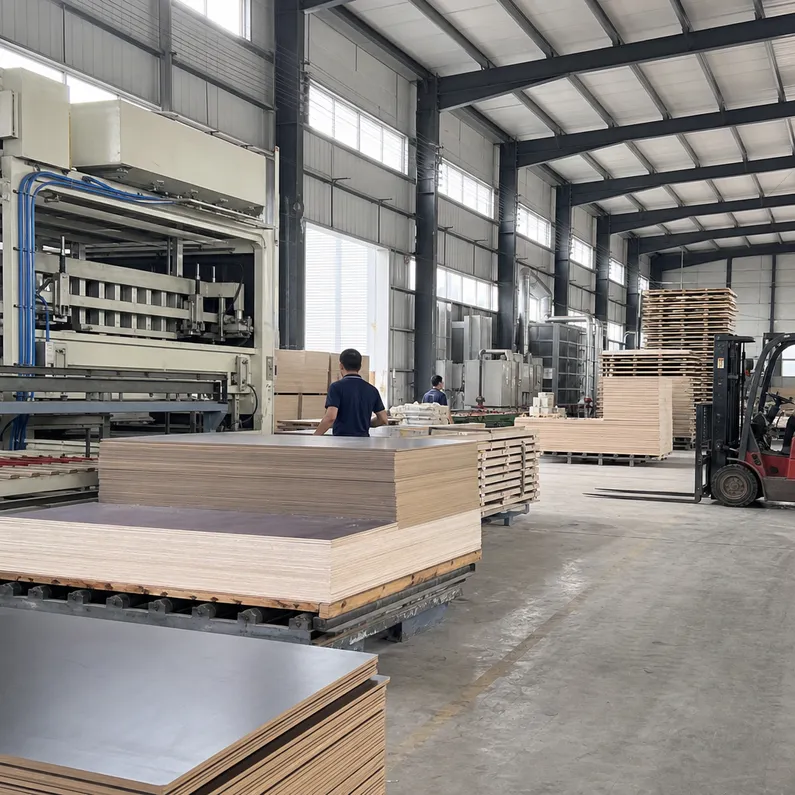
Xuzhou QD Wood Industry Co., Ltd.
Factory-direct · Xuzhou, Jiangsu, China
Certification documentation (CARB P2, FSC, CE) prepared as standard for export shipments. Specify your import market at enquiry stage.
Related HPL Plywood Products
General-purpose HPL-faced plywood sheet for furniture, wall cladding, and commercial fit-out.
WBP-bonded HPL plywood specified for kitchen environments — moisture resistance and surface durability.
Thicker HPL plywood panels engineered for countertop and worksurface applications.
HPL plywood optimised for furniture manufacturing — consistent thickness, flat panels, and a wide decor range.