

Melamine MDF Manufacturer Factory-Direct from Xuzhou, China
Melamine MDF boards pressed and finished in our own facility — no trading company markup, no spec surprises at the port. Five product variants covering standard board, white, high-gloss, 18mm, and kitchen-grade configurations. Thickness range 9mm–25mm with custom sizing on confirmed orders.
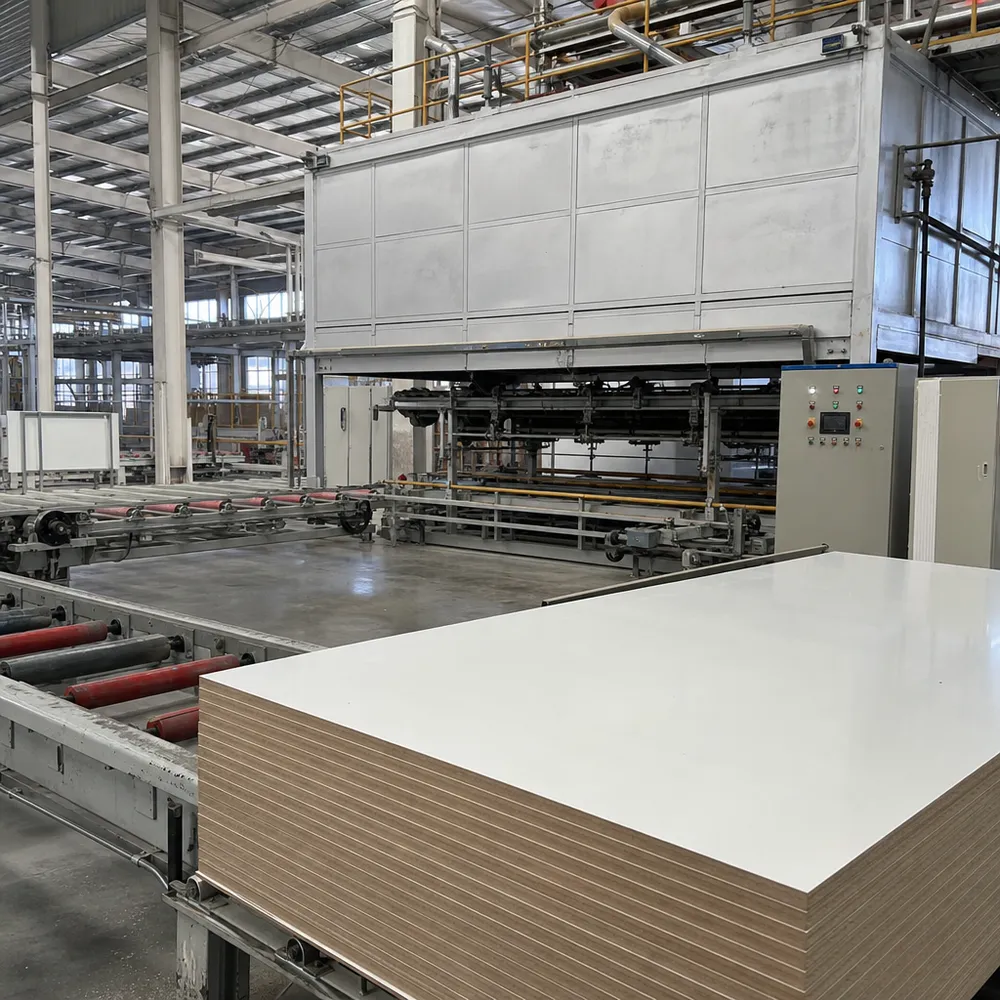
What We Make and How We Make It
Melamine MDF is medium-density fiberboard with a melamine-impregnated paper overlay pressed directly onto the substrate under heat and pressure. The result is a panel with a hard, sealed surface — scratch-resistant, easy to clean, and ready for downstream cutting and assembly without additional finishing. We've been running a dedicated melamine pressing line since the early years of the factory, and it's one of the product categories where the process details matter most to the final result.
The substrate starts as MDF produced to a consistent density — we target 680–750 kg/m³ for standard furniture-grade panels, which gives you the screw-holding strength and machinability that cabinet and furniture manufacturers need. Density variation across a batch is one of the things we check at incoming inspection, because low-density zones in the substrate telegraph through to the surface after pressing and show up as depressions or uneven gloss.
The melamine paper is sourced from suppliers we've worked with for years — the paper weight, resin content, and impregnation uniformity all affect how the surface bonds and how it performs under abrasion and moisture cycling.

Press Parameter Logging
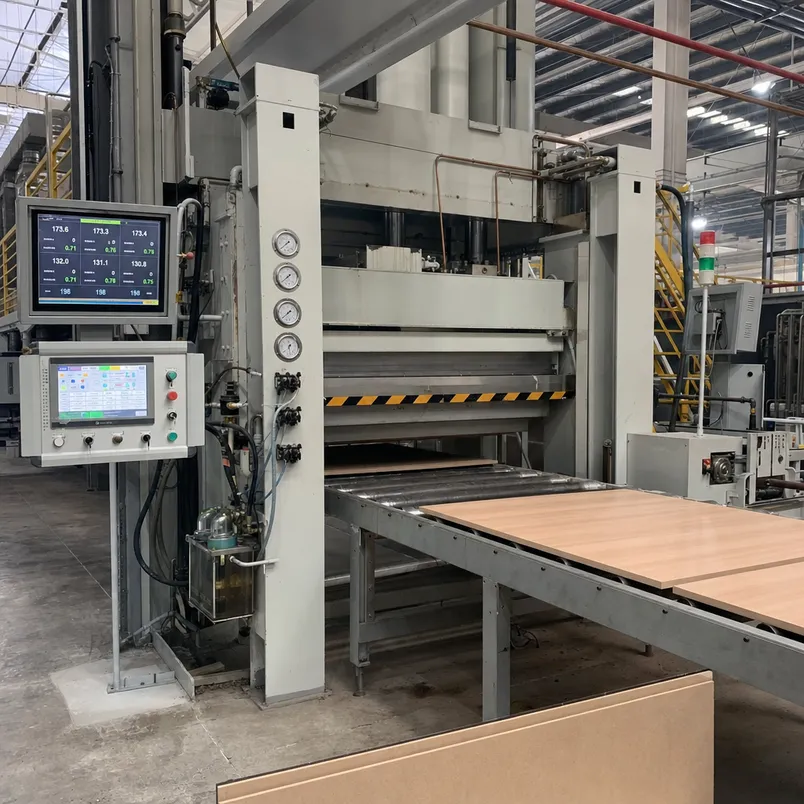
The pressing step is where most quality variation happens. We run short-cycle hot presses calibrated to specific temperature, pressure, and dwell-time parameters for each surface type — matte, satin, and high-gloss each require different press conditions to achieve the correct surface hardness and texture replication.
A press running slightly cool produces a surface that looks fine but hasn't fully cured the resin — that surface will show micro-scratches earlier in service. We log press parameters per batch, so if a surface issue surfaces downstream, we can trace it back to the specific production run and identify whether it was a press condition or a paper batch issue.
The Three Variables That Determine Surface Quality
Substrate Density
Target 680–750 kg/m³ for furniture-grade panels. Low-density zones telegraph through to the surface after pressing, showing up as depressions or uneven gloss. Checked at incoming inspection on every batch.
Melamine Paper Specification
Paper weight, resin content, and impregnation uniformity all affect how the surface bonds and performs under abrasion and moisture cycling. Sourced from long-term suppliers with consistent batch quality.
Press Conditions
Temperature, pressure, and dwell-time parameters are calibrated per surface type. Matte, satin, and high-gloss each require different settings. Parameters are logged per batch for full traceability.
Melamine MDF Product Line
Five variants, each targeting a specific segment of the furniture and interior fit-out supply chain. The differences between them are not cosmetic — they reflect different substrate densities, paper specifications, and press parameters.
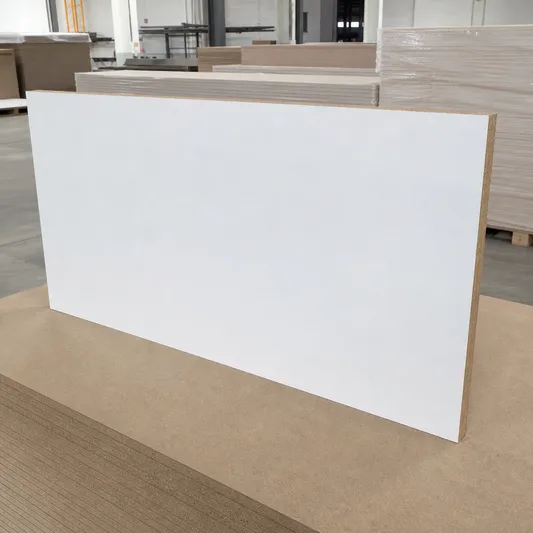
Melamine MDF Board
The standard entry point for most buyers. Furniture-grade MDF substrate with a matte or satin melamine surface in a range of solid colors and wood-grain decors. The workhorse of the range — goes into flat-pack furniture, shelving systems, and retail display units at volume.
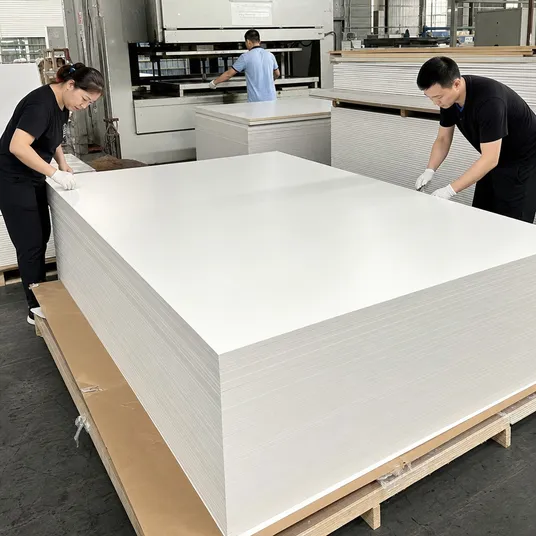
White Melamine MDF
White is the highest-volume color in most markets, and the most unforgiving — any surface defect, yellowing, or gloss inconsistency is immediately visible. We run white melamine on a dedicated press cycle with tighter paper inspection than the standard color range. Buyers supplying flat-pack furniture manufacturers or kitchen cabinet assemblers typically anchor their orders here.
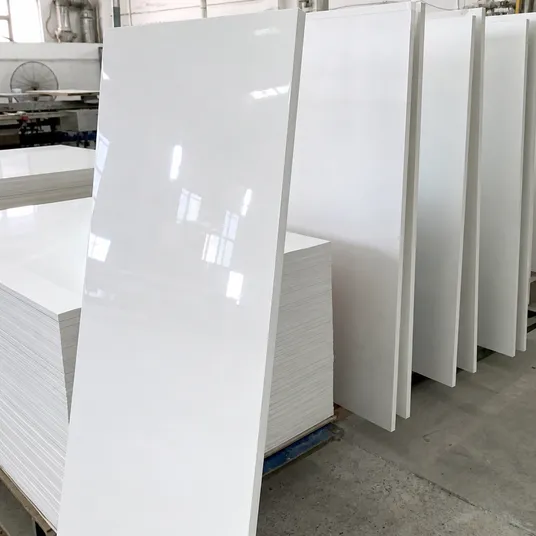
High Gloss Melamine MDF
High-gloss surface requires a mirror-finish press plate and a higher-resin paper specification. The press plate condition is the critical variable — any contamination or micro-scratch on the plate transfers directly to the panel surface. We inspect and recondition press plates on a scheduled cycle, and run high-gloss panels at the start of a press cycle. For buyers supplying premium kitchen fronts, wardrobe doors, and retail display furniture.
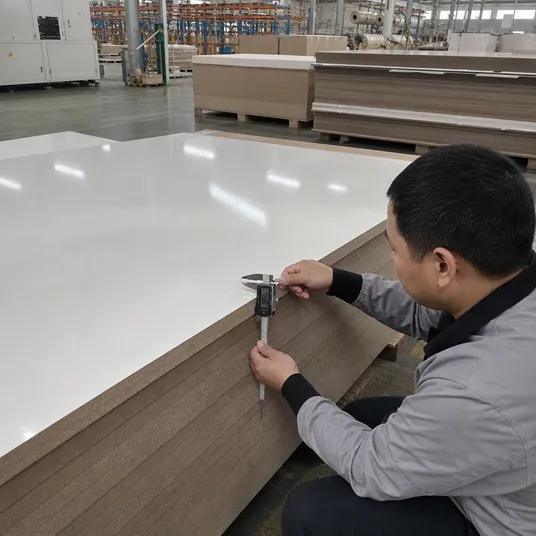
18mm Melamine MDF
18mm is the structural workhorse thickness for cabinet carcasses, shelving, and furniture panels — the specification most furniture manufacturers default to for cabinet sides, shelves, and door panels. Consistent thickness tolerance (±0.2mm) matters here because downstream CNC cutting equipment is calibrated to a specific thickness, and variation causes feed errors and edge-banding misalignment. Our calibrated sanding line holds that tolerance across the full panel.
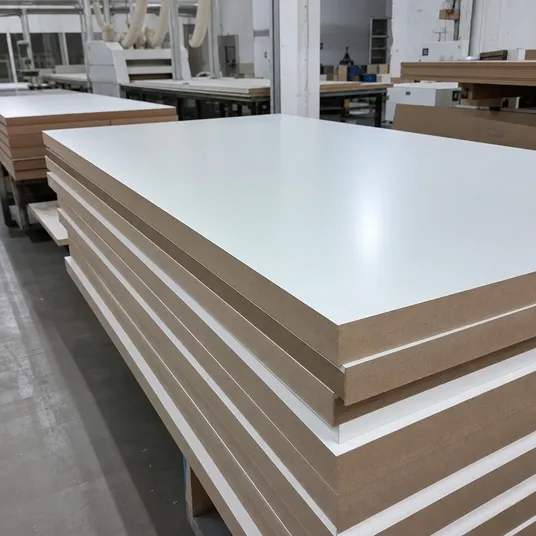
Kitchen Melamine MDF
Kitchen environments impose conditions that standard melamine MDF is not optimised for — steam, humidity cycling, cleaning chemicals, and repeated surface contact. This variant uses a moisture-resistant substrate with a higher-density core and a surface paper specification selected for enhanced abrasion and stain resistance. For buyers supplying kitchen cabinet manufacturers, joinery workshops, and fit-out contractors where end-use conditions are more demanding than typical furniture applications.
Not sure which variant fits your application?
Send us your end-use spec and we'll confirm the right substrate, thickness, and surface combination before you commit to an order.
Matte, Satin, and High Gloss — What the Difference Actually Means
Surface finish is not just an aesthetic choice. Gloss level affects how surface defects read, how the panel performs under cleaning, and which press plate specification is required. Understanding the tradeoffs helps buyers specify correctly the first time.
| Finish Type | Gloss Level | Press Plate | Defect Visibility | Typical Application | Cleaning Tolerance |
|---|---|---|---|---|---|
| Matte | 5–15 GU | Structured / textured | Low — hides minor marks | Office furniture, shelving, flat-pack | Good — resists fingerprints |
| Satin | 20–40 GU | Semi-polished | Moderate — balanced | Bedroom furniture, retail display | Good — easy to wipe clean |
| High Gloss | 80–100 GU | Mirror-finish | High — shows all marks | Kitchen fronts, wardrobe doors | Moderate — shows smears |
Matte Finish
Produced with a structured press plate that imparts a fine surface texture. That texture scatters light, reducing gloss and making minor surface marks less visible. The most forgiving finish for high-traffic applications and environments where panels are handled frequently before installation.
- Hides handling marks and minor scratches
- Fingerprint-resistant surface texture
- Lower press plate maintenance requirement
Satin Finish
The mid-point between matte and gloss. A semi-polished press plate produces a smooth surface with a soft sheen — enough reflectivity to read as premium without the maintenance demands of high gloss. The most versatile finish across furniture categories and the default choice for buyers who need a single finish to cover multiple end-use segments.
- Balanced aesthetics across furniture categories
- Easy to clean without showing smears
- Suitable for both residential and commercial fit-out
High Gloss Finish
Requires a mirror-finish press plate and a higher-resin paper specification. Any contamination or micro-scratch on the press plate transfers directly to the panel surface — which is why press plate condition is the critical process variable for this finish. We schedule plate inspection and reconditioning cycles specifically around high-gloss production runs.
- Mirror-finish press plate, scheduled reconditioning
- Higher-resin paper for maximum surface hardness
- Panels run at start of press cycle to minimise contamination risk
Solid Colors, Wood Grains, and Custom Decors
The decor range covers the core specifications that account for the majority of volume in furniture and interior fit-out markets. Custom decors are available for buyers with sufficient volume to justify a dedicated paper run.
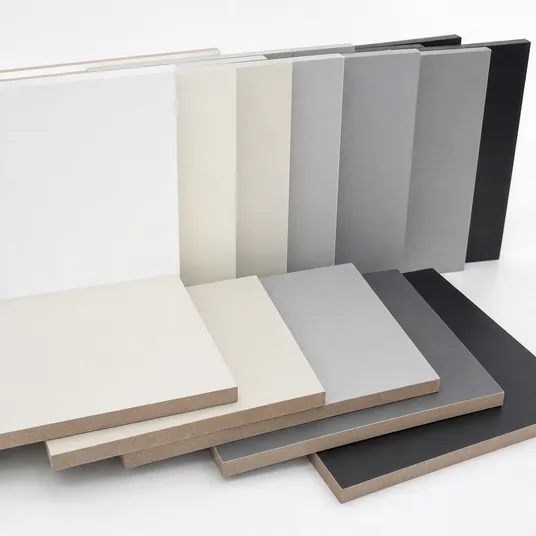
Solid Colors
White, off-white, light grey, mid grey, anthracite, black, and a range of neutral tones. White accounts for the largest share of volume across most markets. All solid colors are available in matte and satin finishes; selected colors in high gloss.
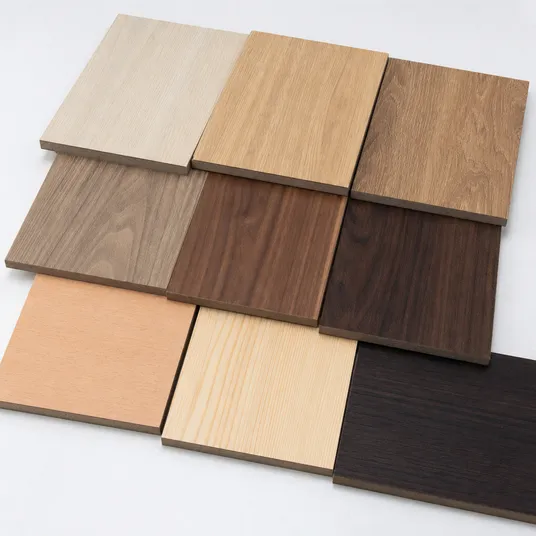
Wood Grain Decors
Oak, walnut, beech, wenge, and pine are the core wood-grain patterns. Grain direction, scale, and color tone are matched to current market preferences in the furniture and interior fit-out segments. Available in matte and satin finishes to complement the grain texture.
- Oak (light, medium, smoked)
- Walnut (natural, dark)
- Beech, Pine, Wenge
Custom Decor Available
Custom Decors
Buyers with sufficient volume can specify a custom decor — a proprietary color, pattern, or texture not available in the standard range. This requires a dedicated paper run with the paper supplier and a minimum order quantity to justify the setup cost. Lead times are longer than standard decors. Contact us to discuss volume thresholds and feasibility.
Enquire About Custom DecorsDecor Samples Available Before Order Commitment
Physical samples of all standard decors and finishes are available on request. Color and texture rendering varies between screen display and physical panel — we recommend confirming against a physical sample before placing a first order in any new decor. Sample lead time is typically 5–7 working days for international shipment.
Dimensions, Tolerances, and Performance Parameters
The numbers that matter for procurement, quality control, and downstream manufacturing. All parameters are measured per batch and available in the quality documentation pack shipped with each order.
Dimensional Specifications
| Parameter | Standard Range | Tolerance |
|---|---|---|
| Thickness | 9 / 12 / 15 / 18 / 25mm | ±0.2mm |
| Panel Width | 1220mm | ±2mm |
| Panel Length | 2440mm | ±2mm |
| Squareness | — | ≤1.5mm/m |
| Bow / Warp | — | ≤1mm/m |
Physical & Mechanical Properties
| Property | Value | Standard |
|---|---|---|
| Density | 680–720 kg/m³ | EN 323 |
| Modulus of Rupture | ≥28 N/mm² | EN 310 |
| Internal Bond | ≥0.60 N/mm² | EN 319 |
| Swelling (24h) | ≤8% | EN 317 |
| Screw Withdrawal | ≥1000 N | EN 320 |
Surface & Finish Properties
| Property | Value / Rating | Standard |
|---|---|---|
| Surface Abrasion | ≥150 rev (IP) | EN 14322 |
| Scratch Resistance | ≥1.5 N | EN 438-2 |
| Stain Resistance | Class 5 (best) | EN 438-2 |
| Light Fastness | ≥6 (grey scale) | EN ISO 105-B02 |
| Gloss Level (matte) | 5–15 GU @ 60° | EN ISO 2813 |
| Gloss Level (satin) | 25–45 GU @ 60° | EN ISO 2813 |
| Gloss Level (high gloss) | ≥80 GU @ 60° | EN ISO 2813 |
Emission & Compliance Parameters
| Parameter | Class / Limit | Standard |
|---|---|---|
| Formaldehyde Emission | E1 (≤0.124 mg/m³) | EN 717-1 |
| CARB Phase 2 | ≤0.11 ppm (MDF) | CARB 93120 |
| CE Marking | Available on request | EN 622-5 |
| FSC / PEFC Chain | Available (select mills) | FSC-STD-40-004 |
| Fire Rating | D-s2,d0 (standard) | EN 13501-1 |
Full Technical Data Sheet
The complete TDS includes batch-level test results, mill certification references, and packaging specifications. Available as part of the quality documentation pack issued with each confirmed order, or on request prior to order for qualified buyers.
Where Melamine MDF Is Used
The combination of a stable substrate and a durable decorative surface makes melamine MDF the default panel choice across furniture manufacturing, interior fit-out, and retail display. Below are the primary end-use segments served by buyers in our network.
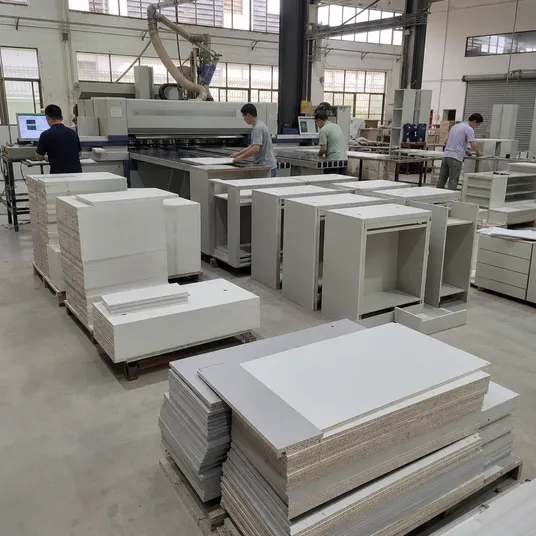
Furniture Manufacturing
Flat-pack and RTA furniture — carcasses, shelving, drawer fronts, and cabinet doors. The pre-finished surface eliminates post-production painting, reducing manufacturing cycle time and cost. White and light grey are the dominant colors in this segment.
- Cabinet carcasses and shelving
- Drawer fronts and door panels
- Wardrobe and storage systems
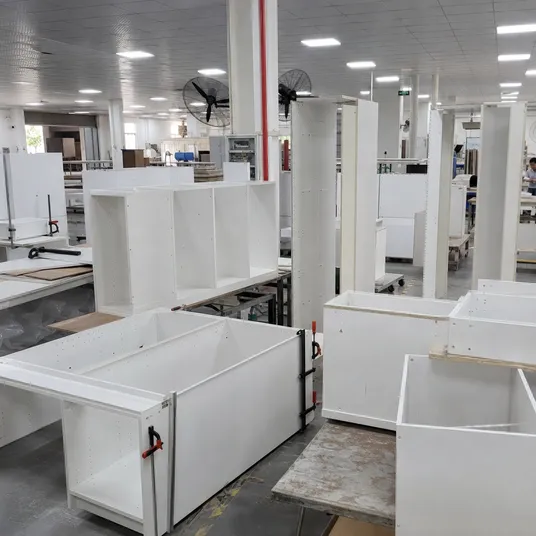
Kitchen & Bath Cabinetry
Interior carcass panels for kitchen and bathroom cabinets where moisture resistance and cleanability matter. Moisture-resistant (MR) grade MDF substrate is specified for these applications. The melamine surface resists common household chemicals and is easy to wipe clean.
- Kitchen base and wall unit carcasses
- Bathroom vanity interiors
- Utility and laundry storage
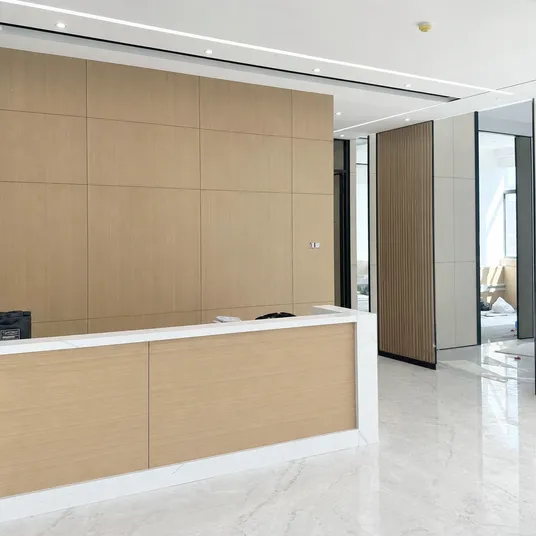
Interior Fit-Out
Wall panelling, ceiling linings, partition infill panels, and feature walls in commercial and residential interiors. The consistent surface finish and dimensional stability make it suitable for large-area installations where visual uniformity is required.
- Wall and ceiling panelling
- Partition and divider panels
- Reception and feature walls
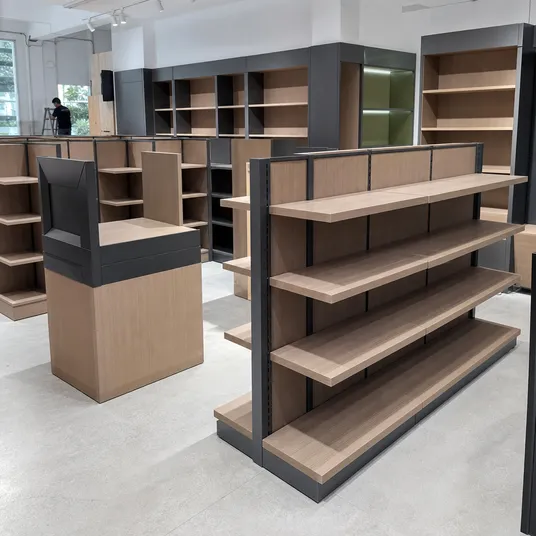
Retail Display & Shopfitting
Display shelving, gondola units, point-of-sale fixtures, and shopfitting components. The pre-finished surface reduces on-site finishing time and delivers a consistent appearance across multiple store rollouts. Custom decors can be matched to brand color standards.
- Display shelving and gondolas
- POS and promotional fixtures
- Brand-matched custom decors
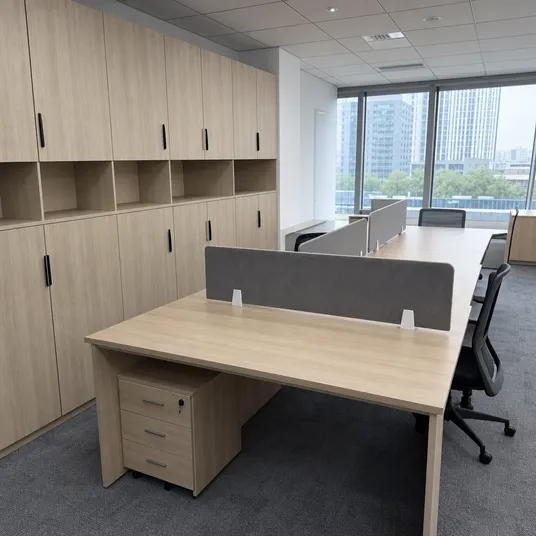
Office Furniture
Desking surfaces, storage units, filing pedestals, and screen panels. The scratch and stain resistance of the melamine surface is well suited to high-use office environments. Neutral tones and wood-grain decors are the most specified in this segment.
- Desking and worksurfaces
- Storage and filing units
- Screen and partition panels
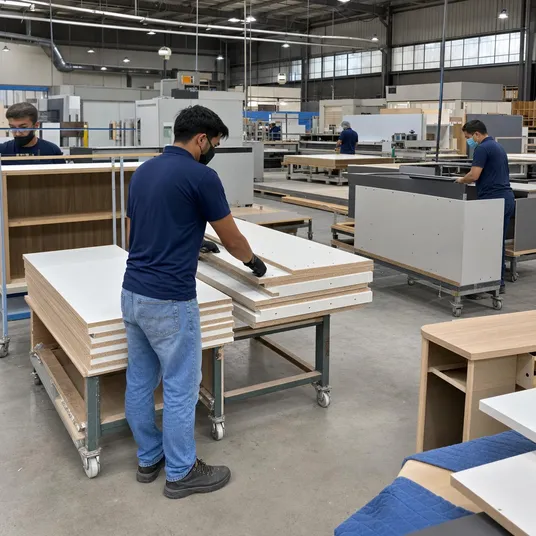
Education & Hospitality
Classroom furniture, library shelving, hotel room furniture, and restaurant fit-out. Durability and ease of maintenance are the primary drivers in these segments. The melamine surface withstands repeated cleaning with standard commercial cleaning agents without surface degradation.
- Classroom and library furniture
- Hotel room and lobby fit-out
- Restaurant and café interiors
Not Recommended for Exterior or Wet-Area Exposure
Standard melamine MDF is an interior product. It is not suitable for direct exterior exposure, prolonged contact with standing water, or high-humidity environments without adequate ventilation. For wet-area applications, specify moisture-resistant (MR) grade substrate and ensure all cut edges are sealed. Contact us if you need guidance on substrate grade selection for a specific application.
How We Source and Ship Melamine MDF
We work with a vetted network of mills across Southeast Asia, South Asia, and Eastern Europe. Mill selection for each order is based on specification match, current capacity, lead time, and destination port logistics. Here is how the supply chain works in practice.
Enquiry & Specification
Buyer submits thickness, decor, finish, quantity, and destination. We confirm availability across our mill network and provide a landed cost estimate within 24–48 hours on business days.
Mill Allocation & Production
On order confirmation, we allocate to the most suitable mill. Production lead time is typically 15–25 days for standard specifications. Custom decors require additional lead time for paper procurement.
QC & Documentation
Pre-shipment inspection covers dimensional checks, surface quality, and emission test verification. Full documentation — commercial invoice, packing list, bill of lading, COA, and test reports — is prepared before vessel departure.
Shipment & Delivery
FCL shipments via major container lines to destination ports worldwide. Transit times vary by origin and destination — typically 18–35 days sea freight. We provide vessel and container tracking throughout transit.
1 × FCL
Minimum order quantity. One full container load per specification. Mixed-specification containers available for established buyers subject to mill agreement.
15–25 Days
Typical production lead time for standard specifications from order confirmation. Custom decors and non-standard thicknesses may require additional time.
18–35 Days
Typical sea freight transit time from origin port to destination. Actual transit depends on origin mill location, destination port, and vessel schedule.
Incoterms We Offer
We can quote on multiple Incoterms depending on buyer preference and destination. The most common terms for our customers are:
- FOB Goods loaded on vessel at origin port. Buyer arranges freight and insurance from that point. Common for buyers with established freight forwarder relationships.
- CFR Cost and freight to destination port included. Buyer arranges insurance and handles import clearance on arrival.
- CIF Cost, insurance, and freight to destination port. Most straightforward option for buyers new to direct import.
- DDP Delivered duty paid to buyer's warehouse. Available to select destinations — ask us for eligibility when enquiring.
Destinations We Supply
We supply melamine MDF to importers, distributors, and manufacturers across a wide range of markets. Current active destination regions include:
Don't see your market listed? Contact us — we can assess feasibility for most destinations with a major container port.
Standards, Emissions, and Documentation
Compliance requirements vary by destination market and end-use application. We supply documentation to support import clearance, product certification, and customer due diligence. Below is an overview of the key standards and certifications relevant to melamine MDF.
Formaldehyde Emissions
Formaldehyde emission class is one of the most commonly specified compliance requirements for MDF. We supply panels to the following emission standards:
- E0 ≤ 0.5 mg/L (perforator method). Suitable for markets with the most stringent indoor air quality requirements.
- E1 ≤ 0.124 ppm (EN 717-1). Standard European requirement. Accepted across EU, UK, and most export markets.
- CARB P2 ≤ 0.11 ppm. Required for products sold into California and broadly adopted across North American supply chains.
- JIS F★★★★ Japanese Industrial Standard four-star rating. Required for Japan market and accepted in several Southeast Asian markets.
Structural & Quality Standards
Panel physical properties are tested and certified against internationally recognised standards. Key standards applicable to our melamine MDF supply include:
- EN 622-5 European standard for MDF — requirements for general purpose, load-bearing, and moisture-resistant grades.
- EN 14322 European standard specifically for melamine-faced boards for interior use, covering surface quality and bond performance.
- ISO 16895 International standard for MDF covering classification, requirements, and test methods.
- GB/T 11718 Chinese national standard for MDF. Applicable to panels produced in Chinese mills.
Chain of Custody & Sustainability
Timber sourcing and chain of custody documentation is increasingly required by buyers in regulated markets. We can supply panels with the following certifications depending on mill and specification:
- FSC® Forest Stewardship Council certification. Available from select mills. Required for many public sector and green-rated projects.
- PEFC Programme for the Endorsement of Forest Certification. Alternative to FSC, accepted in most European markets.
- EUTR / UKTR EU Timber Regulation and UK Timber Regulation due diligence documentation. We maintain supplier declarations and risk assessments.
- LEED / BREEAM We can provide material data sheets and emission test reports to support LEED and BREEAM credit submissions.
Documentation We Provide
Certificate of Analysis
Emission Test Reports
FSC / PEFC CoC Cert
Bill of Lading
Commercial Invoice & Packing List
Certificate of Origin
Certification Availability Varies by Mill and Order
Not all certifications are available from every mill or for every specification. When submitting an enquiry, please indicate which compliance standards and documentation are required for your market or project. We will confirm availability and any associated cost or lead time implications before order confirmation.
Technical Specifications: What to Specify When You Order
Category-level ranges for the melamine MDF line. Individual product pages carry the exact parameters for each variant.
| Parameter | Range / Options |
|---|---|
| Substrate | Standard MDF (680–720 kg/m³), MR-grade MDF (moisture-resistant) |
| Thickness | 9mm, 12mm, 15mm, 16mm, 18mm, 25mm; custom on confirmed orders |
| Panel Size | 1220×2440mm standard; 1830×2440mm, custom sizes available |
| Surface Finish | Matte, satin, high-gloss |
| Color / Decor | Solid colors (white, black, grey, beige, custom); wood-grain decors |
| Formaldehyde Emission | E1 (≤0.124 mg/m³), E0 (≤0.050 mg/m³), CARB P2 |
| Certifications |
CARB P2 ISO 9001:2015 CE FSC
|
| Thickness Tolerance | ±0.2mm (calibrated sanding) |
| Edge Treatment | Square edge standard; T-molding and ABS edge-banding available on request |
| MOQ | Negotiable by variant and destination market |
CARB P2 as Standard
Not a premium add-on
We formulate to CARB P2 as the baseline across the melamine MDF range. If your market requires E1 documentation for EU import or CARB P2 for US/California distribution, the certification is already in place — you're not paying extra for it or waiting for a special production run.
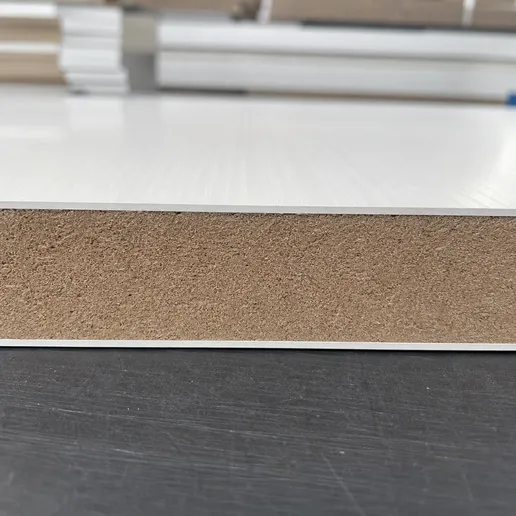
Available Thicknesses
18mm is the highest-volume thickness for cabinet carcass work. Custom thicknesses available on confirmed orders.
Where Melamine MDF Moves: Market Segments Worth Targeting
The commercial logic of melamine MDF is straightforward: it's a finished-surface panel that eliminates a downstream processing step. Buyers who distribute to furniture manufacturers, cabinet shops, or fit-out contractors are selling them time and labor savings, not just a board.
Flat-Pack & RTA Furniture Manufacturing
Highest-Volume Segment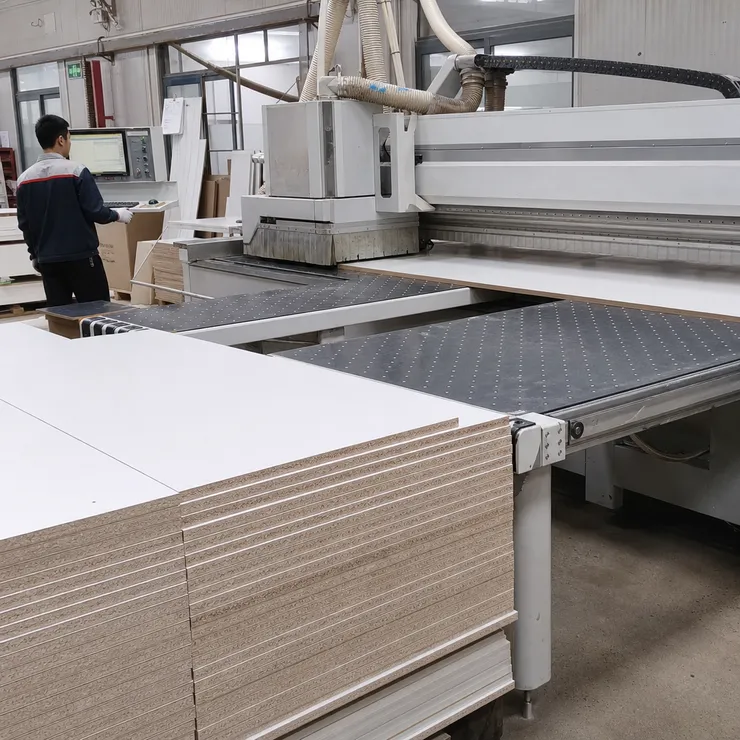
Furniture manufacturers running CNC cutting lines need consistent thickness, consistent surface hardness, and consistent color batch-to-batch — because they're cutting hundreds of panels per shift and any variation shows up as edge-banding gaps or color mismatches in the assembled product.
What they need from you
Kitchen & Bathroom Cabinet Supply
Margin Premium Segment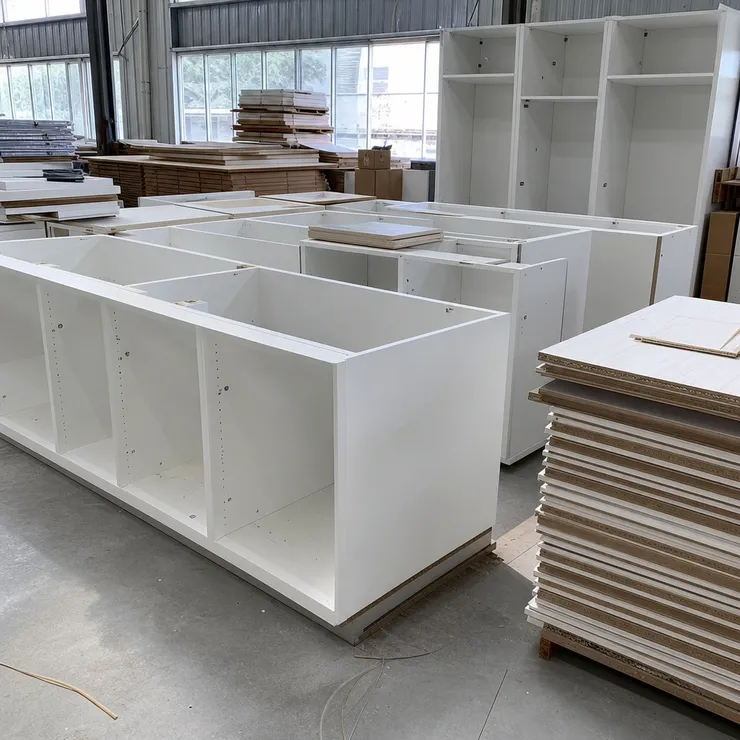
Cabinet manufacturers supplying residential renovation projects need panels that survive installation in humid environments without edge swelling — and they need documentation (CARB P2, E1) to satisfy their own customers' health and safety requirements. Distributors who can supply certified, MR-grade melamine MDF are selling a compliance solution, not just a commodity board.
What they need from you
Interior Fit-Out & Commercial Joinery
Multi-Thickness Orders
Office partitioning, retail display systems, hospitality furniture — runs on melamine MDF because the surface is ready to use without painting or veneering. Project contractors buying for commercial fit-out typically order in mixed thicknesses (12mm, 18mm, 25mm) and need consistent color matching across batches. Our batch-controlled pressing can supply multiple containers of the same decor with consistent color, which matters when a fit-out project spans multiple delivery phases.
What they need from you
Distributor & Importer Stocking Programs
OEM / Private-Label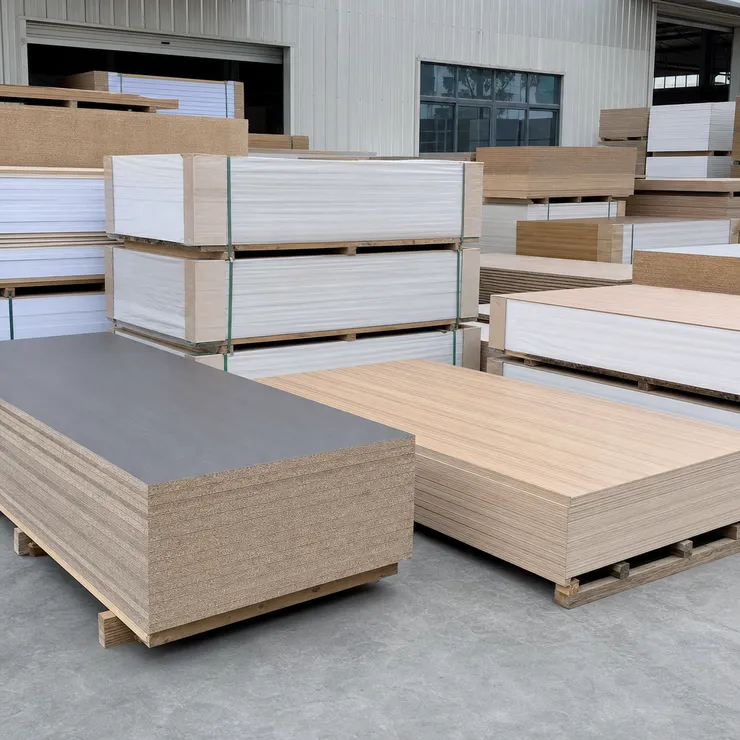
Buyers who warehouse melamine MDF for resale to local cabinet shops and joiners benefit from our OEM capability. Custom decors, private-label packaging, and non-standard panel sizes are all available on confirmed orders, so your stocked product isn't identical to what your competitors are sourcing from the same generic range.
What they need from you
Supplying one of these segments?
Each segment has different documentation, grade, and packaging requirements. Tell us your end-market and we'll confirm which variant, certification package, and MOQ structure fits your program.
The Pressing Process and Why Surface Failures Happen
Most melamine MDF quality failures trace back to one of three causes: substrate density variation, paper resin inconsistency, or press parameter drift. We've seen all three, and the process controls we run are specifically designed around those failure modes.
Substrate Density Variation
The upstream problem. If the MDF substrate has low-density zones — caused by inconsistent fiber mat formation or press pressure distribution during MDF production — those zones compress differently under the melamine press and produce surface depressions or uneven gloss.
We check substrate density at incoming inspection using a density profile scanner that measures across the panel width, not just at the edges. Panels with density variation outside tolerance are rejected before they reach the melamine line. This adds cost to incoming inspection, but it's cheaper than pressing a full batch of panels with surface defects and scrapping them at outgoing QC.
Paper Resin Inconsistency
Shows up as surface delamination or blistering — the melamine paper lifts from the substrate in patches, usually at panel edges or corners where the press pressure is slightly lower.
We source melamine paper from approved suppliers with documented resin content specifications, and we run incoming paper checks on each roll batch. Paper that's outside the resin content range goes back — we don't press with it and adjust the press parameters to compensate, because that approach produces inconsistent results across the batch.
Press Parameter Drift
The in-process problem. Hot press platens expand with heat, and if the press isn't recalibrated after a certain number of cycles, the pressure distribution across the panel surface changes.
We run press calibration checks on a scheduled cycle and after any press maintenance event. The press log records temperature, pressure, and dwell time for every batch — if a surface issue is reported from the field, we can pull the press log for that batch and identify whether the parameters were within spec.
What This Means for Your Production Line
Melamine MDF from our line arrives with consistent surface hardness, consistent gloss level, and consistent color within a batch.
For buyers supplying furniture manufacturers who are running automated assembly lines, that consistency is what prevents production stoppages and warranty claims downstream.
Customization Dimensions for OEM and Private-Label Programs
The melamine MDF range supports OEM and private-label programs across several dimensions. Most buyers who come to us for standard product eventually ask about customization once they see how the process works.
Decor and Color Customization
The most common request. We can press custom decors — wood grains, solid colors, stone patterns — on confirmed orders.
Existing paper suppliers: Minimum run is typically one press batch. Lead time follows standard production scheduling.
New custom decors: Requires custom paper development. Lead time extends to 4–6 weeks for paper sourcing before production can start.
Panel Dimension Customization
Melamine MDF is cut-to-size, not molded, so non-standard dimensions are a scheduling and yield question, not a capital investment. We can produce panels in non-standard widths and lengths on confirmed orders.
Substrate Specification Customization
Covers density grade, moisture resistance level, and formaldehyde emission class. Specified at the MDF production stage.
E0 emission (≤0.050 mg/m³): Available if your market requires E0 rather than CARB P2.
Higher-density substrate (720–750 kg/m³): Available for better screw-holding in thin panels.
Private-Label Packaging
Bundle marking, pallet labeling, and documentation in your brand name — available on confirmed OEM programs. We've run private-label programs for distributors in North America and Europe who stock melamine MDF under their own brand.
Ready to Discuss Your OEM Program?
Send your target specification, volume, and destination market to [email protected] — we'll come back with a detailed quote and the relevant certification documentation.
Include: target decor or color, panel dimensions, substrate density grade, emission class requirement, destination market, and estimated annual volume.
Certifications That Clear Customs Without Delays
The certification stack on our melamine MDF line covers the documentation requirements for the markets where this product moves in volume.
California Air Resources Board Phase 2
The formaldehyde emission standard for composite wood products sold or used in California — and in practice, the standard most US distributors require regardless of state, because their customers don't want to manage a two-tier inventory. Our CARB P2 certification covers the melamine MDF range; the documentation package for US-bound shipments is prepared as standard.
FSC Chain of Custody
The wood fiber in our MDF substrate can be traced back to FSC-certified forests. For buyers supplying into retail channels with sustainability sourcing policies, or into markets where deforestation-linked supply chains are a regulatory or reputational risk, FSC documentation is increasingly a procurement gate rather than a nice-to-have.
European Construction Products Regulation
Covers the European construction products regulation requirements. For melamine MDF going into European markets — particularly for commercial fit-out and construction applications — CE documentation is part of the standard export package.
Quality Management System
Covers the quality management system across the facility. Audit reports are available on request — we don't make buyers chase documentation.
Market-Specific Documentation — We Know What Causes Delays
We've been through enough customs clearance cycles in North America, Europe, the Middle East, and Australia to know what documentation gaps cause delays. For market-specific documentation requirements, contact us directly.

Container Loading and Export Packaging
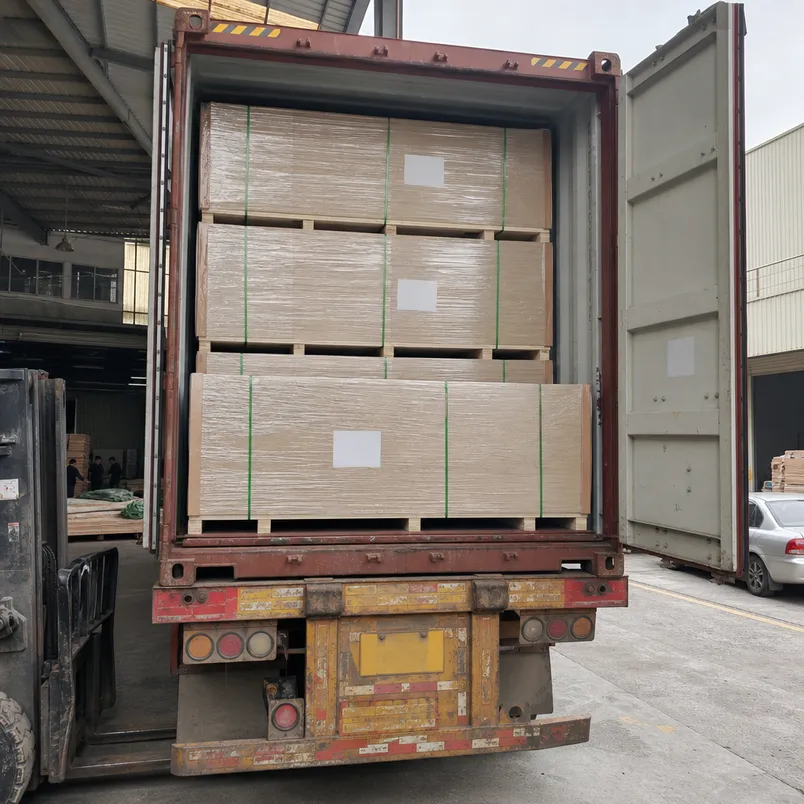
Melamine MDF ships well in 40HQ containers when the loading is planned correctly. The surface is the vulnerable point — melamine panels scratch and chip at corners if they're not protected during transit, and a scratched panel is a warranty claim or a rejected delivery.
Export Packaging Specification
Interleaving Paper Between Panels
Prevents surface-to-surface contact during transit vibration. Applied between every panel in the bundle.
Strapped Bundles with Corner Edge Boards
Bundles are strapped and corner-protected with edge boards, then wrapped in moisture-resistant film.
PE Protective Film — High-Gloss Panels
For high-gloss panels, we add a PE protective film on the surface before bundling. The film stays on through transit and is removed by the end user at installation. High-gloss panels without surface protection film are a common source of transit damage claims — we added the film as standard after seeing the damage pattern on early export shipments.
Loading Plan Included with Every Shipment
For buyers ordering mixed thicknesses or mixed variants, we provide a loading plan with each shipment so your receiving team knows the bundle configuration and can plan unloading accordingly.
40HQ Container Capacity
Standard 1220×2440mm panels in 18mm thickness load approximately 280–300 sheets per 40HQ container, depending on bundle configuration and mixed-thickness loading.
Transit Times from Xuzhou
Loading Ports: Qingdao & Lianyungang
These are vessel transit times. Add 3–5 days for inland transport to port and customs clearance at destination.
Buyer FAQ: Technical Questions We Get Most Often
Answers to the specification and compliance questions that come up most often during sourcing conversations — written for buyers who need to make the right call before placing an order.
What's the difference between standard melamine MDF and moisture-resistant melamine MDF — and when does it matter?
Standard MDF substrate uses a urea-formaldehyde resin system that performs well in dry interior environments but swells at panel edges when exposed to sustained humidity or direct moisture contact. Moisture-resistant (MR-grade) MDF uses a modified resin system with better dimensional stability under humidity cycling.
The surface melamine paper itself is not the moisture barrier — it's the substrate that determines edge performance. Specifying MR-grade for the wrong application adds cost without benefit; specifying standard grade for a wet environment creates warranty exposure.
Specify by application
Use MR-Grade
Kitchens, bathrooms, laundry rooms, or any space with regular humidity above 70%. Edge swelling is the failure mode to prevent.
Standard Grade Is Sufficient
Bedroom furniture, office shelving, retail display — dry interior applications where standard grade costs less and performs identically.
What formaldehyde emission class should I specify for US distribution versus EU distribution?
For US distribution, CARB P2 is the relevant standard — it applies to composite wood products sold or used in California and is the de facto national standard for most US distributors. For EU distribution, E1 (≤0.124 mg/m³) is the baseline requirement under EN 622 for MDF products; some buyers specify E0 (≤0.050 mg/m³) for premium product lines or markets with stricter requirements.
We produce to CARB P2 as the baseline, which meets or exceeds both E1 and most E0 requirements — so a single production specification covers both markets. If your EU buyer specifically requires E0 documentation, confirm with us before ordering and we'll issue the appropriate test report.
Emission standards at a glance
Our CARB P2 baseline covers both E1 and most E0 requirements. One production spec, both markets.
Why does melamine MDF sometimes show edge swelling after installation, and how do I prevent it?
Edge swelling happens when the MDF substrate absorbs moisture at the cut edge — the melamine surface is sealed, but the cut edge exposes the raw fiber. The fix is edge-banding: ABS or PVC edge tape applied to all cut edges seals the substrate and prevents moisture ingress.
Key prevention factors
Edge-banding (non-negotiable for wet areas)
ABS or PVC edge tape on all cut edges. For kitchen and bathroom applications, this is mandatory — not optional.
MR-grade substrate
Swells significantly less at cut edges than standard grade, even without edge-banding. Kitchen-grade melamine MDF uses MR substrate as standard.
We can supply panels with pre-applied edge-banding on request, or supply the edge-banding material separately. Specify your application environment when ordering and we'll confirm the right substrate grade.
What's the minimum order quantity for a custom decor or non-standard panel size?
MOQ depends on how much customization is involved. Here's how it breaks down:
| Scenario | MOQ |
|---|---|
| Custom panel sizes, standard decors | ~200–300 sheets |
| Custom decors requiring paper sourcing | ~500–800 panels |
| Private-label programs (ongoing volume) | Negotiable |
Standard decors: One full press batch; varies by thickness.
Custom decors: Driven by paper supplier minimum — 3,000–5,000 m² of paper, translating to roughly 500–800 panels at 18mm.
Private-label: Lower per-order MOQs available once initial setup is confirmed.
Get a volume-specific MOQ confirmation
Send your target specification and annual volume estimate and we'll work out what makes sense for your program.
How consistent is color matching across multiple container orders of the same decor?
Color consistency is controlled at two points: paper sourcing and press parameters. We source melamine paper from the same approved suppliers for repeat orders of the same decor, and we maintain press parameter records so we can replicate the same press conditions.
White, grey, black — batch-to-batch consistency is high because the paper specification is stable.
Inherent variation in the printing process — we supply color reference samples from each production batch for pre-installation verification.
Where color matching across multiple delivery phases is critical, order the full project quantity in a single production run.
For multi-phase fit-out projects, a single production run is the most reliable way to guarantee cross-delivery color consistency.
What lead time should I plan for from order confirmation to container loading?
Lead times vary by order type. Below are production lead times — add inland transport to port (3–5 days) and vessel booking lead time (typically 5–7 days) for total time to container loading.
Total time to container loading: Add inland transport to port (3–5 days) and vessel booking lead time (typically 5–7 days) to whichever production lead time applies to your order.