

Structural Plywood Manufacturer — WBP Bonding, Load-Bearing Performance
Structural grade plywood engineered for load-bearing performance. WBP phenolic resin bonding, consistent cross-grain layup, and CE-certified for construction applications. We've manufactured structural grade plywood for export since 2008 — every panel is pressed to a defined bonding specification, not just tested at the end.
Your downstream projects get panels that perform under load, not just panels that look right in the warehouse.
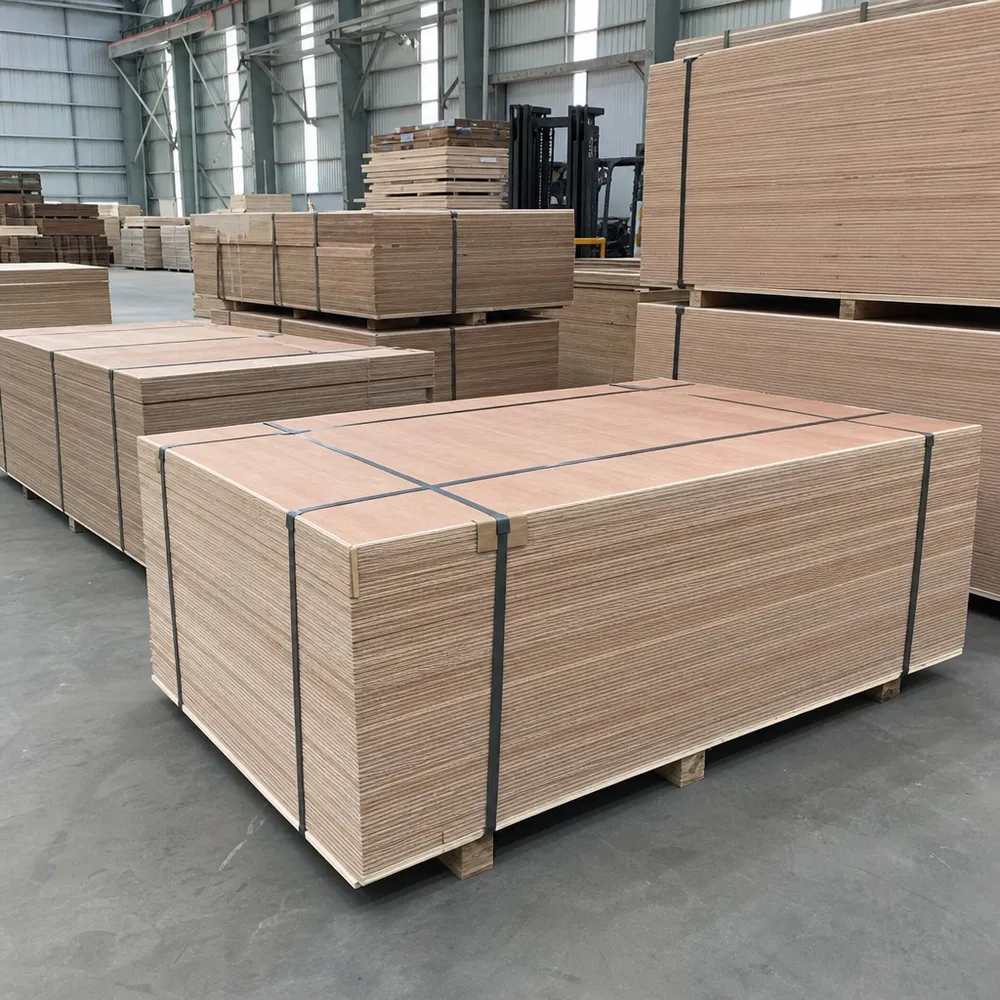
What Separates Structural Grade Plywood from Standard Commercial Panels
Structural plywood sits in a different performance category from general-purpose commercial plywood. The distinction isn't cosmetic — it's in the bonding specification, the veneer layup, and the glue system used.
The Bonding Specification
Standard commercial panels are bonded with interior-grade or MR (moisture-resistant) adhesives suited for dry, protected environments. Structural grade plywood uses WBP (weather and boil proof) phenolic resin adhesive, which maintains bond integrity under sustained load, humidity cycling, and temperature variation.
That bonding difference is what makes a panel suitable for roof sheathing, floor decking, wall bracing, and concrete formwork — applications where delamination under stress isn't a quality complaint, it's a structural failure.
Cross-Grain Veneer Layup
In structural plywood, each veneer layer is oriented perpendicular to the adjacent layer — the cross-grain construction that distributes load across the panel rather than concentrating it along the grain direction.
We run a minimum of 5 plies on panels 12mm and above; thinner structural panels (9mm) use a 3-ply construction with heavier individual veneer thickness to maintain the bending strength specification.
Buyer question we hear often:
"Are 3-ply structural panels as strong as 5-ply?" The answer: it depends on the veneer thickness and species. A 9mm panel with 3mm hardwood veneers can meet the same bending modulus as a 5-ply softwood panel at the same thickness. The ply count alone doesn't tell you the structural story.
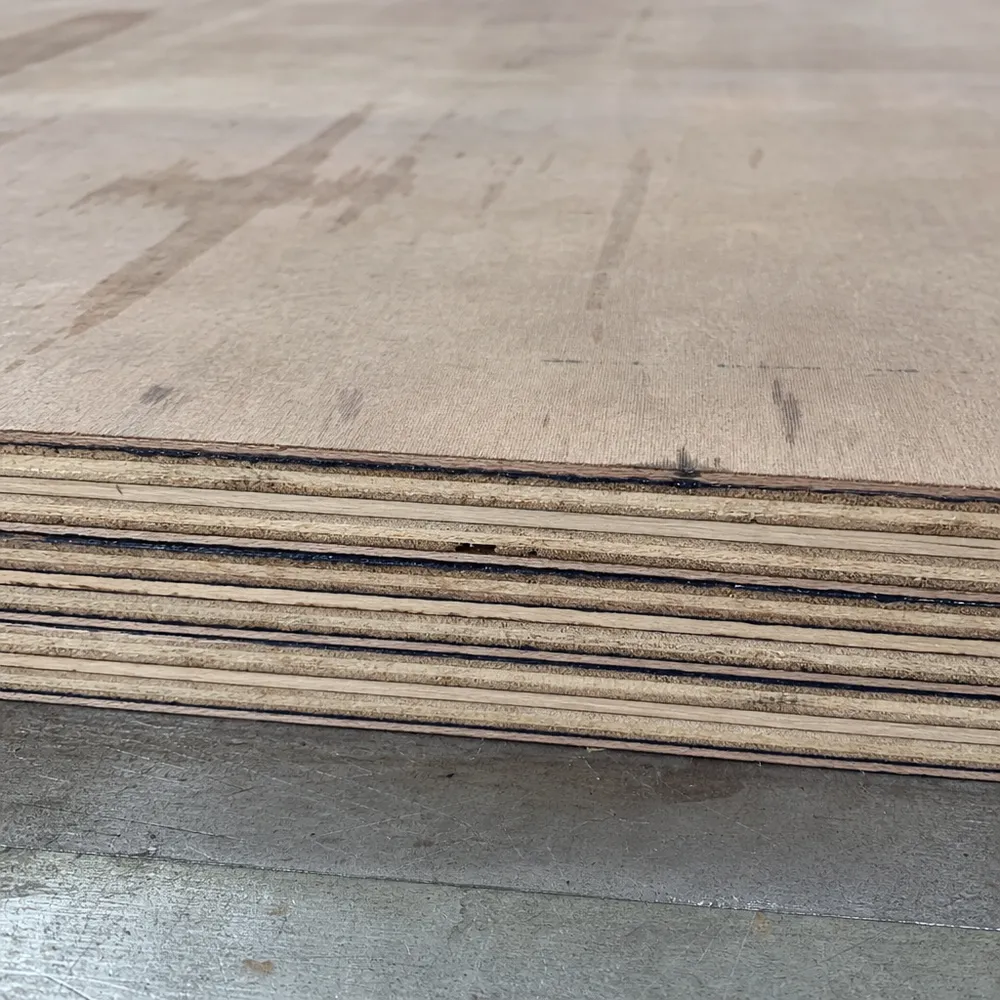
Face Grade: C/D, Not A/B
The face veneer grade on structural plywood is typically C/D or C/C — not the A/B face grades you'd specify for furniture or cabinetry. Buyers sometimes push back on this, expecting a cleaner face.
The reality is that structural applications are covered, embedded, or loaded — the face grade is irrelevant to performance, and specifying A-grade faces on structural panels adds cost without adding value to your downstream customer.
Compare structural plywood against exterior, marine, and moisture-resistant grades.
View all gradesStructural plywood is specified for
Roof Sheathing
Load-bearing deck under roofing membrane
Floor Decking
Sub-floor and structural floor systems
Wall Bracing
Shear wall and lateral bracing panels
Concrete Formwork
Reusable form panels for poured concrete
Structural Plywood Specifications
The parameters below cover our standard production for structural grade plywood. These are the specifications we run in regular production — not theoretical maximums.
Standard Production Specifications
Regular production values — contact us for data sheets and third-party test reports
What These Numbers Mean for Your Order
Structural plywood specifications aren't just data points — they're the basis for your downstream compliance. The thickness tolerance, glue system, and emission class all feed into what certifications your end product can carry and what building codes it can satisfy.
If you're sourcing for a market with specific structural standards — AS/NZS 2269 for Australia, EN 636 for Europe, PS 1 for North America — tell us upfront. We can align production parameters and documentation to match.
Thickness Selection by Application
Light wall sheathing, internal bracing panels, low-load applications
Standard roof sheathing, wall bracing, light floor underlayment
Sub-floor decking, heavy roof loads, concrete formwork panels
Heavy structural decking, industrial flooring, high-load formwork
WBP Glue: The Structural Baseline
WBP (Weather and Boil Proof) phenolic resin is the minimum glue standard for structural plywood. It resists delamination under sustained moisture exposure and cyclic loading — conditions that interior-grade UF adhesives cannot handle. All our structural panels ship with WBP as standard.
Why Thickness Tolerance Matters
A ±0.2mm tolerance on a calibrated-sanded panel means your 18mm panel arrives at 17.8–18.2mm — consistently. Uncalibrated panels from lower-tier mills can vary ±0.8mm or more, which creates problems in engineered floor systems and prefab assemblies where panel stacking tolerances are tight.
Need a spec sheet or test report?
We can provide third-party lab reports, mill certificates, and compliance documentation for confirmed orders.
Standards, Certifications & Market Compliance
Structural plywood is one of the most regulated panel categories in global trade. The standard your panels need to meet depends on the destination market — and getting this wrong creates costly delays at customs or on-site rejection.
EN 636
European Standard — Plywood Specifications
The primary European structural plywood standard. Defines three classes: EN 636-1 (dry conditions), EN 636-2 (humid conditions), EN 636-3 (exterior/structural). Most structural applications in Europe require EN 636-3.
AS/NZS 2269
Australia & New Zealand Structural Standard
Governs structural plywood for the Australian and New Zealand markets. Specifies bond quality, stress grades (F7 through F27), and species groupings. Panels must be third-party certified by a JAS-ANZ accredited body.
PS 1 / PS 2
US Product Standards — Structural Panels
PS 1 covers construction and industrial plywood; PS 2 covers performance-rated structural panels. Both require APA or equivalent third-party certification. Imported structural plywood must carry a recognized grade stamp to be accepted on US job sites.
JAS
Japanese Agricultural Standard
Japan's structural plywood standard under the JAS framework. Specifies bond type (Type 1 for structural/exterior), species, and grade. JAS-certified structural plywood is required for use in Japanese building code-compliant construction.
FSC / PEFC
Chain-of-Custody Certification
FSC and PEFC chain-of-custody certification documents that the timber in your panels originates from responsibly managed forests. Increasingly required for public procurement, green building ratings (LEED, BREEAM), and EU Timber Regulation compliance.
CARB P2 / E1
Formaldehyde Emission Standards
CARB Phase 2 is mandatory for panels sold into California and increasingly enforced across the US. E1 is the European baseline. Both cap formaldehyde off-gassing from the adhesive system. We run E1 as standard; CARB P2 is available on request with third-party test documentation.
Tell Us Your Destination Market Before You Order
Structural plywood compliance isn't something you can retrofit after production. The glue system, species selection, veneer grading, and third-party certification all need to be locked in before the panels go into the press. If you're importing into a regulated market, share the destination and end-use with us at inquiry stage — we'll confirm what documentation and production parameters apply.
The Bonding Process: Where Structural Performance Is Actually Built
The WBP bonding specification is what buyers cite when they specify structural plywood — but the certification on the panel only tells you the glue system used, not how well it was applied. The bond is made in the press, not in the lab.
Hot Press System: Calibrated for Uniformity
Our hot press system runs multi-daylight hydraulic presses calibrated to maintain uniform pressure and temperature across the full 1220×2440mm panel surface. For structural plywood specifically, we run higher press temperatures and longer dwell times than we use for interior-grade panels — the phenolic resin system requires sustained heat to fully cure.
Under-curing produces a bond that passes a dry shear test but fails under cyclic moisture loading. Press parameters are logged per batch, so if a bonding issue surfaces downstream, we can trace it back to the specific production run and identify whether it was a press parameter deviation or a glue spread issue.
Glue Spread Weight: Checked at Layup
Glue spread weight is checked at the layup stage against a defined specification. Too light and you get bond failure at the glue line; too heavy and you get bleed-through and surface contamination that affects downstream adhesive bonding in your customer's application.
We check spread weight by weighing the glue-coated veneer before and after application on a sample basis per shift. It's a simple check, but it's the one that catches the most common bonding defect before it reaches the press.
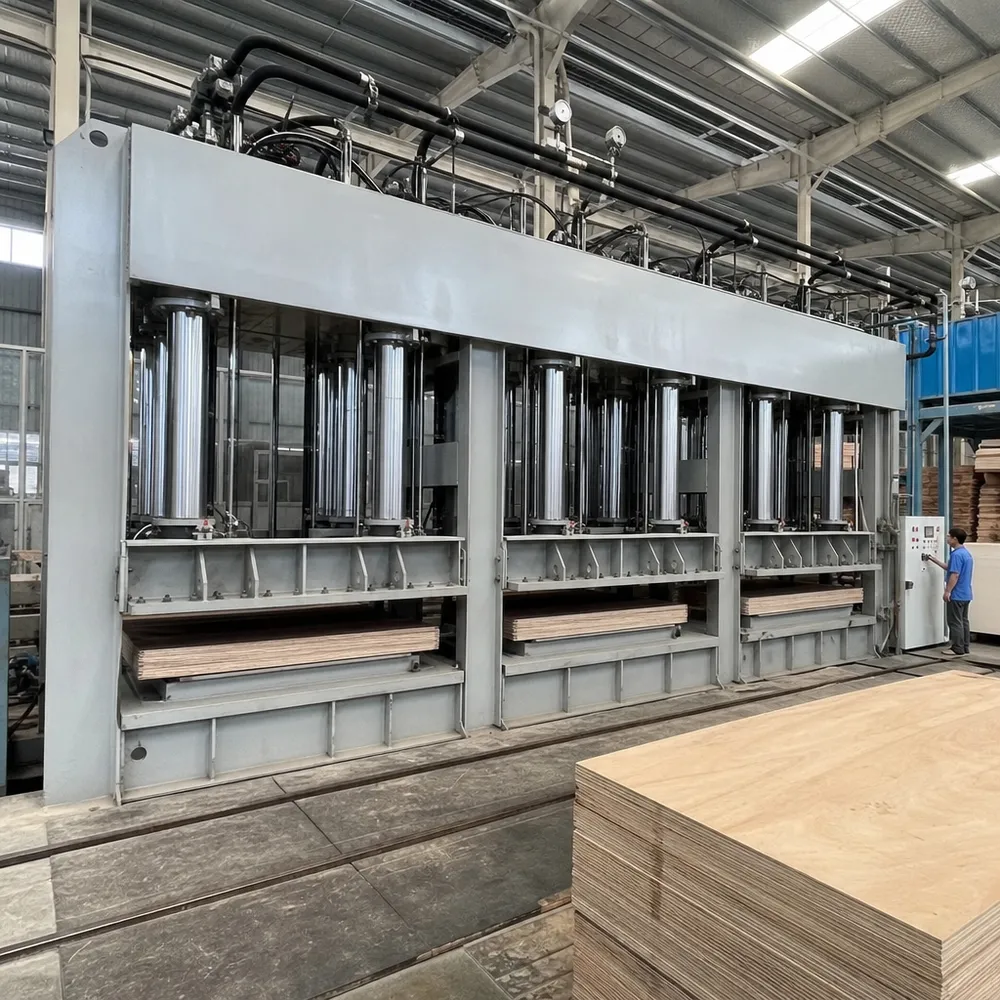
Post-Press Delamination Check: Every Structural Panel
After pressing, every structural panel goes through a post-press delamination check — we tap the panel surface and listen for hollow spots that indicate a failed glue line. Any panel that shows a suspect area is pulled for destructive testing before the batch is released.
This sounds obvious, but it's a step that gets skipped under production pressure. We keep it in the process because the cost of one container of delaminated structural panels in a construction project is orders of magnitude higher than the cost of the check.
Thickness Selection and Load Application Guide
Choosing the right structural plywood thickness for your market comes down to the span, load, and building code requirements your buyers are working to. Here's how the thickness range maps to typical structural applications.
Wall Sheathing & Secondary Bracing
Wall sheathing in light-frame construction, secondary bracing panels, and packaging applications where structural rigidity is needed. Span ratings typically support 400mm stud spacing under standard residential loads.
Residential Roof Sheathing & Floor Underlayment
Highest VolumeThe most common thickness for residential roof sheathing and floor underlayment in markets with 400–600mm rafter/joist spacing. This is our highest-volume structural thickness — if you're building a distribution inventory, 12mm is the SKU that moves.
Commercial Floor Decking & Long-Span Roofing
Floor decking for commercial and light industrial applications, and roof sheathing where longer spans or heavier loads require additional stiffness. Common in Australian and New Zealand construction specifications.
Heavy Floor Decking & Concrete Formwork
Heavy floor decking, concrete formwork, and structural wall panels in commercial construction. At 18mm, the panel is stiff enough to span 600mm joist spacing under commercial floor loads without deflection issues.
Industrial Decking, Mezzanines & Vehicle Ramps
Order ConfirmedHeavy-duty floor decking for industrial facilities, mezzanine platforms, and vehicle ramps. Also used in engineered timber construction as structural sheathing elements. We run 21mm and 25mm on confirmed orders — lead time is the same as standard thicknesses once the order is confirmed.
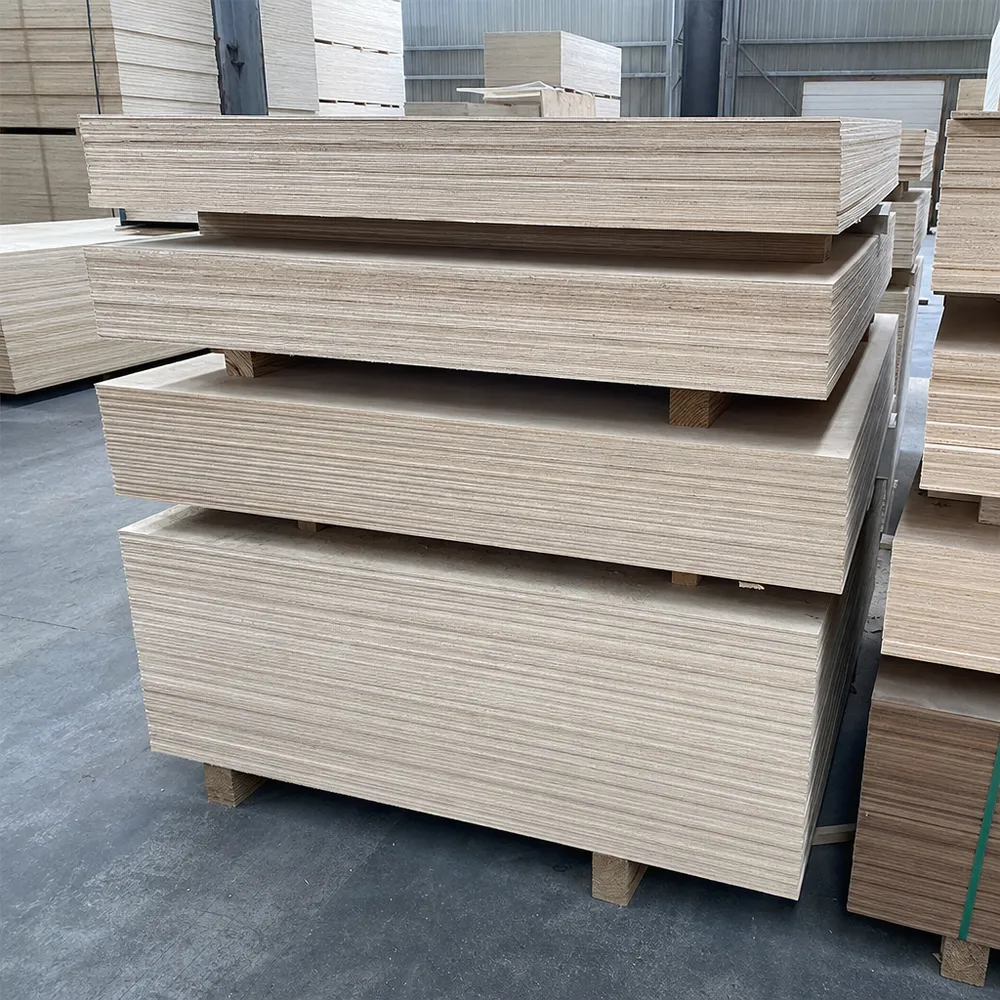
Working to a Specific Building Code?
If your buyers are working to specific span tables or building codes, send us the specification and we'll confirm which panel configuration meets it.
Thickness Quick-Reference
| Thickness | Primary Application | Typical Span | Market |
|---|---|---|---|
| 9mm | Wall sheathing, secondary bracing, packaging | 400mm stud spacing | Residential |
| 12mm Top SKU | Roof sheathing, floor underlayment | 400–600mm rafter/joist | Residential |
| 15mm | Commercial floor decking, long-span roofing | 600mm+ rafter/joist | Commercial / AU & NZ |
| 18mm | Heavy floor decking, concrete formwork, wall panels | 600mm joist (commercial) | Commercial |
| 21–25mm | Industrial decking, mezzanines, vehicle ramps, engineered timber | Heavy-duty spans | Industrial / Engineered |
Market Segments Where Structural Plywood Generates Repeatable Volume
Four buyer categories drive consistent structural plywood volume. Each has distinct ordering patterns, specification priorities, and commercial variables that determine whether a distributor relationship holds across multiple projects.
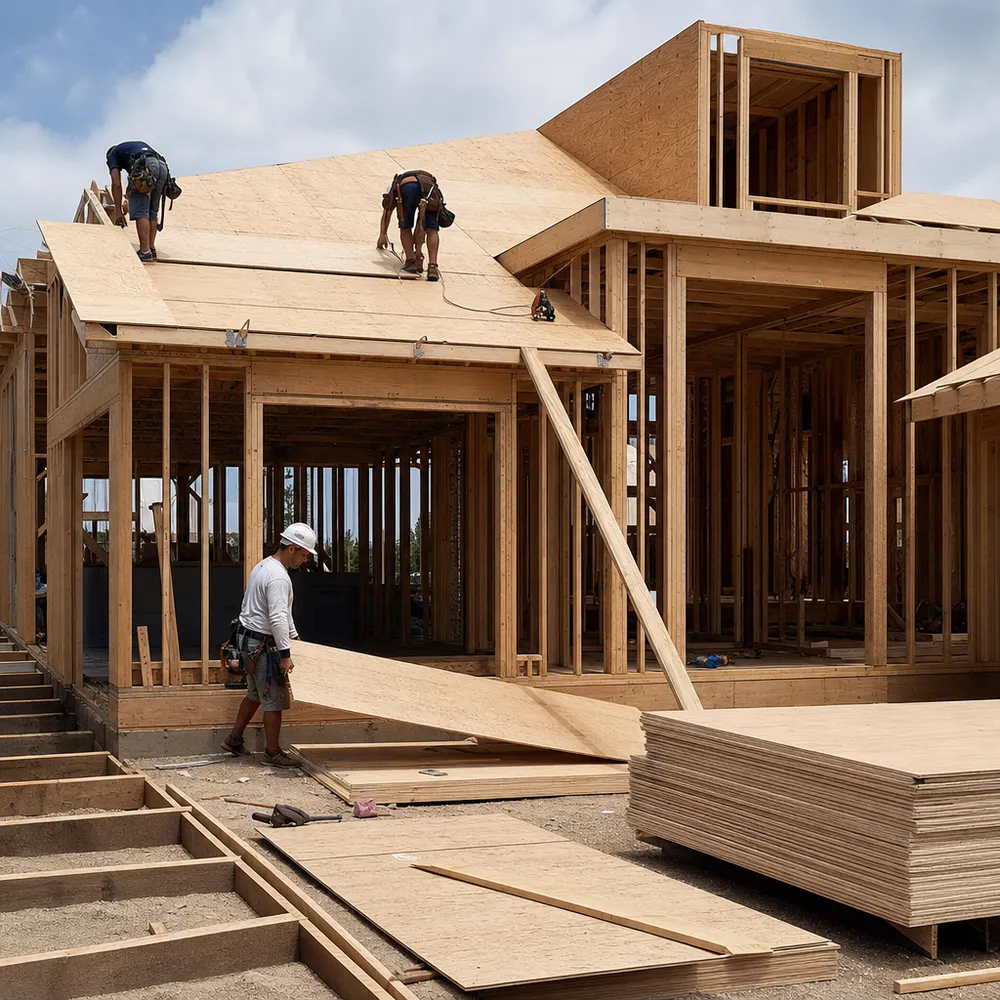
Residential Construction Supply
Core Volume DriverThe core volume driver for structural plywood distributors. A single residential subdivision of 50–100 homes consumes 12mm and 18mm structural panels across roof sheathing, floor decking, and wall bracing — typically 200–500 m³ per project depending on construction type.
Builders reorder by project phase, so a distributor with a reliable structural plywood supply becomes a preferred vendor across multiple projects from the same developer. The key commercial variable here is consistency: builders spec a panel once and expect every delivery to match. Thickness variation or bonding inconsistency forces re-specification, which costs the distributor the relationship.
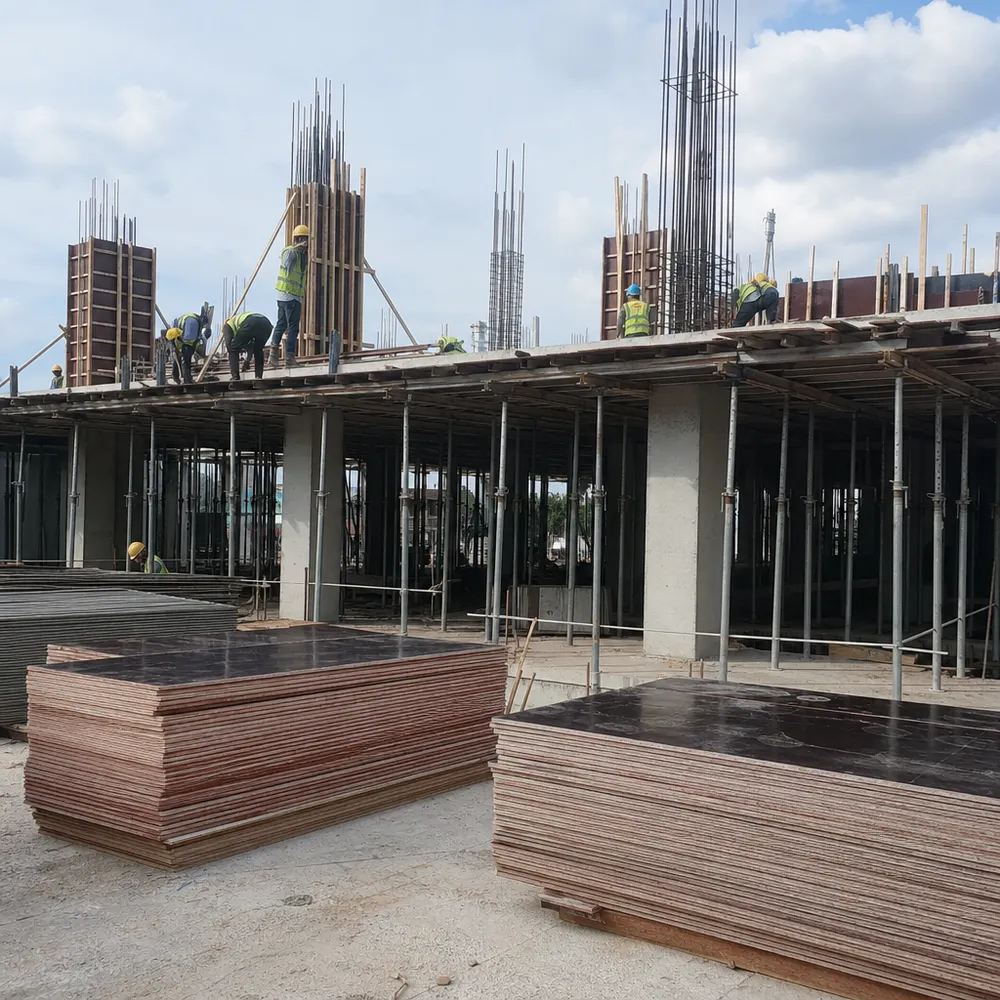
Commercial Construction & Fit-Out
Formwork & SheathingCommercial contractors use structural plywood for concrete formwork, temporary decking, and structural sheathing in steel-frame buildings. Formwork applications are particularly volume-efficient for distributors — the same panels are reused 4–8 times on a project before being replaced.
This means contractors order in bulk at project start and reorder mid-project when panels reach end-of-life. Our 18mm structural panels with C/D face grade are the standard specification for this segment.
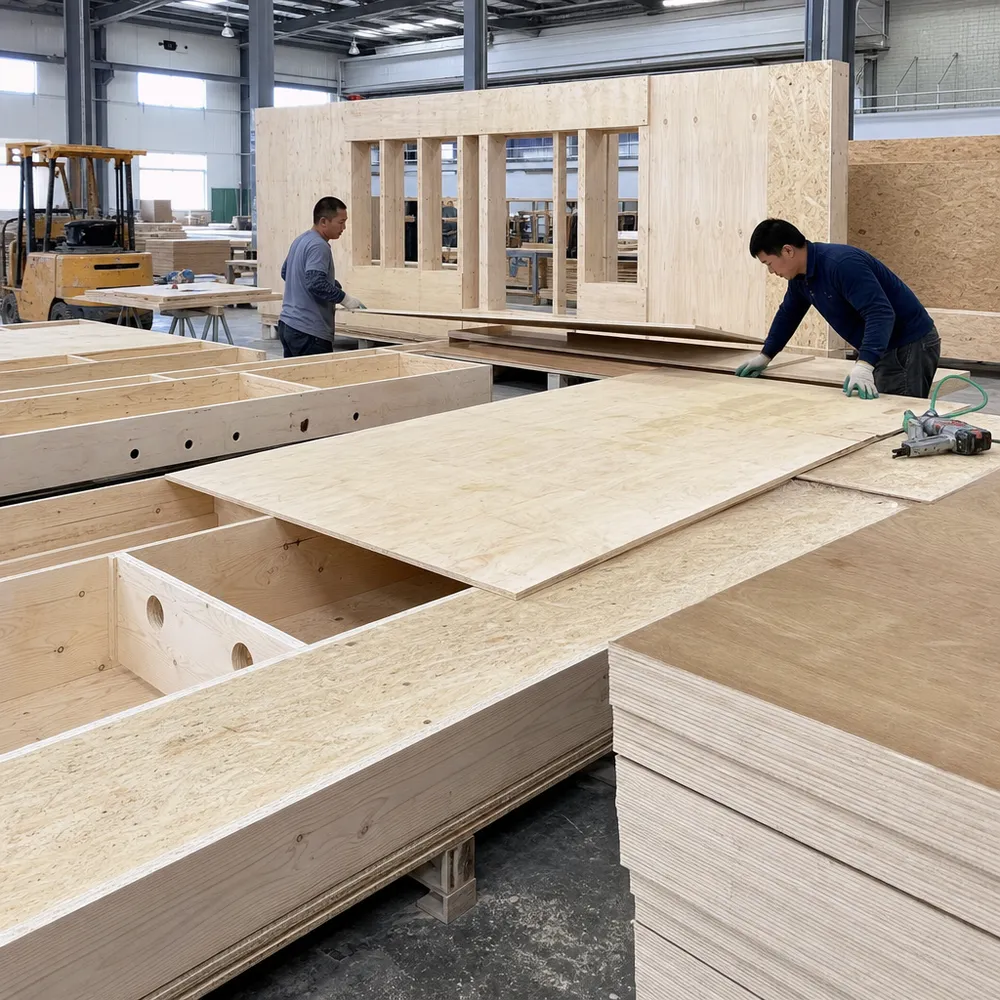
Prefabricated Building Manufacturers
High-Value AccountsModular home builders, container home fabricators, and SIP panel manufacturers use structural plywood as a core component in wall and floor assemblies. This segment orders in consistent volumes on production schedules rather than project-by-project, making it a high-value account for distributors.
Specification requirements are tighter — dimensional consistency matters when panels are cut to precise module dimensions on automated equipment. FSC certification is common in this segment because prefab builders often supply into green-building projects.
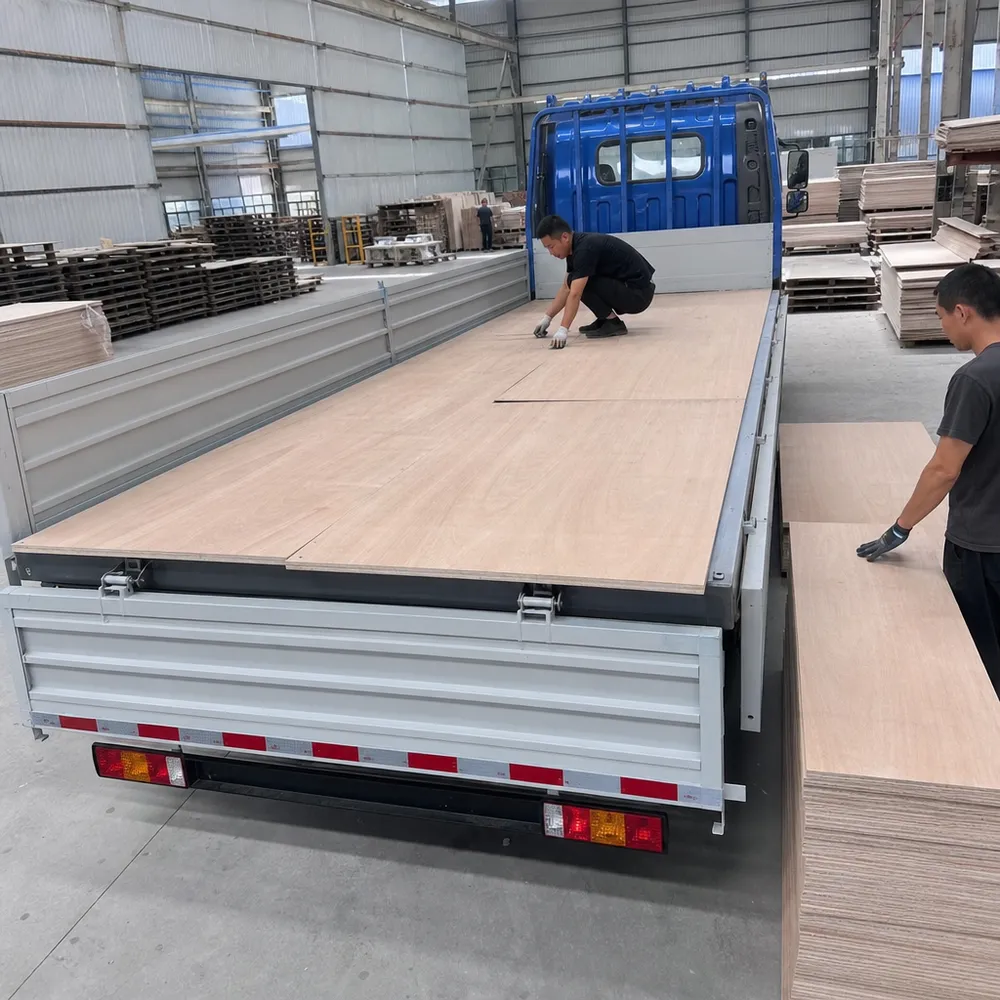
Overseas Component Manufacturers
Production-Schedule BuyersFurniture manufacturers using structural-grade panels for load-bearing frames, vehicle body builders using plywood for truck floors and trailer decking, and packaging manufacturers who need structural rigidity represent a different buying pattern. These buyers purchase on production schedules, not construction timelines.
They're sensitive to thickness tolerance and surface consistency because the panels go through their own downstream processing. Our ±0.2mm thickness tolerance and calibrated sanding are the specs that matter most to this segment.
Match Your Volume to the Right Thickness Mix
Tell us your target market and volume — we'll recommend the right thickness mix and confirm lead times for your segment.
Certifications That Clear Your Import Documentation
The certification stack that covers documentation requirements across North America, Europe, Australia, and the Middle East — without requiring you to qualify separate suppliers for each region.
EN 636 — EU Construction Markets
Our structural plywood carries CE marking under EN 636, the European standard for plywood used in construction. CE marking is a mandatory requirement for structural panels sold into EU construction markets.
We include the CE declaration of conformity with every EU-bound shipment.
Quality Management System
Covers our quality management system across the full production process. For buyers who need to qualify us as an approved supplier, the ISO 9001 certificate is the standard documentation request.
Audit reports are available on request.
Sustainability & Green Building
Available for structural plywood orders where your buyers have sustainability sourcing requirements or where you're supplying into green-building projects (LEED, BREEAM, Green Star).
FSC documentation adds a lead time buffer for the first order while we confirm species sourcing — subsequent orders run on standard lead time.
US Formaldehyde Compliance
Our standard production uses low-formaldehyde resin systems. CARB P2 compliance is available for structural plywood orders destined for California and other US markets with formaldehyde emission requirements.
We prepare the CARB documentation package as standard for US-bound shipments.
One Supplier. Four Markets. Full Documentation Stack.
For structural plywood going into regulated construction markets, the certification stack — CE + ISO 9001 + FSC + CARB P2 — covers the documentation requirements across North America, Europe, Australia, and the Middle East without requiring you to qualify separate suppliers for each region.
Market Coverage by Certification
Customization Parameters for Structural Plywood OEM Orders
The standard structural plywood configuration covers most distribution and construction supply needs. For OEM buyers with specific requirements, here's what we can adjust and what the constraints are.
Veneer Species Selection
Face and core veneer species can be specified to match your application requirements.
- Eucalyptus face / poplar core — cost-efficient, good surface hardness
- Full eucalyptus — higher density, better screw-holding
- Hardwood face / poplar core — for applications where face hardness matters
Species selection affects panel weight and density — relevant if your buyers are calculating structural loads or container freight costs.
Panel Dimensions
Non-standard panel sizes are available on confirmed orders. Common custom dimensions include:
- 1250×2500mm — European markets
- 915×1830mm — imperial framing dimension markets
- Custom-cut panels — prefab manufacturers needing module-specific dimensions
Custom dimensions are a scheduling and yield question for us, not a tooling cost — there's no setup charge for non-standard sizes on orders above our standard MOQ.
Thickness Tolerance Tightening
For buyers supplying automated manufacturing operations where tighter tolerance is required, we can run ±0.15mm on confirmed orders with a small premium for the additional calibration pass.
Edge Treatment
Standard export panels receive edge sealing to prevent moisture ingress during ocean transit. Available options on confirmed orders:
Branding and Marking
Panels can be marked with your brand, grade stamp, or certification mark. For distributors building a private-label structural plywood line, we handle the marking as part of the production run.
- Brand name or logo marking
- Grade stamp
- Certification mark
Minimum Order Quantities
Send us your OEM specification — we'll confirm feasibility and lead time within 48 hours.
Container Loading and Export Logistics
Structural plywood ships efficiently in standard 40HQ containers. Here's what you can expect per load, by thickness.
Loading Quantities by Thickness (1220×2440mm, 40HQ)
Loading quantities are approximate and depend on panel weight and stacking configuration. We provide a loading plan with each shipment.
Packaging for Ocean Transit
- Bundled in packs of 50–100 sheets depending on thickness
- Strapped, corner-protected, and wrapped in moisture-resistant film
- Each bundle marked with product specification, thickness, grade, batch number, and destination port
- For regulated construction markets: CE marking and certification documentation included in the shipping package
- Mixed-thickness loads available — consolidated loading reduces per-unit freight cost
Export Ports
We export from Xuzhou through:
Estimated Transit Times by Region
Structural Plywood vs. Sibling Products: Choosing the Right Panel
Structural plywood is one of several load-bearing and weather-resistant panel options in our commercial plywood range. Here's how to position it against the alternatives.
Structural vs. Exterior Plywood
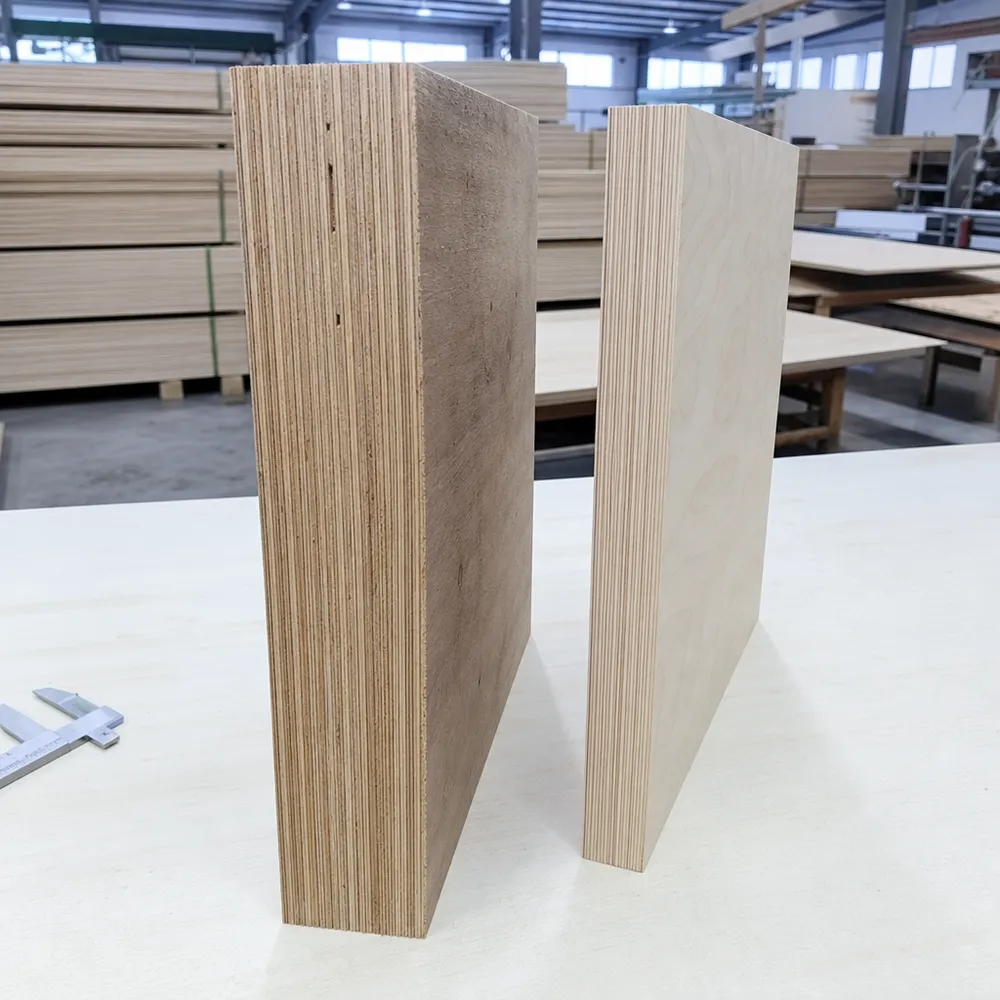
Both use WBP bonding and are rated for exposure. The difference is in the application: exterior plywood is optimized for cladding, fascia, and exposed applications where appearance matters alongside weather resistance.
Structural plywood prioritizes bending strength and load capacity over face appearance — C/D face grade vs. the cleaner faces on exterior panels. If your buyer needs a panel that's both structural and visible, exterior plywood is the right specification.
Structural vs. Marine Plywood
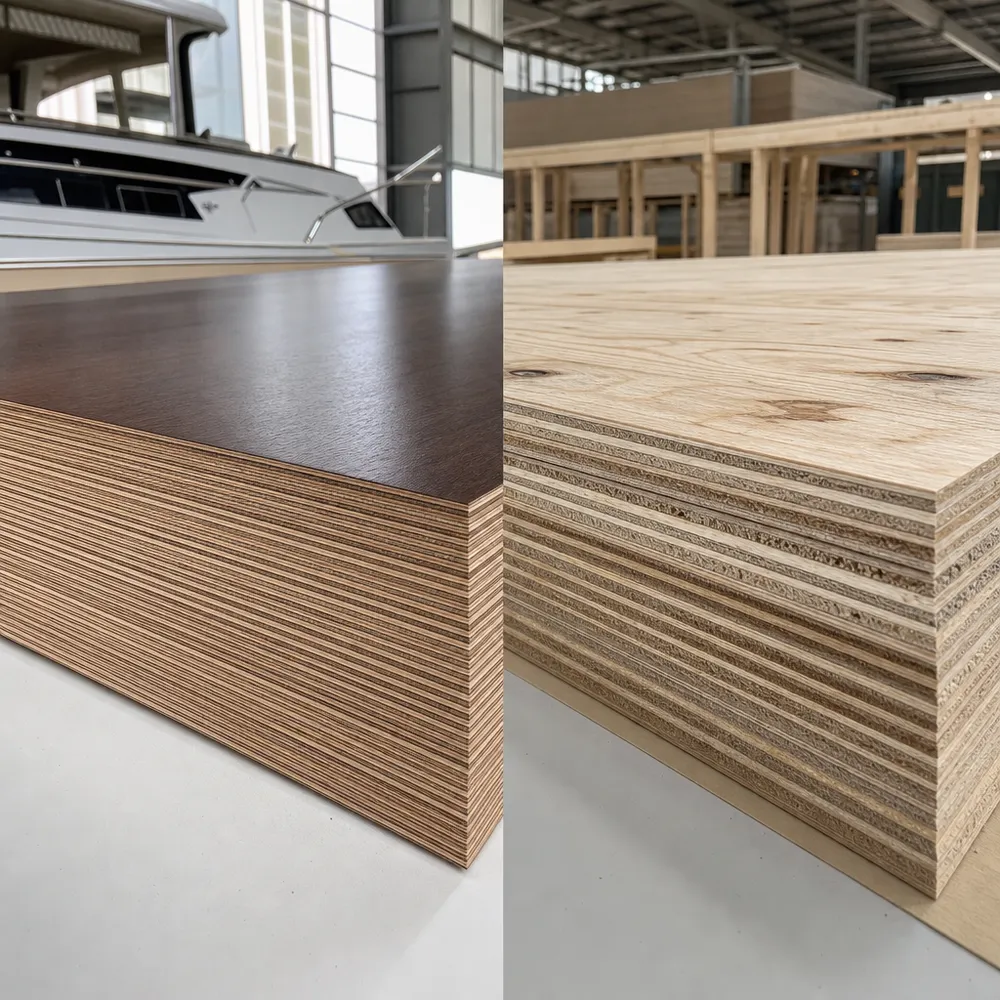
Marine plywood uses a void-free core construction with A/B face grades and is manufactured to BS 1088 or equivalent standards. It's the specification for boat building, dock construction, and applications where the panel is continuously exposed to water.
Structural plywood is the right choice for construction applications; marine plywood is the right choice when the panel lives in water. Marine plywood carries a significant price premium — specifying it for standard construction applications is over-engineering that your buyers will push back on.
Structural vs. Moisture-Resistant Plywood
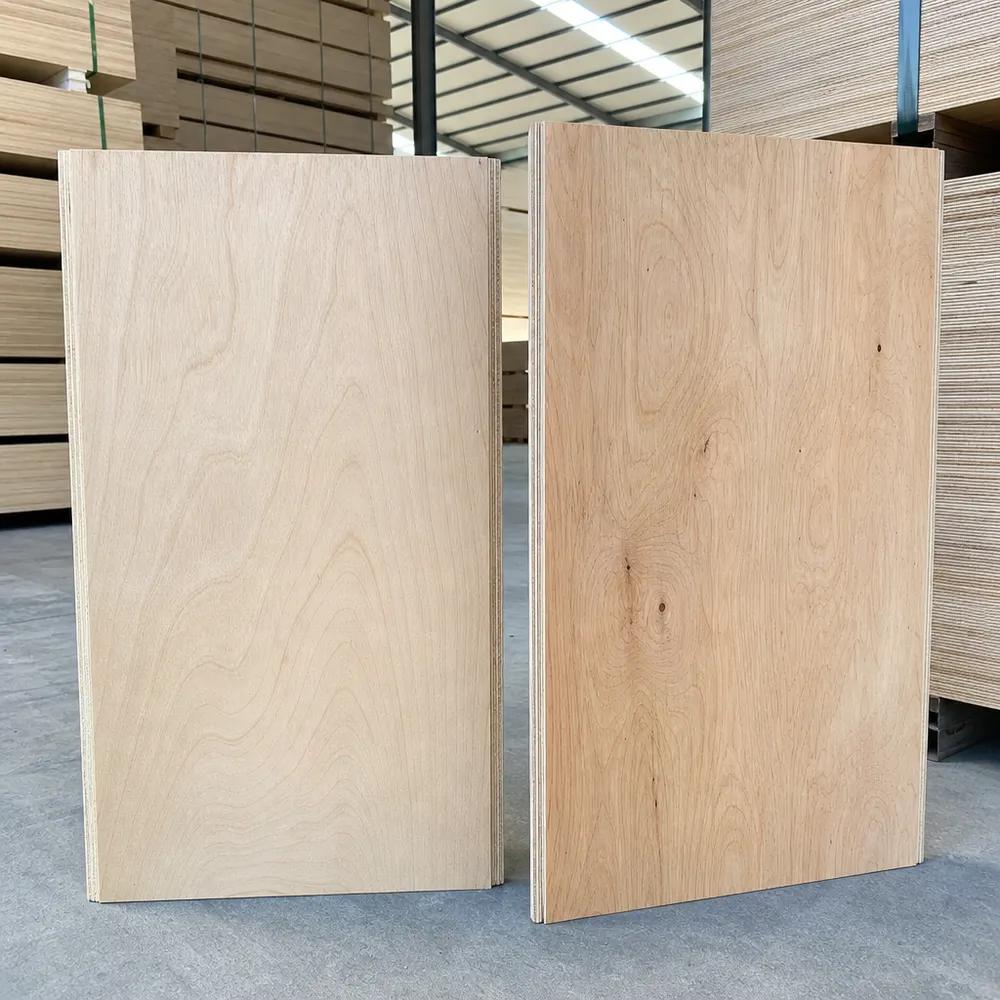
Moisture-resistant plywood uses MR (urea-formaldehyde) adhesive, which handles intermittent moisture exposure but is not rated for structural load-bearing applications.
If your buyer needs a panel for a protected structural application (interior floor decking in a dry climate, for example), moisture-resistant plywood may be sufficient and more cost-efficient. For any application with sustained load or exterior exposure, structural grade is the correct specification.
| Panel Type | Adhesive | Face Grade | Primary Use | Price Tier |
|---|---|---|---|---|
| Structural Plywood | WBP Phenolic | C/D | Load-bearing construction, subfloor, formwork | Mid |
| Exterior Plywood | WBP Phenolic | A/B or B/C | Cladding, fascia, visible exterior applications | Mid–High |
| Marine Plywood | WBP Phenolic | A/B (void-free) | Boat building, dock construction, continuous water exposure | Premium |
| Moisture-Resistant Plywood | MR (UF) | B/BB or C/D | Protected interior, intermittent moisture, non-structural | Economy–Mid |
Frequently Asked Questions
Common specification, certification, and logistics questions from importers and distributors sourcing structural plywood.
The core difference is the adhesive system and the bonding specification. Structural plywood uses WBP (weather and boil proof) phenolic resin adhesive, which maintains bond integrity under sustained load, humidity cycling, and temperature variation. Standard commercial plywood typically uses MR (moisture-resistant) or interior-grade adhesive, which is adequate for protected interior applications but not rated for structural load-bearing use.
The veneer layup and face grade also differ — structural panels use cross-grain construction optimized for bending strength, with C/D face grades rather than the A/B grades used in furniture and cabinetry panels.
CE marking under EN 636 is the mandatory requirement for structural plywood sold into EU construction markets. EN 636 covers three classes: EN 636-1 (dry conditions), EN 636-2 (humid conditions), and EN 636-3 (exterior conditions). For most structural construction applications, EN 636-2 or EN 636-3 is the relevant specification.
Our structural plywood carries CE marking, and we include the declaration of conformity with every EU-bound shipment. If your buyers are working to a specific EN 636 class, confirm it when you send the inquiry and we'll verify the panel configuration meets it.
For residential floor decking on 400mm joist spacing, 15mm structural plywood is typically sufficient. For 600mm joist spacing or commercial floor loads, 18mm is the standard specification. For industrial applications — warehouse floors, mezzanine platforms, vehicle ramps — 21mm or 25mm is the appropriate range.
These are general guidelines based on typical span table values; your buyers should verify against the specific building code and span tables for their market. If they're working to AS/NZS 2269, EN 636, or PS 1/PS 2, send us the specification and we'll confirm the right panel configuration.
Delamination in structural plywood after installation is almost always a moisture management issue, not a panel defect. The most common failure mode: panels installed before the building is weathertight, exposed to rain or condensation, and then sealed in place. The moisture drives into the panel edges and glue lines, and even WBP bonding has limits under sustained saturation.
The practical prevention: store panels under cover before installation, seal cut edges with a compatible edge sealant, and ensure the building envelope is closed before panels are permanently enclosed. For applications with ongoing moisture exposure (subfloor over crawl spaces, for example), specify a panel with edge sealing and ensure adequate ventilation in the cavity.
Key prevention checklist: Store under cover before installation · Seal all cut edges · Close building envelope before enclosing panels · Ensure cavity ventilation for subfloor applications.
Our standard MOQ for structural plywood is one 40HQ container, which covers approximately 48–54 m³ depending on thickness. For buyers who need mixed thicknesses, we can consolidate multiple thicknesses into a single container load.
For trial orders or new product introductions, we can discuss smaller quantities — send us your target volume and we'll work out what makes sense for both sides.
Yes — 18mm structural plywood is the standard specification for concrete formwork in most markets. The WBP bonding handles the moisture exposure from fresh concrete, and the panel stiffness at 18mm is sufficient for standard pour depths.
For high-pressure pours or applications requiring multiple reuses, film-faced plywood is the better specification — the phenolic film surface releases from concrete cleanly and extends panel reuse life to 8–15 pours versus 4–6 for uncoated structural plywood.
Formwork tip: If your buyers are doing repeated pours, film-faced plywood will reduce their per-pour cost significantly. We supply both — mention the application when you inquire and we'll recommend the right panel.
Ready to source structural plywood
at the right specification?
Send us your thickness, grade, certification, and target volume. We'll come back with a competitive FOB price and lead time — usually within one business day.
No commitment required · FOB pricing · CE, FSC & CARB documentation available
Get a Quote for Structural Plywood
Send us your target thickness, panel size, volume, and destination market. We'll come back with a detailed quote, the relevant certification documentation for your import requirements, and loading quantities for your container planning.
What to Include in Your Enquiry
-
1
Target thickness
Specify the nominal thickness or range you need — 9mm, 12mm, 15mm, 18mm, 21mm, or 25mm.
-
2
Panel size
Standard 1220×2440mm or custom dimensions for your market or project specification.
-
3
Volume
Estimated order quantity in m³ or number of panels — even a rough figure helps us size the quote accurately.
-
4
Destination market
Country or region so we can include the correct certification documentation for your import requirements.
Test Before You Scale
Most buyers in this category start with a single 40HQ container to test the specification against their market before scaling volume. We can ship samples before the container order if you need to verify the panel against a specific project specification.
What We Send Back
- Detailed FOB / CIF price breakdown
- Relevant certification documentation for your import market
- Container loading quantities for your logistics planning
- Sample availability and lead time confirmation
Xuzhou QD Wood Industry Co., Ltd.
No. 88 Sanbao Industrial Park, Tongshan District, Xuzhou, Jiangsu Province, 221116, China