

Marine Plywood Manufacturer
Factory-direct marine plywood built for full water exposure — WBP phenolic glue, void-free core, export-grade moisture control. Every panel is pressed with waterproof boiling-proof adhesive and inspected for internal voids before it ships. Your downstream customers get panels that don't delaminate; you get fewer returns.
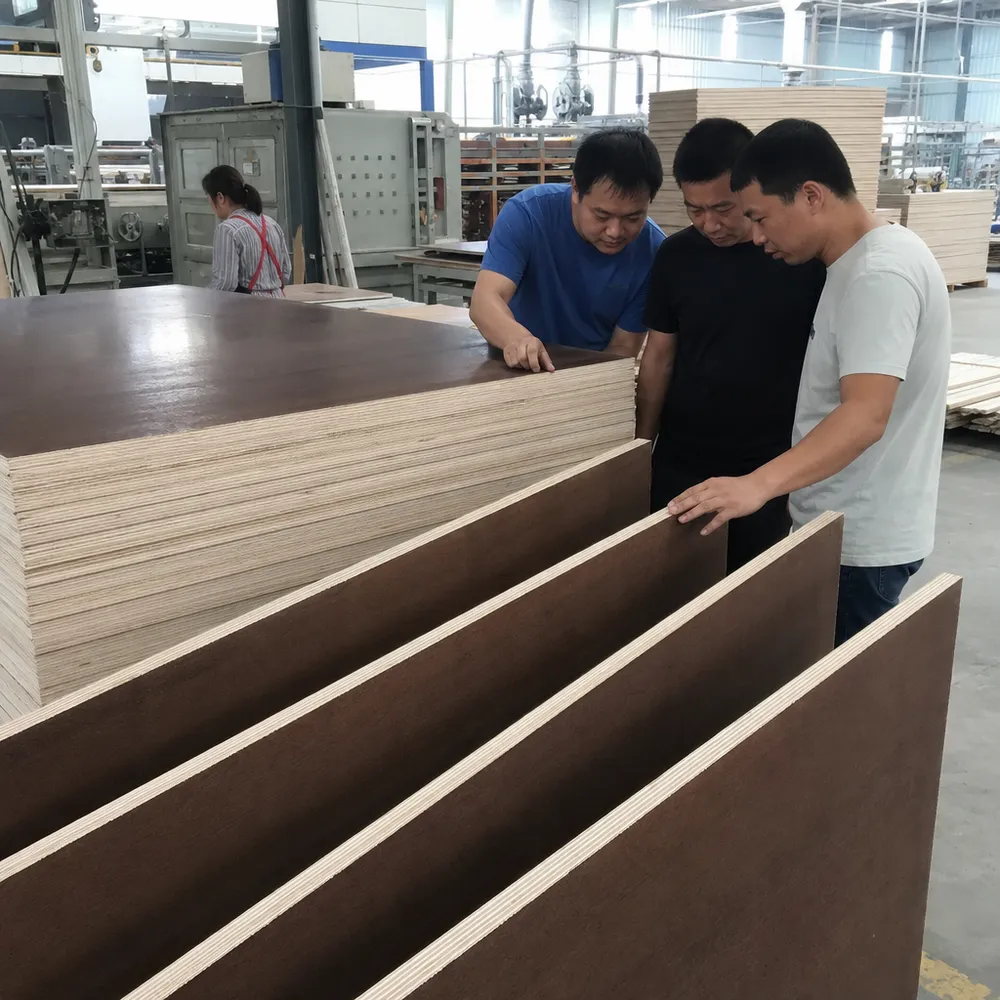
What Marine Plywood Actually Means — and Why the Distinction Matters for Your Orders
Marine plywood is not just waterproof plywood with a different label. The two products share water resistance as a goal but diverge sharply in how they achieve it — and that gap is exactly where buyer complaints originate.
Standard waterproof plywood uses WBP (water-boiling-proof) glue on the face layers but may tolerate small voids in the core. Marine grade plywood goes further: the core must be void-free across every layer, the veneer species must be close-grained and defect-controlled, and the adhesive must maintain bond integrity through repeated wet-dry cycling, not just a single soak test.
The reason voids matter so much is structural — a void in the core creates a stress concentration point. Under load in a wet environment, that's where delamination starts. By the time the panel fails visibly, the damage has been building for months.
We produce marine plywood to BS 1088 and equivalent standards, using hardwood face and core veneers with no core gaps, no knot holes, and no filler patches. The glue line is phenolic WBP throughout — not just on the face layers.
A common cost-cutting practice to watch for:
Some factories use WBP on the outer plies and a lower-grade adhesive on the inner core layers to reduce cost. That construction passes a surface soak test but fails in prolonged immersion. We don't do that — our phenolic WBP glue line runs through every layer of every panel.
For your business, the distinction translates directly: marine plywood commands a price premium in every market we ship to. Buyers who stock it alongside standard exterior plywood carry a higher-margin SKU that serves a specific, non-substitutable demand — boat builders, marine contractors, coastal construction, and high-humidity interior applications where the buyer's customer will not accept delamination risk.
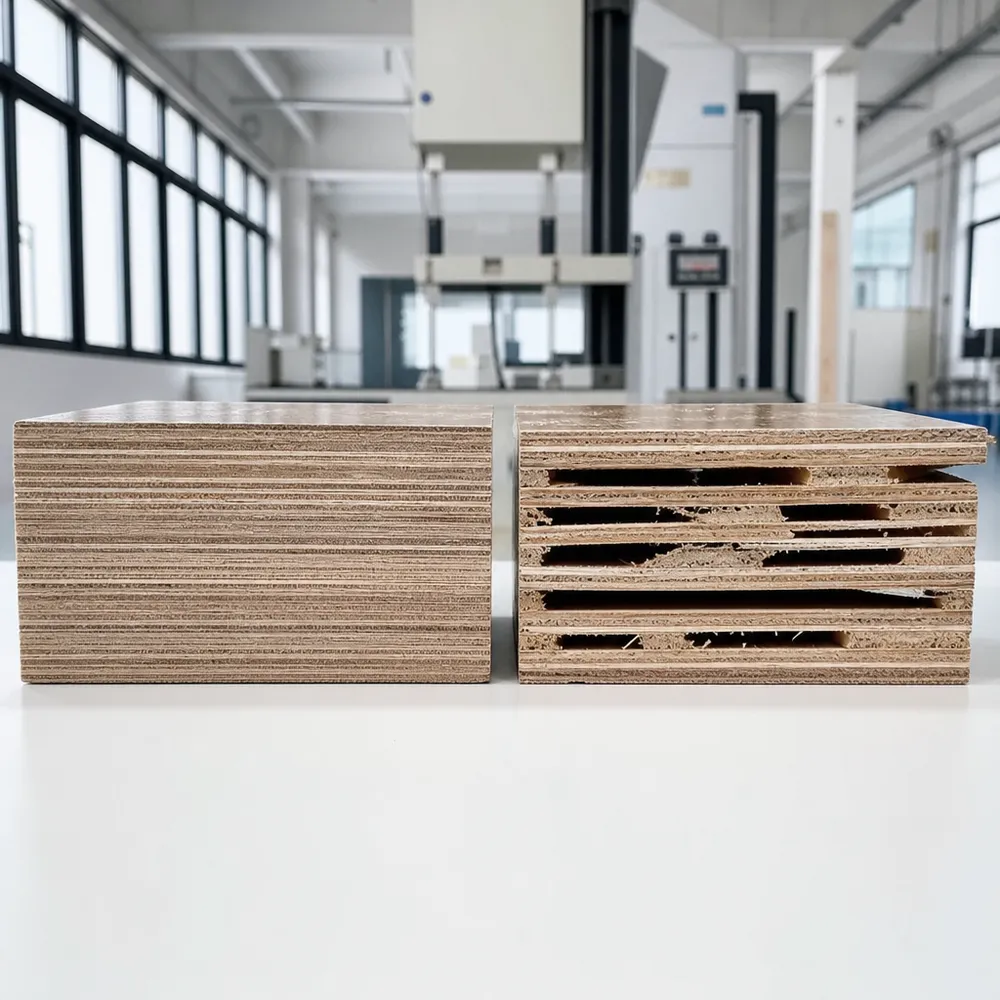
Marine Grade
- WBP phenolic glue — all layers
- Void-free core, no filler patches
- Close-grained, defect-controlled veneers
- Survives repeated wet-dry cycling
- BS 1088 / EN 636-3 compliant
Standard Waterproof
- WBP glue on face layers
- Core voids may be tolerated
- Inner layers may use lower-grade adhesive
- Passes surface soak test
- Risk of failure in prolonged immersion
Marine Grade Serves These Demand Segments
Technical Specifications
Specifications shown are standard production values. Contact us for exact data sheets on your target thickness and grade.
Standard Production Specifications
| Parameter | Specification |
|---|---|
| Glue Type | WBP Phenolic (waterproof boiling-proof) — full panel, all layers All layers |
| Core Construction | Void-free hardwood veneer core, no gaps, no filler |
| Face Veneer |
Close-grained hardwood
Okoume Meranti Poplar Specify on order
|
| Standard Thickness |
4mm 6mm 9mm 12mm 15mm 18mm 25mm
|
| Custom Thickness | 2.5mm–25mm available on confirmed orders |
| Panel Size (Standard) | 1220 × 2440mm |
| Custom Sizes | Available — confirm dimensions at order stage |
| Moisture Content | 8–12% Export-controlled, verified pre-shipment |
| Thickness Tolerance | ±0.2mm (calibrated sanding) |
| Surface Grade |
BB/BB BB/CC CC/CC A/B on request
|
| Density (typical) | 550–700 kg/m³ (species-dependent) |
| Bending Strength | ≥ 40 N/mm² (parallel to grain, 12mm panel) |
| Modulus of Elasticity | ≥ 7,000 N/mm² |
| Formaldehyde Emission | E1 / CARB P2 Low emission |
| Standards Compliance |
BS 1088 EN 636-3 ISO 1096
|
Available Thicknesses
Custom 2.5–25mm on confirmed orders.
Standards & Compliance
BS 1088
British Standard for marine plywood — the benchmark for boat-building quality
EN 636-3
European standard for plywood in exterior / severe exposure conditions
ISO 1096
International classification and terminology for plywood types
E1 / CARB P2
Low formaldehyde emission — meets EU and California indoor air quality limits
Need a Full Data Sheet?
We supply grade-specific technical data sheets with confirmed orders. Request one when you enquire.
Request Data SheetApplications Across Marine & Construction
Marine grade plywood is specified wherever panels face sustained moisture, structural load, or both. These are the primary demand segments we supply.
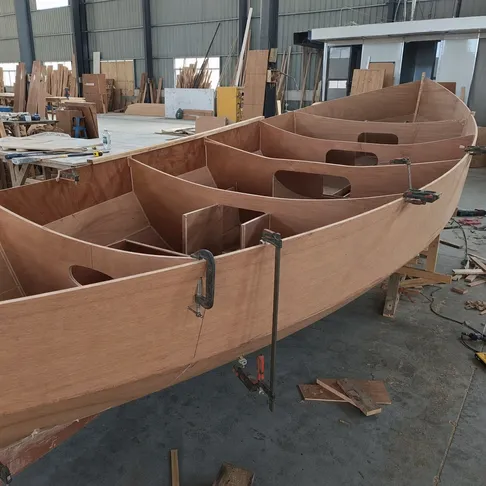
Boat Building
Hulls, decks, bulkheads, and cabin soles. The void-free core and WBP glue line are non-negotiable for structural integrity in a marine environment.
Docks & Pontoons
Permanent water contact demands panels that won't delaminate under tidal cycling. Marine grade holds its bond where standard exterior ply fails within seasons.
Coastal Construction
Salt-laden air accelerates delamination in standard panels. Marine grade is specified for sheathing, flooring, and structural panels in coastal builds.
Wet Rooms & Bathrooms
Used as a tile backer substrate and floor build-up where moisture ingress is a long-term risk. Void-free core prevents tile cracking from panel flex.
Caravans & Vehicle Fit-Out
Lightweight yet structurally consistent panels for van conversions, motorhomes, and caravans where condensation and temperature swings are constant.
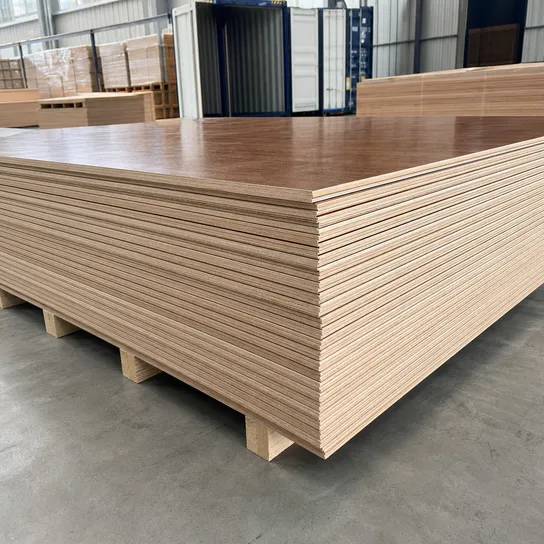
Premium Cabinetry
The flat, void-free surface and consistent thickness make marine grade the preferred substrate for high-end kitchen and bathroom cabinetry.
Not Sure Which Grade or Thickness?
Tell us your application, load requirements, and exposure conditions. We'll confirm the right specification before you order — no obligation.
Discuss your applicationHow We Build the Core: The Process Behind Zero-Void Construction
The void-free core requirement is where marine plywood manufacturing separates from standard plywood production — and it's where most of the cost difference lives.
Veneer Selection
Stricter grading pass than commercial line
Core veneers for marine panels go through a stricter grading pass than our standard commercial plywood line. Any veneer with knot holes, splits, or gaps wider than 1mm is pulled before layup.
On a standard commercial panel, small core voids are acceptable because the application doesn't demand full structural integrity through the thickness. On a marine panel, we treat every void as a potential delamination site.
The grading is done manually by experienced sorters — automated optical grading catches surface defects but misses subsurface density variations that affect bonding.
Glue Application
Phenolic WBP resin at calibrated spread weight
Automated spreaders calibrated to apply phenolic WBP resin at consistent spread weight across the full veneer surface. The spread weight matters: too light and you get bond failure at the glue line; too heavy and you get bleed-through that contaminates the face veneer.
We run the marine line at a slightly higher spread weight than our standard commercial panels because the phenolic resin needs full coverage to achieve the Class 3 bond strength required under EN 314-2.
Hot Pressing
Higher temp and pressure than standard plywood
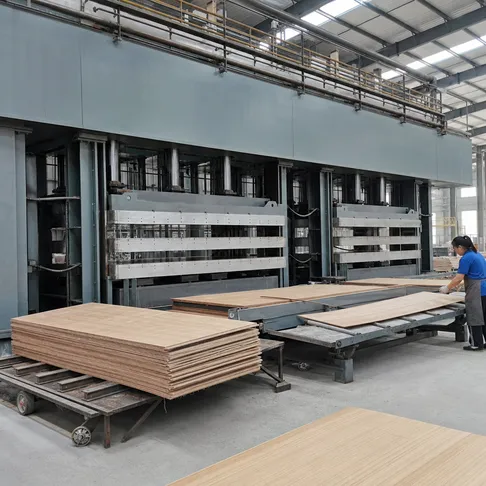
Phenolic WBP adhesive requires more heat to cure fully than urea-formaldehyde systems. Our multi-daylight hydraulic presses are calibrated for marine-grade press parameters, and press conditions are logged per batch.
If a bonding issue surfaces downstream, we can pull the batch record and identify whether it was a press parameter deviation or a veneer issue.
Post-Press QC & Sanding
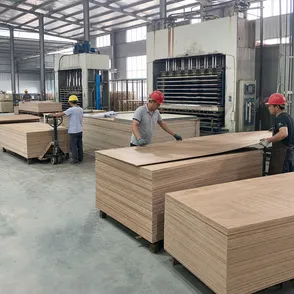
Delamination check before sanding line
Every panel goes through a delamination check before it reaches the sanding line. We tap-test panels and check edge sections for any sign of glue line failure. Panels that show any delamination are rejected — they don't get reworked and downgraded, they come out of the marine batch entirely.
Export-Grade Edge Sealing
Ocean container transit protection
Moisture content is verified at 8–12% before packing. For marine plywood going into ocean containers, we apply edge sealing on export-grade panels to prevent moisture ingress during transit.
A panel that arrives at 14% moisture because the edges absorbed humidity in the container is a problem we've eliminated from our process.
The sanding line calibrates thickness to ±0.2mm tolerance — critical when your buyer is cutting panels on CNC equipment where thickness variation causes feed errors.
Market Segments Where Marine Plywood Earns Its Premium
Marine plywood commands a price premium because it solves problems that cheaper grades cannot. Here's where that premium is justified — and what it means for your distribution business.
Boat Building & Marine Fabrication
Core demand driverBoat builders — from small custom yards to production manufacturers — specify BS 1088 marine plywood for hull planking, bulkheads, and interior structural components. The void-free core is non-negotiable here: a void in a hull panel is a structural failure point.
Distributor opportunity: Distributors supplying marine fabrication yards typically run standing orders with predictable reorder cycles tied to production schedules. The product is well-defined, the specification is standardized, and the buyers are easy to identify.
Coastal & Waterfront Construction
Multi-year project cyclesDock decking, marina structures, seawall formwork, and waterfront residential construction in high-humidity coastal zones. Contractors in these markets specify marine grade because standard exterior plywood has a documented failure history in permanent wet exposure.
Distributor opportunity: Coastal construction projects run on multi-year timelines with repeat material orders. Contractors who find a reliable marine plywood source tend to stay with it — we've had distributors in Southeast Asia and the Gulf report that once a contractor specifies our panels on a project, they return for the next one without re-quoting.
High-Humidity Interior Applications
Margin-positive segmentCommercial kitchens, cold storage facilities, food processing plants, and wet-area flooring substrates. Building codes in several markets are tightening moisture performance requirements for interior structural panels.
Marine plywood in these applications is often overkill on paper but specified by cautious engineers who've seen standard panels fail.
Distributor note: The buyer is paying for certainty, not just performance. This segment is margin-positive.
Furniture & Cabinetry for Marine Environments
Face grade mattersYacht interiors, boat cabin furniture, and outdoor furniture in coastal climates use marine plywood for its combination of dimensional stability and surface quality.
Face veneer grade matters here. We can supply BB/BB surface grade for applications where the panel will be finished or veneered, or specify face species on OEM orders.
Related Products in This Category
Customization: What You Can Specify and What Affects Lead Time
Marine plywood customization runs across four dimensions. Understanding what's standard production versus what triggers a custom run helps you plan order timelines accurately.
Thickness and Panel Size
Standard ProductionStandard production runs 4mm through 25mm in 1220×2440mm panels. Non-standard thicknesses (e.g., 7mm, 11mm, 17mm) and non-standard panel sizes are available on confirmed orders.
Lead time impact: Non-standard dimensions add 5–7 working days for scheduling. Minimum order quantities apply. Confirm dimensions before placing the order if you're supplying a boat builder with specific panel size requirements.
Face Veneer Species
Specify at Order StageStandard production uses Okoume, Meranti, or Poplar face veneers depending on availability and your market preference. We don't substitute without confirmation.
Okoume
Traditional BS 1088 face species — lightweight, close-grained. Well-regarded in European and North American boat building markets.
Meranti
Denser. More common in Southeast Asian and Middle Eastern markets.
Poplar Core + Hardwood Face
Available for buyers who need to manage landed cost.
Surface Grade
BB/BB StandardBB/BB is standard for marine applications. BB/CC is available for applications where one face will be concealed.
We don't produce marine plywood in lower surface grades — the core construction standard applies regardless of face grade.
OEM Branding and Documentation
OEM/ODM AvailableWe support OEM orders with custom panel marking, private-label packaging, and buyer-specific documentation packages.
Minimum Order Quantities
MOQ for standard marine plywood is one 20HQ container. Custom specifications — non-standard thickness, non-standard size, specific face species — typically require a minimum of one 40HQ container to justify the production run setup.
Send Us Your Specification for a Detailed QuoteCertifications and Compliance for Your Import Market
The certification stack on our marine plywood covers the key procurement gates in our export markets. Here's what each certification means for your import process.
ISO 9001:2015
CertifiedQuality Management System
Covers the quality management system — documented process controls, batch traceability, and corrective action procedures. For buyers who need to qualify us as an approved supplier, the ISO certificate is the starting point.
FSC Chain of Custody
CertifiedForest Stewardship Council
The wood fiber in our marine panels can be traced to certified forests. If your buyers have sustainability sourcing policies — increasingly common in European and North American markets — FSC documentation is a procurement requirement, not a differentiator.
We carry FSC as standard — not as a special option.
CARB P2
CompliantCalifornia Air Resources Board Phase 2
The most stringent formaldehyde emission standard in our export markets. Our marine plywood meets CARB P2 as a baseline production standard, not as a special option.
For US-bound shipments, we prepare the CARB documentation package automatically.
CE Marking
IncludedEuropean Construction Product Regulations
For marine plywood going into European building applications, CE documentation is included with shipment.
BS 1088 Compliance
British Standard for Marine Plywood
Our marine plywood is produced to BS 1088 standard — void-free core, WBP phenolic adhesive, close-grained hardwood veneers. We can provide test reports on request.
Note: BS 1088 is a product standard, not a third-party certification — compliance is declared by the manufacturer and verified through testing. We maintain test records and can provide documentation for buyer qualification processes.
BS 1088 Requirements We Meet
Third-Party Pre-Shipment Inspection
Third-party pre-shipment inspection is available through SGS, Bureau Veritas, or your preferred agency. We coordinate access and have the documentation ready before the inspector arrives.
Packaging, Container Loading, and Transit Protection
Marine plywood for export is packed to survive ocean transit without surface damage or moisture ingress. Every bundle is prepared to the standard your downstream customers expect.
Bundle Preparation Standards
-
Bundle size
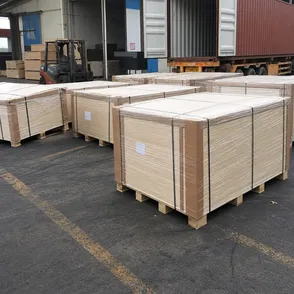
Panels bundled in packs of 50–100 sheets depending on thickness, strapped with steel banding
-
Corner protection
Edge protection with corner boards on all four corners of each bundle
-
Moisture-resistant film wrap
Full bundle wrap — critical for marine plywood, which is going into applications where the buyer's customer will not accept any surface moisture damage
-
Bundle marking
Each bundle marked with species, thickness, grade, quantity, batch number, and destination port
-
Edge sealing
Applied on all export-grade marine panels before packing
Container Loading Quantities
Standard 1220×2440mm panels load efficiently into 20HQ and 40HQ containers. Use these figures for freight planning and landed cost calculations.
| Thickness | 20HQ (approx.) | 40HQ (approx.) |
|---|---|---|
| 6mm | 1,800–2,000 sheets | 3,800–4,200 sheets |
| 9mm | 1,200–1,400 sheets | 2,500–2,800 sheets |
| 12mm | 900–1,000 sheets | 1,900–2,100 sheets |
| 18mm | 600–650 sheets | 1,250–1,350 sheets |
Loading quantities are approximate and vary with exact panel weight and stacking configuration. We provide a loading plan with each shipment.
Transit times from Xuzhou. Actual transit varies by carrier and routing.
Marine Plywood vs. Other Waterproof Grades: Choosing the Right Product for Your Market
If you're stocking multiple plywood grades, the positioning between marine and adjacent products matters for your sales team and your downstream customers.
| Attribute | Marine Plywood | Exterior Plywood | Moisture-Resistant Plywood |
|---|---|---|---|
| Glue type | WBP Phenolic (all layers) | WBP Phenolic (face layers) | MR (moisture-resistant) |
| Core voids | None permitted | Small voids acceptable | Voids acceptable |
| Intended exposure | Permanent wet / full immersion | Exterior, intermittent wet | Interior, high humidity |
| Standard | BS 1088, EN 636-3 | EN 636-2 | EN 636-1 |
| Price position | Premium | Mid | Standard |
| Typical buyer | Boat builders, marine contractors | Construction, outdoor furniture | Interior fit-out, furniture |
Marine Plywood
The right specification when the application involves permanent water contact or structural load in a wet environment. Zero voids, WBP phenolic throughout all layers.
Premium gradeExterior Plywood
For exterior construction applications where the panel will be protected by cladding or coating. More cost-effective than marine grade for applications that don't require full immersion resistance.
View Exterior PlywoodMoisture-Resistant Plywood
For interior applications in humid environments without direct water contact. Covers the requirement at a lower landed cost than marine grade.
View MR PlywoodStocking All Three Grades: The Distribution Advantage
Stocking all three grades gives your distribution business a complete waterproof plywood range — you can match the specification to the application rather than defaulting to marine grade for everything (which costs your customers more than necessary) or defaulting to standard grade (which generates warranty claims).
Marine plywood is the right specification when the application involves permanent water contact or structural load in a wet environment. For other waterproof requirements, the adjacent grades deliver the right performance at the right price point.
FAQ: Marine Plywood Sourcing Decisions
Common questions from importers, distributors, and boat builders evaluating marine plywood specifications and supplier qualification.
BS 1088 requires void-free core construction, close-grained hardwood veneers with no knot holes or filler patches, and WBP phenolic adhesive throughout all layers. Standard WBP plywood uses waterproof glue but permits core voids and lower-grade veneer species.
In practice, the difference shows up in structural applications under sustained wet exposure — BS 1088 panels maintain integrity; standard WBP panels with core voids develop delamination at the void locations over time. For boat building and permanent marine exposure, BS 1088 is the correct specification. For exterior construction with intermittent moisture exposure, standard WBP exterior plywood is sufficient and more cost-effective.
- Void-free core construction
- Close-grained hardwood veneers
- No knot holes or filler patches
- WBP phenolic adhesive throughout
- Maintains integrity under sustained wet exposure
- Waterproof glue
- Core voids permitted
- Lower-grade veneer species allowed
- Suitable for intermittent moisture
- More cost-effective for exterior construction
Okoume is the traditional BS 1088 species — it's lightweight (important for boat building where weight matters), close-grained, and well-recognized in European and North American marine markets. If your buyers are boat builders or marine fabricators in these markets, Okoume face is the expected specification.
Meranti is denser, more common in Southeast Asian and Middle Eastern markets, and slightly more cost-effective. Poplar core with hardwood face is available for buyers who need to manage landed cost without compromising the core construction standard.
Lightweight, close-grained. Standard for European & North American marine markets. Preferred by boat builders.
Denser, slightly more cost-effective. Common in Southeast Asian and Middle Eastern markets.
Manages landed cost without compromising core construction standard. Available on request.
Specify your preference at order stage — we don't substitute species without confirmation.
Yes. Our marine plywood uses phenolic WBP resin, which is a low-formaldehyde adhesive system. All panels meet CARB P2 emission limits as a standard production specification.
For US-bound shipments, we prepare the CARB documentation package automatically — you don't need to request it separately.
Standard thickness, standard size, standard face species. One 20HQ container minimum.
Non-standard thickness, non-standard panel size, or specific face veneer species outside standard range. 40HQ minimum to justify production run setup.
For buyers new to the product, we can discuss sample orders before committing to a full container.
The most reliable method is a pre-shipment inspection by a third-party agency — SGS, Bureau Veritas, or your preferred inspector. The inspector cross-sections sample panels from the production batch and verifies core construction against the BS 1088 standard. We coordinate access and have documentation ready before the inspection.
SGS, Bureau Veritas, or your preferred inspector. Inspector cross-sections sample panels from the production batch and verifies core construction against BS 1088. We coordinate access and prepare documentation.
For buyers who want to verify before committing to a full container, we can arrange a sample shipment of 10–20 panels for your own testing.
Delamination in marine plywood has three root causes: inadequate glue spread (bond failure at the glue line), core voids (stress concentration under load), and moisture content mismatch between veneers at layup (differential expansion after pressing).
Automated glue spreaders maintain consistent spread weight across every panel, eliminating dry spots that cause glue line failure.
Core veneer grading eliminates voids before layup. No voids means no stress concentration points under load or sustained wet exposure.
Pre-press moisture verification ensures veneers are within the target range before they go into the press. Post-press delamination checks catch any panels that show glue line failure before they reach the sanding line.
Get a Quote for Marine Plywood
Send us your target specification — thickness, face species, surface grade, panel size, volume, and destination market. We'll come back with a detailed quote, the relevant certification documentation for your import requirements, and container loading quantities.
Most buyers in this category start with a sample order of 10–20 panels to verify core construction and surface quality before committing to a full container. We can arrange samples — contact us to discuss.
Other Plywood Products from QD Wood
Same factory, same quality controls — different panel types for different applications.
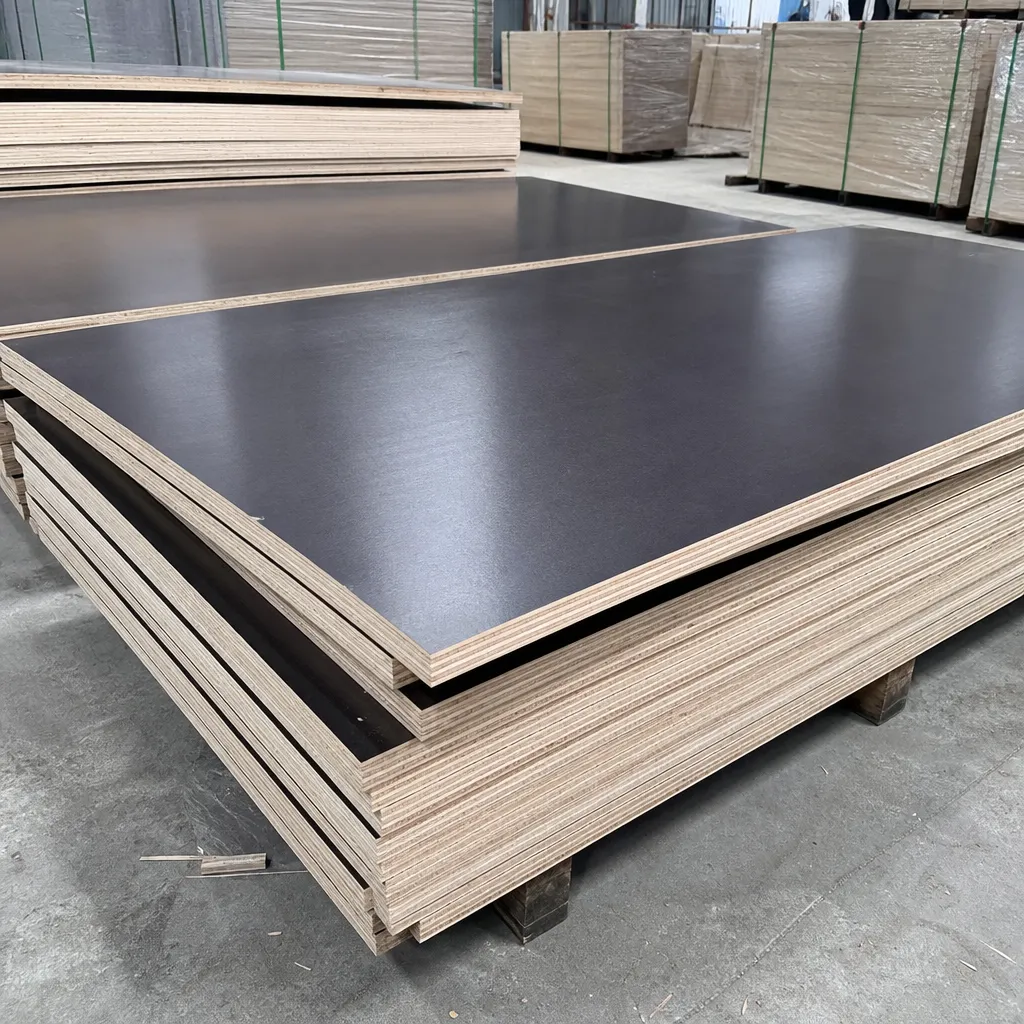
Film Faced Plywood
Black or brown phenolic film surface. 6–25 mm. Engineered for repeated concrete pours with consistent release and edge seal.
View product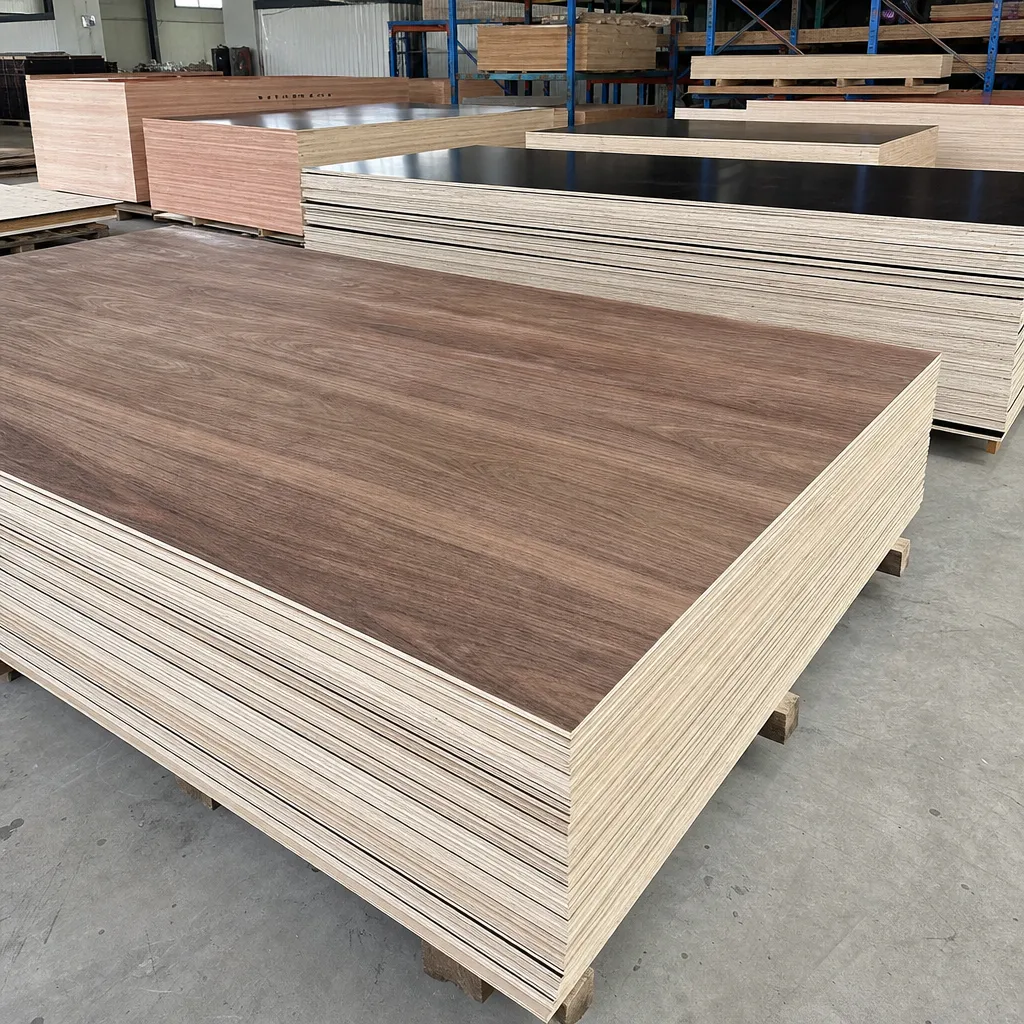
Hardwood Plywood
Birch, poplar, and eucalyptus core options. A/B through C/D face grades. Flat, stable panels for interior furniture and cabinet carcass work.
View product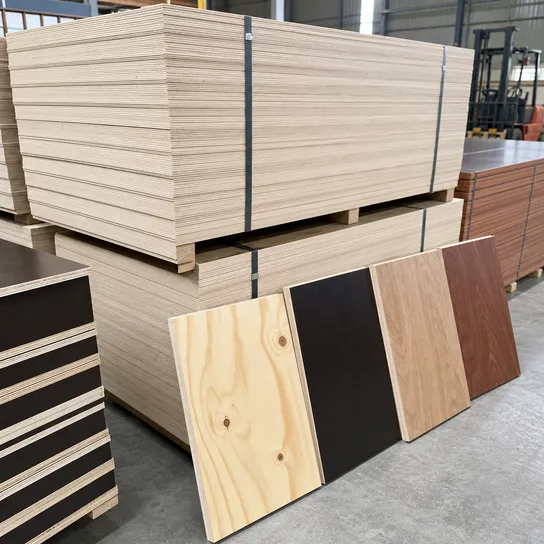
Structural Plywood
F7–F27 stress grades. Flooring, wall bracing, and roof decking applications. Stamped and certified for structural use in AU/NZ and EU markets.
View product