

18mm Blockboard Manufacturer
Solid wood strip core — the standard thickness for furniture carcasses, door cores, and interior joinery panels.
We manufacture to export-grade moisture specs (8–12%) with calibrated sanding to ±0.2mm tolerance, so your downstream cutting and assembly runs without rework.
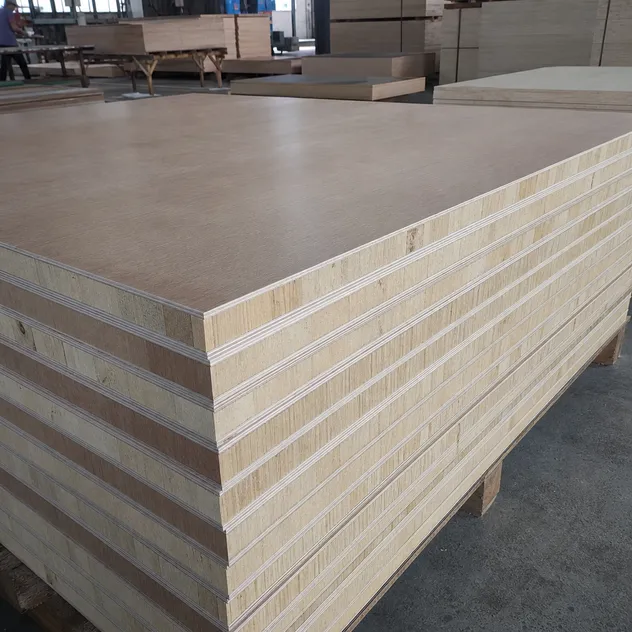
What 18mm Blockboard Is — and Where It Sits in the Blockboard Range
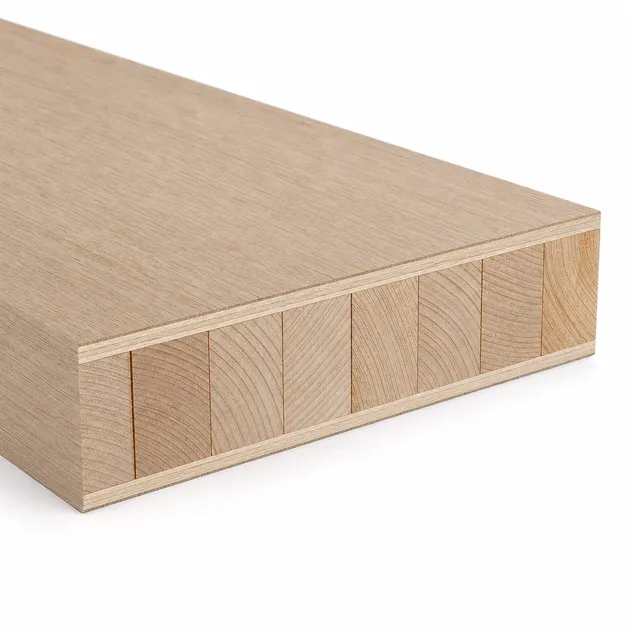
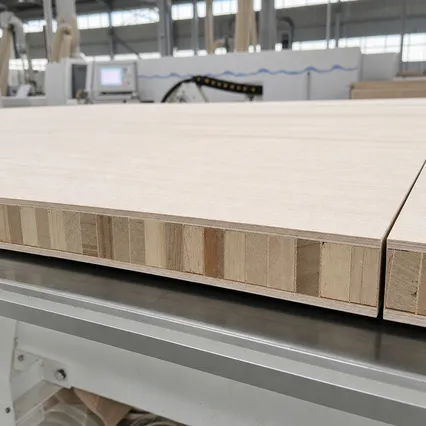
18mm blockboard is the workhorse thickness of the blockboard category. The construction is a solid wood strip core — typically poplar, pine, or eucalyptus strips edge-glued and arranged in alternating grain directions — sandwiched between two face veneers and pressed under heat and pressure. The result is a panel that combines the dimensional stability of engineered wood with the screw-holding and edge-machining characteristics of solid timber.
The 18mm dimension is the standard blockboard thickness for most furniture and interior joinery applications. It's thick enough to carry shelf loads without visible sag over standard spans (up to 900mm unsupported), rigid enough for door core blanks, and light enough that a full 1220×2440mm sheet stays manageable on a production line. When buyers ask us about standard blockboard thickness, 18mm is the answer for the majority of applications — 25mm blockboard is the step up for heavier structural panels or thicker door blanks, and we produce that too, but 18mm is where most orders land.
The face veneers on our standard 18mm blockboard are poplar or hardwood species depending on the order specification. For bare panels going into furniture manufacturing where the face will be laminated or painted, poplar face is the cost-efficient choice. For panels where the face veneer is the finished surface — or where a specific species is required for grain matching — we can specify the face veneer separately.
18mm Blockboard Technical Specifications
Specifications shown are standard production values. Actual parameters may vary by order specification. Contact us for a detailed product data sheet and confirmation of exact specs for your application.
Standard Production Parameters
Why the 8–12% Moisture Range Matters
We target 8–12% for all export-grade panels — that's the range where blockboard panels remain dimensionally stable through ocean transit and acclimatization in your destination market. Panels shipped at higher moisture content arrive flat but can cup or bow as they dry down in a climate-controlled warehouse or production facility. We've been controlling to this range since 2008 because we saw what happened to buyers who didn't — and it's now a non-negotiable part of our export production process.
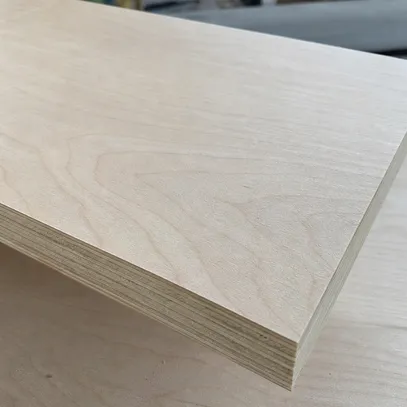
How 18mm Blockboard Is Built
The structural performance of blockboard comes directly from how the core is assembled. Here's what goes into every panel we produce — and why each step matters for the buyer.
Panel Cross-Section — 18mm
Core Species Comparison
Manufacturing Process
Core Strip Preparation
Solid wood is kiln-dried to 8–12% moisture content, then ripped into strips of 25–40mm width. Strips are sorted for defects — knots, splits, and grain irregularities are removed before assembly. This step directly determines the flatness and screw-holding performance of the finished panel.
Core Assembly & Edge Gluing
Strips are arranged with alternating grain direction where possible and edge-glued under pressure to form a solid core slab. The quality of this glue joint determines whether the panel will remain flat under load — a poorly assembled core is the most common source of blockboard warping complaints.
Cross-Band Veneer Application
Thin veneer sheets are applied perpendicular to the core strip grain on both faces of the core. This cross-banding step is what gives blockboard its dimensional stability — it resists the natural tendency of the wood core to expand and contract across the grain.
Face Veneer & Hot Press
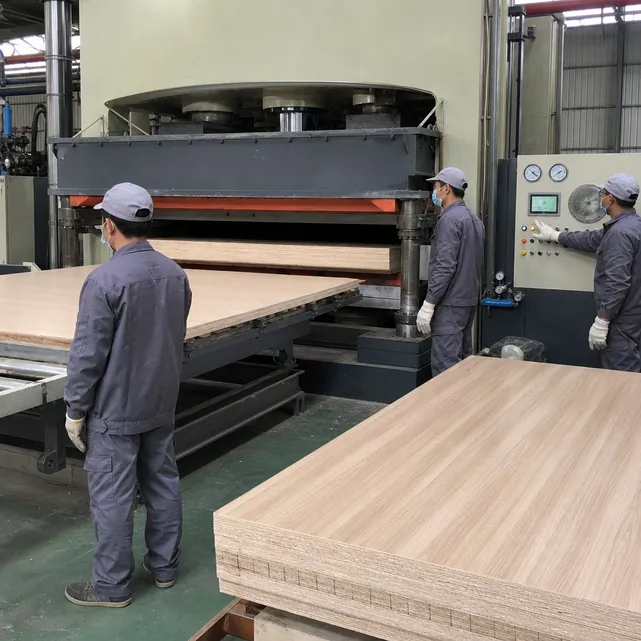
Face veneers are applied and the full panel assembly goes through a hot press at controlled temperature and pressure. Press parameters are calibrated to the glue type — MR or WBP — to ensure full bond penetration without over-compressing the core.
Sanding, Calibration & QC
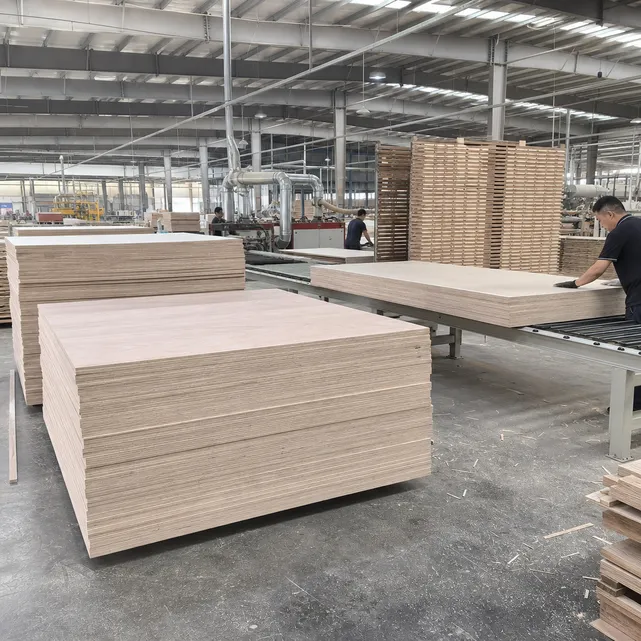
Panels are sanded to a consistent thickness tolerance of ±0.2mm across the full panel face. Each batch is checked for flatness, surface defects, and moisture content before being cleared for export. Panels that don't meet spec are pulled — not downgraded and shipped.
Our QC process is batch-level, not sample-level. Every panel in a production run is checked for thickness and flatness. Moisture content is verified by batch using calibrated meters before palletizing for export.
Where 18mm Blockboard Is Used
18mm is the most specified blockboard thickness for structural interior applications. Here's where buyers actually use it — and what drives the specification decision in each case.
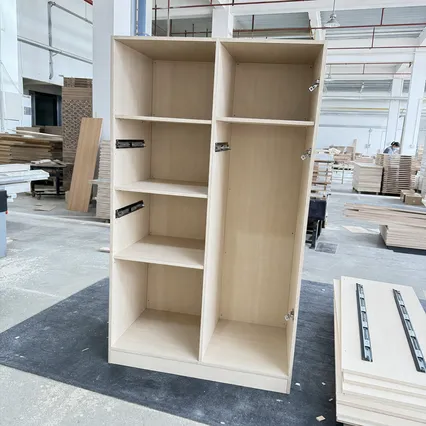
Furniture Carcasses
Cabinet boxes, wardrobe frames, and shelving units. 18mm provides the structural rigidity needed for load-bearing panels while keeping weight manageable. The solid core gives reliable screw-holding at edges — critical for hinge and drawer-runner fixings.
Door Core Blanks
Interior flush door manufacturing is one of the largest volume applications for 18mm blockboard. The solid core provides the mass and screw-holding needed for lock blocks and hinge positions, while the panel stays flat through the door skin lamination process.
Interior Joinery
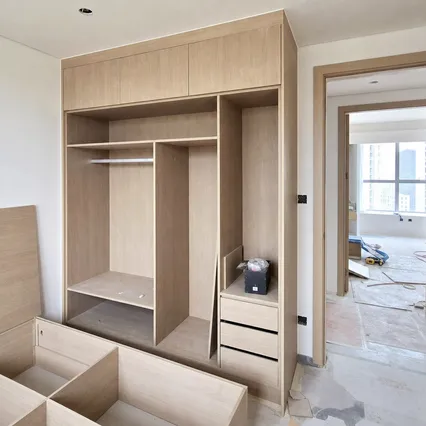
Fitted furniture, built-in units, and architectural joinery where panels need to be cut, routed, and finished on-site. 18mm blockboard machines cleanly and holds edge profiles well — important for visible joinery where MDF would chip or ply would delaminate at the edge.
Shelf Panels
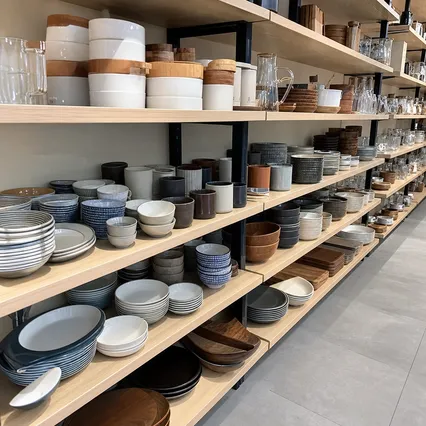
For spans over 600mm, 18mm blockboard outperforms MDF and particleboard on sag resistance due to the solid wood core. Retail shelving, library shelving, and storage systems where deflection under load is a design constraint are common applications.
Kitchen Cabinets
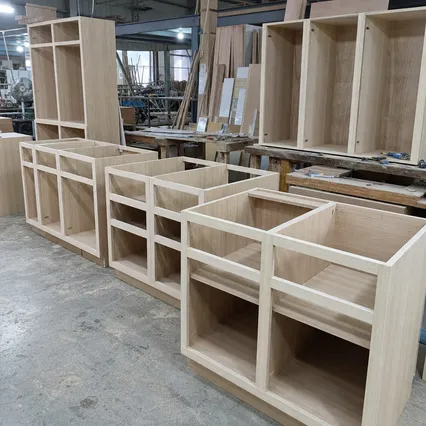
Kitchen cabinet manufacturers in markets where MR or WBP glue is specified use 18mm blockboard for carcass construction. The moisture-resistant glue option makes it suitable for kitchen environments, and the solid core handles the repeated loading of kitchen storage better than hollow-core alternatives.
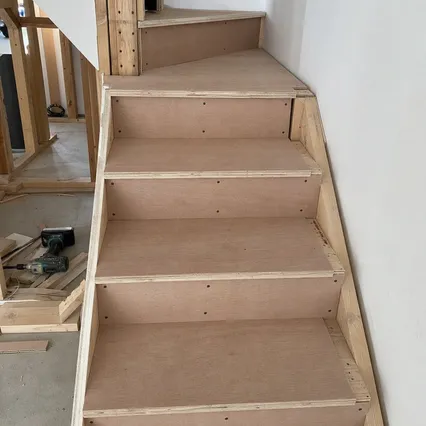
Staircase Substrates
Tread substrates and riser panels where a stable, screw-holding base is needed under a hardwood or laminate finish. 18mm blockboard provides the rigidity and nail/screw retention that particleboard can't match in this application, particularly at the nosing edge.
Not Sure Which Spec Fits Your Application?
Different applications call for different glue types, core species, and surface finishes. Tell us what you're building and we'll confirm the right specification — including whether 18mm is the right thickness or whether a different panel would serve you better.
Why Strip Width and Species Selection Affect Your Downstream Process
The solid wood strip core is what separates blockboard from MDF and particle board in terms of screw-holding and edge-machining performance. But not all blockboard cores are equivalent — strip width, species, and core assembly quality all affect how the panel behaves when your customer cuts, routes, or fastens it.
Strip Width: The 25–40mm Standard
We run core strips at 25–40mm width. This is the industry-standard balance point, and it's where we've settled after running blockboard production since our early years.
The tradeoffs at either extreme are real and affect your finished product:
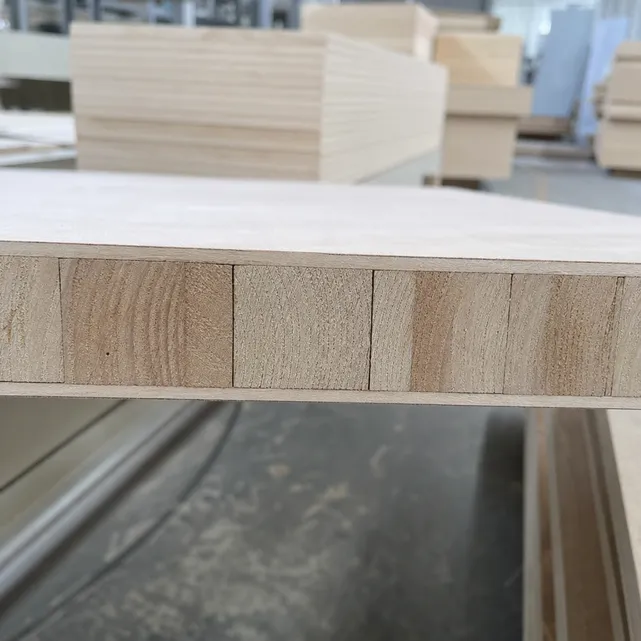
Strip width directly affects surface quality on thin face veneers. Panels with strips over 50mm can show telegraphing — visible ridges on the finished surface — that creates problems in paint or laminate finishing.
Core Species: Weight, Hardness, and Moisture Behavior
Core species matters for weight, hardness, and moisture behavior. We source core timber from approved suppliers with FSC chain-of-custody documentation, so the species you specify on your order is the species in the panel.
Poplar Core
StandardThe standard for furniture-grade blockboard. Light, machines cleanly, and holds screws adequately for cabinet and wardrobe applications.
Pine Core
High-StressDenser and harder than poplar. Improves screw-holding in high-stress joints but adds weight and cost. Suited for structural or load-bearing applications.
Eucalyptus Core
Export-GradeSits between poplar and pine in density. Increasingly common in export-grade panels due to availability and consistent quality from plantation sources.
Face Veneer Quality and Your Finishing Cost
Face veneer quality directly affects your downstream finishing cost. A face veneer with tight grain, minimal knots, and consistent thickness sands flat and accepts paint or laminate without bleed-through or surface irregularity.
We grade face veneers before pressing — panels with face defects that would affect the finished surface are pulled at the grading stage, not after pressing.
Where 18mm Blockboard Moves: Market Segments and Order Patterns
Understanding which segment you're supplying into determines which specification parameters and supply reliability factors matter most to your customers.
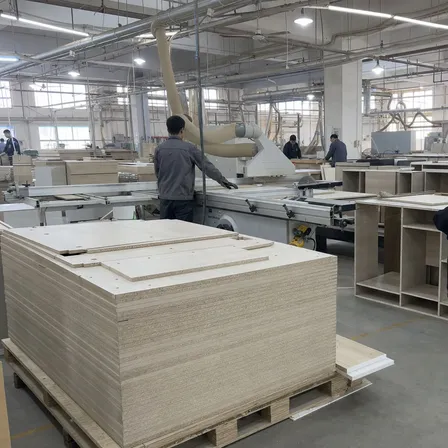
Furniture Manufacturing Supply
Largest SegmentCabinet makers, wardrobe manufacturers, and flat-pack furniture producers use 18mm blockboard as the primary carcass material — side panels, shelves, back panels, and door blanks.
Furniture manufacturers typically order in container quantities (a 40HQ holds approximately 600–700 sheets of 1220×2440×18mm blockboard depending on packing configuration), and reorder on a 4–8 week cycle once they've qualified the spec.
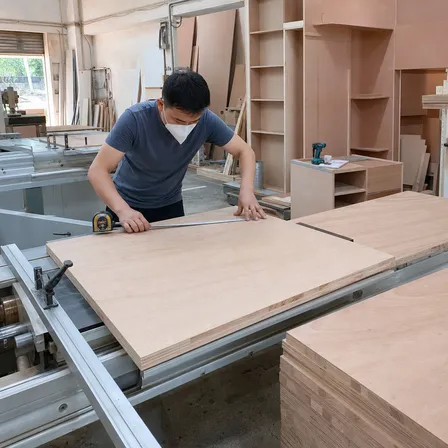
Interior Joinery and Fit-Out
Second Major SegmentContractors and joinery shops use 18mm blockboard for built-in furniture, door cores, stair treads, and wall paneling substrates. This segment tends to order in smaller quantities per project but at higher frequency — a joinery contractor running multiple fit-out projects simultaneously might place 3–5 orders per month.
Panels that are out of tolerance cause problems when being cut to size on a panel saw. A 0.5mm thickness variation across a batch creates visible joint gaps in finished joinery work.
Building Materials Distribution
Growing ChannelParticularly strong in Southeast Asia and the Middle East where blockboard is a standard stocking item for timber merchants and building materials distributors. Distributors typically carry 18mm as their primary blockboard SKU and add 25mm as a secondary line for structural applications.
The reorder pattern is volume-driven — distributors restock based on inventory turns rather than project schedules, which means supply reliability and lead time consistency matter more than any individual order's specifications.
OEM Panel Supply for Overseas Manufacturers
Fast-GrowingFurniture manufacturers in markets like Vietnam, Malaysia, and Turkey source blockboard from China as a semi-finished substrate, then apply their own face treatments and cut to their own dimensions. This segment has grown significantly in the last few years.
For this segment, consistent core quality (so their cutting and machining runs predictably) and CARB P2 or E1 formaldehyde compliance (so the finished product can be sold into regulated markets without re-testing the substrate) are the two non-negotiable requirements.
Discuss Your Volume Requirements
Whether you're qualifying a new substrate supplier or scaling an existing supply chain, we can work through the spec and logistics details with you directly.
Customization Parameters for 18mm Blockboard Orders
18mm is the standard, but the configuration around it is flexible. Here's what we can adjust on confirmed orders.
Thickness Variants
12mm – 25mm range
We produce blockboard from 12mm through 25mm on the same production lines. 25mm blockboard is the most common request after 18mm — used for heavier door blanks, structural shelving, and applications where the extra rigidity justifies the weight and cost premium. If you're building a product line that needs both 18mm and 25mm blockboard, we can run both on a single order to consolidate your sourcing.
Panel Dimensions
Standard + custom cutting
Standard is 1220×2440mm. We can produce 1220×2745mm (the "long panel" format common in European markets) and custom dimensions on confirmed orders.
Custom cutting to your finished dimensions is available for buyers who want to reduce waste in their own production — we cut to size here and you receive panels ready for your process.
Core Species
Weight · hardness · cost
Each species has different weight, hardness, and cost implications — tell us your application and we'll recommend the right core for your downstream process.
Face Veneer Species
Grain-matched available
Poplar face is standard for painted or laminated applications. Hardwood face veneers including birch, okoume, and other species are available on request.
For furniture manufacturers who need grain-matched face veneers across a product line, we can source and specify face veneers to your requirements.
Surface Treatment
- Bare sanded — standard
- Melamine-faced — white, wood grain, or custom decor paper
- Film-faced — phenolic or melamine film
- Pre-primed — for paint
Melamine-faced 18mm blockboard is a finished panel — your customer cuts and assembles without additional surface treatment. View our melamine blockboard range →
Glue Specification
Moisture-resistant. Suitable for interior applications.
Waterproof boil-proof. For humid environments or intermittent moisture exposure.
Formaldehyde Emission Grade
Standard interior grade.
For US-bound shipments and North American distribution.
Ultra-low emission. For markets with stricter requirements.
Minimum Order Quantities
MOQ for standard 18mm blockboard in standard dimensions is one container (20GP or 40HQ). Custom dimensions, face veneer species, or surface treatments typically require a minimum of one 40HQ container to justify the production setup.
We'll confirm MOQ and lead time when you send us your specification.
Production Process: How We Control the Variables That Matter
Blockboard quality failures in the field — delamination, surface telegraphing, warping after installation — almost always trace back to one of three production variables: core moisture before pressing, glue spread consistency, or press parameter control. We've built our process around controlling all three.
Core Timber Drying
Core timber arrives at the facility and goes into a controlled drying chamber before it's processed into strips. We target core moisture at 8–10% before strip cutting — if the core goes into the press wet, the panel will be dimensionally unstable after pressing regardless of how well the face veneers are applied.
The drying chamber runs on a timed cycle calibrated to the species and initial moisture content of each batch; we don't pull material early to hit a production schedule.
Automated Glue Spread
Glue spread is applied by automated roller spreader, not by hand. The spreader is calibrated to apply a consistent gram-per-square-meter coverage across the full veneer surface.
Too little glue produces bond failure at the interface; too much produces bleed-through on face veneers and excess squeeze-out that contaminates the press platens. We check spread weight at the start of each production run and after any material change.
Hot Press with Controlled Parameters
The hot press runs at controlled temperature and pressure for a defined dwell time based on panel thickness and glue specification. For 18mm blockboard, the press parameters are set to achieve full cure through the panel cross-section — not just surface bonding.
Post-press, panels are stacked and allowed to cool and stabilize before they go to the sanding line. Rushing this step produces panels that are dimensionally stable when they leave the press but creep slightly as residual stress releases — which shows up as thickness variation at the sanding stage.
Calibrated Sanding and Thickness QC
Sanding runs on a calibrated wide-belt sander. The target is ±0.2mm thickness tolerance across the full panel surface.
We check thickness at five points per panel (four corners and center) on a sampling basis during production, and 100% on export batches. Panels outside tolerance are pulled before packing.
The Three Root Causes of Field Failures
Why blockboard fails after installation — and how we address each one.
Compliance and Certification for Your Import Market
The certifications we hold cover the documentation requirements for our main export markets. Below is what each covers and what we prepare as standard for your shipment.
CARB P2
US MarketCalifornia Air Resources Board — Phase 2
Required for panels sold into California and increasingly used as the de facto standard for US market compliance. Our CARB P2 certification covers formaldehyde emissions from composite wood products.
Standard Documentation Package
- TPC (Third Party Certifier) number
- CARB-compliant labeling on each panel and bundle
- Chain-of-custody records for your customs broker
FSC Chain of Custody
SustainabilityForest Stewardship Council — CoC Certified
Covers buyers with sustainability sourcing requirements or who supply into markets where deforestation-linked supply chains are a reputational or regulatory concern. FSC certification means the wood fiber in our panels traces back to certified forests.
Available On
FSC documentation provided on confirmed FSC-specified orders. If your downstream customers or retail partners require FSC documentation, specify at order stage.
CE Marking
EU MarketEuropean Conformity — EN Standards for Wood-Based Panels
Relevant for European market entry, particularly for panels used in construction and building applications. Our CE declaration of conformity covers the applicable EN standards for wood-based panels.
Scope
Construction and building applications. Declaration of conformity available with shipment documentation.
ISO 9001:2015
Quality SystemQuality Management System — Production & QC
The quality management system certification that covers our production and QC processes. Provides a documented framework for consistent output across batches and production runs.
Documentation
Audit reports available on request. Relevant for buyers whose procurement teams require supplier QMS evidence.
EU Deforestation Regulation (EUDR) Compliance
For buyers supplying into the European Union
The EU Timber Regulation (EUTR) and its successor the EU Deforestation Regulation (EUDR) require due diligence documentation on the legal origin of timber. Our FSC certification and supplier documentation support your EUDR compliance requirements.
Wood species identification for each panel specification in your order
Origin documentation tracing timber to country of harvest as required by EUDR
Full supply chain documentation package for your compliance team's due diligence file
Container Loading and Export Logistics
A standard 18mm blockboard panel (1220×2440mm) weighs approximately 22–28 kg depending on core species and density. Use the figures below to plan your container utilization and receiving logistics.
Container Loading Quantities
Bundle Specification and Marking
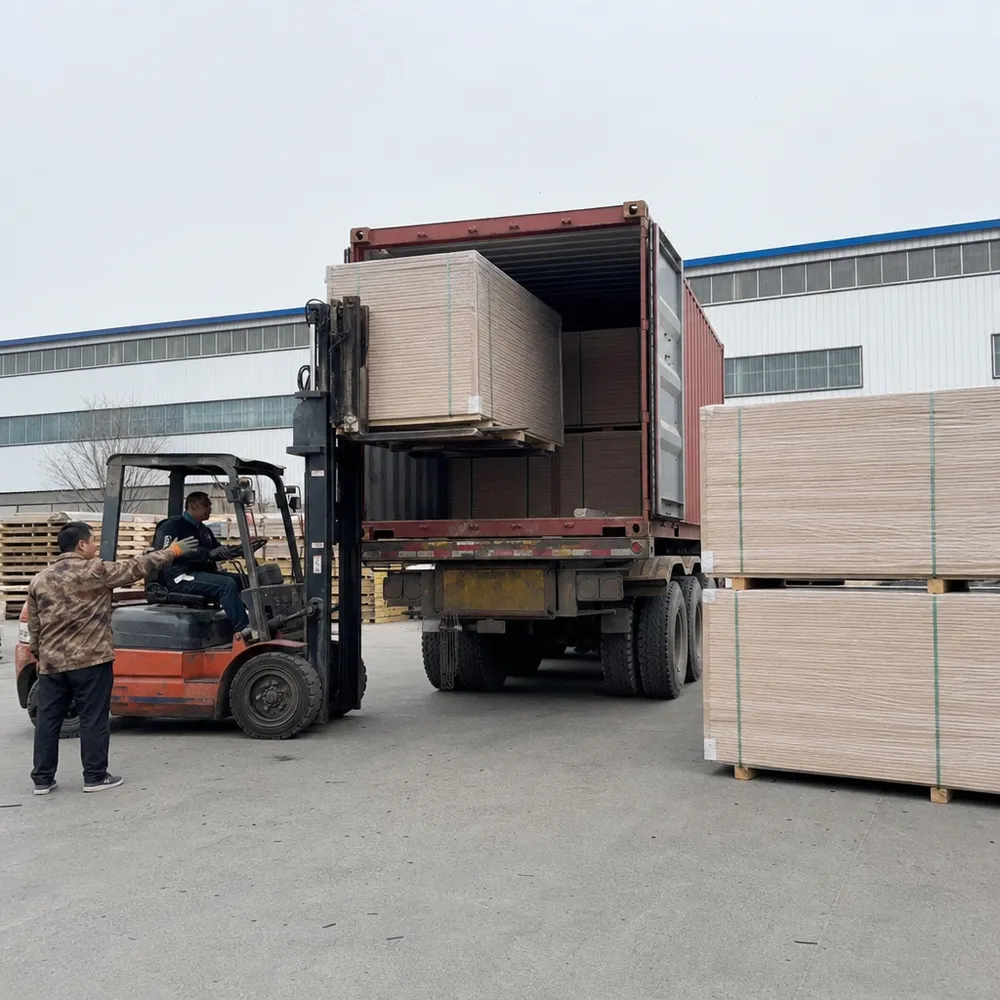
Panels are bundled in packs of 50 sheets, strapped, and edge-protected with corner boards. Export-grade packing includes moisture-resistant film wrap on the bundle exterior — relevant for ocean transit where condensation inside the container can affect surface quality on bare-faced panels.
Each Bundle Is Marked With
Transit Times to Major Destination Ports
We provide a loading plan with each shipment so your receiving team knows the exact bundle configuration and count before the container arrives. We load from Xuzhou to Qingdao, Shanghai, or Lianyungang port depending on routing and schedule.
Other Blockboard Products in This Range
18mm is the standard, but your market may need other configurations. We produce the full blockboard range and can consolidate sourcing across SKUs into a single order and container load.
Blockboard Furniture Panels
Furniture-grade blockboard optimized for cabinet and wardrobe production, with face veneer options matched to furniture manufacturing requirements.
View productBlockboard Cabinet Panels
Cabinet-specific construction with tighter face veneer grading for visible interior surfaces.
View productMelamine Blockboard
18mm blockboard with melamine paper face, ready for cut-and-assemble furniture production without additional surface treatment.
View productLaminate Blockboard
HPL or decorative laminate face for higher-wear applications and premium furniture lines.
View productBuilding a product range that spans multiple blockboard configurations? We can consolidate your sourcing across these SKUs into a single order and container load.
View all blockboard productsFrequently Asked Questions
Specification, compliance, and logistics questions we hear from importers and furniture manufacturers sourcing 18mm blockboard.
18mm is the standard for most furniture carcass applications — shelves, side panels, door blanks, and wardrobe frames. It provides adequate rigidity for spans up to 900mm without visible sag, and the thickness is compatible with standard hardware (hinges, drawer slides, shelf pins) designed for 18mm panels.
25mm blockboard is used where additional rigidity is required — thicker door blanks, structural shelving in commercial fit-out, or applications where the panel carries significant point loads. If you're unsure which thickness fits your application, send us the span, load, and end-use details and we'll confirm.
The core construction is the key difference. Blockboard has a solid wood strip core, which gives it better screw-holding at the face and edge, and a more solid feel when machined or routed. Plywood has a cross-laminated veneer core, which gives it more uniform strength in both directions and better resistance to splitting along the grain.
For furniture carcasses where screws go into the face or edge, blockboard typically performs better. For structural applications where the panel is loaded in bending across its full surface, plywood's cross-laminated construction is an advantage. Most furniture manufacturers use blockboard for carcass panels and plywood for structural components — the two products are complementary, not interchangeable.
Yes, we produce CARB P2-compliant 18mm blockboard. CARB P2 compliance needs to be specified on your order — it affects the resin system we use and the documentation we prepare.
Standard production runs to E1 (≤1.5 mg/L), which meets European requirements but not California's stricter CARB P2 limit. For US-bound shipments, specify CARB P2 on your inquiry and we'll confirm the production schedule and documentation package.
Standard 18mm blockboard in 1220×2440mm runs at one container (20GP or 40HQ) MOQ. Custom dimensions, non-standard face veneer species, or surface treatments (melamine face, film face) typically require a minimum of one 40HQ container to cover the production setup.
For buyers who need a smaller trial quantity before committing to a full container, we can discuss sample orders — contact us with your specification and target volume.
Warping in installed blockboard almost always comes from one of two sources: panels installed at the wrong moisture content for the installation environment, or panels with unbalanced face construction (different veneer thickness or species on each face).
For humid environments — Southeast Asia, coastal markets, kitchens and bathrooms — specify WBP glue and ensure the panels are acclimatized to the installation environment before cutting and fitting. Our export-grade panels ship at 8–12% moisture content, which is appropriate for most interior environments; if your installation environment is significantly wetter or drier than that range, allow acclimatization time before installation. For kitchen and bathroom applications, melamine-faced blockboard provides an additional moisture barrier on the face surfaces.
Standard 18mm blockboard in standard dimensions typically runs 15–20 working days from order confirmation to container loading.
Custom specifications — non-standard dimensions, specific face veneer species, CARB P2 certification, or surface treatments — add 5–10 working days depending on material sourcing. We'll confirm the production schedule when you send us your specification and target ship date.
Get a Quote for 18mm Blockboard
Send us your specification and we'll come back with a detailed quote, the relevant certification documentation for your import requirements, and a production schedule.
What to Include in Your Enquiry
The more detail you provide, the faster we can return an accurate quote. Include as many of the following as you have confirmed:
-
Thickness — confirm 18mm or specify tolerance requirement
-
Panel size — standard 1220×2440mm or custom dimensions
-
Core species preference — poplar, eucalyptus, or mixed hardwood
-
Face veneer — poplar, birch, hardwood, or melamine overlay
-
Glue type — MR, MF, or WBP phenolic
-
Formaldehyde grade — E0, E1, or CARB P2
-
Destination market — determines certification and documentation requirements
-
Target volume — CBM or container count per order cycle
Start with a Sample Order
Most buyers in this category start with a sample order to verify the spec against their production process before committing to container quantities. We can arrange samples — contact us with your requirements.
What We Return With Your Quote
Xuzhou QD Wood Industry Co., Ltd.
Factory direct — no intermediaries
Other Blockboard Products in This Range
Explore related products from the same manufacturing line.
Optimised core construction for furniture manufacturing applications.
Flat, stable panels for cabinet carcass and door construction.
Pre-laminated surface finish for direct-to-use panel applications.
Melamine-faced panels with durable, cleanable surface for interiors.