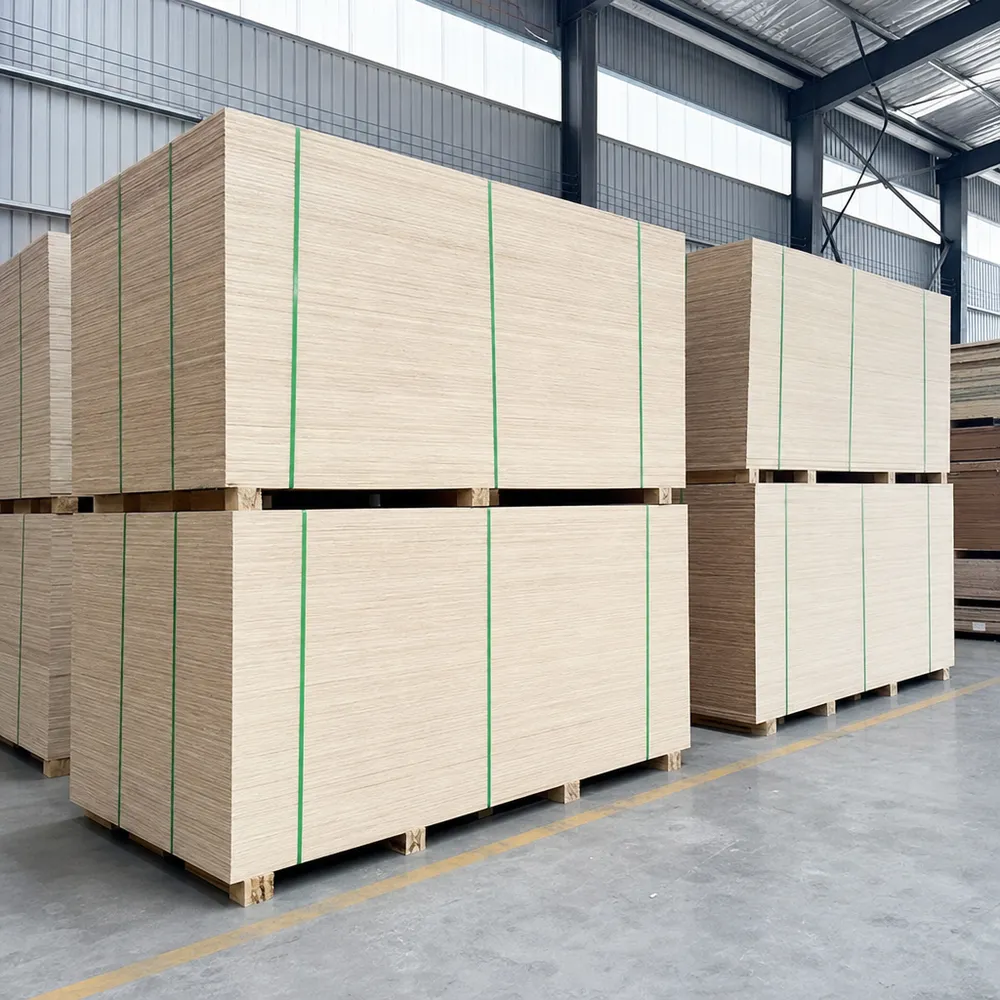
Exterior Plywood —
WBP Bonded, Export-Grade,
Factory Direct
Built around one failure mode: delamination after ocean transit and on-site weather exposure. WBP phenolic glue line, 8–12% moisture-controlled veneers, and edge sealing as standard — so your panels arrive flat and stay bonded through the job.
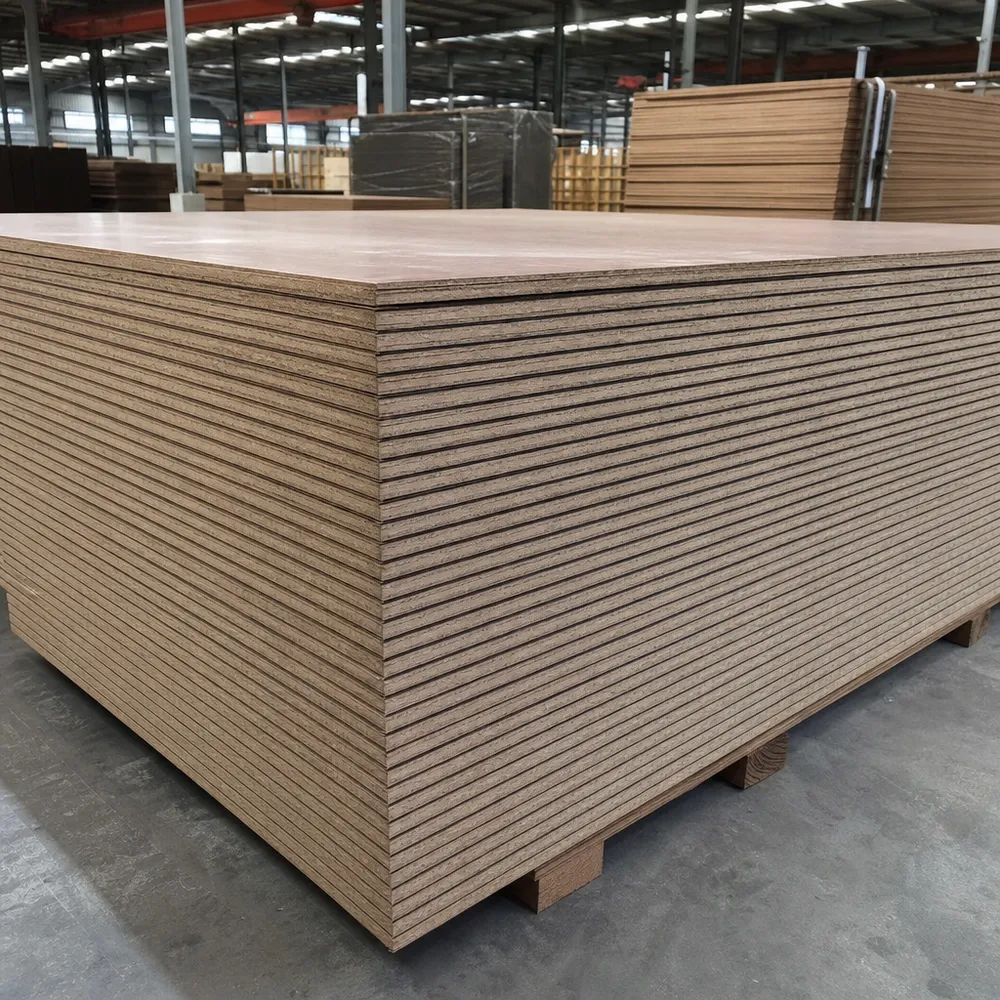
What Separates Exterior Plywood from the Rest of the Commercial Range
Exterior plywood is defined by its glue line, not its face veneer. The critical specification is WBP — Weather and Boil Proof — phenolic resin bonding that holds under sustained moisture exposure, temperature cycling, and the mechanical stress of outdoor installation.
Interior Grade (UF Adhesive)
Urea-formaldehyde adhesive softens and fails when it gets wet. Not suitable for outdoor exposure, ocean transit, or weather cycling.
Exterior Grade (PF Resin)
Phenolic resin cures to a thermoset bond that doesn't reverse under heat or moisture. That distinction is the entire reason exterior plywood exists as a separate product category.
We produce exterior plywood with full WBP phenolic glue lines throughout — face-to-core and core-to-core bonds all use the same PF resin system. Some factories use phenolic only on the outer bond lines and UF on interior core bonds to cut resin cost. We don't do that, because the failure mode it creates — internal delamination that doesn't show on the surface until the panel is already installed — is exactly the kind of problem that generates warranty claims and damages your relationship with the contractor or distributor you sold to.
The Hidden Delamination Risk
Internal delamination from mixed glue systems doesn't show on the surface until the panel is already installed. The glue cost difference per panel is small; the downstream cost of a delamination claim is not.
The face veneer grade on exterior plywood is typically C/C or C/D for construction applications, and B/BB for applications where surface appearance matters alongside weather resistance. We can supply both configurations — the right choice depends on whether your buyer is covering the panel or leaving it exposed.
C/C or C/D Grade
Construction applications where the panel is covered — sheathing, hoarding, concrete formwork backup.
B/BB Grade
Appearance-grade exterior applications where the panel is left exposed — signage substrate, site hoardings, cladding backing.
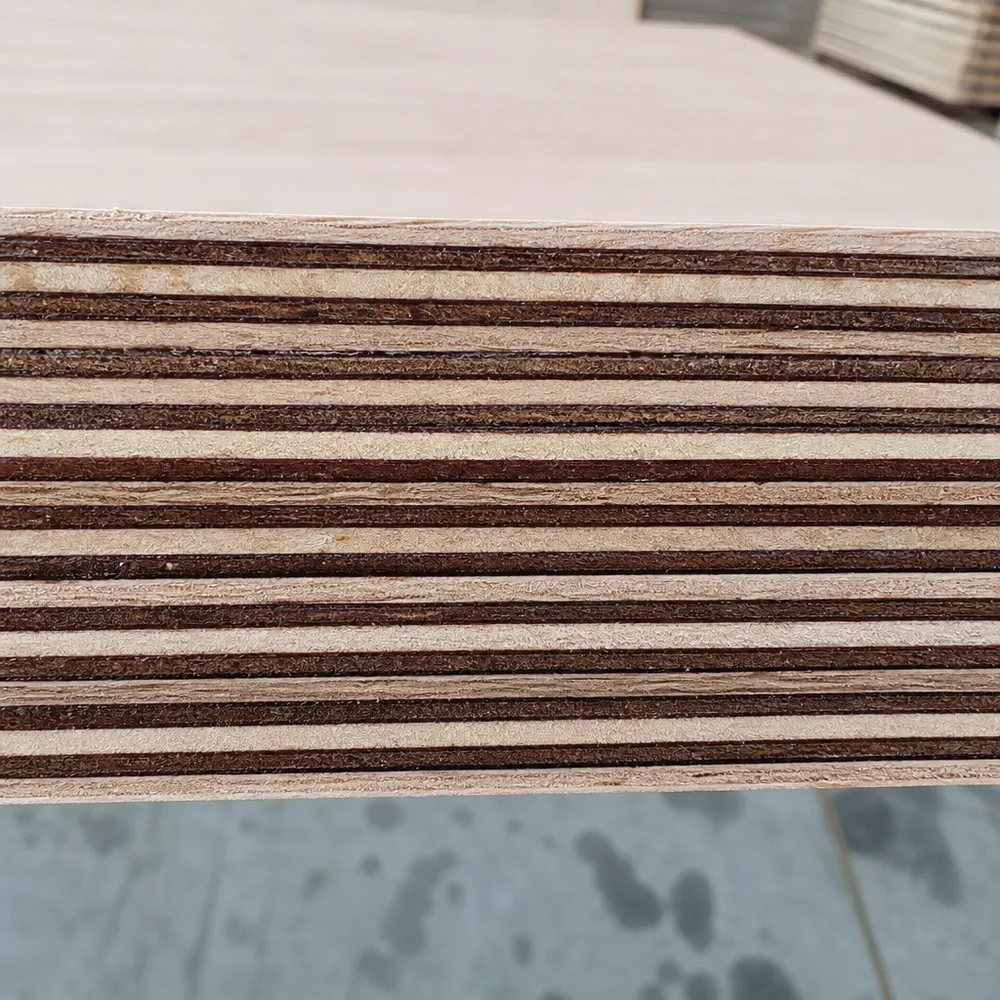
Full Bond Line — No Shortcuts
- Face-to-core bonds: WBP phenolic resin (PF)
- Core-to-core bonds: Same PF resin system — not UF on interior layers
- Thermoset cure: Bond does not reverse under heat or moisture
- Edge sealing: Standard on export grade to prevent moisture ingress at cut edges
Technical Specifications
Standard production values for our export-grade exterior plywood. Contact us for exact data sheets on specific thickness and grade combinations, or to confirm specifications for your project requirements.
Standard Production Specifications
| Parameter | Specification |
|---|---|
| Glue system | WBP phenolic resin (PF) — full bond line, all layers |
| Standard face grade | C/C C/D (construction) B/BB (appearance-grade exterior) |
| Standard thickness | 9mm 12mm 15mm 18mm other thicknesses available on order |
| Thickness range | 6mm – 25mm |
| Standard panel size | 1220 × 2440mm (4' × 8') |
| Custom sizes | Available on confirmed orders — no tooling surcharge |
| Veneer species | Hardwood face (eucalyptus, poplar, or mixed hardwood); poplar or combi core |
| Core construction | Odd-number ply, cross-grain layup |
| Moisture content | 8–12% (export-controlled, pre-press verified) |
| Thickness tolerance | ±0.2mm (calibrated sanding) |
| Formaldehyde emission | E1 E0 available on request |
| Surface finish | Sanded both sides (S2S); unsanded available on request |
| Edge treatment | Sealed edges standard on export grade; square-cut available |
| Certification | CARB P2 FSC® CE Marking on confirmed orders |
| MOQ | 1 × 20ft container (mixed grades and thicknesses accepted) |
Why Tolerance Matters
For buyers specifying to fabricators
A ±0.2mm thickness tolerance means your fabricator can set machinery once and run the full order without re-calibrating between sheets. Loose-tolerance panels (±0.5mm or worse) cause edge-banding gaps, CNC depth errors, and rework costs that erode your margin.
Moisture Content at Export
8–12% pre-press verified
Panels pressed at the correct moisture content bond more consistently and arrive dimensionally stable. High-moisture panels can warp in container transit — a common complaint with lower-cost supply chains that skip pre-press MC checks.
Custom Sizes — No Surcharge
On confirmed container orders
Non-standard panel dimensions (e.g. 1250 × 2500mm, 915 × 1830mm) are available on confirmed orders without a tooling surcharge. Useful for buyers supplying markets with non-imperial sheet standards or for reducing cut waste on specific applications.
Applications
Exterior plywood's WBP bond and weather resistance make it the default choice across a wide range of construction, infrastructure, and industrial applications. Below are the most common end-uses our buyers specify it for.
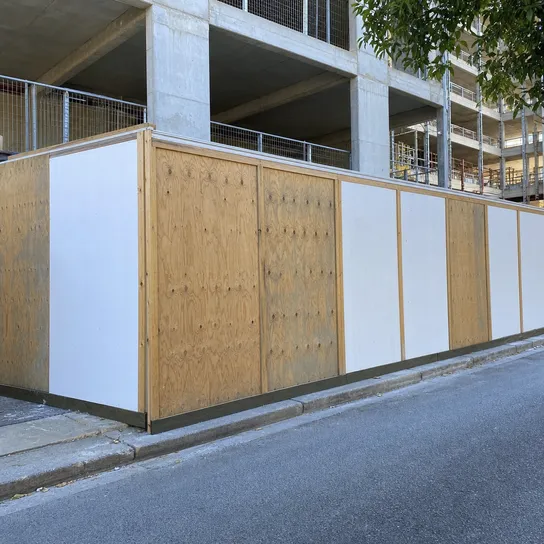
Site Hoarding & Enclosures
Temporary perimeter barriers and site enclosures exposed to weather for months at a time. WBP bond prevents delamination; B/BB face grade suits printed or painted hoarding panels.
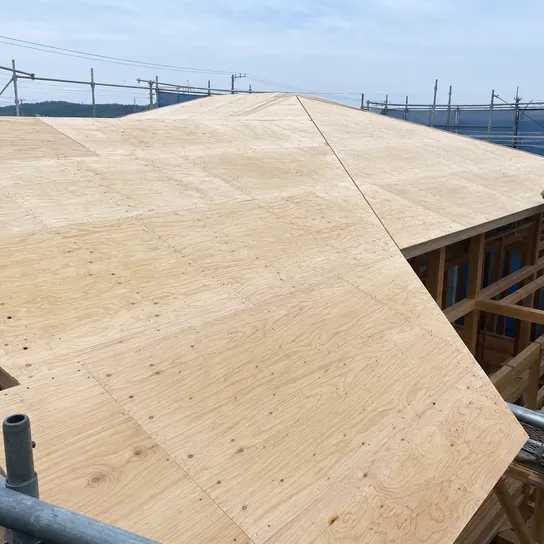
Roof Sheathing
Structural deck layer beneath roofing membranes or tiles. Exterior-grade bond is required because sheathing is exposed during construction and may experience condensation cycling in service.
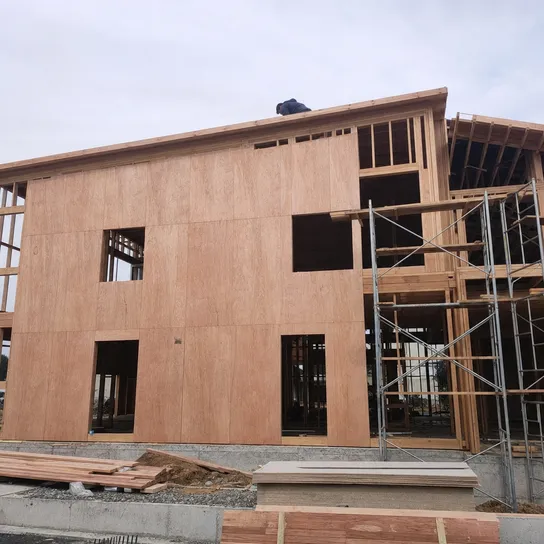
Wall Sheathing & Bracing
Structural bracing panel in timber-frame and light-gauge steel construction. Provides racking resistance and a substrate for cladding systems. Covered in service but exposed during build.
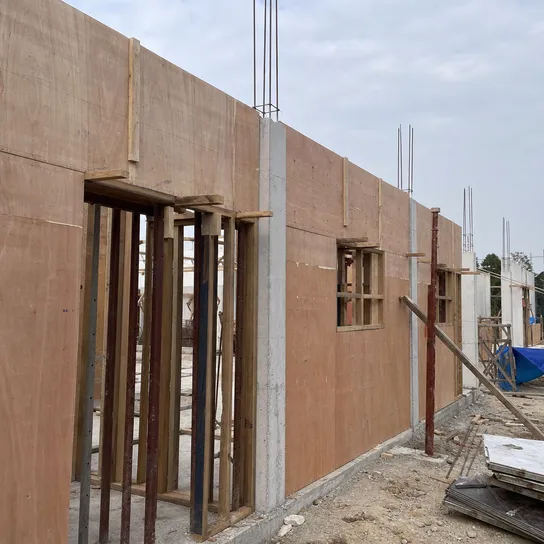
Concrete Formwork Backup
Backing panel behind film-faced formwork, or direct-use formwork for lower-specification pours. WBP bond withstands repeated wet/dry cycles and concrete pressure without delaminating.
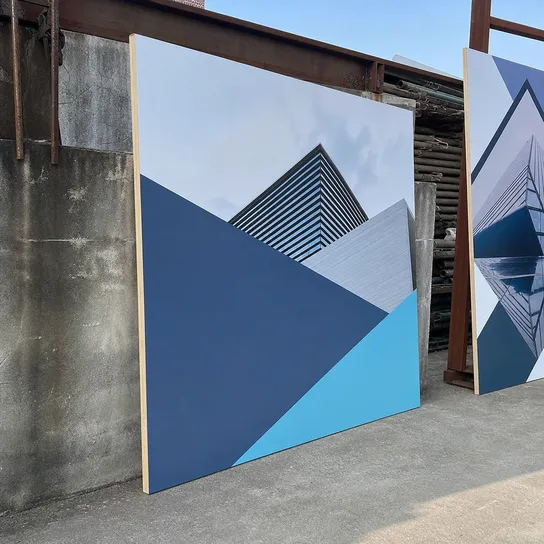
Outdoor Signage Substrate
Rigid backing for printed or painted outdoor signs. B/BB face grade provides a smooth, consistent surface for direct printing or vinyl application without telegraphing core defects.
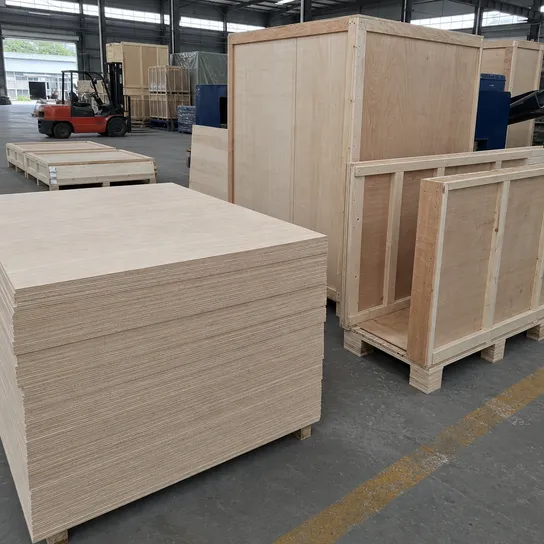
Export Crating & Industrial Packaging
Heavy-duty crates and packaging for machinery, equipment, and goods shipped by sea. WBP bond handles port humidity and container condensation without structural failure.
Not sure which grade fits your application? The short answer: if the panel is covered in service, C/C or C/D is the cost-efficient choice. If it's exposed or painted, specify B/BB. For structural applications, confirm the required panel thickness with your engineer — we can supply data sheets to support specification.
Talk to our team about your applicationSourcing & Quality Control
The difference between exterior plywood that performs and exterior plywood that fails in the field usually comes down to what happens before the panel ships — not the grade stamp on the face.
Veneer Moisture Verification
Each veneer batch is moisture-tested before pressing. Veneers outside the 8–12% target range are held back — not pressed and corrected after the fact. This is the single most important step for bond integrity and dimensional stability in transit.
Glue Line Inspection
Panels are cross-cut and inspected for glue line continuity and void presence. Any batch showing incomplete bond coverage or core voids beyond grade tolerance is rejected before packing.
Calibrated Thickness Sanding
Panels are sanded to a calibrated thickness tolerance of ±0.2mm. Thickness is verified with digital gauges at multiple points across the panel — not just at the centre.
Pre-Shipment Inspection
Third-party pre-shipment inspection (PSI) is available on request. We work with SGS, Bureau Veritas, and equivalent inspection bodies. PSI reports cover grade conformance, moisture content, dimensions, and packing condition.
Export Packing & Container Loading
Panels are packed in moisture-resistant kraft paper wrapping with timber dunnage to prevent movement in container. Desiccant bags are included as standard on ocean freight shipments to manage container humidity during transit.
What to Ask Any Exterior Plywood Supplier
These questions separate suppliers who understand exterior plywood from those who are simply reselling commodity panels with a WBP label.
- Is the WBP bond applied to all layers, or only face-to-core? Some manufacturers use UF resin on interior core bonds and only apply PF resin at the face layers.
- What is the pre-press moisture content target? If they can't answer this, the MC is not being controlled.
- What is the thickness tolerance? ±0.2mm is achievable with calibrated sanding. ±0.5mm or "approximately" is a red flag.
- Can you provide a mill test report or third-party inspection report? Legitimate manufacturers can supply these on request.
- How are panels packed for ocean freight? Kraft wrap, dunnage, and desiccant are standard practice — not optional extras.
Request a Mill Test Report
We provide mill test reports and third-party inspection documentation on confirmed orders. If you're evaluating us against another supplier, we're happy to provide sample documentation so you can compare what's actually being tested and reported.
Request documentationBuying Guide
A practical reference for importers, distributors, and procurement teams buying exterior plywood at container volume. Covers the decisions that affect landed cost, quality consistency, and downstream performance.
Grade Selection
Match the grade to the exposure and finish requirement — not the lowest available price point. Over-specifying costs money; under-specifying costs more when panels fail in service.
- B/BB: exposed faces, painted or clear-coated, architectural and marine applications
- C/C: structural and industrial use where appearance is not a factor
- C/D: concealed applications — sheathing, crating, packaging
Thickness & Construction
Specify the number of plies alongside thickness. Two panels can share the same nominal thickness but differ significantly in stiffness and load capacity depending on ply count and core species.
- 9mm / 5-ply: light cladding, packaging, general utility
- 12mm / 7-ply: structural sheathing, formwork, flooring substrate
- 18mm / 9-ply: heavy-duty flooring, crating, load-bearing panels
Volume & Lead Time
Container-load orders (typically 20–22 CBM per 20ft container) offer the best landed cost per panel. Split-grade containers are possible but add complexity to packing and documentation.
- Standard production lead time: 15–25 days from order confirmation
- Ocean transit to major ports: 18–35 days depending on destination
- PSI and documentation add 3–5 days — plan accordingly
Order Specification Checklist
Include these details in every RFQ to avoid back-and-forth and ensure the quote reflects exactly what you need.
Certifications & Compliance
Certification requirements vary by destination market and end use. Here's what's relevant for exterior plywood and what each certification actually means in practice.
FSC Certified
Forest Stewardship Council certification confirms the timber supply chain meets responsible forestry standards. Required by many European and North American buyers, and increasingly specified in public procurement.
CARB P2 Compliant
California Air Resources Board Phase 2 sets formaldehyde emission limits for composite wood products sold into the US market. Mandatory for panels entering California; widely adopted as a baseline across the US.
CE Marking / EN 636
EN 636-3 is the European standard for plywood for use in exterior conditions. CE marking under this standard is required for structural applications in EU construction projects and confirms the panel meets defined mechanical and bond performance criteria.
E1 / E0 Emission Class
European formaldehyde emission classes. E1 (≤0.1 ppm) is the standard threshold for interior-safe panels; E0 (≤0.05 ppm) is the stricter class increasingly required in residential and healthcare applications.
ISPM 15 Packing
International Standards for Phytosanitary Measures No. 15 governs wood packaging material used in international trade. All timber dunnage and packing used in our shipments is ISPM 15 compliant — heat-treated and marked accordingly.
Need a Specific Certificate?
If your market or project requires documentation not listed here — phytosanitary certificates, fumigation records, country-of-origin declarations, or custom test reports — contact us before placing your order so we can confirm availability.
Frequently Asked Questions
Answers to the questions we hear most often from importers, distributors, and project buyers evaluating exterior plywood.
What is the difference between WBP and MR glue in plywood?
Can exterior plywood be left permanently exposed without any surface treatment?
What species is typically used for exterior plywood face veneers?
Is exterior plywood the same as marine plywood?
What is the minimum order quantity for exterior plywood?
How do I verify that a supplier's WBP claim is genuine?
Other Plywood Products
Exterior plywood is one part of a broader commercial plywood range. If your application calls for a different bond type, surface, or structural specification, these products may be relevant.
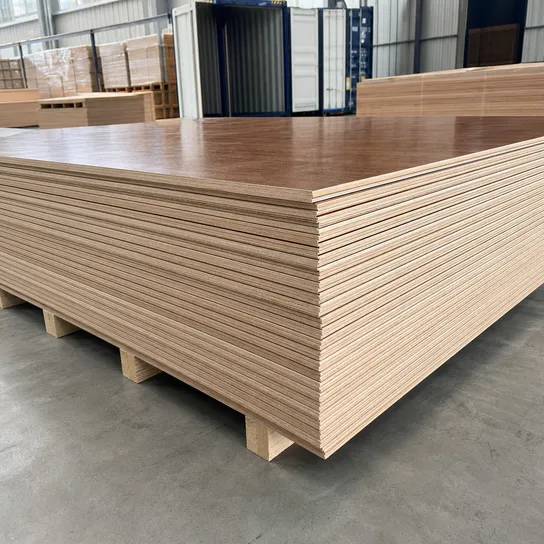
Marine Plywood
BS 1088 standard, void-free core, continuous immersion rated. For boat building and marine structures.
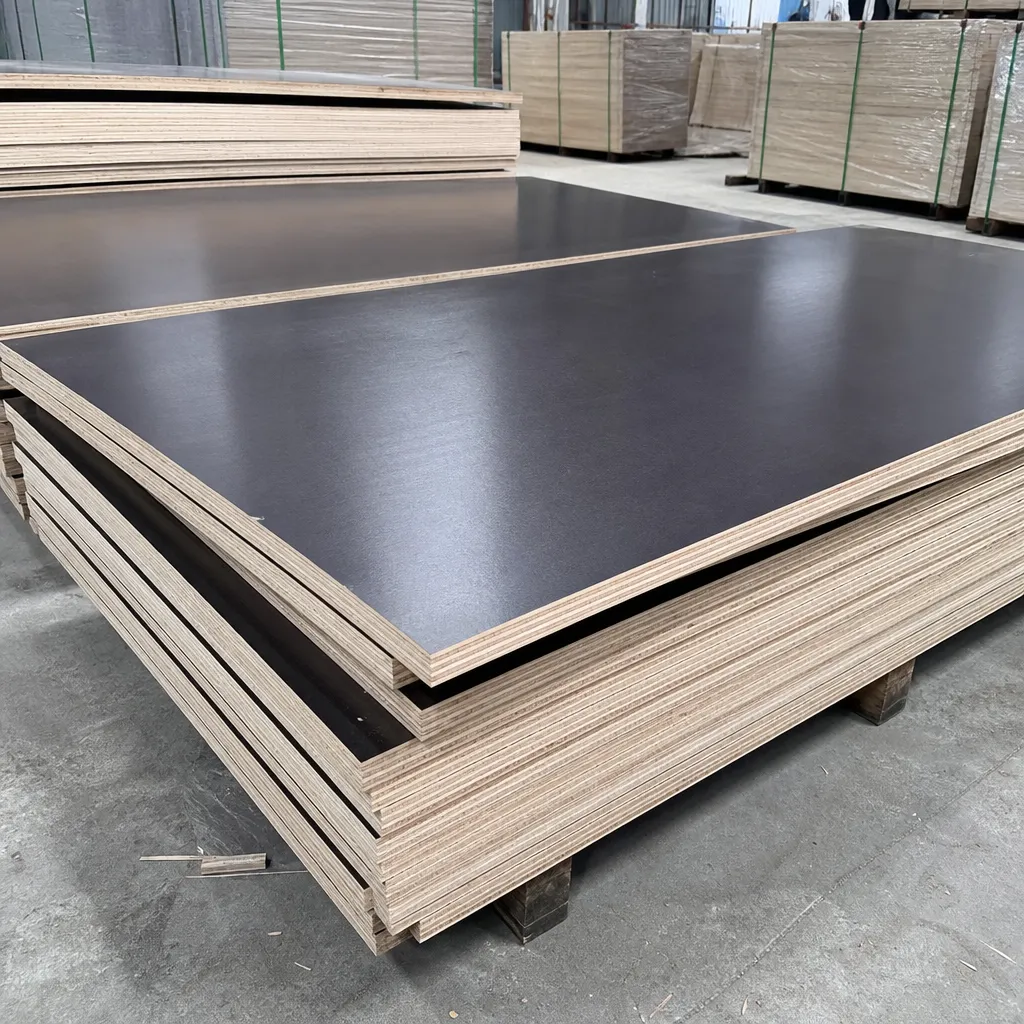
Film Faced Plywood
Phenolic film overlay for concrete formwork. Reusable, smooth release surface, WBP core.
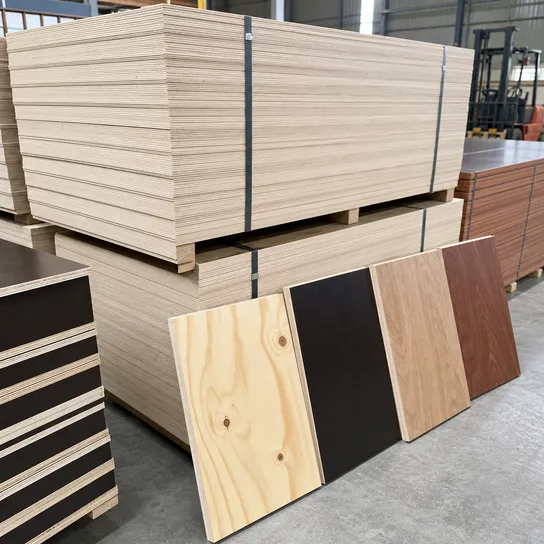
Structural Plywood
Engineered for load-bearing applications. Graded to EN314-2 Class 3 and AS/NZS 2269. Suitable for flooring, roofing, and wall sheathing.
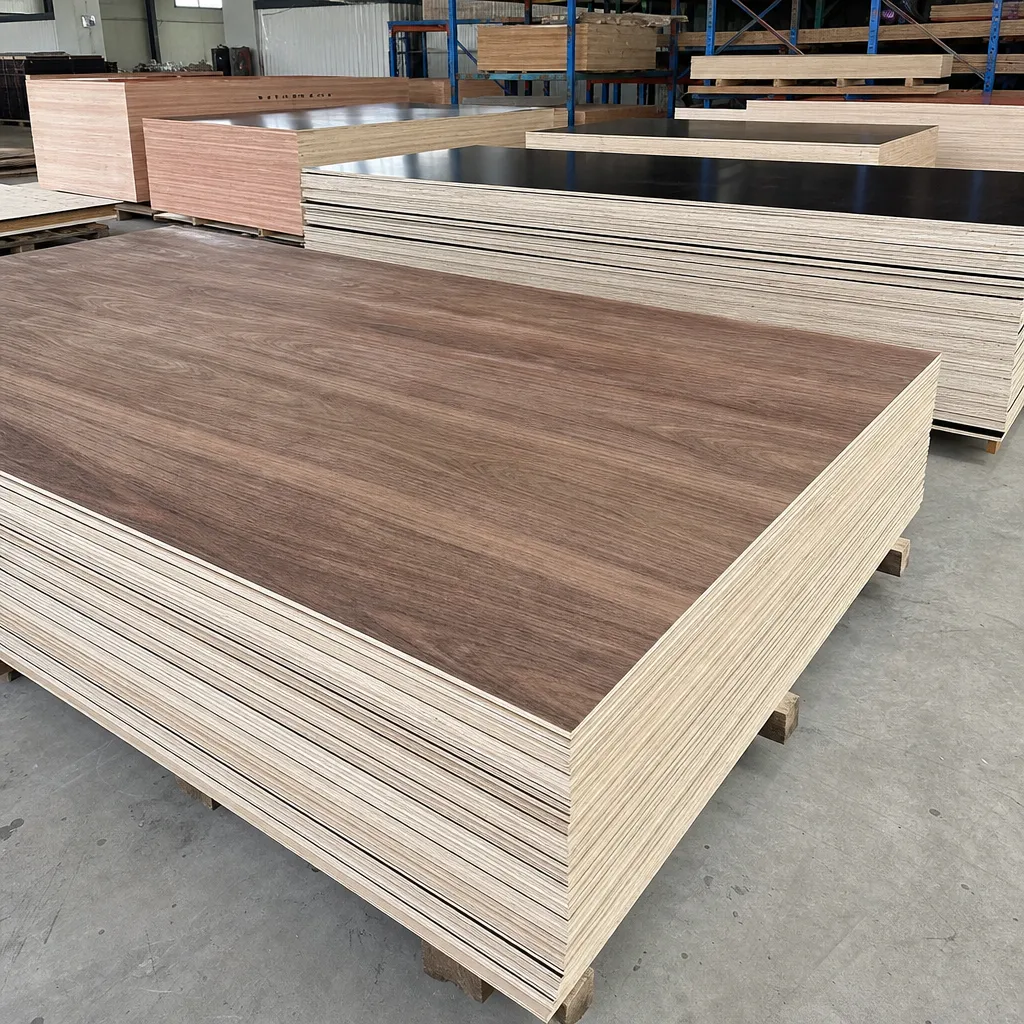
Hardwood Plywood
Hardwood face and core construction for furniture, cabinetry, and interior fit-out where surface quality matters.
How We Control the Variables That Cause Exterior Plywood to Fail in the Field
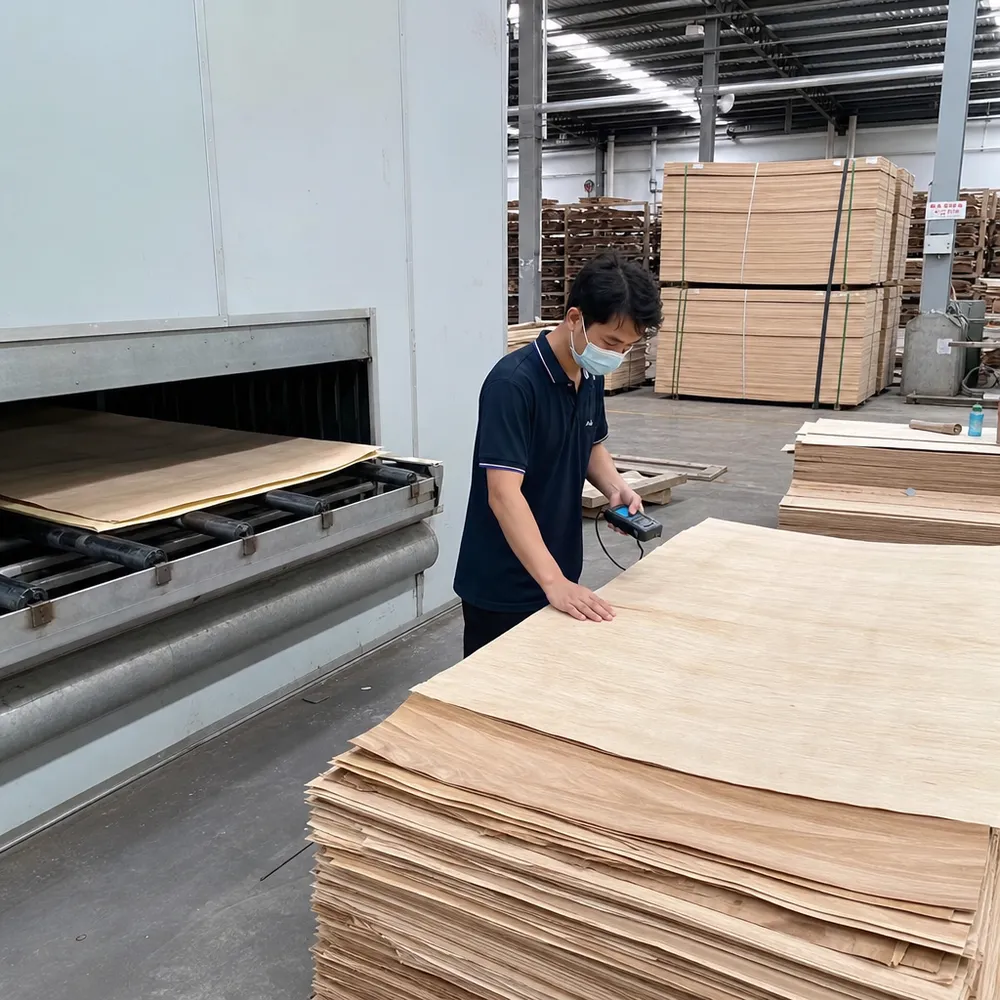
The two most common failure modes in exterior plywood — delamination and warping — both trace back to the same root cause: moisture content that's wrong at the time of pressing. Hitting the target window consistently requires a controlled drying process, not just a moisture meter at the end.
Veneer Drying & Pre-Press Moisture Verification
Incoming veneers are sorted by species and initial moisture content, then dried to target range in our roller dryer system. Before veneers go to the glue spreader, moisture content is spot-checked across the batch.
Hot Press Parameters for Phenolic Resin Cure
PF resin requires more heat to fully cross-link than UF-bonded panels. Our multi-daylight hydraulic presses run at higher temperature with press times calibrated to panel thickness. Press parameters are logged per batch — if a bonding question comes up downstream, we can pull the production record and confirm the cure conditions.
Post-Press Delamination Check
Every panel goes through a delamination check before it reaches the sanding line. We tap-test panels and check for blistering — any panel that shows a hollow sound or surface irregularity is pulled and inspected.
Reject rate: ~1–2% of production. A factory with zero rejects at this stage is either not checking or not being honest about it.
Edge Sealing on All Export-Grade Panels
Panel edges are the most vulnerable point for moisture ingress during ocean transit — the cross-grain veneer ends are exposed, and without sealing, they'll absorb moisture from container humidity and start to swell. We apply a water-based edge sealant on all four edges as standard for export orders.
Why the Moisture Window Is Narrow
Too wet at pressing
Steam generated during pressing creates internal pressure that weakens the bond line — leading to delamination.
Too dry at pressing
Resin doesn't flow and wet-out properly across the veneer surface, leaving dry spots that become delamination initiation points.
Our target: 6–10% veneer MC
Accounts for moisture uptake from the glue spread and delivers the 8–12% final panel moisture needed for export stability.
Field Lesson: Middle East Surface Checking
We tightened this process after seeing a batch of panels develop surface checking on arrival in the Middle East. The veneers had been dried correctly, but the glue spread added more moisture than we'd accounted for in the drying target. We adjusted the drying target to compensate — the problem went away.
Construction and Building Markets: Where Exterior Plywood Moves Volume
Exterior plywood serves distinct buyer segments across construction, prefab, and specialty manufacturing — each with different spec requirements, order patterns, and margin profiles. Understanding which segment you're supplying into determines how you position the product.
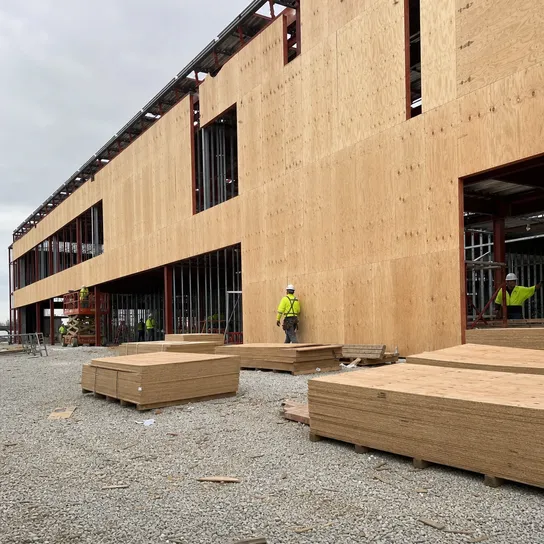
Structural Sheathing & Hoarding Supply
Construction contractors buy sheathing in large quantities per project — a mid-size commercial building project might consume 2,000–5,000 sheets of 12mm or 15mm exterior plywood for wall sheathing, roof decking, and site hoarding.
Order pattern: Project-driven repeat orders. Lower margin per sheet than specialty products, but high turnover and predictable reorder cycles.
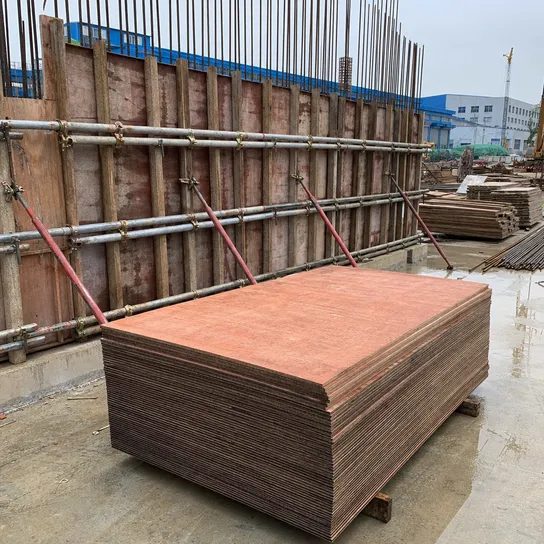
Concrete Formwork Backup & Site Hoarding
Formwork backup panels take repeated concrete pours and need to hold their dimensions under wet conditions. Buyers in this segment are often willing to pay a small premium for confirmed phenolic bonding over generic "exterior grade" claims.
Site hoarding note: Typically C/D grade, single-use or low-reuse, price-sensitive — landed cost efficiency matters most here.
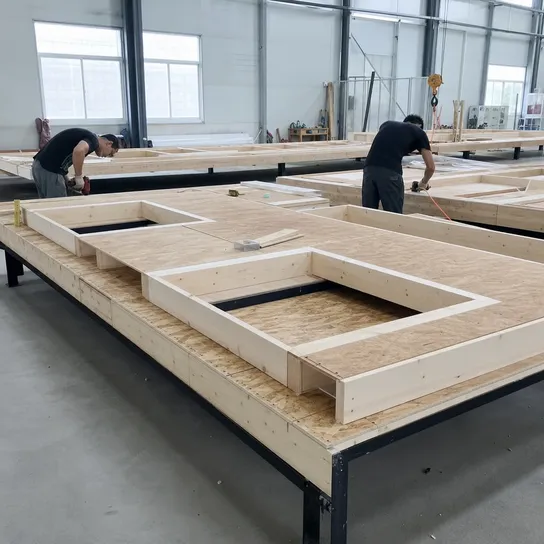
Prefabricated Building Components
Wall panels, floor cassettes, and roof panels. Prefab manufacturers typically buy in consistent large volumes (500–2,000 sheets per production run) with tight dimensional tolerances — their cutting and assembly equipment is calibrated to specific panel dimensions.
Tolerance note: Thickness variation above ±0.5mm causes feed errors on automated panel saws. Our calibrated sanding holds ±0.2mm.
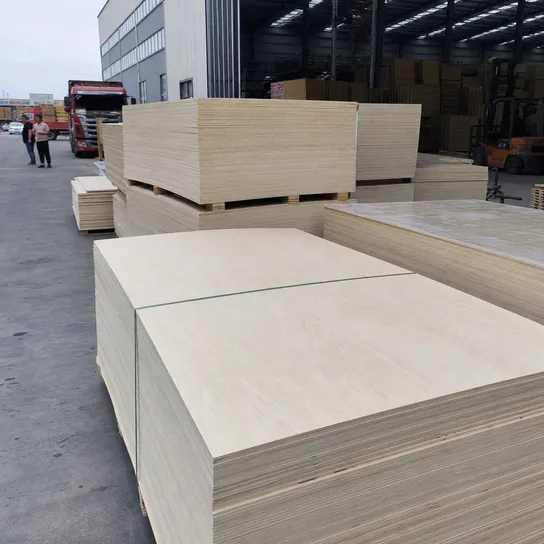
Outdoor Furniture & Landscape Structures
Used as substrate for painted or coated outdoor furniture, pergola components, and garden structures. Typically wants B/BB face grade for a cleaner surface under paint, and often specifies FSC certification for sustainability-conscious retail channels.
Order volumes: 200–500 sheets per run. Smaller than construction sheathing, but higher margin per sheet. FSC requirement filters out lower-quality suppliers.
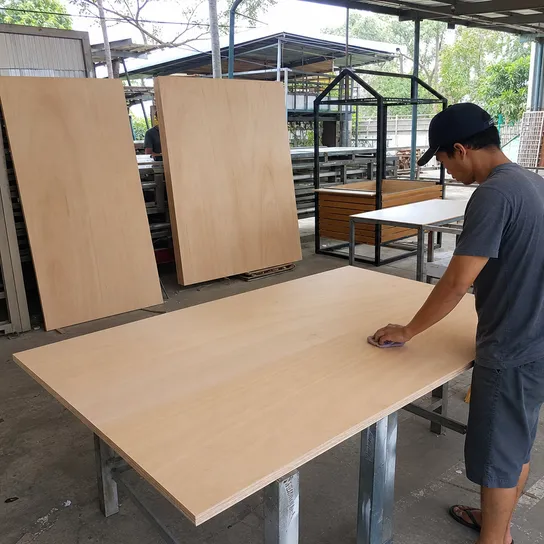
Signage & Display Substrate
Exterior-grade plywood used as the substrate for painted and printed outdoor signage, where the panel needs to hold its flatness and surface integrity through weather exposure. Buyers want consistent face veneer quality and confirmed WBP bonding.
Fit for distributors: Modest order volumes but clear specification requirements — a good fit for serving multiple market segments from a single SKU.
Segment Quick Reference
Prefab segment has grown significantly in Australian and European markets. Worth building relationships with prefab component manufacturers if you're in those markets.
Exterior Plywood as a Distribution Anchor
If you're supplying into the construction distribution channel, exterior plywood is a volume anchor product — lower margin per sheet than specialty products, but high turnover and predictable reorder cycles. Contractors who find a reliable supplier at the right price point tend to stay with them across multiple projects.
The repeat order pattern is project-driven. The key to holding that relationship is consistent panel quality and reliable delivery — not just the lowest landed cost on the first order.
High volume, lower margin per sheet. Anchor product for distributor portfolios.
FSC, B/BB face grade, and WBP confirmation filter out lower-quality competition and support higher margin per sheet.
Glue Line Verification: What "WBP" Actually Means on Our Production Floor
The WBP claim is only as good as the test behind it. Here's exactly how we verify bond integrity — and how buyers can independently confirm it.
The Boil Test: Industry Standard for WBP Verification
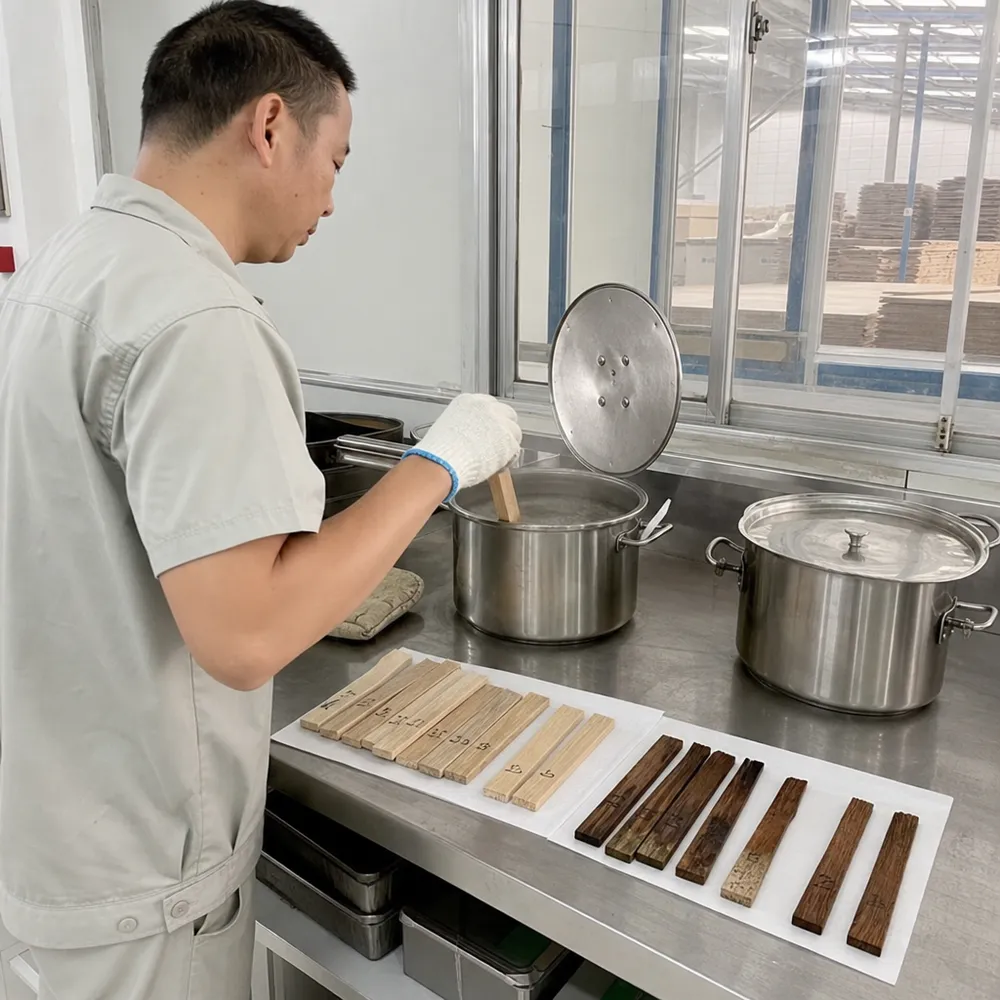
The standard test for WBP bonding is the boil test — panels are submerged in boiling water for a defined period (typically 4 hours for the full WBP test, or a shorter cycle for the V313 wet test used in European standards), then inspected for delamination. A panel that passes this test has a bond line that will hold under the sustained moisture exposure of outdoor use.
We run boil tests on samples from every production batch of exterior plywood. The test is done in-house as part of our outgoing QC process, and we retain test records by batch number.
Boil Test Parameters
Third-Party Inspection
For buyers who require third-party verification, we work with SGS and Bureau Veritas. Pre-shipment inspection can be arranged through your preferred agency — we coordinate access to the production facility and test samples.
Certification Coverage by Market
Our exterior plywood certification stack is structured to cover the major import markets. Each certification addresses a specific compliance requirement your buyers will ask about.
Covers European construction market requirements. EN 636-3 is the classification your European construction buyers need to specify the product in building projects subject to CE marking requirements.
Covers buyers with sustainability sourcing policies or who are supplying into markets where FSC-certified materials are specified.
Covers formaldehyde emission requirements for the US market, including California compliance requirements for retailers and distributors.
Customization: What We Can Adjust and What Affects Your MOQ
Standard exterior plywood runs in 1220×2440mm panels at the thicknesses listed in the spec table above. Here's what we can adjust on confirmed orders — and where MOQ thresholds apply.
Thickness
Any thickness from 6mm to 25mm in 1mm increments. Non-standard thicknesses (e.g., 17mm, 19mm) require a minimum order of 1 × 20GP container to justify production scheduling.
Panel Dimensions
Custom sizes are available — we cut to size on precision saws, so custom dimensions are a scheduling question, not a tooling question. Minimum order for custom dimensions is typically 1 container.
Face Veneer Species
Standard production uses eucalyptus or poplar face veneers. Hardwood face veneers are available for appearance-grade exterior applications — these carry a price premium and require advance material sourcing.
Formaldehyde Specification
Standard production is E1. CARB P2 is available as a specified option — it requires the CARB P2 resin system and adds to the unit cost, but opens the US market.
OEM Marking & Packaging
Custom bundle marking, private label stamps, and specific packaging configurations are available. Most buyers in the distribution channel want their own brand or product code on the bundle.
Ready to Specify?
Send us your thickness, dimensions, face veneer species, formaldehyde spec, and any OEM marking requirements. We'll return a detailed quote with lead time and container loading figures.
MOQ Summary: Standard vs. Custom
| Parameter | Standard Option | Custom Option | MOQ Impact |
|---|---|---|---|
| Thickness | 9, 12, 15, 18mm | Any 6–25mm in 1mm steps | Min. 1 × 20GP for non-standard |
| Panel Dimensions | 1220×2440mm | Custom cut sizes | Typically 1 container |
| Face Veneer | Eucalyptus / Poplar | Okoume, Bintangor, Meranti | Price premium + longer lead time |
| Formaldehyde | E1 | CARB P2 | Unit cost increase |
| OEM Marking | Standard bundle marking | Private label / custom code | Standard for confirmed accounts |
Container Loading and Export Logistics
Standard 1220×2440mm exterior plywood loads as follows. Loading quantities vary with panel dimensions and stacking configuration — we provide a loading plan with each shipment.
| Container | Thickness | Approx. Sheet Count | Approx. Volume |
|---|---|---|---|
| 20GP | 12mm | 800–900 sheets | ~14–16 m³ |
| 40HQ | 12mm | 1,800–2,000 sheets | ~30–34 m³ |
| 20GP | 18mm | 550–620 sheets | ~14–16 m³ |
| 40HQ | 18mm | 1,200–1,400 sheets | ~30–34 m³ |
Packing Standards
Panels are bundled in packs of 50–100 sheets depending on thickness, strapped with steel banding, corner-protected, and wrapped in moisture-resistant film.
- Each bundle marked with species, grade, thickness, panel size, batch number, and destination port
- Steel banding with corner protection on every bundle
- Moisture-resistant film wrap as standard
- Edge-sealed panels packed with sealed edges protected from abrasion during loading
Export Documentation
Prepared to market standard. We've been through enough customs cycles in North America, Europe, the Middle East, and Australia to know what documentation gaps cause delays — the paperwork is prepared to avoid them, not to satisfy a checklist.
- Commercial invoice and packing list
- Bill of lading and certificate of origin
- Phytosanitary certificate where required by destination country
- CE declaration, FSC certificate, CARB documentation as applicable to your market
- US-bound shipments: CARB documentation package prepared as standard
Port Connections & Transit Times
Xuzhou connects to Qingdao, Shanghai, and Lianyungang ports
Exterior vs. Marine vs. Moisture-Resistant: Choosing the Right Grade
These three product types are frequently confused, and the confusion costs buyers money — either by over-specifying (paying for marine grade when exterior grade is sufficient) or under-specifying (using moisture-resistant interior grade in an application that needs full WBP bonding).
Exterior Plywood
CE EN 636-3 Classification
WBP phenolic glue line, designed for sustained outdoor exposure and weather cycling. The right choice for construction sheathing, site hoarding, outdoor furniture substrate, and any application where the panel will be exposed to rain, humidity, or temperature cycling.
Marine Plywood
Stricter Veneer Requirements
Also WBP bonded, but with stricter veneer quality requirements — no core gaps, no knots, face grade B/BB or better throughout. Specified where the panel needs to hold its integrity under prolonged immersion or in structural marine applications.
Moisture-Resistant Plywood
MR (UF) Adhesive
Uses MR (moisture-resistant) UF adhesive rather than full WBP phenolic. Suitable for humid interior environments — kitchens, bathrooms, covered outdoor areas with limited direct weather exposure. Not suitable for sustained outdoor exposure or direct rain contact.
Building a Multi-Segment Product Line?
If you're building a product line that covers multiple market segments, stocking both exterior and moisture-resistant grades gives you coverage from construction sheathing down to interior humid-area applications without paying for marine grade across the board.
Marine grade costs more than exterior grade because the veneer selection is tighter. If your buyer is building boat hulls or dock structures, marine grade is the right spec. If they're building site hoarding or roof sheathing, exterior grade is sufficient and more cost-effective.
Common Questions from Buyers
Answers to the questions importers and distributors ask most often before placing a first container order.
Standard MOQ is 1 × 20GP container for standard thickness and size combinations. For non-standard dimensions or thicknesses, MOQ is also 1 × 20GP. Sample orders (5–10 sheets) are available for new buyers who need to test the product with their customers before committing to a container order — contact us to arrange.
Our exterior plywood uses WBP phenolic resin (PF) throughout all bond lines, meeting the boil test requirements of EN 314-2 Class 3 (the European WBP standard) and equivalent standards. We run boil tests on production samples from each batch and retain records by batch number. Third-party pre-shipment inspection through SGS or Bureau Veritas can be arranged on request — we coordinate access and provide test samples to the inspector.
Both faces are C grade — knots, patches, and minor surface defects are permitted but the panel is structurally sound. Suitable for applications where both faces may be visible or where a consistent appearance matters.
One face is C grade, the back face is D grade — more defects permitted on the D face. Fine for applications where the back face is concealed (sheathing, hoarding, substrate). C/D is the more common and cost-effective choice for construction applications.
If your buyer needs a cleaner surface for painting or coating, specify B/BB.
Yes. Our CE-marked exterior plywood is classified EN 636-3, which is the classification for plywood intended for use in exterior conditions under the European Construction Products Regulation. The CE declaration of conformity is included with EU-bound shipments. If your buyer's project specification requires EN 636-3 documentation, we can provide the declaration and test reports.
Yes. We hold FSC chain-of-custody certification, so we can supply FSC-certified exterior plywood with the FSC certificate and chain-of-custody documentation. FSC-certified orders require advance notice so we can confirm FSC-certified material availability — specify this requirement at the inquiry stage. There is typically a small price premium for FSC-certified material.
Non-standard dimensions, thicknesses, or face veneer species may require additional lead time for material sourcing — confirm at the inquiry stage.
Get a Quote for Exterior Plywood
Send us your thickness, grade, panel size, volume, destination market, and any certification requirements (CE, FSC, CARB P2). We'll come back with a detailed FOB quote, the relevant certification documentation for your import requirements, and a loading plan showing container utilization for your order volume.
Most new buyers in this category start with a sample order to test the product with their own customers before committing to a container. We can ship samples — contact us to arrange.
- Thickness and panel size required
- Face grade (C/C, C/D, B/BB, or other)
- Order volume (CBM or sheet count)
- Destination port and country
- Certification requirements: CE, FSC, CARB P2