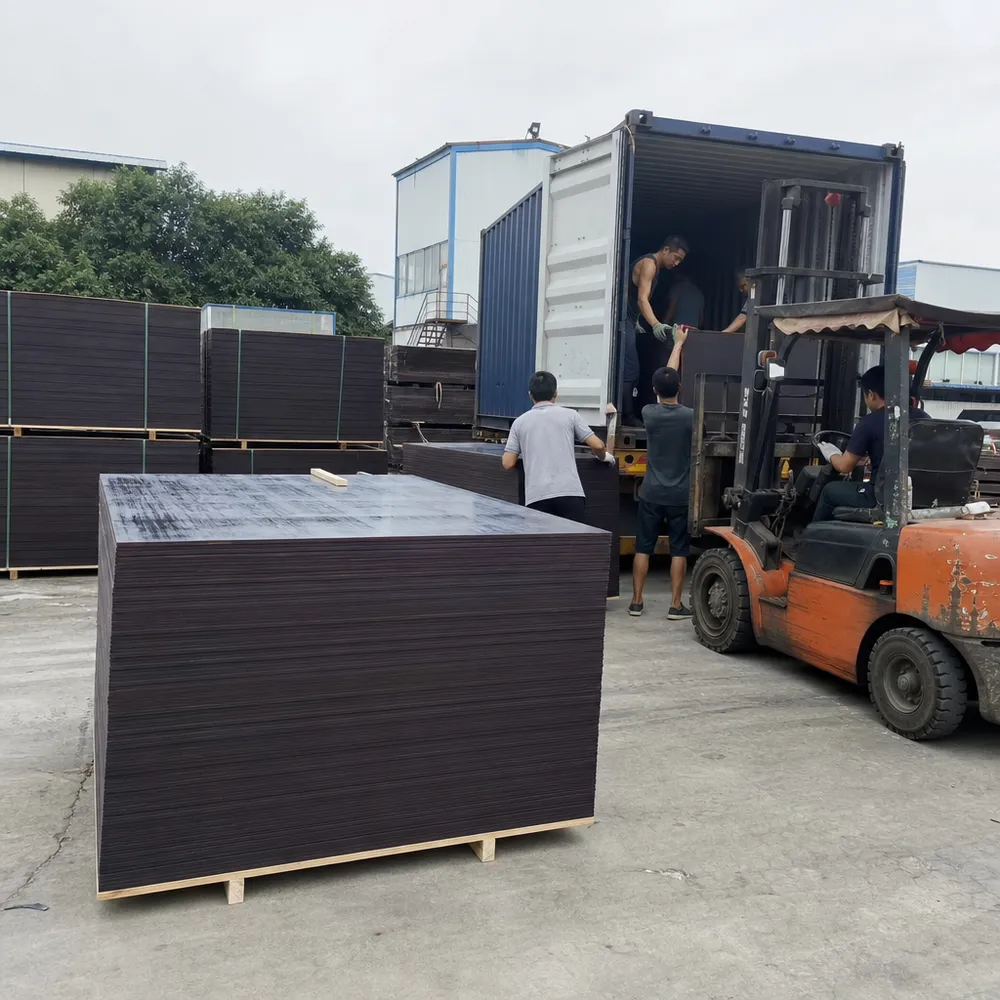
Marine Grade Film Faced Plywood Manufacturer
Built for repeated wet-cycle exposure — not just a pour and dry. WBP phenolic resin throughout every glue line, phenolic-impregnated film overlay, factory-direct from Xuzhou, China.
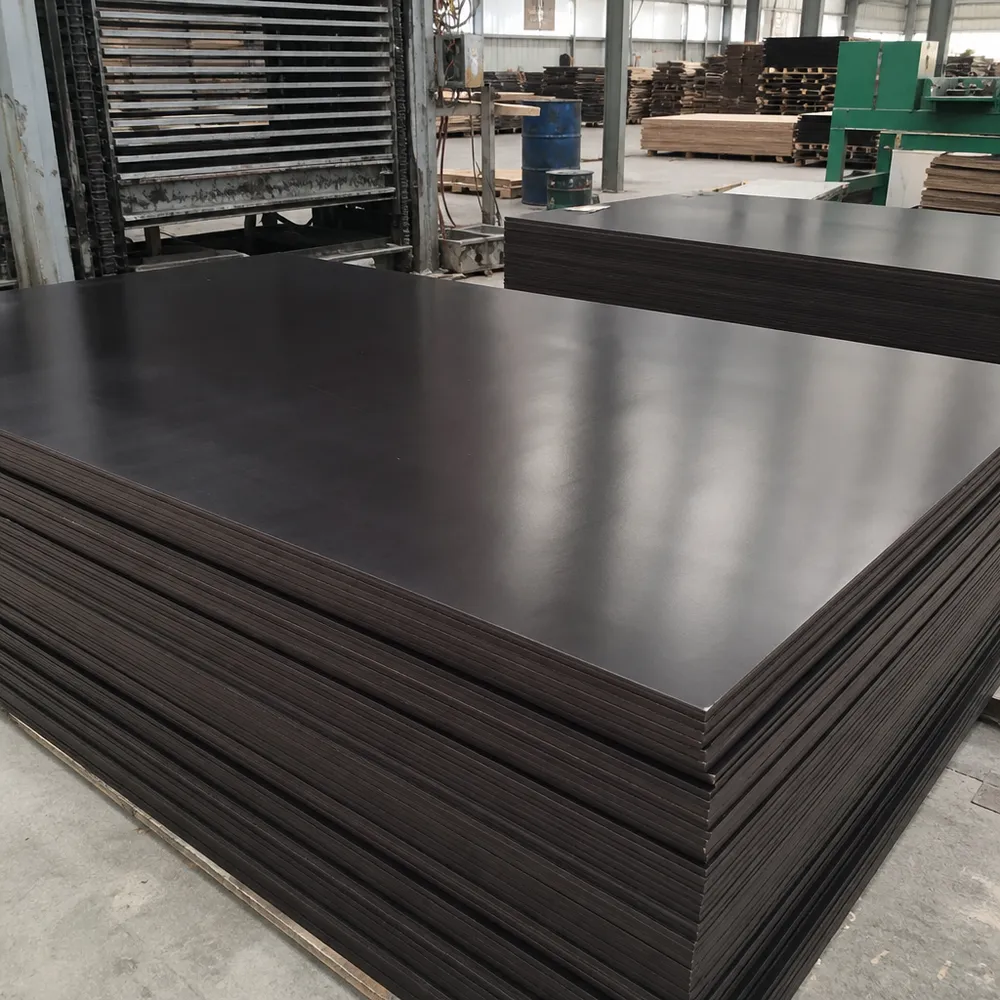
What Separates Marine Grade from Standard Film Faced Plywood
Most film faced plywood is built for concrete formwork — it handles moisture during a pour and dries out between uses. Marine film faced plywood is built for a different failure mode: sustained or repeated wet exposure where the panel never fully dries between cycles.
The distinction is in the glue line, not the film.
Standard film faced plywood uses MR (moisture-resistant) or even WBP glue, but the core construction and veneer drying tolerances are calibrated for intermittent exposure. Marine grade uses WBP (Weather and Boil Proof) phenolic resin throughout every glue line — face-to-core and core-to-core — and the veneer layup is built to tighter moisture tolerances before pressing.
The result is a panel that resists delamination under conditions that would cause a standard formwork panel to fail within a few wet-dry cycles.
Press Parameters for Marine Grade
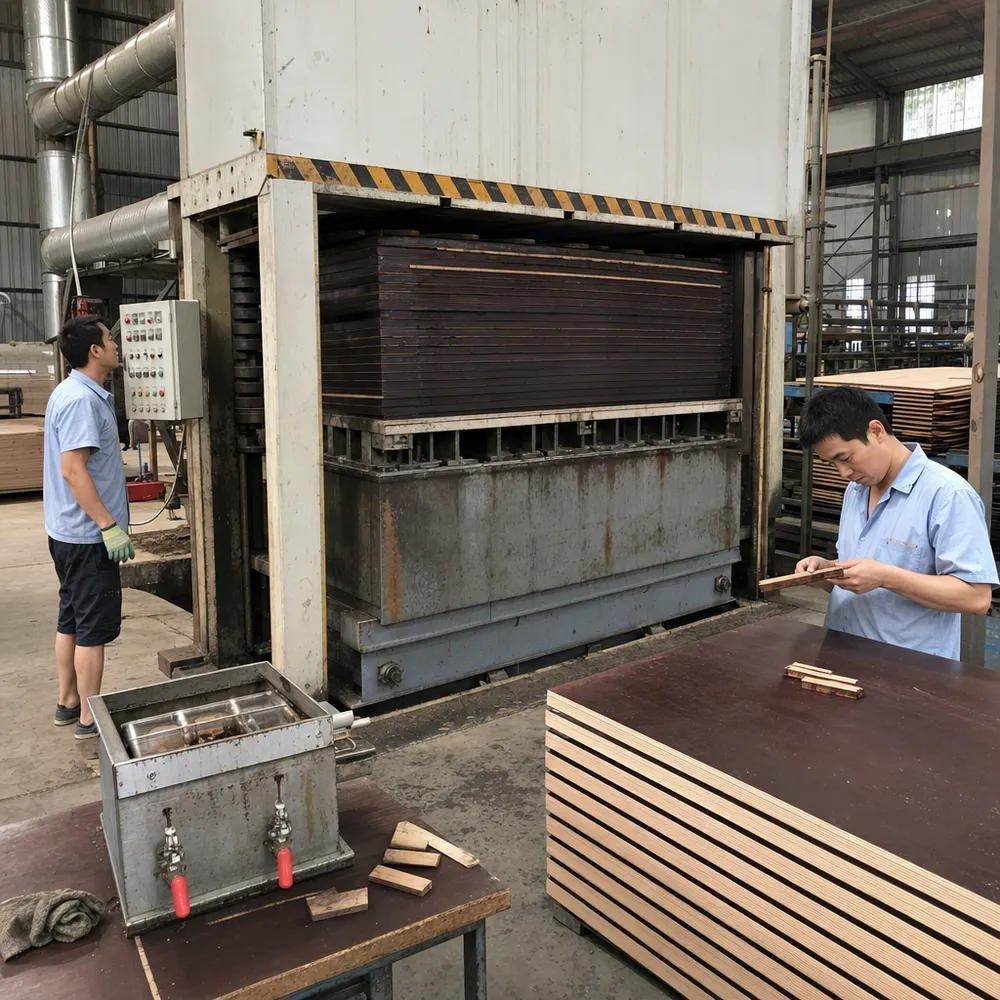
We press our marine film faced plywood with the same multi-daylight hydraulic hot press system used across our film-faced range, but the glue spread weight and press temperature profile are adjusted specifically for WBP phenolic resin. Phenolic resin requires higher press temperatures and longer dwell times than urea-based adhesives — if you cut corners on either, you get a panel that passes a dry bond test but fails under boil testing.
Our press parameters for marine grade are logged per batch, and we run boil tests on samples from each production run before the panels reach the sanding line.
Film Integration: Pressed-In vs. Post-Laminated
The film itself is a phenolic-impregnated overlay — typically 120g/m² or 220g/m² depending on the specification — bonded to the face veneer under heat and pressure as part of the pressing cycle, not applied as a separate lamination step afterward.
That integration matters: a film that's pressed in as part of the panel construction bonds at the fiber level, while a post-press laminated film can peel at the edges under sustained moisture exposure. For buyers supplying into marine, offshore, or high-humidity construction applications, that edge integrity is the difference between a product that performs and one that generates warranty claims.
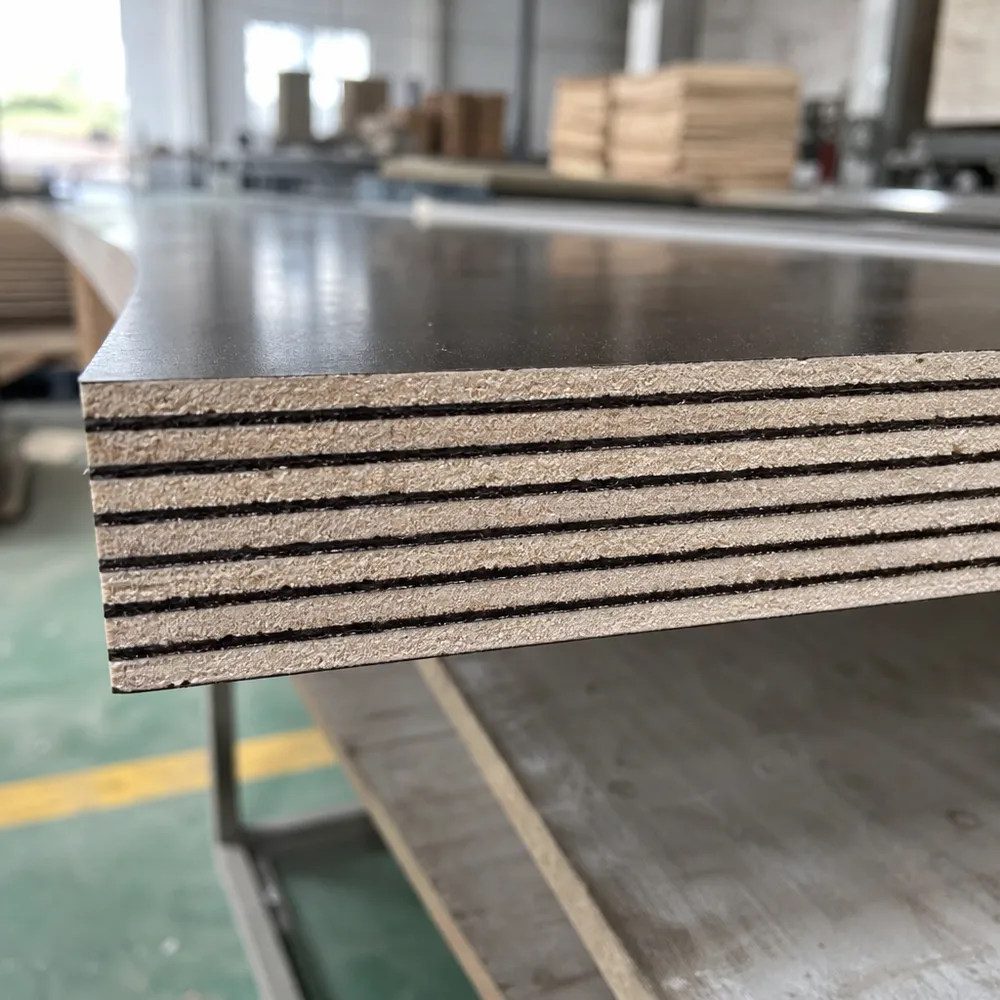
Standard vs. Marine Grade — Key Differences
Technical Specifications
Standard values for marine film faced plywood. Actual specifications may vary by order. Contact us for detailed product data sheets and custom specification confirmation.
Marine Film Faced Plywood — Full Specification Table
Thickness vs. Typical Use
Specification Confirmation
All values shown are standard production parameters. For project-critical specifications — including structural load ratings, specific glue-line shear values, or third-party test reports — request a formal product data sheet with your quote.
Need a Custom Specification?
Custom thickness, panel size, film weight, or core species are available on confirmed orders. Tell us your project requirements and we'll confirm feasibility.
Request Custom SpecApplications of Marine Film Faced Plywood
The combination of WBP bonding and phenolic film makes this panel the right choice wherever sustained moisture exposure, repeated forming cycles, or structural integrity in wet conditions is required.
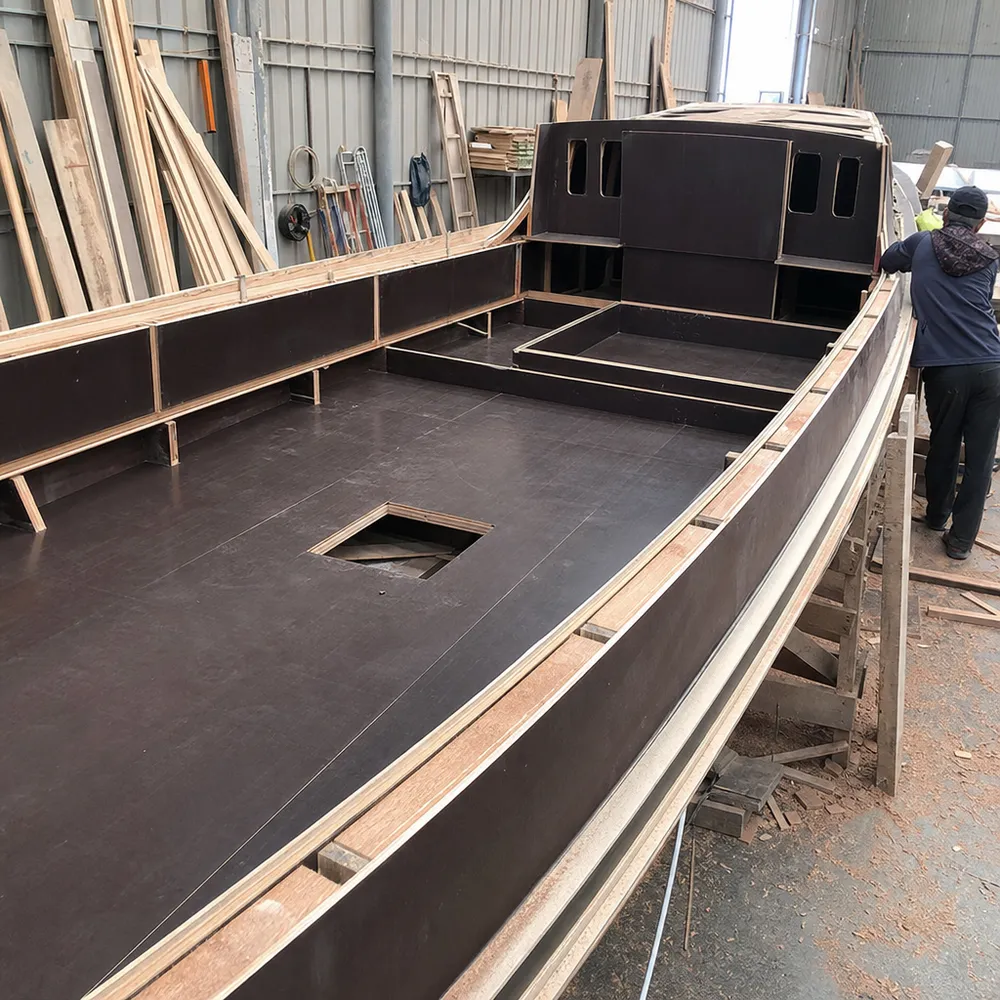
Marine & Boat Building
Hull linings, bulkheads, cabin soles, and deck substrates where panels face bilge moisture, spray, and repeated wet-dry cycling. WBP bonding prevents delamination that would compromise structural integrity.
- Hull and bulkhead lining
- Cabin sole and deck substrate
- Pontoon and dock platforms
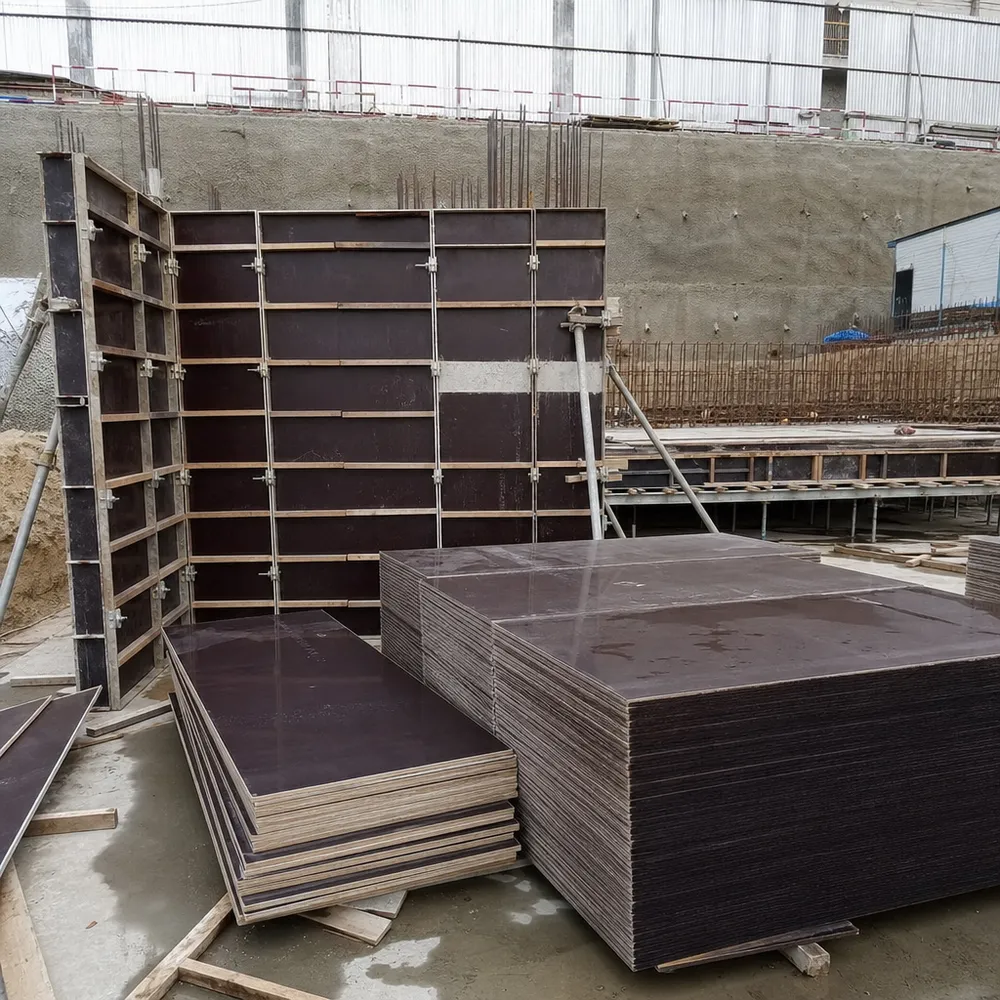
Concrete Formwork
High-cycle formwork in wet pours, underground structures, and marine construction where panels are stripped, cleaned, and reused. Marine grade extends pour cycles significantly over standard film faced plywood.
- Wall and column forms
- Slab and beam soffit shuttering
- Tunnel and underground forms
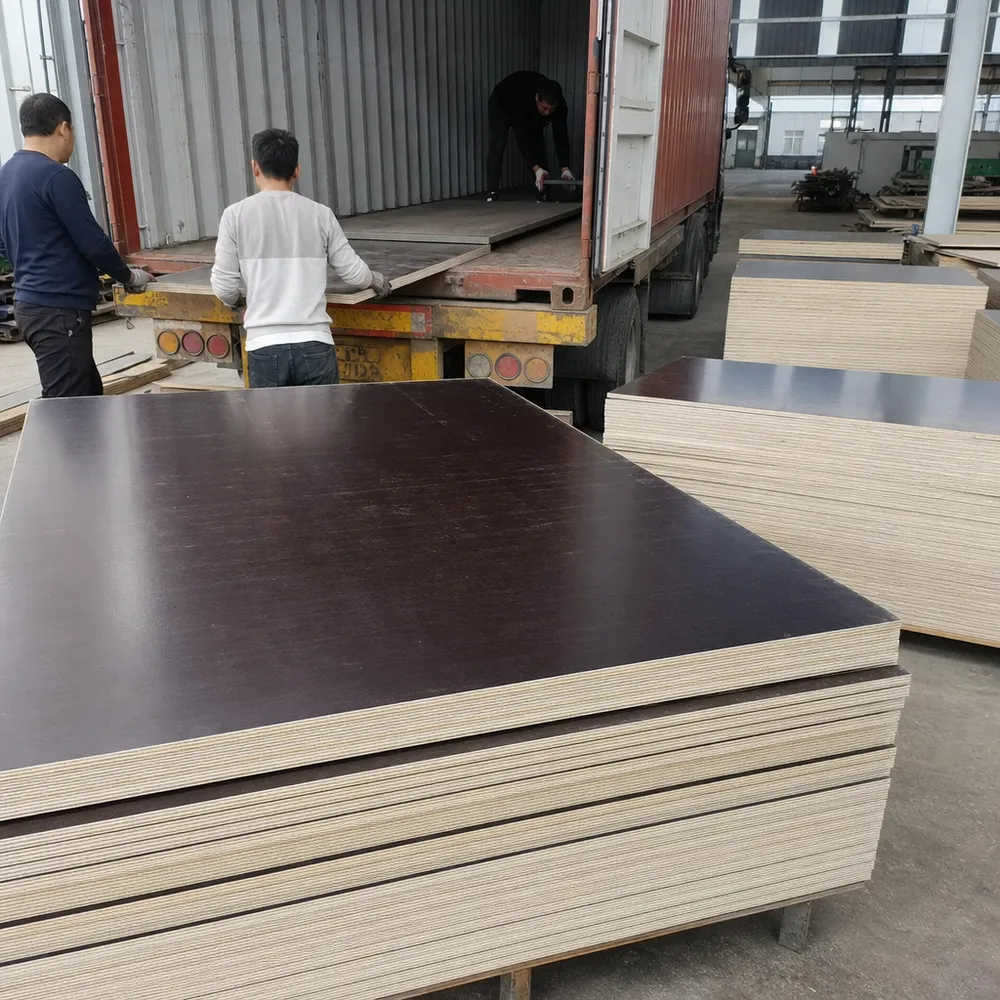
Container & Transport Flooring
Shipping container floors, trailer beds, and refrigerated vehicle interiors where condensation, wash-down, and load cycling demand a panel that won't swell, delaminate, or lose structural stiffness.
- Shipping container floors
- Refrigerated trailer interiors
- Heavy vehicle load beds
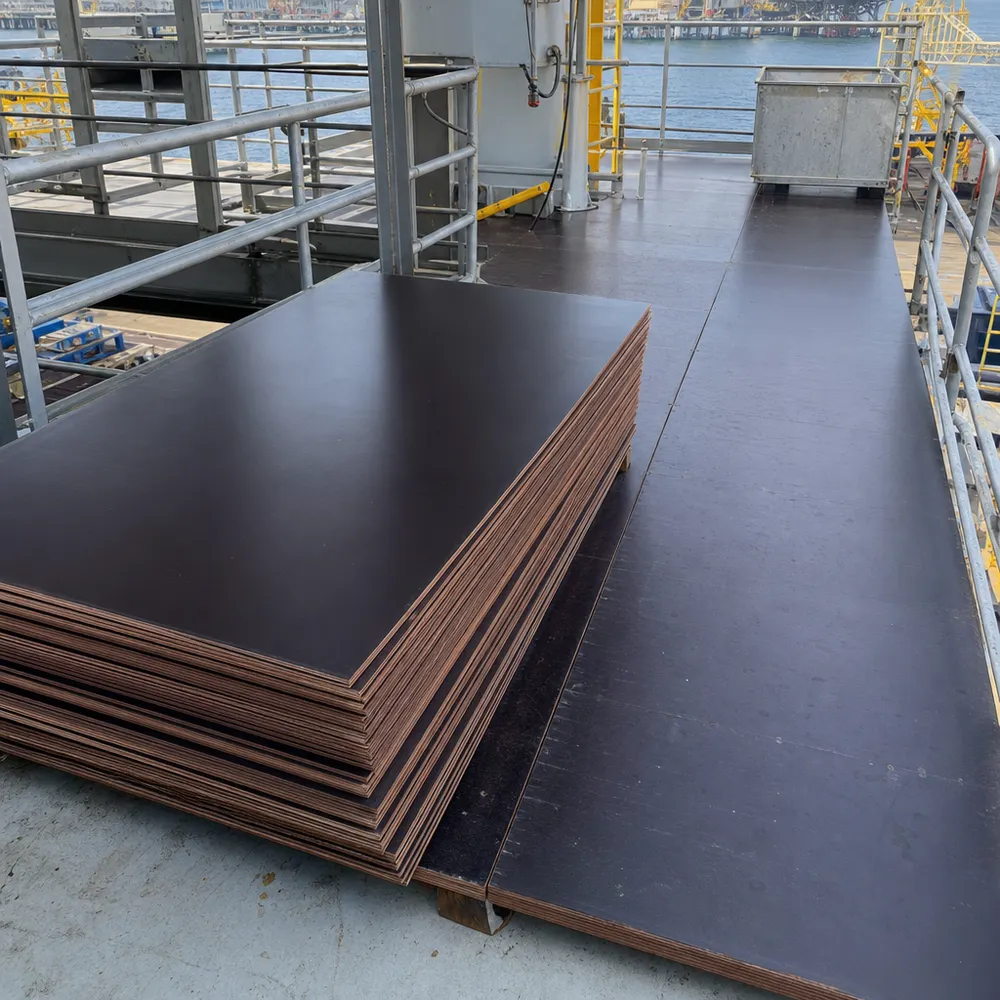
Offshore & Industrial Platforms
Walkways, work platforms, and temporary structures in coastal, offshore, and high-humidity industrial environments. The phenolic film surface resists chemical splash and provides a cleanable, slip-resistant working surface.
- Offshore walkways and grating
- Industrial mezzanine decking
- Temporary site platforms
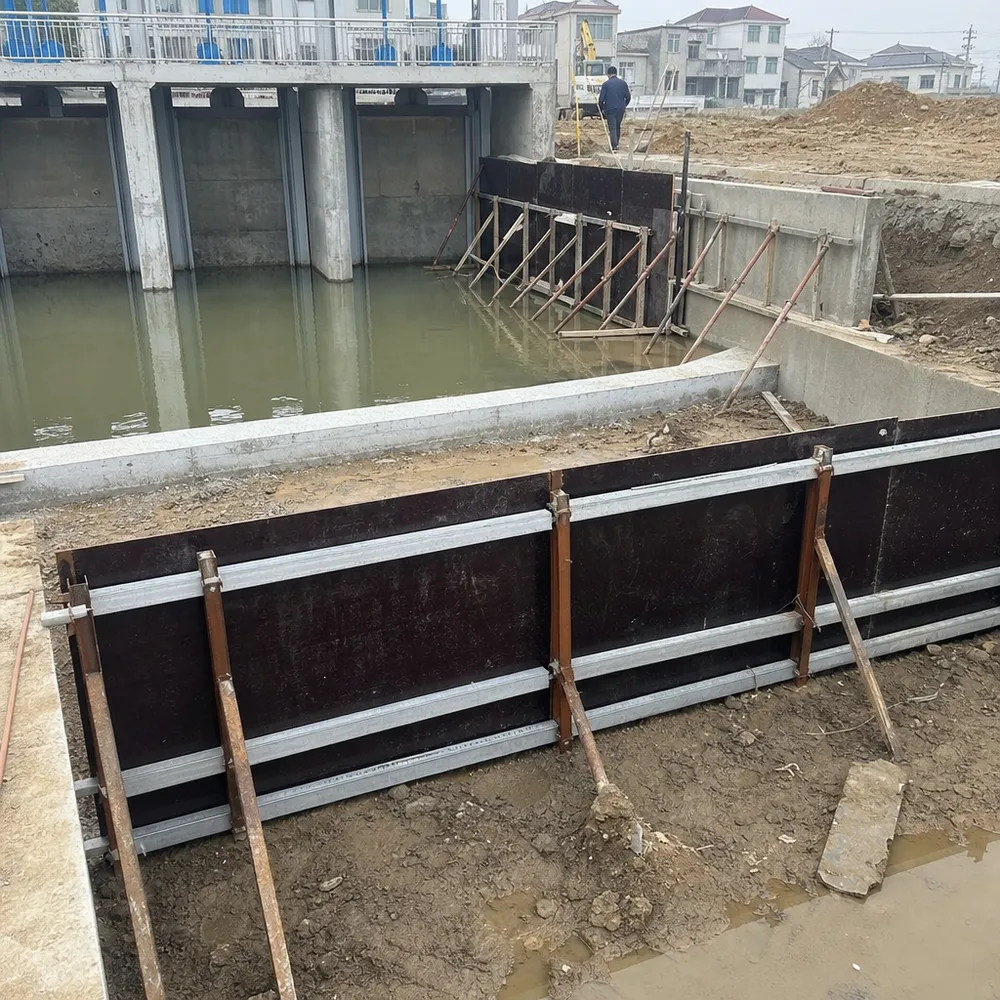
Flood & Water Infrastructure
Temporary flood barriers, weir shuttering, and water-retaining formwork where panels are submerged or in prolonged contact with water. WBP bonding is the minimum acceptable standard for these applications.
- Temporary flood barriers
- Weir and sluice shuttering
- Retaining wall formwork
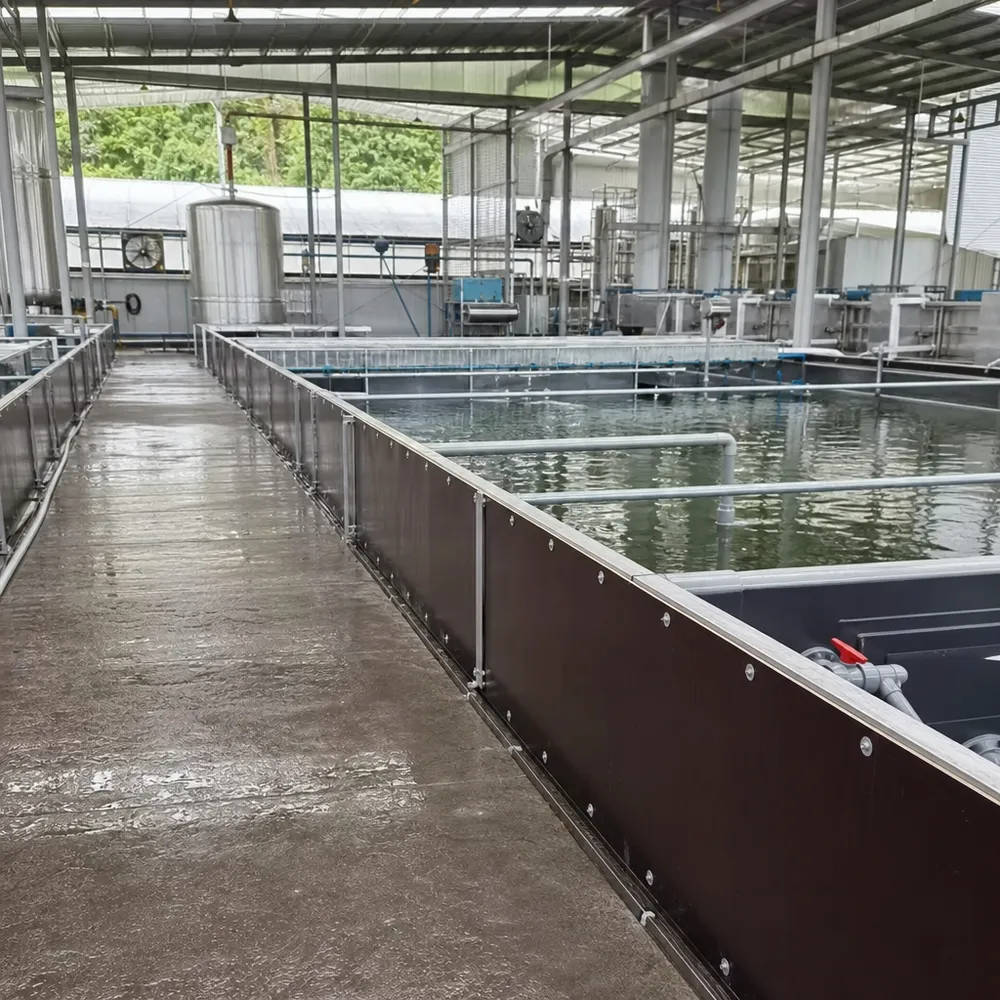
Aquaculture & Wet Processing
Tank surrounds, fish farm walkways, and wet processing facility panels where constant humidity and wash-down cycles would cause standard plywood to fail within a single season.
- Fish farm tank surrounds
- Wet processing facility walls
- Hatchery and pond infrastructure
Not sure if marine grade is the right specification for your project?
If your application involves intermittent moisture only — covered formwork, interior use, or dry-storage environments — standard film faced plywood may be sufficient and more cost-effective. We're happy to help you match the right grade to your actual exposure conditions.
Why Source Marine Film Faced Plywood from QD Plywood
Marine grade is a specification that depends entirely on process discipline and honest documentation. Here's what we do differently.
Per-Batch Boil Testing
Every production batch is boil-tested before shipment — not sampled quarterly or tested on a representative panel. If a batch fails, it doesn't ship. Test records are available on request.
Press Parameter Logging
Temperature, pressure, and dwell time are logged for every press cycle. This is the documentation that separates a verifiable marine grade claim from a marketing label.
WBP on Every Glue Line
Some suppliers use WBP on face glue lines only and MR on inner plies to reduce cost. We use WBP phenolic resin throughout — because moisture doesn't stop at the face veneer.
Full Documentation Package
FSC chain-of-custody certificates, CARB P2 compliance documentation, CE marking, mill test reports, and packing lists are provided with every shipment — not on request after the fact.
Calibrated Thickness Tolerance
±0.2mm thickness tolerance through calibrated sanding. This matters in formwork and structural applications where panel-to-panel consistency affects pour quality and load distribution.
Technical Pre-Sales Support
We'll review your application, confirm the right specification, and flag if a different grade would serve you better. We'd rather lose a sale than supply the wrong product for a structural marine application.
Certifications & Compliance
Marine Film Faced Plywood — Standard Specifications
Standard stock dimensions and parameters. Custom sizes, thicknesses, and film weights are available on request for container-load orders.
| Parameter | Standard Value / Range | Notes |
|---|---|---|
| Panel Size | 1220 × 2440 mm (4′ × 8′) | Custom sizes available on FCL orders |
| Thickness Range | 12 mm, 15 mm, 18 mm, 21 mm, 25 mm | ±0.2 mm tolerance via calibrated sanding |
| Core Species | Hardwood (Eucalyptus / Poplar / Combi) | Eucalyptus core for highest density and strength |
| Glue Type | WBP Phenolic Resin — all glue lines | No MR inner plies; full WBP throughout |
| Film Type | Phenolic resin-impregnated kraft paper | Black or brown; smooth or mesh texture |
| Film Weight | 120 g/m² (standard) / 220 g/m² (heavy) | 220 g/m² recommended for marine applications |
| Face / Back Grade | B/BB or BB/BB | Tight knots, no open voids on face veneer |
| Moisture Content | 6% – 14% | Kiln-dried prior to pressing |
| Formaldehyde Emission | E1 / CARB P2 | ≤ 0.5 ppm (CARB P2); ≤ 0.1 ppm (E0 on request) |
| Bonding Standard | EN 314-2 Class 3 / BS 1088 equivalent | Verified by per-batch boil test |
| Edge Treatment | Sealed with waterproof paint | Reduces end-grain moisture ingress in service |
| Reuse Cycles (Formwork) | 15 – 30+ cycles | Dependent on site handling and release agent use |
| Certifications | FSC, CARB P2, CE | Documentation included with every shipment |
Marine Grade vs Standard Film Faced Plywood
Both products share the same phenolic film surface. The differences are in the core, the glue, and the testing — and those differences determine whether a panel survives prolonged water exposure or fails at the glue line.
| Feature | Marine Grade | Standard Film Faced |
|---|---|---|
| Glue Bond | WBP all glue lines | WBP face / MR inner plies (common) |
| Core Voids | No voids permitted | Small voids acceptable per grade |
| Boil Test | Per-batch mandatory | Periodic / on request |
| Film Weight | 220 g/m² standard | 120 g/m² standard |
| Prolonged Submersion | Suitable | Not recommended |
| Salt Water Resistance | High | Moderate (surface only) |
| Reuse Cycles | 15 – 30+ cycles | 8 – 20 cycles (dry conditions) |
| Documentation | Full test records included | Standard CoC / packing list |
| Typical Applications | Marine, offshore, flood, aquaculture | General formwork, covered construction |
| Price Premium | 15 – 25% over standard grade | Baseline |
Price premium is indicative and varies with order volume, thickness, and film specification. Contact us for a current quote.
Frequently Asked Questions
Questions we hear regularly from buyers specifying marine film faced plywood for the first time.
What is the difference between marine plywood and marine film faced plywood?
Marine plywood (e.g., BS 1088) is an uncoated structural panel with a void-free hardwood core and WBP bonding throughout — used in boat building where the panel itself is a structural element. Marine film faced plywood adds a phenolic resin film to both faces, making it suitable for formwork, shuttering, and surface applications where a smooth, release-ready, water-resistant face is needed. The film adds surface protection but does not replace the structural requirements of the core. Both require WBP bonding on all glue lines.
Can marine film faced plywood be permanently submerged?
It can withstand prolonged and repeated water contact, including temporary submersion in flood barrier and formwork applications. For permanent structural submersion — such as underwater piling or submerged hull components — additional engineering assessment is required. The phenolic film and WBP glue lines resist delamination, but the wood core will eventually absorb moisture through cut edges if not properly sealed. Edge sealing with waterproof paint or epoxy is essential in any application involving sustained water contact.
How do I verify that a supplier's product is genuinely marine grade?
Ask for per-batch boil test records, not just a product specification sheet. A genuine marine grade claim should be backed by EN 314-2 Class 3 test results tied to the specific production batch you are purchasing. Also request press parameter logs (temperature, pressure, dwell time) and confirm that WBP resin is used on all glue lines — not just the face plies. If a supplier cannot provide batch-level documentation, treat the marine grade claim as unverified.
What film weight should I specify for marine applications?
220 g/m² is the standard recommendation for marine and offshore applications. The heavier film provides a thicker phenolic barrier, better abrasion resistance, and improved resistance to edge moisture ingress compared to the 120 g/m² film used on standard film faced plywood. For applications involving repeated wave wash, tidal exposure, or abrasive contact (e.g., dock fenders, boat ramp panels), 220 g/m² is the minimum we would recommend.
Is marine film faced plywood suitable for food contact or potable water applications?
Standard marine film faced plywood is not certified for direct food contact or potable water containment. The phenolic resin film is inert once fully cured, but certification for food-grade or drinking water contact requires specific testing under relevant food safety regulations (e.g., EU Regulation 10/2011 for food contact materials). If your application involves potable water tanks or food processing surfaces, contact us to discuss whether a food-grade certified panel is available or whether an alternative material is more appropriate.
What is the minimum order quantity for marine film faced plywood?
We supply from part-container loads upward, with full container loads (FCL) offering the best unit pricing. For smaller project quantities, we can often consolidate with other orders. Contact us with your required thickness, quantity, and destination port and we'll confirm availability and lead time. Custom dimensions and film weights are available on FCL orders only.
How should marine film faced plywood be stored on site?
Store flat on level bearers, covered and off the ground. Even marine grade panels should not be stored with cut edges exposed to standing water for extended periods before use — the film protects the faces, but unsealed cut edges remain a moisture ingress point. Stack with stickers between panels to allow air circulation. Avoid direct ground contact, which accelerates edge moisture uptake regardless of glue bond quality.
Other Film Faced Plywood Grades
If marine grade is more than your application requires, or if you need a complementary product, these grades are worth reviewing.
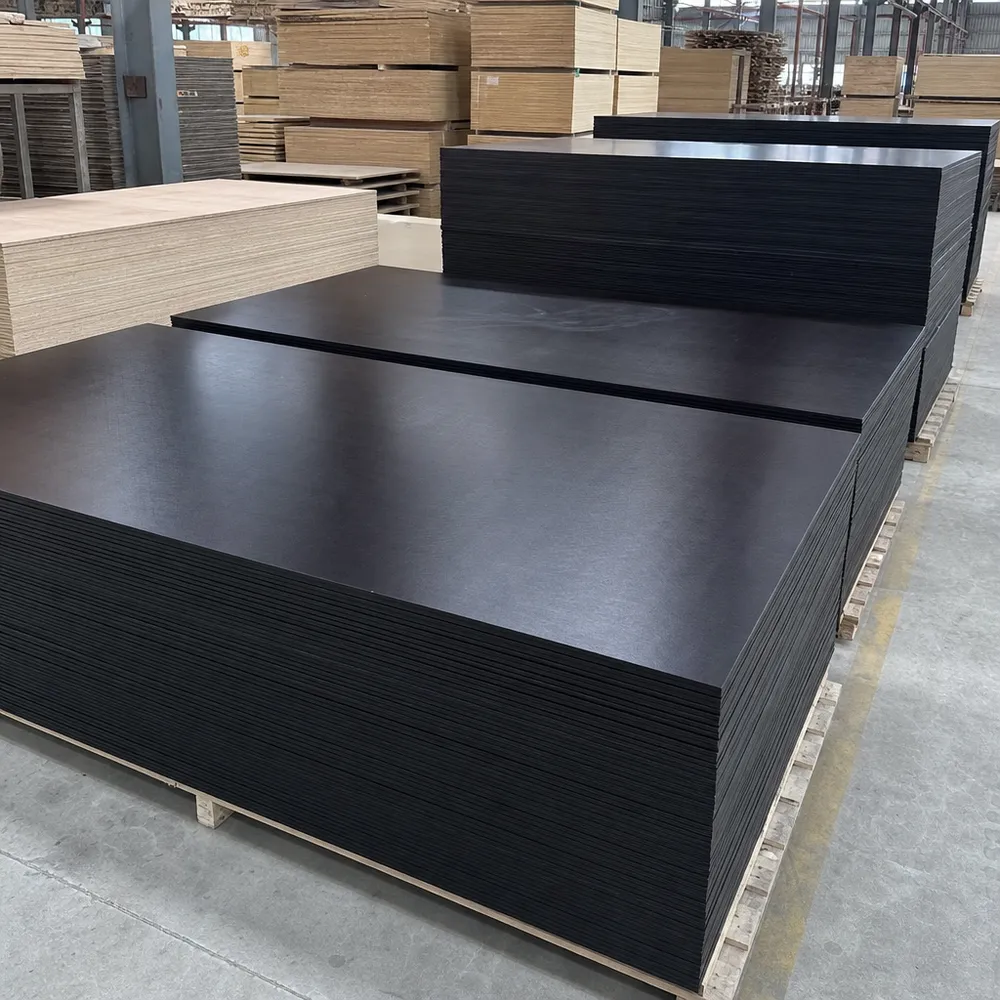
Standard Film Faced Plywood
120 g/m² black or brown phenolic film on a poplar or combi core. The workhorse grade for general formwork and shuttering in covered or dry-cycle applications.
View product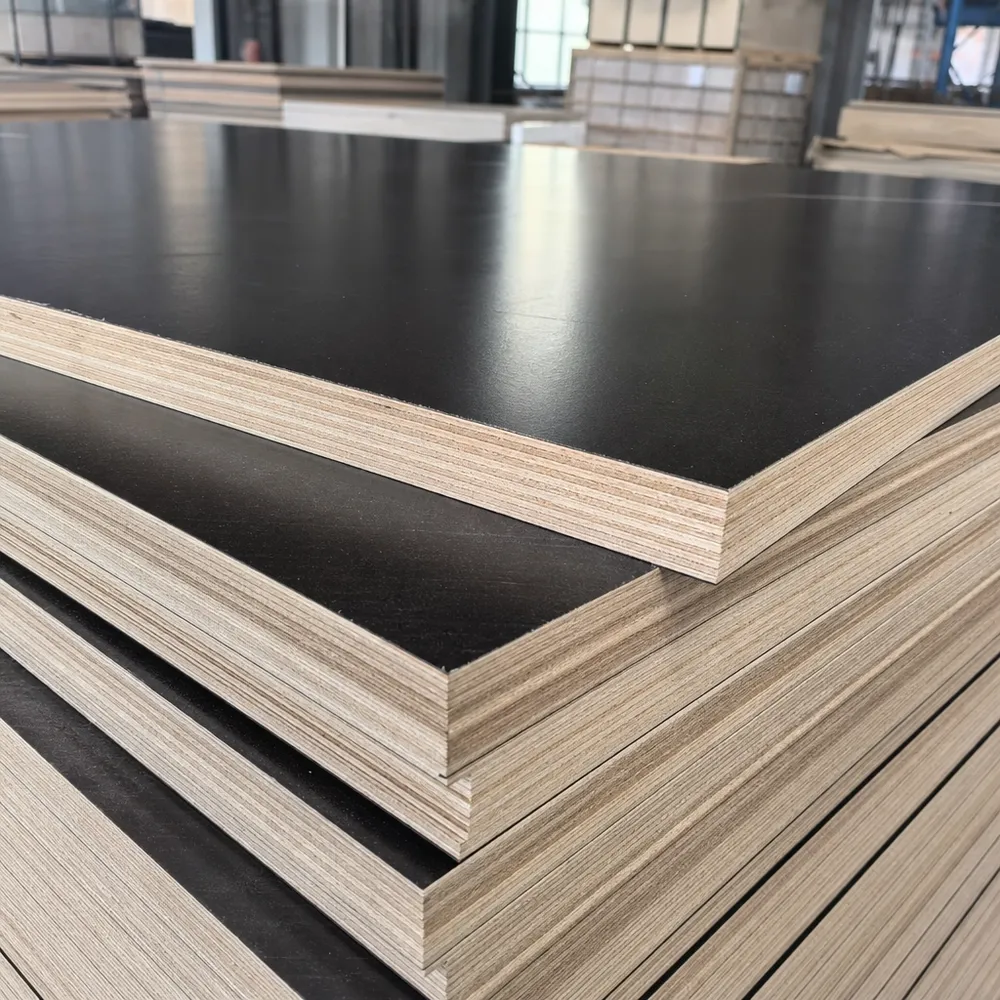
Hardwood Film Faced Plywood
Dense hardwood core with 220 g/m² film. Higher load capacity and better edge integrity than poplar-core grades — a step below full marine spec but suited to heavy-duty formwork.
View product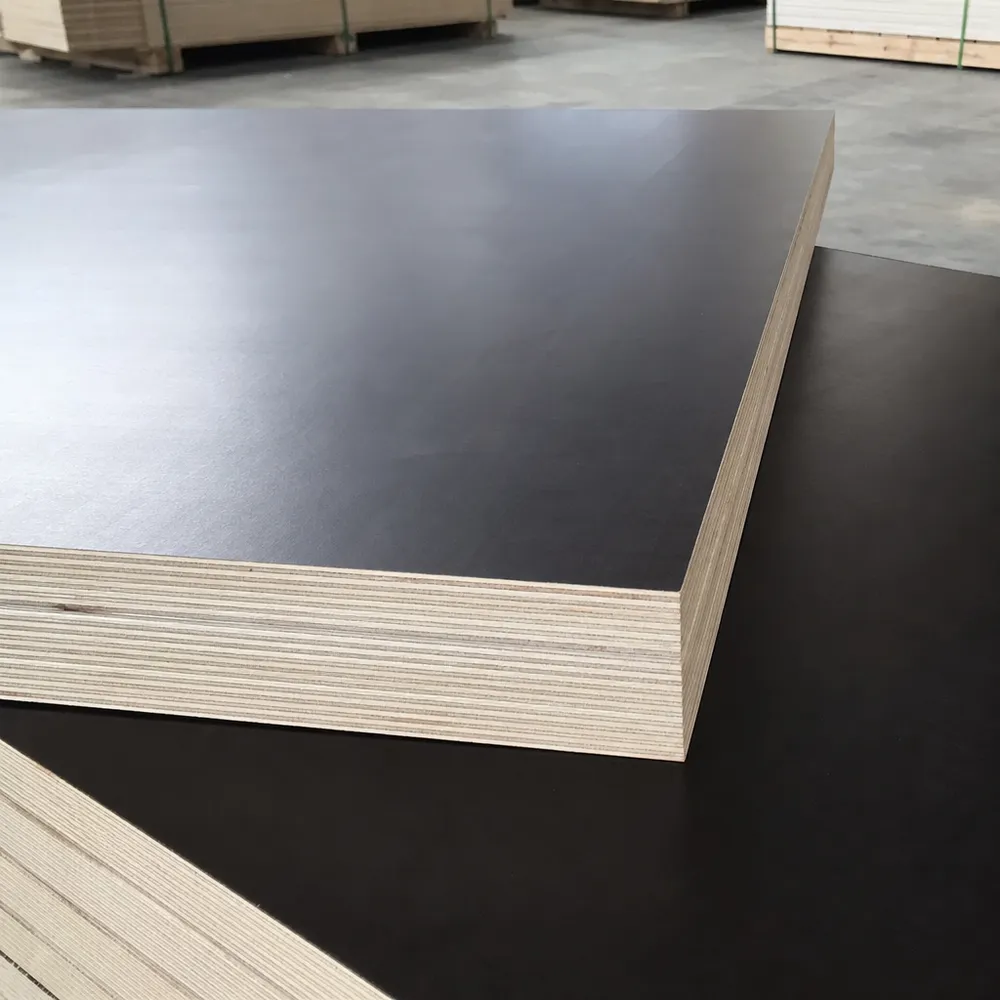
Birch Film Faced Plywood
All-birch core with consistent density throughout. Preferred for precision formwork, concrete finish work, and applications where dimensional stability under load is critical.
View productReady to Specify Marine Film Faced Plywood?
Tell us your thickness, quantity, and destination port. We'll confirm stock availability, lead time, and pricing — with full batch documentation included as standard.
Typical response within one business day. FCL and LCL shipments available worldwide.
Where Marine Film Faced Plywood Earns Its Premium
The "marine grade" designation commands a price premium over standard film faced plywood — and your downstream buyers will pay it, but only if the product actually performs in the applications they're buying it for. Here's where the commercial opportunity is concentrated.
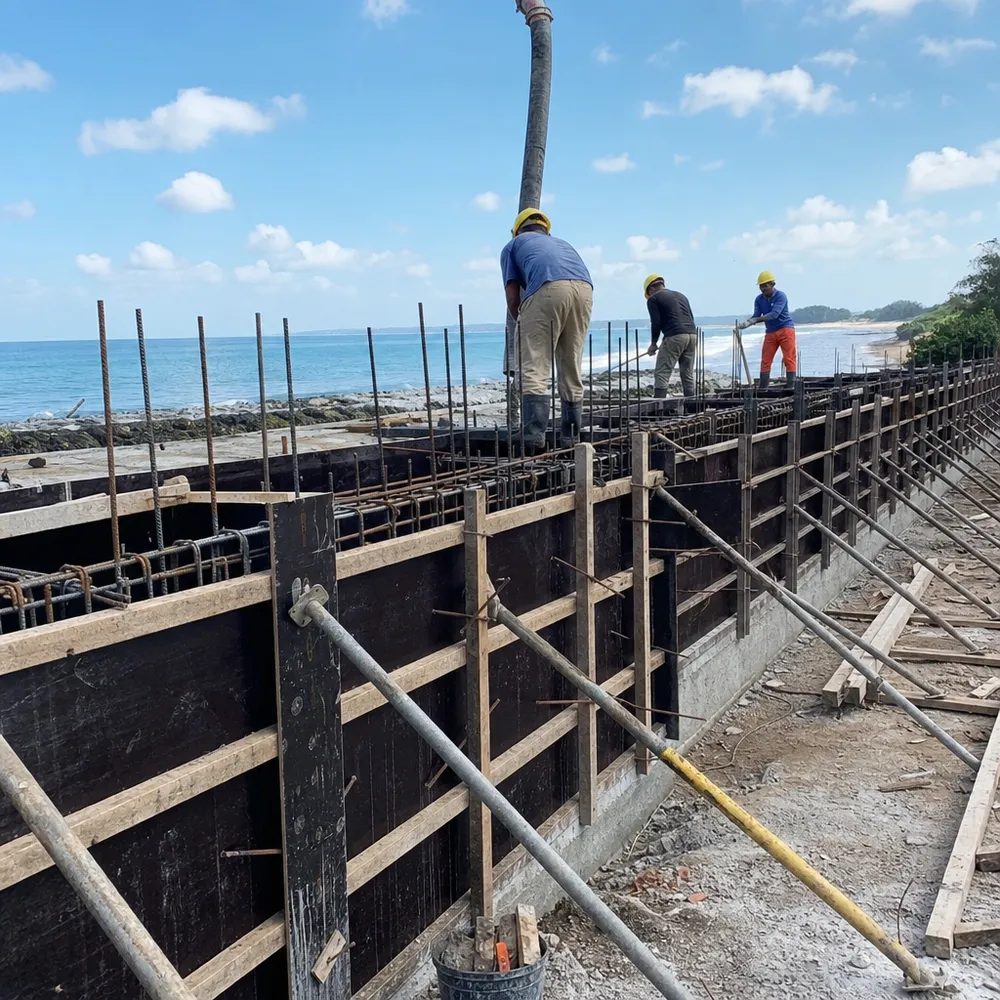
Concrete Formwork in Coastal & Offshore Construction
High-margin · Specification-drivenContractors building seawalls, jetties, bridge abutments, and offshore platform structures need formwork panels that survive salt-spray exposure and repeated wet-dry cycling without delaminating mid-pour. A delaminated panel mid-pour is a structural incident, not just a material failure.
Contractors in these segments specify marine grade explicitly and pay accordingly. Product quality is the primary selection criterion, not price.
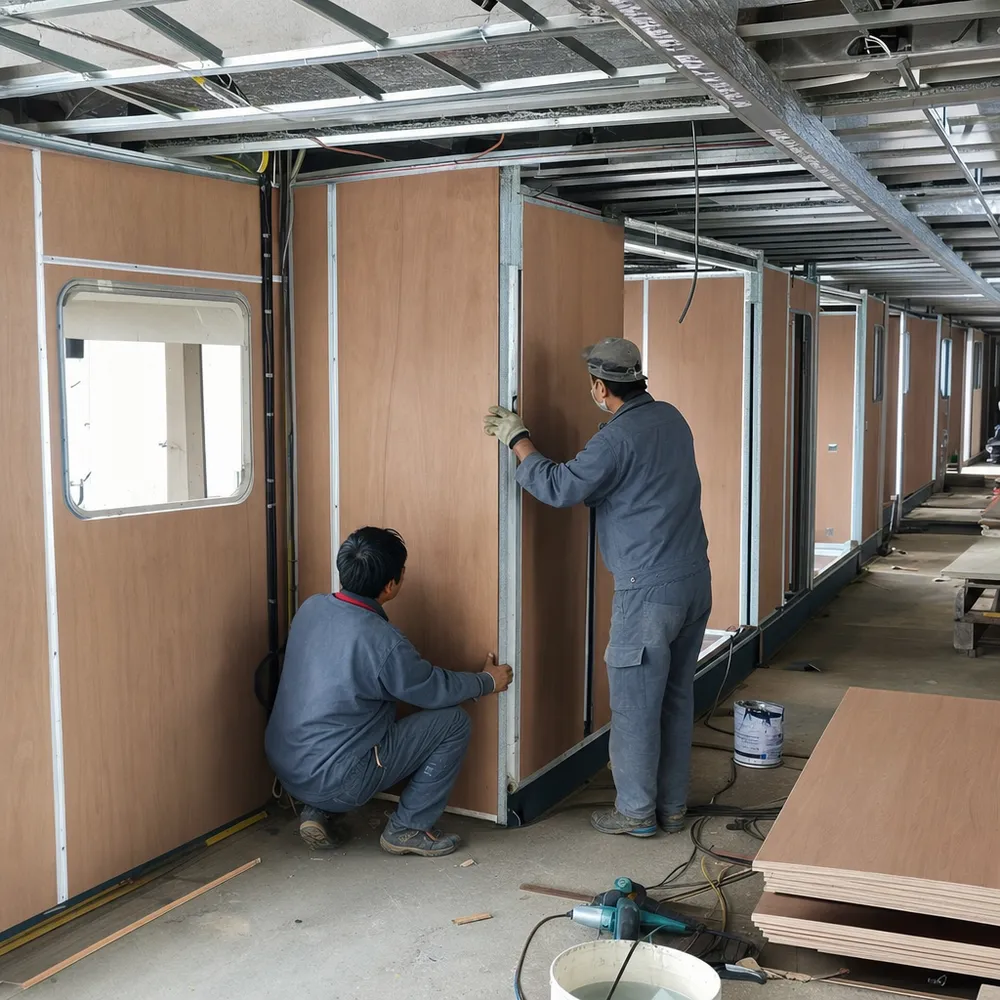
Shipbuilding & Boat Manufacturing
Sticky segment · Long BOM cyclesInterior panels, bulkheads, flooring substrates, and cabin linings in commercial vessels and recreational boats require panels that hold dimensional stability in permanently humid environments. Shipyards and boat builders typically source through specialist marine timber merchants or direct from manufacturers on approved vendor lists.
Order volumes per vessel are modest, but the segment is sticky — once a panel is approved for a vessel series, it stays on the BOM for the production run.
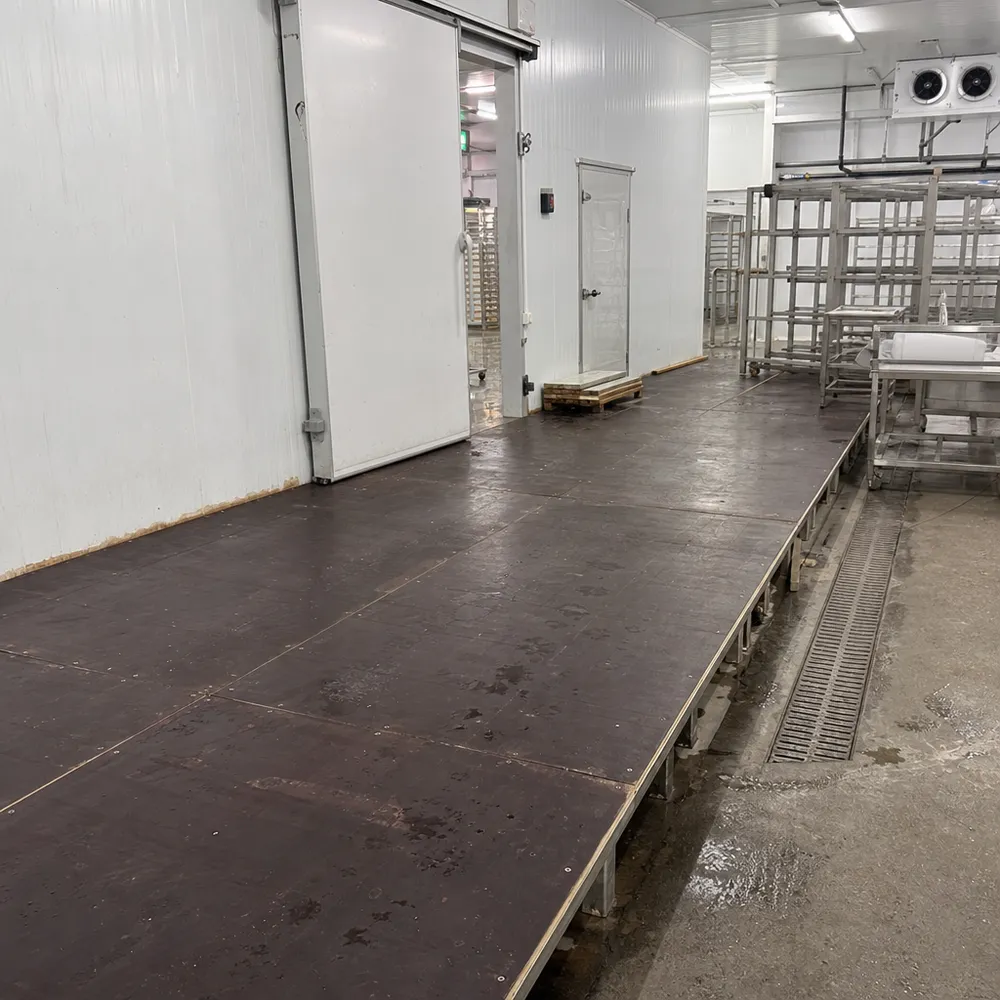
High-Humidity Industrial Flooring & Work Platforms
25–40% margin premium over standardFood processing facilities, cold storage construction, and industrial platforms in wet environments use marine grade panels for flooring substrates and elevated work platforms where standard plywood would swell and delaminate within months.
Facility contractors and industrial builders in these segments often source through regional distributors who stock marine grade as a premium SKU alongside standard construction plywood. The margin differential between standard and marine grade in this channel is typically 25–40%.
Prefabricated Construction & Modular Building
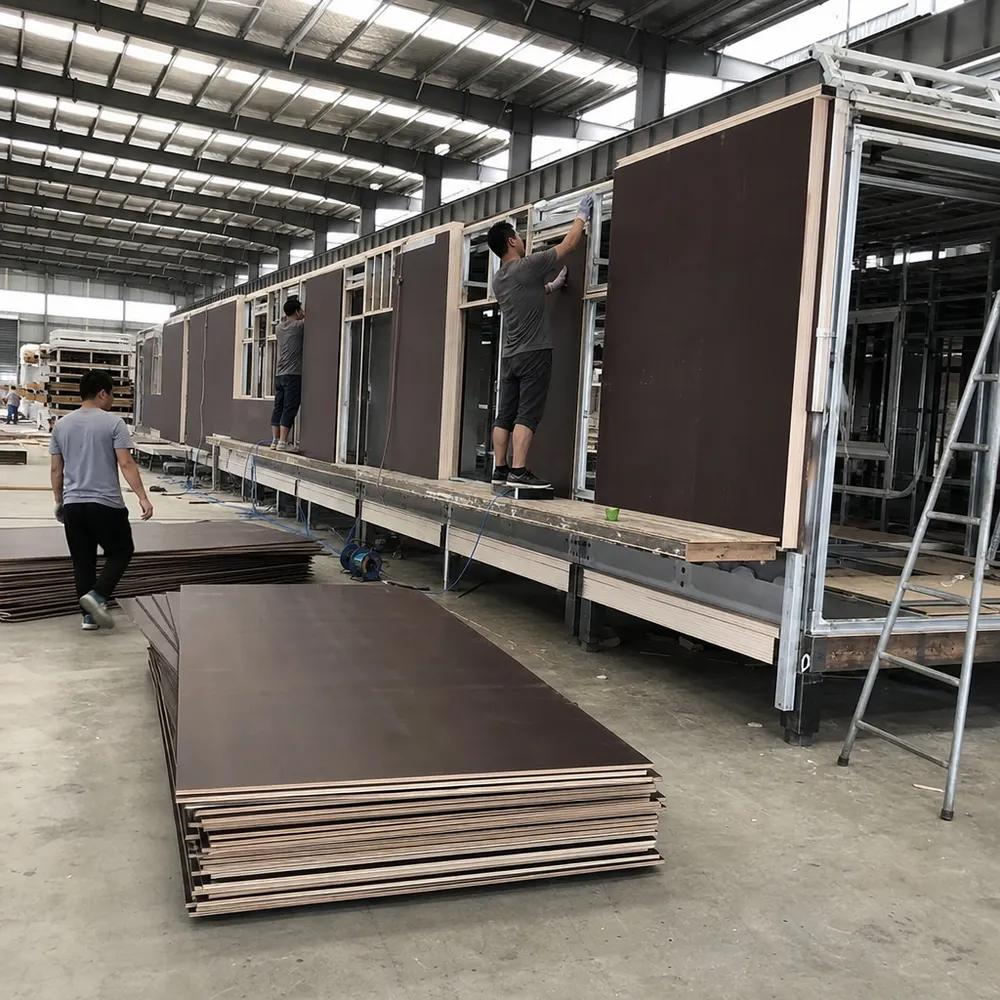
Predictable reorder cyclesManufacturers of prefab panels, modular homes, and container conversions use marine film faced plywood for exterior-facing structural panels where the panel will be exposed to weather during transport and installation before the building envelope is complete.
This segment buys in consistent volumes tied to production schedules and values supply consistency as much as product quality. The reorder predictability is a significant advantage over project-based construction supply.
The Glue Line Is the Product: How We Build the WBP Bond
Film faced plywood is a commodity in most of the market. The differentiation — the part that actually determines whether a panel survives 10 wet cycles or 3 — is in the glue line construction and the pressing process. This is where we spend the most attention.
Resin Sourcing & Incoming Quality Control
We source WBP phenolic resin from approved suppliers and run incoming quality checks on each batch — resin viscosity, pH, and solid content are verified before the batch enters production.
Resin that's out of spec on viscosity will spread unevenly across the veneer surface, and uneven spread produces weak spots in the bond that don't show up on a surface inspection but fail under sustained moisture exposure.
Real failure case: We switched resin suppliers once in 2019 after three consecutive batches came in with viscosity drift. The panels looked fine, but our boil test samples were showing micro-delamination at the edges. We caught it before any product shipped — but it's the kind of failure mode that only shows up if you're actually testing, not just pressing and shipping.
Glue Spread Weight & Layup Control
Glue spread weight is controlled by calibrated roller spreaders and checked against specification at the start of each production run. For marine grade, we run slightly higher spread weights than standard film faced plywood to ensure full coverage across the veneer surface, including any minor surface irregularities in the core veneers.
The layup sequence — face veneer, glue, core veneer, glue, core veneer, and so on — is assembled in a controlled environment to prevent the spread glue from skinning before the panel reaches the press.
Hot Press Parameters for WBP Phenolic Resin
These are higher temperature and longer dwell requirements than urea-formaldehyde adhesives, which is why marine grade panels take longer to produce per cycle than standard film faced plywood. Press temperature and pressure are logged per batch.
If a bonding issue surfaces downstream, we can pull the production record and identify whether it was a process deviation or a material issue.
Post-Press Inspection & Boil Test
Post-press, every panel is inspected for delamination and blister before it moves to the sanding line. Panels that show any bonding defect are pulled at this stage.
The boil test — submerging a sample in boiling water for a defined period and checking for delamination — is run on samples from each production batch as the final bond quality verification before the batch is released for finishing.
WBP Phenolic vs. Urea-Formaldehyde: Why It Matters
Full Production Traceability
Press temperature, pressure, and dwell time are logged per batch. If a bonding issue surfaces downstream, we can pull the production record and identify whether it was a process deviation or a material issue — not just a guess.
Core Veneer Quality: Where Most Marine Plywood Failures Actually Start
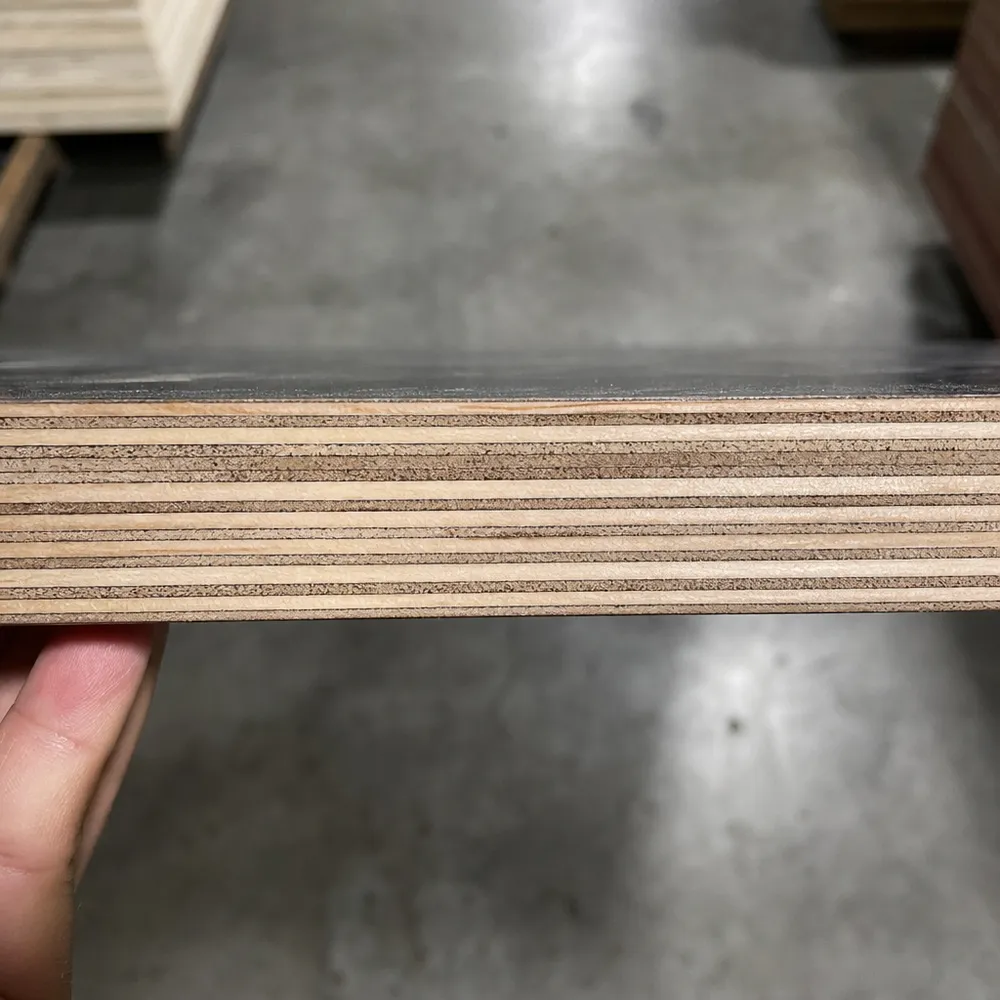
The glue line gets most of the attention in marine plywood specifications, but core veneer quality is where the majority of real-world failures originate. Voids, overlaps, and low-density core species all compromise structural performance in ways that aren't visible on the surface and don't show up in a basic visual inspection.
Core Voids: The Hidden Structural Problem
A void in the core veneer creates a local area with no structural support. Under point loading — a fastener, a concentrated load, repeated impact — the face veneer bridges the void and eventually cracks or punches through. In marine applications where the panel is also cycling through wet and dry conditions, the void becomes a moisture trap that accelerates delamination from the inside out.
What to check: Ask for the core veneer grade specification. "BB/CC core" or "void-free core" are the relevant terms. If a supplier can't tell you the core veneer grade, that's a red flag.
Core Gaps & Overlaps at Veneer Joints
Where core veneer sheets are joined edge-to-edge, gaps and overlaps both create problems. A gap leaves a void line running across the panel width. An overlap creates a thickness variation that causes uneven press pressure — the overlap area gets over-compressed while adjacent areas get under-pressed, producing inconsistent bond quality across the panel.
Core Species Density & Stability
Low-density core species have lower screw-holding capacity, lower shear strength, and higher moisture-driven dimensional movement than hardwood cores. For marine applications where fastener retention and dimensional stability under repeated wetting matter, core species selection is a structural decision, not just a cost variable.
- • Hardwood (Eucalyptus, Poplar-hardwood mix)
- • Consistent density across panel
- • Low moisture movement
- • Softwood or mixed-species cores
- • High-void low-density species
- • Unspecified "hardwood" blends
Our Core Veneer Specification
Standard Ply Count by Thickness
Higher ply count per thickness means thinner individual veneers — more glue lines, better load distribution, and reduced risk of individual veneer failure propagating through the panel.
Film Face Quality: What Separates a 120 g/m² Film from a 220 g/m² Film
Film weight is the most commonly misunderstood specification in film faced plywood. A heavier film isn't just more durable — it changes the moisture barrier performance, the abrasion resistance, and the number of reuse cycles the panel can sustain before the face degrades. For marine applications, film weight selection is a functional decision.
- Suitable for dry or semi-exposed applications
- Lower reuse cycle count
- Not recommended for continuous moisture exposure
- Film edge more vulnerable to delamination under repeated wetting
- Full moisture barrier under continuous exposure
- Higher abrasion resistance — more reuse cycles
- Thicker film resists edge penetration at cut lines
- Better performance under UV and chemical exposure
- Maximum abrasion and impact resistance
- Specified for high-cycle concrete formwork and heavy marine decking
- Highest reuse cycle count
- Higher cost — specify where cycle count justifies it
How the Film Bonds to the Face Veneer
The phenolic film is pressed onto the face veneer under heat and pressure in a separate lamination step after the panel is pressed and sanded. The film resin partially penetrates the face veneer surface, creating a mechanical and chemical bond — not just a surface adhesive layer.
This is why film adhesion quality depends on face veneer surface preparation. A face veneer that's been sanded to the correct grit and is free of contamination bonds reliably. A face veneer with surface oils, dust, or uneven sanding produces inconsistent film adhesion that shows up as film lifting at edges or blistering under heat.
Edge Sealing: The Most Overlooked Specification
Even with a 220 g/m² film on both faces, an unsealed panel edge is a direct moisture ingress path into the core. In marine applications, panels are cut to size on site — every cut edge is an unsealed edge unless the installer applies edge sealant.
Installer note: All cut edges on marine film faced plywood should be sealed with a compatible edge sealant before installation in wet or submerged environments. This is a site responsibility, not a panel specification — but it's the most common source of premature failure we see in the field.
Certifications That Clear Customs and Satisfy Procurement Audits
The certification stack on our marine film faced plywood covers the documentation requirements you'll encounter in the major import markets.
Quality Management System
Covers process controls, inspection records, and corrective action procedures behind every production batch. For buyers who run supplier audits, this is the baseline documentation that confirms the factory has a functioning QMS — not just a certificate on the wall.
Traceable Forest Sourcing
Wood fiber in the panel can be traced to certified forest sources. If your buyers have sustainability sourcing policies — increasingly common in European construction procurement and US institutional purchasing — FSC documentation satisfies that requirement without requiring a separate audit of our supply chain. We maintain FSC CoC records per batch and can provide chain-of-custody documentation with each shipment.
Formaldehyde Emission Standard
California Air Resources Board Phase 2 — the most stringent in our export markets. Our marine film faced plywood is formulated to meet CARB P2 as the baseline, not as a special option. For US-bound shipments, we prepare the CARB documentation package as standard.
US Customs has been increasing scrutiny on formaldehyde compliance documentation for wood panel imports. Shipments without proper CARB paperwork are getting held.
European Construction Products
Covers European construction product requirements. For buyers supplying into EU construction projects, CE documentation is increasingly a procurement gate at the project specification level.
Audit Reports and Test Certificates Available on Request
We don't make buyers chase documentation. If you need a specific certificate for your import clearance or customer audit, tell us when you inquire and we'll include it with the quote.
Customization: What We Can Specify, What We Can't
Marine film faced plywood has more customization variables than standard formwork plywood. Getting the specification right before production starts saves everyone time.
Film Weight and Color
Standard options are 120g/m² and 220g/m² phenolic film in black or brown. The 120g/m² film is sufficient for most construction applications; the 220g/m² film provides a harder surface with better abrasion resistance, suited for applications where the panel surface takes repeated mechanical contact.
Custom film colors available on orders of 500+ sheets — the film lamination line requires a minimum run to justify the material changeover.
Panel Dimensions
Standard is 1220×2440mm. We cut to custom dimensions on confirmed orders — length and width can be adjusted within our press and saw capacity. Non-standard dimensions are a scheduling and yield question, not a tooling cost, so the premium is modest.
Minimum order for custom dimensions is typically one container load.
Core Species
Standard core is poplar or eucalyptus veneer, or a combination core depending on thickness and target density. Buyers who need higher density for specific load-bearing applications can specify eucalyptus-dominant core construction.
Birch core is available for premium specifications — see our birch film faced plywood for that option.
Thickness
6mm through 25mm in standard increments. Non-standard thicknesses (e.g., 17mm, 19mm) are available on confirmed orders with a minimum quantity.
Edge Treatment
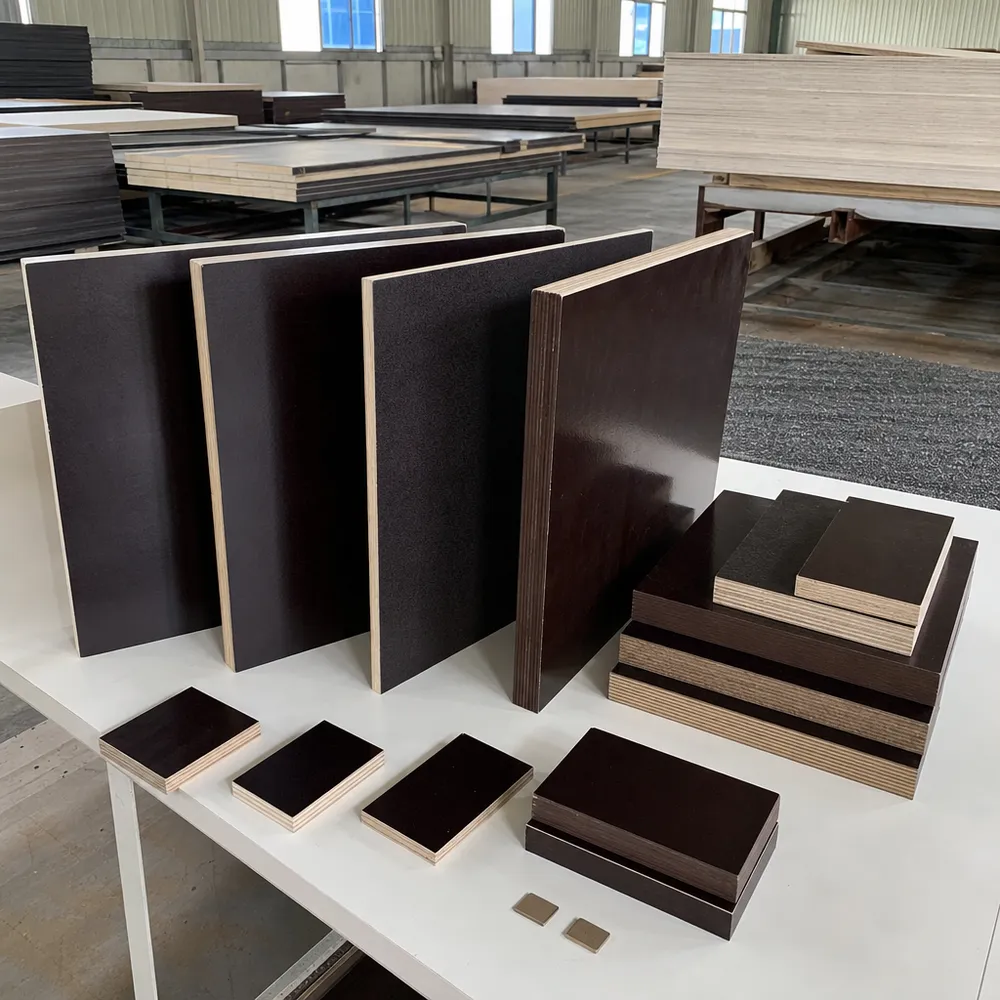
Standard export panels have sealed edges to prevent moisture ingress during ocean transit. For marine applications where edge exposure is a concern in service, we can apply additional edge sealing on request.
OEM Branding
Custom brand marking, panel stamps, and packaging labels are available for buyers building their own branded product lines. Minimum quantities apply — contact us with your branding requirements.
What We Can't Do
We can't produce marine grade film faced plywood with urea-formaldehyde glue and call it WBP-bonded. If a buyer asks for "marine grade" at standard film faced plywood pricing, the honest answer is that the glue system is the cost driver, and cutting the glue spec cuts the product.
We'd rather lose the order than ship a panel that fails in a marine application.
Container Loading and Export Logistics
Marine film faced plywood ships in standard 20GP and 40HQ containers. Here's what to expect from loading quantities through to documentation at destination.
Typical Loading Quantities — 18mm Panels (1220×2440mm)
| Container Type | Approx. Loading Quantity (18mm) |
|---|---|
| 20GP | ~600–650 sheets |
| 40HQ | ~1,200–1,300 sheets |
Thickness affects loading capacity: Thinner panels (12mm and below) load more sheets per container; thicker panels (21mm, 25mm) load fewer. We provide a loading plan with each shipment so your receiving team knows the exact bundle configuration and stacking order.
Export Packaging Standard
Port Routing and Vessel Transit Times
We ship from Xuzhou through Qingdao, Shanghai, or Lianyungang ports depending on routing and destination. Transit times below are vessel transit only — add 3–5 days for inland transport to port and customs clearance at destination.
Export Documentation
Export documentation is prepared to destination market standard. For US-bound shipments, the CARB documentation package is included as standard.
Marine Film Faced Plywood vs. Other Products in the Range
Marine grade is the right specification when sustained wet exposure or WBP bond documentation is a requirement. It's not always the right choice — pointing you toward the right product for your application is more useful than selling you a premium spec you don't need.
| If your application requires… | Consider… |
|---|---|
| Standard concrete formwork, intermittent moisture exposure | Waterproof Film Faced Plywood — WBP glue, lower cost than marine grade |
| Maximum reuse cycles on heavy construction sites | Phenolic Film Faced Plywood — harder phenolic film surface, optimized for formwork reuse |
| Premium density and strength, marine or structural use | Birch Film Faced Plywood — birch core for higher density and bending strength |
| Standard formwork, cost-sensitive projects | 18mm Film Faced Plywood or Brown Film Faced Plywood — standard WBP or MR glue, competitive pricing |
| Structural applications with load-bearing requirements | Structural Film Faced Plywood — engineered for defined structural performance |
Standard concrete formwork, intermittent moisture exposure
Maximum reuse cycles on heavy construction sites
Premium density and strength, marine or structural use
Standard formwork, cost-sensitive projects
Standard WBP or MR glue, competitive pricing
Structural applications with load-bearing requirements
Explore the Full Film Faced Plywood Range
Compare all specifications, grades, and surface options across the complete product line.
Frequently Asked Questions
Common questions from contractors, distributors, and procurement teams evaluating marine film faced plywood for the first time.
Both use WBP (Weather and Boil Proof) phenolic glue, but marine grade is built to tighter tolerances throughout: stricter veneer moisture content before pressing, higher glue spread weights, longer press dwell times, and mandatory boil testing on production samples.
Standard waterproof film faced plywood is engineered for concrete formwork — intermittent wet exposure with drying cycles between uses. Marine grade is engineered for sustained or repeated wet exposure where the panel may never fully dry between cycles.
The practical difference shows up after 5–8 wet cycles:
Standard waterproof panel may begin showing edge delamination after 5–8 wet cycles
Properly manufactured marine grade panel holds bond integrity through 10–15 cycles or more depending on application conditions
For most construction and formwork applications, 120g/m² is sufficient. The 220g/m² film provides a harder, more abrasion-resistant surface — specify it when the panel surface will take repeated mechanical contact.
Sufficient for most construction and formwork applications. Lower cost and weight.
Specify when the panel surface will take repeated mechanical contact:
- Concrete formwork with aggressive stripping
- Industrial flooring with forklift traffic
- Marine decking with foot traffic and equipment movement
The 220g/m² film adds cost and weight. Don't specify it unless the application actually demands the harder surface.
Yes. Our marine film faced plywood is formulated to CARB P2 emission standards as the baseline specification. WBP phenolic resin, when properly cured at the correct press temperature and dwell time, produces very low formaldehyde emissions — typically well within CARB P2 limits.
Documentation included as standard for US-bound shipments
We include CARB documentation with US-bound shipments as standard. If you need test reports for your import documentation or customer audit, request them when you inquire.
Standard Specifications
18mm, 1220×2440mm, black or brown film
Can typically be accommodated in partial container quantities for first orders.
Custom Specifications
Non-standard dimensions, custom film colors, specific core constructions
Generally require a minimum of one container load — approximately 600–650 sheets for 18mm in a 20GP.
Contact us with your target volume and specification; we'll confirm the minimum and lead time.
Request a sample order first. We can ship a small quantity of production samples — typically 5–10 sheets — for your own testing before committing to a full container.
Standard tests buyers run on marine grade panels:
Boil Test
EN 314 or equivalent
Cross-Cut Adhesion
Film adhesion test
Moisture Cycling
Repeated wet/dry cycles
We can also provide our own boil test results from the production batch the samples came from. Most buyers in this segment start with a sample evaluation before their first full order, and we build that into the process rather than treating it as an obstacle.
Yes. FSC chain-of-custody certification covers our marine film faced plywood production. For European buyers with sustainability sourcing requirements or project specifications that mandate FSC-certified materials, we can provide FSC CoC documentation with each shipment.
Specify FSC certification when you inquire and we'll confirm the documentation package.
Get a Quote for Marine Film Faced Plywood
Send us your specification — thickness, panel size, film weight, quantity, and destination market — and we'll come back with a detailed quote, the relevant certification documentation, and a loading plan for your container.
If you're not sure which specification fits your application, describe the end use and we'll recommend the right configuration. We've shipped marine film faced plywood to contractors, distributors, and manufacturers across North America, Europe, the Middle East, Southeast Asia, and Australia — if there's a compliance or logistics question specific to your market, we've likely dealt with it before.
What to include in your inquiry
- Thickness — 12mm, 15mm, 18mm, or custom
- Panel size — standard 1220×2440mm or custom dimensions
- Film weight — 120g/m² or 220g/m²
- Quantity — sheets or container loads
- Destination market — for certification and logistics planning
- End use — if unsure on spec, describe the application
Markets we regularly serve