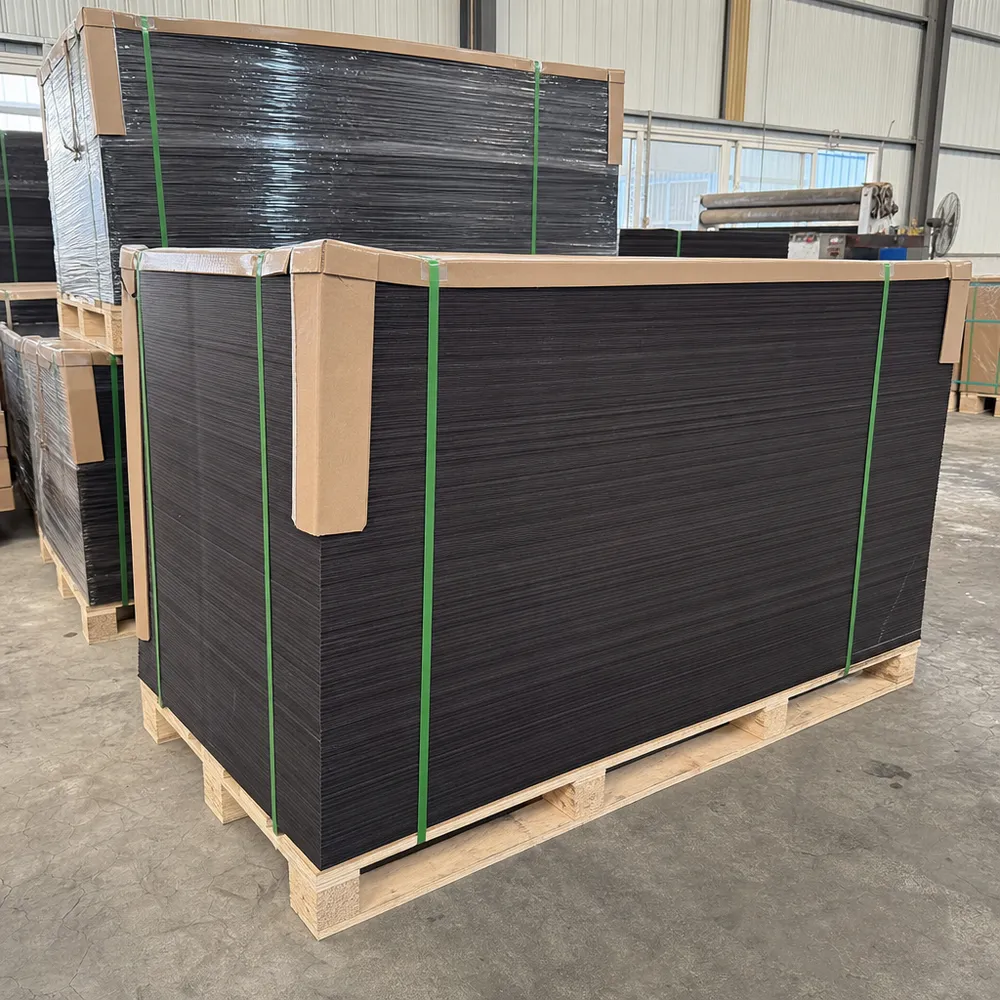
Birch Film Faced Plywood — All-Birch Core Construction
Higher density, tighter grain, and better screw retention than poplar-core alternatives. Built for contractors and distributors who need a formwork panel that holds up through more pours and commands a premium in the market.
Phenolic film overlay, WBP glue bond, export-certified.
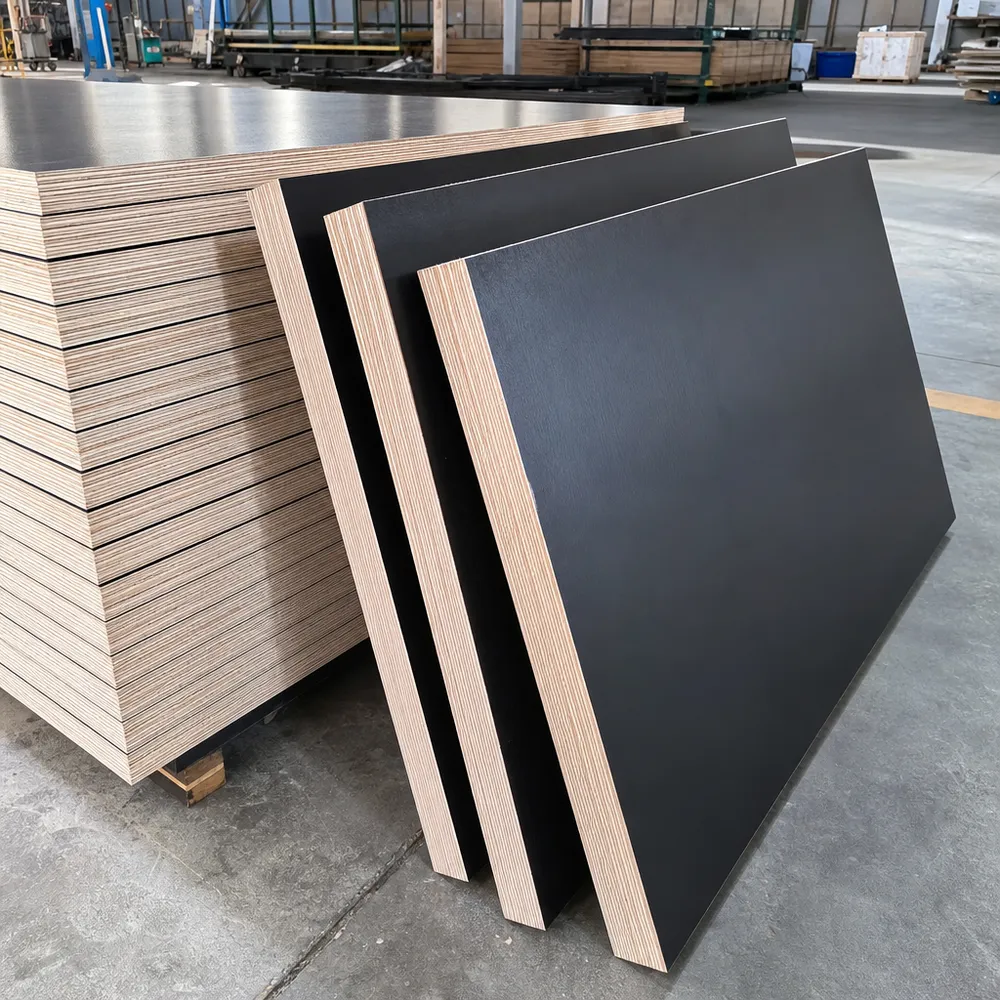
What Makes Birch Core the Structural Argument
Most film faced plywood in the market runs a poplar or mixed-hardwood core. That's fine for standard concrete forming where the panel sees 4–6 pours and gets replaced. Birch core film faced plywood is a different product for a different buyer calculation.
Birch veneer is denser and harder than poplar — typical birch veneer density runs 600–680 kg/m³ versus 350–450 kg/m³ for poplar. That density difference translates directly into three things your downstream customers will notice: the panel resists edge crushing when forms are stripped, screws and nails hold without pulling through, and the panel stays flat under repeated wetting and drying cycles.
For contractors running high-cycle formwork systems — column forms, wall forms, slab decking that gets reused 10–15 times — the birch core is the reason the panel earns its price premium.
We run birch core film faced plywood on a dedicated layup line, not mixed with our poplar-core production. The reason is practical: birch veneer requires different press parameters — higher pressure and slightly longer press time to achieve the same glue penetration as the softer poplar. If you run them on the same schedule, one of them is wrong. (We learned this early on when we were still mixing species on the same press cycle — the birch panels were coming out with slightly lower internal bond strength than the poplar ones, even though the birch itself is the harder wood. The press time was calibrated for poplar.)
Film Overlay: Hot-Pressed, Not Cold-Laminated
The phenolic film overlay on our birch core panels is 120 g/m² on the face and 120 g/m² on the back as standard, with 220 g/m² available for buyers targeting high-cycle industrial applications. The film is hot-pressed onto the panel surface — not cold-laminated — so the bond is structural, not adhesive. Cold-laminated film peels at the edges under the mechanical stress of stripping; hot-pressed film stays bonded.
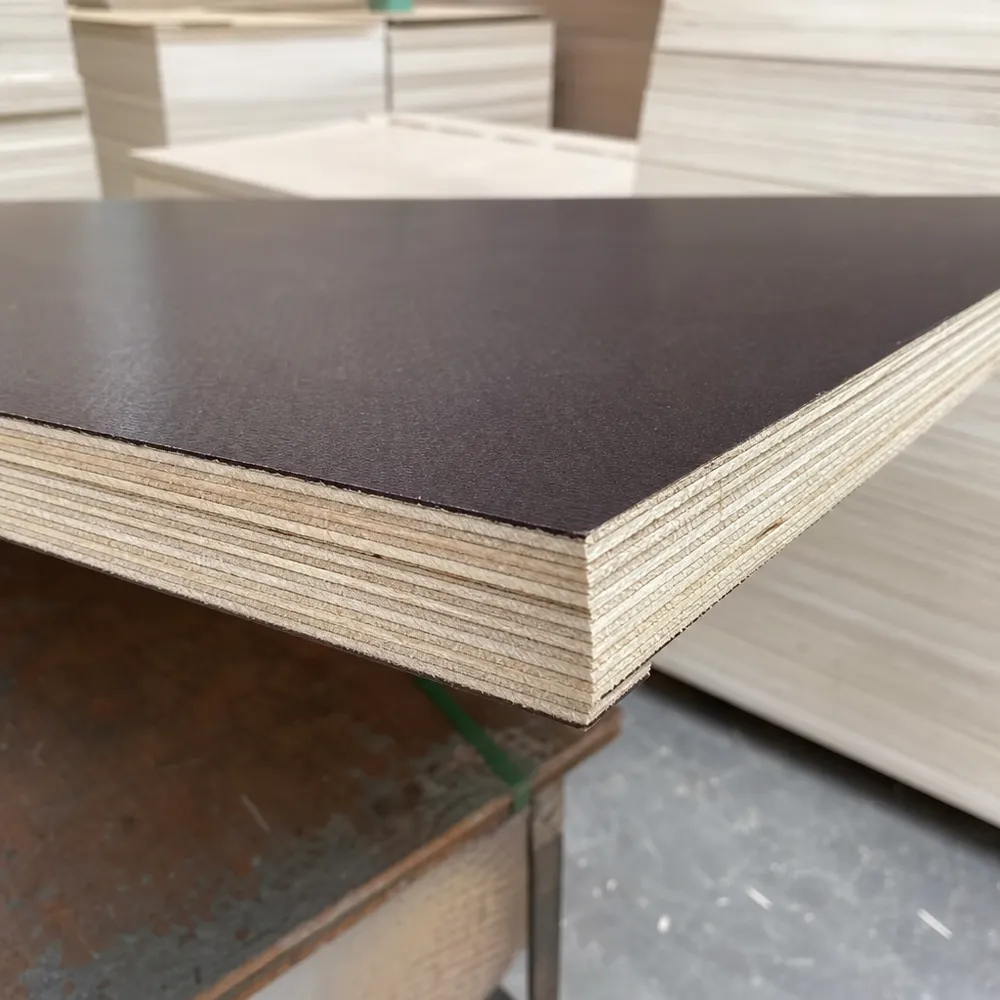
Core Density Comparison
Higher density means better edge crush resistance, superior screw withdrawal, and improved flatness retention under repeated wet/dry cycling.
Edge Crush Resistance
Denser birch veneer resists edge crushing when forms are stripped. Panels maintain structural integrity through repeated pour-and-strip cycles without corner delamination.
Screw & Nail Retention
Screws and nails hold without pulling through. Typical face screw withdrawal for 18mm birch core panels runs ≥1,200 N — critical for reusable formwork systems where fastener points are stressed repeatedly.
Flatness Under Cycling
Birch core stays flat under repeated wetting and drying cycles. For column forms, wall forms, and slab decking reused 10–15 times, panel flatness directly affects concrete surface quality.
Ready to spec birch core for your next project?
Request a quote with specifications and FOB pricing for your target volume.
Technical Specifications
Standard specifications for birch core film faced plywood. Contact us for detailed product data sheets and test reports for your specific order requirements.
Standard Specification Table
| Parameter | Specification |
|---|---|
| Core species | All-birch (Betula spp.) |
| Face/back film | Phenolic resin film, 120 g/m² standard / 220 g/m² available |
| Film color | Black (standard) / Brown available |
| Glue bond | WBP (Weather and Boil Proof) phenolic resin |
| Standard thickness | 12mm, 15mm, 18mm, 21mm |
| Thickness tolerance | ±0.5mm |
| Standard panel size | 1220 × 2440mm |
| Alternative sizes | 1250 × 2500mm, 915 × 1830mm |
| Veneer layers | 9-ply (18mm typical) |
| Surface finish | Sanded, smooth |
| Edge treatment | Sealed with waterproof paint |
| Moisture content | 8–12% (export standard) |
| Formaldehyde emission | CARB P2 / E1 compliant |
| Density (typical) | 650–720 kg/m³ |
| Bending strength | ≥40 MPa (parallel to grain) |
| Screw withdrawal (face) | ≥1,200 N (typical for 18mm) |
Specifications shown are industry-standard values for birch core film faced plywood. Actual specifications may vary by order. Contact us for detailed product data sheets and test reports.
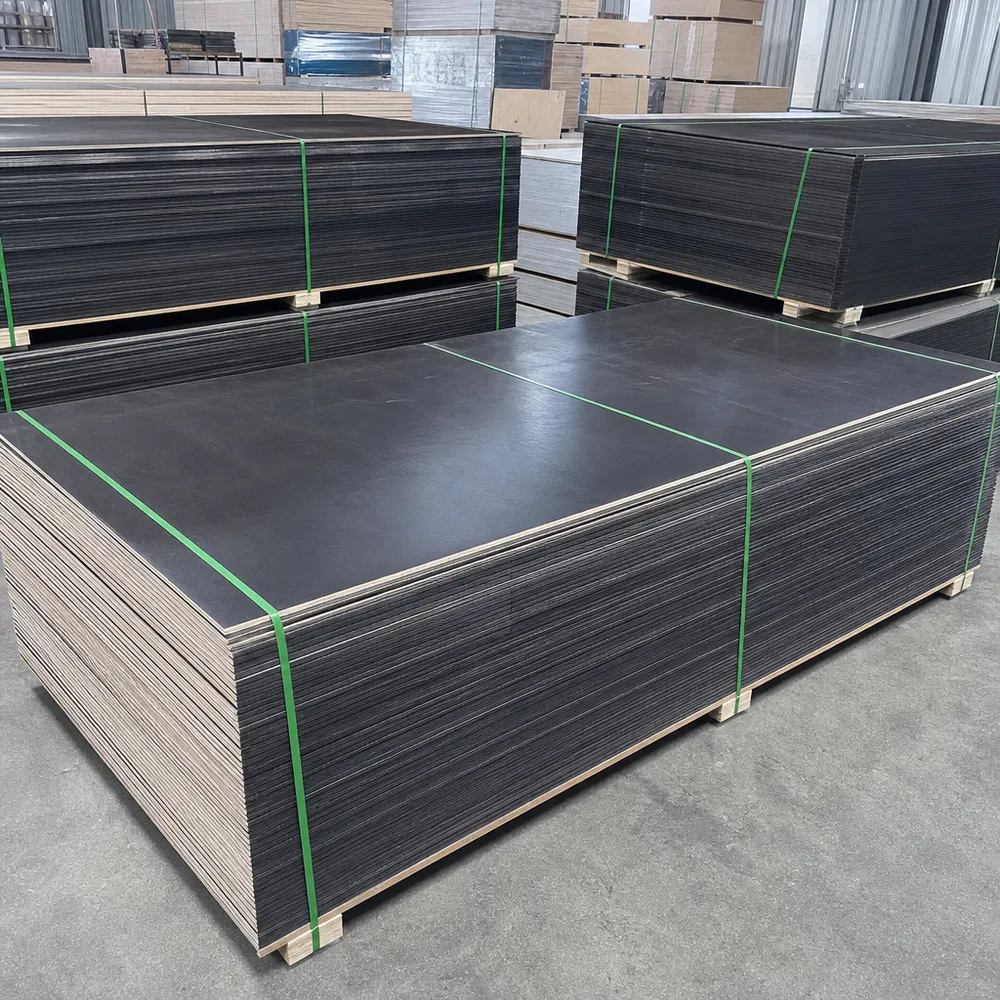
Film Weight: What It Means for Your Project
Standard Film
Suitable for most residential and commercial formwork. Good release, 8–12 pour cycles typical with proper care.
Heavy Film
Preferred for high-cycle infrastructure and civil projects. Thicker film layer extends service life to 15–20+ pours under demanding conditions.
Freight & Container Notes
Standard 1220×2440mm panels load efficiently into 20' and 40' containers. Typical 40' HC container holds approximately 20–22 m³ of 18mm panels (roughly 450–500 sheets).
All panels are bundled, edge-sealed, and wrapped for ocean freight. We provide packing lists, phytosanitary certificates, and fumigation certificates as standard export documentation.
EN 314-2
Glue Bond Class 3
CARB P2
Formaldehyde
E1 / E0
EU Emission
Applications
Birch core film faced plywood is specified across a wide range of construction and industrial applications where panel strength, surface quality, and reuse cycles matter.
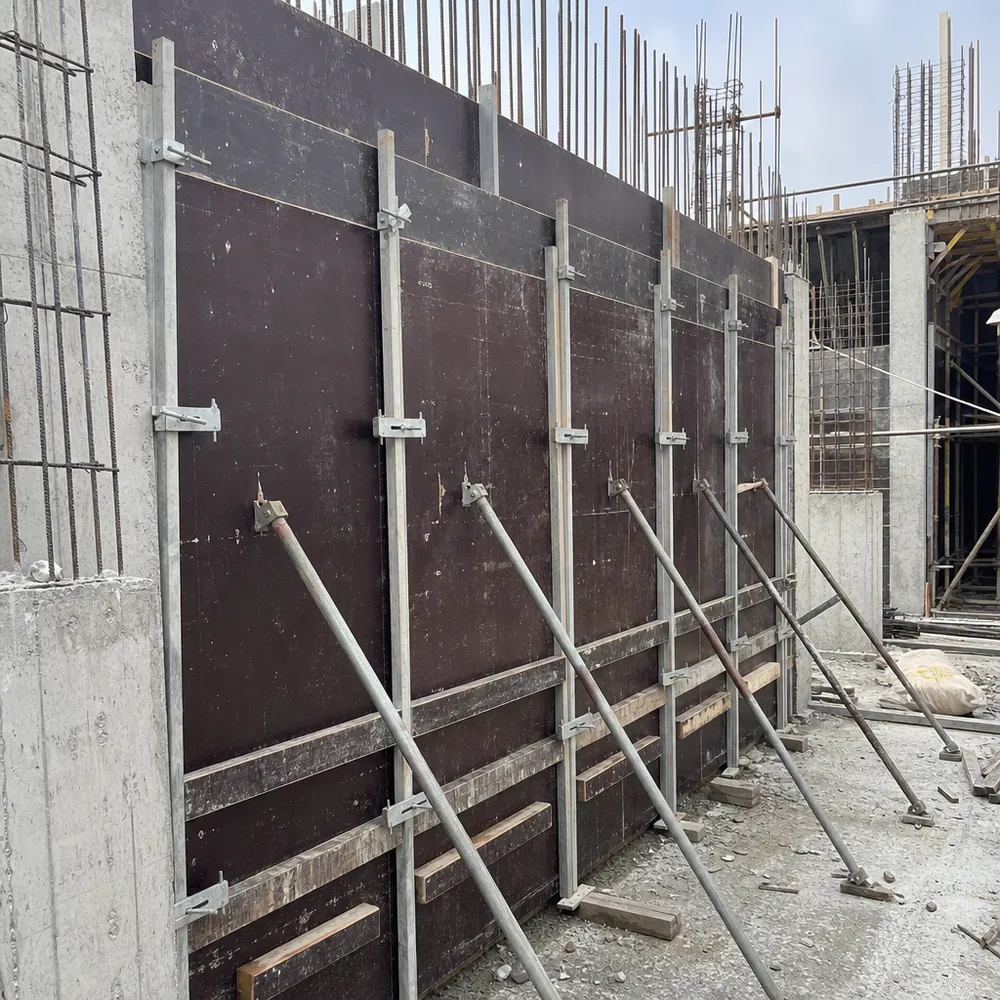
Concrete Wall Formwork
The most common application. Birch core panels withstand lateral concrete pressure without bowing. The phenolic film releases cleanly, leaving a smooth concrete face that often requires no further finishing.
Typical thickness: 18mm, 21mm
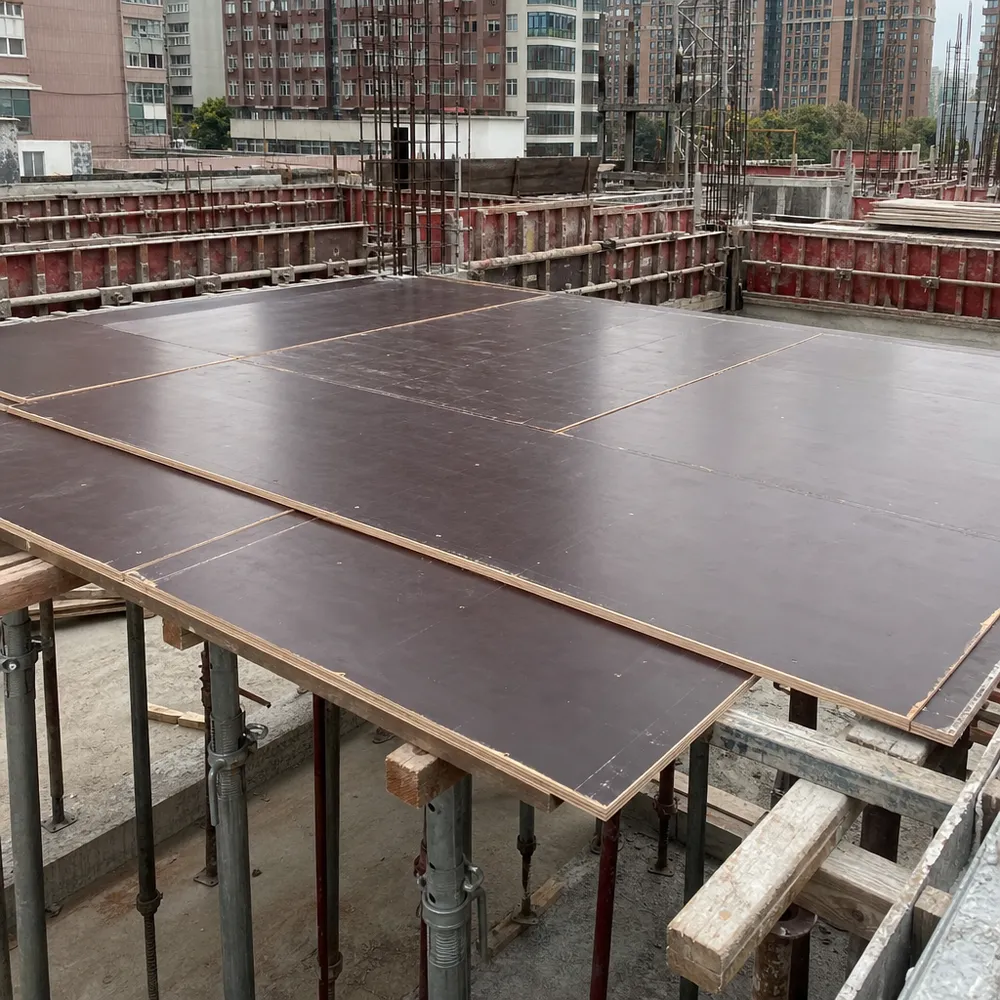
Slab & Deck Formwork
Horizontal slab decking demands high bending stiffness across wide spans between props. Birch core's superior MOR and MOE values reduce deflection under wet concrete loads, protecting slab thickness tolerances.
Typical thickness: 18mm, 21mm
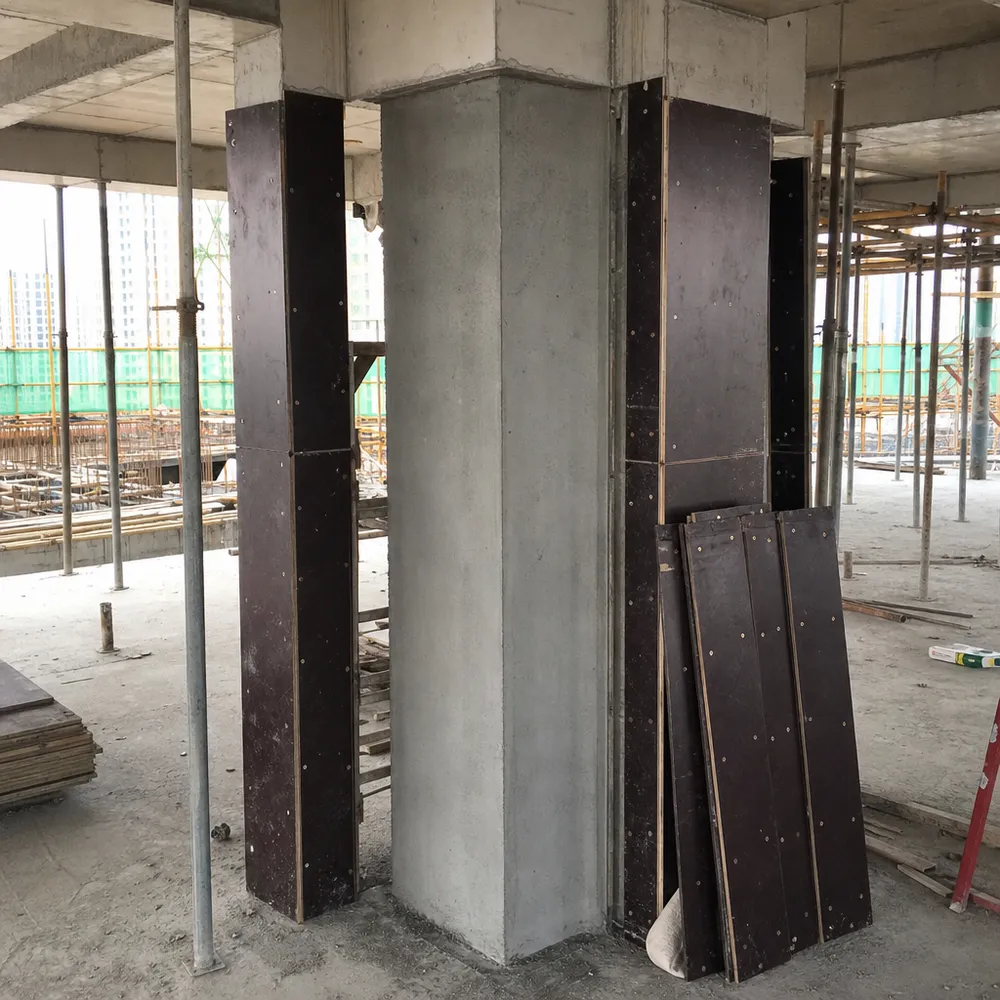
Column & Beam Forms
Column forms are stripped and reused repeatedly on the same project. Birch core's edge crush resistance and screw retention keep column box forms tight and square through multiple reuse cycles.
Typical thickness: 15mm, 18mm
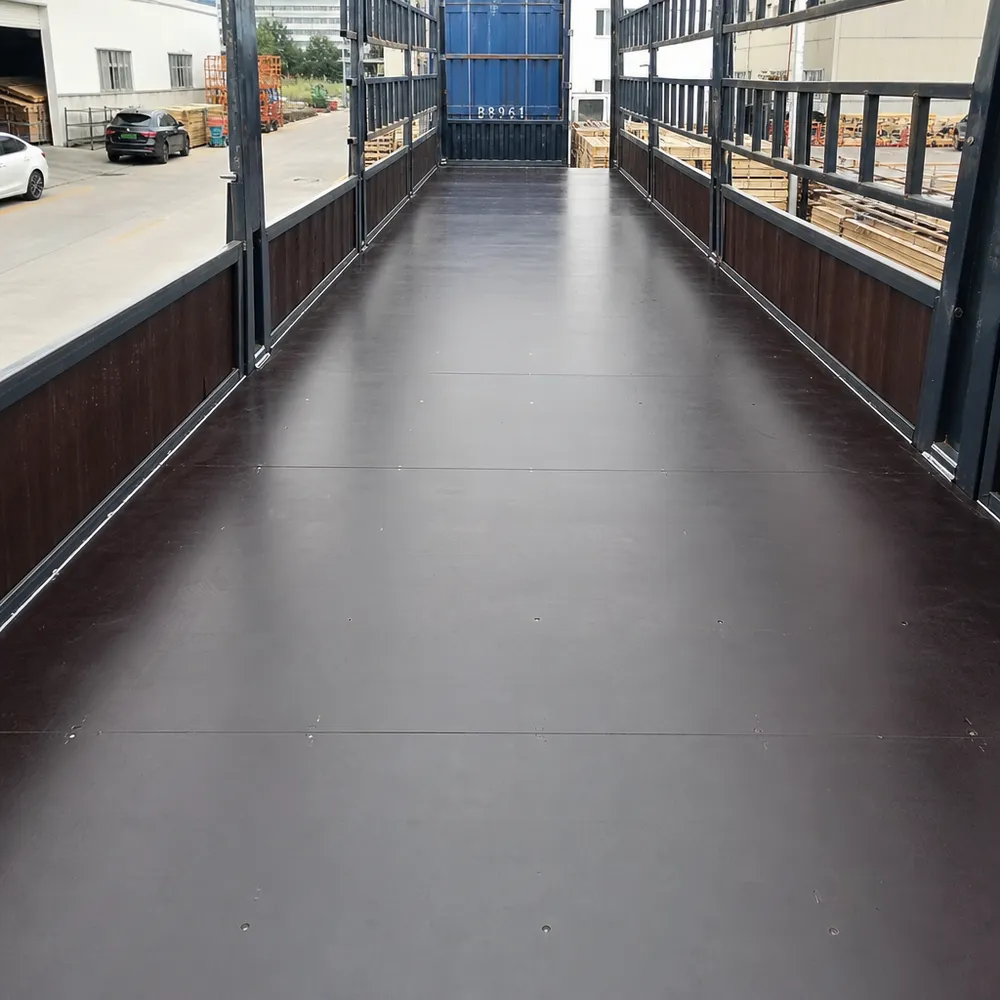
Vehicle & Trailer Flooring
Truck beds, trailer floors, and container liners require panels that resist point loads, moisture ingress, and abrasion. Birch core with 220 g/m² film handles heavy pallet and forklift traffic.
Typical thickness: 18mm, 21mm
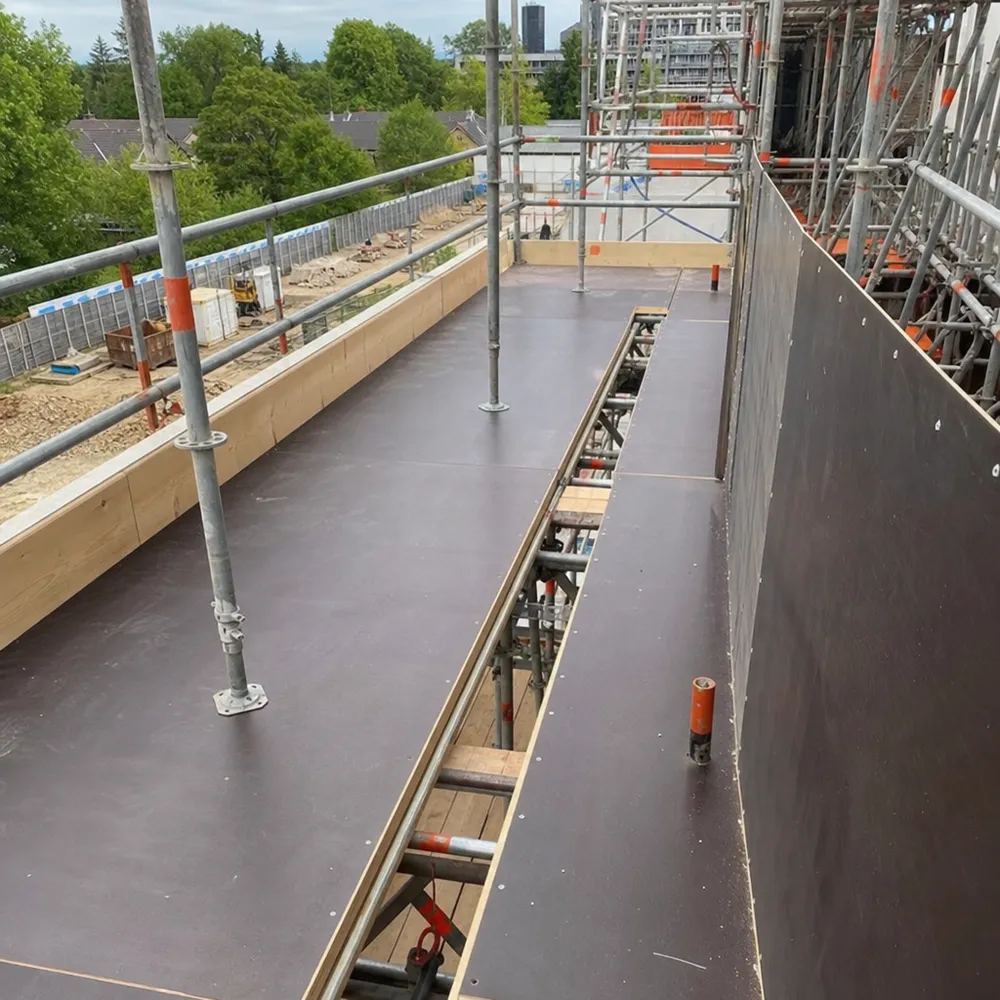
Scaffold Platforms & Hoarding
Scaffold deck boards and site hoarding panels need to withstand weather exposure and repeated handling. Birch core's WBP glue bond and sealed edges resist delamination in outdoor conditions.
Typical thickness: 12mm, 15mm
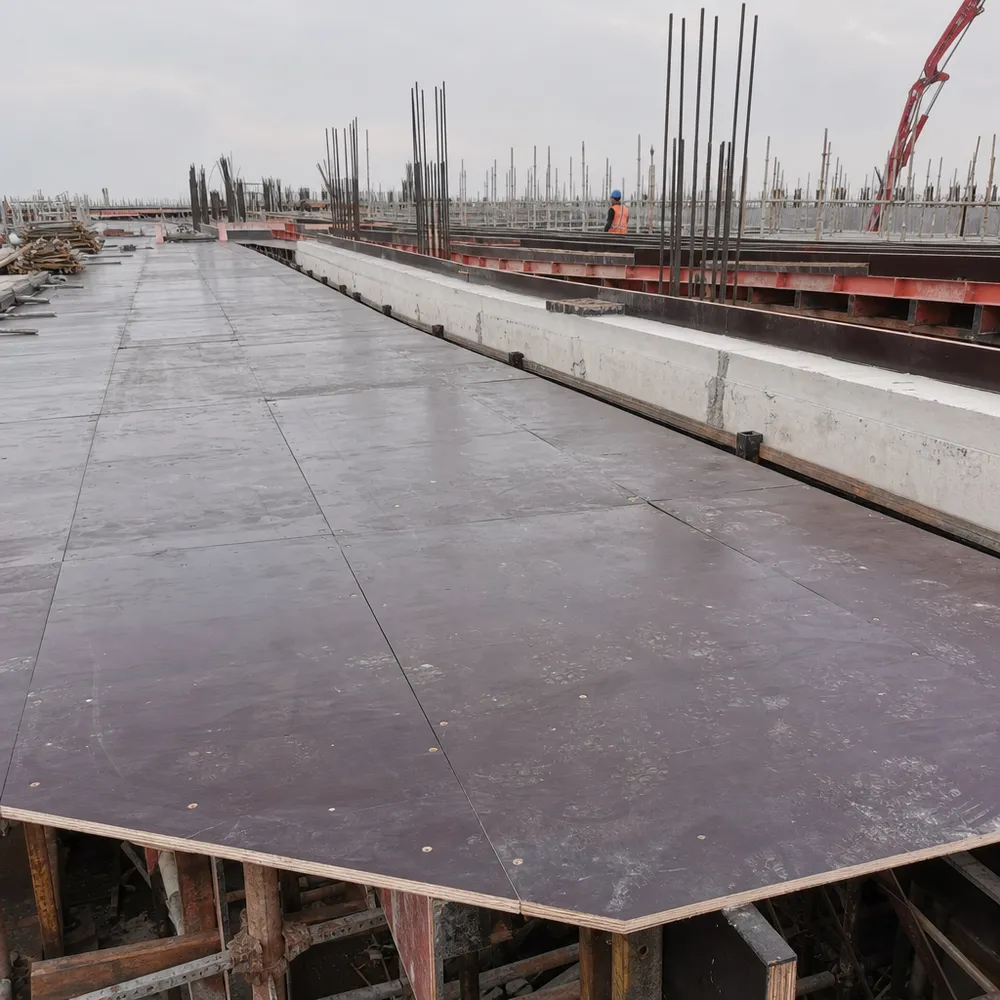
Civil & Infrastructure Projects
Bridge decks, retaining walls, tunnels, and marine structures demand the highest panel performance. Birch core with 220 g/m² film and WBP bond is the standard specification for these demanding environments.
Typical thickness: 18mm, 21mm
Expected Reuse Cycles by Application
Based on proper release agent use, careful stripping, and edge re-sealing between pours.
| Application | Film Weight | Typical Reuse Cycles |
|---|---|---|
| Wall formwork | 120 g/m² | 8–12 pours |
| Wall formwork | 220 g/m² | 15–20 pours |
| Slab decking | 120 g/m² | 6–10 pours |
| Column forms | 120–220 g/m² | 10–15 pours |
| Civil / infrastructure | 220 g/m² | 15–25 pours |
Reuse cycle estimates are indicative. Actual performance depends on site handling practices, release agent application, stripping method, and storage conditions between pours.
Where Birch Core Film Faced Plywood Earns Its Margin
The commercial logic for stocking birch core film faced plywood is straightforward: it's a premium-positioned product in a commodity category, and the performance difference is visible and verifiable to the end user.
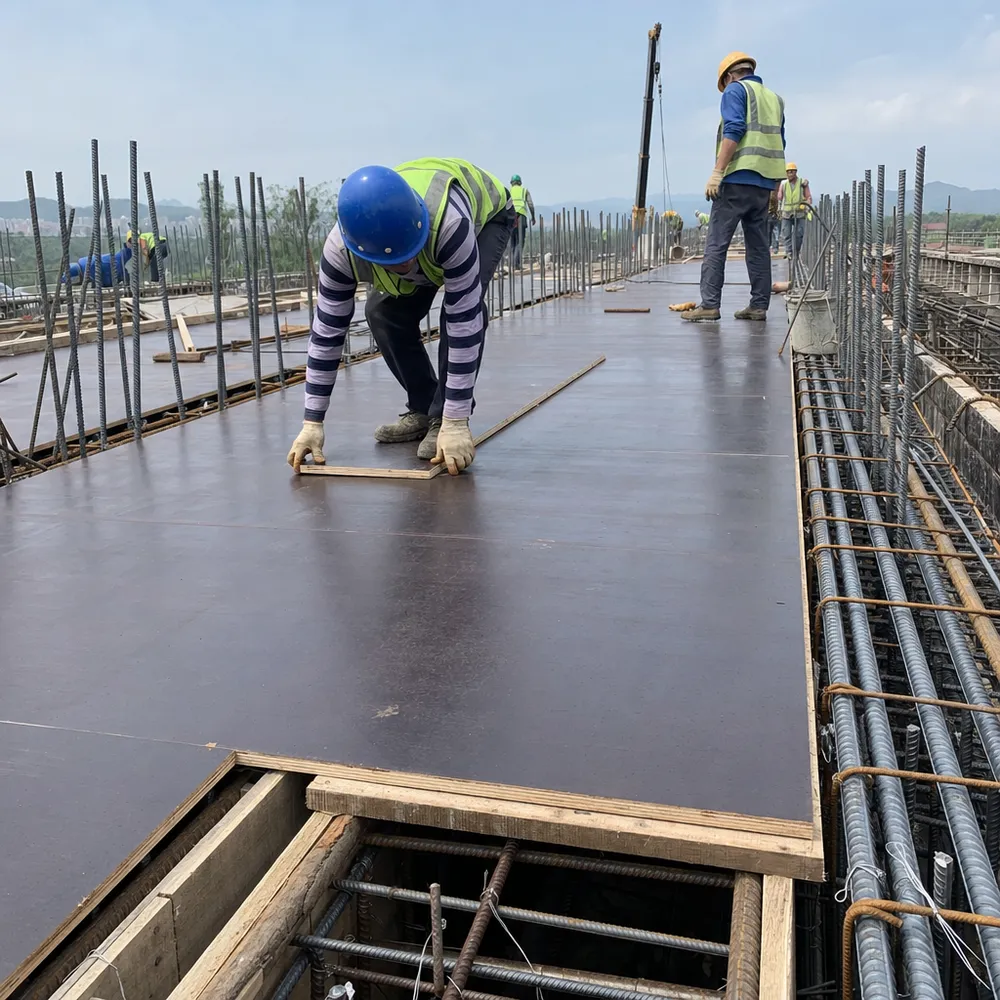
High-Cycle Concrete Formwork for Infrastructure Contractors
Bridge decks, tunnel linings, retaining walls — these are projects where the formwork system is a capital asset, not a consumable. Contractors running 10–20 pour cycles on the same panel set need a board that won't delaminate at the edges, won't crush under form tie pressure, and won't warp when it sits wet overnight.
Birch core delivers on all three. Infrastructure contractors in Europe and the Gulf typically specify birch core explicitly in their formwork procurement — if you're distributing to this segment, birch core is the product they're asking for, and poplar-core won't close the sale.
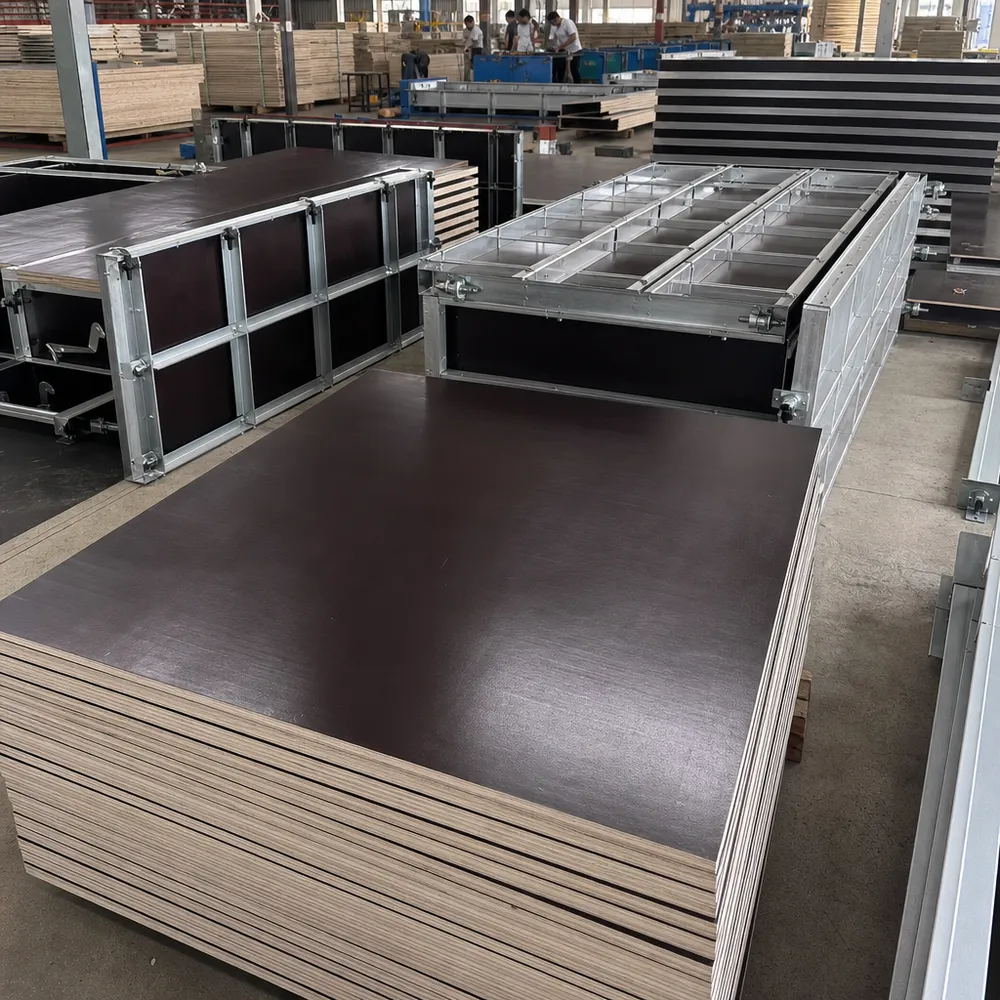
Engineered Formwork System Manufacturers
Companies that manufacture proprietary formwork systems — table forms, climbing forms, modular wall systems — often specify birch core film faced plywood as the panel component because the dimensional consistency and screw-holding performance are part of the system's performance guarantee.
These buyers typically order in container quantities on a regular schedule, making them high-value reorder accounts. The birch core specification is locked into their system design, so once you're their supplier, the relationship is sticky.
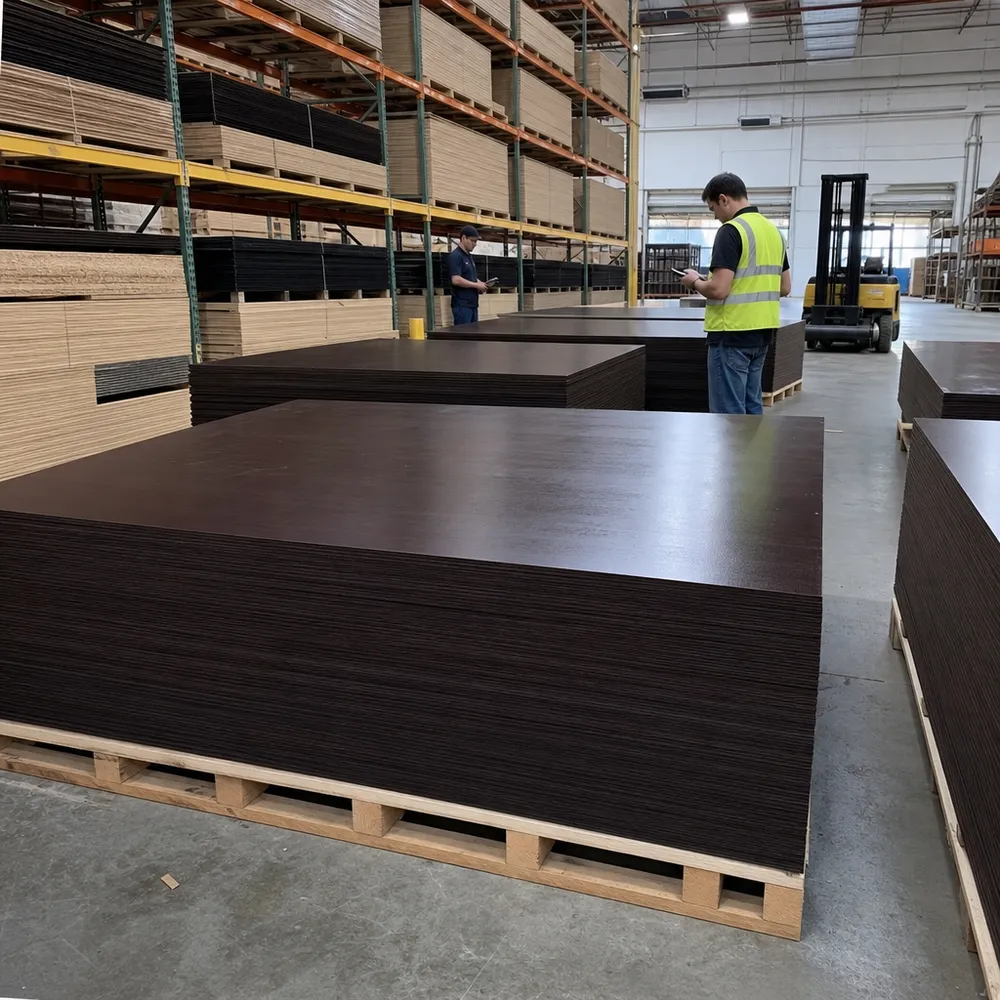
Premium Construction Material Distributors in Europe and North America
In markets where contractors are accustomed to paying for quality and where the birch core specification is well understood, birch film faced plywood commands a 15–25% price premium over standard poplar-core panels. For a distributor, that margin differential is significant.
The product also differentiates your offering from the commodity importers who are only moving poplar-core at the lowest price point. European buyers in particular have become more specification-conscious about core species — this segment has been growing steadily over the past several years.
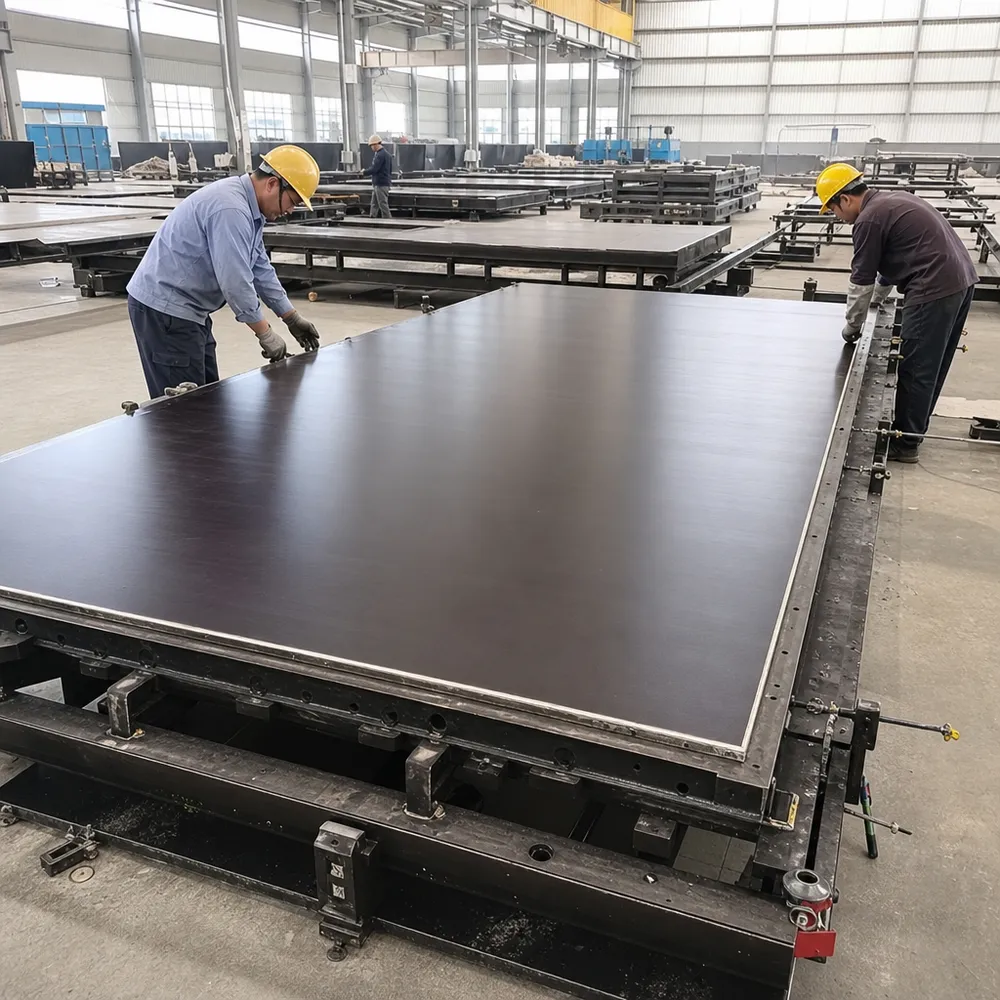
Prefabricated Construction Component Manufacturers
Precast concrete panel producers and modular building manufacturers use film faced plywood as the forming surface for their production molds. These are high-cycle, controlled-environment applications where the panel is used hundreds of times.
Birch core's dimensional stability under repeated thermal and moisture cycling is the key performance requirement. Order volumes from this segment tend to be large and predictable — annual supply agreements are common.
The Distributor Margin Argument in One Line
Birch core is a premium-positioned product in a commodity category. The performance difference is visible and verifiable to the end user — which means the price premium holds, and the conversation shifts from cost to specification. That's a better place to sell from.
How We Produce Birch Core Film Faced Plywood
Every process parameter below is set specifically for birch — not adapted from a poplar-core line. Birch is less forgiving, and the production discipline required is part of what makes the finished panel perform.
Veneer Sourcing and Grading
The birch veneer we use comes from certified sources — FSC chain-of-custody applies to our birch core production, so buyers with sustainability sourcing requirements can document the supply chain.
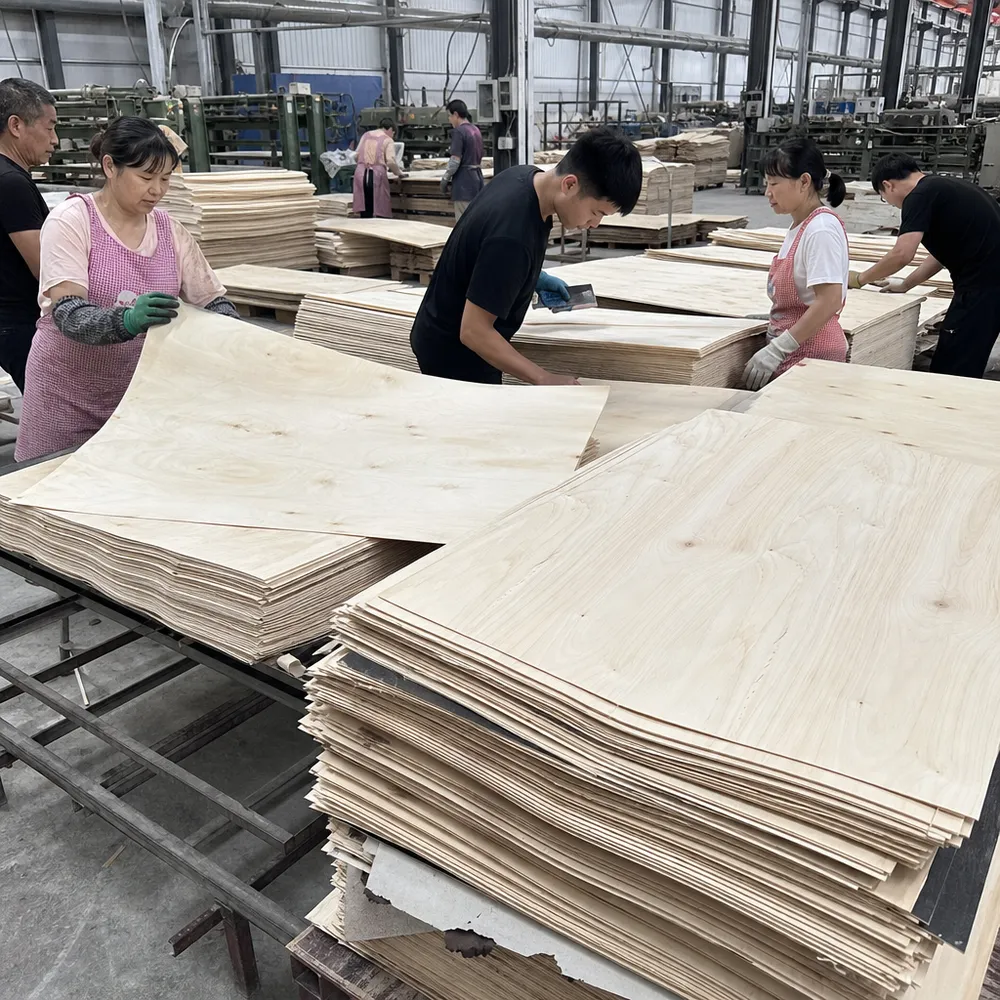
Incoming birch veneers are graded and sorted before they reach the layup line: face veneers are selected for surface quality (tight grain, minimal knots, consistent color), core veneers are checked for moisture content and structural integrity. We target 6–8% moisture in the core veneers before pressing — birch is less forgiving than poplar if you press it wet, and the result is internal stress that shows up as warping after the panel cools.
Layup Sequence and Glue Application
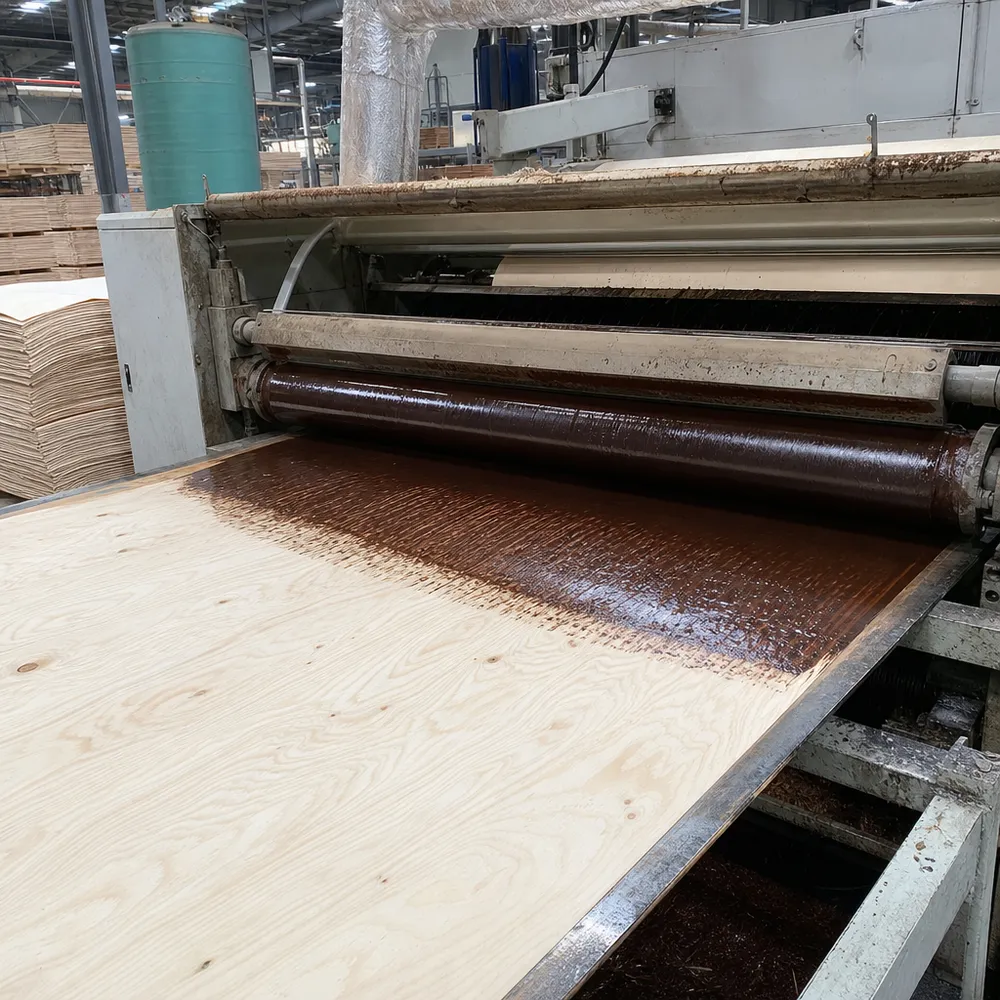
The layup sequence for our standard 18mm birch panel is 9-ply, with cross-banded core construction. Glue spread is applied by automated roller spreader — consistent resin weight across the full veneer surface is critical for birch because the denser wood requires full glue coverage to achieve the WBP bond strength.
We run phenolic resin as standard for all film faced products. Urea-formaldehyde is not used in this product line because it doesn't meet the WBP bond requirement for exterior and formwork applications.
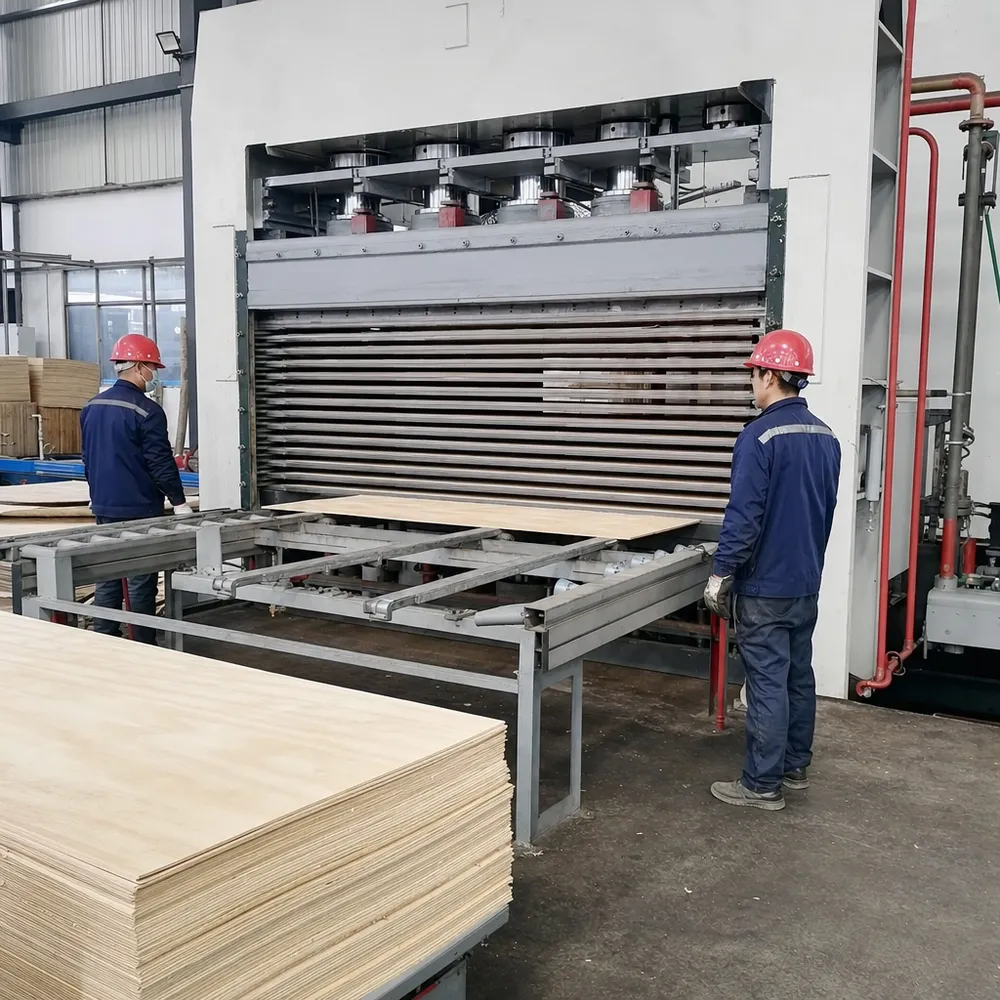
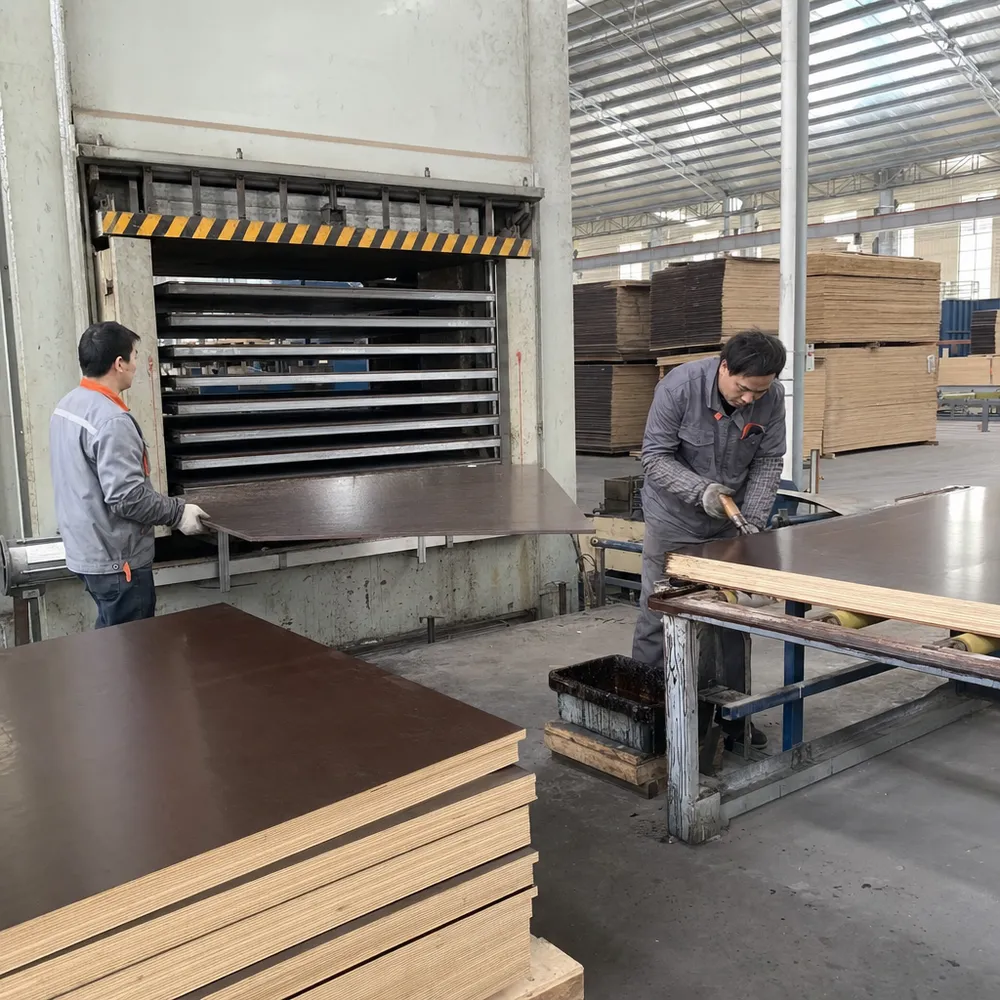
Hot Press Parameters for Birch
Hot press parameters for birch are set at higher pressure than our poplar-core line — typically 1.4–1.6 MPa versus 1.0–1.2 MPa for poplar — with press time adjusted to ensure full resin cure through the denser veneer stack. Post-press, panels are conditioned in the stacking area before they go to the sanding line; birch panels need longer conditioning time than poplar to stabilize before sanding, otherwise you get thickness variation as the panel continues to move after sanding.
Film Overlay and Edge Sealing
Film overlay is applied in a separate hot press cycle after the panel is sanded to final thickness. The phenolic film is positioned on both faces, pressed at controlled temperature and pressure, and the bond is tested by cross-cut adhesion check on samples from each press load.
Edge sealing with waterproof paint is applied after trimming — this is the step that most directly affects how the panel performs in wet site conditions, and we don't skip it on export orders.
Three-Stage QC for Birch Core
Our three-stage QC process covers incoming veneer inspection, in-process bond testing, and outgoing panel inspection. For birch core specifically, the outgoing inspection includes thickness measurement at nine points per panel — birch's higher density makes it more sensitive to press variation — plus surface film adhesion check and edge seal verification.
Learn More About Our ManufacturingBirch Film Faced Plywood — Full Specifications
Standard production specifications for our birch core film faced plywood. Custom thicknesses, panel sizes, and film weights are available on request for container-load orders.
| Parameter | Standard | Tolerance |
|---|---|---|
| Panel Size | 1220 × 2440 mm (4′ × 8′) | ±2 mm |
| Thickness Range | 6 / 9 / 12 / 15 / 18 / 21 mm | ±0.5 mm |
| Ply Count (18mm) | 9-ply | — |
| Squareness | ≤ 1.5 mm / 1000 mm | — |
| Flatness | ≤ 1.0 mm / 1000 mm | — |
Customization Options for Birch Film Faced Plywood
The standard product covers most formwork applications, but we handle a range of customization requests on confirmed orders. Below is the full matrix of what can be specified.
| Customization Dimension | Options | MOQ Note |
|---|---|---|
| Film weight | 120 g/m² (standard), 150 g/m², 220 g/m² | 220 g/m² requires minimum 1 container |
| Film color | Black (standard), brown, red | Non-standard colors: minimum 1 container |
| Panel thickness | 12mm, 15mm, 18mm, 21mm standard; other thicknesses available | Non-standard thickness: confirm via inquiry |
| Panel dimensions | 1220×2440mm standard; 1250×2500mm, 915×1830mm, custom sizes | Custom dimensions: minimum 1 container |
| Edge treatment | Sealed (standard), unsealed, custom color edge paint | — |
| Branding | OEM brand marking, custom stamp, private label | Confirm via inquiry |
| Certification documentation | FSC, CARB P2, CE, ISO 9001 available | Included as standard for applicable markets |
OEM Programs
For buyers who want their own brand on the panel, custom film colors, or non-standard dimensions for a proprietary formwork system — our engineering team handles specification development. Lead time from specification confirmation to first production sample is typically 15–20 working days.
We've run OEM programs for formwork system manufacturers in Europe and the Middle East. The process is straightforward once the specification is locked.
A Practical Note on Custom Dimensions
Birch core panels cut differently than poplar-core on the trim saw because of the density difference. If you're specifying non-standard dimensions for a formwork system that will be cut on-site, factor in that birch requires sharper tooling and generates more heat at the cut edge.
We can pre-cut to your dimensions at the factory, which eliminates that variable for your customer.
Container Loading and Export Logistics
We've shipped to North America, Europe, the Middle East, Southeast Asia, and Australia. The documentation requirements for each market are handled as standard, not as special requests.
40HQ Container Capacity
A standard 40HQ container loads approximately 400–450 sheets of 18mm birch film faced plywood (1220×2440mm), depending on stacking configuration. The exact count varies with thickness — 12mm panels load more sheets per container, 21mm fewer. We provide a loading plan with each shipment.
Weight Advisory for Road Transport
Birch panels are heavier than poplar-core at the same thickness. A 40HQ of 18mm birch film faced plywood typically runs 22–24 metric tons, which is at or near the weight limit for road transport in some markets.
If you're distributing in a market with strict axle weight regulations, confirm your logistics chain can handle the weight before committing to a full container of 18mm birch. We've had buyers in Southeast Asia discover this after the container arrived — worth checking in advance.
Export Packaging
Export Documentation — Standard
All documentation is handled as standard, not as special requests.
- Commercial invoice & packing list
- Bill of lading
- Certificate of origin
- Phytosanitary certificate (where required)
- FSC certificate
- CARB P2 documentation (US-bound shipments)
- CE declaration of conformity (EU shipments)
Transit Times from Xuzhou
Estimated transit to major destination ports.
Certifications That Clear Customs Without Delays
Every certification below ships with the relevant order as standard documentation — not as an add-on or special request. We've seen containers held at US ports because CARB documentation was incomplete or incorrectly formatted. We prepare it to avoid that outcome.
Quality management system certification covering our full production process, including the birch core film faced plywood line.
Covers our film faced plywood products for European construction applications. The CE declaration of conformity is included with EU-bound shipments as standard.
The birch veneer in our FSC-certified production runs can be traced to certified forests. For buyers with sustainability sourcing requirements, FSC documentation is available as part of the standard shipping package.
California Air Resources Board standard — the most stringent in our export markets. Our phenolic resin system is formulated to meet CARB P2 as the baseline. It's not a special option or a separate product line.
EU Buyers
The combination of CE and FSC covers the two most common procurement gate requirements for European buyers. Both documents ship as standard with EU-bound orders — no separate request needed.
US Buyers
CARB P2 is the critical document for US-bound shipments. We've seen containers held at US ports because the CARB documentation was incomplete or incorrectly formatted. Our documentation package is prepared to avoid that outcome.
Birch Core vs. Other Film Faced Plywood Options
Birch core is the right choice for some applications and the wrong choice for others. Here's how it positions against the other products in our film faced plywood range.
When Standard Poplar Core Is the Right Call
If your market is primarily standard construction contractors doing 4–6 pour cycles, our standard film faced plywood is the right product — the birch core premium doesn't pay back at that cycle count.
When Phenolic Film Faced Is Worth Comparing
If you need the highest film weight and chemical resistance for industrial concrete applications, our phenolic film faced plywood is worth comparing.
When Birch Core Is the Specified Product
If your buyers are running high-cycle systems and specifying birch core explicitly, this is the product. The density, screw-holding, and reuse cycle count justify the premium at 10+ cycles.
Not sure which product fits your application?
View the full film faced plywood range to compare all options side by side.
Sourcing Birch Film Faced Plywood: Common Questions
Answers to the questions buyers ask most often before placing a first order — MOQ, reuse cycles, film weight selection, compliance, lead times, and OEM programs.
Standard MOQ is one 20GP container for standard specifications (18mm, 1220×2440mm, black film). Mixed thickness orders can be accommodated in a 40HQ container. For non-standard specifications — custom dimensions, non-standard film weight, OEM branding — minimum one 40HQ container. Contact us with your target volume and we'll confirm the most efficient loading configuration.
In controlled formwork applications with proper stripping technique and panel maintenance, birch core panels typically achieve 10–20 reuse cycles versus 4–8 for standard poplar-core panels. The actual cycle count depends heavily on site conditions, stripping method, and whether the panels are stored flat and dry between uses.
The birch core's advantage is most pronounced in edge durability and screw-holding retention over repeated cycles — the edges don't crush and the screw holes don't elongate the way they do in softer-core panels.
For standard construction formwork (4–10 cycles), 120 g/m² film on both faces is sufficient. For high-cycle industrial applications — precast concrete production, tunnel formwork, infrastructure projects targeting 15+ cycles — specify 220 g/m² film.
The heavier film adds abrasion resistance and extends the surface life of the panel. The core species (birch) is the structural argument; the film weight is the surface argument. Both matter for high-cycle performance.
Yes. Our phenolic resin system meets CARB P2 as standard across our film faced plywood range, including birch core. The CARB P2 documentation package is included with US-bound shipments. If you need test reports for your own compliance documentation, we can provide them — ask when you request a quote.
Standard specifications (18mm, 1220×2440mm, black 120 g/m² film) typically ship within 15–20 working days from order confirmation, subject to production scheduling. Non-standard specifications add 5–10 working days for material sourcing and setup. We'll confirm the specific lead time when we quote your order.
Yes. We handle OEM programs including custom brand stamps, custom film colors, and non-standard dimensions. Minimum order for OEM programs is typically one 40HQ container. The specification development and first-article approval process runs 15–20 working days before production starts.
Get a Quote for Birch Film Faced Plywood
Send us your target thickness, panel size, film weight, destination market, and estimated volume. We'll come back with a detailed FOB quote, the relevant certification documentation for your import requirements, and a loading plan for your container configuration.
Most buyers in this product category start with a sample order to verify the panel against their formwork system before committing to a full container. We can ship samples — ask about sample availability when you contact us.
Include in your enquiry
- Target thickness and panel size (e.g., 18mm, 1220×2440mm)
- Film weight requirement (120 g/m² standard or 220 g/m² high-cycle)
- Destination market and port of discharge
- Estimated volume (number of panels or container count)
- Any OEM branding or non-standard specification requirements