

18mm Film Faced Plywood — Factory-Direct Formwork Grade
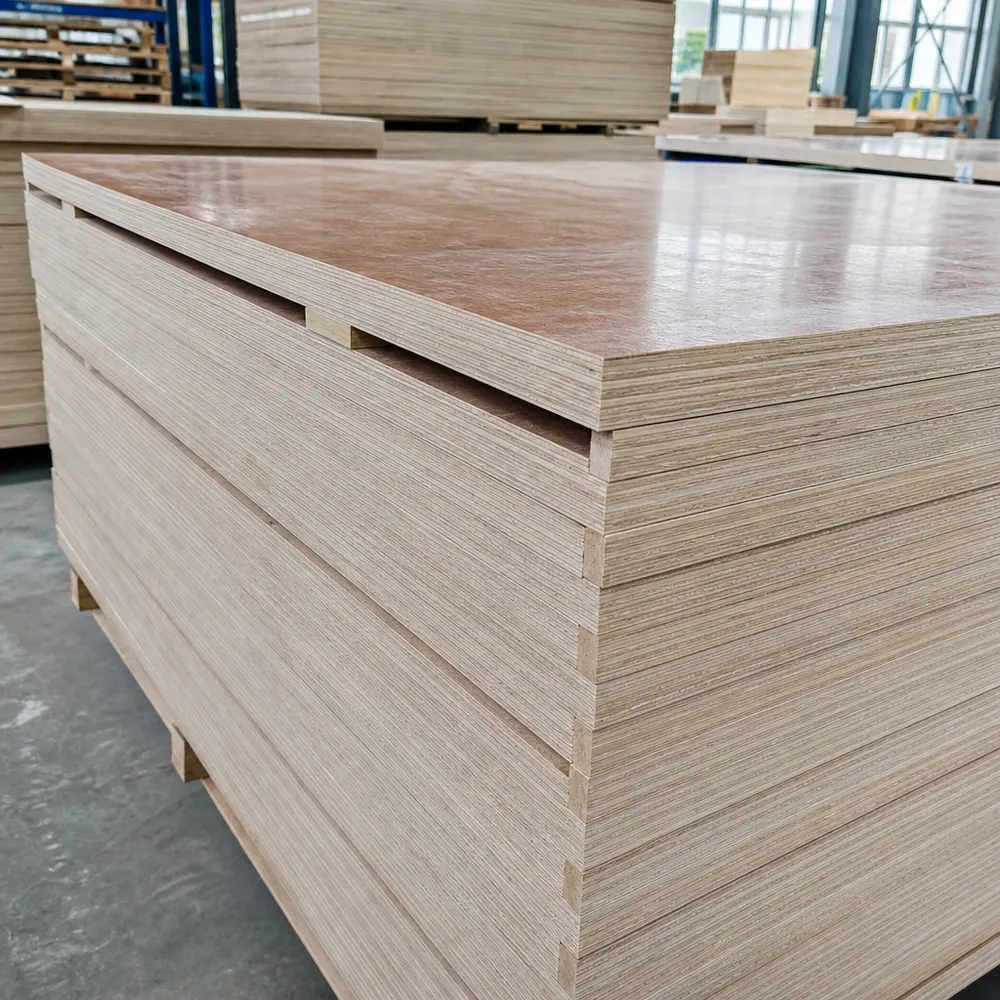
18mm film faced plywood built for concrete formwork — phenolic film surface, WBP bonding, controlled moisture for export.
The 18mm thickness is the workhorse of the formwork market. It carries the load, takes the pour, and releases clean. We've been producing it since 2008 and we know exactly where the failure points are — and how to engineer them out.
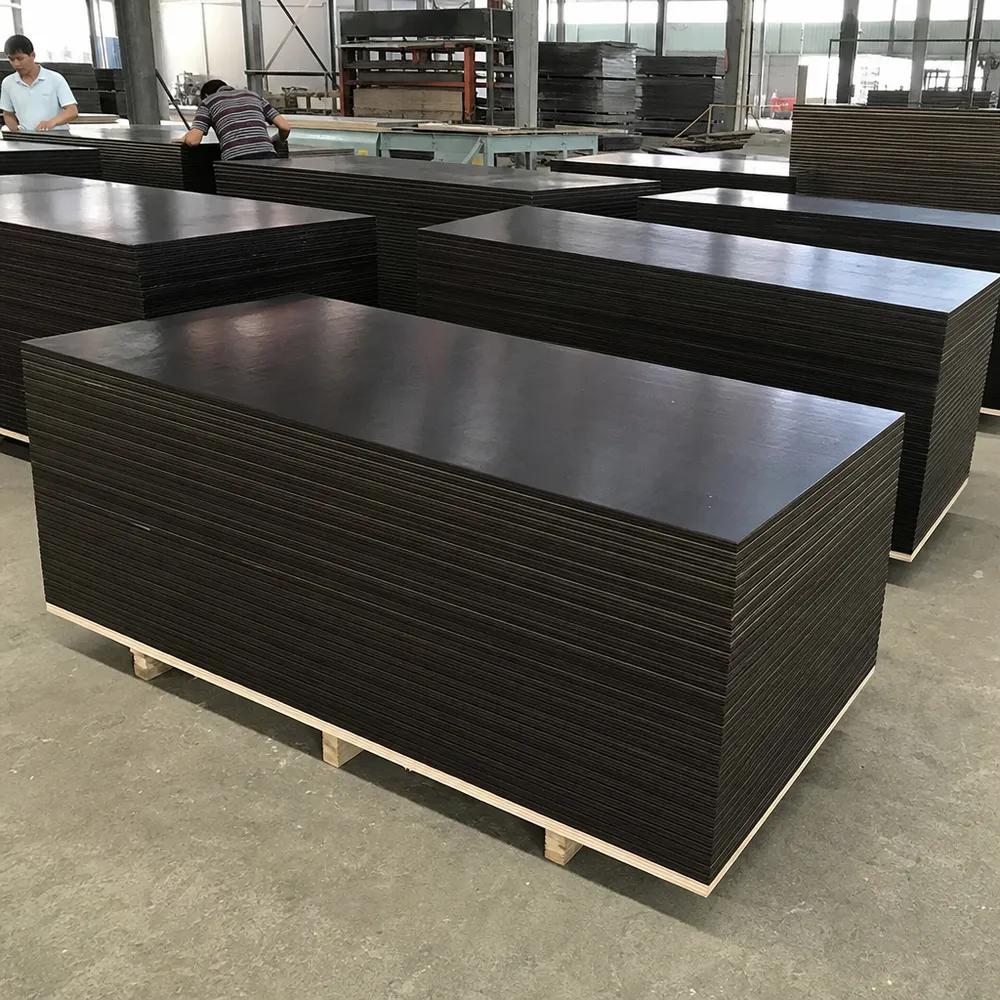
What Makes 18mm the Formwork Standard — and Where Most Panels Fall Short
18mm film faced plywood sits at the intersection of structural load capacity and freight efficiency. It's thick enough to span standard joist spacing without deflection under wet concrete pressure, and thin enough that a 40HQ container loads a meaningful quantity without blowing your landed cost. That's why it dominates concrete formwork procurement globally — and why the spec sheet for this thickness gets scrutinized harder than any other.
The failure modes we see most often in the market are predictable: delamination at the film-to-core interface after the first few pours, edge swelling from moisture ingress during site storage, and thickness variation across a batch that causes misalignment when panels are butted together on a large pour. All three trace back to the same root causes — inconsistent glue spread, inadequate edge sealing, and pre-press moisture that wasn't controlled before layup.
We built our 18mm film faced plywood production around eliminating those three failure modes specifically. The phenolic film is hot-pressed onto the panel surface rather than adhesive-bonded — the bond is mechanical, not chemical, so it doesn't delaminate when the panel flexes under load. Core veneers are dried to 8–12% moisture before layup, verified by moisture meter at the layup station, not estimated from drying time. Edge sealing is applied on all export-grade panels as standard, not as an upgrade option.
We added edge sealing as standard after seeing too many containers arrive at Gulf ports with edge swelling from humidity during transit — it's a small cost that prevents a large problem.
! The Three Failure Modes
-
Film delamination
Film-to-core interface fails after first few pours. Root cause: adhesive bonding instead of hot-press mechanical bond.
-
Edge swelling
Moisture ingress during site storage or transit. Root cause: no edge sealing on export panels.
-
Thickness variation
Batch inconsistency causes misalignment on large pours. Root cause: pre-press moisture not controlled before layup.
How We Engineer Them Out
-
Hot-press mechanical bond
Phenolic film hot-pressed onto panel surface — mechanical bond, not chemical. Doesn't delaminate under load flex.
-
Moisture verified at layup station
Core veneers dried to 8–12% moisture, verified by moisture meter at the layup station — not estimated from drying time.
-
Edge sealing standard on all export panels
Applied as standard, not an upgrade option. Prevents humidity-driven edge swelling during ocean transit.
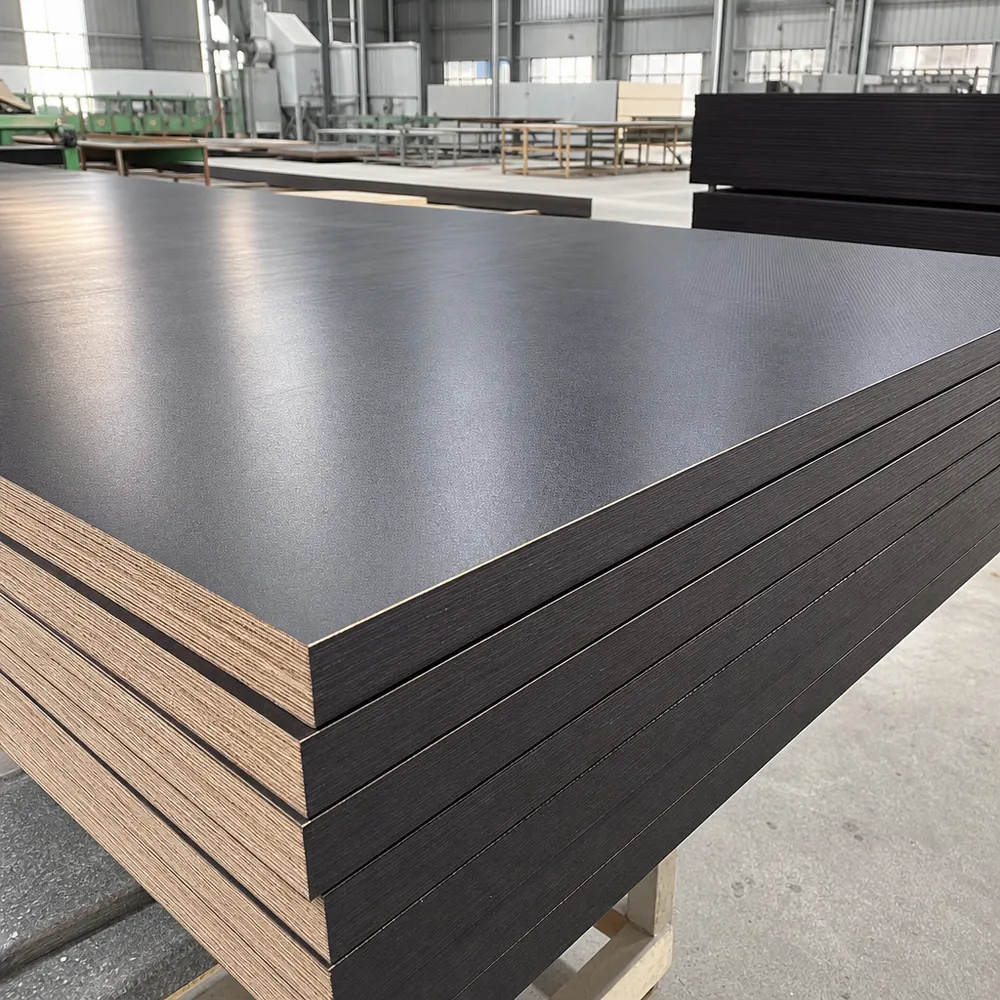
Full Specifications for 18mm Film Faced Plywood
These are the parameters your procurement team needs to fill a comparison sheet. Where industry-standard ranges apply, we've noted them — contact us for the exact data sheet for your specific order.
18mm Film Faced Plywood — Full Parameter Table
| Parameter | Specification |
|---|---|
| Nominal Thickness | 18mm |
| Thickness Tolerance | ±0.5mm (calibrated sanding) ±0.2mm achievable on request |
| Standard Panel Size | 1220 × 2440mm (4′ × 8′) |
| Alternative Sizes | 1250 × 2500mm, 915 × 1830mm, custom on confirmed orders |
| Core Construction | Cross-grain veneer layers, odd-ply construction (typically 11-ply at 18mm) |
| Core Species | Poplar (standard) Eucalyptus Hardwood mixed core |
| Face/Back Film | Phenolic resin film, standard 120g/m² 220g/m² available |
| Film Color | Black (standard) Brown Red |
| Glue Type | WBP (Weather and Boil Proof) phenolic resin Exterior/formwork grade |
| Formaldehyde Emission | E1 standard (≤1.5mg/L) CARB P2 available |
| Moisture Content | 8–12% Export-controlled, verified pre-shipment |
| Density | Approx. 600–680 kg/m³ (varies by core species) |
| Bending Strength | Typical ≥40 MPa (parallel to face grain) |
| Surface Texture | Anti-slip mesh pattern (standard) Smooth (specify) |
| Reuse Cycles | 15–20+ cycles (site-dependent; proper stripping and storage required) |
| Edge Treatment | Sealed edges standard on export panels Paint-sealed or PVC tape available |
| Certification | CE, ISO 9001, FSC available on request |
| Standard Compliance | GB/T 17656, EN 13986, BS 1088 (marine grade on request) |
| MOQ | 1 × 20ft container (approx. 600–700 panels depending on packing) |
| Lead Time | 15–25 days production; transit varies by destination port |
Quick Weight Reference
Per panel at 18mm, 1220 × 2440mm:
Weights are approximate. Exact figures on your order data sheet.
Container Load Guide
Exact packing depends on pallet configuration and destination port requirements.
Need the Full Data Sheet?
We'll send the complete technical data sheet — including test reports and mill certifications — for your specific order configuration.
Request Data SheetPoplar vs Eucalyptus vs Hardwood Core — Which Is Right for Your Project?
The core species is the single biggest variable in 18mm film faced plywood performance. Here's how to choose based on your actual site conditions and budget constraints.
Poplar Core
Best For
- Standard concrete formwork
- Residential and mid-rise construction
- Budget-sensitive projects with moderate reuse cycles
Key Properties
Limitations
- Lower bending strength than eucalyptus
- Not ideal for high-load or long-span applications
Eucalyptus Core
Best For
- High-rise and infrastructure formwork
- Long-span slab and beam applications
- Projects requiring 20+ reuse cycles
Key Properties
Limitations
- Heavier than poplar — factor into handling logistics
- Slight premium over poplar core
Hardwood Mixed Core
Best For
- Heavy-duty industrial formwork
- Marine and container flooring applications
- Maximum load-bearing requirements
Key Properties
Limitations
- Heaviest option — handling and transport costs higher
- Species mix varies; confirm with mill for consistency
Not Sure Which Core to Specify?
Tell us your application
Slab, column, wall, or beam formwork — each has different load and reuse requirements.
Share your reuse target
If you need 20+ cycles, eucalyptus is usually the right call. Under 15, poplar delivers better value.
We'll confirm the spec
We'll recommend the right core and film weight combination and send a sample data sheet before you commit.
The Film Overlay Process: Where Reuse Cycles Are Won or Lost
The film is the commercial story of this product. Your downstream customers judge panel value by reuse cycles — more cycles per panel means lower cost-per-pour, which is the number that actually drives purchasing decisions on job sites.
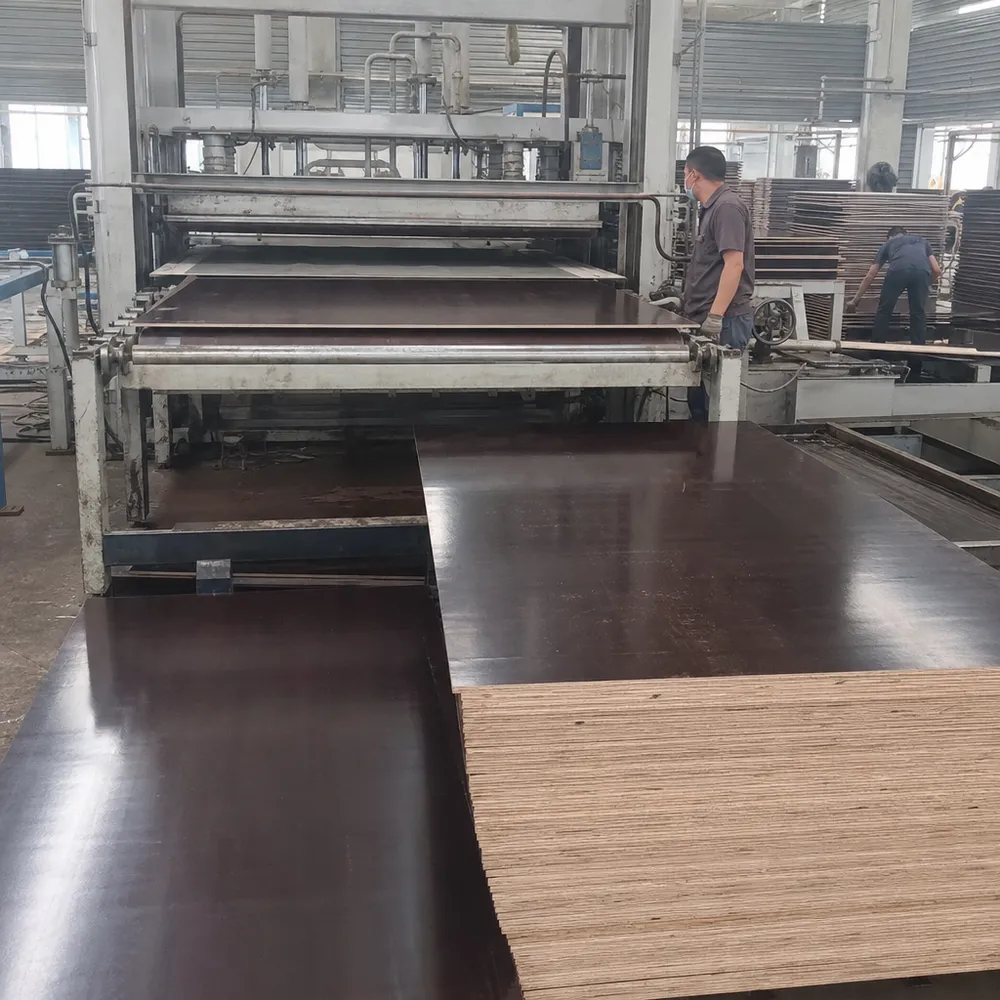
Dedicated Film Overlay Lamination Line
The process starts with a sanded, calibrated plywood substrate — thickness tolerance held to ±0.2mm before the film goes on. A wavy substrate produces uneven film contact pressure during pressing, which is where adhesion voids originate.
Penetration Bond, Not Surface Coating
The phenolic film is pressed under heat and pressure in a short-cycle hot press. The phenolic resin partially melts and bonds into the surface veneer fibers — it's not a surface coating, it's a penetration bond. That's the difference between a film that peels after three pours and one that holds for twelve.
Batch-Level Adhesion Testing
Film adhesion is tested on every production batch by cross-cut and peel test before panels reach the sanding and trimming line. Any batch showing adhesion failure at the test stage is pulled and re-pressed. We don't ship panels with marginal film adhesion and hope they hold — the downstream warranty claim cost isn't worth it, and neither is the relationship damage.
Film Weight: The Spec That Drives Cycle Count
Film weight matters more than most buyers realize. Here's how the two standard specs compare in real-world use:
Most rental fleet customers in the Middle East and Southeast Asia have moved to the 220 g/m² spec after running the numbers.
Ready to specify film weight for your order? Our team can walk through the cost-per-pour math for your specific cycle requirements.
Get a Quote for 18mm Film Faced PlywoodMarket Segments Where 18mm Formwork Plywood Moves Volume
Understanding where this product sells helps you build the right inventory position and margin structure. These are the segments driving consistent reorder volume across our distributor and contractor accounts.
Concrete Construction Contractors
Residential & CommercialThe core market. Contractors building multi-story residential, commercial slabs, and retaining walls consume 18mm film faced plywood in volume — a mid-size residential project in Southeast Asia or the Middle East might run 500–2,000 panels per phase, with reorders tied to project phases.
Price-sensitive but reuse-cycle-aware — will pay a modest premium for panels that reliably hit 10+ cycles over panels that fail at 5
Film weight spec becomes a selling point, not just a cost line
Reorder cadence tied to project phases — predictable demand pattern for distributors
Formwork Rental Companies
High-Value SegmentA high-value segment often underserved by distributors who focus only on direct contractor sales. Rental companies buy in larger initial quantities — 2,000–10,000 panels to stock a rental fleet — and reorder when panels reach end-of-life.
Purchasing decision almost entirely driven by reuse cycle data — they run a cost-per-pour model
220 g/m² film spec is the right product for this segment — consistent performance across a fleet
Active buyers in Australia, the Gulf, and Southeast Asia — an underserved channel worth building
Infrastructure & Civil Engineering
Large Single Orders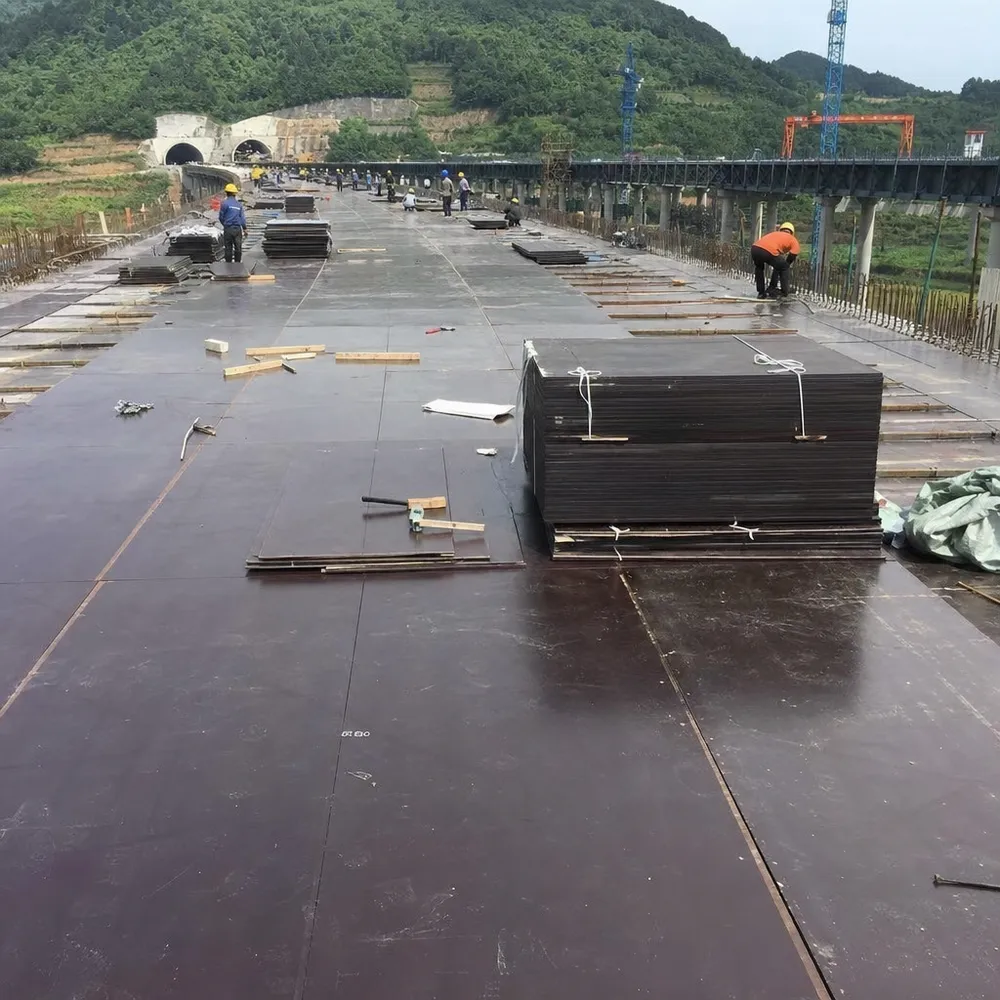
Bridge decks, tunnel linings, dam formwork, and highway infrastructure consume 18mm film faced plywood in large single-order quantities. These projects often specify panel dimensions, film weight, and core species in the tender documents.
Ability to supply custom specifications — non-standard sizes, specific core constructions, certified documentation packages — is the differentiator
CE and FSC documentation covers compliance requirements common in European and Middle Eastern infrastructure tenders
Custom specifications handled on confirmed orders
Building Materials Distributors
Supply ChainDistributors stocking for regional construction supply chains typically carry 18mm film faced plywood as a standard SKU alongside other formwork consumables. Construction is cyclical but continuous — a well-positioned distributor in a growing construction market can turn this SKU 4–6 times per year.
Commercial logic is reorder frequency — high turn rate makes this a strong SKU for regional distributors
Key sourcing requirement is batch consistency — customers need panels that perform the same way every order, not panels that vary by shipment
Standard SKU positioning alongside other formwork consumables simplifies procurement
Inventory Position and Margin Structure
Each segment has a different purchasing trigger: contractors reorder by project phase, rental companies reorder at fleet end-of-life, infrastructure projects are tender-driven, and distributors reorder on stock depletion. Knowing which segment you're serving determines how you position film weight, documentation, and minimum order quantities.
Customization Parameters and What They Mean for Your Order
18mm film faced plywood has more customization variables than most buyers initially realize. Here's what can be specified, what the practical limits are, and how customization affects your order.
Film Weight & Color
Surface SpecStandard is 120g/m² black film. We also run 220g/m² film for heavy-use applications, and brown and red film colors are available on request.
Market note: Brown film is common in Southeast Asia; black is standard in the Middle East and Australia. Specify your target market and we'll confirm the regional standard.
Core Species
Structural SpecPoplar core is our standard for 18mm — the right balance of weight, strength, and cost for most formwork applications. Eucalyptus core is available for higher density and bending strength. Hardwood mixed core available for premium specifications.
Freight impact: Core species affects panel weight and density, which affects container loading quantities and freight cost — worth specifying correctly upfront.
Panel Dimensions
Format SpecNon-standard dimensions are a yield and scheduling question — no tooling cost, but minimum order quantities apply.
Thickness Tolerance
Precision SpecDefault production tolerance for most formwork applications.
Calibrated sanding for automated cutting equipment or precision formwork systems. Specify on order.
Formaldehyde Emission Standard
Compliance SpecCARB P2 requires specific resin formulation. Confirm your destination market and we'll specify the correct emission standard.
Branding & Marking
OEM / LogisticsAvailable on confirmed orders.
Typically 15–25 working days depending on order volume and specification complexity. Specific customization capabilities and MOQ requirements — confirm via inquiry.
Container Loading and Landed Cost Planning
18mm film faced plywood is a bulk commodity — your landed cost calculation depends heavily on container utilization. Here's the practical loading data.
Standard 1220×2440×18mm Panels — Poplar Core, Stacked Flat
| Container Type | Approx. Loading Qty | Notes |
|---|---|---|
|
20GP
20-foot General Purpose
|
~300–350
panels
|
Weight-limited at higher densities |
|
40HQ
40-foot High Cube
|
~650–750
panels
|
Standard export configuration |
Eucalyptus core note: Eucalyptus core panels run heavier — loading quantity drops by roughly 10–15% in a weight-limited container. We provide a loading plan with every shipment so your receiving team knows the exact count and stack configuration.
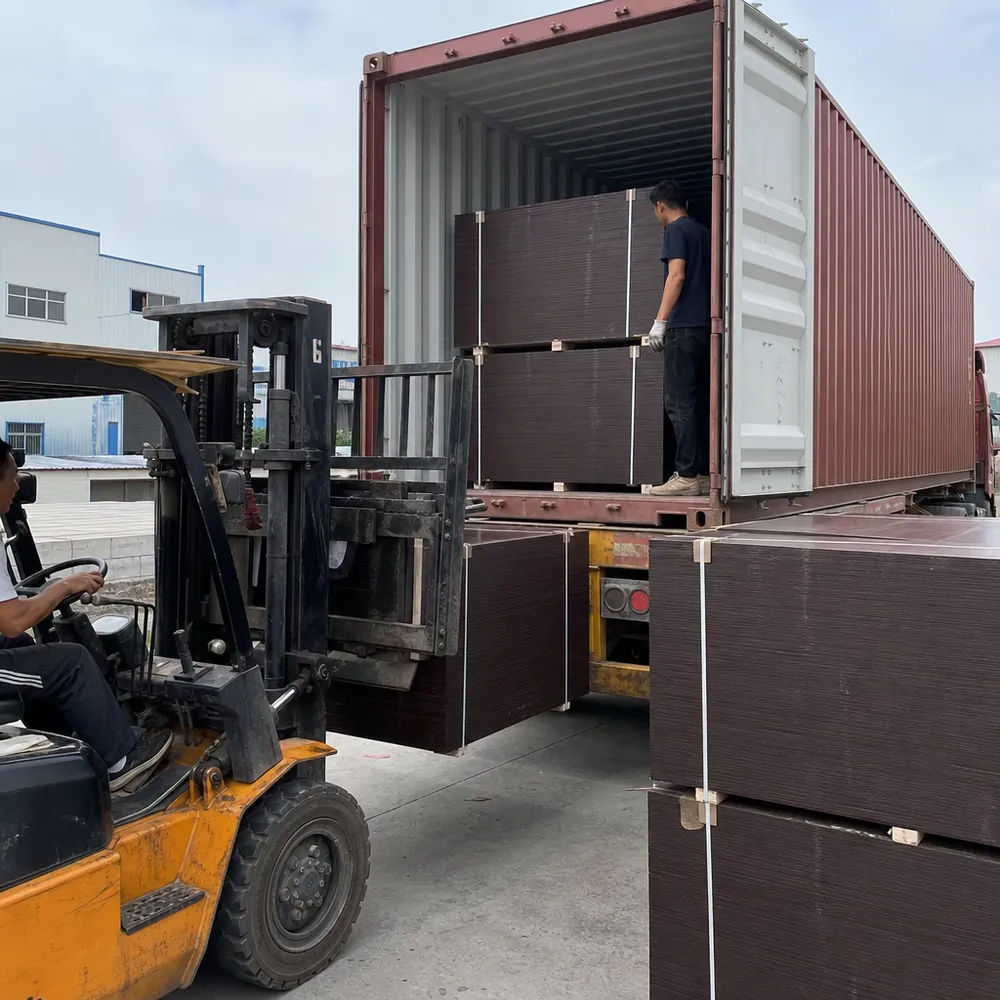
Export Packing Standard
Shipping Ports & Transit Times
Xuzhou factory → Qingdao / Shanghai / Lianyungang
Tell us your destination port and required volume — we'll return a CIF or FOB quote with a full loading plan.
Certifications That Clear Customs and Satisfy Procurement Gates
The certification stack on our 18mm film faced plywood covers the compliance requirements you'll encounter in the major import markets.
Quality Management System
Covers our full production process. Audit reports available on request.
Applicable to all export markets
European Construction Products
Declaration of conformity documents performance characteristics against relevant harmonized standards. Required for EU construction procurement and increasingly referenced in Middle Eastern infrastructure tenders that follow European specifications.
EU member states + Middle East tenders
Certified Sustainable Sourcing
Wood fiber traces back to FSC-certified forests. Required by buyers with sustainability sourcing policies and increasingly a procurement gate for public sector construction in Europe, Australia, and North America. Eliminates a compliance question before it becomes a problem for downstream customers with sustainability reporting requirements.
Europe · Australia · North America
Formaldehyde Emission Standard
California Air Resources Board Phase 2 — the most stringent formaldehyde limit in our export markets. We formulate to CARB P2 as a production option, not a special run. Specify it on your order and the documentation is included in the export package.
US-bound orders · CARB-required buyers
Third-Party Inspection Available
Third-party inspection is available on request. We work with SGS, Bureau Veritas, and similar agencies to provide independent verification of product quality and specification compliance before shipment.
Learn more about our manufacturing capabilities and quality systemsHow 18mm Compares to Other Thicknesses in the Film Faced Range
18mm is the dominant formwork thickness, but it's not the right spec for every application. Here's where the other thicknesses fit, so you can direct buyers to the right product rather than losing the sale.
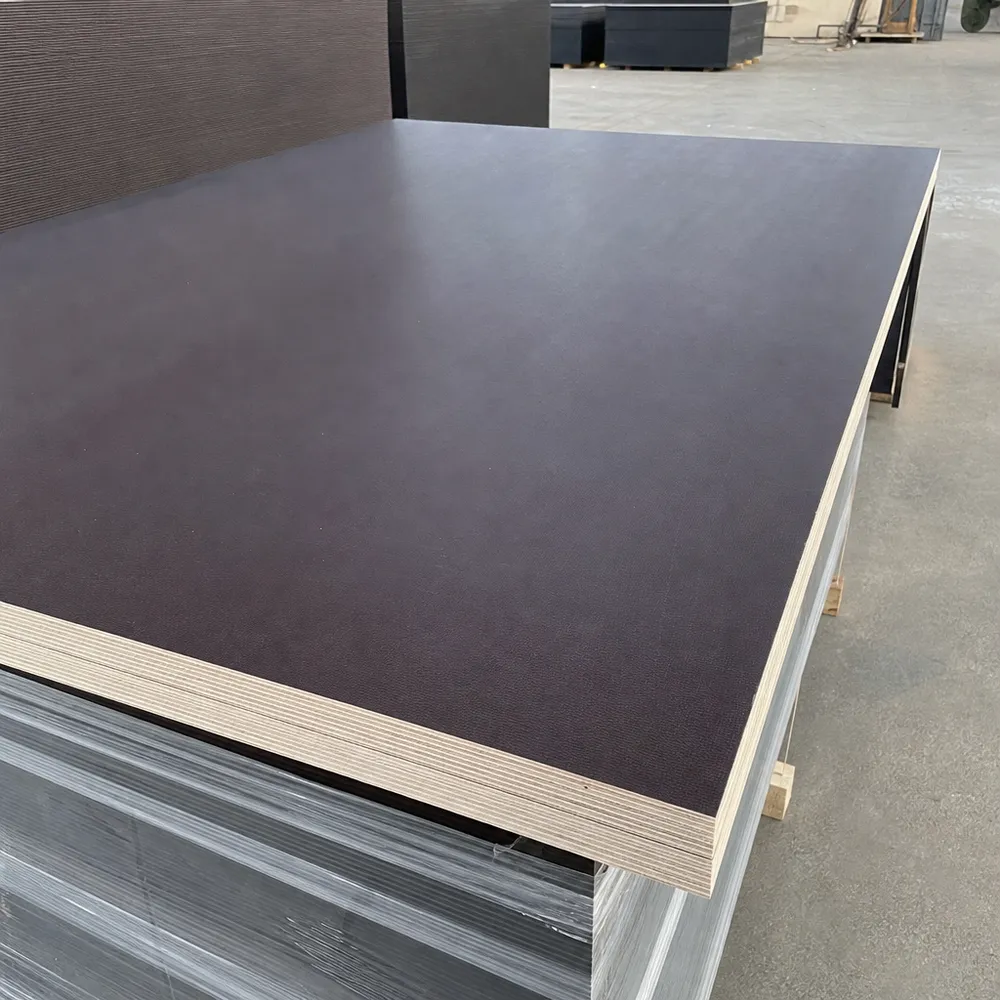
18mm Film Faced Plywood
The dominant formwork thickness. Handles slab, beam, and column pours across commercial and infrastructure construction. The default spec for most formwork distributors.
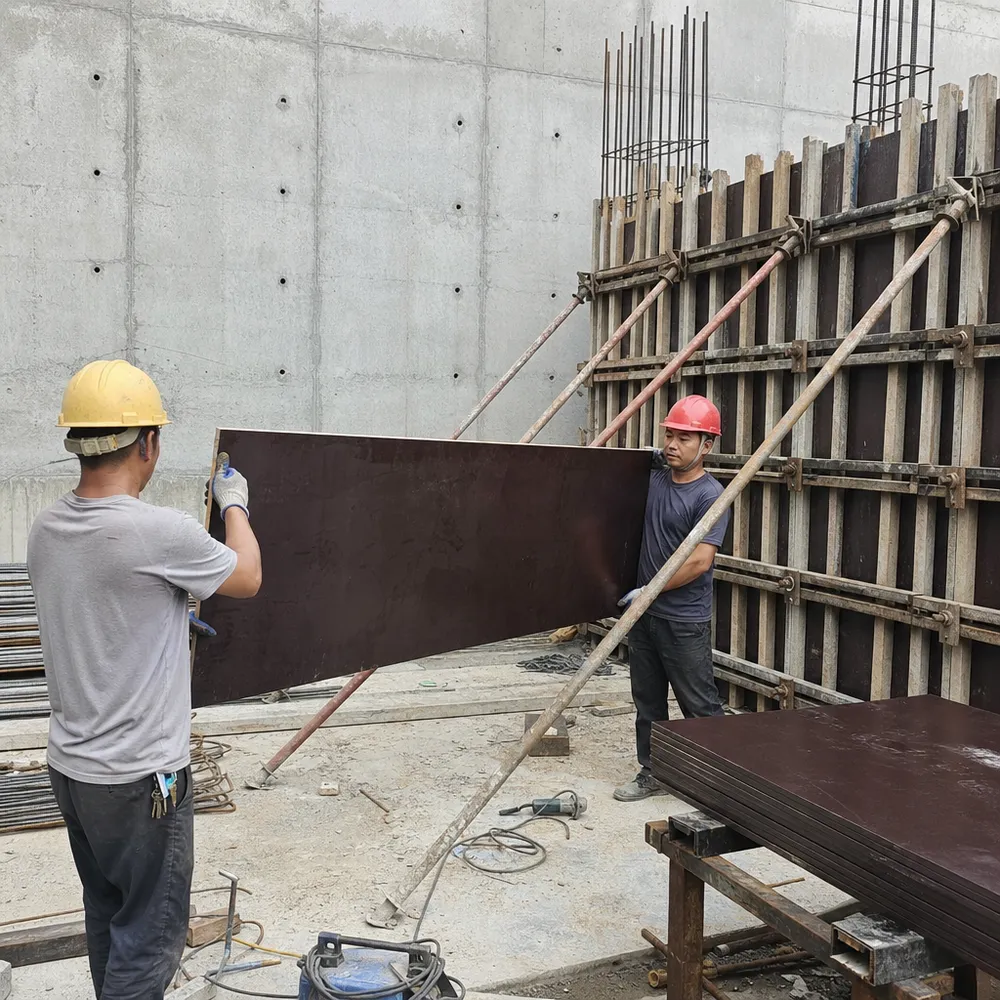
12mm Film Faced Plywood
Suited for lighter-load applications: wall formwork, column forms, and applications where panel weight is a handling constraint. Lower material cost per panel, but lower load capacity. If your market includes smaller contractors doing residential wall pours, 12mm is worth stocking alongside 18mm.
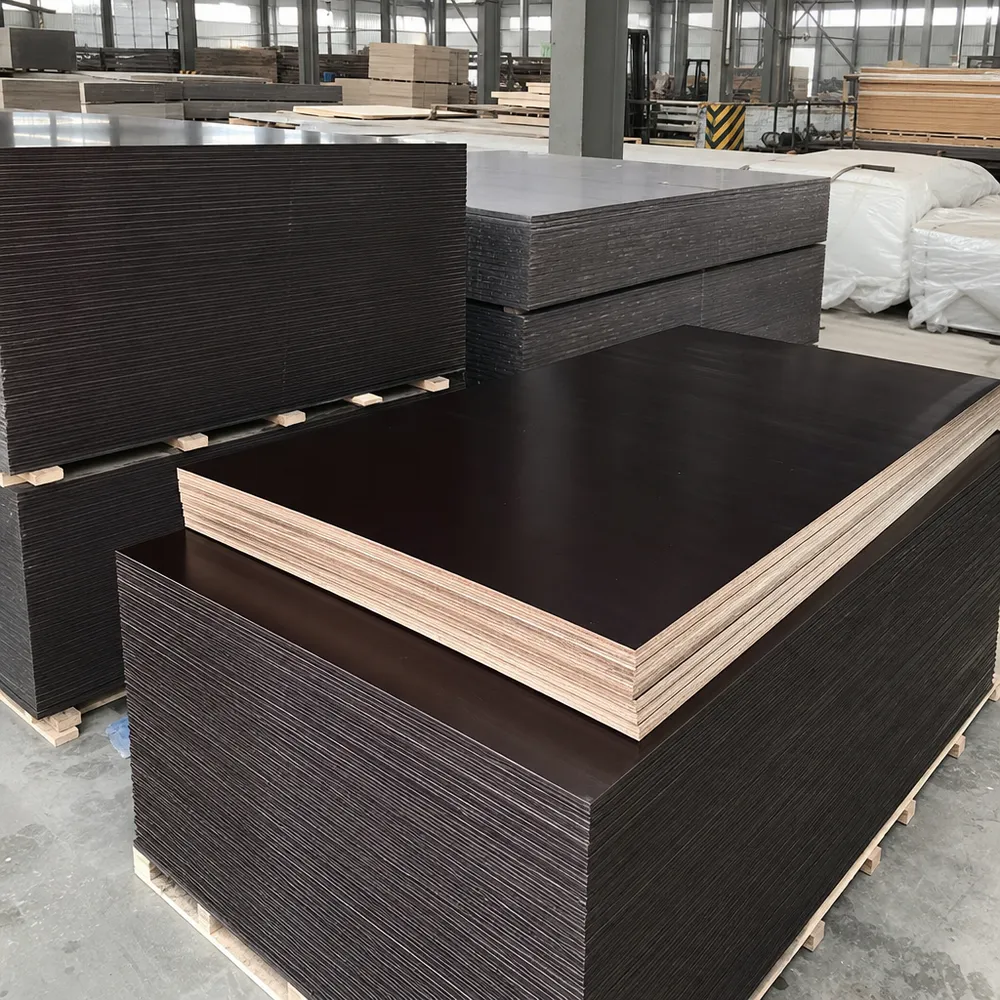
Phenolic Film Faced Plywood
Same 18mm thickness option but with a heavier phenolic resin overlay and higher-density core construction, targeting premium formwork systems and high-cycle rental applications where maximum reuse cycles justify the price premium.
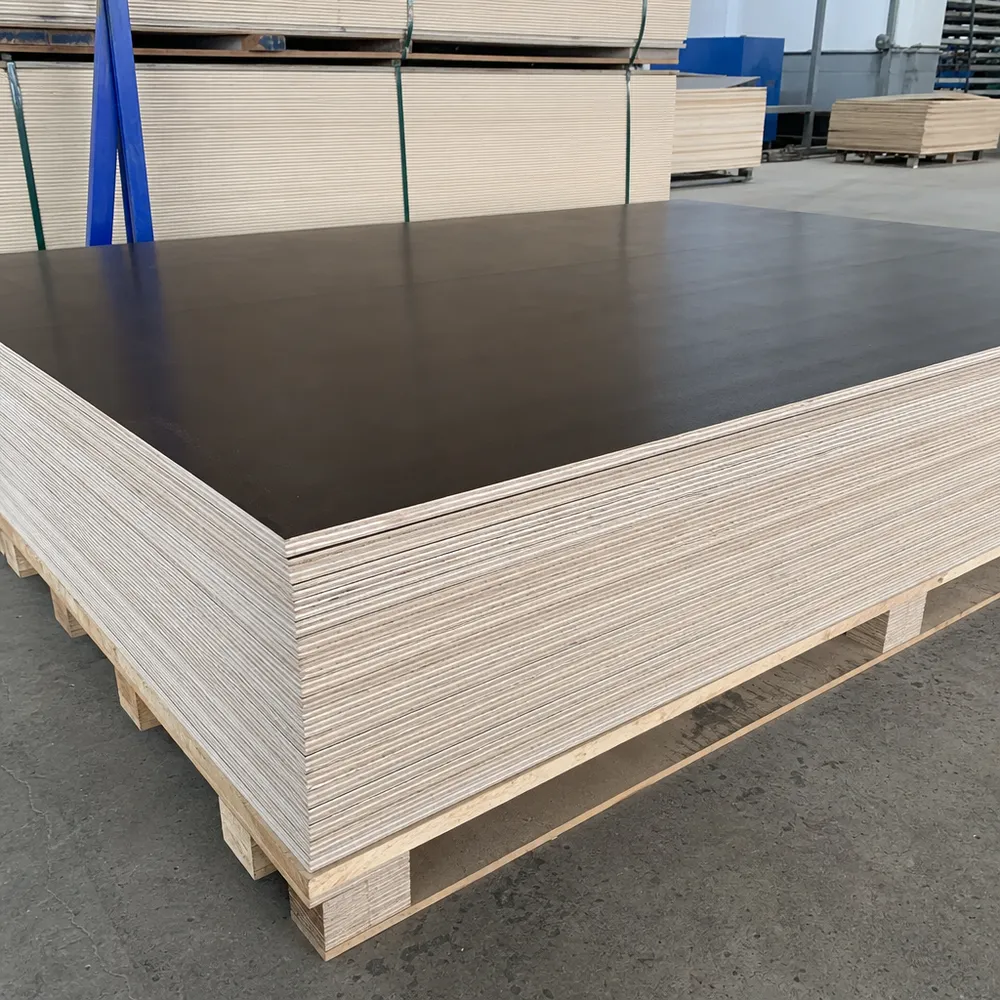
Birch Film Faced Plywood
Birch core construction for buyers in markets where birch core is the expected specification — common in European and North American premium formwork segments. Higher density, higher bending strength, higher cost.
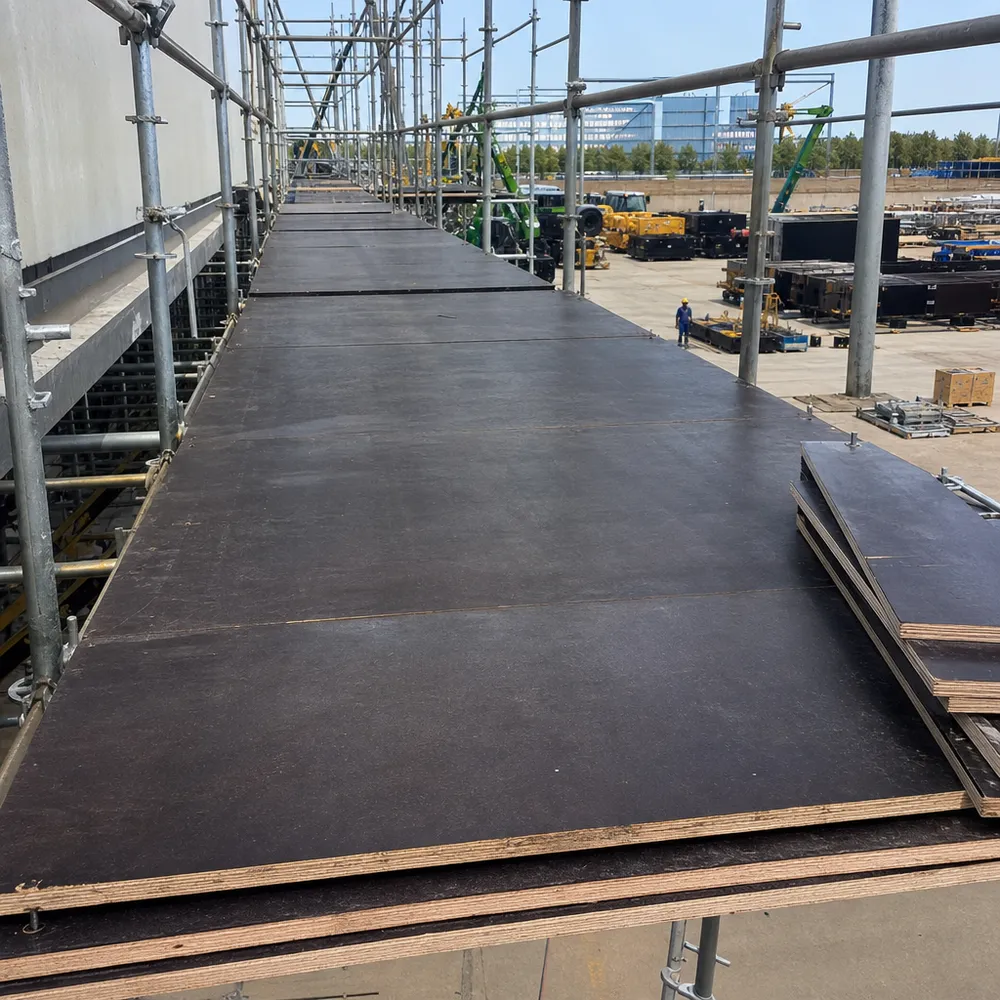
Structural Film Faced Plywood
Engineered for structural load-bearing applications beyond standard formwork: scaffold decking, heavy equipment platforms, and applications with defined structural load requirements. When the application demands documented load capacity rather than standard formwork reuse cycles, this is the right product.
View structural specsBuilding a Formwork Product Line?
If you're building a formwork product line for a regional market, the right SKU mix depends on your market's construction type and contractor profile.
Send us your target market and volume expectations — we'll suggest a starter configuration based on what's moving for our existing distributors in that region.
Frequently Asked Questions
Common questions from importers, distributors, and procurement teams sourcing 18mm film faced plywood.
Under standard commercial formwork conditions — proper stripping technique, site storage off the ground, no dragging across abrasive surfaces — 120g/m² film panels typically deliver 8–12 reuse cycles. The 220g/m² film spec extends this to 15–20 cycles in the same conditions.
The variables that kill cycles early are improper stripping (prying against the film surface rather than the panel edge), storage in direct sun exposure that degrades the phenolic film, and using panels in applications with sharp aggregate or rebar contact that abrades the surface.
If your customers are reporting low cycle counts, it's usually a site handling issue rather than a panel quality issue — worth asking about their stripping and storage practice before assuming a product problem.
Film weight is the mass of the phenolic resin film per square meter of panel surface. Heavier film means more resin, thicker overlay, and more abrasion resistance.
Appropriate for most residential and commercial construction formwork. Standard commercial spec.
For rental fleets, infrastructure projects, and high-cycle applications. 40–60% more reuse cycles in high-abuse conditions.
The cost difference is roughly 8–10% per panel. For buyers building a rental fleet or supplying infrastructure contractors, the 220g/m² spec pays for itself quickly.
Yes. CARB P2 is available as a production specification on our 18mm film faced plywood. It requires a specific low-formaldehyde resin formulation and adds a small cost premium over standard E1 production.
If your order is US-bound or your buyers have CARB compliance requirements, specify CARB P2 on your inquiry and we'll include the full documentation package in your export documents:
- Test reports
- Chain-of-custody records
- CARB compliance statement
Standard MOQ: one 20GP container (approximately 300–350 panels at standard dimensions).
For custom specifications — non-standard dimensions, specific core species, 220g/m² film, or OEM marking — MOQ requirements may be higher depending on the specification. Contact us with your full specification and target volume and we'll confirm the MOQ and lead time for your order.
Yes. We produce non-standard dimensions on confirmed orders — there's no tooling cost since plywood is cut-to-size rather than molded. Common non-standard requests include:
- 1250×2500mm for European market requirements
- Half-panel sizes for specific formwork system compatibility
- Custom widths for proprietary formwork systems
Minimum order quantities apply to make the production run economical. Provide your target dimensions and quantity on your inquiry.
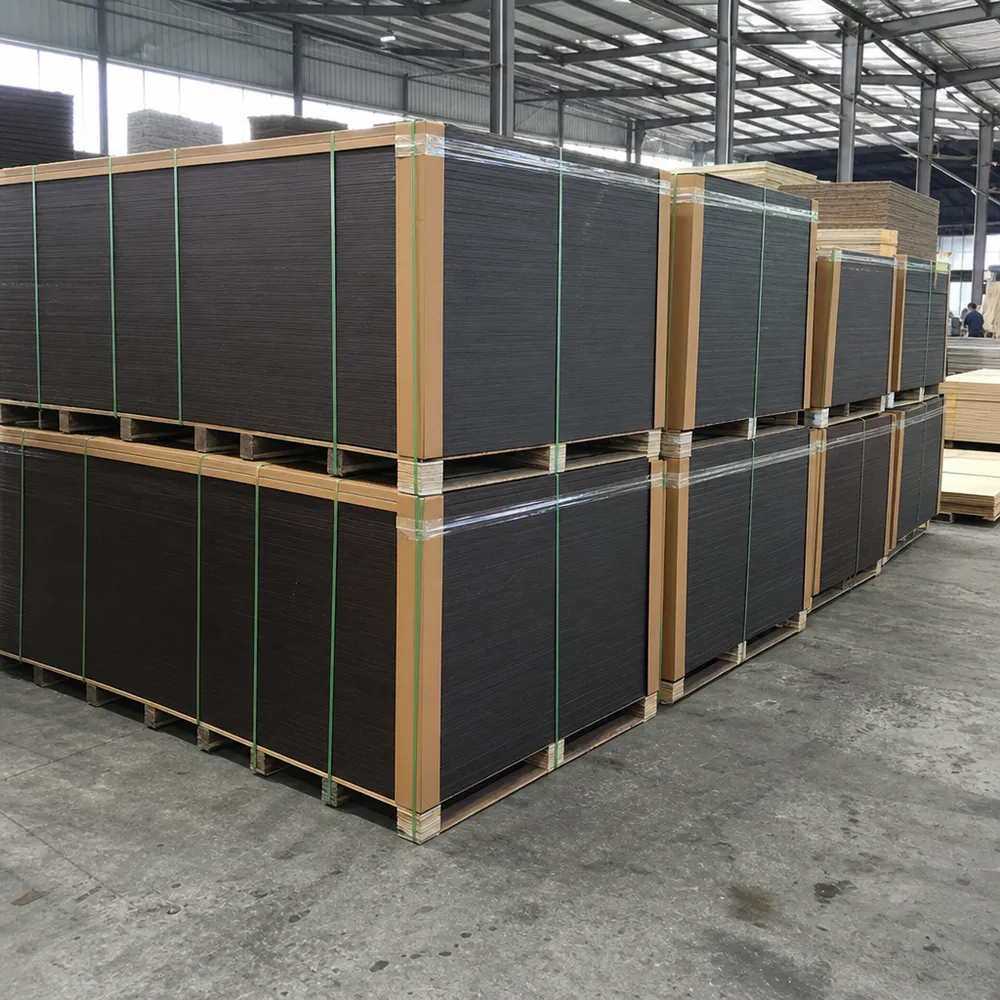
Panels are bundled in packs of 50–100 sheets with the following export-grade packaging:
- Steel or PP banding straps
- Cardboard or plastic corner boards
- Moisture-resistant polyethylene film wrap
- Bundle marking: product spec, batch number, quantity, destination port
- Edge sealing on all panels before bundling (export-grade orders)
We provide a container loading plan with each shipment.
Get a Quote for 18mm Film Faced Plywood
Send us your specification — thickness, film weight, core species, panel dimensions, destination market, and target volume — and we'll come back with a detailed FOB quote and the relevant certification documentation for your import requirements. Most inquiries get a response within 24 hours.
If you're new to sourcing film faced plywood from China, tell us your target market and what you're currently paying — we'll spec the configuration that protects your margin and confirm what documentation your customs clearance requires.
No. 88 Sanbao Industrial Park, Tongshan District, Xuzhou, Jiangsu Province, 221116, China
- Thickness: 18mm (confirm or specify alternate)
- Film weight: 120g/m² standard or 220g/m² heavy-duty
- Core species: eucalyptus, poplar, or combi
- Panel dimensions: standard 1220×2440mm or custom
- Destination market: for certification and documentation requirements
- Target volume: container count or panel quantity
Explore the Film Faced Plywood Range
Other specifications and configurations available from QDPlywood.com.
Related Plywood Products
Other plywood categories frequently ordered alongside 18mm film faced plywood.
18mm Film Faced Plywood — Common Questions
Answers to the questions buyers ask most before placing their first order.