

18mm Melamine MDF — Standard Cabinet Thickness, Factory Direct
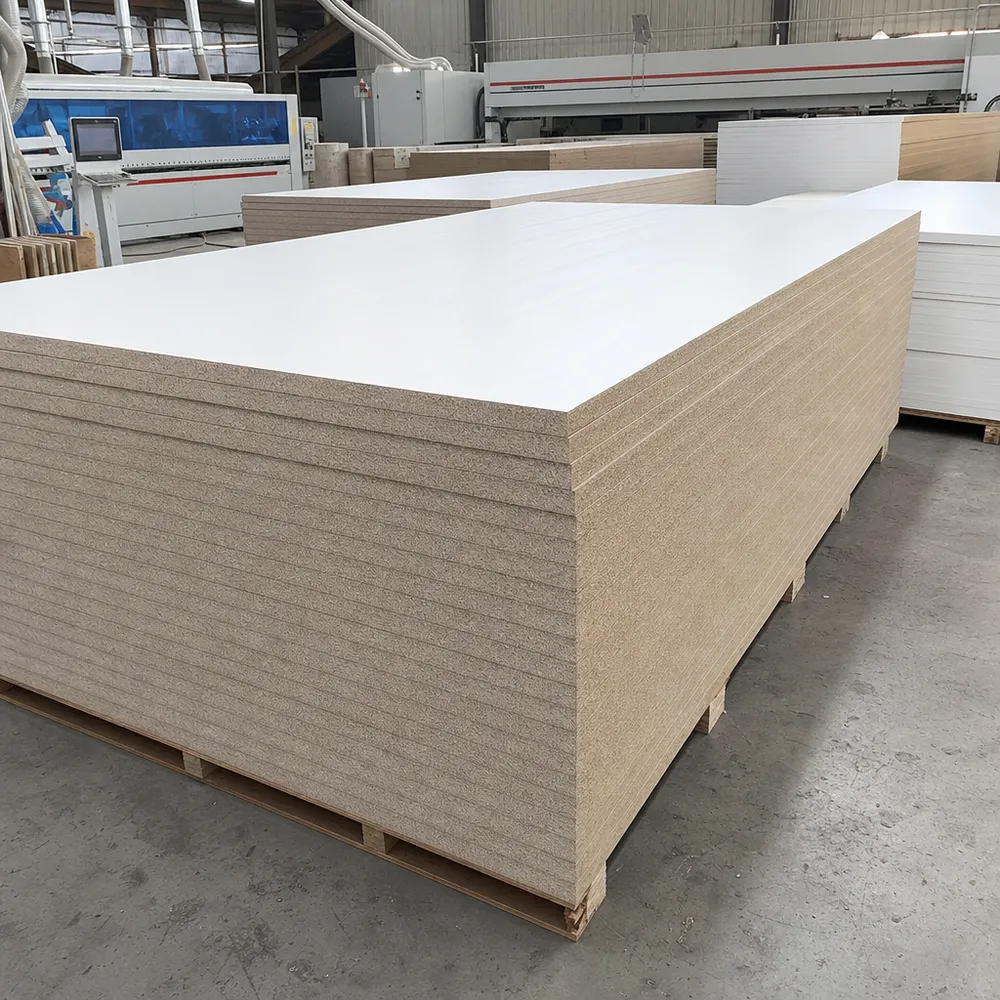
Manufactured at our 18,000 m² Xuzhou facility with a dedicated melamine pressing line. Every panel ships with formaldehyde emission documentation included — no chasing paperwork after the container lands.
Why 18mm Is the Thickness Your Buyers Actually Specify
18mm is not an arbitrary number in the melamine MDF world — it's the de facto standard for cabinet carcasses, wardrobe panels, shelving, and furniture components across every major market we ship to. When your downstream customers — furniture manufacturers, kitchen cabinet shops, fit-out contractors — write a bill of materials, 18mm is the default. Anything thinner needs justification; anything thicker is a deliberate upgrade.
That means 18mm melamine MDF is the highest-volume SKU in this category, the one that moves in container quantities, and the one where your margin depends on sourcing consistency rather than novelty.
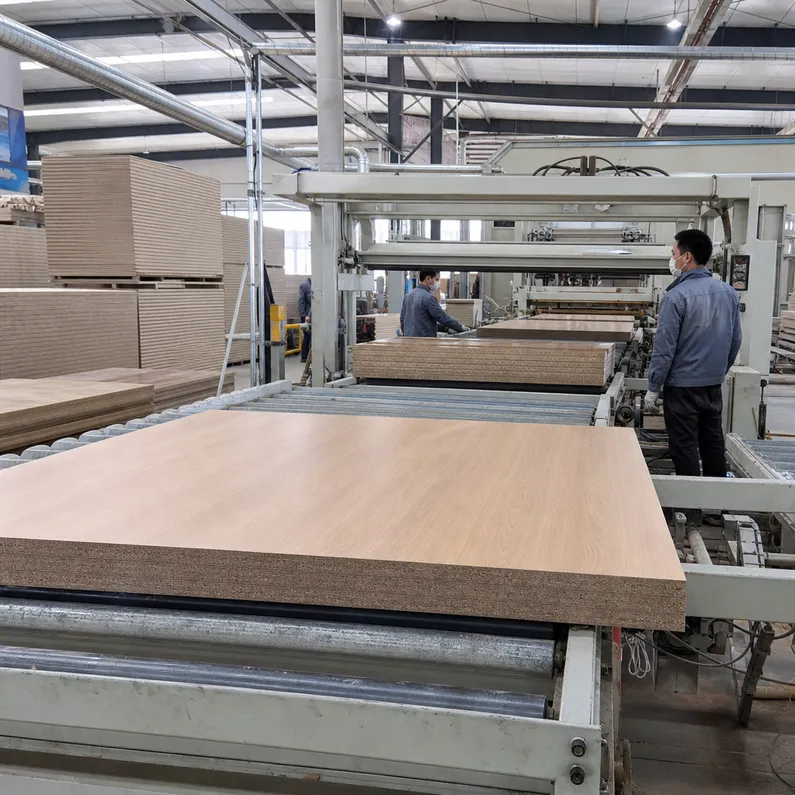
We've been pressing melamine-faced panels since the early years of the operation, and 18mm is the thickness where we see the most repeat orders and the most exacting buyer requirements. The tolerance expectations are tighter here than on thinner panels — buyers running CNC cutting lines for cabinet production cannot absorb thickness variation.
Why tolerance matters on the cutting line: A panel that comes in at 17.6mm instead of 18.0mm causes feed errors and joint gaps that generate rework claims. Our calibrated sanding line holds thickness to ±0.2mm across the full 1220×2440mm sheet, so your downstream customers' cutting programs run without adjustment.
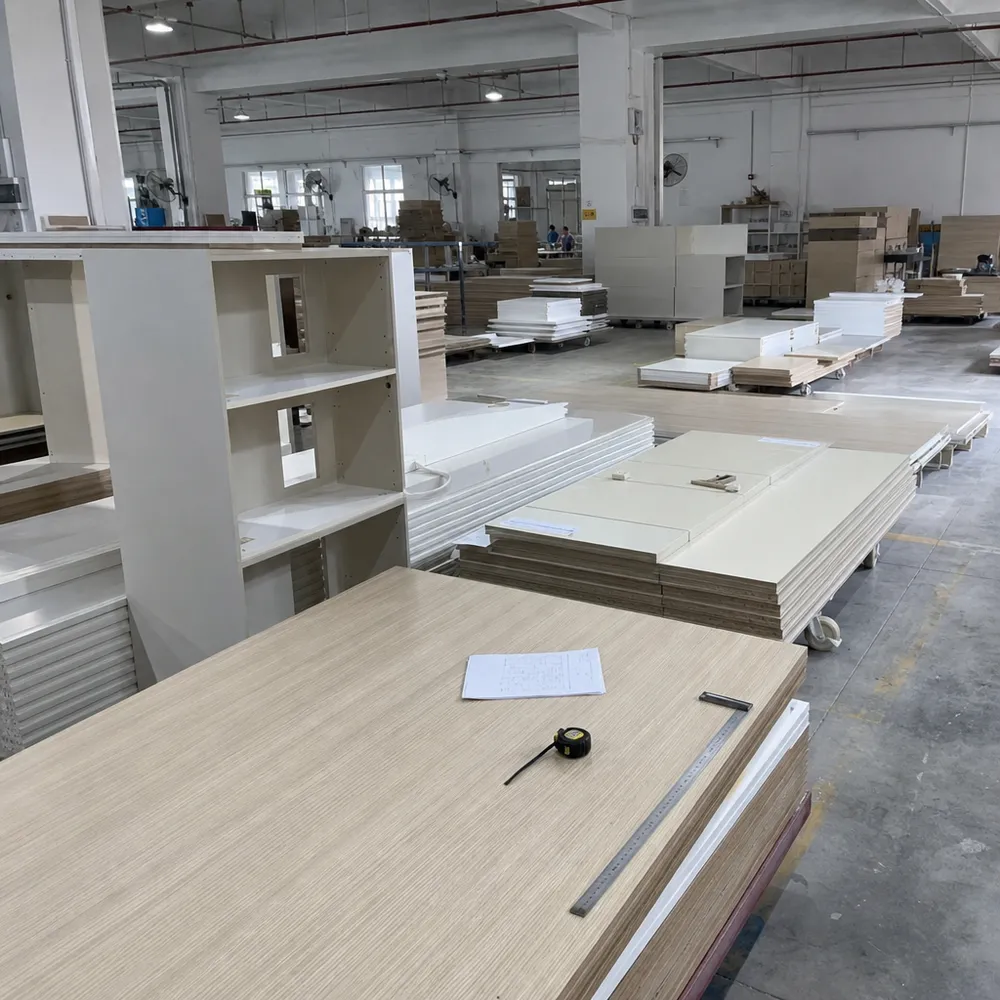
Cabinet Carcasses
Default spec for kitchen and wardrobe box construction
Shelving Panels
Structural shelving in retail fixtures and storage units
CNC Cut-to-Size
Tight tolerance required for automated cutting programs
Fit-Out Contractors
Commercial interiors, office furniture, hospitality fit-outs
Product Specifications
Industry-standard values for 18mm melamine MDF. Contact us for detailed product data sheets and confirmation of exact parameters for your application.
18mm Melamine MDF — Full Specification Table
| Parameter | Specification |
|---|---|
| Thickness | 18mm tolerance ±0.2mm |
| Standard Panel Size | 1220 × 2440mm |
| Core Material | MDF (medium density fiberboard), standard density 700–750 kg/m³ |
| Face Material | Melamine-impregnated decorative paper, both faces |
| Surface Finish | Matte Silk Textured (woodgrain, solid color) |
| Standard Colors |
White Beige Light Grey Walnut Oak Wenge + Custom
|
| Formaldehyde Emission | E1 standard (≤0.124 mg/m³) CARB P2 available |
| Moisture Resistance | Standard MDF core MR core on request |
| Bending Strength | Typical ≥28 N/mm² (MDF core, per EN 310) |
| Internal Bond | Typical ≥0.60 N/mm² (per EN 319) |
| Surface Abrasion | Typical ≥150 IP (per EN 438 abrasion test) |
| Edge Treatment | Square edge standard; edge banding compatible |
| Certifications |
CARB P2 ISO 9001:2015 FSC CE
|
Specifications shown are industry-standard values for this product type. Actual specifications may vary by order. Contact us for detailed product data sheets and confirmation of exact parameters for your application.
Continuous-Press Core Sourcing
The MDF core we use is sourced from mills running continuous press lines — the density consistency across a board is better than batch-press MDF, which matters when you're edge-banding or routing profiles. We switched to continuous-press core sourcing in 2019 after seeing edge-banding adhesion failures on batch-press boards — the density variation at the panel edge was causing inconsistent glue uptake.
Key Performance Figures

Continuous-press MDF core with melamine face — consistent density edge-to-edge.
Certifications at a Glance
-
CARB Phase 2
California Air Resources Board — low formaldehyde emission standard
-
FSC Certified
Forest Stewardship Council — responsibly sourced wood fibre
-
ISO 9001:2015
Quality management system certification across production
-
CE Marked
Meets EU construction product regulation requirements
Need the Full Data Sheet?
We can send the complete technical data sheet with test reports for your specific order batch.
Why 18mm Is the Industry Standard Thickness
18mm didn't become the default by accident. It sits at the intersection of structural performance, hardware compatibility, and material efficiency — and understanding why helps you specify confidently.
Hardware Compatibility
The entire European cabinet hardware ecosystem — Blum, Hettich, Grass, Häfele — is engineered around 18mm panel thickness. Hinge cup depths, drawer runner mounting heights, shelf pin hole spacing, and cam-lock connector dimensions all assume 18mm as the baseline. Specifying a different thickness means sourcing non-standard hardware or shimming, both of which add cost and complexity.
Span-to-Load Ratio
At 18mm, an MDF panel can span approximately 700–800mm between supports before deflection under typical shelf loads (books, kitchenware) becomes noticeable. This maps directly to standard cabinet module widths of 600mm and 800mm. Going thinner requires intermediate supports or reduces usable span; going thicker adds weight and cost without proportional structural gain for most applications.
CNC and Machining Efficiency
CNC nesting programs are optimised around 18mm. Tool paths for dado joints, biscuit slots, and dowel holes are pre-configured in most cabinet design software (Cabinet Vision, imos, Mozaik) at 18mm. Switching thickness means reconfiguring tooling offsets and joint depths across every program — a significant re-engineering cost for production shops.
Edge Banding Surface Area
18mm provides enough edge surface for 0.4mm, 1mm, and 2mm ABS or PVC edge banding to bond reliably without the edge being too narrow for the banding machine's pressure rollers. Thinner panels (12mm, 15mm) can cause tracking issues on some edge banders; thicker panels (25mm) require wider banding stock that's less commonly stocked.
Logistics and Stacking
A full pack of 18mm panels (typically 50–60 sheets) sits at a manageable weight for forklift handling and fits standard pallet heights. The thickness also means panels don't flex during transport in a way that risks surface damage — a real issue with 12mm panels in full-pack quantities.
MDF Thickness Comparison
| Thickness | Typical Use | Hardware Fit |
|---|---|---|
| 9mm | Back panels, drawer bottoms | Limited |
| 12mm | Light shelving, door panels | Partial |
| 15mm | Lighter carcasses, wall units | Mostly |
| 18mm ✓ | Carcasses, shelving, doors, worktops | Full |
| 22mm | Heavy-duty shelving, worktops | Adapted |
| 25mm | Structural, commercial counters | Adapted |
When to Specify Thicker Than 18mm
- Spans exceeding 900mm without intermediate support (go to 22mm or 25mm)
- Point loads from heavy equipment or machinery on shelving
- Commercial countertops requiring post-form edge profiles
- Structural base panels in floor-standing retail fixtures
We stock 22mm and 25mm melamine MDF alongside 18mm — contact us if your project needs a different thickness.
Melamine MDF vs Raw MDF
Raw MDF requires painting, laminating, or veneering on-site — adding labour, materials, and drying time. Melamine MDF arrives ready to use: the decorative surface is factory-applied under heat and pressure, giving a harder, more consistent finish than site-applied paint and eliminating the need for a separate finishing step in most cabinet and furniture applications.
Raw MDF
- Needs finishing on-site
- Paint adhesion variable
- Lower material cost
- Paintable any colour
Melamine MDF
- Ready to use
- Hard factory surface
- Consistent colour/finish
- Scratch resistant
Standard Colours and Surface Finishes
We hold stock in the most-specified colours and finishes. Custom colours and matched decors are available on indent orders — lead times and minimum quantities apply.
Solid Colours — Stock Range
White
Most stocked — matte & silk
Beige / Cream
Warm neutral, matte finish
Light Grey
Matte & silk available
Anthracite Grey
Matte finish, indent stock
Black
Matte finish
Custom Colour
Indent — MOQ applies
Wood Decors — Stock Range
Oak
Light & medium tones, textured
Walnut
Dark grain, textured finish
Wenge
Very dark, fine grain texture
Maple
Pale, fine grain, matte
Cherry
Warm reddish-brown tone
Custom Decor
Indent — MOQ applies
Surface Finish Types
Matte
Most commonLow sheen, diffuse surface. Hides minor surface marks and fingerprints well. Standard choice for cabinet interiors, shelving, and furniture carcasses.
Silk / Satin
StockMid-level sheen. Easier to wipe clean than matte. Popular for kitchen cabinet doors, retail display units, and office furniture fronts.
Gloss
IndentHigh-reflectance surface. Shows fingerprints and surface scratches more readily. Used for premium kitchen doors and display-facing panels where visual impact is the priority.
Textured / Woodgrain
StockEmbossed surface texture registered to the decor print. Adds tactile realism to wood-effect boards and improves grip on horizontal surfaces.
Choosing a Finish
For interior carcasses and shelving, matte is the practical default — it's forgiving and cost-effective. Reserve silk or gloss for visible faces and doors where cleanability or appearance justifies the premium. Textured finishes add grip on horizontal surfaces and are worth specifying for worktops and display shelves.
Need a Colour Sample?
We can send physical samples of stock colours and finishes before you commit to a full order. Lead time is typically 2–3 working days.
Request SamplesWhere Melamine MDF Is Used
Melamine MDF is the default board material across a wide range of interior joinery and furniture manufacturing applications. Here's how it performs in the most common use cases.
Kitchen Cabinets
Carcass boxes, shelves, drawer bases, and back panels. White and light grey are the dominant colours. 18mm is standard for carcass walls; 12mm for back panels and drawer bottoms.
Wardrobes & Fitted Furniture
Shelf decks, hanging rails, internal dividers, and drawer boxes. Wood decors are popular here. 18mm throughout with 6mm or 9mm for lightweight back panels.
Retail Display & Shopfitting
Gondola shelving, display plinths, counter units, and wall bays. High-traffic surfaces benefit from silk or textured finishes. 18mm standard; 22–25mm for heavy-load base panels.
Office Furniture
Desktops, storage pedestals, bookcase carcasses, and partition panels. Anthracite, white, and wood decors are common. 18mm for structural panels; 25mm for large unsupported desk spans.
Educational & Commercial Interiors
Classroom storage, library shelving, canteen seating units, and reception counters. Durability and ease of cleaning are priorities. Silk and textured finishes preferred over matte in high-use environments.
DIY & Trade Projects
Bespoke shelving, alcove units, utility room storage, and workshop benches. Cut-to-size service available. White 18mm is the most popular single SKU across all customer types.
Not Suitable For Wet or Exterior Use
Standard melamine MDF is not moisture-resistant. For areas with direct water exposure — such as bathroom carcasses, utility splashbacks, or external applications — specify moisture-resistant (MR) MDF or a suitable alternative substrate. We stock MR MDF in white melamine; ask our team for availability.
Cutting, Machining, and Edge Treatment
Melamine MDF machines cleanly with the right tooling. Understanding the key considerations will help you get clean edges and avoid common finishing problems on-site.
Cutting Guidance
Use a fine-tooth TCT blade
A tungsten carbide-tipped (TCT) blade with 60–80 teeth gives the cleanest cut through the melamine face. Coarser blades chip the surface at the exit side of the cut.
Score the face before cutting
On site with a circular saw, score the cut line with a sharp knife before sawing to prevent the melamine surface from chipping along the kerf.
Cut face-down on a table saw
The blade exits through the top face on a table saw. Cutting face-down keeps the decorative surface on the cleaner entry side of the blade.
Panel saw or CNC for production
For volume cutting, a beam saw or CNC router with a scoring blade gives consistent chip-free edges without additional site preparation.
Drilling & Fixings
MDF holds screws well in the face but has lower holding strength at the edge. For edge fixings, use:
- Confirmat screws (designed for MDF edge jointing)
- Cam and dowel (Minifix) fittings for knock-down assembly
- PVA glue with biscuits or dominos for permanent joints
- Pre-drill pilot holes to avoid splitting near edges
Edge Treatment Options
Cut edges expose raw MDF core. For any visible edge, an edge treatment is required — both for appearance and to protect the core from moisture ingress.
PVC Edge Banding
Most common0.4mm–2mm PVC tape applied with a hot-melt adhesive edge bander. Matches most stock melamine colours. 0.4mm for concealed edges; 1–2mm for impact-resistant visible edges.
Iron-On Melamine Tape
Site usePre-glued melamine strip applied with a domestic iron. Suitable for site work and DIY. Less durable than machine-applied PVC banding but adequate for low-traffic edges.
Solid Timber Lipping
PremiumHardwood or softwood strip glued and pinned to the edge. Adds impact resistance and allows profiling. Common on worktops, shelving, and furniture where a solid-wood edge detail is specified.
Paint or Primer
Concealed edgesFor edges that will be concealed or painted, sealing with MDF primer and paint is sufficient. Not recommended for edges exposed to handling or moisture.
Order Edge Banding With Your Board
We supply matching PVC edge banding for all stock melamine colours. Ordering tape at the same time as your boards ensures a colour match and avoids a separate sourcing step. Ask our team when placing your order.
The Melamine Pressing Process: Where Surface Quality Is Made or Lost
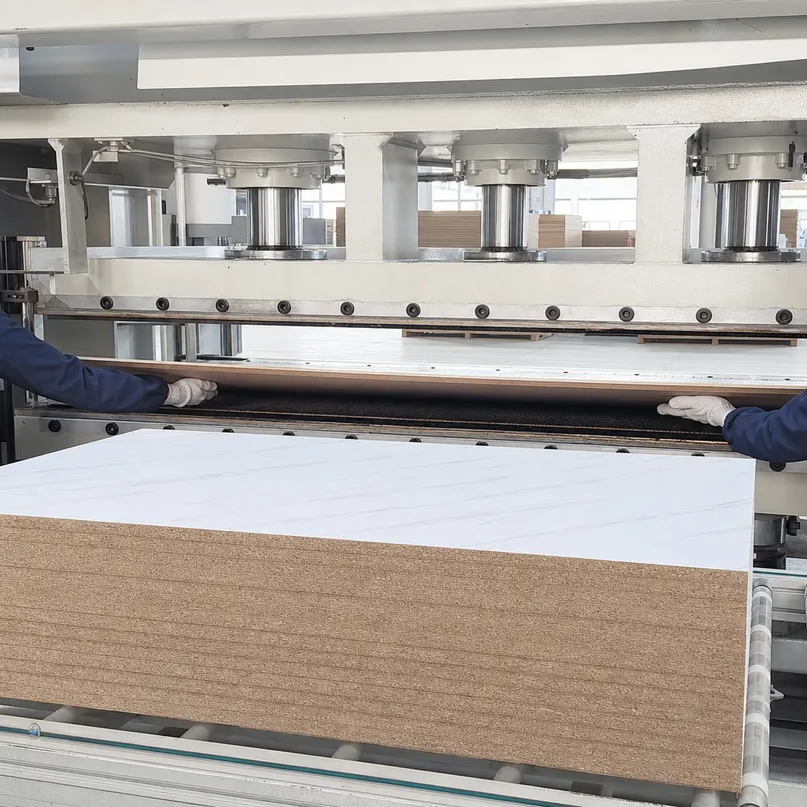
The melamine surface on an 18mm board is a thin layer — typically 80–120 gsm decorative paper impregnated with melamine resin — bonded to the MDF core under heat and pressure. The variables that determine whether that surface performs in service are press temperature, press pressure, press time, and the moisture content of the MDF core going into the press.
The Three Failure Modes
Surface Blistering
Trapped moisture vaporizing under the paper during pressing. Caused by MDF core moisture content above the 6–8% conditioning window. Risk increases sharply above that range.
Edge Delamination
Insufficient resin cure at the panel perimeter. Typically a press platen calibration issue — uneven pressure distribution means the edges don't reach full cure temperature and dwell time.
Surface Micro-Cracking
Over-cure from excessive temperature or press time. Shows up as a network of fine cracks in the melamine surface — visible under raking light and a direct cause of buyer claims at final inspection.
How We Control the Variables
Logged Press Parameters
Temperature, pressure, and cycle time are recorded and traceable to the production run — every batch, not spot checks.
Core Moisture Conditioning
MDF core is conditioned to 6–8% moisture content before pressing. Above that range, blistering risk increases sharply.
Quarterly Platen Calibration
Press platens are calibrated quarterly to verify uniform pressure distribution across the full panel surface. Uneven pressure produces surface gloss variation visible under raking light.
Consistent Paper Sourcing
Decorative paper sourced from established mills with consistent resin impregnation. We don't switch paper suppliers based on spot pricing — paper quality variation is the fastest way to introduce surface inconsistency across a production run.
Post-Press Quality Sequence
Visual Inspection Pass
Every panel goes through visual inspection before sanding. Blisters, delamination, and surface defects are pulled at this stage — they don't reach the sanding line.
Sanding and Calibration
The sanding step calibrates thickness and removes any surface irregularities from the pressing process. This is where dimensional tolerance is locked in.
Final Inspection
Checks surface grade, thickness at four corners and center, and edge condition before packing. Panels that don't pass don't ship.
Market Segments Where 18mm Melamine MDF Moves in Volume
Four segments account for the majority of 18mm melamine MDF demand. Understanding which segment your buyers operate in determines how you position the product, what colors and finishes to stock, and what order patterns to expect.
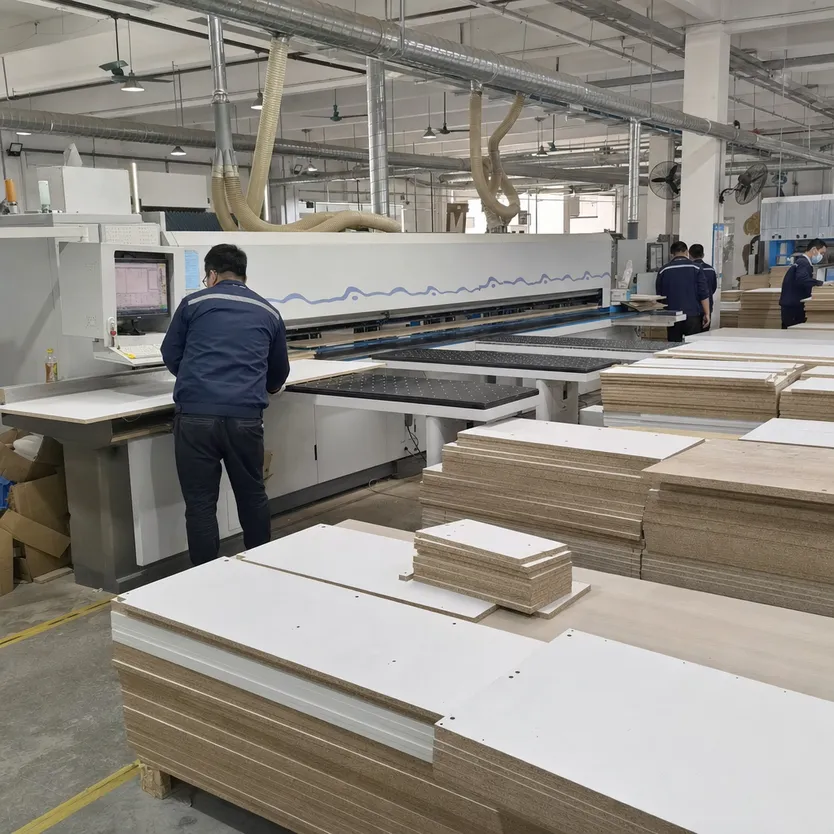
Flat-Pack Furniture Manufacturing
Furniture manufacturers running CNC cutting lines for flat-pack cabinet and wardrobe production consume 18mm melamine MDF in container quantities — a mid-size furniture factory might run 500–1,000 sheets per day. The economics work because melamine MDF eliminates the secondary finishing step: the surface comes ready for assembly, no painting or veneering required.
If you're supplying furniture manufacturers, 18mm melamine MDF is a core SKU that generates predictable, repeatable orders tied to their production schedule.
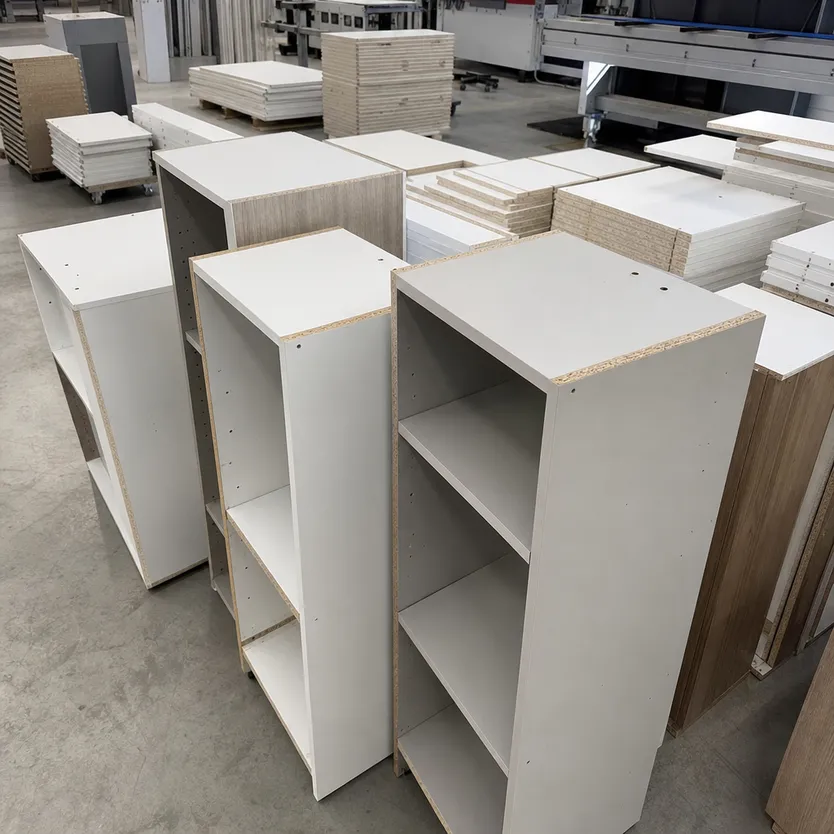
Kitchen Cabinet Production
Cabinet shops — from small custom shops to mid-scale production operations — use 18mm melamine MDF for carcass panels: sides, tops, bottoms, and fixed shelves. The standard melamine MDF thickness of 18mm is specified in most cabinet design software as the default carcass dimension, which means your buyers aren't making a thickness decision — they're ordering to a standard.
White and light grey are the dominant colors for this segment; woodgrain finishes (oak, walnut) are growing as cabinet makers offer more finish options to their customers.
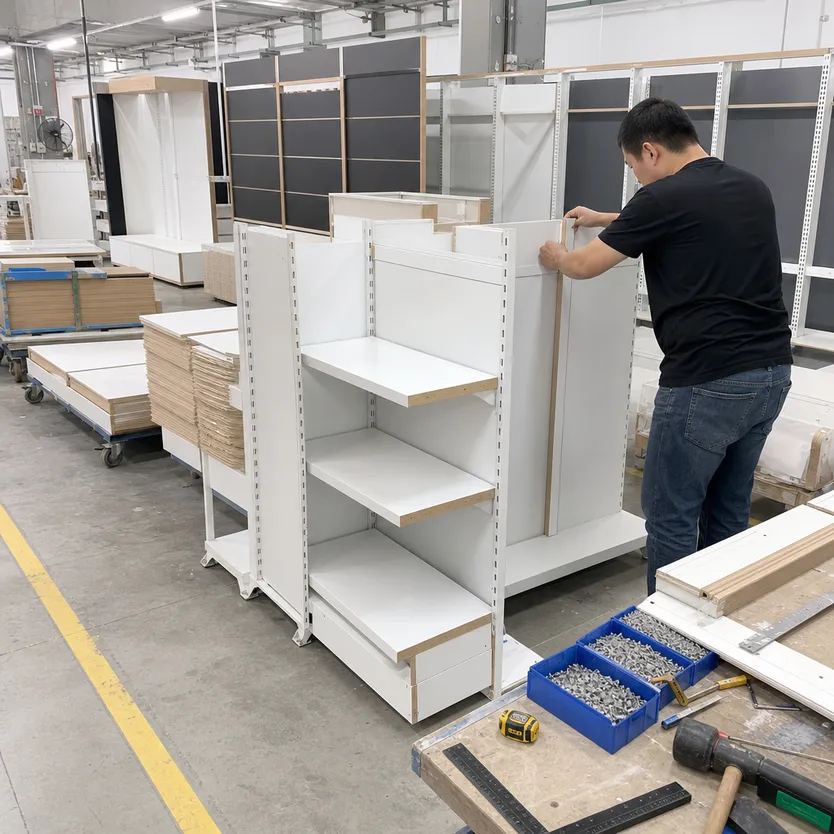
Retail Fixture and Shopfitting
Shopfitters building display shelving, gondola units, and back-wall systems for retail chains specify 18mm melamine MDF for the same reason furniture manufacturers do — it's a finished surface that goes straight into the build. Retail rollout programs (a chain opening 20–50 stores per year) generate large, time-sensitive orders with consistent specifications.
The margin on shopfitting supply is typically better than commodity furniture supply because the buyer is paying for reliability and documentation, not just the lowest unit price. Worth paying attention to if you're building a distribution business.
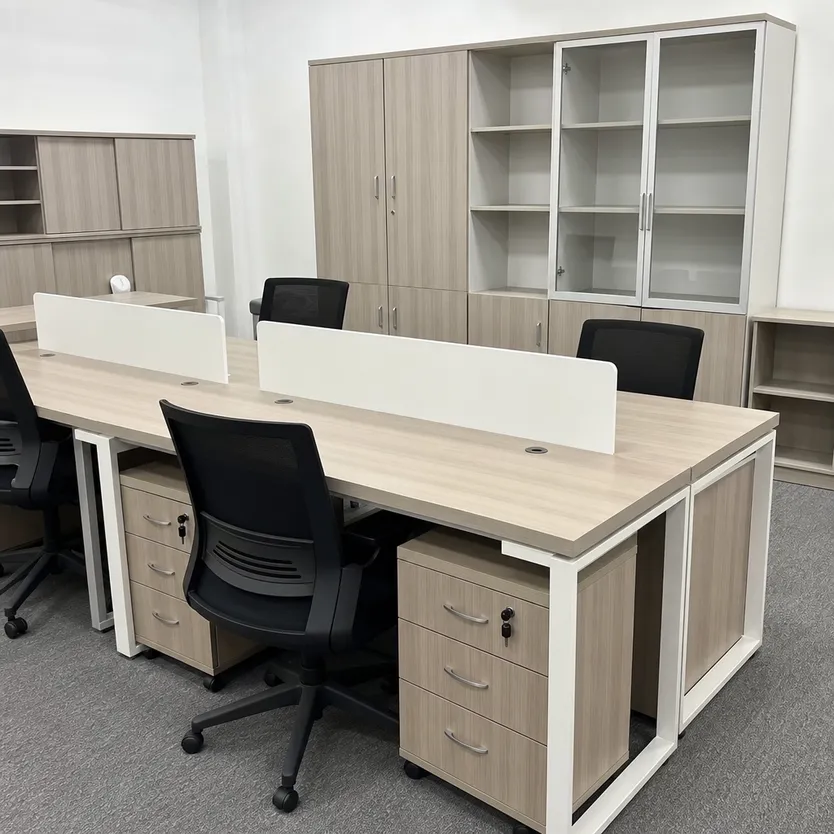
Modular Office Furniture
Desks, storage units, and partition panels run on 18mm melamine MDF in markets where cost-effective, clean-finish panels are the standard. Office furniture distributors in Southeast Asia, the Middle East, and Eastern Europe are active buyers in this segment.
This segment has grown steadily over the past three years — worth building into your product line if you're targeting commercial fit-out distributors.
Supplying Multiple Segments?
If you're building a distribution business across furniture, cabinet, shopfitting, and office segments, volume pricing and stocking programs are available. Discuss your target segment mix and we'll structure pricing accordingly.
Formaldehyde Compliance: What Your Import Market Actually Requires
This is the question that determines whether your container clears customs or sits in a bonded warehouse. The formaldehyde emission standard your buyers need depends on their end market, and the answer is not the same across regions.
CARB P2
California Air Resources Board Phase 2 — the most stringent standard in our export markets. Required for products sold in California and increasingly used as the de facto standard for all US market supply, because buyers don't want to manage two inventory streams.
Our CARB P2 compliant 18mm melamine MDF is produced with low-formaldehyde resin systems and tested per CARB protocol.
Documentation ships with order as standard for US-bound containers.
E1
Per EN 717-1. The standard for European market supply and covers most other export markets including Australia, the Middle East, and Southeast Asia.
Our standard 18mm melamine MDF production meets E1 as the baseline.
CE declaration of conformity included for EU-bound shipments.
E0
Available on request for buyers supplying into markets with stricter requirements or for buyers whose downstream customers specify it.
E0 requires a different resin system and carries a modest price premium. Worth confirming whether your market actually requires it before specifying — the cost difference adds up at volume.
Specify at order stage. Confirm your market requirement before ordering.
Standards by Export Market
| Market | Required Standard | Limit | Documentation |
|---|---|---|---|
| United States (California) | CARB P2 | ≤0.11 ppm | TPC certificate + test reports |
| United States (non-CA) | CARB P2 | ≤0.11 ppm | De facto standard; buyers avoid dual inventory |
| European Union | E1 | ≤0.124 mg/m³ | CE declaration of conformity |
| Australia | E1 | ≤0.124 mg/m³ | E1 test report |
| Middle East / Southeast Asia | E1 | ≤0.124 mg/m³ | E1 test report |
| Strict-requirement markets | E0 | ≤0.05 mg/m³ | On request; price premium applies |
Documentation Prepared Before Loading
We've been through enough US and EU customs cycles to know what documentation gaps cause delays. The paperwork is prepared to market standard before the container is loaded — you don't need to chase us for certificates after the fact.
Customization: What You Can Specify and What Affects MOQ
18mm is the standard thickness, but the rest of the specification is configurable. Here's what we can adjust and what the practical constraints are.
Surface Color & Texture
No MOQ premium for standard colorsStandard colors — white, beige, light grey, walnut, oak, wenge — are available from stock paper inventory with no MOQ premium.
Custom Colors
- Paper sourcing lead time: 15–20 working days
- Minimum order: 200 sheets to justify paper procurement
Textured surfaces (fine grain, coarse grain, embossed woodgrain) are available within the standard paper range. Custom emboss patterns require tooling discussion.
Panel Dimensions
No tooling cost for custom sizesStandard: 1220×2440mm. We can cut to custom dimensions on confirmed orders.
Common Custom Requests
- 1220×2800mm — tall wardrobe panels
- 1220×3050mm — European market specifications
Custom dimensions are a cutting and yield question, not a tooling question — no tooling cost. Non-standard sizes do affect container loading efficiency, which we'll flag when quoting.
Core Specification
Three core optionsDefault specification. Suitable for most cabinet and furniture applications.
For higher-humidity environments. Most common request: kitchen and bathroom cabinet supply.
High-density fiberboard for applications requiring higher screw-holding strength or edge-banding performance.
Formaldehyde Standard
Specify at order stageSwitching emission standards mid-production is not practical. Confirm your market requirement before placing the order.
OEM / Private Label
We handle OEM orders — custom panel marking, private label packaging, and custom documentation. Minimum order for OEM programs is typically one container.
One Container Includes Approximately:
Customization Options at a Glance
| Parameter | Standard | Custom Option | MOQ / Lead Time Note |
|---|---|---|---|
| Surface color | 6 standard colors | Any RAL / custom swatch | 200 sheets min; 15–20 WD sourcing |
| Surface texture | Fine grain, coarse grain, woodgrain | Custom emboss pattern | Tooling discussion required |
| Panel dimensions | 1220×2440mm | Any cut size | No tooling cost; yield affects price |
| Thickness | 18mm | 6–25mm range | Standard MOQ per thickness |
| Core type | Standard MDF | MR core, HDF core | Same MOQ; price premium applies |
| Emission standard | E1 | CARB P2, E0 | Confirm before order; not switchable mid-run |
| OEM / private label | — | Custom marking, packaging, docs | 1 container minimum |
What the documentation actually covers
Certifications matter at customs and at the point of sale. Here's what we can provide, what each document covers, and what it doesn't.
FSC® Chain of Custody
Available on requestFSC-certified production runs are available for buyers who need to make on-pack or marketing claims about responsible sourcing.
FSC runs require advance notice. Not all production slots are FSC-certified; confirm at inquiry stage.
CARB Phase 2 / EPA TSCA Title VI
Required for US marketMandatory for composite wood products sold into the United States. We supply test reports and third-party certification documentation.
Must be specified at order stage. CARB P2 and standard E1 are different production runs.
CE Marking / EN Standards
EU & UK marketMDF panels for the European market are produced to EN 622-5 (MDF) and EN 13986 (wood-based panels for use in construction). CE marking documentation is available.
Third-Party Inspection
SGS · Bureau Veritas · IntertekPre-shipment inspection by SGS, Bureau Veritas, or Intertek can be arranged on request. We coordinate factory access and documentation.
Standard Shipping Documentation
Every shipment includes the following as standard. Additional documents (phytosanitary certificates, fumigation certificates, legalized documents) are available on request and may carry a handling fee.
Commercial Invoice
HS code, unit price, total value
Packing List
Bundle count, sheet count, gross/net weight
Bill of Lading
Original or telex release per buyer preference
Certificate of Origin
Chamber of Commerce or Form E (ASEAN)
Test Report
Formaldehyde emission, mechanical properties
Quality Certificate
Factory QC sign-off per production batch
Production Quality Control Points
Raw Material Intake
Fiber moisture content, resin batch verification, paper roll inspection
In-Process
Press temperature and pressure monitoring, thickness gauge checks every 30 minutes
Post-Production
Surface adhesion test, edge inspection, dimensional verification per batch sample
Pre-Shipment
Final visual inspection, bundle count verification, loading supervision
Container Loading and Landed Cost Planning
18mm melamine MDF is a dense product — a standard 1220×2440×18mm panel weighs approximately 38–42 kg depending on core density. Container loading efficiency directly affects your landed cost per sheet, so it's worth understanding the numbers before you commit to a volume.
40HQ Container Capacity
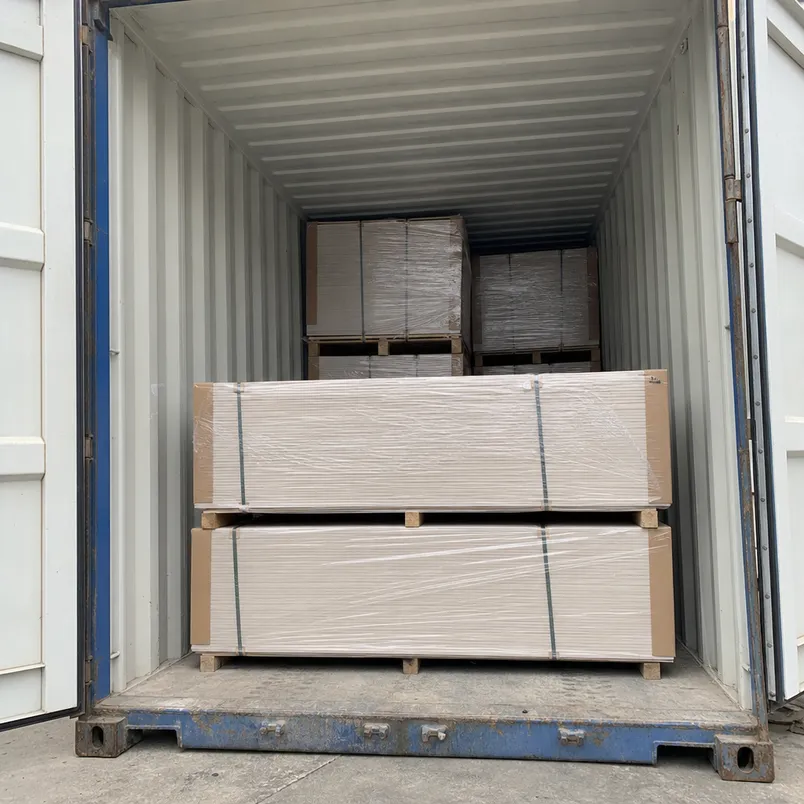
A standard 40HQ container typically loads 600–750 sheets of 1220×2440×18mm melamine MDF, depending on stacking configuration and packaging. We provide a loading plan with each shipment so your receiving team knows the exact count and configuration.
Mixed Specification Loading
For buyers ordering mixed specifications — multiple colors or core types — we coordinate the loading to maximize cubic utilization. Mixing panel types in a single container is straightforward as long as the specifications are confirmed before production.
Packaging Specification
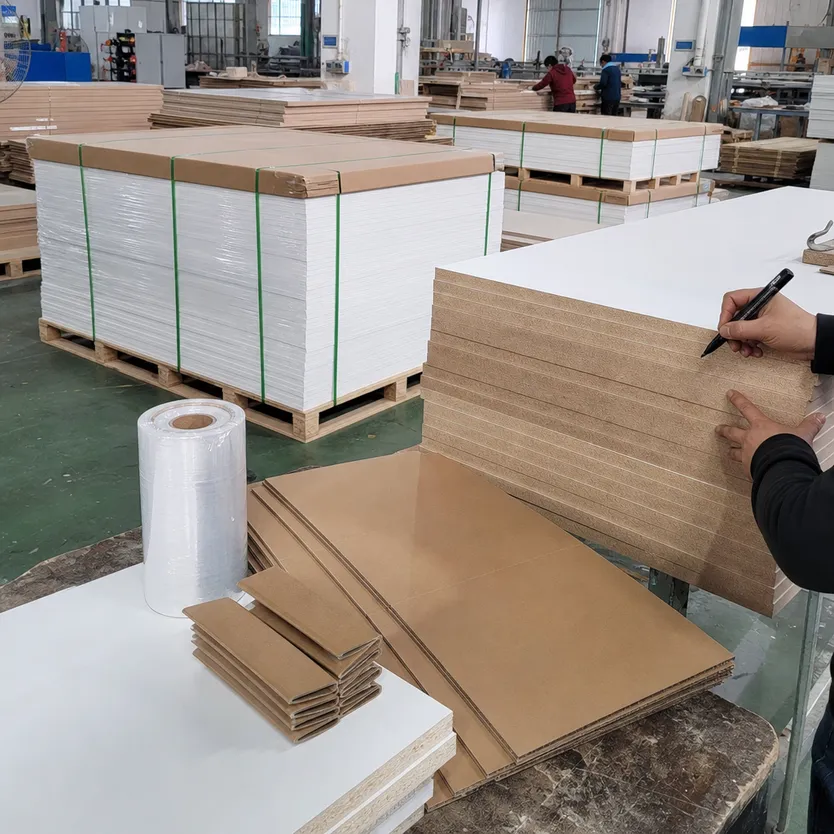
Panels are bundled in packs of 50–100 sheets, strapped, and wrapped in moisture-resistant film. Corner boards protect edges during transit. Each bundle is marked with specification, color, batch number, and destination port. The packaging spec handles both humid Gulf ports and dry Australian ports.
Vessel Transit Times from Xuzhou
Xuzhou connects to Qingdao, Shanghai, and Lianyungang ports. Add 3–5 days for inland transport to port and customs clearance at destination.
Ready to calculate your landed cost?
Get a freight estimate included with your product quote — we'll confirm sheet count, loading plan, and port routing for your destination.
How 18mm Melamine MDF Sits in the Melamine MDF Range
18mm is the volume workhorse of the melamine MDF category, but it's not the right choice for every application. Here's how it positions against the other products in our melamine MDF range.
Melamine MDF Board
The full thickness range from 9mm to 25mm. If your buyers need multiple thicknesses, start here.
White Melamine MDF
18mm in white is the most common single SKU in this range. Covers white-specific surface grades and applications in more detail.
High Gloss Melamine MDF
For buyers supplying into markets where high-gloss finish commands a premium — contemporary kitchen fronts, retail display. Different surface paper and pressing parameters from standard matte/silk finish.
Kitchen Melamine MDF
18mm with MR core as the standard specification, optimized for kitchen cabinet supply. Covers moisture resistance requirements and kitchen-specific color ranges.
Building a product line across multiple melamine MDF specifications?
We can consolidate multiple SKUs into a single order and container. Contact us to discuss SKU mix and volume pricing — mixing panel types in one shipment is straightforward once specifications are confirmed before production.
Frequently Asked Questions
Common specification and procurement questions from importers and distributors sourcing 18mm melamine MDF.
18mm is the industry standard for cabinet carcass panels — sides, tops, bottoms, and fixed shelves. Most cabinet design software defaults to 18mm for carcass construction.
Thinner panels (12mm, 15mm) are used for back panels and drawer bottoms; thicker panels (25mm) appear in heavy-duty shelving or worktop applications. If your buyers are running standard cabinet production, 18mm is the specification they're already working to.
Yes, we produce CARB P2 compliant 18mm melamine MDF. CARB P2 sets the formaldehyde emission limit for MDF at ≤0.11 ppm — our CARB P2 production uses low-formaldehyde resin systems and is tested and certified by a CARB-approved Third Party Certifier.
The full documentation package (TPC certificate, test reports) ships with US-bound orders as standard.
If you're supplying into California or to US buyers who require CARB documentation, specify CARB P2 at order stage.
Suitable for interior dry environments — furniture, wardrobes, office fit-out.
Uses a moisture-resistant resin system that reduces swelling when the panel is exposed to humidity — relevant for kitchen and bathroom cabinet applications.
MR core does not make the panel waterproof; it reduces the rate of moisture absorption. For applications with direct water contact, a different substrate (moisture-resistant plywood or PVC board) is more appropriate.
MR core carries an 8–12% price premium over standard core.
Yes — 18mm melamine MDF is fully compatible with standard PVC, ABS, and wood veneer edge banding applied by hot-melt adhesive. The MDF core provides consistent density at the panel edge, which is important for adhesion.
Practical note: If you're edge-banding with a thin (0.4mm) PVC tape on a high-traffic application, the MDF edge is softer than plywood and more susceptible to impact damage. For high-abuse applications, specify a thicker edge band (1.0–2.0mm) or consider our melamine plywood range, which offers a harder edge profile.
No MOQ premium — you can order as few sheets as fill a container efficiently (typically 600–750 sheets per 40HQ).
Minimum 200 sheets per color to justify paper procurement.
Minimum one container.
For buyers building a multi-color product line, we can consolidate multiple colors into a single container as long as each color meets the 200-sheet minimum.
Get a Quote for 18mm Melamine MDF
Send us your specification — thickness (18mm), panel size, surface color, core type (standard or MR), formaldehyde standard (E1 or CARB P2), and target volume. We'll come back with a detailed FOB quote, the relevant certification documentation for your import market, and a loading plan showing container utilization.
Most new buyers in this category start with a sample order — 5–10 sheets in their target colors — to test surface quality and confirm the specification before committing to a container. We can arrange samples within 5–7 working days.
What to Include in Your Specification
- Thickness: 18mm (confirm or specify alternative)
- Panel size: 1220×2440mm standard or custom dimensions
- Surface color: standard stock color or custom color reference
- Core type: standard or moisture-resistant (MR)
- Formaldehyde standard: E1 or CARB P2
- Target volume: number of sheets or containers
Other Melamine MDF Products
Frequently Asked Questions
Common questions from buyers sourcing 18mm melamine MDF from China.
What is the standard thickness tolerance for 18mm melamine MDF?
Standard tolerance is ±0.2mm on the MDF core. After pressing, the melamine paper adds negligible thickness. For applications requiring tighter tolerances — such as CNC-routed cabinet carcasses — we can specify ±0.1mm on request, which requires sanding calibration after pressing.
Can I order 18mm melamine MDF in a custom panel size?
Yes. Standard size is 1220×2440mm. We also produce 1220×2800mm and 1220×3050mm for markets that use longer panels. Custom widths and lengths are available at container quantities. Note that non-standard sizes affect container loading efficiency, so we'll provide a loading plan with your quote.
What is the difference between E1 and CARB P2 formaldehyde standards?
E1 is the European standard, permitting formaldehyde emissions up to 0.1 ppm (EN 717-1). CARB P2 is the California Air Resources Board Phase 2 standard, also at 0.11 ppm but tested under ASTM E1333 or ASTM D6007. For the US market, CARB P2 is the relevant certification. For Europe and most other markets, E1 is sufficient. Both are available from our factory; specify which you need when requesting a quote.
How many sheets of 18mm melamine MDF fit in a 20ft container?
A standard 20ft container holds approximately 580–620 sheets of 18mm melamine MDF at 1220×2440mm, depending on packing method and pallet configuration. A 40ft container holds approximately 1,150–1,250 sheets. We provide a detailed loading plan with every container quote so you can verify utilization before confirming the order.
What surface textures are available on 18mm melamine MDF?
Standard options are smooth (flat), woodgrain emboss, and fine-pore (linen) texture. The texture is pressed into the melamine paper during lamination using a structured press plate. Smooth is the most common for painted-look and solid-color finishes. Woodgrain emboss is used with wood-pattern decors to add tactile realism. Fine-pore is popular for white and light-color panels in Scandinavian-style furniture.
Is moisture-resistant (MR) 18mm melamine MDF waterproof?
No. MR MDF is moisture-resistant, not waterproof. The green-dyed core uses a moisture-resistant urea-formaldehyde resin that reduces swelling under humid conditions compared to standard MDF. It is suitable for kitchen and bathroom cabinet carcasses in normal indoor humidity. It should not be used in direct water contact, submerged applications, or exterior environments. For those applications, exterior-grade plywood or marine board is the correct specification.
Can you match a custom color or decor for private label orders?
Yes. For private label and OEM orders, we can source melamine paper in custom colors or decors from our paper suppliers. You provide a color reference (RAL, NCS, Pantone, or a physical sample) and we arrange paper procurement and press a sample run for approval before production. Custom color orders require a minimum of one container and a longer lead time — typically 30–45 days from paper approval to shipment.
What documentation do you provide for import and customs clearance?
Standard export documentation includes commercial invoice, packing list, bill of lading, and certificate of origin. For regulated markets we also provide the relevant test report — CARB P2 third-party test report for the US, EN 717-1 test report for Europe, or TSCA Title VI documentation as required. FSC chain-of-custody certificates are available for FSC-certified orders. We can advise on the specific documentation your import market requires.