

3mm Hardboard — Factory-Direct Thin Hardboard Sheets
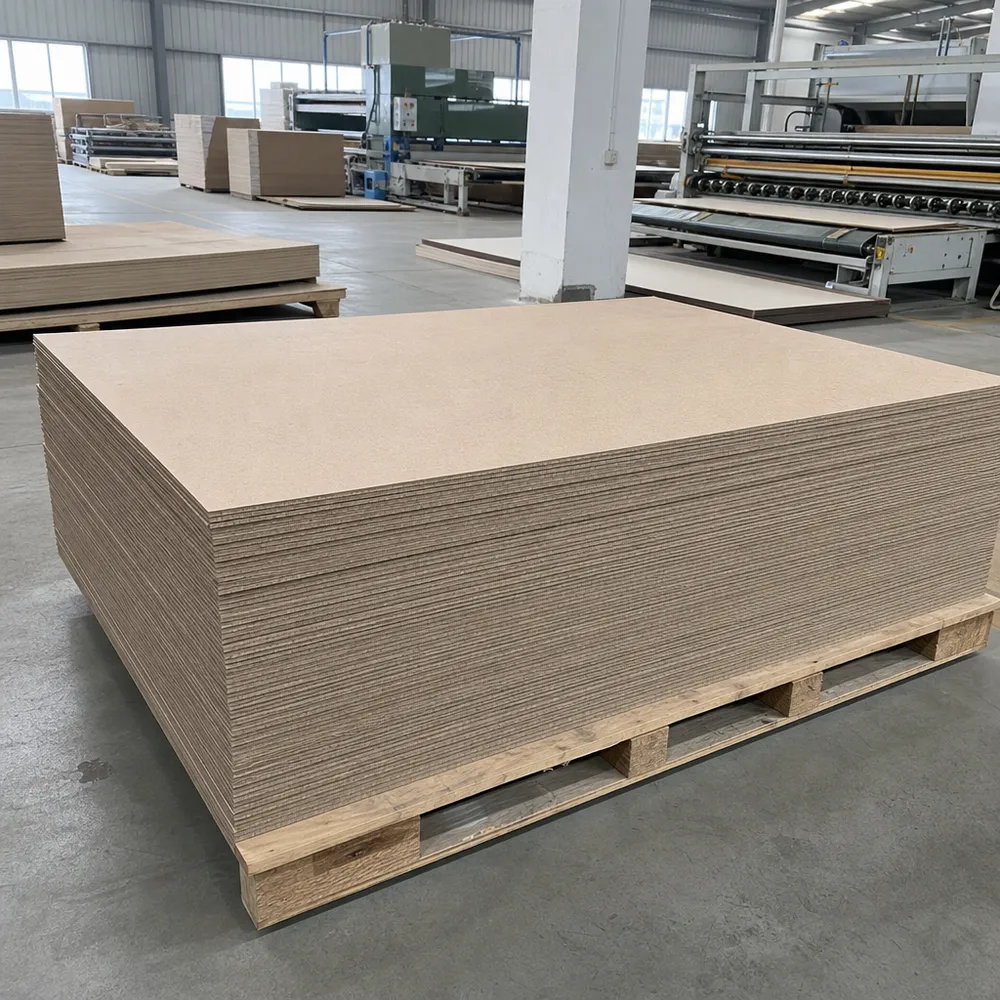
Consistent-density 3mm hardboard from a dedicated engineered wood factory — smooth face, tight thickness tolerance, CARB P2 compliant. Sourced direct from our 18,000 m² Xuzhou facility. No trading company markup. Custom panel sizes on confirmed orders.
What Makes 3mm Hardboard Different from the Rest of the Hardboard Range
At 3mm, hardboard sits at the thinnest end of the commercial hardboard range — and that specific thickness is what makes it useful for applications where weight, stack height, and cut-edge precision all matter. It's not a thinner version of standard hardboard; it's a different product with a different buyer profile.
Standard Hardboard vs. 3mm Format
Standard hardboard (typically 4.75mm–6mm) is used where rigidity and load-bearing matter. The 3mm format trades some of that rigidity for a profile that fits into furniture back panels, drawer bottoms, display board substrates, and thin-wall cladding applications where the surrounding structure carries the load and the hardboard provides a flat, smooth surface.
Same Density, Different Profile
The density is the same — typically 800–1000 kg/m³ for standard hardboard — but the reduced thickness means your downstream customers get a panel that cuts cleanly, lays flat, and doesn't add unnecessary weight to finished furniture or display units.
Production Process: Same Lines, Tighter Calibration
We press 3mm hardboard on the same production lines as our broader hardboard range, using the same fiber preparation and hot-press parameters. The difference is in the press gap calibration and the post-press sanding pass.
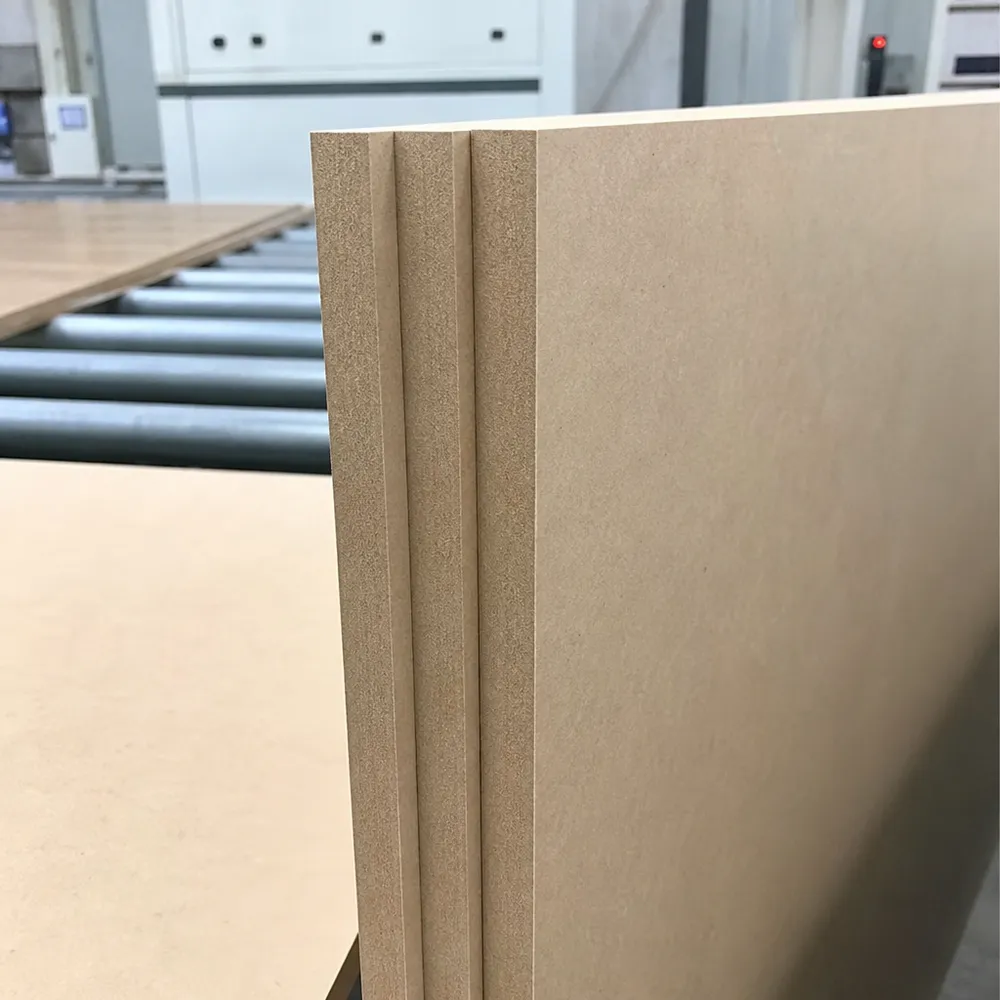
Why ±0.2mm matters at 3mm: A ±0.5mm variation is a 17% swing in panel thickness. We hold ±0.2mm on the sanding line — the same tolerance we apply to our export-grade plywood. That spec came from a furniture manufacturer in Southeast Asia running our panels through automated edge-banding equipment. The machine kept faulting on thickness variation from another supplier. We tightened our calibration and the problem went away.
Flat, Smooth Surface
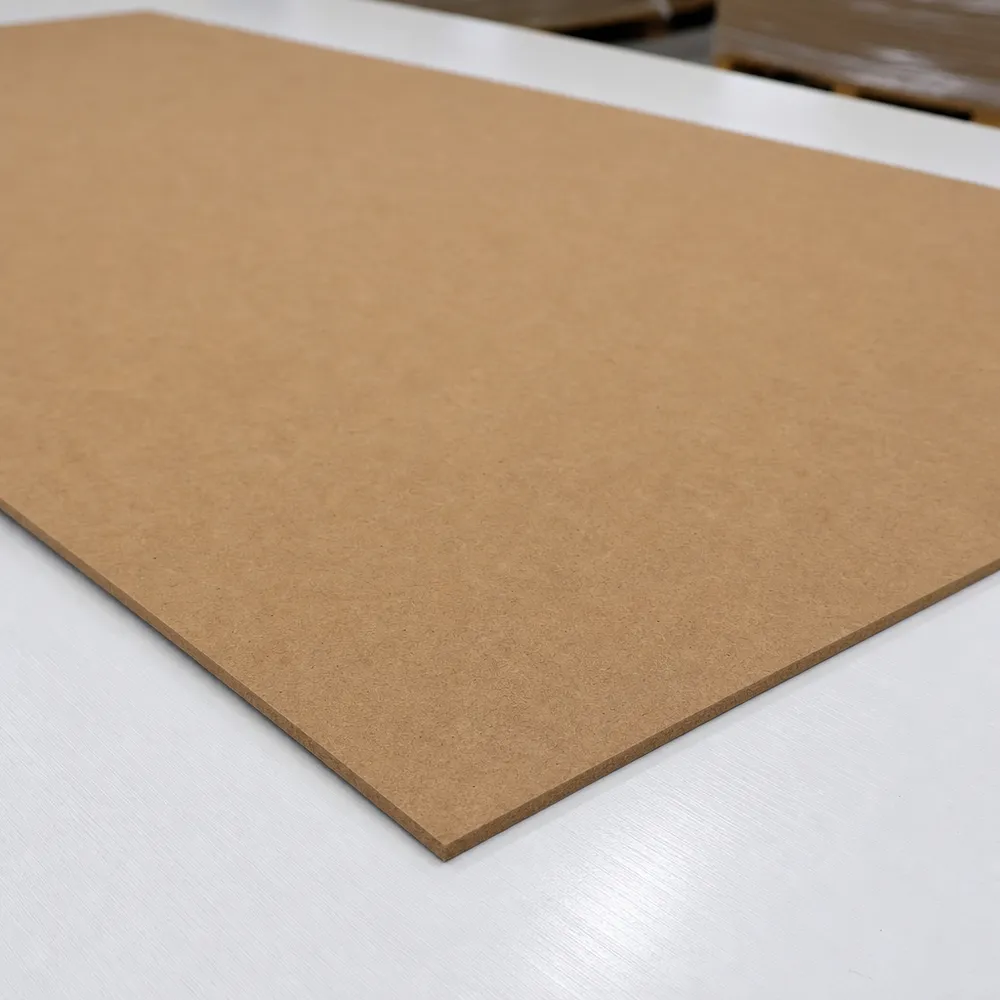
S1S standard; S2S available. Cuts cleanly for furniture and display applications.
Reduced Stack Height
Lower weight per panel. Efficient for container loading and downstream handling.
±0.2mm Tolerance
Export-grade calibration. Designed for automated edge-banding and precision assembly.
CARB P2 Compliant
Formaldehyde emission compliance for North American and international markets.
Who Buys 3mm Hardboard
- Furniture manufacturers needing back panels and drawer bottoms
- Display and exhibition board fabricators
- Thin-wall cladding and interior fit-out contractors
- Importers sourcing for markets in North America, Europe, Middle East, Southeast Asia, and Australia
3mm Hardboard Specifications
Specifications shown are industry-standard values for this product type. Actual specifications may vary by batch and application. Contact us for detailed product data sheets and test reports.
Technical Specifications — 3mm Hardboard
Custom panel sizes are available on confirmed orders — see the customization section below.
3mm Hardboard Applications
At 3mm, hardboard sits in a practical sweet spot — rigid enough to hold its shape under load, thin enough to reduce weight and material cost. These are the applications where that combination matters most.
Furniture Back Panels
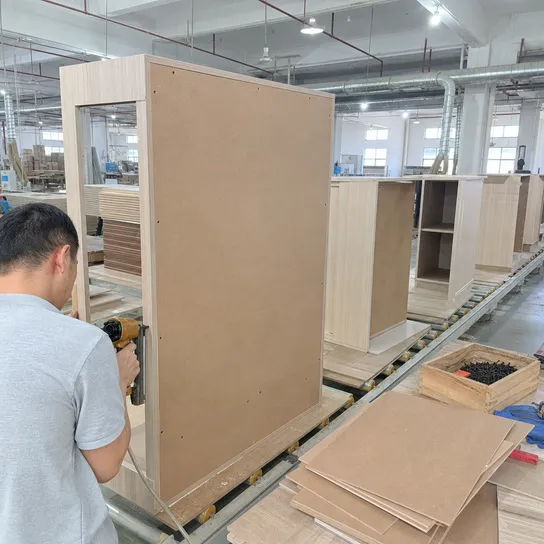
The most common application for 3mm hardboard globally. Used as cabinet backs, wardrobe rear panels, and drawer bottoms where a flat, smooth, lightweight sheet is required. The S1S surface accepts paint and laminate without additional preparation.
- Cabinet and wardrobe backs
- Drawer bottoms and dividers
- Bookcase and shelving unit backs
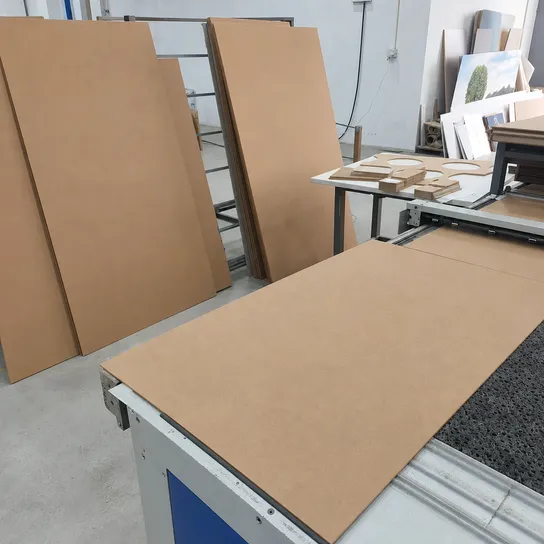
Display & Exhibition Boards
The smooth face and consistent flatness of 3mm hardboard make it a preferred substrate for printed graphics, POS displays, and exhibition panels. Lightweight for transport and easy to cut to custom shapes on CNC routers.
- Point-of-sale display boards
- Exhibition stand panels
- Printed graphic substrates
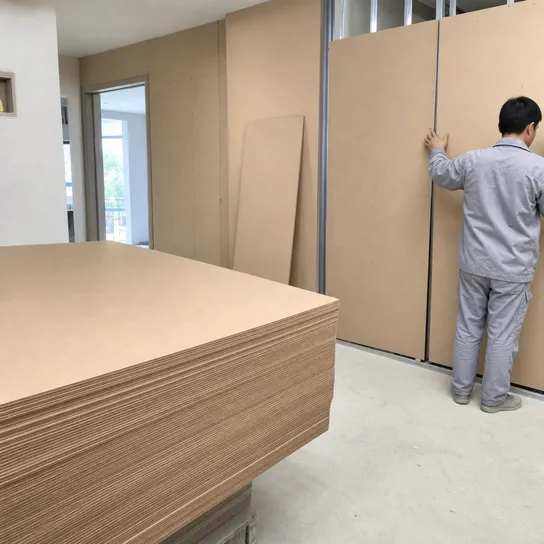
Interior Wall Cladding
Used as a thin-wall lining in residential and commercial fit-out projects. Bonds well to framing with adhesive or mechanical fasteners. The smooth surface is ready for paint, wallpaper, or decorative laminate.
- Residential interior linings
- Commercial fit-out panels
- Decorative laminate substrate
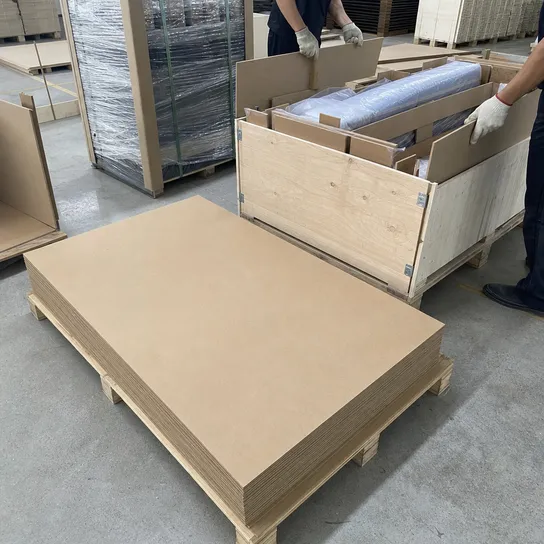
Protective Packaging Boards
Rigid enough to protect goods in transit without adding significant weight. Used as pallet separators, corner boards, and protective inserts for fragile goods in export packaging.
- Pallet layer separators
- Export crate liners
- Protective inserts for fragile goods

Craft, Hobby & Art Panels
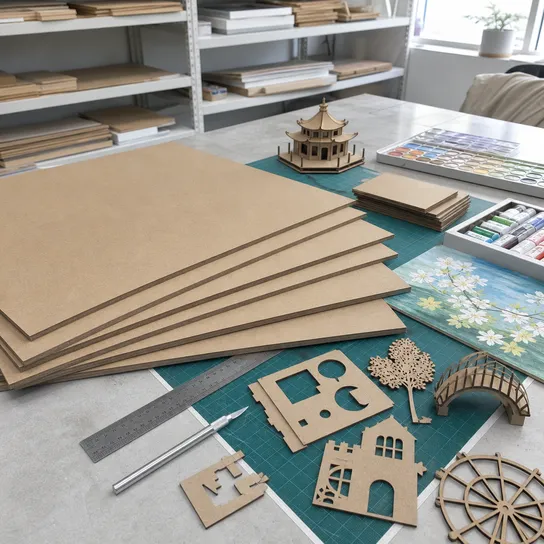
The smooth, hard surface of 3mm hardboard is well-suited to painting, drawing, and mixed-media art. Widely used by artists as a rigid, affordable alternative to canvas board. Also used in model-making and hobby fabrication.
- Artist painting panels
- Model-making substrates
- Hobby and DIY project boards
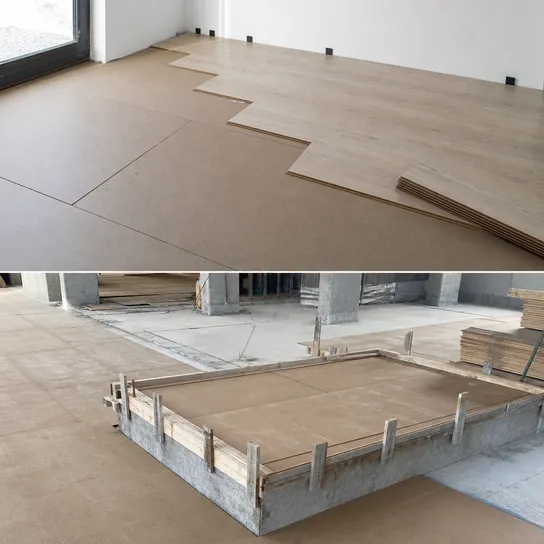
Flooring Underlay & Formwork
Used as a levelling underlay beneath vinyl, laminate, and engineered wood flooring. Also used as temporary formwork and surface protection on construction sites where a thin, rigid, disposable board is needed.
- Flooring levelling underlay
- Temporary site surface protection
- Lightweight formwork panels
Not Sure Which Application Fits?
Our team works with importers, distributors, and manufacturers across furniture, construction, and display industries. If you have a specific end-use in mind, we can advise on the right surface finish, panel size, and emission standard for your market.
How We Produce 3mm Hardboard: The Process Details That Affect Your Order
Hardboard production starts with wood fiber — typically a mix of softwood and hardwood fiber, refined to a consistent particle size and dried to a controlled moisture level before pressing. The fiber mat is formed, pre-pressed to remove air, then hot-pressed under high pressure and temperature to bond the fibers without added adhesive.
Standard hardboard uses the lignin naturally present in wood fiber as the binder — which is why it qualifies as a low-emission product and why CARB P2 compliance is achievable without reformulating the resin system.
At 3mm, the press cycle is shorter than for thicker panels, but the pressure profile matters more. Too little pressure and you get a panel with low internal bond — it'll delaminate at the edges when cut. Too much and you compress the fiber beyond the target density range, which makes the panel brittle and prone to cracking under bending loads.
We run the press parameters for 3mm on a separate calibration profile from our 4.75mm and 6mm panels, not just a scaled-down version of the thicker-panel settings. The press temperature runs at 180–200°C, and the press time is adjusted to achieve full fiber consolidation without over-curing the surface.
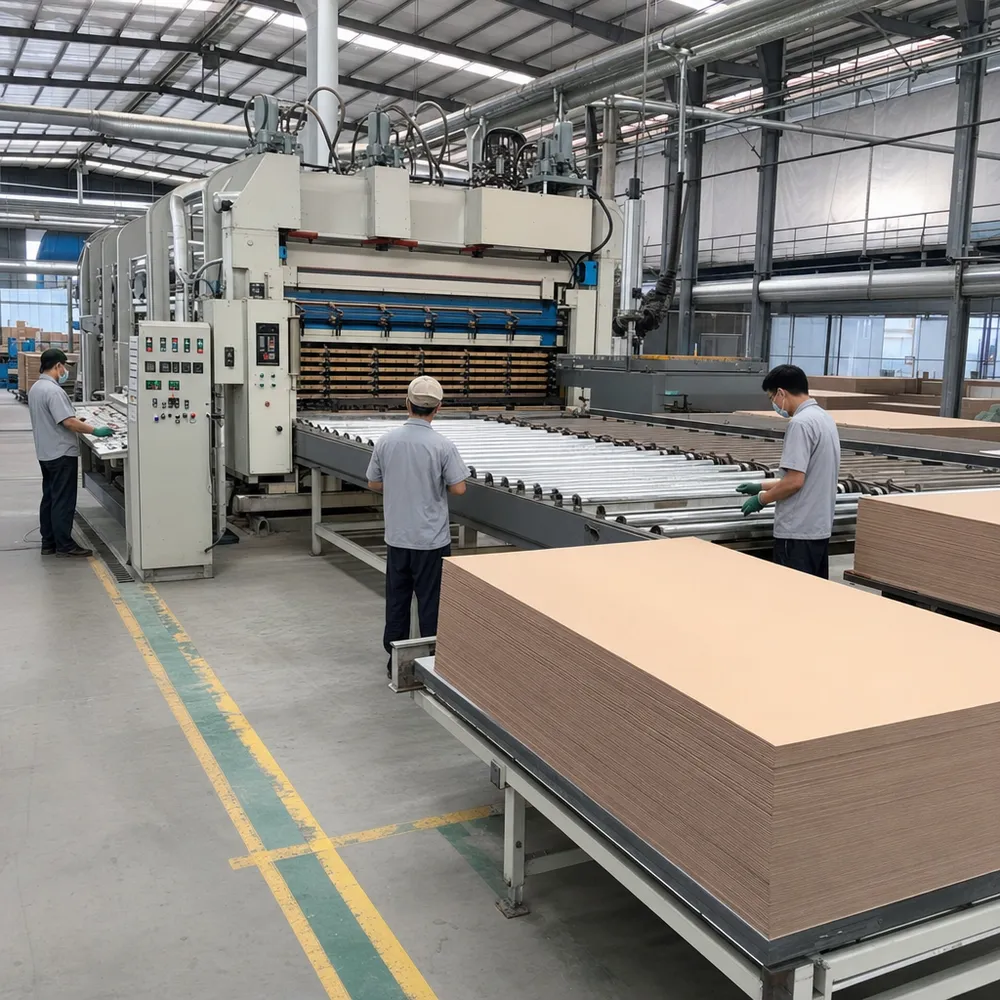
Press Parameters: 3mm Profile
Post-Press Sanding and Thickness QC
Post-press, every panel goes through a calibrated wide-belt sander. The sanding pass does two things: it brings the panel to final thickness within tolerance, and it produces the smooth face surface that makes 3mm hardboard useful as a substrate.
We check thickness at five points across each panel — center and four corners — and any panel outside ±0.2mm is pulled before packing.
FSC Chain-of-Custody Fiber Sourcing
The fiber sourcing for FSC-certified orders is tracked through our chain-of-custody system. If your buyers or end customers require FSC documentation, we can supply it.
The certification covers our full hardboard range, not just selected SKUs — so you're not limited to a subset of panel sizes or surface finishes when specifying FSC.
Where 3mm Hardboard Moves: Market Segments Worth Sourcing For
3mm hardboard serves multiple buyer types across distinct industries. Understanding where volume concentrates helps you position inventory and identify reorder patterns before your first container lands.
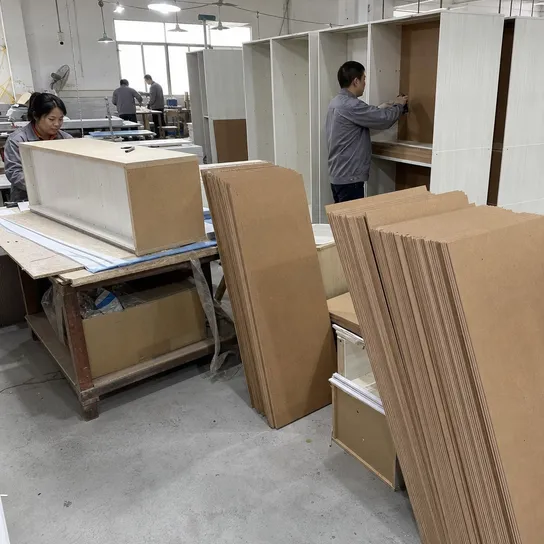
Furniture Back Panels and Drawer Bottoms
Highest Volume SegmentThis is the highest-volume segment for 3mm hardboard globally. Flat-pack furniture manufacturers use it by the container load: a single production run of a wardrobe or bookcase line can consume thousands of back panels per week.
The 3mm format keeps finished furniture weight down — relevant for e-commerce shipping cost calculations — while providing a flat, smooth surface that takes printed paper overlay or direct painting without telegraphing fiber texture.
If you're supplying flat-pack furniture manufacturers or furniture component distributors, 3mm hardboard is a repeatable, high-frequency reorder SKU.
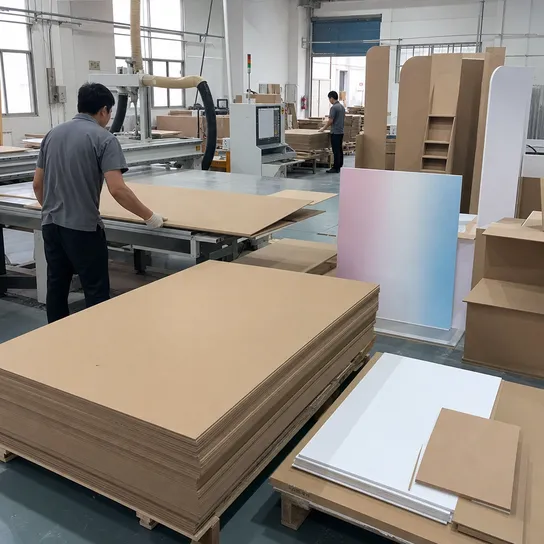
Display and Exhibition Systems
Smaller Orders, Higher FrequencyTrade show display manufacturers, retail fixture suppliers, and point-of-sale display producers use 3mm hardboard as a substrate for printed graphics panels, pegboard backing, and lightweight display structures. The smooth face takes adhesive-backed vinyl and direct digital printing cleanly.
Order patterns in this segment tend to be smaller but more frequent — display companies often run custom sizes for specific booth configurations, which is where our custom-cut capability becomes relevant.
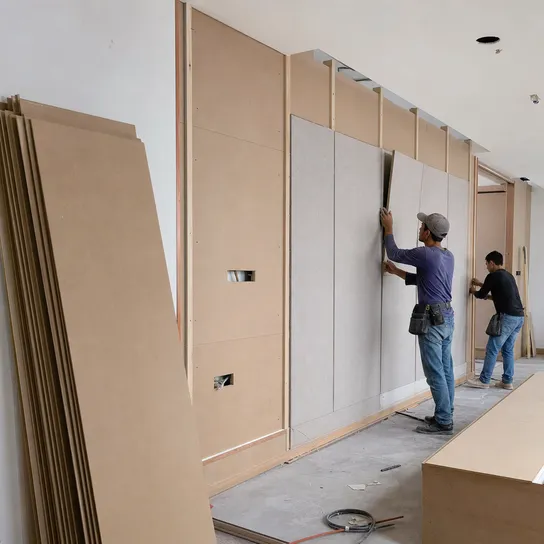
Interior Cladding and Wall Paneling Substrates
Middle East & Southeast Asia VolumeIn residential and light commercial fit-out, 3mm hardboard is used as a substrate layer behind decorative wall panels, as a smooth backing for fabric-wrapped panels, and as a thin underlayment in flooring applications. Contractors and interior fit-out suppliers in the Middle East and Southeast Asia markets use it in volume for hotel and apartment fit-out projects.
sheets of 3mm hardboard for wall substrate applications in a single mid-size hotel fit-out project
Craft, Hobby, and Art Supply Distribution
Higher Per-Unit Margin3mm hardboard is a standard product in the craft and art supply channel: painting boards, model-making substrates, laser-cutting stock. This segment buys in smaller quantities but at higher per-unit margins, and it's a useful channel for distributors who want to move hardboard across multiple buyer types without holding separate SKUs.
The same panel that goes to a furniture factory also sells to a craft distributor — your inventory works harder.
Mixed-Channel Distribution Model
We've seen buyers in Australia and the UK build a mixed-channel distribution model around 3mm hardboard specifically because of this versatility — furniture trade on one side, craft and art supply on the other, same SKU. One inventory position serves multiple buyer types, which improves stock turn and reduces the risk of slow-moving panels.
Explore Related Hardboard Products
Customization Parameters for 3mm Hardboard
The standard panel is 1220 × 2440mm, S1S (one smooth face). Here's what we can adjust on confirmed orders.
Available Order Parameters
Custom dimensions available; minimum order quantity applies for non-standard sizes
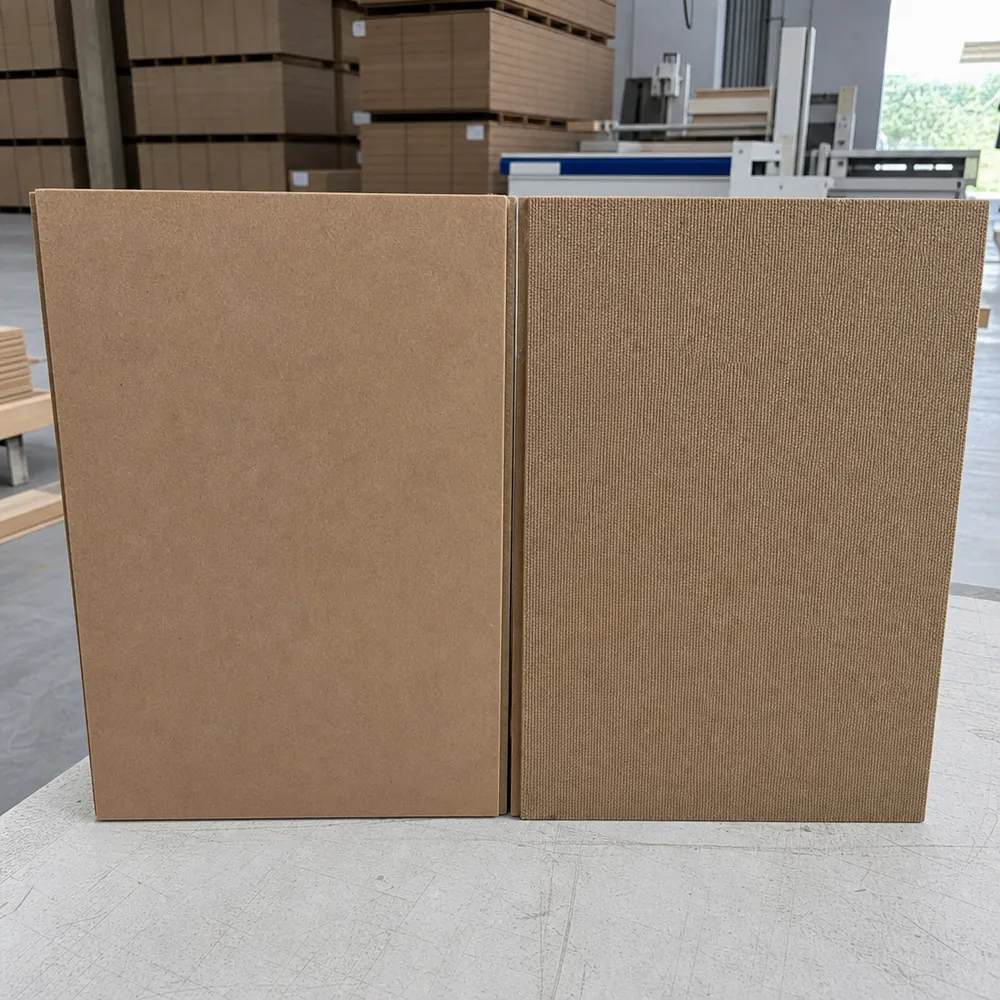
S1S: one smooth face, one mesh/textured back. S2S: two smooth faces.
FSC chain-of-custody available; CARB P2 documentation included as standard for US-bound orders
Standard bundle and strap; moisture-resistant film wrap available for ocean transit
OEM labeling and private-label packaging available on qualifying order volumes
S1S vs. S2S: Which to Specify
S2S panels carry a small premium over S1S — the second sanding pass adds time and increases the reject rate slightly because both faces have to meet the surface grade standard. For applications where only one face is visible (furniture backs, drawer bottoms), S1S is the right call and keeps your landed cost lower.
Custom Sizes: How Pricing Works
Custom sizes below 1220 × 2440mm are cut from full panels — there's no tooling cost, but yield loss on non-standard dimensions affects the per-unit price. We'll quote based on your target dimensions and volume so you can see the actual cost before committing.
Get a Custom Dimensions Quote
Send us your target dimensions and volume for a custom quote. We'll confirm yield, per-unit pricing, and lead time before you commit.
Send Dimensions & VolumeCompliance and Certification: What Clears Customs in Your Market
Every major import market has its own formaldehyde emission and documentation requirements. Here's what we cover as standard and what's available on request.
US Market Standard
California Air Resources Board Phase 2 governs hardboard sold into the US market. Our 3mm hardboard is produced to CARB P2 as the default export specification, not as an upgrade option.
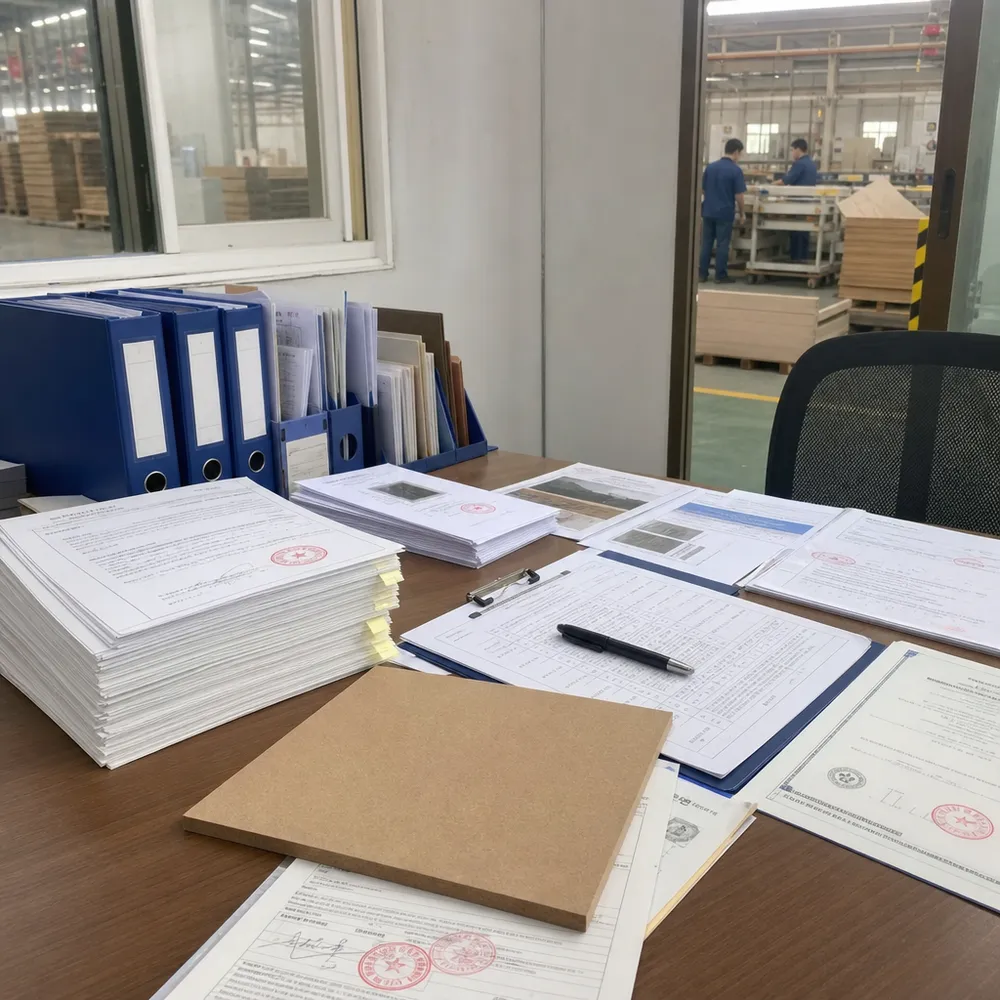
The full CARB documentation package — including the composite wood product (CWP) certification and test reports — is prepared as standard for US-bound shipments.
Sustainability Sourcing
For buyers with sustainability sourcing policies or who supply into markets where deforestation-linked supply chains create regulatory or reputational risk. FSC documentation is available on request.
Our chain-of-custody certification covers the full hardboard range.
European Market
Relevant for buyers supplying into European construction and building material applications. CE declaration of conformity is included for EU-bound shipments.
Included as standard for EU-bound shipments.
Quality Management
Our QMS certification covers the full production process, including incoming fiber inspection, in-process press parameter monitoring, and outgoing thickness and surface grade inspection.
Audit reports available on request.
CARB P2: Already Covered for US Imports
If you're importing into the US or supplying buyers who sell into California, CARB P2 compliance is already covered. The documentation package — CWP certification and test reports — is prepared as standard for US-bound shipments, not assembled on request.
This matters at the customs stage: US Customs and Border Protection requires importers to maintain CARB documentation for composite wood products. Having the full package ready before the shipment departs removes a common delay point.
Other Market Standards
For buyers supplying into markets with specific formaldehyde emission requirements beyond CARB P2 — Japan's F★★★★ standard, for example — contact us to confirm the applicable test standard. We'll advise on whether our standard production specification meets it or whether a specific test report is needed.
Certifications at a Glance
Container Loading and Landed Cost Efficiency
3mm hardboard is one of the more container-efficient panel products we ship. Understanding how loading density affects your per-sheet freight cost is essential to accurate landed cost calculations.
Loading Density Advantage
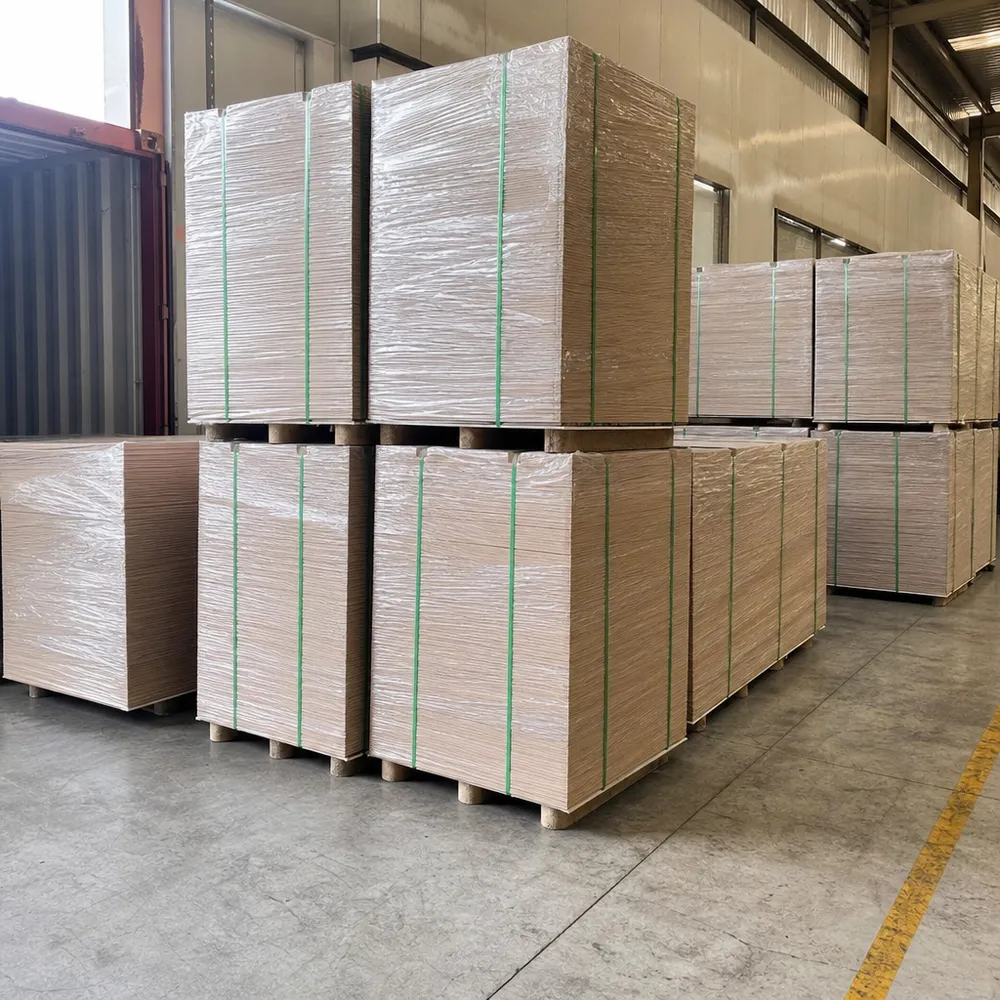
At 3mm thickness, a standard bundle of 1220 × 2440mm panels stacks to a much lower height per unit than thicker panels. A 40HQ container typically loads:
That loading efficiency directly affects your landed cost per sheet. The FOB price per sheet is only part of the calculation — the number of sheets per container determines your freight cost per unit, and that number varies based on how the supplier packs and loads.
Loading Plan & Documentation
We provide a loading plan with every shipment so your freight forwarder and receiving team know exactly what to expect. Each bundle includes:
- Corner board edge protection and moisture-resistant film wrap for ocean transit
- Bundle marking: product specification, quantity, batch number, and destination port
- CARB documentation included in shipping package for US-bound shipments
- CE declaration included for EU shipments
Transit Times from Xuzhou
Transit times depend on routing and port of discharge. Contact us for a routing-specific estimate.
Comparing suppliers on FOB price alone understates the real cost difference.
Bundle configuration and packing method affect sheets-per-container, which directly determines your freight cost per unit. When requesting quotes, ask each supplier for their loading plan and confirmed sheet count per 40HQ — not just the FOB price per sheet.
3mm Hardboard vs. Sibling Products: Choosing the Right Format
The hardboard range covers several distinct product types. Here's where 3mm hardboard fits relative to the others — and when a different format is the better sourcing decision.
3mm Hardboard
This page 3mmFurniture backs, drawer bottoms, display substrates, thin cladding — where weight and stack height matter. Best container loading efficiency in the hardboard range.
Hardboard Sheet
4.75mm–6mmGeneral-purpose hardboard applications requiring more rigidity. When structural stiffness matters more than weight or stack height.
View productHardboard Paneling
3mm–6mmWall cladding and decorative paneling applications with surface treatment. When the end use is visible interior surfaces.
View productHardboard Furniture Board
3mm–6mmFurniture-specific grades with tighter surface quality standards. When your buyers' QC process requires stricter surface consistency than general-purpose hardboard.
View productPrimed Hardboard
3mm–6mmReady-to-paint surface; eliminates your buyer's priming step. If your buyers need a surface that's ready to paint without additional priming, this eliminates a processing step in their workflow and can justify a higher selling price.
View productMasonite Hardboard
3.2mm–6mmMasonite-type specification for North American market requirements. If the application requires a specific Masonite-type specification for North American building codes or retail channel requirements, this is the right product.
View product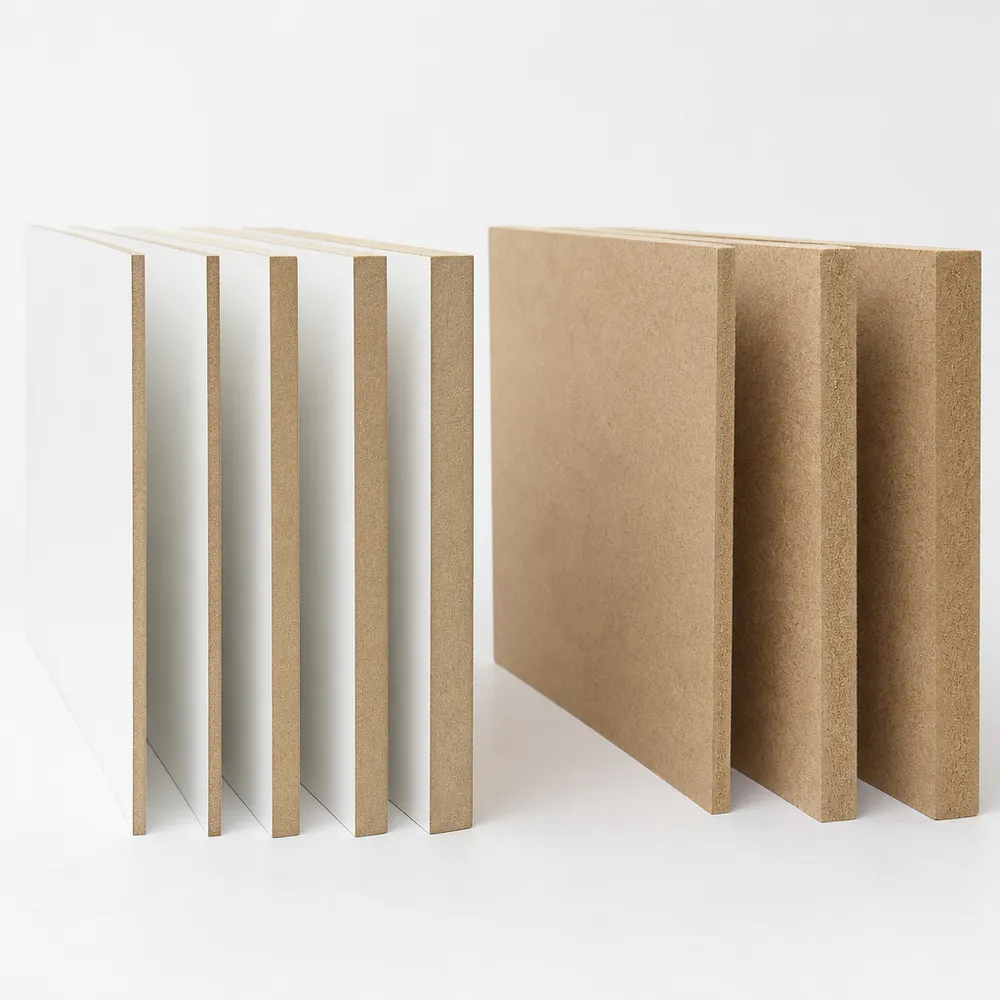
| Product | Thickness | Best For |
|---|---|---|
| 3mm Hardboard This page | 3mm | Furniture backs, drawer bottoms, display substrates, thin cladding — where weight and stack height matter |
| Hardboard Sheet | 4.75mm–6mm | General-purpose hardboard applications requiring more rigidity |
| Hardboard Paneling | 3mm–6mm | Wall cladding and decorative paneling applications with surface treatment |
| Hardboard Furniture Board | 3mm–6mm | Furniture-specific grades with tighter surface quality standards |
| Primed Hardboard | 3mm–6mm | Ready-to-paint surface; eliminates your buyer's priming step |
| Masonite Hardboard | 3.2mm–6mm | Masonite-type specification for North American market requirements |
When to choose Primed Hardboard instead
If your buyers need a surface that's ready to paint without additional priming, primed hardboard eliminates a processing step in their workflow and can justify a higher selling price.
When to choose Masonite Hardboard instead
If the application requires a specific Masonite-type specification for North American building codes or retail channel requirements, masonite hardboard is the right product.
Frequently Asked Questions
Technical and commercial questions we hear most often from importers and distributors sourcing 3mm hardboard.
What is the standard thickness tolerance on your 3mm hardboard?
We hold ±0.2mm on the sanding line, verified at five measurement points per panel — center and four corners. Any panel outside that tolerance is pulled before packing. For automated processing equipment such as edge banders, CNC routers, and laminating lines, this tolerance level prevents feed errors and surface defect rates that come from thickness variation within a batch.
Can 3mm hardboard be used for laser cutting?
Yes. 3mm hardboard is a standard laser-cutting substrate in the craft and signage industries. The consistent density and smooth face produce clean cut edges with minimal charring at standard CO₂ laser settings. For buyers supplying laser-cutting operations or craft distributors, this is a relevant selling point. Confirm the specific fiber composition and density with us if your buyer has tight requirements on cut quality.
What formaldehyde emission standard does your 3mm hardboard meet?
Our standard export specification meets CARB P2, which is the most stringent formaldehyde emission limit in our major export markets. E1 is also available. Standard hardboard produced without added urea-formaldehyde resin — using only the lignin binder from the wood fiber — typically achieves very low emission levels. We test and certify to CARB P2 as the documented standard rather than relying on the production method alone. Test reports are available on request.
What is the minimum order quantity for 3mm hardboard?
MOQ varies by specification — standard S1S panels in 1220 × 2440mm have a lower MOQ than custom sizes or S2S. Contact us with your target volume and we'll confirm the MOQ and lead time for your specific requirement. Most buyers in this product category start with a container-load trial order to verify the specification against their downstream application before committing to larger volumes.
How does 3mm hardboard compare to 3mm MDF for furniture back panels?
3mm hardboard is denser and harder than 3mm MDF at the same thickness — hardboard typically runs 800–1000 kg/m³ versus 650–750 kg/m³ for standard MDF. That density difference means hardboard holds fasteners better at the edge and is more resistant to surface denting. The trade-off is that hardboard is less workable for routing or profiling — if your buyer needs shaped edges or routed grooves, MDF is easier to machine. For flat back panels and drawer bottoms where the panel is cut to size and installed flat, hardboard is the more durable choice at equivalent thickness.
- Flat back panels and drawer bottoms
- Applications requiring edge fastener retention
- Higher surface dent resistance
- Density: 800–1000 kg/m³
- Shaped edges and routed grooves
- Profiled or machined panel edges
- Easier workability for complex cuts
- Density: 650–750 kg/m³
Get a Quote for 3mm Hardboard
Send us your panel dimensions, target volume, destination market, and any certification requirements — we'll come back with a detailed quote and the relevant documentation for your import requirements.
Most buyers in this category start with a sample order to verify the thickness tolerance and surface quality against their downstream application. We can arrange samples before you commit to a container order.
Thickness tolerance ±0.2mm, verified at 5 points per panel
CARB P2 certified — test reports available on request
Custom sizes and S2S available — confirm MOQ with us
Samples available before container commitment
Xuzhou QD Wood Industry Co., Ltd.
[email protected]
Phone / WhatsApp
+8615852005272
Address
No. 88 Sanbao Industrial Park, Tongshan District,
Xuzhou, Jiangsu Province, 221116, China