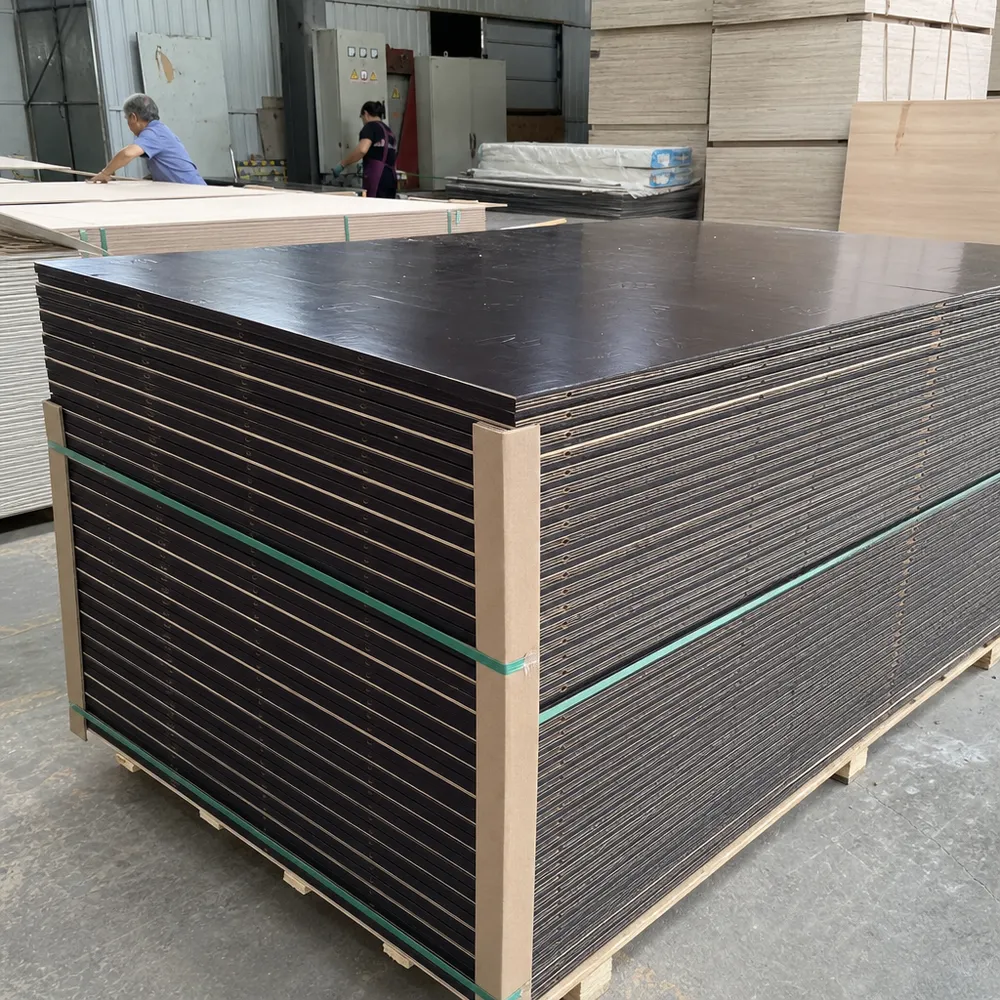
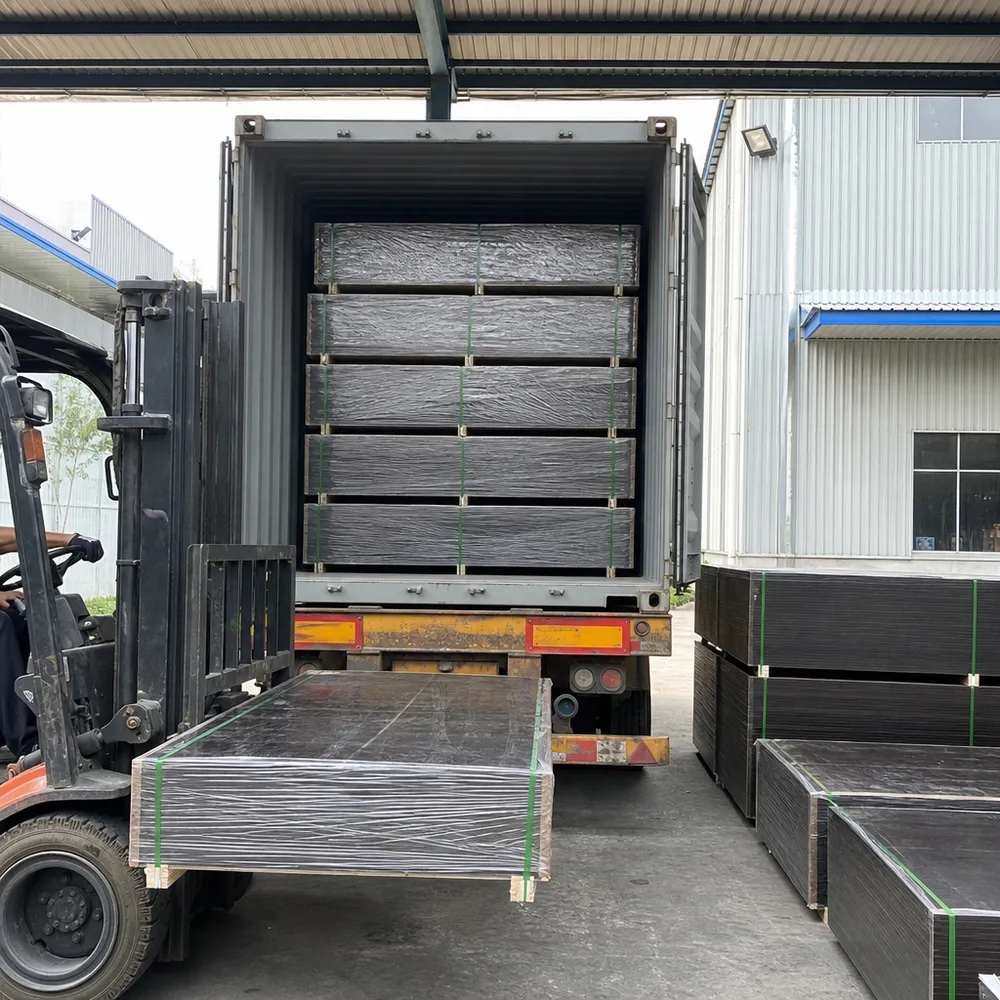
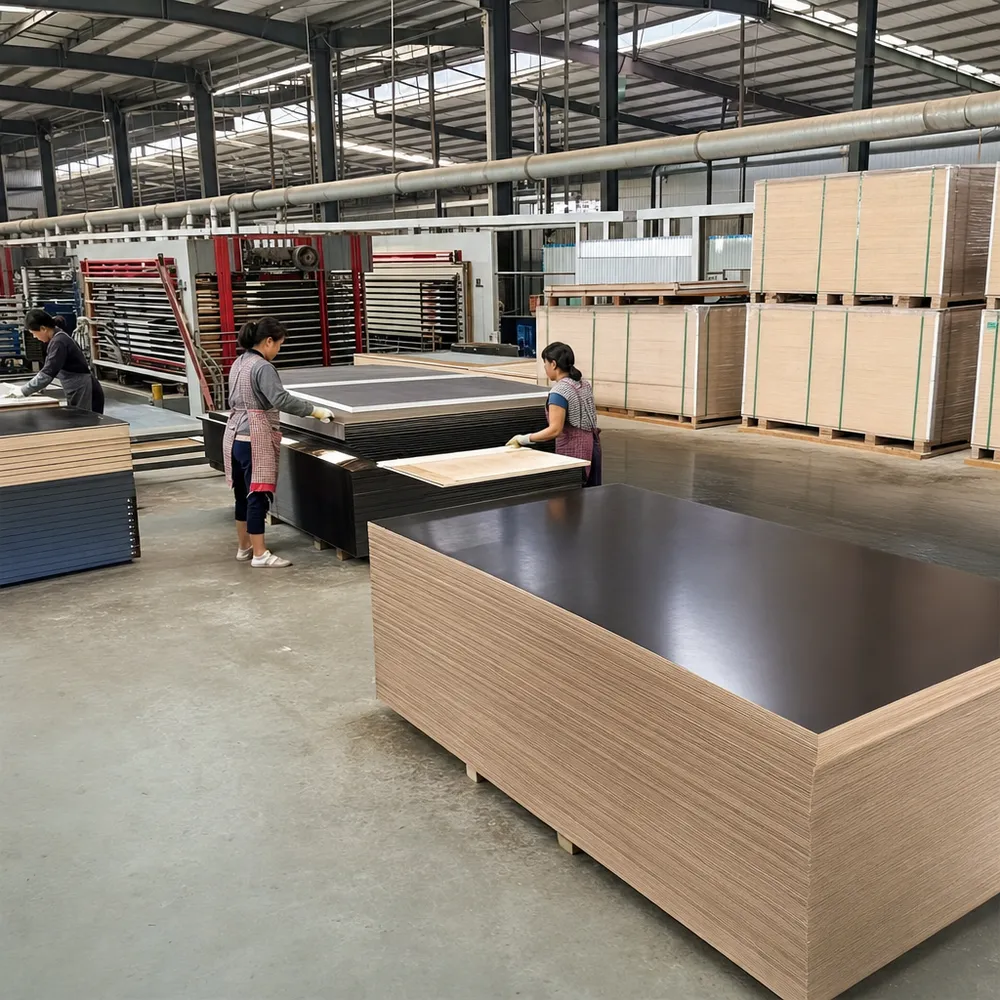
Waterproof Film Faced Plywood Built for Repeated Wetting Cycles
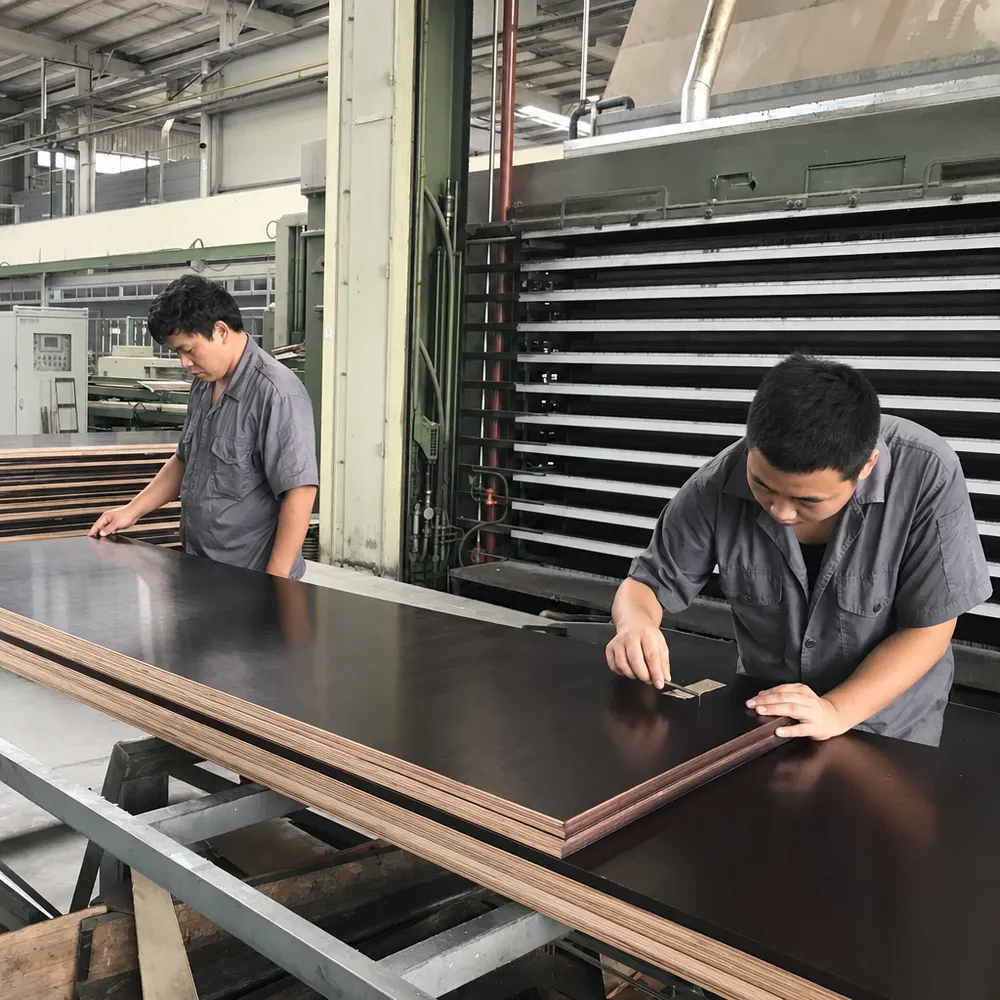
The difference between standard and waterproof specification is the glue bond in the inner plies. We run WBP (Weather and Boil Proof) adhesive throughout the full core construction — not just on the face layers — so the panel holds together when it's soaked, dried, and soaked again on a construction site.
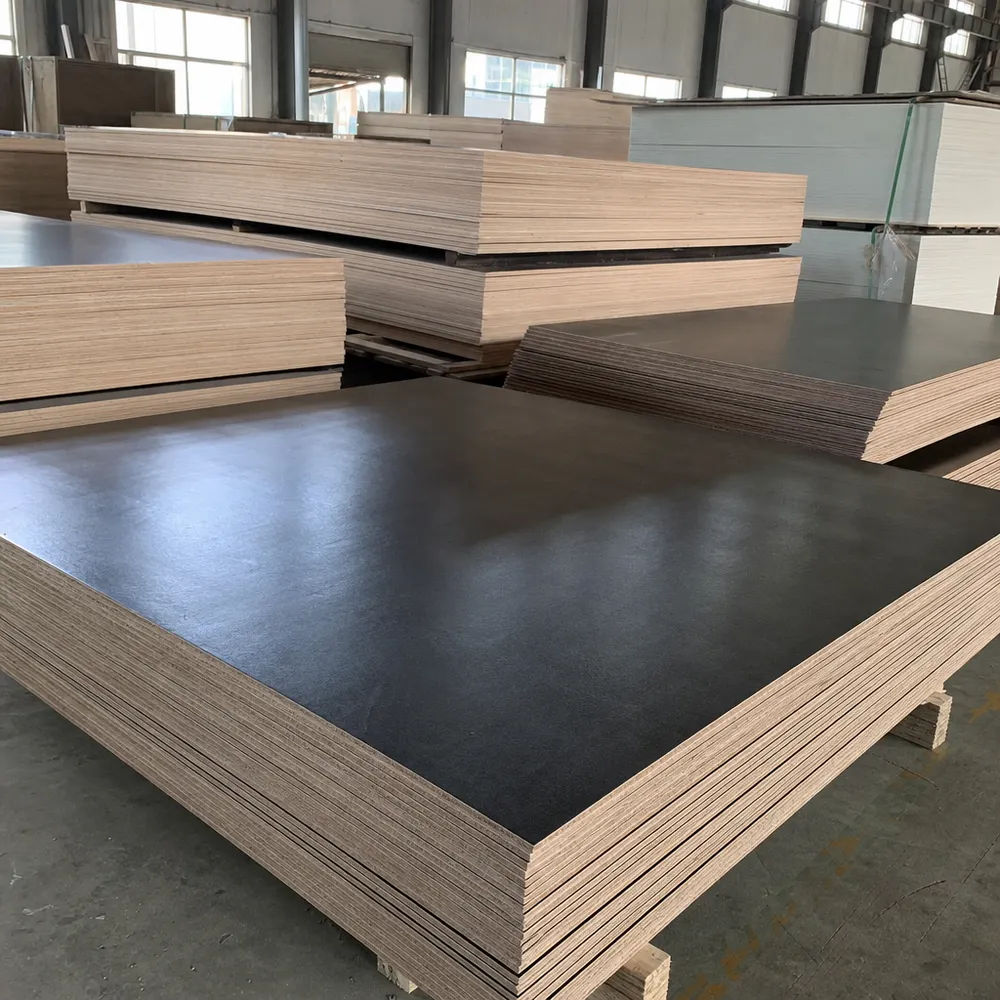
What Makes This Panel Waterproof — and Why the Distinction Matters for Your Buyers
Most film faced plywood on the market uses WBP glue bond on the face layers and MR (moisture resistant) bond on the inner core plies. That's a cost decision, not a performance decision.
MR bond is cheaper, and for dry or semi-protected applications, it's adequate. The problem shows up when the panel is repeatedly soaked and dried: the inner plies absorb moisture differentially, the MR bond softens under sustained wet conditions, and the core begins to delaminate from the inside out. The face film looks intact. The panel is structurally compromised.
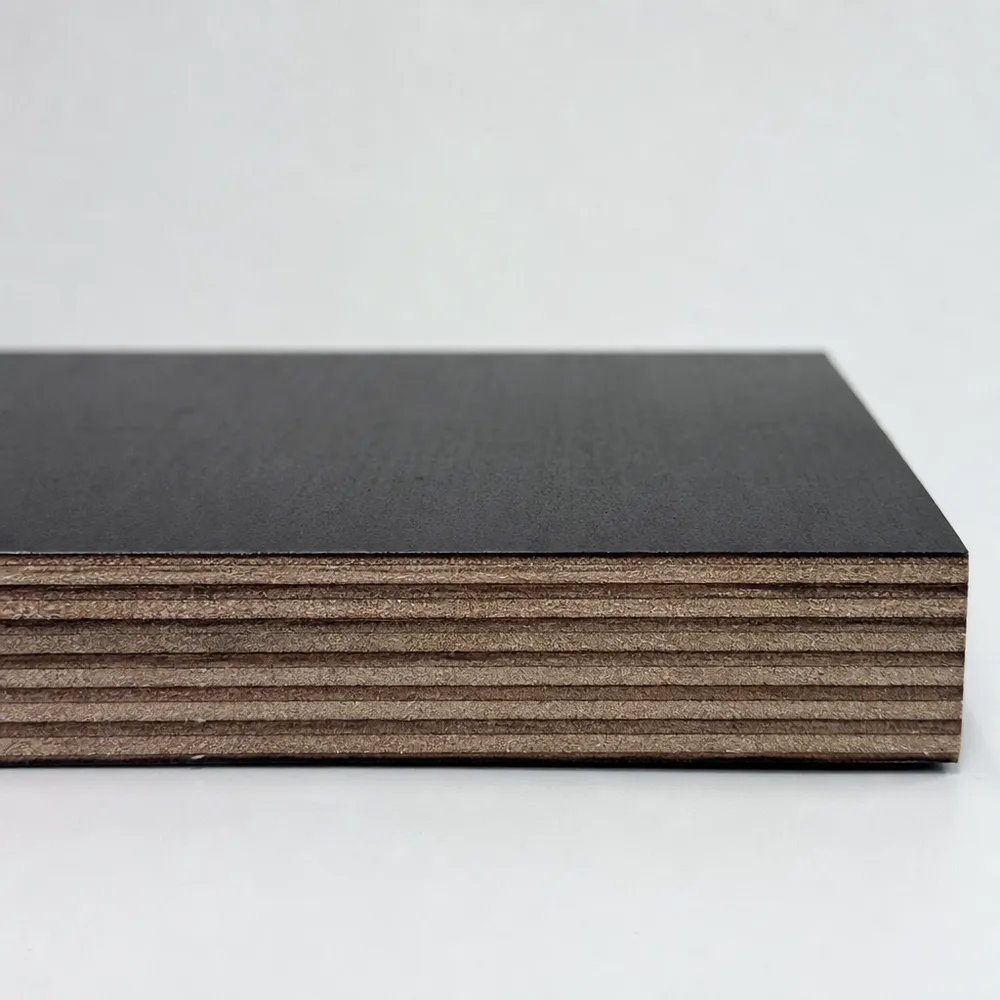
Waterproof film faced plywood uses WBP adhesive throughout — face layers and every inner ply in the core construction.
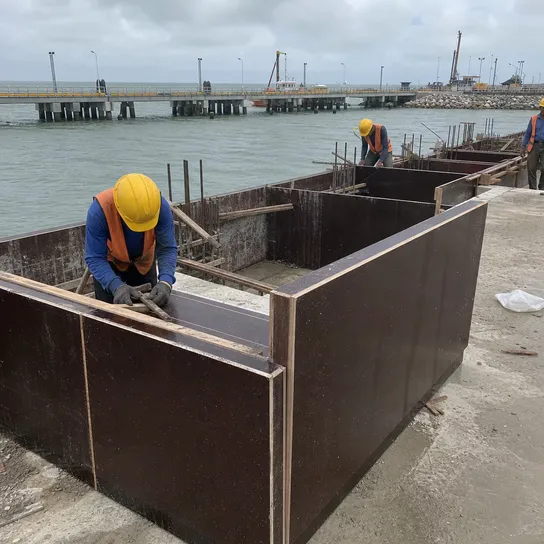
WBP bond is a phenolic resin adhesive that maintains its bond strength after boiling water immersion testing (the test that gives it the name). When the panel is exposed to standing water, repeated rain cycles, or high-humidity site conditions, the bond integrity holds across the full cross-section, not just at the surface.
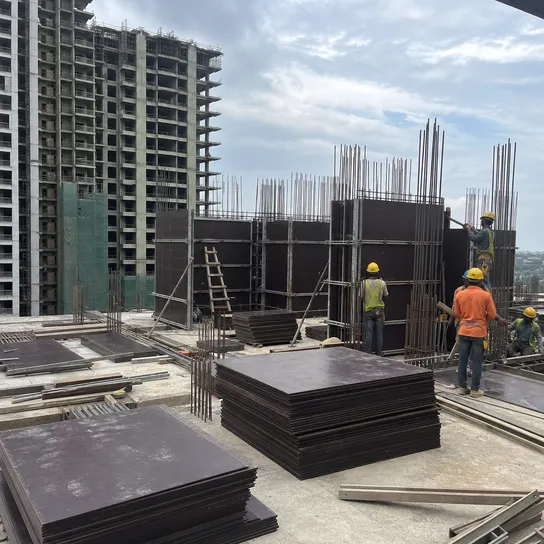
We've been running WBP-throughout construction since we started exporting to Gulf and Southeast Asian markets in the early 2010s. Buyers in those climates were getting core delamination failures on standard-spec panels after two or three monsoon seasons — the face film was fine, but the core was separating. Switching to full WBP bond eliminated that failure mode.
Cost Difference: Real but Modest
The cost difference per panel is typically 8–12% over standard MR-core construction. For buyers supplying high-humidity markets, the reduction in warranty claims and replacement orders more than covers it.
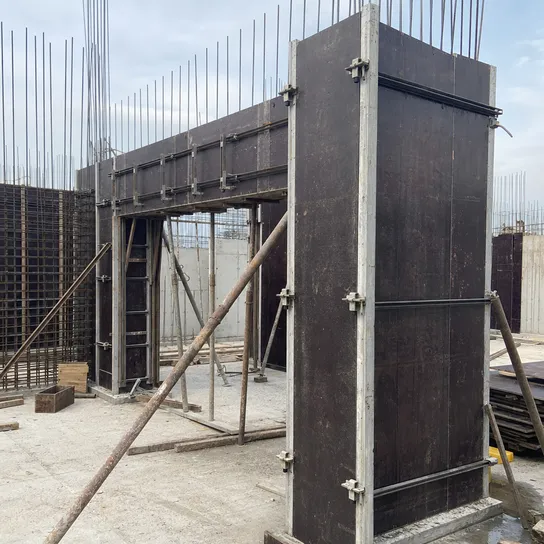
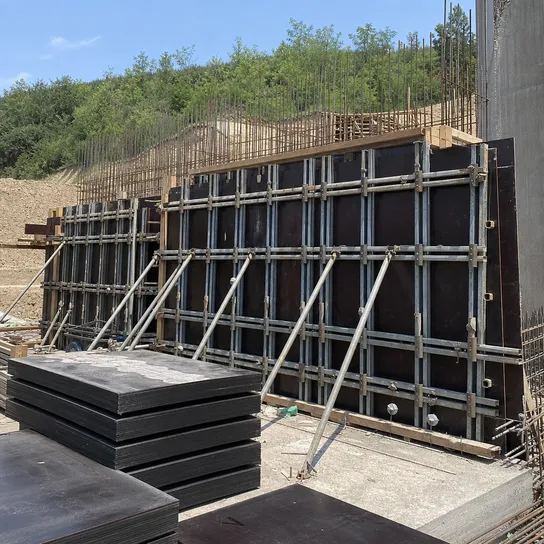
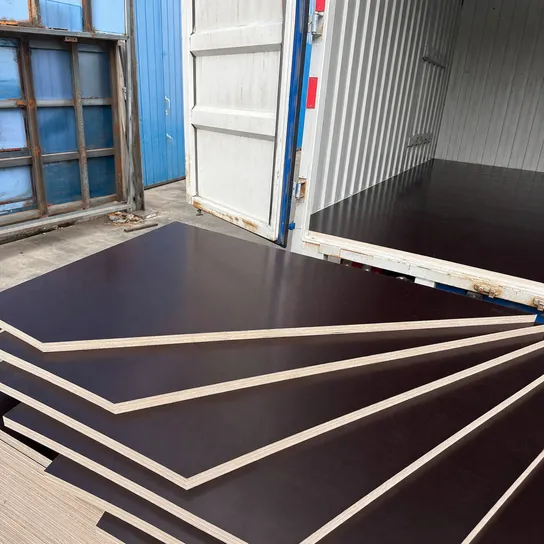
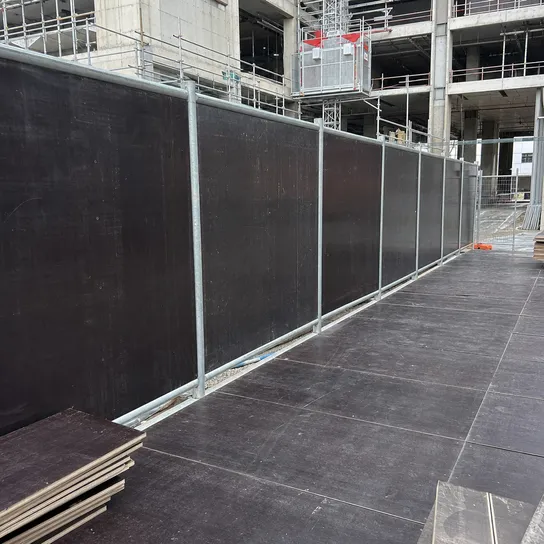
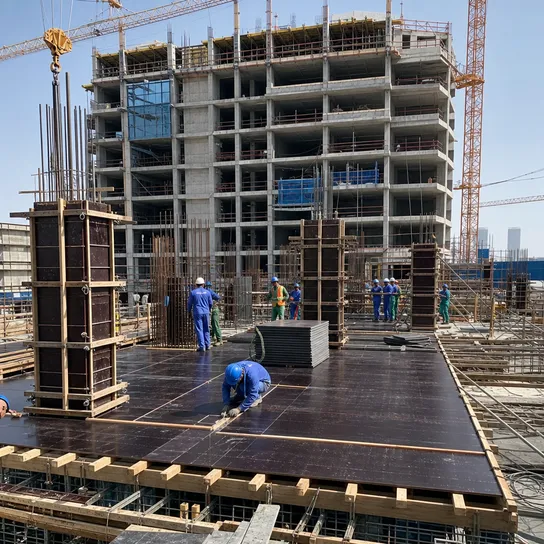
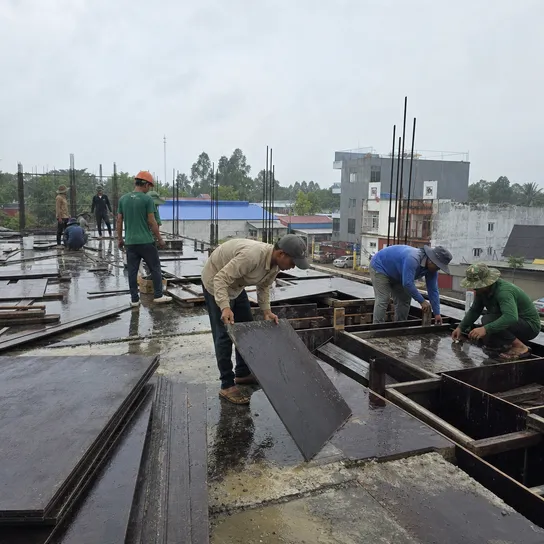
The phenolic film overlay on the face adds the second layer of waterproof protection: a thermosetting resin surface that resists moisture absorption, concrete alkalinity, and mechanical abrasion. Together, the WBP core bond and phenolic face film make this the specification for projects where the panel will be exposed to sustained moisture — not just occasional rain, but standing water, tropical humidity, and repeated wet-dry cycling over a construction season.
WBP Throughout
Phenolic resin adhesive in every ply — face and core — not just the surface layers.
Phenolic Film Face
Thermosetting resin surface resists moisture absorption, concrete alkalinity, and abrasion.
8–12+ Reuse Cycles
Bond integrity holds through repeated wet-dry cycling across a full construction season.
Gulf & Tropical Markets
Proven in high-humidity climates since the early 2010s — eliminates monsoon-season delamination failures.
Technical Specifications
Specifications shown are industry-standard values for this product type. Actual specifications may vary by order. Contact us for detailed product data sheets and confirmation of exact parameters.
Waterproof Film Faced Plywood — Full Specification
| Parameter | Specification |
|---|---|
| Glue Bond | WBP throughout all plies |
| Film Type | Phenolic resin film |
| Film Weight | 120–220 g/m² Standard export: 160–180 g/m² |
| Film Color | Brown (standard); black available on specification |
| Core Species | Poplar, hardwood, or mixed hardwood (specify on order) |
| Thickness | |
| Panel Size | 1220×2440mm standard; custom dimensions available |
| Moisture Content | 8–12% Verified at veneer stage |
| Thickness Tolerance | ±0.2mm (calibrated sanding) |
| Formaldehyde Emission |
CARB P2 E1 (specify on order)
|
| Edge Treatment | Sealed on export-grade panels |
| Reuse Cycles | 8–12+ (phenolic film, WBP bond, proper site handling) |
| Certifications |
ISO 9001:2015 CE FSC CARB P2
|
Specification Notes
- Film weight directly affects reuse cycle count and surface hardness. Specify 180 g/m² or above for high-cycle formwork applications.
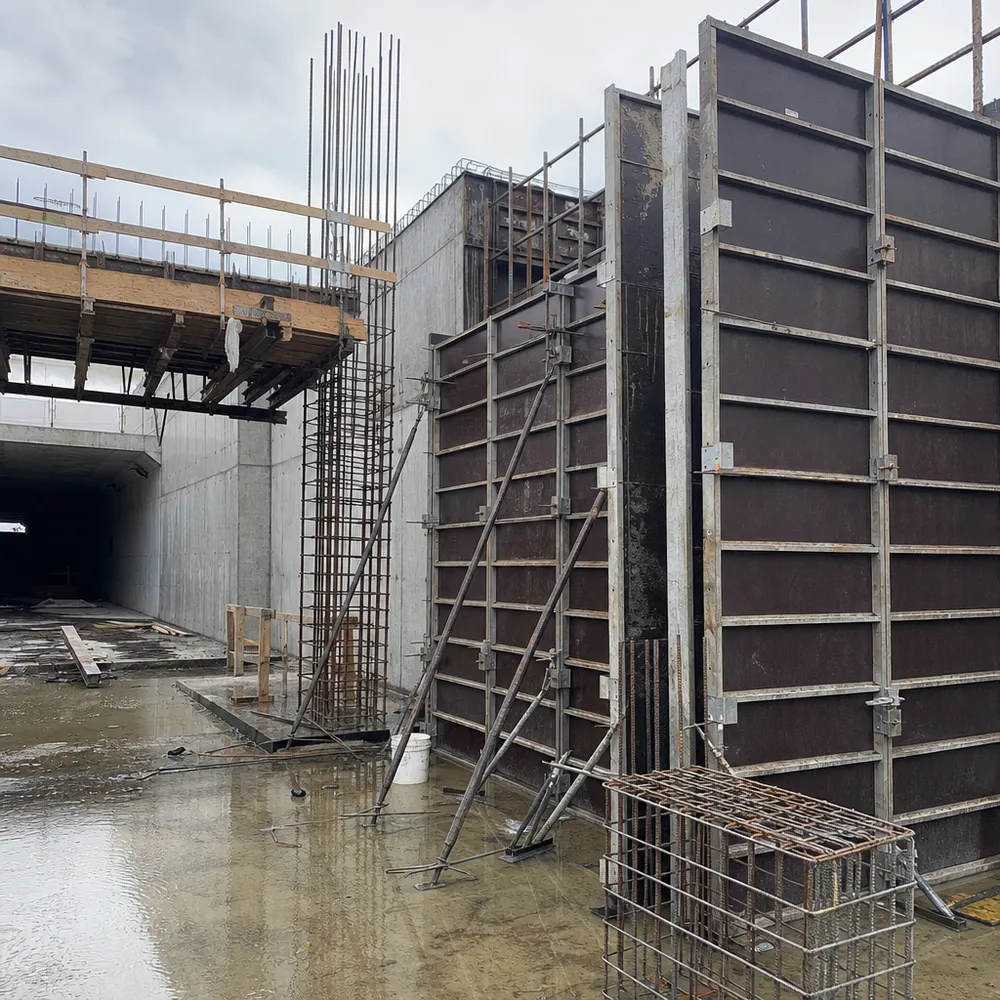
- Poplar core panels are lighter and suit residential formwork; hardwood core panels offer higher MOR and suit heavy civil or infrastructure pours.
- Edge sealing is standard on export-grade panels. Unsealed edges must be site-treated before first use in wet conditions.
- CARB P2 and E1 compliance is available on confirmed orders. Specify at time of inquiry — not all stock carries both certifications simultaneously.
Quick Reference
Most-requested parameters at a glance
Certifications Available
ISO 9001:2015
Quality management system
CE Marking
European conformity standard
FSC Certified
Responsible forest sourcing
CARB Phase 2
Low formaldehyde emission
Need a Full Data Sheet?
Request a detailed product data sheet with test reports, bond strength values, and compliance documentation for your procurement team.
Request Data Sheet