

HPL Plywood Sheet — Factory-Direct
High pressure laminate plywood sheet with a structural plywood core — built for surfaces that take daily punishment and can't be replaced every season. We press HPL directly onto calibrated plywood cores at our 18,000 m² facility in Xuzhou. Every panel ships with the certification documentation your import market requires.
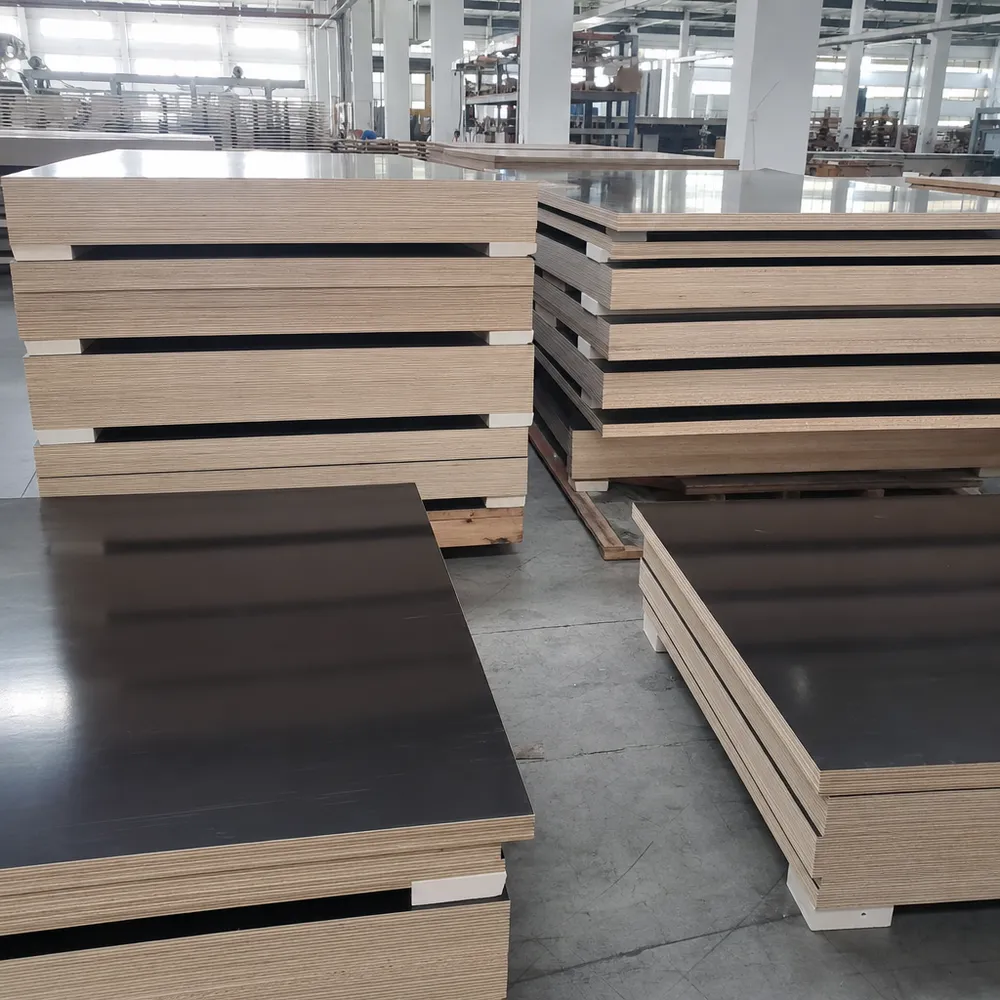
What Makes an HPL Plywood Sheet Different from Standard Laminate Board
The distinction matters when you're sourcing for applications where the substrate has to carry structural load while the surface handles abrasion, moisture, and cleaning cycles. An HPL plywood sheet combines a cross-grain plywood core — which resists warping and holds fasteners — with a high pressure laminate face bonded under heat and pressure, typically 1,000–1,400 psi, that produces a surface hardness and chemical resistance no paint or low-pressure melamine overlay can match.
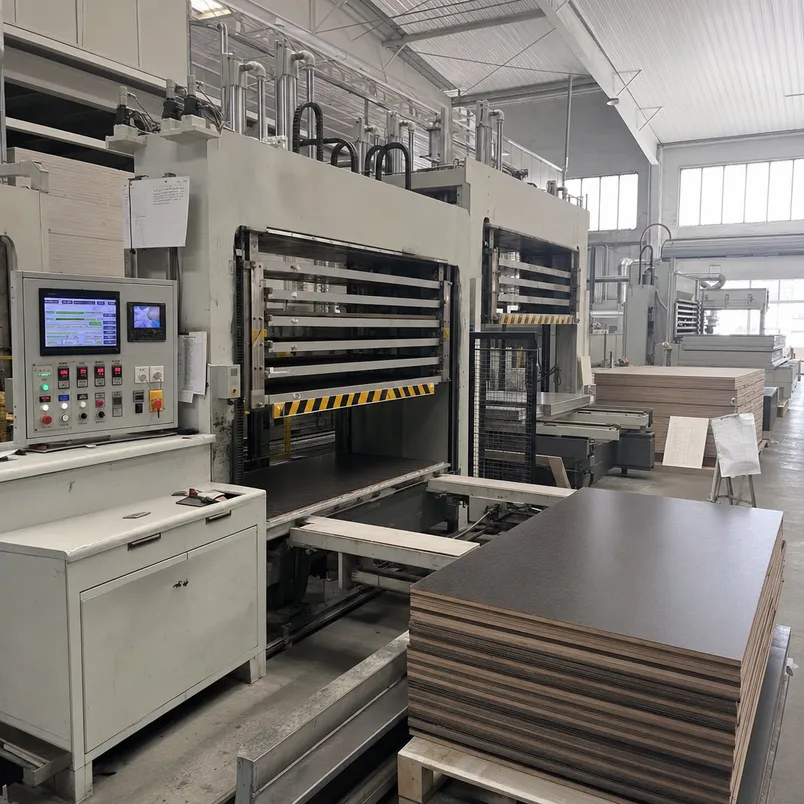
We run this product on a dedicated lamination line separate from our melamine-faced panels. The reason is process temperature: HPL bonding requires a different press cycle than melamine paper — higher initial pressure, controlled cooling rate — and mixing the two on the same line produces inconsistent adhesion at the HPL-to-core interface.
Why We Separate the Lines
We learned this early on when scaling up the HPL range. Delamination failures were subtle — panels passed visual inspection but failed peel tests at 60°C. Separating the lamination lines from melamine production fixed it. The result is an HPL plywood board where the laminate stays bonded through humidity cycling, cleaning chemical exposure, and the kind of edge impact that happens in real commercial environments.
This is the sheet-format product in our HPL plywood range — full panels in standard and custom dimensions, sold to distributors, fabricators, and project buyers who cut to size downstream.
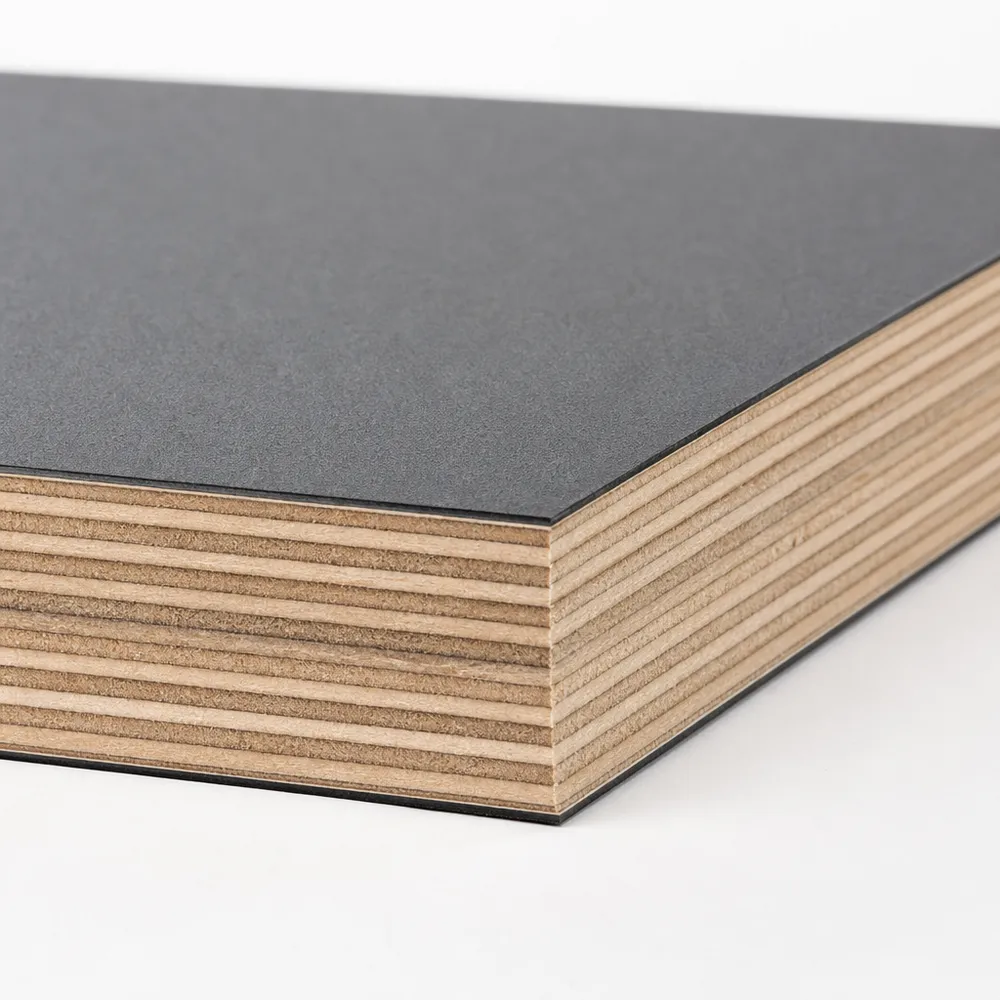
Cross-Grain Plywood Core
Resists warping and holds fasteners under structural load — unlike MDF or particleboard substrates.
1,000–1,400 psi Bond
High-pressure lamination produces surface hardness and chemical resistance that paint or melamine overlay cannot match.
Dedicated Press Line
Separate from melamine production — different press cycle, controlled cooling rate, consistent adhesion at the HPL-to-core interface.
Peel-Test Validated
Face bond strength ≥1.0 MPa verified by cross-cut adhesion test. Panels that pass visual inspection also pass 60°C peel tests.
Application-Specific Configurations
If you need application-specific configurations, we also produce these products — each optimized for its end use rather than being a generic sheet cut to a different size:
HPL Plywood Sheet Specifications
Specifications shown are industry-standard values for this product type. Actual specifications may vary by order. Contact us for detailed product data sheets and confirmation of exact parameters for your application.
Full Technical Specification
Common Thickness Options
HPL Face Thickness Matters
Thicker HPL faces (1.2mm–1.5mm) offer greater impact resistance and are preferred for countertops and high-traffic horizontal surfaces. Thinner faces (0.6mm–0.8mm) are standard for vertical panels and cabinetry where weight and cost are priorities.
Need a Custom Spec?
Non-standard sizes, custom HPL decors, or specific emission certifications — send us your requirements and we'll confirm feasibility and pricing within one business day.
Request Custom SpecHPL Surface Finishes & Decor Patterns
The HPL face is where aesthetics and performance meet. We source decorative HPL from established laminators and press it to our plywood cores — giving you a wide range of visual options without compromising bond integrity.
Solid Color
White, black, grey, beige, and custom RAL-matched colors. Consistent hue across the full panel with no grain variation — ideal for contemporary cabinetry and retail fixtures.
Woodgrain
Photographic woodgrain reproduction on HPL — oak, walnut, teak, maple, and wenge patterns available. Delivers the warmth of timber with HPL's scratch and moisture resistance.
Matte & Soft-Touch
Low-sheen surface that diffuses light and reduces glare. Soft-touch variants add a tactile quality preferred in premium furniture and hospitality interiors.
High Gloss
Mirror-like reflective surface for kitchen fronts, display cases, and feature walls. Pairs with anti-fingerprint coating to maintain appearance in high-touch environments.
Anti-Bacterial
Silver-ion treatment integrated into the HPL surface layer. Reduces bacterial growth by ≥99% — specified for healthcare, food-service, and laboratory environments.
Stone & Concrete Effect
Marble, granite, and concrete-look HPL faces for countertops and wall panels. Achieves the visual weight of stone at a fraction of the cost and weight.
Custom Decor & Brand Colors
For retail chains, hospitality groups, or OEM furniture manufacturers requiring brand-specific colors or proprietary patterns, we can source and press custom HPL decors. Minimum quantities apply — contact us to discuss feasibility.
The Lamination Process: Where Bond Failure Actually Happens
Most HPL plywood board failures in the field — edge lifting, surface bubbling, delamination under heat — trace back to one of three production decisions: core moisture content going into the press, glue spread uniformity, and press temperature profile. We've built our process around controlling all three.
Core Moisture Content
Target: 8–10% before layupCore moisture is the variable most factories underestimate. If the plywood core carries more than 10% moisture when it enters the hot press, the steam generated during pressing creates micro-voids at the glue line. The panel looks fine at the factory. It starts lifting at the edges six months later in a humid climate.
Our veneer drying line targets 8–10% core moisture before layup, and we verify with a pin-type moisture meter at the press infeed — not just at the end of the drying cycle. That extra check adds time, but it's the difference between panels that stay flat in Southeast Asia and panels that don't.
Glue Spread Uniformity
Tolerance: ±5 g/m²Glue spread is controlled by automated roller coaters calibrated to ±5 g/m² tolerance. Too light and you get bond failure under peel load; too heavy and you get bleed-through at the HPL face, which shows as a color shift at the surface.
The automated system holds spread weight consistent across the full panel width — something manual spreading can't do reliably on a 1220mm panel.
Press Temperature Profile
130–150°C with controlled coolingThe press cycle for HPL bonding runs at 130–150°C with a controlled cooling phase before the panel is released. Releasing pressure while the panel is still hot causes the HPL to spring back slightly from the core — that's the root cause of the "drumming" sound you sometimes hear when you tap an HPL panel that looks fine but has a partially bonded face.
Our press parameters are logged per batch, so if a bonding issue surfaces downstream, we can pull the production record and identify whether it was a press temperature deviation or a material issue.
The "Drumming" Defect: What It Means
When you tap an HPL panel and hear a hollow sound in spots, the face is partially delaminated from the core — even if the surface looks intact. This is caused by releasing press pressure before the panel has cooled sufficiently. The HPL springs back microscopically from the glue line, creating an air gap that grows over time with thermal cycling.
Our controlled cooling phase eliminates this failure mode. Press parameters are logged per batch — if a bonding issue surfaces downstream, we can pull the production record and trace it to a specific press run.
Why field failures trace back to the factory
Edge lifting and surface bubbling that appear 6–12 months after installation are almost always production defects, not installation errors. The three variables above — moisture, spread, and press profile — are the root causes in the vast majority of cases. Controlling them at the source is the only reliable way to prevent warranty claims in the field.
Market Segments Where HPL Plywood Sheet Moves Volume
HPL plywood sheet serves distinct buyer segments with different procurement criteria. Understanding which segment you're supplying into determines which specifications matter most.
Commercial Interiors & Fit-Out Supply
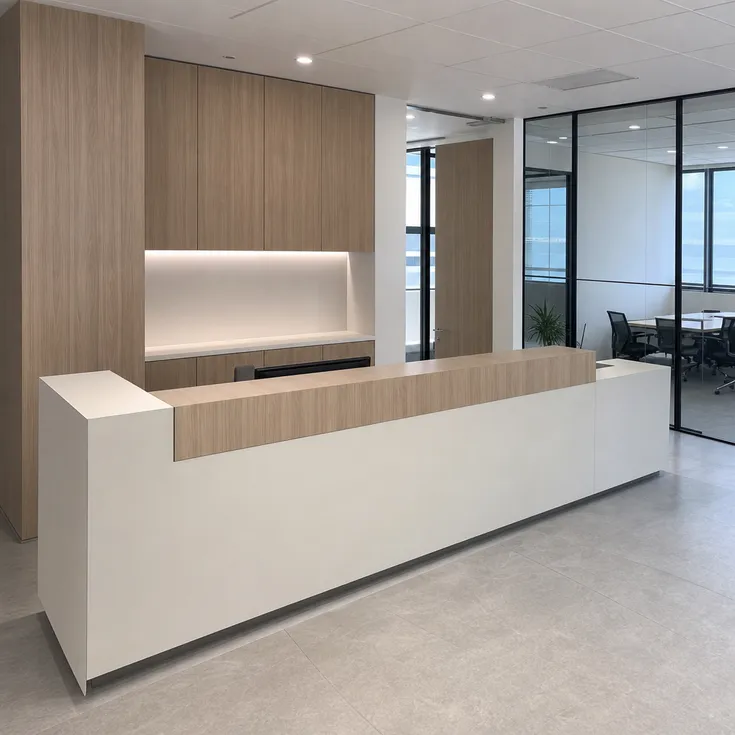
Fit-out contractors and interior supply distributors are the core buyers for HPL plywood sheet in standard dimensions. A single commercial office fit-out — reception desks, partition cladding, built-in joinery — can consume 200–500 sheets per project.
Distributors supplying fit-out contractors typically carry 3–5 surface finishes in stock (matte white, woodgrain, solid grey, anti-fingerprint) and reorder on 4–8 week cycles.
Key specification driver: The HPL surface's chemical resistance and cleanability is the specification that gets written into commercial interior contracts — it's not a premium option, it's the baseline requirement for anything that will be cleaned with commercial-grade products.
Hospitality & Healthcare Furniture Manufacturing
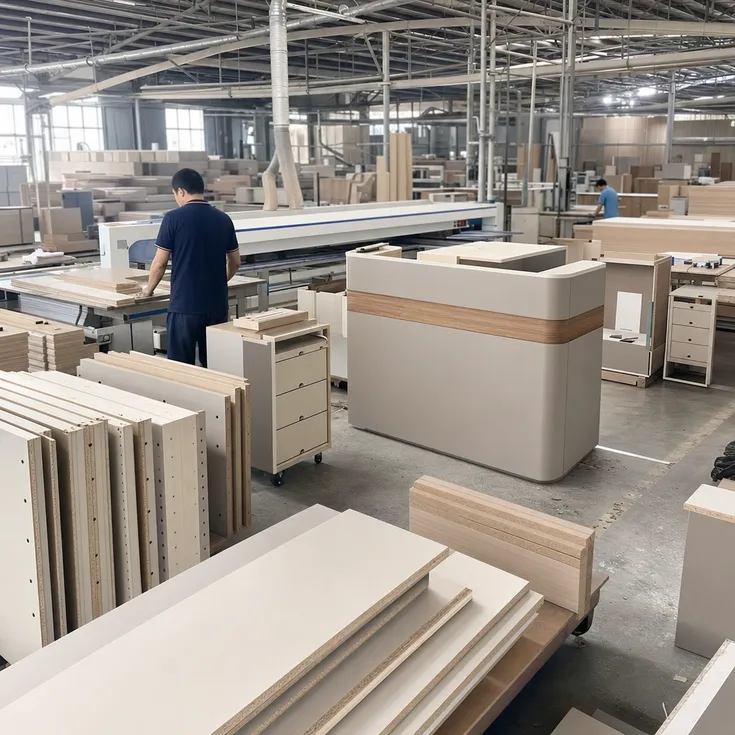
Furniture manufacturers supplying hotels, hospitals, and aged care facilities specify HPL plywood board for case goods — wardrobes, bedside units, nurse station counters — because the surface survives the cleaning protocols those environments require.
Bleach-based disinfectants that destroy melamine surfaces don't affect properly bonded HPL. For manufacturers in this segment, the HPL face grade and bond strength are the procurement criteria, not just the core thickness.
Active buyer regions: We supply this segment with 0.8mm and 1.0mm HPL face options on 15mm and 18mm cores — the configurations that cover most case goods applications. Hospitals in the Middle East and Australia are particularly active buyers in this segment for our existing distributors.
Retail Fixture & Display Manufacturing
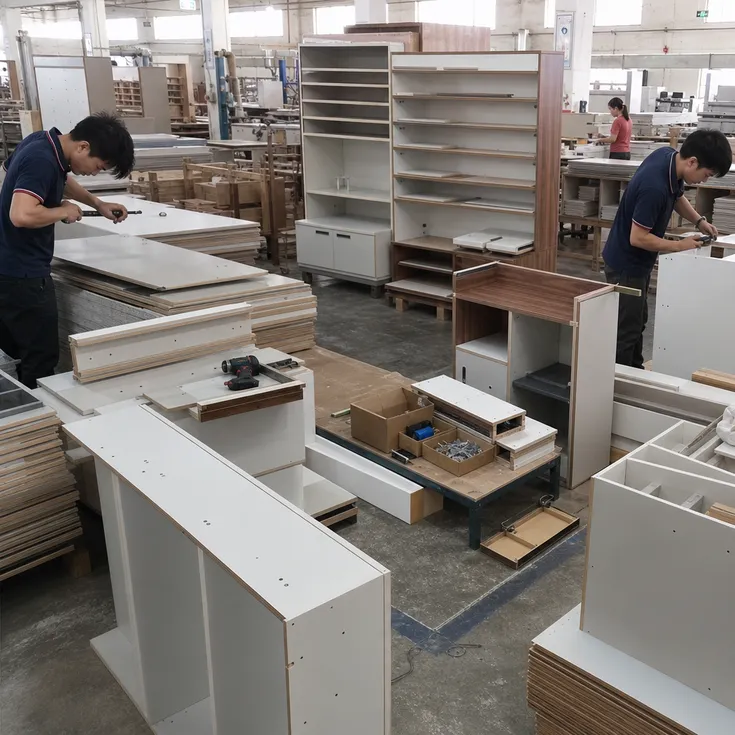
Retail fixture manufacturers — shop fittings, display units, point-of-sale installations — use HPL plywood sheet for its combination of surface durability and machinability. The plywood core holds edge banding and fasteners better than MDF-based alternatives, which matters when fixtures are assembled and disassembled for seasonal resets.
A mid-size retail chain rolling out a store format across 50–100 locations generates consistent, repeatable orders for the fixture manufacturer — and by extension, for the HPL plywood board supplier.
Critical spec: Surface consistency across batches. If the woodgrain pattern or color shifts between production runs, the fixture manufacturer has a problem at the installation site.
Educational & Institutional Furniture
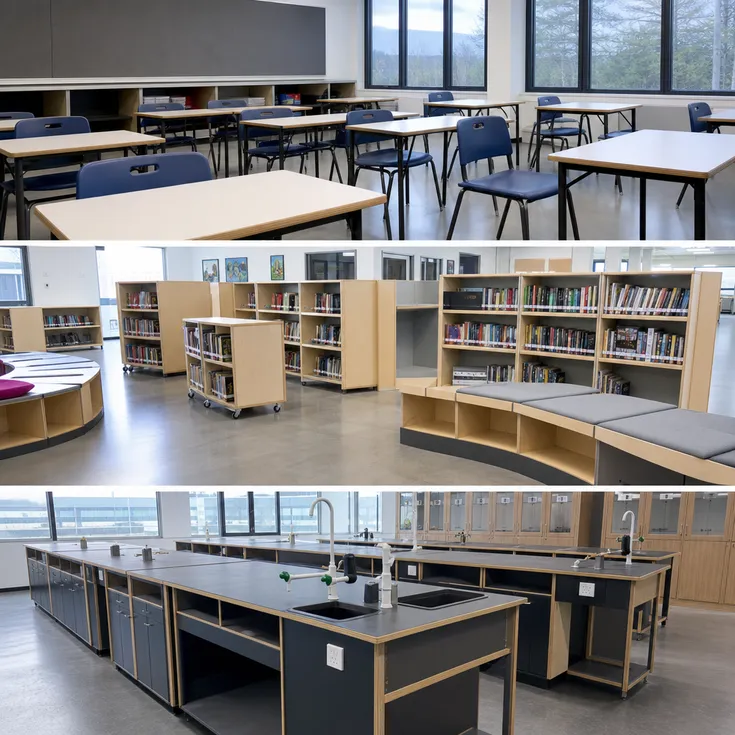
School furniture manufacturers and institutional suppliers specify HPL plywood for student desks, library shelving, and laboratory benches — surfaces that take daily abuse from students and need to survive 10–15 year replacement cycles.
District-level procurement in North America and Europe typically runs on annual or biennial furniture budgets, generating predictable volume for distributors who have established relationships with furniture manufacturers in this segment.
Procurement gate: The CARB P2 certification on our HPL plywood sheet is a procurement gate for US educational institutions — panels without it don't get specified.
Segment Summary: What Each Buyer Cares About
| Segment | Primary Spec Driver | Volume Pattern |
|---|---|---|
| Commercial fit-out | Chemical resistance, cleanability | 200–500 sheets/project, 4–8 wk reorder |
| Hospitality/healthcare | HPL face grade, bond strength | Steady case goods production runs |
| Retail fixtures | Batch-to-batch surface consistency | Repeatable rollout orders, 50–100 locations |
| Educational/institutional | CARB P2 certification, durability | Annual/biennial district procurement |
If you're a distributor evaluating whether HPL plywood sheet fits your portfolio, the segment table above maps directly to the buyer relationships you already have. Each segment has distinct reorder patterns and certification requirements.
View HPL Plywood RangeCustomization Parameters and What They Mean for Your Order
The HPL plywood sheet is one of the more customizable products in our range, because the two main variables — core construction and HPL face — can be specified independently. Here's what's actually adjustable and what the constraints are.
Core Thickness and Species
6mm – 25mm range
We produce HPL plywood board on cores from 6mm to 25mm. The core species — poplar, eucalyptus, mixed hardwood, or full hardwood — affects panel weight, screw-holding strength, and price.
HPL Face Thickness
0.6mm – 1.2mm options
Standard is 0.8mm, which covers most commercial interior applications. For high-traffic surfaces — countertops, laboratory benches, heavy-use work surfaces — thicker face adds meaningful impact resistance.
Surface Finish and Color
Major laminate supplier ranges
We work with HPL from major laminate suppliers and can match most standard decor ranges. Custom colors and patterns are available on minimum order quantities — confirm the specific decor reference at inquiry.
Glue Specification
MR standard · WBP available
MR (moisture resistant, urea-formaldehyde based) is standard for interior applications. WBP (waterproof boil-proof, phenolic resin) is available for applications with direct moisture exposure or outdoor-adjacent use.
Panel Dimensions
Standard and extended formats
Non-standard widths are possible but require minimum order confirmation — the yield impact on our cutting line affects the economics below a certain volume.
Standard vs. Custom Configuration MOQ
Confirm your specific requirements at inquiry and we'll advise on the exact MOQ and lead time.
Certification Coverage for Your Import Market
Our HPL plywood sheet carries ISO 9001:2015, CE, FSC chain-of-custody, and CARB P2 certification. Here's what each one means for your specific market.
California Air Resources Board Phase 2
The most stringent formaldehyde emission standard in our export markets. US buyers supplying educational institutions, government projects, or retailers with sustainability sourcing policies need CARB P2 documentation as a procurement gate.
We formulate to CARB P2 as the baseline for our HPL plywood board — not as a special option. The documentation package (test reports, chain-of-custody records) is prepared as standard for US-bound shipments.
CE Marking — European Construction Products
For HPL plywood sheet going into European commercial interiors, CE documentation is the compliance baseline. Our CE declaration of conformity is included with EU shipments.
CE declaration of conformity is included as standard with all EU-bound shipments. No additional request required.
FSC Chain-of-Custody
The wood fiber in our panels can be traced to certified forests. This matters if your buyers have sustainability sourcing requirements, or if you're supplying into markets where deforestation-linked supply chains create reputational or regulatory risk.
FSC documentation is available on request — not all orders require it, but we maintain the chain-of-custody infrastructure so it's available when you need it.
ISO 9001:2015 — Quality Management System
Covers our quality management system — the process controls, inspection protocols, and documentation practices that sit behind the product certifications. Third-party inspection is available on request.
We work with SGS, Bureau Veritas, and similar agencies for third-party inspection on request.
Regional Import Documentation — We've Done This Before
For buyers in the Middle East and Southeast Asia, we can provide the documentation packages required for local import clearance. We've been through enough customs cycles in these markets to know what documentation gaps cause delays.
Container Loading and Export Logistics
HPL plywood sheet in standard 1220 × 2440mm dimensions loads efficiently into 20HQ and 40HQ containers. Here's what to expect from a typical shipment.
Loading Quantities by Container Type
Loading quantities are approximate and vary with exact panel thickness and packaging. We provide a loading plan with each shipment.
Packaging and Surface Protection
Bundle Configuration
Panels are bundled in packs of 50–100 sheets depending on thickness, strapped, and edge-protected with corner boards.
Moisture-Resistant Wrap
Each bundle is wrapped in moisture-resistant film to protect against humidity during ocean transit.
PE Face Film — Standard on All HPL Shipments
The HPL face is protected with a PE film during transit. Surface scratches during container loading are the most common damage claim we see — the film eliminates them. We added face film as standard after a batch of panels arrived in Australia with handling scratches on the HPL surface; the buyer's downstream customer rejected the lot. The film adds a small cost per panel but has eliminated that claim category entirely.
Export Documentation
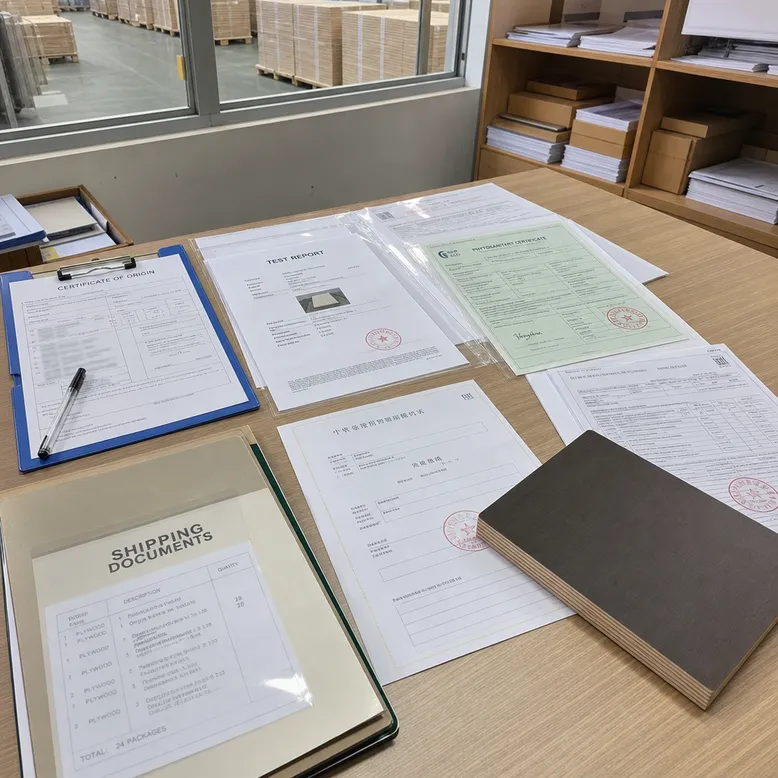
Standard export documentation package covers all major destination markets:
- Commercial invoice
- Packing list
- Bill of lading
- Certificate of origin
- Phytosanitary certificate (where required)
- Certification documents: CARB P2, FSC, CE (per destination market)
Transit Times from Xuzhou
Transit times depend on routing and port of discharge. Confirm exact schedule at inquiry.
Frequently Asked Questions
Practical answers to the specification and procurement questions we hear most often from importers and project buyers.
The surface layer and bonding process are different, and they produce meaningfully different performance.
Melamine plywood uses a paper impregnated with melamine resin, pressed at relatively low pressure — the result is a decorative surface that works well for furniture in normal interior conditions.
HPL (high pressure laminate) is a multi-layer composite — kraft paper layers saturated with phenolic resin, topped with a decorative layer — pressed at 1,000–1,400 psi. The resulting surface is significantly harder, more chemical-resistant, and more impact-resistant than melamine.
Use HPL plywood board when:
Surfaces will be cleaned with commercial disinfectants, exposed to moisture, or subject to daily abrasion.
Melamine plywood is adequate when:
Standard furniture in dry interior environments where cost is the primary driver.
Lightweight applications where the surface won't take direct impact.
Standard commercial interior applications — wall cladding, cabinet doors, partition panels. Covers most requirements at 15mm or 18mm core.
Work surfaces, countertops, and laboratory benches where impact and abrasion are higher.
If you're unsure, send us the application description and we'll recommend the configuration — we've supplied enough of these to know where the 0.8mm holds up and where it doesn't.
Yes. CARB P2 is our baseline formaldehyde emission standard for HPL plywood board — not a special option. Test reports are available on request, and the full CARB documentation package is prepared as standard for US-bound shipments.
Baseline standard — all HPL plywood board
Available as standard for European markets
Available on confirmed orders — confirm at inquiry
1 CTN
container
Standard surface finishes
Matte white, woodgrain, solid grey, and other stock decors. MOQ is typically 1 container.
2 CTN
containers
Custom decors
Specific colors, patterns, or anti-bacterial/anti-fingerprint surfaces not in our standard range. MOQ is typically 2 containers. The constraint is the HPL procurement side: custom decors require a minimum order from the laminate supplier, which sets the floor for our production run.
Confirm your specific decor reference at inquiry and we'll advise on the exact MOQ.
Yes, WBP phenolic resin glue is available on confirmed orders. WBP is appropriate for applications with direct moisture exposure — wet-area wall cladding, outdoor-adjacent installations, marine environments. It adds cost and typically 5–7 working days to lead time compared to MR glue.
MR Glue
Sufficient for purely interior applications without moisture exposure. More cost-effective.
WBP Glue
Direct moisture exposure, wet-area cladding, outdoor-adjacent, marine. Adds 5–7 working days to lead time.
If you're on the borderline — a bathroom vanity, for example — specify WBP. The cost difference is small relative to the risk of a delamination claim.
Lead time depends on the specification and order volume. Standard configurations ship faster; custom decors or WBP glue add time on the production side.
Standard specification, stock decors, MR glue — from order confirmation to container loading.
Custom decors or WBP glue — additional time for HPL procurement or extended pressing cycle.
Pre-shipment inspection (PSI) if required — plan for this in your booking window.
These are production lead times to container loading, not port-to-port transit. Add your shipping transit time when planning project delivery. We'll confirm the exact schedule at order confirmation.
Yes. We send physical samples for surface finish, thickness, and core quality verification before you commit to a production order. Sample lead time is typically 7–10 working days to most destinations.
What we send
- Cut panel sample showing HPL face, core, and edge
- Surface finish swatch for decor confirmation
- Test reports (CARB P2, E1, or relevant standard)
How to request
Send us your specification — thickness, core, face finish, glue type — and your delivery address. We'll arrange dispatch and send you a tracking number.
Courier cost for samples is typically covered by us for qualified buyers. Confirm at inquiry.
Ready to Specify
Get a quote for your HPL plywood board order
Send us your specification — thickness, core, face finish, glue type, quantity — and we'll come back with pricing, lead time, and a sample dispatch within one business day.
No commitment required. Samples available before production order.
Other HPL Plywood Products in This Range
If the sheet format isn't the right fit for your application, the rest of our HPL plywood range covers specific end uses.
HPL Plywood Cabinet Board
Pre-configured for cabinet carcass and door applications — core thickness and face spec optimized for cabinet manufacturing.
View ProductKitchen HPL Plywood
Kitchen-specific surface grades — moisture resistance and heat tolerance for kitchen environments.
View ProductHPL Plywood Countertop
Thicker HPL face (1.0mm–1.5mm) on dense core — built for work surface load and impact.
View ProductFurniture HPL Plywood
Furniture-grade face finishes with consistent color matching across batches — for furniture manufacturers who need batch-to-batch consistency.
View ProductGet a Quote for HPL Plywood Sheet
Send us your core thickness, HPL face specification, surface finish, panel dimensions, target volume, and destination market. We'll come back with a detailed quote, the relevant certification documentation for your import requirements, and — if you're new to this product category — a recommendation on the configuration that fits your downstream application.
Most new buyers in this segment start with a sample order to test the surface finish and bond quality with their own fabrication process before committing to container volume. We can arrange samples; ask when you inquire.
What to Include in Your Inquiry
- Core thickness and species preference
- HPL face specification (thickness, texture, color)
- Panel dimensions and surface finish
- Target volume and delivery schedule
- Destination market and certification requirements
Xuzhou QD Wood Industry Co., Ltd.
Sample Orders Available
Most new buyers start with a sample order to test surface finish and bond quality with their own fabrication process before committing to container volume.
Ask about sample availability when you send your inquiry — we'll include it in the response alongside the quote and certification documentation.