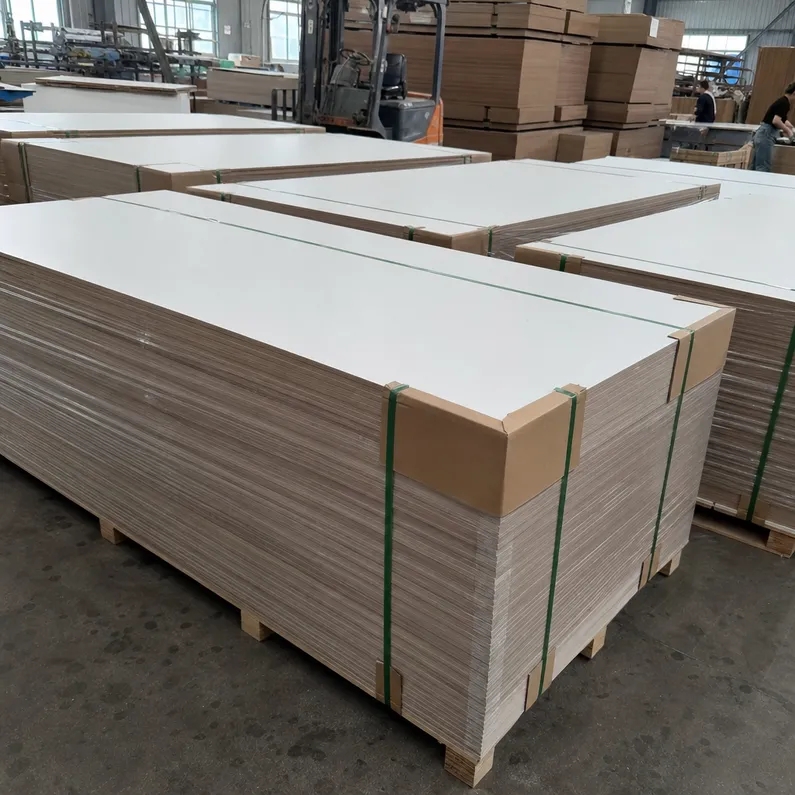
Furniture HPL Plywood
Manufacturer
HPL laminated to structural plywood core, factory-direct from Xuzhou. Scratch resistance, dimensional stability, and CARB P2 compliance in a single panel — ready for cabinet, shelving, and flat-pack furniture manufacturing at scale.
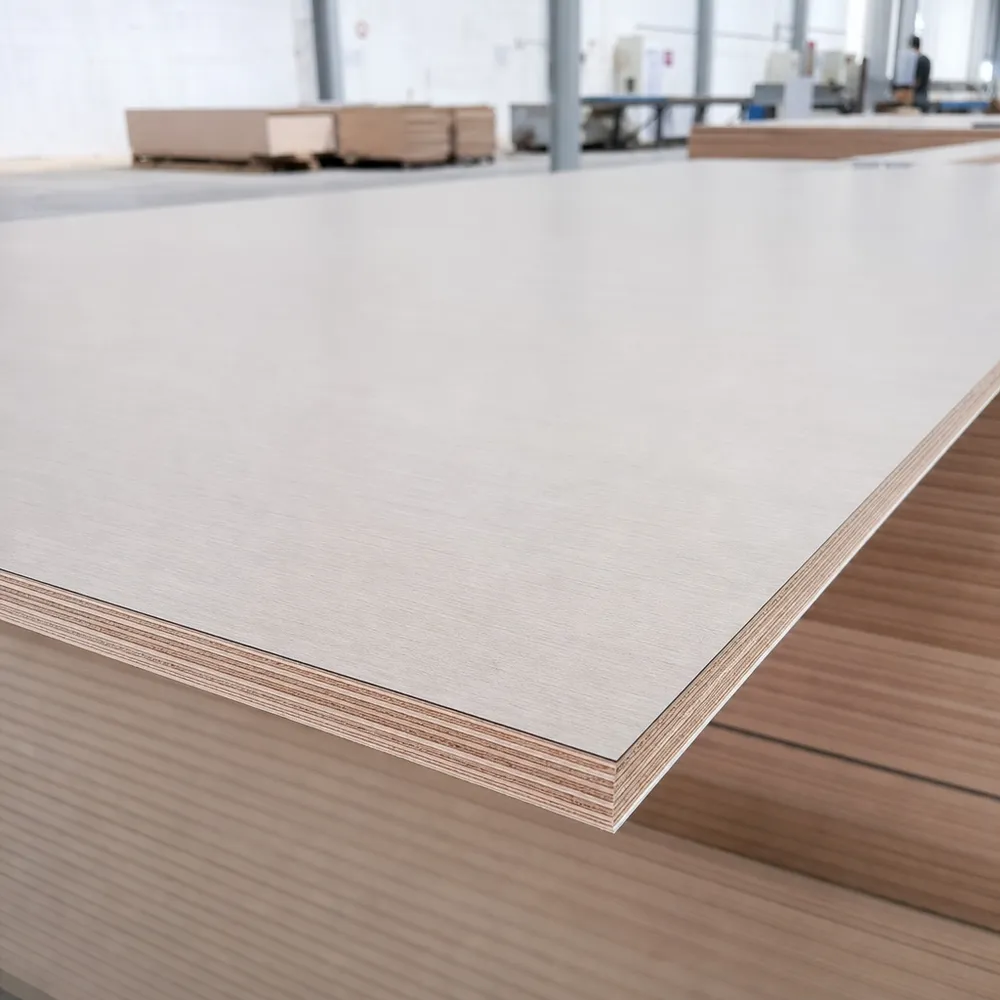
What Furniture HPL Plywood Is — and Where It Sits in the HPL Range
A laminated panel built for furniture and interior joinery: HPL sheet bonded under heat and pressure to a structural plywood substrate, combining the dimensional stability of plywood with a hard, wear-resistant decorative surface.
Furniture HPL plywood is a laminated panel: a high-pressure laminate (HPL) sheet bonded under heat and pressure to a structural plywood substrate. The result is a panel that carries the dimensional stability and screw-holding strength of plywood with a hard, wear-resistant decorative surface that melamine-faced boards can't match in durability.
Within our HPL plywood range, this product is positioned specifically for furniture and interior joinery applications — flat-pack carcasses, shelving, wardrobe panels, office furniture components, and retail display units.
Furniture Board vs. Countertop Board — The Distinction That Matters
This product is a different product from our HPL plywood countertop, which uses a thicker HPL overlay and a denser core construction optimized for horizontal work surfaces under sustained load.
The furniture board is optimized for vertical panels, carcass sides, and shelf decks where surface appearance, edge machinability, and consistent thickness matter more than impact resistance.
The distinction matters when you're specifying for a furniture manufacturer or building a product line for distribution. A buyer who needs countertop-grade panels for a kitchen line should look at our countertop product. A buyer sourcing carcass material for a flat-pack furniture range, a wardrobe system, or a commercial shelving program is in the right place here.
Primary Applications
Flat-Pack Carcasses
Cabinet sides, backs, and shelves for flat-pack furniture ranges
Shelving Systems
Shelf decks for commercial and residential shelving programs
Wardrobe Panels
Vertical carcass panels for wardrobe and storage systems
Office Furniture
Components for office furniture and retail display units
HPL Plywood Range — Where This Product Sits
Furniture HPL Plywood — This Product
0.6–0.8mm HPL overlay · Optimized for vertical panels, carcass sides, shelf decks · Surface appearance, edge machinability, consistent thickness
Thicker HPL overlay · Denser core · Horizontal work surfaces under sustained load · Kitchen lines
General-purpose HPL sheet stock for varied interior applications
Cabinet-specific HPL board for kitchen and bathroom cabinetry programs
Lamination Construction: How the Panel Is Built
Surface performance depends almost entirely on two things: the HPL sheet specification and the bonding process. We run both in-house, which is why we can control the outcome.
1 HPL Overlay Specification
The HPL overlay we use on furniture-grade panels is typically 0.6–0.8mm thick — the standard range for furniture applications. Thinner than 0.5mm and you start seeing print-through from the substrate surface on textured decors; thicker than 1.0mm adds cost without meaningful benefit for vertical furniture panels.
The HPL is sourced from qualified laminate suppliers and arrives at our facility with surface hardness and abrasion resistance already tested to EN 438 standards. We don't laminate off-spec HPL to hit a price point — if a batch fails incoming inspection, it goes back.
2 Adhesive System and CARB P2 Compliance
The plywood substrate runs through our hot press lamination line, where the HPL is bonded using a urea-formaldehyde or melamine-formaldehyde adhesive system depending on the target emission specification.
CARB P2 — We Test the Finished Panel, Not Just the Substrate
For CARB P2 orders, we use a low-emission adhesive system throughout — both the plywood core bonding and the HPL lamination adhesive are selected to keep the assembled panel within CARB P2 limits. Some suppliers hit CARB P2 on the plywood substrate but use a non-compliant lamination adhesive, and the assembled panel fails the emission test. We test the finished panel.
3 Press Parameters and Quality Control
Press parameters — temperature, pressure, and dwell time — are logged per production batch. The critical variable in HPL lamination is uniform pressure distribution across the full panel surface; uneven pressure produces panels with adhesion voids that show up as blistering or delamination after the panel is cut and exposed to humidity cycling.
Our press platens are calibrated quarterly, and any batch showing surface irregularity at post-press inspection is pulled before it reaches the sanding and trimming line.
4 Plywood Core Construction and Moisture Control
The plywood core construction uses cross-grain veneer layup — typically 5, 7, or 9 plies depending on the target thickness — which gives the panel its dimensional stability and resistance to warping.
We dry core veneers to 8–10% moisture content before layup, which is tighter than what most domestic-market factories bother with. That moisture control is what keeps your panels flat after they clear customs and sit in a warehouse in a humid climate.
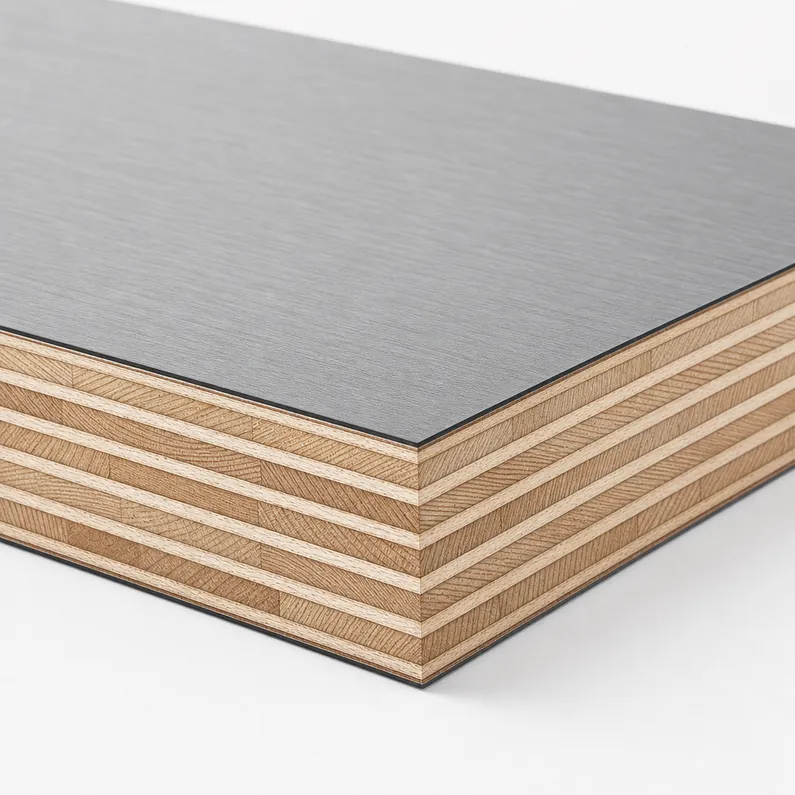
HPL overlay bonded to cross-grain plywood core — 5, 7, or 9 ply depending on target thickness
Construction at a Glance
What Goes Wrong When Lamination Is Cut Short
-
Blistering — adhesion voids from uneven press pressure; visible after humidity cycling or edge trimming
-
Print-through — substrate surface texture telegraphing through thin HPL overlay on textured decors
-
Panel bow — unbalanced lamination (one face only, or mismatched overlay weights) causing the panel to cup after cutting
-
Emission failure — CARB P2 substrate paired with non-compliant lamination adhesive; assembled panel fails third-party test
Dimensions, Grades, and Surface Options
Standard configurations we hold in production. Custom dimensions, thicknesses, and decor programs are available on request — lead times vary by specification.
Standard Thickness Range
| Thickness | Ply Count | Typical Use | Stock Status |
|---|---|---|---|
| 9mm | 5-ply | Back panels, light carcass dividers | ● In Stock |
| 12mm | 7-ply | Carcass sides, shelf decks, door panels | ● In Stock |
| 15mm | 9-ply | Primary carcass panels, wardrobe sides | ● In Stock |
| 18mm | 9-ply | Heavy-duty carcass, structural panels | ● In Stock |
| 25mm | 11-ply | Thick structural panels, display units | ◐ On Request |
Standard Sheet Sizes
| Sheet Size | Format | Notes |
|---|---|---|
| 1220 × 2440mm | 4′ × 8′ | Standard export format, most common |
| 1525 × 3050mm | 5′ × 10′ | Jumbo format for tall wardrobe panels |
| 1220 × 3050mm | 4′ × 10′ | Long format, available on request |
Custom sizes available for container-load orders. Thickness tolerance: ±0.5mm. Length/width tolerance: +0/−2mm.
Surface and Core Grade Options
| Grade | HPL Face | Back Face | Core |
|---|---|---|---|
| A/B | HPL decorative face | Grade B veneer | B/BB core veneers |
| A/A (2-sided) | HPL both faces | HPL back (matched or plain) | B/BB core veneers |
| A/Melamine | HPL decorative face | Melamine balance sheet | B/BB core veneers |
Two-sided HPL panels recommended where both faces are visible in the finished assembly. Melamine back is a cost-effective balance layer for single-face applications.
Surface Decor Options
Wood Grain
Oak, walnut, teak, wenge, maple — standard and custom grain programs
Solid Colour
White, off-white, grey, black, and custom RAL-matched colours
Stone / Concrete
Marble, slate, concrete-look decors for contemporary interiors
Custom / OEM Decor
Proprietary decor programs for OEM furniture brands — MOQ applies
Texture options: smooth, fine texture, embossed sync-pore (registered emboss). Gloss levels: matte, satin, high-gloss.
Emission Standards and Certifications
CARB P2
California Air Resources Board — finished panel tested
E1 / E0
European formaldehyde emission classes per EN 13986
FSC® / PEFC
Chain-of-custody certified veneer sourcing available
EN 438
HPL surface performance standard — hardness, abrasion, impact
Manufacturing Tolerances
Technical Specifications
Standard parameters for furniture HPL plywood. Specifications shown are industry-standard values for this product type. Contact us for detailed product data sheets and confirmation of exact parameters for your application.
Panel & Core Parameters
Surface, Compliance & Adhesive
Specifications shown are industry-standard values for this product type. Actual specifications may vary by order. Contact us for detailed product data sheets and confirmation of exact parameters for your application.
Market Segments Where This Panel Earns Margin
The commercial value of furniture HPL plywood comes from its position between commodity melamine-faced board — lower cost, lower durability — and solid-surface or stone materials — higher cost, heavier, harder to machine. For your downstream customers, it's a panel that justifies a price premium over melamine while remaining practical for CNC routing, edge banding, and flat-pack assembly.
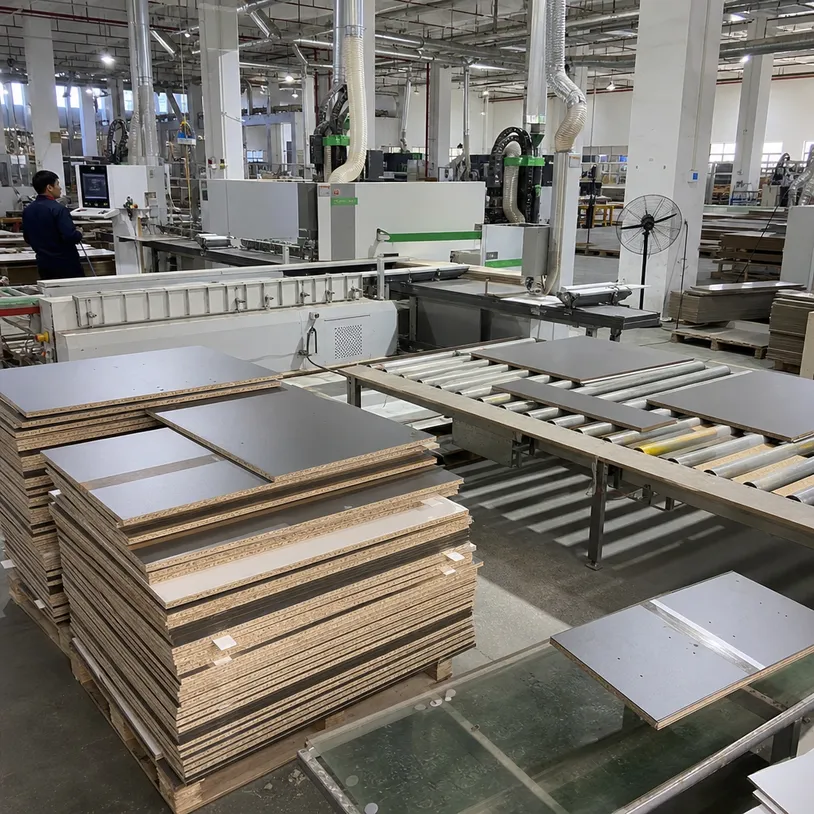
Flat-Pack Furniture Manufacturing
The highest-volume segment we supply into. Furniture manufacturers running CNC production lines need panels with consistent thickness — ±0.2mm is the tolerance that matters, as variation beyond that causes feed errors on automated cutting equipment — clean edge machinability, and a surface that photographs well for e-commerce listings. HPL plywood furniture board delivers all three.
Order pattern: Manufacturers in this segment typically order in full-container quantities — 20HQ or 40HQ — on 4–8 week replenishment cycles, making it a predictable, repeatable revenue stream for distributors who stock it.
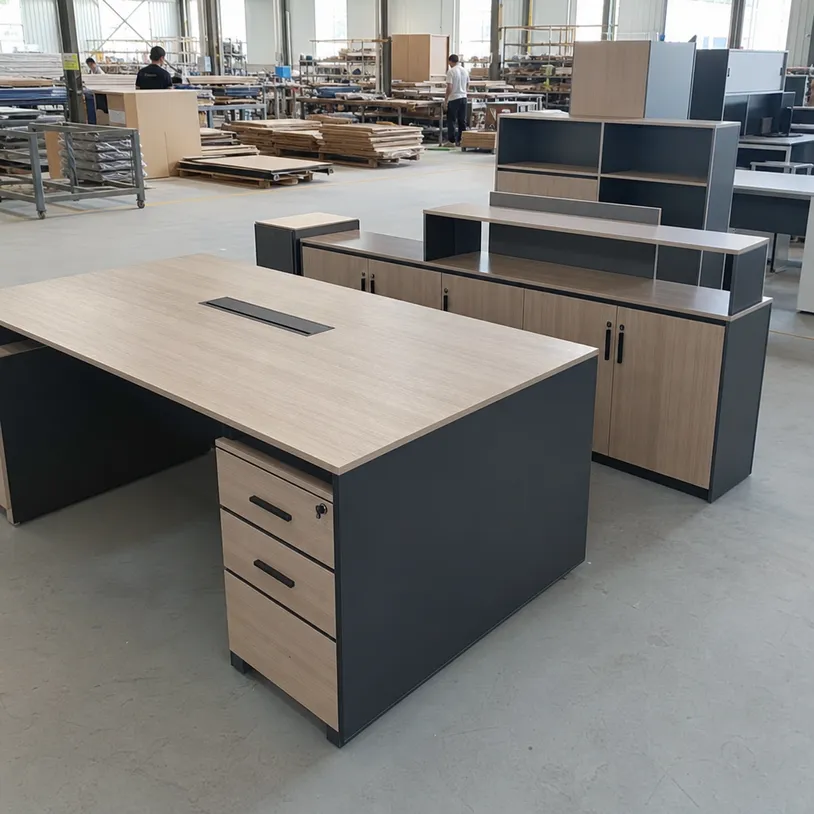
Commercial Office Furniture
A segment where HPL plywood commands a meaningful price premium over melamine board. Desks, storage units, and partition panels specified for commercial interiors need a surface that holds up to daily abrasion and cleaning without showing wear. The scratch resistance of HPL — typically rated at 150+ cycles on the Taber abrasion test — is a specification that procurement teams for office fit-out projects actively look for.
Positioning: If you're supplying into the commercial fit-out channel, this is a panel you can position as a specification-grade product, not a commodity.
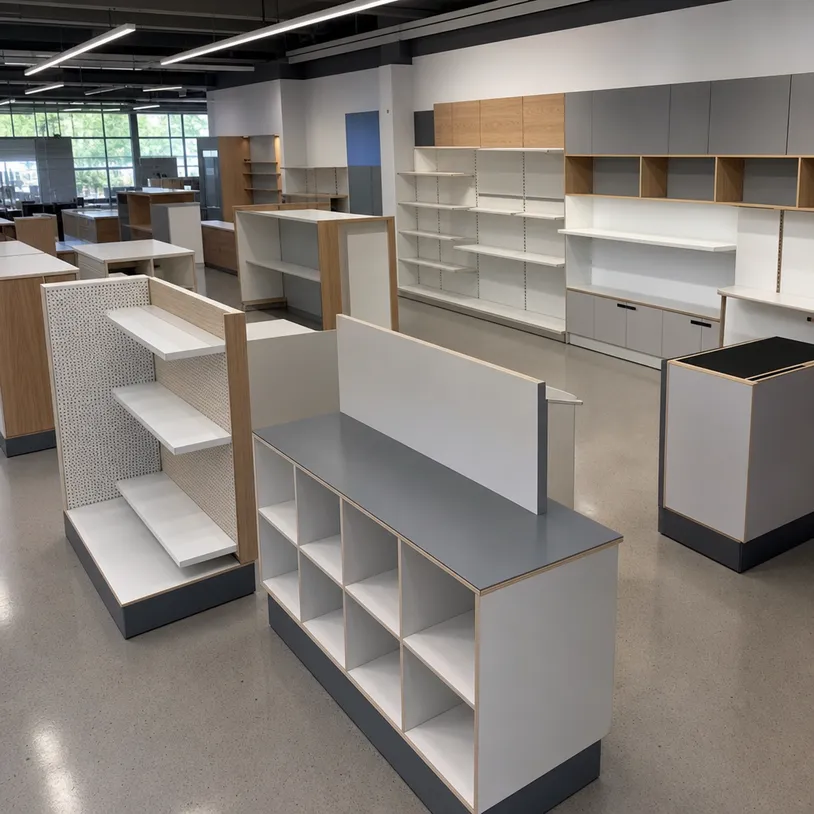
Retail Display and Shopfitting
A segment that has grown significantly among our European and Australian buyers. Display fixtures, shelving systems, and point-of-sale units need a surface that looks consistent across a large installation and holds up to repeated restocking and cleaning. HPL plywood is the standard substrate for this application — the surface durability justifies the cost, and the plywood core handles the hardware loads that MDF-based alternatives struggle with.
Order pattern: Retail fit-out buyers tend to order in project quantities — 500 to 2,000 panels per project — with tight lead time requirements. If you're building a position in this segment, talk to us about lead time commitments on standing orders.
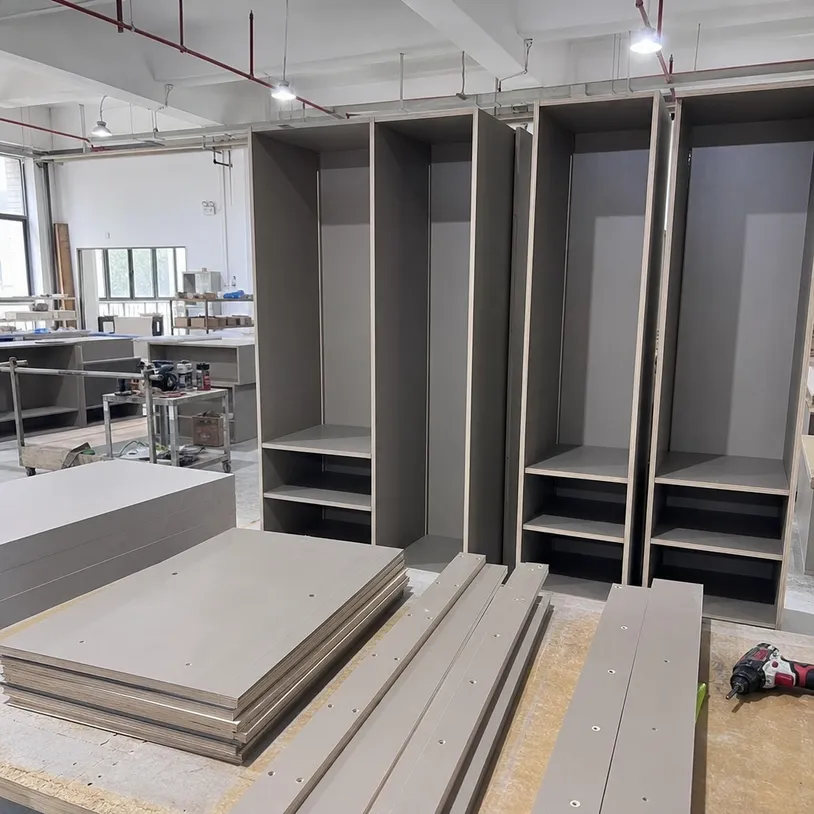
Wardrobe and Storage System Manufacturing
Where the dimensional stability of the plywood core becomes the key selling point. Wardrobe carcasses assembled from panels that warp after installation generate warranty claims and callbacks — the kind of after-sales cost that erodes margin on what should be a straightforward product.
Core advantage: The cross-grain plywood core in our furniture HPL board resists warping under the humidity cycling that causes problems with MDF-based alternatives, so your downstream customers get fewer callbacks and you get fewer returns.
Positioning Between Commodity and Premium
Furniture HPL plywood sits above commodity melamine-faced board on durability and surface quality, while remaining lighter, more machinable, and more cost-effective than solid-surface or stone alternatives. That positioning is where your margin lives — and where your downstream customers can justify the specification to their own buyers.
Customization Parameters for Production Orders
Customization options on furniture HPL plywood are broader than most buyers expect — and the lead time impact is smaller than it would be for a molded or machined product. Plywood is cut-to-size, not tooled. Custom dimensions are a scheduling and yield question, not a capital investment.
HPL Surface Options
Any HPL decor available from our qualified laminate suppliers — solid colors, woodgrain patterns, stone textures, and abstract designs. For buyers building a branded furniture line, we can match specific Pantone references or source HPL to match an existing product range.
Minimum order for a custom decor is typically 50 panels — below that, the lamination line changeover cost doesn't make sense for either side.
Thickness Range
Standard production runs 12mm, 15mm, and 18mm. Confirmed orders can be produced from 9mm through 25mm.
★ Standard stock. Non-standard thicknesses add 5–7 working days to lead time on the first order while we confirm the veneer layup schedule.
Panel Dimensions
Standard 1220×2440mm. Oversized panels up to 1525×3050mm are available on request.
Oversized panels are relevant for buyers supplying large-format furniture manufacturers or commercial joinery shops that want to minimize waste on wide panels.
Single-Sided vs. Double-Sided Lamination
Standard product is single-sided HPL with a balancing paper on the reverse to prevent warping. Double-sided HPL lamination is available for applications where both faces are visible.
Single-sided (standard)
HPL face + balancing paper reverse. Prevents warping.
Double-sided (on request)
Open shelving, glass-door cabinet interiors, and similar. Adds to panel cost but eliminates separate backing treatment.
Core Species and Construction
Standard core uses hardwood veneer. Alternative core species are available for specific performance or cost requirements.
Hardwood core (standard)
Balanced performance across strength, weight, and cost.
Poplar core
Weight-sensitive applications or markets where poplar-core panels carry a cost advantage.
Birch core (premium)
Maximum screw-holding strength. Premium pricing applies.
OEM / Private Label
We handle OEM orders — custom panel marking, private label packaging, and specific documentation requirements for your market.
Lead Time: First Production Sample
15–20 working days
from specification confirmation
Covers custom panel marking, private label packaging, and market-specific documentation.
Tell us your target market, application, and volume — we'll confirm what's achievable within standard production parameters.
Compliance Coverage Across Your Export Markets
The certification stack on our furniture HPL plywood is built around the markets where documentation is a procurement gate, not an afterthought.
CARB P2
Standard on All PanelsCalifornia Air Resources Board — Phase 2
Covers California and the broader US market. For furniture sold into the US — whether through retail, e-commerce, or commercial channels — CARB P2 compliance is a legal requirement, not a differentiator.
We formulate to CARB P2 as the baseline on all furniture-grade panels — your US-bound orders don't require a separate product specification. CARB documentation is included with the shipment as standard.
FSC Chain of Custody
On RequestForest Stewardship Council — Certified Supply Chain
Covers buyers with sustainability sourcing policies or customers in markets where deforestation-linked supply chains carry reputational or regulatory risk. The wood fiber in certified panels can be traced back to FSC-certified forests.
Standard requirement for buyers supplying into European retail chains and for commercial fit-out projects with green building certification requirements — LEED, BREEAM, and similar.
CE Marking
EU MarketsEuropean Construction & Building Materials
Covers European construction and building material applications. For buyers supplying into EU markets, CE documentation is included with relevant shipments.
Required for construction and building material applications sold into the European Union. Included with relevant shipments as standard.
ISO 9001:2015
Full ProductionQuality Management System
Covers the quality management system across our full production operation — the process controls, inspection protocols, and batch traceability that sit behind every panel we ship.
Process controls, inspection protocols, and batch traceability across the full production operation — not just the finished panel.
Extended Formaldehyde Emission Standards
For buyers supplying into markets with specific formaldehyde emission requirements beyond CARB P2, we can produce to those specifications on confirmed orders.
Japan
F★★★★
Japanese Industrial Standard — highest emission class
Europe
E0
Ultra-low formaldehyde — stricter than E1 standard
USA (Baseline)
CARB P2
Standard on all furniture-grade panels
Ask us about the emission specification for your target market and we'll confirm whether it's achievable within our standard production parameters or requires a specific adhesive system.
Specify your target market and we'll confirm the applicable certification package for your shipment.
Container Loading and Export Logistics
Every shipment comes with a loading plan so your receiving team knows exactly what to expect. Here's how we pack, protect, and document furniture HPL plywood for international transit.
Container Capacity by Thickness
40HQ standard loading counts, 1220×2440mm panels
Exact count depends on stacking configuration and packaging. A loading plan is provided with every shipment.
Packaging and Surface Protection
Transit-ready from lamination through delivery
- Panels bundled in packs of 20–50 sheets depending on thickness, strapped and edge-protected with corner boards
- PE film applied at the lamination stage — not as an afterthought at packing — for consistent surface protection
- For buyers who need film intact through downstream CNC cutting or edge banding: release adhesive film that peels cleanly without leaving residue on the HPL surface
Export Documentation
Prepared to avoid customs delays in North America, Europe, and Australia
Phytosanitary certificate and CE declaration issued where required by destination market.
Port Access and Transit Times
Xuzhou connects to Qingdao, Shanghai, and Lianyungang
Multi-Product Container Consolidation
If you're building a product line that spans multiple applications — furniture carcasses plus kitchen panels, for example — we can consolidate your order across product types into a single container to reduce your per-unit freight cost.
Frequently Asked Questions
Specification decisions, compliance requirements, and logistics questions answered directly from production experience.
For standard furniture applications — carcass sides, shelving, wardrobe panels — 0.6mm HPL is the industry standard and the right choice for most orders. It provides adequate scratch and abrasion resistance for furniture use while keeping panel weight and cost in check.
Specify 0.8mm if your downstream customers are in commercial environments (office furniture, retail fixtures) where the panels see heavier daily use. Anything above 0.8mm on a furniture panel is over-specified and adds cost without meaningful performance benefit — save the thicker HPL for countertop applications.
The surface hardness is the key difference. HPL is a thermoset laminate pressed at 70–100 bar — the result is a surface with a Brinell hardness of around 80–100 N/mm², compared to 20–40 N/mm² for a typical melamine paper overlay.
In practical terms: HPL resists scratching from keys, tools, and abrasive cleaning; melamine doesn't. For furniture that will be used in commercial environments or sold at a price point where durability is a selling argument, HPL justifies the cost premium. For budget furniture where price is the primary driver, melamine-faced plywood is the right call — we make that too.
Yes. Our furniture HPL plywood is produced to CARB P2 as the standard specification — both the plywood substrate and the lamination adhesive are selected to keep the assembled panel within CARB P2 formaldehyde emission limits (≤0.05 ppm). CARB documentation is included with US-bound shipments as standard.
If you need third-party test reports rather than manufacturer documentation, we can arrange SGS or Bureau Veritas testing on your order.
Standard MOQ is one 20HQ container. For buyers who need smaller quantities to test the product with their customers before committing to full container orders, we can discuss sample orders — typically 10–20 panels — at a higher per-unit cost to cover the handling overhead.
Most buyers in this category start with a sample order to run through their own CNC and edge banding equipment, then move to container orders once they've confirmed the panel performs to spec.
Yes. Standard production is 1220×2440mm, but we can produce up to 1525×3050mm on confirmed orders. Custom sizes are a yield and scheduling question — there's no tooling cost, but non-standard dimensions do require a minimum order quantity to make the production run economical.
Contact us with your target dimensions and volume and we'll confirm the MOQ and lead time.
Delamination on HPL furniture panels in humid environments is almost always a bonding failure at the HPL-to-substrate interface, not a failure of the HPL itself. The causes are: insufficient press pressure during lamination, contaminated substrate surface before bonding, or moisture content in the plywood substrate that's too high at the time of lamination.
Our panels are produced with substrate moisture content at 8–10% before lamination and press parameters logged per batch — if a bonding issue surfaces, we can trace it to the production run.
For buyers in high-humidity markets (Southeast Asia, Gulf, coastal Australia), specify MR (moisture-resistant) glue type on your order; it adds marginal cost but significantly reduces the risk of bond failure under sustained humidity exposure.
Get a Quote for Furniture HPL Plywood
Send us your panel specification — thickness, HPL decor, quantity, and destination market — and we'll come back with a detailed quote and the relevant certification documentation for your import requirements.
If you're not sure which specification fits your application, describe what you're making and we'll recommend the right construction.
Most new buyers in this category start with a sample order to test the panel through their own production process before committing to container quantities. We can ship samples within 7–10 working days of specification confirmation.
No. 88 Sanbao Industrial Park, Tongshan District,
Xuzhou, Jiangsu Province, 221116, China