

Furniture Plywood Manufacturer — Factory-Direct, Export-Grade Panels
Furniture-grade plywood built for consistent machining, clean surface finishing, and stable dimensions across your entire production run. We've manufactured furniture plywood for cabinet makers, flat-pack furniture producers, and wholesale distributors since 2008 — with CARB P2 and FSC certification covering your key import markets.
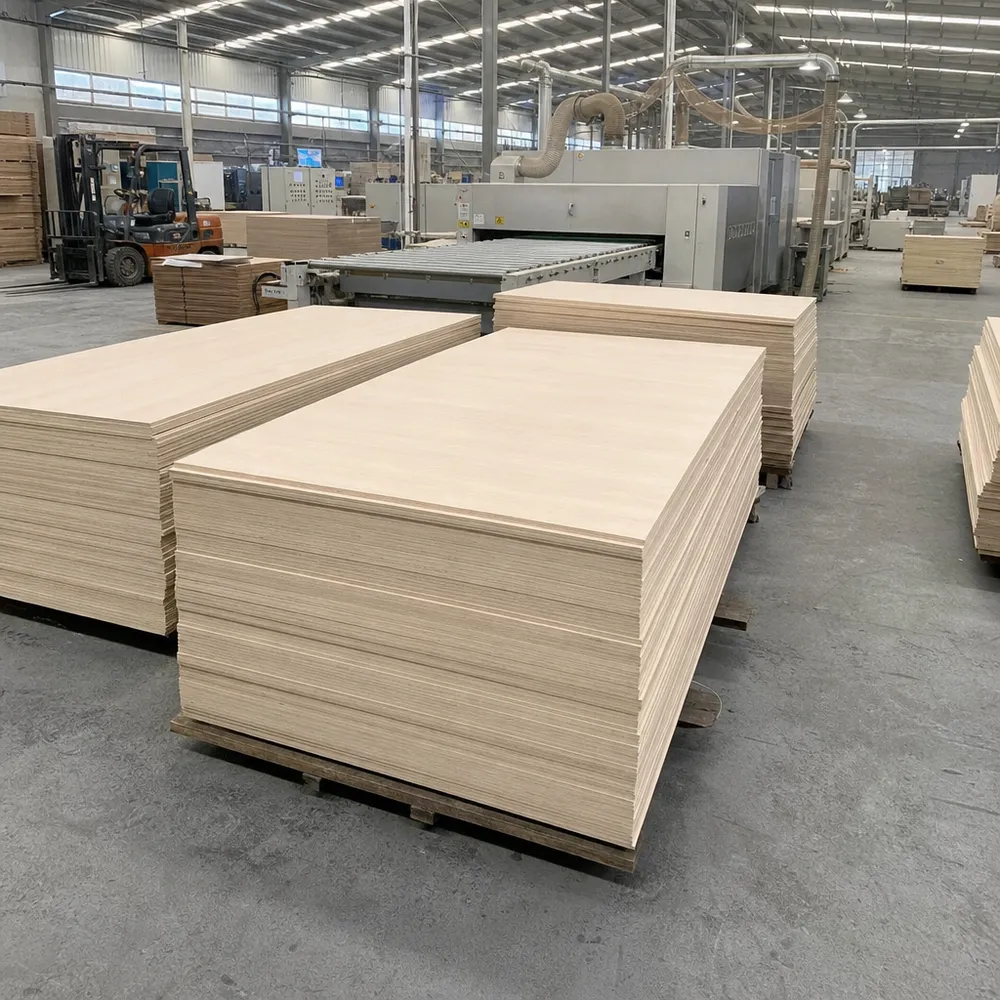
What Makes Furniture Plywood Different from General Commercial Plywood
Furniture plywood is not simply a thinner or lighter version of structural plywood. The difference is in what the downstream process demands. A furniture manufacturer running panels through a CNC router or edge bander needs consistent thickness across the sheet — not ±0.5mm variation that causes feed errors and tool chatter. A cabinet assembler applying veneer or melamine overlay needs a face surface that's flat, sanded to a consistent grit, and free of core voids that telegraph through the finish. A flat-pack furniture producer needs panels that stay dimensionally stable after cutting, not panels that cup or bow when the humidity changes in the warehouse.
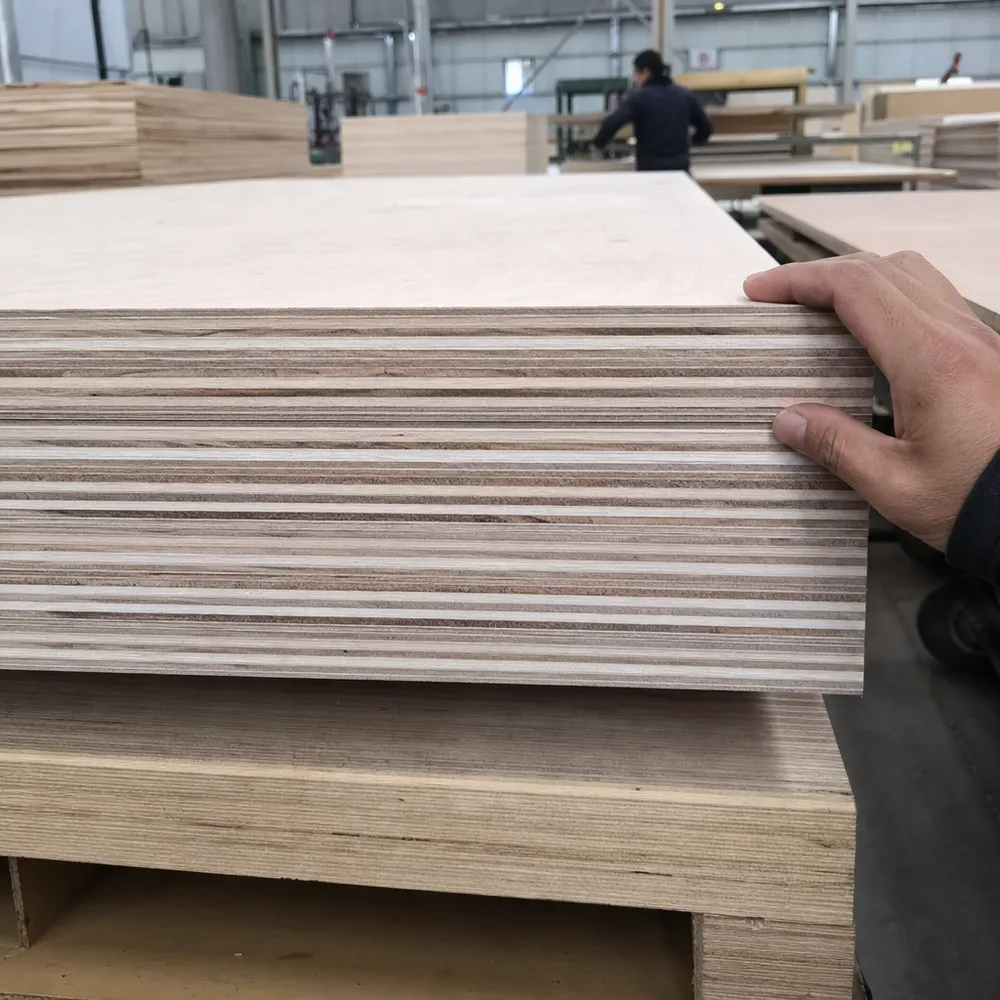
We build furniture plywood around those three requirements: thickness consistency, surface quality, and dimensional stability. The core construction uses cross-laminated veneers with balanced layup — an odd number of plies with grain direction alternating 90° between layers. That cross-grain structure is what resists warping. The face veneers are graded separately from core veneers and sanded to a calibrated finish before the panel leaves the line. Thickness tolerance runs ±0.2mm across the panel, which is tight enough for automated cutting equipment to run without manual adjustment between sheets.
The moisture content target for our export furniture plywood is 8–12%. We've been running that range since 2008, and it's the number that matters most for dimensional stability after the panel clears customs and sits in a warehouse or production facility in a different climate. Panels that arrive at 14–16% moisture will lose that moisture in a dry warehouse and shrink. Panels at 6% will absorb moisture in a humid environment and swell. The 8–12% range is the equilibrium zone for most indoor environments across our export markets — North America, Europe, the Middle East, Southeast Asia, and Australia.
Thickness Consistency
±0.2mm tolerance. CNC routers and edge banders run without manual adjustment between sheets.
Surface Quality
Face veneers graded separately. Sanded to calibrated grit. No core voids telegraphing through veneer or melamine overlay.
Dimensional Stability
8–12% MC equilibrium. Panels don't cup or bow after cutting, even when climate changes in transit or storage.
Panels at 14–16% MC shrink in dry warehouses. Panels at 6% swell in humid environments. The 8–12% range is the equilibrium zone for North America, Europe, the Middle East, Southeast Asia, and Australia — the markets we've been shipping to since 2008.
Technical Specifications
Furniture plywood specifications vary by application — cabinet carcass panels run thicker than drawer bottoms, and face veneer species depends on whether the panel will be painted, laminated, or left exposed. The table below covers the standard parameters we produce to. Custom specifications are available on confirmed orders.
Standard Production Parameters
Custom specifications available on confirmed orders
| Parameter | Standard Range | Notes |
|---|---|---|
| Thickness |
2.5mm 3mm 4mm 5mm 6mm 9mm 12mm 15mm 18mm 25mm
|
Custom thickness available on request |
| Panel Size | 1220 × 2440mm | 4×8 ft. Custom sizes on confirmed orders |
| Face Veneer Species |
Poplar Birch Eucalyptus Hardwood
|
Species affects surface grain and finishing behavior |
| Core Construction | Cross-laminated veneer core | Odd-ply layup, balanced construction for warp resistance |
| Glue Type |
MR WBP
|
WBP for kitchen and bathroom cabinet applications |
| Formaldehyde Emission |
E0 E1 CARB P2
|
CARB P2 is standard for US-bound shipments |
| Moisture Content | 8–12% | Controlled drying process, verified pre-shipment |
| Thickness Tolerance | ±0.2mm | Calibrated wide-belt sanding |
| Surface Finish |
Sanded (S2S) Unsanded Film-overlay ready
|
S2S standard for furniture applications |
| Density | 550–650 kg/m³ | Varies by species and core composition |
| Grade |
A/B B/B B/C C/D
|
A/B and B/B for exposed furniture surfaces |
| MOE (Bending) | ≥ 4,000 MPa | Parallel to face grain direction |
| MOR (Bending) | ≥ 30 MPa | Parallel to face grain direction |
| Screw Holding | ≥ 1,000 N | Face and edge; critical for hinge and hardware mounting |
Certifications & Standards
Packaging & Export Prep
- Panels bundled in export-grade pallet packs with corner protection and stretch wrap
- ISPM-15 heat-treated timber dunnage — no fumigation delays at destination ports
- 20ft and 40ft container loading plans provided with each shipment
- Moisture barrier wrapping available for high-humidity transit routes
- Bundle labeling includes species, thickness, grade, MC%, and production batch
Thickness outside the standard range, a specific face veneer species, or a custom panel size — we handle these on confirmed orders. Send us your spec sheet and we'll confirm feasibility within 48 hours.
Send Your Spec SheetWhich Plywood for Which Furniture Application
Not every panel is right for every application. Cabinet carcasses, drawer bottoms, bed frames, and tabletops each have different structural and finishing requirements. Here's how to match the spec to the job.
Kitchen Cabinets
Kitchen cabinets need moisture resistance at the glue line — steam, spills, and humidity cycling are constant. WBP bonded panels at 18mm give the carcass rigidity for hinge loads and the glue durability for wet environments.
Wardrobe & Closet Systems
Wardrobe carcasses are high-volume, cost-sensitive, and typically in dry interior environments. MR glue is sufficient. Flat, stable panels matter more than moisture resistance — consistent thickness keeps sliding door tracks aligned.
Drawer Boxes
Drawer boxes are where thickness tolerance matters most. A 0.5mm variation in side panels throws off the dovetail or box joint. Birch-faced panels give a clean, consistent surface for exposed drawer interiors in premium furniture lines.
Bed Frames & Platforms
Platform beds and storage bed frames carry dynamic loads. Thicker panels with high MOE and strong screw-holding values prevent flex and hardware pull-out over time. Eucalyptus core panels perform well here due to higher density.
Tabletops & Desktops
Tabletops are the most visible surface in any furniture piece. Face veneer grade, flatness, and surface smoothness determine how well paint, lacquer, or laminate adheres and how the finished piece looks. A/B grade face with calibrated sanding is the baseline.
Office & Contract Furniture
Contract furniture projects run large volumes across multiple SKUs. Batch consistency matters as much as individual panel quality — color variation between deliveries and thickness drift across a production run create rework on the factory floor.
Send us your product drawings or a brief description of the furniture type, finish method, and destination market. We'll recommend the right panel spec and confirm availability. Most inquiries get a response within one business day.
Get a Spec RecommendationMoisture Control and Core Construction: The Two Variables That Determine Your Return Rate
Most furniture plywood failures in the field trace back to one of two root causes: moisture content that was out of range when the panel was processed, or a core construction that wasn't balanced. Both are manufacturing decisions, not material quality issues — and both are controllable.
Moisture Control
Root cause #1 of field failures
We run a dedicated drying line where veneers are dried to target moisture before layup. The hot press drives out additional moisture during bonding, but we don't rely on the press to do the drying work — that's how you get uneven moisture distribution across the panel, which shows up as differential shrinkage after the panel is cut.
Every batch is moisture-checked before pressing and again before packing. The 8–12% range isn't a target we aim for and miss occasionally — it's a process control parameter with a rejection threshold.
Core Construction
Root cause #2 of field failures
Furniture plywood uses an odd-ply cross-laminated layup — 3-ply, 5-ply, 7-ply, or 9-ply depending on thickness. The grain direction alternates 90° between each layer. This is the structural reason furniture plywood resists warping: the opposing grain directions constrain each other's movement as the wood responds to humidity changes.
A panel with an even number of plies, or with grain directions that aren't properly alternated, will cup. We check layup orientation at the assembly stage before pressing — it's a visual check that takes 30 seconds per panel and prevents the kind of defect that only shows up after the container is unloaded.
Opposing grain directions constrain each other's movement as wood responds to humidity changes — the structural basis of warp resistance.
The Most Common Complaint We Hear from Buyers Switching Suppliers
Cupping on 18mm panels after cutting. Nine times out of ten, it's a moisture or layup issue from the source factory — not a problem with the buyer's storage conditions. If you're seeing this pattern with your current supplier, the fix is upstream, not in your warehouse.
WBP Glue Recommendation for Cabinet Plywood
For cabinet plywood specifically — kitchen cabinets, wardrobe carcasses, office furniture — we recommend WBP glue construction even for interior applications. The humidity cycling in a kitchen environment, even without direct water contact, is enough to stress MR-glue bonds over time.
Surface Quality and Finishing Compatibility
The face veneer is what your downstream customer sees and touches, and it's what determines whether your furniture plywood can be sold into premium, mid-market, or economy segments. We grade face veneers separately from core veneers — they go through a different inspection line before layup.
Sanded-Two-Sides (S2S) Standard Finish
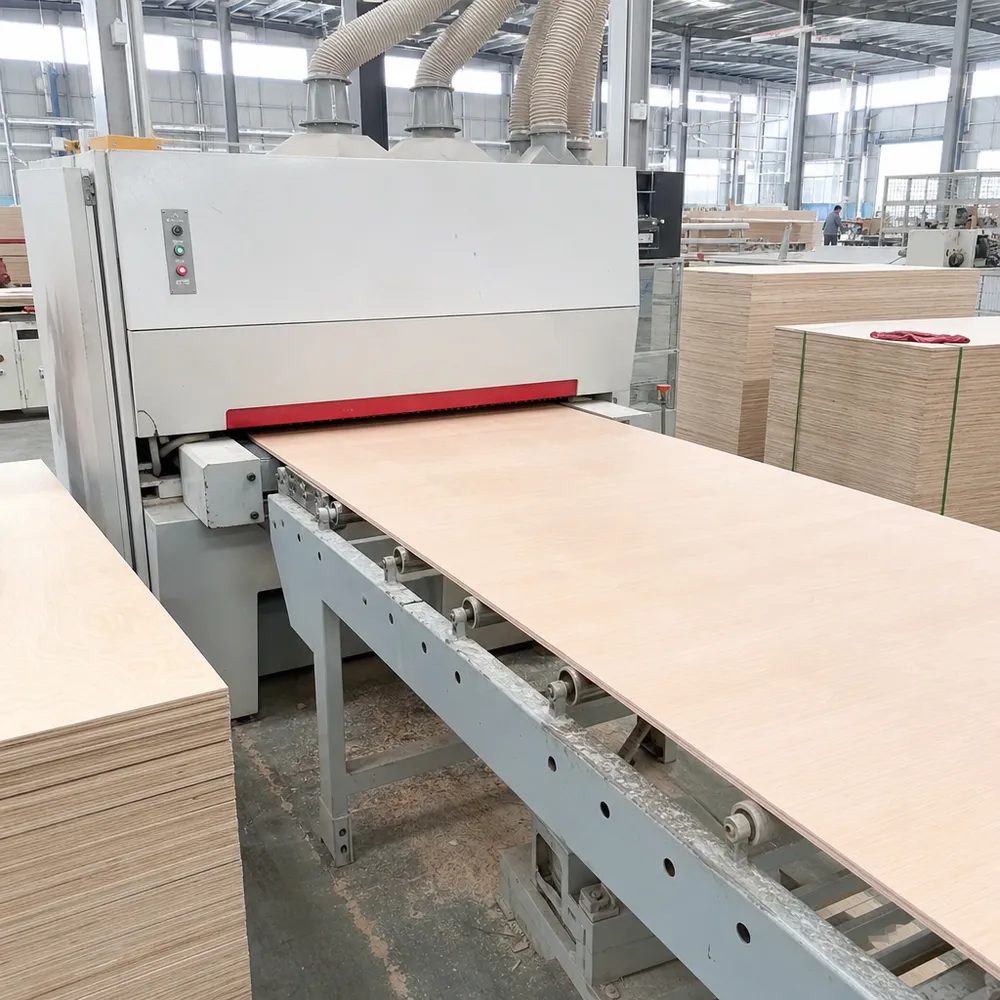
Standard furniture plywood ships with a sanded-two-sides (S2S) finish. The sanding is done on a calibrated wide-belt sander that maintains consistent grit depth across the full panel width. The result is a flat, consistent surface that accepts paint, lacquer, melamine overlay, or veneer lamination without requiring additional preparation.
Buyers report they can skip the pre-sanding step in their own production line when using our panels. That's a measurable labor cost reduction on their end — not a marketing claim, but a downstream process efficiency.
Face Veneer Options and Finishing Behavior
Face veneer choice affects finishing behavior in ways that matter for your downstream market. The right selection depends on your end application and the finish your customer expects.
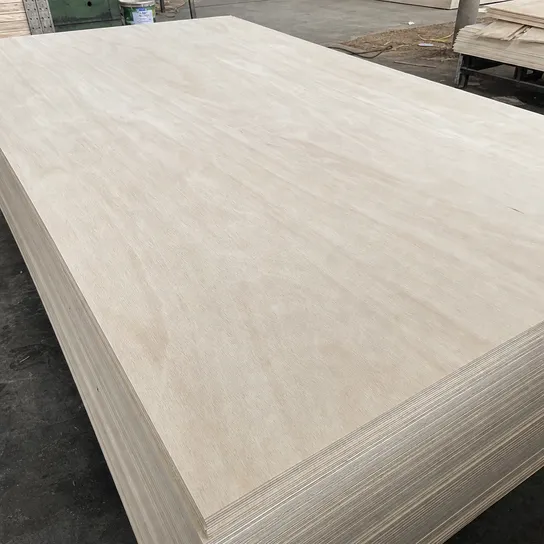
Poplar Face
Light, consistent grain. Takes paint and lacquer evenly. Standard choice for painted furniture and melamine-overlay applications.
Most economical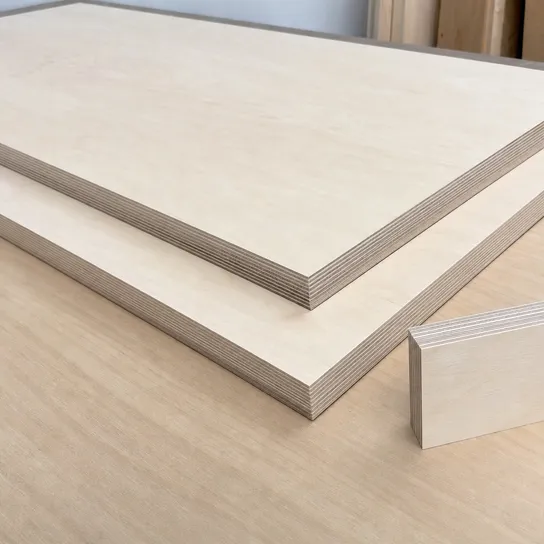
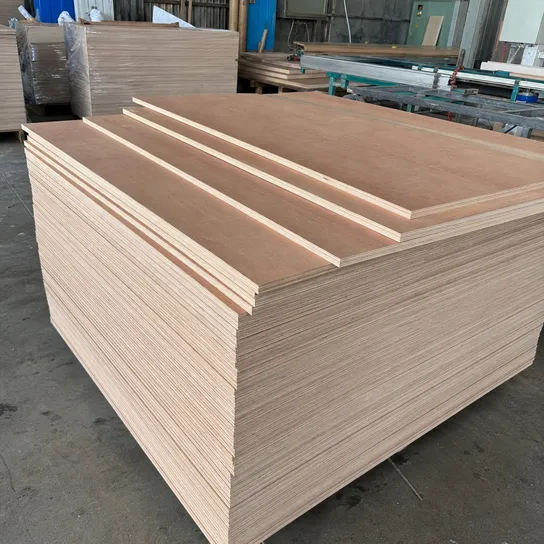
Birch Face
Tighter grain, harder surface, better screw-holding at edges. Preferred for natural or stained finishes and applications where edge quality matters.
Eucalyptus Face
Dense, strong, good for structural furniture components. Common in markets where hardwood appearance is valued.
Structural components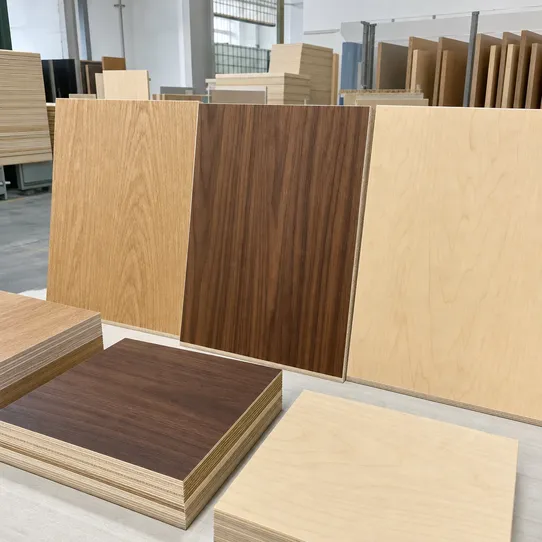
Hardwood Face Veneers
Available on OEM orders — oak, walnut, maple, and other species for premium furniture applications where the face veneer is the visible finish layer.
OEM / Premium segmentSurface Consistency for Flat-Pack and E-Commerce Furniture
For buyers supplying into the flat-pack furniture market — RTA furniture, e-commerce furniture brands — surface consistency is particularly important. Flat-pack furniture is assembled by end users, and surface defects that a factory worker would sand out become warranty claims when the end user discovers them during assembly.
Our outgoing inspection includes a surface defect check against the grade specification. Panels with core voids, surface splits, or sanding marks outside tolerance are pulled before packing.
Market Segments Where Furniture Plywood Moves at Volume
Furniture plywood is a commodity in the sense that it's widely sourced — but the segments that buy it in volume have specific requirements that separate suppliers who can deliver consistently from those who can't.
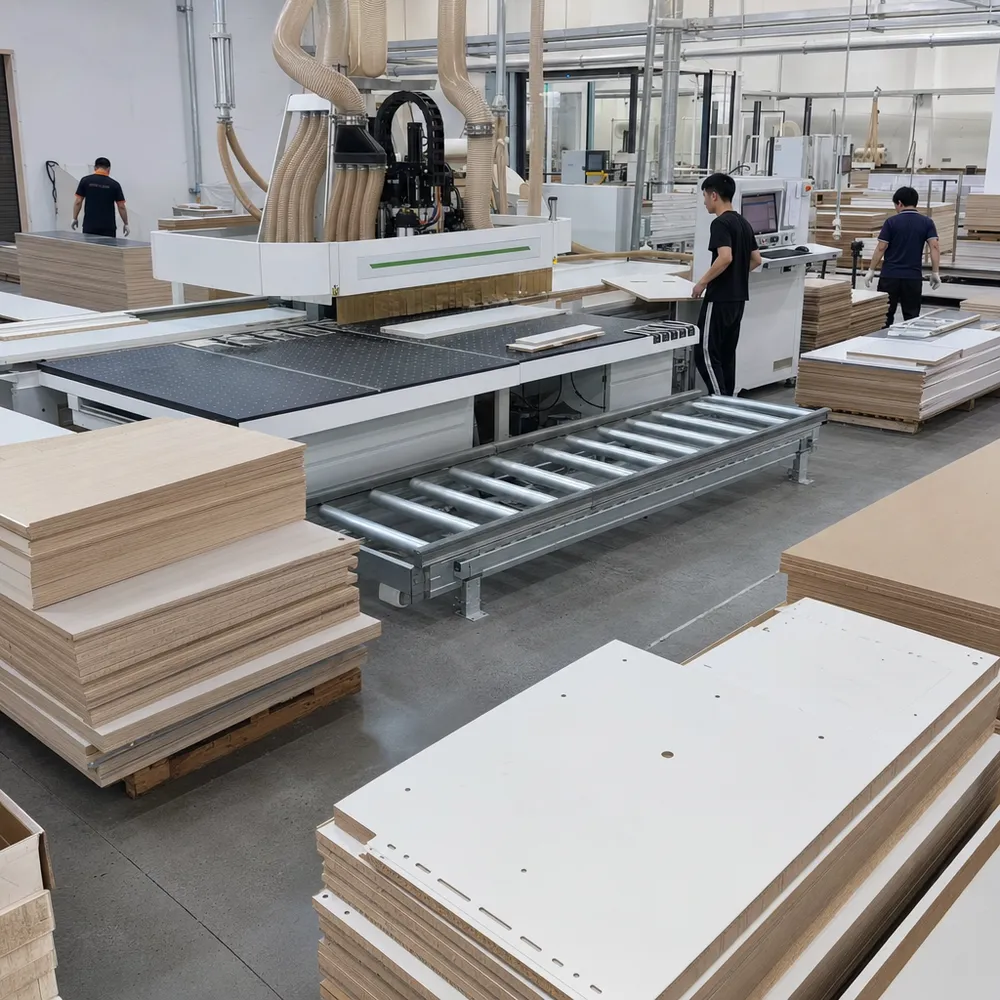
Kitchen and Bathroom Cabinet Manufacturing
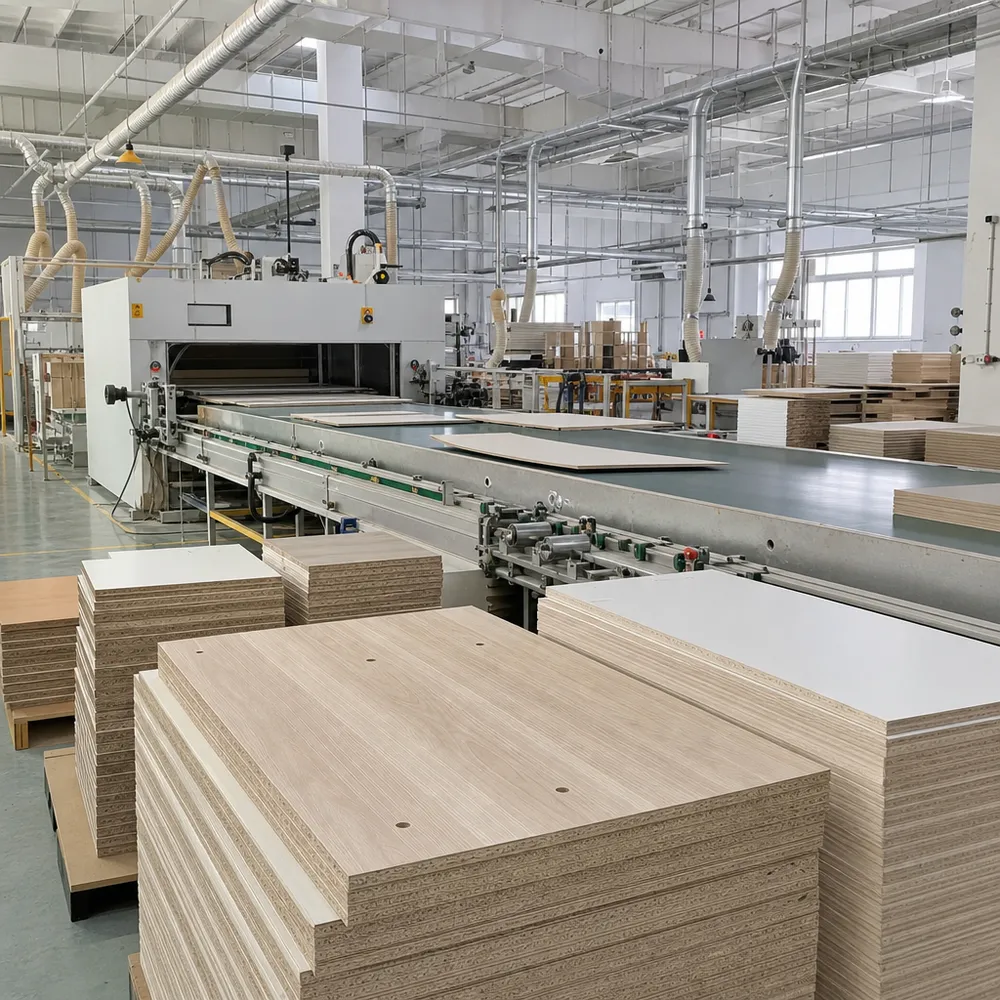
Highest-Volume SegmentCabinet manufacturers run high-throughput CNC operations where panel consistency directly affects machine uptime — a batch with thickness variation outside ±0.3mm causes feed errors that require manual intervention. They also need CARB P2 compliance for US-market cabinets, and WBP glue for moisture-exposed applications.
Key Requirements
Flat-Pack and RTA Furniture Production
Amazon · Wayfair · DTC BrandsThis segment supplies Amazon, Wayfair, IKEA-adjacent brands, and direct-to-consumer furniture e-commerce — running on tight margin and high volume. These manufacturers need panels dimensionally consistent enough to cut on automated lines without manual adjustment, and surface-quality consistent enough to minimize finishing labor.
Key Requirements
Wholesale Distribution and Building Materials Supply
Channel SegmentDistributors who stock furniture plywood for sale to local cabinet shops, joiners, and furniture manufacturers. For this segment, the key commercial variables are consistent panel quality (so their customers don't return product), reliable lead times (so they don't run out of stock), and documentation (so they can supply into regulated markets without customs delays).
Certification Premium
A distributor who can offer CARB P2 and FSC-certified furniture plywood has a product that commands a price premium over uncertified alternatives.
Key Requirements
Overseas Furniture Manufacturers — OEM Sourcing
SE Asia · Middle East · Eastern EuropeManufacturers sourcing from China for their own production need a supplier who can handle OEM specifications: custom face veneer species, specific core constructions, custom panel dimensions, and private-label packaging. We handle OEM furniture plywood programs from specification development through production sample approval to ongoing supply.
OEM Capabilities
- Custom face veneer species
- Specific core constructions
- Custom panel dimensions
Program Scope
- Spec development
- Sample approval
- Private-label packaging
Certifications That Clear Customs and Satisfy Procurement Audits
The certification stack on our furniture plywood covers the compliance requirements for our main export markets without requiring you to qualify a separate supplier for each region.
CARB P2
California Air Resources Board Phase 2
The formaldehyde emission standard for composite wood products sold in California and, effectively, across the US market. Without CARB P2 documentation, the product can't legally be sold in California and most major US retailers won't accept it regardless of state.
Baseline for all US-bound shipments
FSC Chain of Custody
Forest Stewardship Council
Wood fiber in our panels can be traced to certified forests. This matters for buyers supplying into markets or to brands with sustainability sourcing policies — European retailers, US furniture brands with ESG commitments, and government procurement programs that require certified wood.
Available on chain-of-custody orders
ISO 9001:2015
Quality Management System
Covers our quality management system — the process controls, inspection procedures, and documentation practices that produce consistent output. For buyers who conduct supplier audits, ISO 9001 certification means the QC process is documented and auditable, not just described verbally.
Documented, auditable QC process
CE Marking
European Market Requirements
Covers European market requirements for construction and building material applications. For furniture plywood going into European markets, CE documentation is available.
Available for EU-bound shipments
Emission Standards
Formaldehyde Emission Levels by Market
We produce to E0, E1, and CARB P2 specifications. Specify your target market when inquiring and we'll confirm the applicable emission standard and documentation.
Japan, South Korea, premium European segments
European market standard across most applications
Required for US retailers and California distribution
Active Certifications
Customization Parameters for OEM and Private-Label Programs
Furniture plywood is one of the more customizable products in our range. The variables that matter — face veneer species, core construction, thickness, panel size, glue type, emission standard — are all adjustable within our production capabilities.
Thickness Range
2.5mm through 25mm in standard increments. Non-standard thicknesses available on confirmed orders.
Panel Dimensions
Standard 1220×2440mm (4×8 ft). Custom dimensions are available — we cut to size on precision saws, so custom dimensions are a scheduling question, not a tooling cost.
Minimum order quantities for custom dimensions are higher than standard sizes. Confirm with us when specifying.
Face Veneer Species
Poplar, birch, eucalyptus as standard. Hardwood face veneers available on OEM orders with minimum quantities.
Face veneer thickness and grade are also specifiable — relevant for buyers who need a specific grain appearance or surface hardness.
Core Construction
Default construction for furniture plywood.
Alternating veneer and MDF layers. Better screw-holding at edges and smoother face surface.
For thick panels where weight reduction matters.
Glue Type & Emission Standard
Specify both when ordering — the glue type affects moisture resistance, the emission standard affects formaldehyde content and documentation requirements.
Glue Type
Emission Level
Private-Label & OEM Packaging
We support private-label programs — custom bundle marking, brand labeling, and documentation in your company name. Common for distributors who want to present a branded product to their customers rather than a factory-marked panel.
Lead Times
Varies by order volume and specification complexity.
How We Produce Furniture Plywood: The Process Details That Affect Your Downstream Quality
The production sequence for furniture plywood has more steps than structural plywood, and the tolerance requirements at each step are tighter. Here's what happens between raw veneer and a finished panel.
Veneer Grading and Drying
Incoming Quality Control
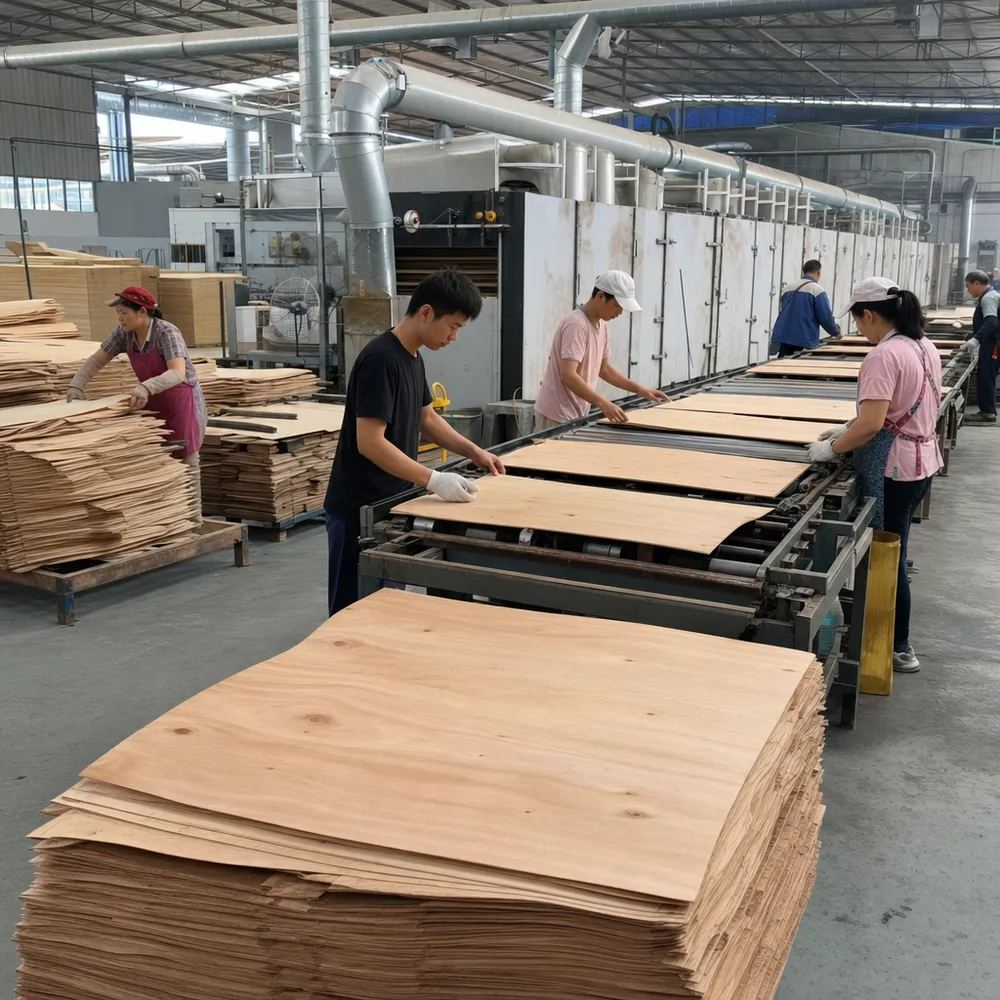
Incoming veneers are sorted by species, moisture content, and surface grade. Face veneers and core veneers go through separate grading lines — face veneers are inspected for surface defects (knots, splits, discoloration, grain irregularities) against the grade specification for the order.
Both are dried to target moisture before layup. We don't mix veneer grades within a panel unless the specification calls for it — a face-grade veneer used as a core veneer is a waste of material, and a core-grade veneer used as a face veneer is a quality defect.
Glue Spreading and Layup
Controlled Application
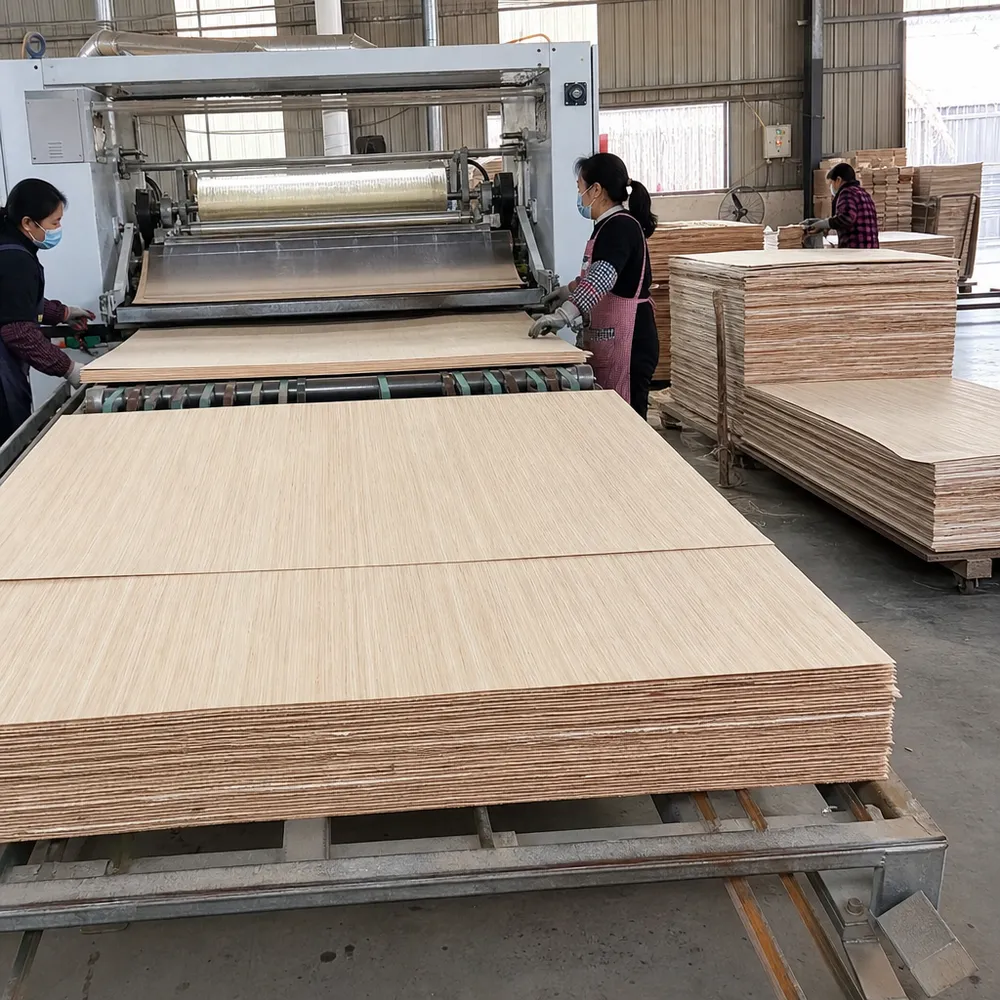
Glue is applied by automated spreader at a controlled spread weight — typically 160–200 g/m² per glue line for furniture applications.
160–200
g/m² per glue line
90°
alternating grain direction
Too light and you get bond failure; too heavy and you get glue bleed-through on face veneers that shows up as surface contamination after sanding. The layup is assembled with grain directions alternating 90° between plies, checked visually before the panel goes to the press.
Hot Pressing
Bond Formation & Calibration
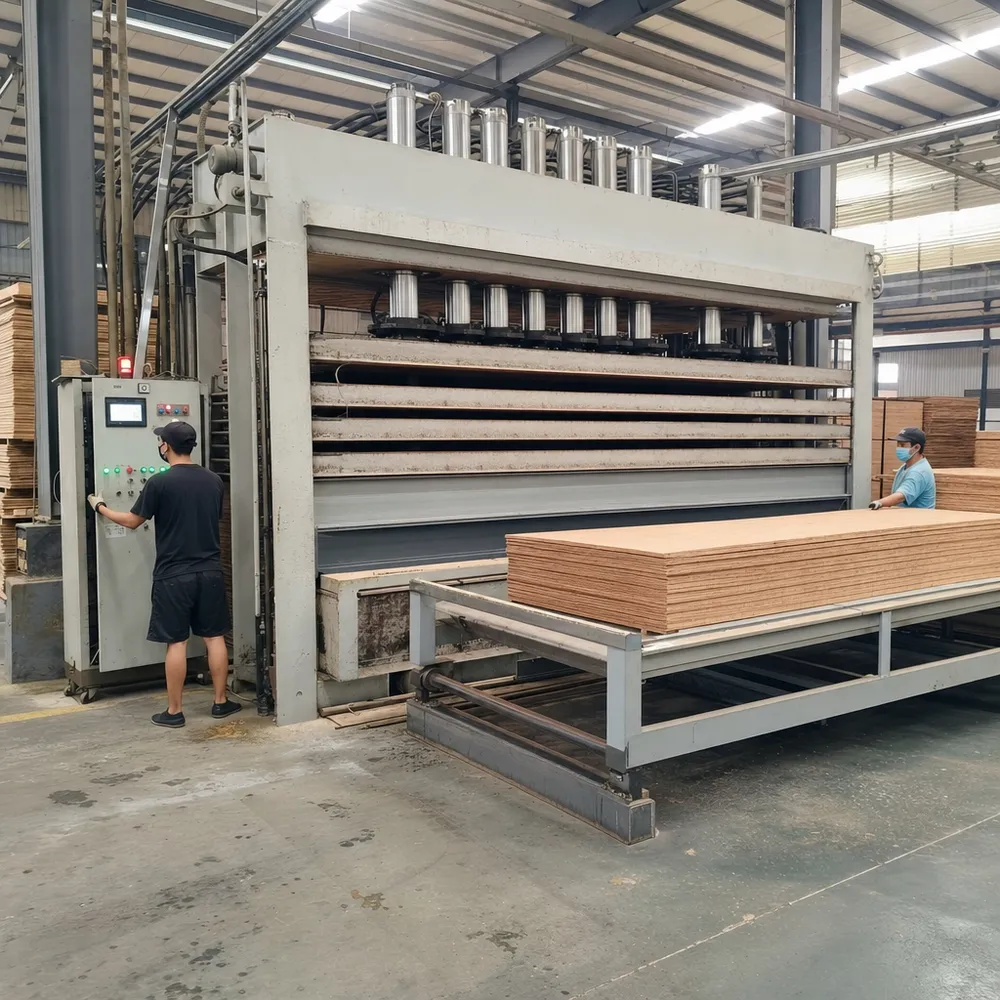
We run multi-daylight hydraulic hot presses. Press temperature, pressure, and time are set by product specification and logged per batch.
The critical variable is pressure uniformity across the full panel surface — uneven pressure produces panels with inconsistent bond strength that may pass a surface check but delaminate under load. Our press parameters are calibrated and monitored; if a batch shows bonding anomalies post-press, we can trace it back to the specific press cycle.
Sanding and Calibration
Thickness Tolerance & Surface Finish
Post-press panels go through a wide-belt sanding line. The sanding is calibrated to achieve the target thickness and surface finish simultaneously — we're not just smoothing the surface, we're bringing the panel to final thickness tolerance.
Achieved at the sanding stage, not the press stage.
This is where a lot of factories lose control — if the press produces panels with thickness variation, the sanding line has to compensate, and you end up with uneven sanding depth that affects surface quality.
Trimming and Inspection
Outgoing Quality Gate
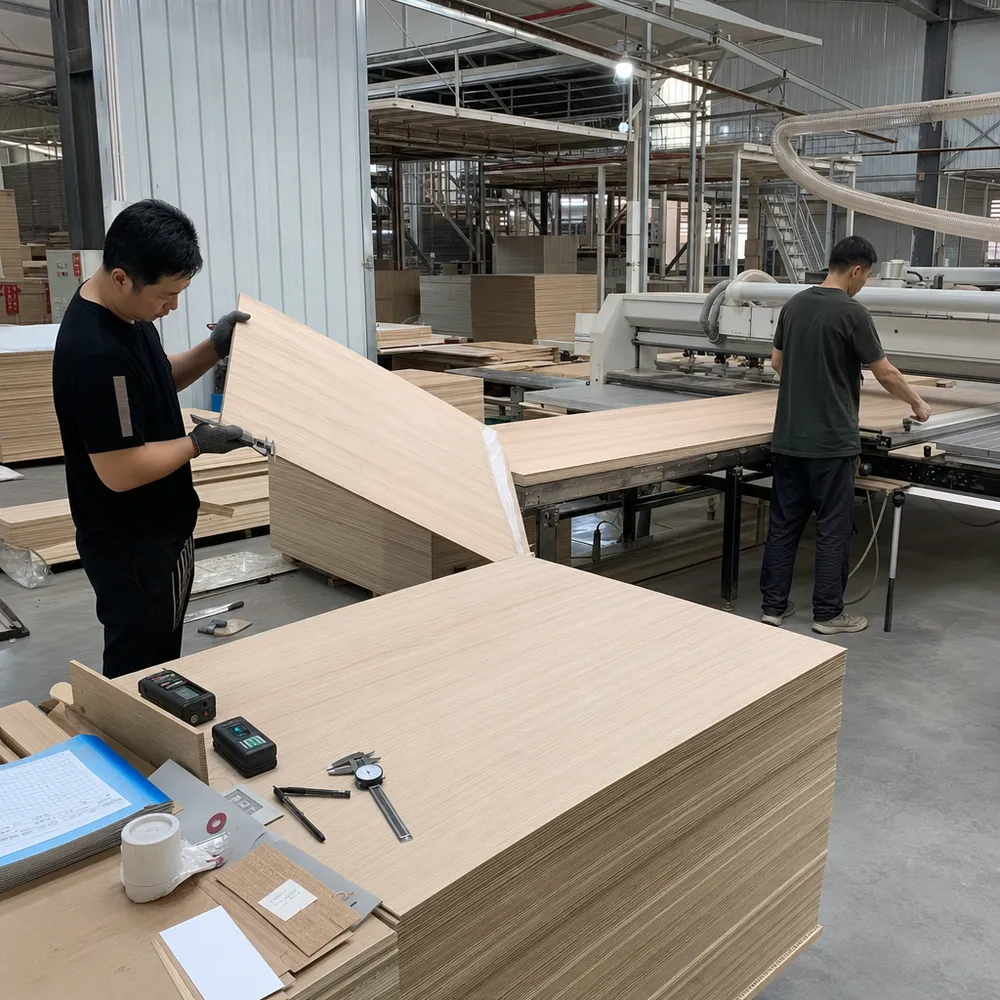
Panels are trimmed to final dimensions on precision saws. Outgoing inspection covers thickness at multiple points, surface grade, moisture content, and formaldehyde emission (sampled per batch for CARB P2 and E1/E0 orders). Panels that fail any inspection parameter are pulled before packing.
Thickness
Multi-point measurement per panel
Surface Grade
Visual inspection against spec
Moisture Content
Verified before packing
Formaldehyde Emission
Batch-sampled for CARB P2, E1/E0
Packaging, Container Loading, and Landed Cost Efficiency
How your order is packed, loaded, and documented directly affects your landed cost and customs clearance speed. Here's what to expect at every stage.
Bundle Packaging Standards
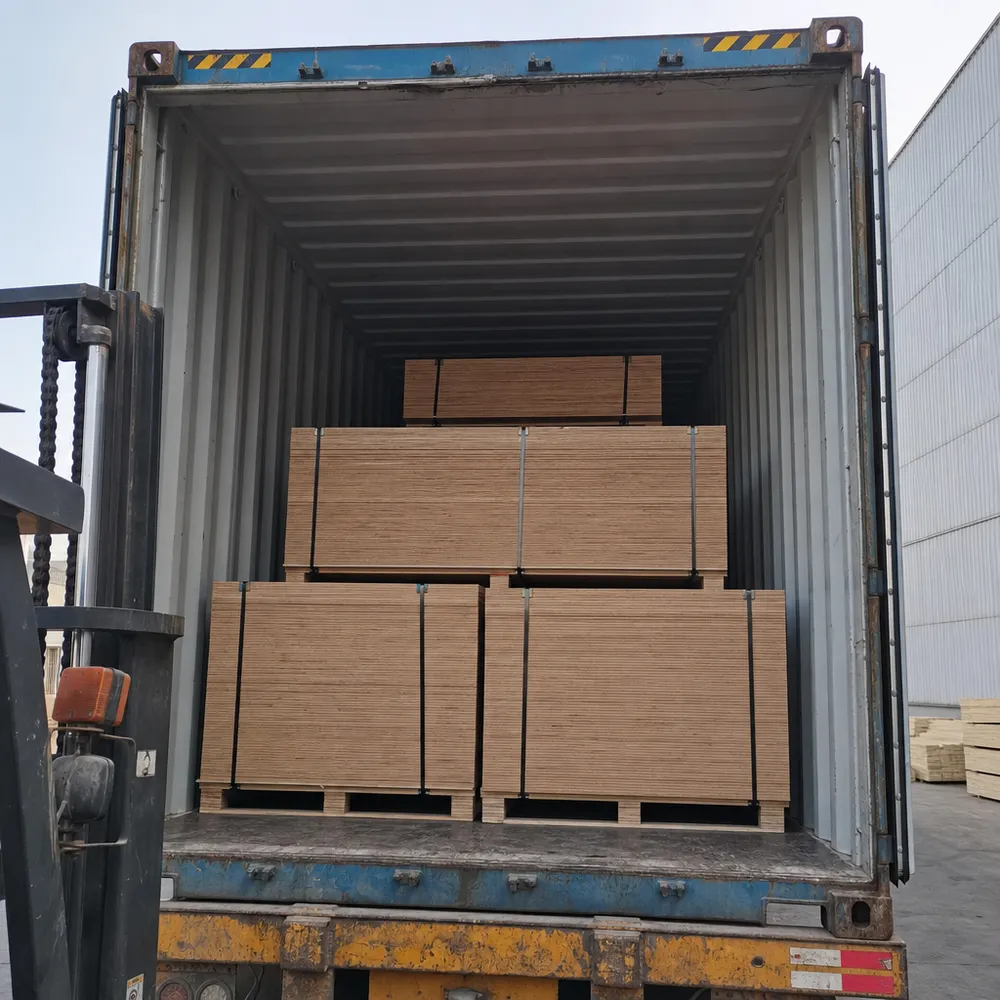
Furniture plywood ships in bundles of 50–100 sheets depending on thickness, strapped and edge-protected with corner boards. Export packaging includes moisture-resistant film wrap on the bundle exterior — relevant for ocean transit where condensation inside the container can affect surface quality on unprotected panels.
We provide a loading plan with each shipment — panel count per layer, stacking configuration, and total cubic meters — so your receiving team knows what to expect before the container arrives.
Export Documentation Package
- Commercial invoice & packing list
- Bill of lading & certificate of origin
- Phytosanitary certificate (where required)
- CARB P2 documentation (US-bound shipments)
- FSC chain-of-custody records (where applicable)
- CE declaration (EU-bound shipments)
We prepare the documentation package to the standard for your destination market. Buyers who've had customs delays with previous suppliers typically find the documentation gap is the cause, not the product itself.
Port Access & Transit Times
Xuzhou connects to Qingdao, Shanghai, and Lianyungang ports.
Container Loading Capacity
Standard 1220×2440mm panels. For mixed-product orders (furniture plywood plus other panel types), we coordinate consolidated loads to maximize cubic utilization and reduce your per-unit freight cost.
Container Loading Reference
| Container Type | 18mm Panels | 12mm Panels | Notes |
|---|---|---|---|
| 20HQ | 600–650 sheets | 900–950 sheets | Varies by panel density and stacking configuration |
| 40HQ | 1,300–1,400 sheets | 1,900–2,000 sheets | Standard for most furniture plywood orders |
Loading plans are provided with every shipment. Panel count per layer, stacking configuration, and total cubic meters are documented so your receiving team can verify the load before the container is opened.
Furniture Plywood vs. Sibling Products: Choosing the Right Panel for Your Application
Furniture plywood sits within our commercial plywood range alongside several related products. The differences matter for your downstream application — here's how to choose.
Furniture Plywood vs. Interior Plywood
Scope differenceInterior plywood covers a broader range of indoor applications — wall paneling, flooring underlayment, general construction. Furniture plywood is a subset with tighter surface quality and thickness tolerance requirements. If your application is furniture or cabinet manufacturing, furniture plywood is the right specification.
View interior plywoodFurniture Plywood vs. Hardwood Plywood
Face veneer differenceHardwood plywood uses hardwood face veneers as standard — oak, maple, birch — and is positioned for premium furniture and joinery applications where the face veneer is the visible finish. Furniture plywood covers a wider range including poplar-face panels for painted or laminated applications. If your downstream market is premium furniture with exposed wood grain, hardwood plywood may be the better fit.
View hardwood plywoodFurniture Plywood vs. Moisture-Resistant Plywood
Glue & environment differenceMoisture-resistant plywood uses WBP glue and is specifically engineered for high-humidity environments — kitchen cabinets, bathroom vanities, laundry rooms. Standard furniture plywood with MR glue is not suitable for these applications. If your market is kitchen or bathroom cabinetry, specify moisture-resistant construction.
View moisture-resistant plywoodFurniture Plywood vs. Marine Plywood
Specification & cost differenceMarine plywood uses WBP glue with void-free core construction and is rated for direct water exposure. It's a higher specification (and higher cost) than furniture plywood. For furniture applications, marine plywood is over-specified unless the end use involves direct water contact.
View marine plywoodQuick Selection Reference
Match your application to the right panel type before requesting a quote.
Not sure which panel fits your spec?
Send us your application details and we'll confirm the right product and glue type before you commit to a sample order.
Frequently Asked Questions
Technical and commercial questions we hear from distributors, cabinet manufacturers, and furniture producers before placing their first order.
18mm is the industry standard for cabinet carcass panels — side panels, top and bottom panels, and fixed shelves. 12mm is used for adjustable shelves and drawer sides in most cabinet systems. 6mm or 9mm is used for cabinet backs where the back panel is recessed into a groove rather than face-nailed.
If you're supplying to cabinet manufacturers, stocking 6mm, 12mm, and 18mm covers the majority of their requirements.
≤1.5 mg/L by perforator method. Standard European requirement — covers most general furniture applications in Europe.
≤0.5 mg/L. Stricter European and Asian standard used for premium furniture and children's furniture.
US standard — 0.05 ppm continuous emission rate for hardwood plywood, roughly equivalent to E0 in stringency. Required for the US market.
Specify your target market when ordering and we'll confirm the applicable standard.
Yes — our S2S sanded furniture plywood is produced specifically for overlay applications. The surface is sanded to a consistent finish that provides good adhesion for melamine paper, PVC film, and wood veneer lamination. The key requirement is that the face surface is flat and free of core voids — both of which our outgoing inspection checks.
For high-gloss melamine overlay applications, specify a higher face grade when ordering. The surface needs to be particularly flat and free of grain texture for gloss finishes to look right.
For sample orders before committing to a full container, we can arrange sample panels for evaluation. Contact us with your specification and target volume and we'll confirm the MOQ and lead time.
Warping after cutting is almost always a moisture content issue — either the panels arrived with moisture content outside the equilibrium range for your environment, or the panels were stored in conditions that caused rapid moisture change after cutting.
Panels cut from a stable 8–12% moisture content and stored flat in a climate-controlled environment will not warp under normal conditions.
If you're seeing warping on panels from a previous supplier, check the moisture content on arrival — a simple pin moisture meter will tell you if the panels are in range. Panels arriving above 13% in a dry warehouse environment will cup as they dry.
Edge sealing is applied on our export-grade furniture plywood as standard — the panel edges are sealed to prevent moisture ingress during ocean transit. This is particularly important for panels shipped to humid destination markets (Southeast Asia, the Gulf) where condensation inside containers can cause edge swelling on unsealed panels.
The edge seal is a thin coating applied after trimming; it doesn't affect the panel dimensions or downstream processing.
Get a Quote for Furniture Plywood
We've been supplying furniture plywood to distributors, cabinet manufacturers, and furniture producers across North America, Europe, the Middle East, Southeast Asia, and Australia since 2008. The factory is in Xuzhou, Jiangsu — direct access to Qingdao, Shanghai, and Lianyungang ports.
Send us your specification — thickness, panel size, face veneer species, glue type, emission standard, destination market, and target volume — and we'll come back with a detailed quote, the relevant certification documentation, and a container loading plan.
Xuzhou, Jiangsu Province, 221116, China
Xuzhou QD Wood Industry Co., Ltd.
Factory established 2008. Xuzhou, Jiangsu Province — direct port access to Qingdao, Shanghai, and Lianyungang.
What to Include in Your Inquiry
- Thickness — e.g. 6mm, 12mm, 18mm, or custom
- Panel size — standard 1220×2440mm or custom dimensions
- Face veneer species — birch, poplar, eucalyptus, hardwood
- Glue type — MR, MF, or WBP
- Emission standard — E1, E0, or CARB P2
- Destination market — US, EU, Middle East, Southeast Asia, etc.
- Target volume — containers per month or annual estimate