

Kitchen Melamine Plywood
Engineered for Cabinet Fabrication
Built specifically for kitchen cabinet carcass and interior panel applications where standard melamine plywood fails under humidity cycling. MR/WBP core, high-resin surface overlay, factory-direct from Xuzhou since 2008.
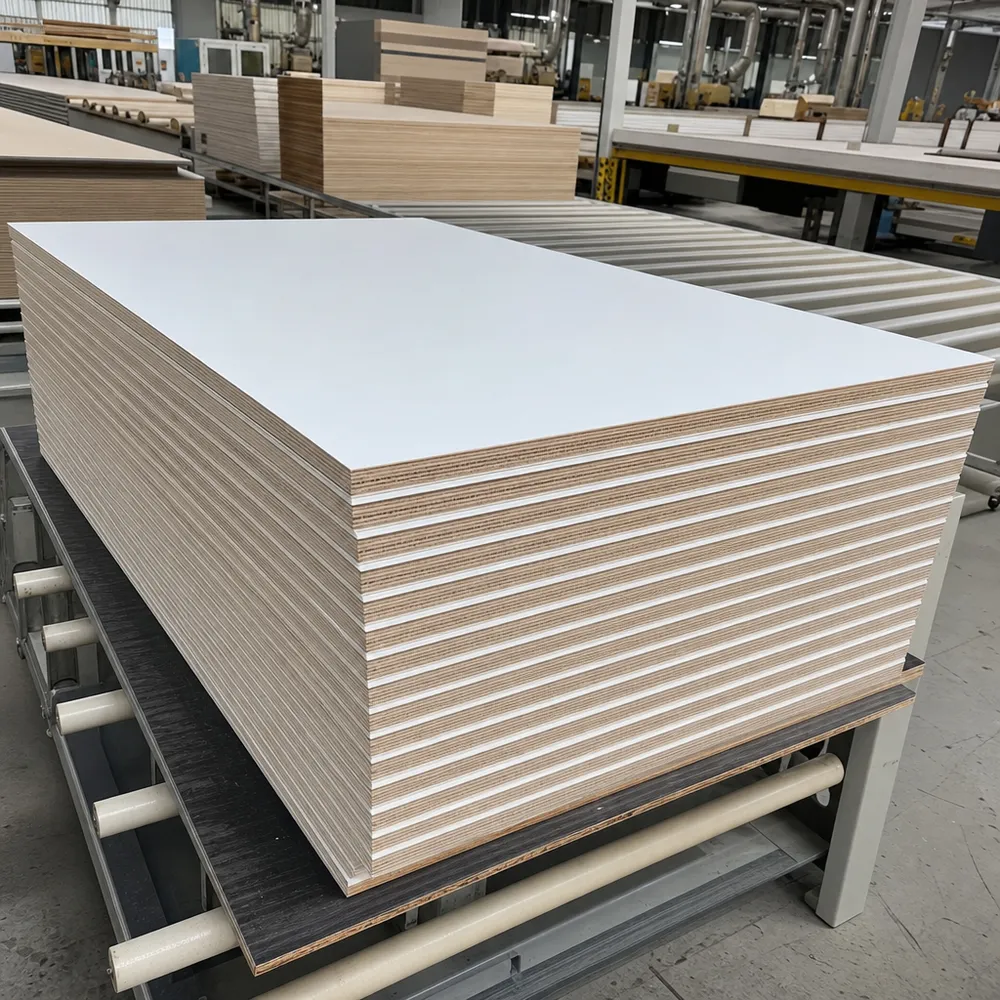
What Separates Kitchen Melamine from Standard Melamine Plywood
Kitchen melamine plywood is not a marketing label for standard melamine board. The difference is in the glue system and the surface overlay specification — two variables that determine whether the panel holds up in a kitchen environment or starts failing within a year of installation.
Standard melamine plywood uses a urea-formaldehyde (UF) glue system in the core construction. UF glue is adequate for dry interior applications — bedroom furniture, office shelving, living room cabinetry. But kitchen environments involve sustained humidity cycling: steam from cooking, moisture from dishwashers and under-sink plumbing, temperature swings between cooking and ventilation. UF glue absorbs moisture under those conditions, and the bond weakens progressively. You won't see it immediately — the panel looks fine on delivery and for the first few months. The failure shows up later, as edge swelling, surface lifting at corners, or delamination at the back panel joints. By then, your buyer has already installed the cabinets.
We run kitchen melamine plywood on a moisture-resistant (MR) glue system as the standard specification, with WBP (waterproof boil-proof) available for applications with direct water contact. The MR glue system uses melamine-urea-formaldehyde resin, which maintains bond integrity through humidity cycling. The surface overlay uses a higher resin saturation paper — 100–120 g/m² versus the 80 g/m² standard — which produces a harder surface with better resistance to moisture penetration at the face. These two specifications together are what make a panel suitable for kitchen cabinet fabrication, not just the word "kitchen" in the product name.
We've had buyers come to us after a container of standard melamine plywood failed in kitchen installations in Southeast Asia — high ambient humidity accelerated the UF glue degradation faster than it would in a temperate climate. The MR specification is the right call for any market with elevated ambient humidity, not just kitchens specifically.
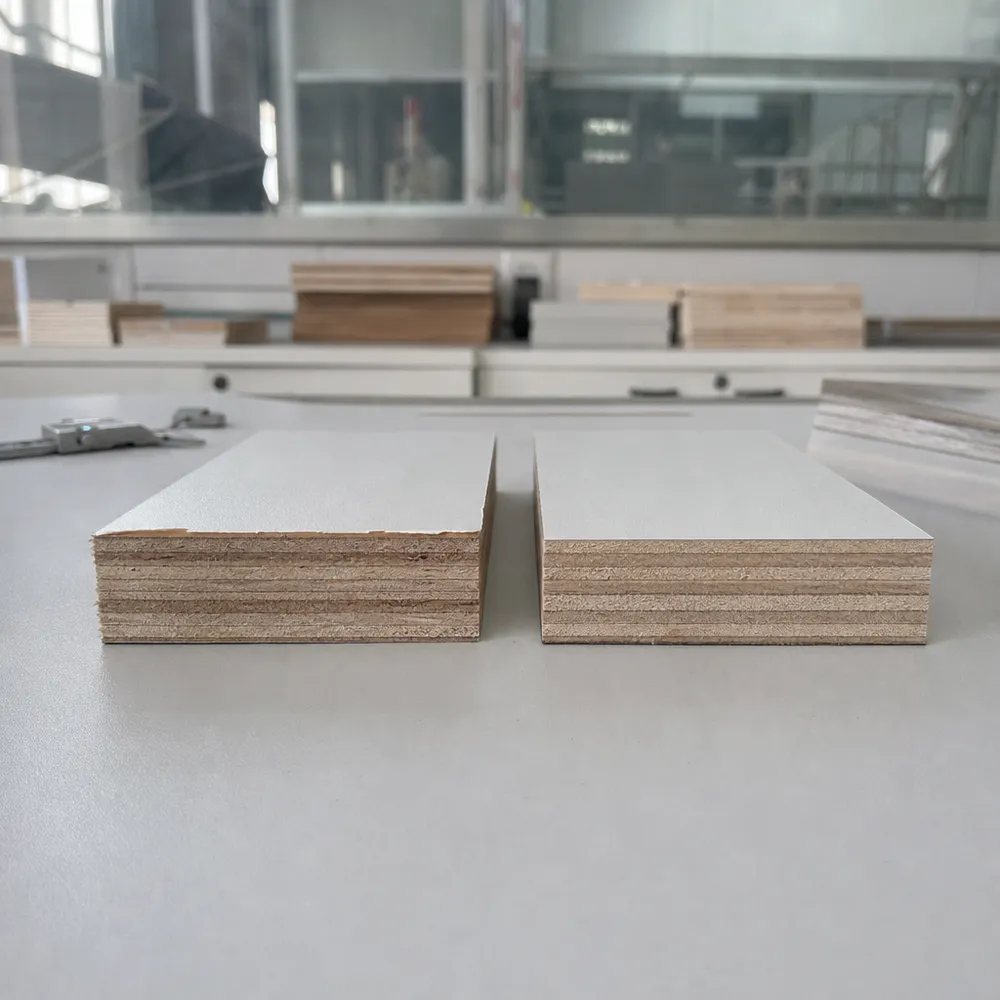
Standard Melamine
- UF (urea-formaldehyde) glue core
- 80 g/m² standard overlay paper
- Bond weakens under humidity cycling
- Edge swelling, surface lifting over time
- Suitable for dry interiors only
Kitchen Melamine
- MR (melamine-urea-formaldehyde) glue core
- 100–120 g/m² high-resin overlay paper
- Bond integrity maintained through humidity cycling
- Harder surface, moisture-resistant face
- WBP option for direct water contact zones
Two Variables That Determine Kitchen Suitability
Technical Specifications
Standard specifications for our kitchen melamine plywood. Contact us to confirm exact parameters for your order specification.
| Parameter | Specification |
|---|---|
| Thickness | 12mm, 15mm, 18mm, 25mm custom available |
| Sheet Size | 1220×2440mm standard; 1220×2800mm, 1525×3050mm on confirmed orders |
| Core Material | Poplar or eucalyptus veneer core hardwood core available |
| Core Construction | Cross-grain veneer layup, odd-number plies |
| Glue System | MR standard (melamine-urea-formaldehyde) WBP available (phenol-formaldehyde) |
| Melamine Paper Weight | 100–120 g/m² high-resin saturation overlay |
| Surface Finish | Matte or satin (standard); custom texture on confirmed orders |
| Decor Options | Solid white, solid colors, wood grain custom on MOQ |
| Formaldehyde Emission | CARB P2 E1 |
| Thickness Tolerance | ±0.2mm (calibrated sanding) |
| Moisture Content | 8–12% (export-grade target range) |
| Certifications |
CARB P2 FSC E1 ISO 9001
|
| MOQ | 1×20ft container (approx. 600–800 sheets depending on thickness) |
| Lead Time | 15–25 days production (after order confirmation) |
Glue System Guide
Why Paper Weight Matters
Heavier overlay paper means more resin per unit area. More resin means a denser, harder surface that resists moisture penetration and abrasion more effectively.
Common Thickness Uses
Applications
Kitchen melamine plywood is specified across residential and commercial projects wherever a durable, moisture-resistant panel surface is required.
Kitchen Cabinetry
The primary application. Used for cabinet carcasses, door panels, shelving, and drawer fronts in both residential and commercial kitchens.
- Upper and lower cabinet boxes
- Flat-pack and RTA furniture
- Commercial kitchen fit-outs
- 18mm carcass, 12mm backs
Bathroom Vanities
MR and WBP core grades handle the sustained humidity of bathroom environments. WBP specified for under-sink zones with plumbing exposure.
- Vanity cabinet carcasses
- Under-sink storage units
- Mirror cabinet boxes
- WBP core for wet zones
Wardrobe & Storage
Clean, consistent surface finish makes kitchen melamine plywood a standard choice for built-in wardrobes, walk-in robes, and storage wall systems.
- Built-in wardrobe carcasses
- Shelving and dividers
- Drawer box construction
- Laundry joinery
Retail & Commercial Fit-Out
Abrasion resistance and consistent colour make it suitable for high-traffic retail shelving, display units, and commercial joinery applications.
- Retail display shelving
- Reception and counter joinery
- Office furniture carcasses
- Hospitality fit-outs
Flat-Pack Manufacturing
Dimensional consistency and calibrated thickness tolerances (±0.2mm) make it a reliable substrate for CNC-routed flat-pack furniture production lines.
- CNC panel processing
- Consistent thickness for hardware
- RTA cabinet components
- High-volume production runs
Benchtops & Work Surfaces
25mm kitchen melamine plywood provides a rigid, hard-wearing substrate for benchtops and work surfaces in utility and light-commercial settings.
- Utility benchtops (laundry, garage)
- Workshop work surfaces
- Commercial prep surfaces
- 25mm for load-bearing spans
Why Source From Us
What separates a reliable kitchen melamine plywood supplier from one that creates problems downstream.
Verified Certifications
CARB P2, FSC, E1, and ISO 9001 documentation available per shipment. Not claimed — verifiable on request with third-party test reports.
Calibrated Thickness Tolerance
±0.2mm tolerance maintained through calibrated sanding. Consistent thickness is critical for CNC processing and hardware fitting — we hold it.
Glue System Transparency
We specify MR or WBP core clearly on every order. No ambiguity about what glue system you're receiving — confirmed in writing before production.
Export Logistics Experience
Fumigation certificates, phytosanitary documentation, and container loading reports provided as standard. We've handled export compliance across 40+ markets.
Pre-Shipment Sampling
Physical samples dispatched before production confirmation. Evaluate surface finish, colour accuracy, and edge quality against your specification before committing to volume.
What Buyers Get Wrong
Ordering "melamine plywood" without specifying MR or WBP core — and receiving UF grade.
Accepting 80 g/m² overlay paper when 100–120 g/m² was quoted — surface performance drops significantly.
Not requesting third-party test reports for CARB P2 — supplier certifications without documentation are unverifiable.
Skipping pre-shipment samples — colour and texture variation between batches is common without sample approval.
Ready to specify kitchen melamine plywood for your next order?
Request a QuoteFrequently Asked Questions
Answers to the questions buyers and specifiers ask most often about kitchen melamine plywood.
What is the difference between MR and WBP core for kitchen use?
Can kitchen melamine plywood be used for benchtops?
What thickness should I specify for kitchen cabinet carcasses?
Is CARB P2 certification required for kitchen applications?
What overlay paper weight should I specify?
How does kitchen melamine plywood compare to MDF for cabinets?
What colours and finishes are available?
What is the minimum order quantity?
Can panels be cut to size before shipping?
How should kitchen melamine plywood be stored on site?
Specify Kitchen Melamine Plywood With Confidence
Send us your specification — thickness, core type, decor, quantity, and destination — and we'll respond with pricing, lead time, and sample availability within one business day.
The Core Construction That Determines Cabinet Performance
A high-resin surface overlay on a weak core is still a weak panel. The substrate is where kitchen melamine plywood either earns its specification or doesn't — surface protection means nothing if the core glue system fails under humidity cycling.
Veneer Moisture Sorting Before Layup
Incoming veneers are sorted by moisture content before layup. We target 8–10% moisture in core veneers before pressing. A veneer entering the press with elevated moisture produces residual stress that shows up as warping or surface irregularity after pressing. Core veneers with open defects above the specification limit are rejected before layup — a void in the core creates a weak point at cut lines where the melamine surface loses substrate support and crumbles during edge-banding.
Controlled Glue Spread and Press Parameters
MR glue is applied by automated spreader at a controlled spread weight — typically 160–180 g/m² per glue line. Too light produces incomplete bonding; too heavy causes bleed-through at the face veneer that contaminates the melamine paper bond. The press runs at 130–140°C with calibrated pressure across the full panel surface. Press parameters are logged per batch, so if a bonding issue surfaces downstream, we can trace it to the specific production run and identify whether it was a glue spread, temperature, or pressure deviation.
Post-Press Peel Test as a Production Gate
Post-press, panels go through a peel test before reaching the sanding line. A strip is cut from the panel edge and the face veneer is peeled — the test confirms that the bond failed in the wood fiber, not at the glue line. A glue-line failure at the peel test means the batch goes back for investigation before it moves forward. This is a production gate, not a final inspection step.
Calibrated Wide-Belt Sanding: ±0.2mm Thickness Tolerance
The calibrated wide-belt sanding line brings thickness tolerance to ±0.2mm across the panel. For buyers supplying into cabinet fabrication operations running automated panel saws and CNC routers, this tolerance is the specification that determines whether panels feed cleanly through their equipment. Thickness variation above ±0.3mm causes feed errors and inconsistent cut depth — problems that show up as production downtime for your buyer, not as a warranty claim you can easily trace back to the panel.
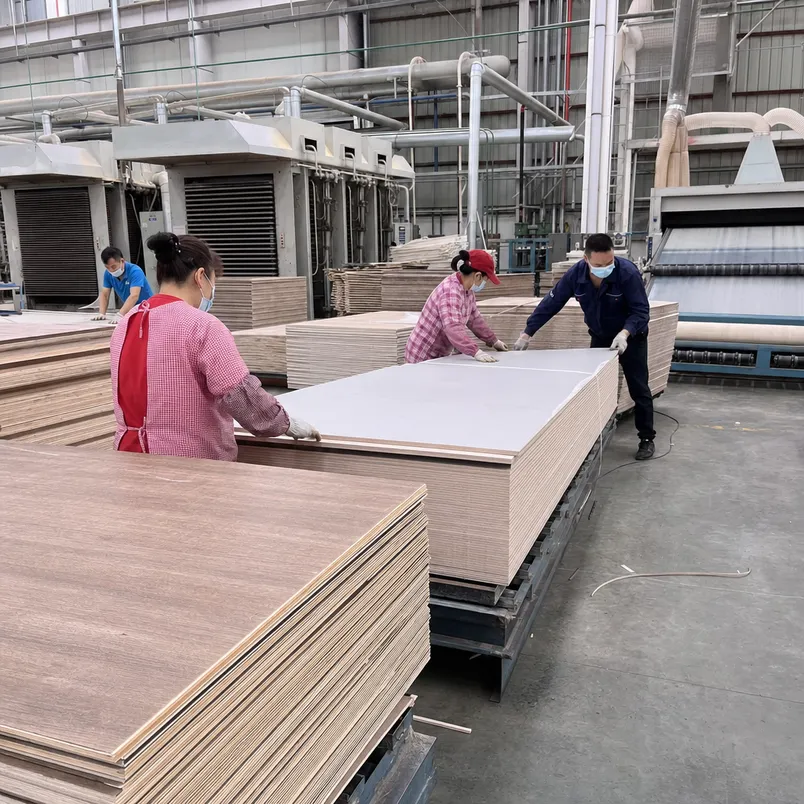
Key Process Parameters
Why this matters for your buyers: Thickness variation above ±0.3mm causes feed errors and inconsistent cut depth on automated panel saws and CNC routers. These problems show up as production downtime for your buyer — not as a warranty claim you can easily trace back to the panel.
Market Segments Where Kitchen Cabinet Melamine Generates Consistent Volume
Kitchen melamine plywood moves in specific segments with predictable order patterns. These are the segments where our existing buyers have built repeatable business.
Kitchen Cabinet Manufacturers
Primary SegmentA mid-size kitchen cabinet factory running 80–150 kitchens per month consumes 15–25 m³ of melamine plywood per month in carcass panels alone — side panels, base units, upper cabinets, and pantry towers. The 18mm MR specification is the standard carcass dimension across European and North American kitchen systems.
Reorder cycle is monthly once you're established as the supplier
Volume is predictable — 15–25 m³/month in carcass panels alone
Key commercial variable: color consistency across orders. A cabinet manufacturer running a product line in a specific white or wood grain needs the same decor across every batch — color shifts between orders create a production problem when panels from different batches end up in the same kitchen installation.
Kitchen Furniture Distributors
Trade SupplyDistributors supplying trade customers — joiners, kitchen retailers, fit-out contractors — need a supplier who can maintain consistent stock availability across the standard thickness and decor range. The 18mm in solid white and two or three wood grains covers the majority of trade customer demand.
Typically start with a trial container to test specification with their customers
Move to quarterly reorder programs once the product is established in their range
Growth market: This segment has grown significantly in the Middle East and Southeast Asia over the last three years — rising middle-class demand for fitted kitchen furniture is driving volume in markets that previously used lower-specification panels.
Overseas Furniture Manufacturers with Export Programs
Vietnam · Malaysia · Eastern EuropeFurniture factories in Vietnam, Malaysia, and Eastern Europe that manufacture kitchen furniture for export to North American and European markets need CARB P2 and FSC documentation to clear customs and meet retailer compliance requirements.
Full certification package ships as standard — no additional lead time or third-party testing cost
Compliance documentation is ready when your buyer needs it for retailer programs
Commercial advantage: A meaningful edge when your buyer is competing for retailer programs that require documented compliance — your buyer's compliance documentation is ready without delay.
RTA and Flat-Pack Kitchen Furniture Brands
OEM Programs AvailableBrands sourcing panels for their own manufacturing or for contract manufacturing programs need consistent specification across high-volume orders. The kitchen melamine specification — MR glue, high-resin overlay, CARB P2 — is the baseline for any kitchen furniture brand selling into regulated markets.
OEM programs available: panel specification, decor, and bundle marking customized to buyer requirements
MR glue core + high-resin overlay + CARB P2 is the baseline specification for regulated markets
Consistent specification maintained across high-volume orders
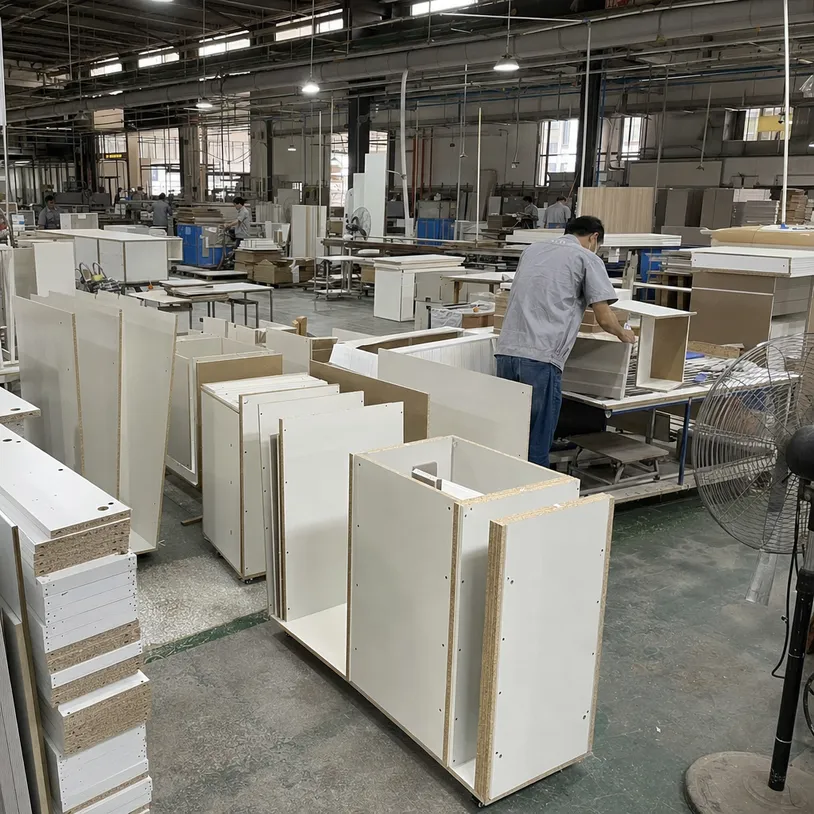
Volume Benchmarks by Segment
Carcass panels only — side panels, base units, upper cabinets, pantry towers
Standard entry point before moving to quarterly reorder programs
Once product is established in trade customer range
Glue System Selection: MR vs WBP for Kitchen Applications
The glue system choice is the most consequential specification decision for kitchen melamine plywood. Here's exactly which applications require which specification.
MR Glue
Standard SpecMelamine-urea-formaldehyde resin — the default specification for kitchen cabinet carcass construction
What It Handles
- Humidity cycling in typical kitchen environments — steam from cooking, occasional splashes
- Elevated ambient humidity around dishwashers and under-sink areas
- Repeated wet-dry cycles without the progressive degradation that UF glue shows in the same conditions
Right for: The vast majority of kitchen cabinet applications. If you're supplying residential kitchen fit-out in standard climates, MR is the correct specification.
WBP Glue
Commercial / TropicalPhenol-formaldehyde resin — specified for direct or sustained water contact applications
When to Specify WBP
- Sink base cabinets where plumbing leaks are a realistic risk
- Commercial kitchen environments with high-pressure cleaning
- Very high-humidity climates where ambient moisture levels are consistently elevated
Trade-off to know: WBP costs more and the darker resin color can show at cut edges — which is why it's not the default. For buyers supplying commercial kitchen fit-out or tropical markets, it's the right call.
Not Sure Which Glue System Fits Your Market?
We can produce kitchen melamine plywood in either glue system on confirmed orders. Tell us the application and the destination market — we'll recommend the right glue system based on what we've seen work for buyers in similar situations.
Surface Overlay: Why Paper Weight and Resin Saturation Matter for Kitchen Use
The melamine surface on kitchen plywood does more work than on standard furniture panels. It's the first line of defense against moisture penetration, grease, and cleaning chemicals — and the specification that determines how long it stays intact.
Standard vs Kitchen-Grade Surface Specification
Adequate for furniture applications where the surface sees light contact and occasional wiping.
Heavier paper provides more resin content per unit area — a harder, denser surface layer that holds up in daily kitchen use.
What the Heavier Spec Delivers
Relevant for kitchen worktops and drawer interiors where utensils and cookware create abrasion. The denser surface layer resists marking under daily use.
The denser resin matrix slows moisture penetration at the surface — the critical failure point for kitchen panels exposed to steam and splashes.
The surface is less porous, so cleaning agents don't penetrate and degrade the resin layer over time. Relevant for commercial kitchen environments with regular chemical cleaning.
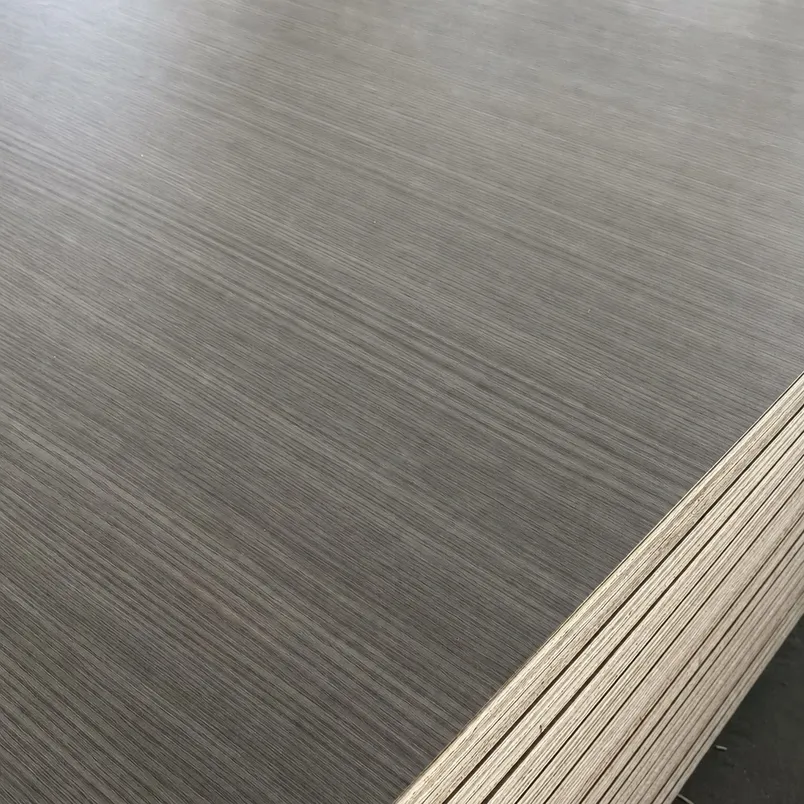
Press Parameters & Quality Control
The melamine paper pressing is managed separately from the core pressing. We run the surface overlay at the temperature and pressure profile specified by the paper supplier for the specific paper weight.
Under-pressing a heavy paper produces a surface that looks bonded but has incomplete resin cure — which shows up as surface softness and early wear in service. Correct press parameters are non-negotiable for kitchen-grade surface performance.
We run a pencil hardness test on each production run. The kitchen melamine specification targets H4 or above — the hardness range that holds up in kitchen use.
Kitchen Melamine Surface Specification at a Glance
Customization Options for Kitchen Melamine Plywood
Standard production covers most cabinet fabrication requirements. Here's what can be adjusted and what the practical constraints are — so you can spec your order with confidence before it goes to production.
Thickness
Standard and custom options
Standard production runs at 12mm, 15mm, 18mm, and 25mm. Custom thicknesses are available on confirmed orders with sufficient volume.
The 18mm thickness is the highest-volume SKU and ships on the shortest lead time. Non-standard thicknesses add 5–7 working days to the production schedule.
Sheet Dimensions
Standard and extended formats
Custom dimensions are available on confirmed orders. Plywood is cut-to-size, so custom dimensions are a scheduling question, not a tooling investment.
Decor and Color
Catalog and custom papers
Catalog decors — solid white, solid colors, standard wood grains — are available at standard MOQ. Custom decors require a minimum paper order from our supplier, which typically translates to 500–1,000 sheets per decor.
For buyers building a private-label kitchen panel range, we recommend starting with catalog decors and moving to custom papers once volume justifies the sourcing commitment.
Glue System
MR standard · WBP available
Specify at order stage. Glue system cannot be changed post-production.
Formaldehyde Emission Standard
CARB P2 baseline · E0 available
E0 is available for buyers supplying into markets with stricter emission requirements. Specify at order stage.
OEM Branding
Private-label programs available
Bundle marking, panel stamping, and documentation under your brand are available for OEM programs. We've run private-label kitchen panel programs for distributors in North America and Europe.
Need a specification outside the standard range?
Send us your target spec — thickness, dimensions, decor, glue system, and emission standard — and we'll confirm feasibility and lead time.
Compliance Documentation for Your Import Market
Kitchen melamine plywood going into regulated markets needs documentation ready before the container ships. We prepare the compliance package as standard — you don't need to request it separately or arrange third-party testing after the fact.
CARB P2
US MarketCalifornia Air Resources Board — Phase 2
Required for California and broadly expected across the US market for composite wood products. Our kitchen melamine plywood is produced to CARB P2 emission standards as the baseline for export production.
FSC Chain of Custody
SustainabilityForest Stewardship Council — certified sourcing
For buyers with sustainability sourcing policies or supplying into retailers with FSC requirements. FSC chain-of-custody documentation is available on confirmed FSC orders. The wood fiber in our panels can be traced back to certified forests.
CE Declaration
EU MarketConformité Européenne — EU market access
Required for EU market access. CE declaration of conformity is included with EU-bound shipments as standard.
ISO 9001:2015
Quality SystemQuality management system certification
Our quality management system certification covers process consistency and traceability across production. Audit reports are available on request.
One supplier. Multiple market certifications.
For buyers supplying into multiple markets, the certification stack — CARB P2, FSC, CE, ISO 9001 — covers the procurement gates in North America, Europe, and sustainability-audited supply chains without requiring you to qualify a separate supplier for each region.
Learn more about our manufacturing capabilities and certification historyContainer Loading and Export Logistics
Everything your receiving team needs to plan inbound shipments — container utilisation, packaging spec, documentation package, and port routing from Xuzhou.
Container Utilisation
Standard 1220×2440mm panels, 18mm thickness
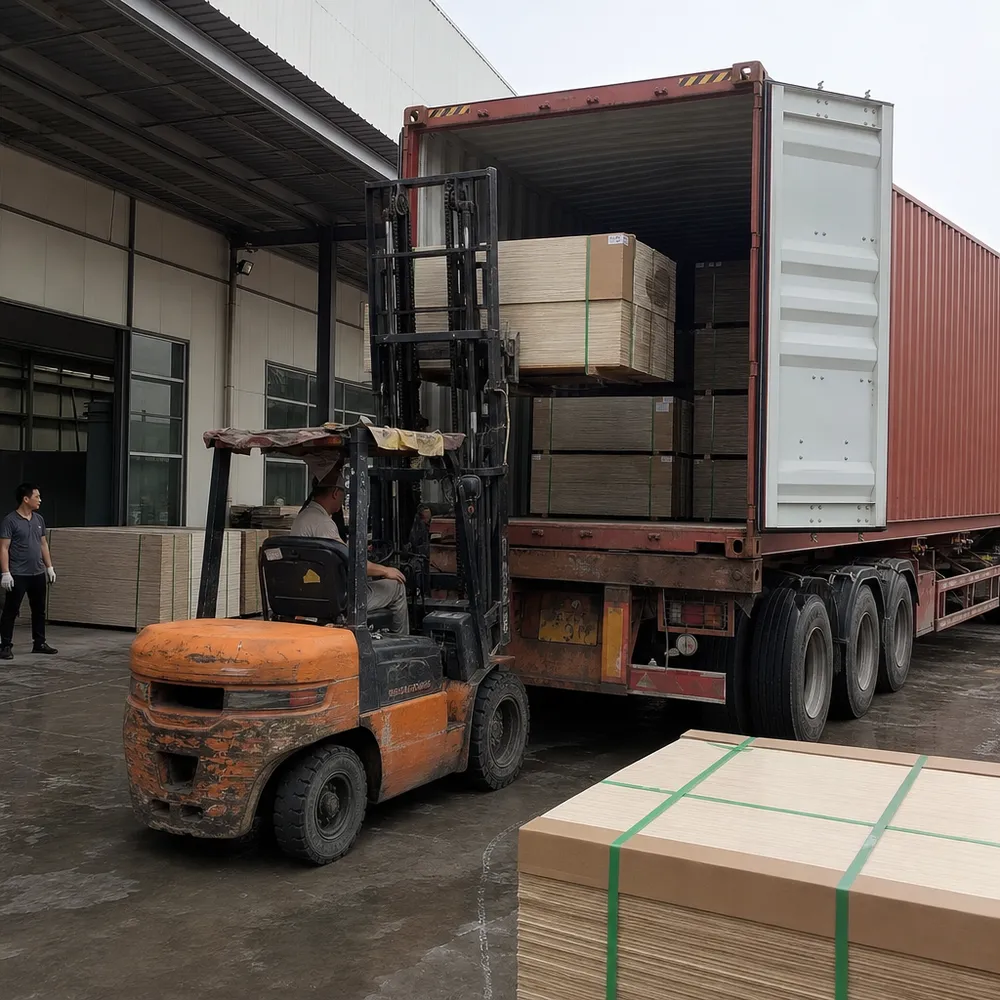
We provide a loading plan with each shipment — bundle count, stacking arrangement, and weight distribution — so your receiving team knows exactly what to expect.
Packaging for Ocean Transit
Designed to arrive at your warehouse ready for resale
- Panels bundled in packs of 50–100 sheets depending on thickness, strapped and edge-protected with corner boards
- Top sheet of each bundle protected with a moisture-resistant film wrap — the melamine surface is the finish
- Each bundle marked with: product specification, thickness, decor, quantity, batch number, and destination port
Export Documentation Package
CARB documentation prepared as standard for US-bound shipments
Phytosanitary certificate provided where required by destination market regulations.
Port Routing & Transit Times
Shipping from Xuzhou to three major export ports
Sibling Products in the Melamine Plywood Range
Kitchen melamine plywood is one of five variants in our melamine plywood range. If the kitchen specification isn't the right fit for your application, here's where the other products sit.
Melamine Board
Standard furniture, shelving, dry interior applications. UF glue system, 80 g/m² overlay — lower cost for non-moisture applications.
Melamine Cabinet Board
General cabinet carcass, wardrobe, storage furniture. Denser core for fastener holding; standard UF glue unless MR specified.
18mm Melamine Plywood
High-volume 18mm sourcing across mixed applications. Standard thickness SKU with highest stock availability and shortest lead time.
Glossy Melamine Plywood
Contemporary furniture, display cabinets, visible panel faces. High-gloss surface for design-led applications; margin premium in retail furniture.
Sourcing Multiple Variants in One Order
If you're building a kitchen cabinet range and need both carcass panels (kitchen melamine) and door fronts (glossy melamine), we can supply both specifications in a single order and coordinate the shipment. Most of our kitchen furniture buyers source two or three variants from the melamine range to cover their full product line.
Frequently Asked Questions
Technical and sourcing questions we receive from cabinet manufacturers, distributors, and OEM buyers evaluating kitchen melamine plywood.
The core glue system and surface overlay specification. Standard melamine plywood uses UF (urea-formaldehyde) glue, which is adequate for dry interior applications but degrades under sustained humidity cycling. Kitchen melamine plywood uses MR (moisture-resistant) or WBP (waterproof boil-proof) glue, which maintains bond integrity in kitchen environments.
The surface overlay also uses heavier paper (100–120 g/m² vs 80 g/m²) with higher resin saturation for better moisture and abrasion resistance at the face. These two differences are what make the panel suitable for kitchen cabinet fabrication — not just the product name.
18mm is the standard carcass thickness across European and North American kitchen cabinet systems. It provides adequate load-bearing capacity for shelf spans up to 900mm and holds cam locks and dowels cleanly in standard cabinet assembly.
Some manufacturers use 15mm for upper cabinet carcasses where load is lower, and 25mm for base cabinets and pantry towers in premium kitchen ranges. If you're supplying into a market with established cabinet system standards, 18mm MR specification covers the majority of applications from a single SKU.
Yes. We produce kitchen melamine plywood to CARB P2 emission standards as the baseline for export production. CARB P2 is the most stringent formaldehyde emission limit in our export markets, and we formulate to meet it rather than treating it as a special option.
For US-bound shipments, the CARB documentation package is included as standard — you don't need to arrange separate testing or request the documentation separately.
Edge swelling and delamination in kitchen applications are almost always a glue system problem — UF glue specified where MR or WBP is required, or MR glue applied at insufficient spread weight.
When evaluating a supplier, ask specifically: what glue system do you use for kitchen melamine, what is your glue spread weight specification, and do you run in-process bond testing? A supplier who can answer those questions with specific numbers is running a controlled process. A supplier who says "we use moisture-resistant glue" without being able to specify the resin type and spread weight is describing a marketing claim, not a manufacturing specification.
- What glue system do you use for kitchen melamine?
- What is your glue spread weight specification?
- Do you run in-process bond testing?
Kitchen melamine plywood is specified for cabinet carcass and interior panel applications — side panels, shelves, base units, and back panels. For countertops and worktops, the surface hardness and impact resistance requirements are higher than melamine plywood can reliably deliver.
HPL (high-pressure laminate) plywood is the right specification for worktop applications — the HPL surface is significantly harder and more impact-resistant than melamine paper. We manufacture kitchen HPL plywood for worktop and countertop applications if that's part of your product range.
MOQ depends on the specification. Standard catalog decors in 18mm MR specification have the lowest MOQ — typically from one container (approximately 18–20 m³ in 40HQ). Custom decors, non-standard thicknesses, or WBP glue specification may require higher MOQ depending on the paper sourcing and production scheduling requirements.
Contact us with your target specification and volume — we'll confirm the MOQ and lead time for your specific order.
Start Your Kitchen Melamine Sourcing
If you're evaluating kitchen melamine plywood for a cabinet manufacturing supply program, a distribution range, or an OEM furniture project, the fastest way to confirm the specification is to request a sample. We can ship samples of the standard 18mm MR specification in two or three catalog decors within 7–10 working days — enough to run through your own quality check and test with your customers before committing to a container order.
If you already have a specification — thickness, decor, glue system, emission standard, volume, destination market — send it directly and we'll come back with a detailed quote and the full certification documentation for your import requirements.
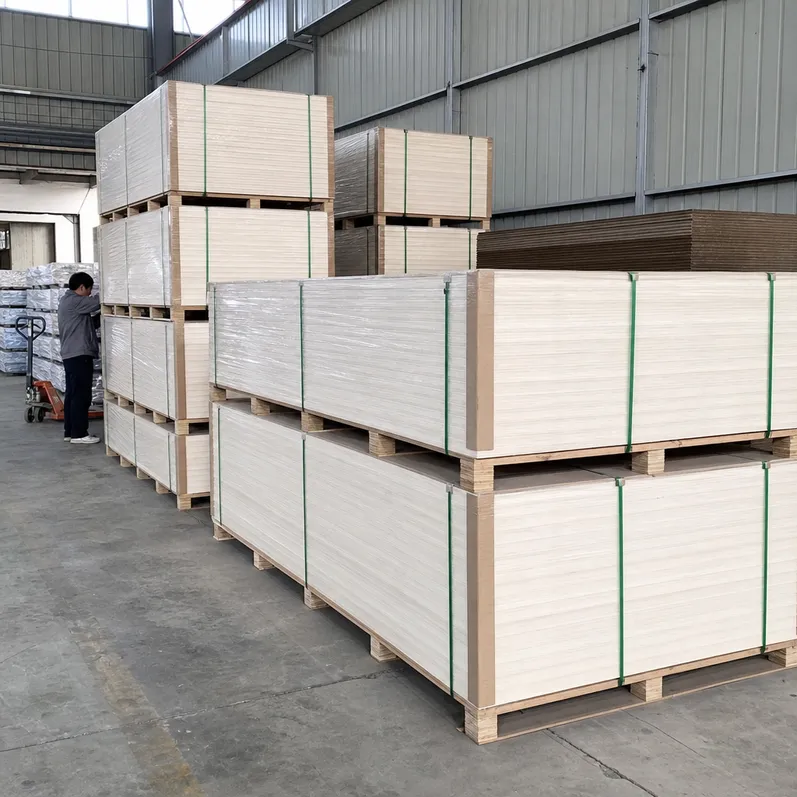
Standard melamine board for general interior panel applications.
Cabinet-grade melamine board optimised for carcass and door panel fabrication.
18mm specification melamine plywood — the dominant carcass thickness for cabinet systems.
High-gloss melamine surface for contemporary kitchen door and visible panel applications.