

Brown Film Faced Plywood Manufacturer
Phenolic resin film, WBP bonding, 8–12% moisture-controlled core. Factory-direct from Xuzhou, China — 6 production lines, 450,000 m³ annual capacity. No trading company markup on your landed cost.
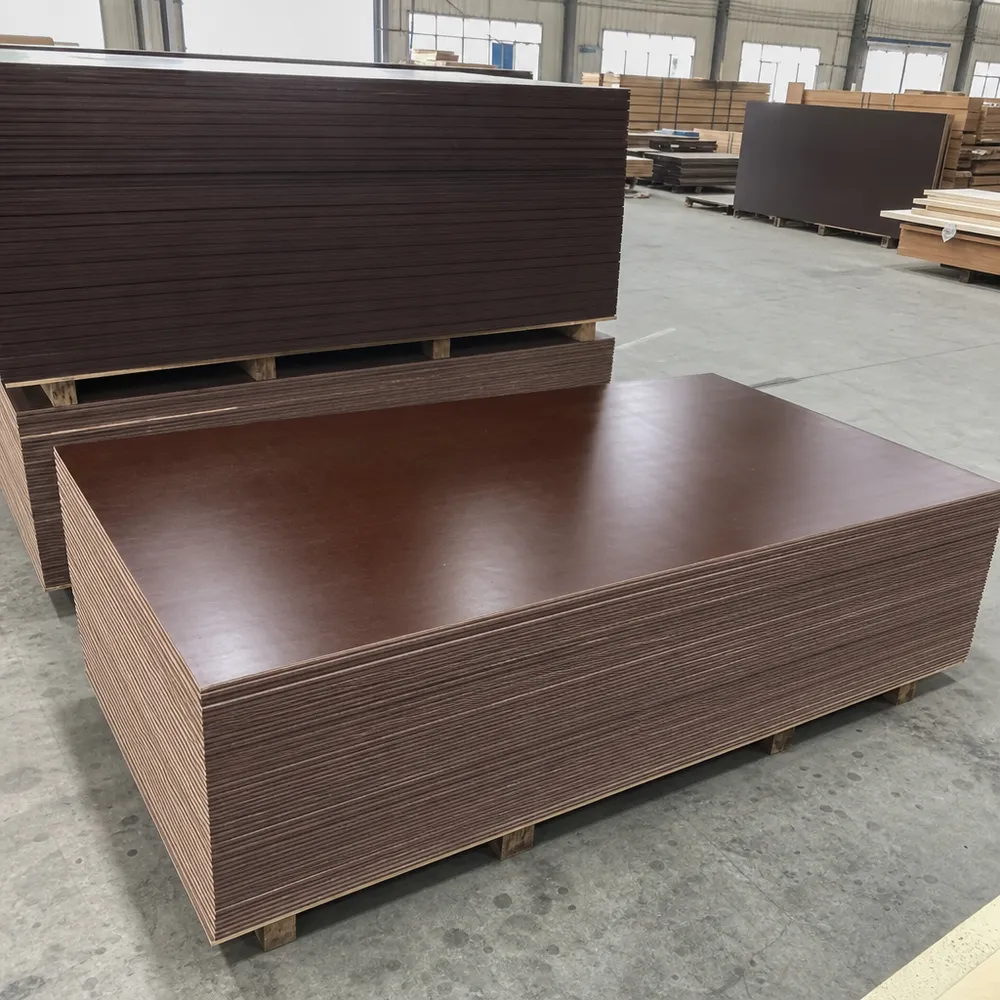
What Brown Film Faced Plywood Is — and Where It Fits in Your Product Line
Brown film faced plywood is a phenolic-resin-coated formwork panel. The brown color comes from the phenolic film itself — a thermosetting resin that bonds to the face veneer under heat and pressure, creating a hard, smooth, water-resistant surface. That surface is what makes the panel release cleanly from concrete after a pour, and what allows it to be reused across multiple pours without the face degrading.
The distinction from black film faced plywood is mostly cosmetic at the film level, but it matters commercially: brown film faced plywood is the dominant specification in Southeast Asia, the Middle East, and parts of Europe, where it's the default expectation on construction sites. If your buyers are in those markets, brown is the SKU they'll ask for by name. Black film faced plywood tends to be specified more in East Asian domestic markets and some North American applications.
We produce both brown and black film faced plywood. If you're building a mixed-market product line, it's worth discussing which color your target region defaults to before you commit to a container.
The core construction is hardwood veneer — typically eucalyptus or poplar, or a combination — with WBP (water-boil-proof) phenolic glue between layers. The film is applied to both faces and all four edges are sealed to prevent moisture ingress during site use and ocean transit. Standard panel size is 1220×2440mm, with thickness running from 12mm to 21mm for most formwork applications, though we produce outside that range on confirmed orders.
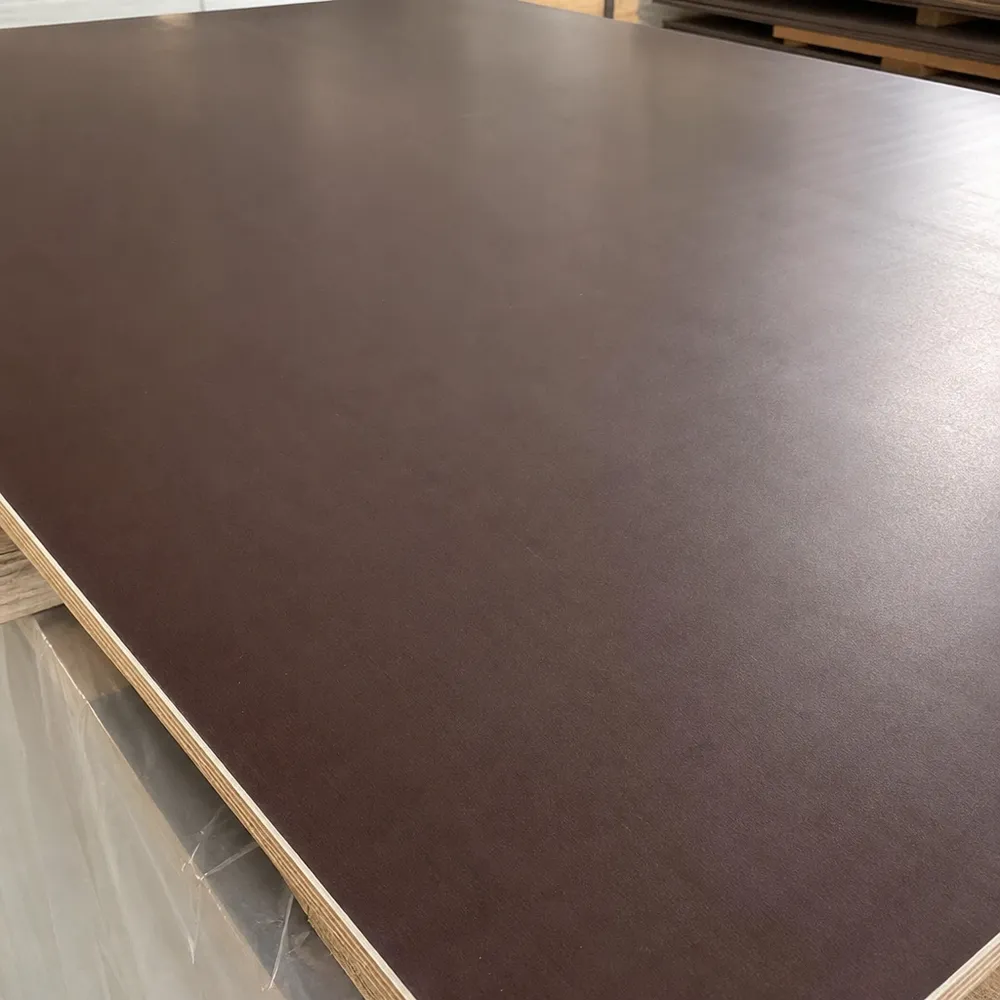
Dominant in Key Export Markets
Southeast Asia, Middle East, and parts of Europe default to brown as the standard formwork spec.
WBP Phenolic Core
Water-boil-proof glue between eucalyptus or poplar veneer layers. Holds integrity through repeated wet-dry cycles on site.
Sealed Edge Treatment
All four edges sealed with waterproof paint — prevents moisture ingress during ocean transit and site storage.
8–15+ Reuse Cycles
Film weight determines reuse count. We'll recommend the right spec for your target market's site conditions.
Technical Specifications
These are industry-standard values for brown film faced plywood in commercial formwork applications. Actual specifications are confirmed at order stage — contact us for a detailed product data sheet.
Standard Specification Table
Specifications shown are industry-standard values for this product type. Actual specifications may vary by order. Contact us for detailed product data sheets and test reports.
The Spec Buyers Most Often Overlook
Film weight is the variable that most often gets missed when comparing quotes.
A 120 g/m² film panel and a 220 g/m² film panel look identical in a photo and may be quoted at similar prices — but the heavier film delivers significantly more reuse cycles before the surface degrades. We run both weights and will recommend the right spec based on your target market's typical site conditions and the price point you're working to.
Available Thickness Range
Custom thicknesses available on request. Minimum order quantities apply.
Need a Full Product Data Sheet?
We can provide test reports, mill certificates, and detailed spec sheets for your procurement or compliance team.
Certifications & Supply Chain Transparency
Buyers in regulated markets increasingly need documented proof of responsible sourcing. Here's what we can provide and why it matters for your customers.
FSC Certified
Forest Stewardship Council certification confirms the timber supply chain meets internationally recognised standards for responsible forest management. Required by many European and North American buyers.
Available on request — confirm at order stage
CARB P2 Compliant
California Air Resources Board Phase 2 sets strict limits on formaldehyde emissions from composite wood panels. CARB P2 compliance is required for products entering the US market and is increasingly expected by health-conscious buyers globally.
E1 / CARB P2 emission standard as standard
ISO 9001:2015
Our manufacturing partners operate under ISO 9001:2015 quality management systems. This means documented production controls, batch traceability, and consistent panel-to-panel quality across large orders.
Mill certificates available with each shipment
CE Marking
Confirms conformity with EU construction product regulations. Required for sale into European markets.
Third-Party Test Reports
Independent lab testing for MOR, MOE, bond strength, and formaldehyde emission available on request.
Phytosanitary Certificates
Heat-treated timber packaging and phytosanitary documentation provided for all export shipments.
Full Export Documentation
Commercial invoice, packing list, bill of lading, certificate of origin, and fumigation certificate as standard.
Where Our Panels Come From
We source from established mills in China's Shandong and Linyi regions — the world's largest production base for film faced plywood. These mills have supplied European, Australian, and North American buyers for decades. We work with a vetted shortlist of manufacturing partners and conduct regular quality audits. We don't broker from unknown sources.
If your procurement process requires a factory audit, pre-shipment inspection, or specific documentation, we can accommodate that. Talk to us before placing your order.
How We Pack, Ship & Deliver
Film faced plywood is a bulk commodity. Getting it to your port in good condition, on time, and with clean documentation is where the real work happens. Here's how we handle it.
Standard Export Packaging
Bundle Size
Panels are bundled in packs of 50–100 sheets depending on thickness. Each bundle is strapped and wrapped for transit stability.
Moisture Protection
Bundles are wrapped in waterproof kraft paper and plastic film. Desiccant packs placed inside each bundle to control humidity during ocean transit.
Pallet & Container Loading
Loaded onto heat-treated timber bearers. A standard 20ft container holds approximately 18–22 m³ of plywood depending on thickness and panel size.
Labelling & Marking
Each bundle labelled with product spec, thickness, quantity, and certification marks. Custom labelling or private label available for established buyers.
Shipping & Lead Times
Typical Transit Times from China
Production Lead Time
Standard orders: 15–25 days production + transit. Custom specs (non-standard thickness, anti-slip surface, private label): allow 25–35 days production. We confirm lead times at order stage based on current mill capacity.
Incoterms We Work With
Minimum Orders & How Pricing Works
We work with importers, distributors, and buying groups — not retail quantities. Here's what to expect on volume thresholds and how we structure pricing.
Minimum Order Quantities
Standard Specs — 1 × 20ft Container
For standard thickness and film weight combinations (e.g., 18mm / 220 g/m²), minimum is one 20ft container — approximately 18–22 m³ depending on thickness.
Custom Specs — 1 × 40ft Container
Non-standard thickness, anti-slip surface, or custom panel sizes require a minimum of one 40ft container to justify production setup costs.
Mixed Container Orders
We can consolidate multiple thicknesses or specs into a single container for buyers who need variety. Minimum per-spec quantity applies — ask us about mixed load options.
What Drives the Price
Heavier film costs more per panel but delivers more reuse cycles — often the better value for your end customer.
Thicker panels and eucalyptus core cost more than poplar. Combi core sits in between.
FOB pricing is lower; CIF includes freight and insurance. We quote both so you can compare landed cost.
Multi-container orders attract better pricing. Repeat buyers on regular schedules get preferential rates.
FSC certification and third-party inspection add a small cost premium. We'll itemise these separately in your quote.
We don't publish list prices — plywood pricing moves with timber markets and freight rates. Send us your spec and destination and we'll turn around a firm quote within 24 hours.
Ready to Get a Price?
Tell us your spec, destination port, and target volume. We'll come back with a detailed FOB and CIF quote within one business day.
How We Produce Brown Film Faced Plywood — and Why the Process Affects Your Reuse Count
The reuse performance of brown film faced plywood comes down to three production variables: core moisture content going into the press, glue spread consistency, and film bonding temperature. Get any one of these wrong and the panel may look fine on delivery but delaminate or blister after two or three pours.
The Most Common Failure Mode in the Market
Panels that blister or peel after minimal use almost always trace back to one of two causes: core veneers that were too wet when pressed, or film applied at insufficient temperature. Both failures are invisible at the time of production and only show up under the thermal cycling and moisture exposure of actual site use.
The Three Variables We Control
Core Moisture Content
Core veneers are dried to target moisture content before layup. We check moisture at the veneer stage — not just at the finished panel stage. This is the step most producers skip, and it's where delamination failures originate.
Glue Spread Consistency
Uneven glue spread creates weak zones that fail under repeated loading. Our process controls spread rate per panel, not per batch average — the difference shows up in panel-to-panel consistency across a container load.
Film Bonding Temperature
Hot press parameters for film-faced products run at higher temperatures than standard plywood pressing. Press time is calibrated to the panel thickness and film weight combination. We log press parameters per batch for full traceability.
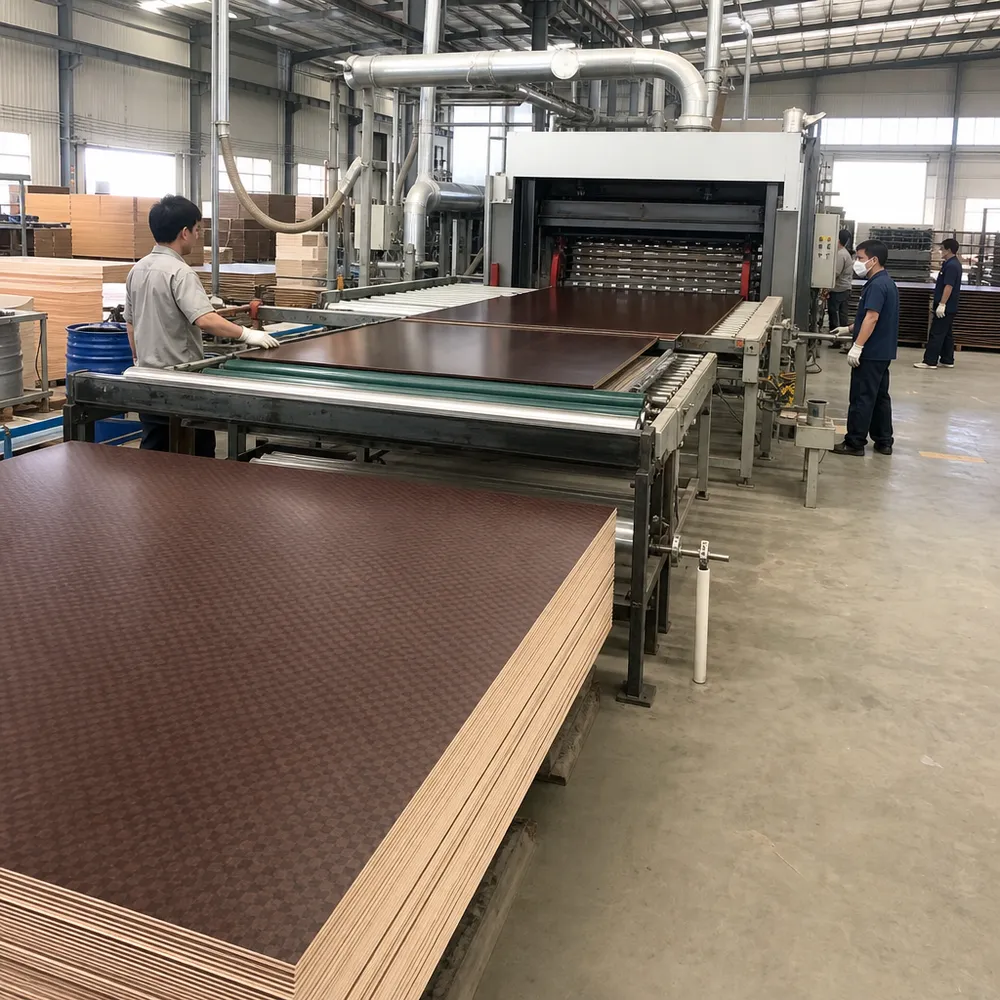
The Film Overlay Line
The film overlay line runs separately from the core pressing line. After the plywood substrate is pressed, sanded, and dimensionally verified, panels move to the film lamination press.
Film is applied under controlled heat and pressure — the phenolic resin in the film cross-links with the face veneer surface, creating a bond that's mechanically stronger than a simple adhesive lamination.
Edge sealing is applied after trimming, covering the exposed veneer edges with waterproof paint to prevent moisture from wicking into the core during transit and site storage.
Batch-Level Traceability
We log press parameters per batch. If a bonding issue surfaces downstream, we can trace it to the specific production run and identify whether it was a process deviation or a material issue.
For Buyers Shipping to Humid Climates
We apply edge sealing as a standard step on all export-grade film-faced panels — not as an optional upgrade. Panels that arrive at a tropical port without sealed edges can absorb enough moisture in the first week of site storage to compromise the core. That's a warranty conversation nobody wants to have.
Market Segments Where Brown Formwork Plywood Moves Volume
Understanding where volume concentrates helps you stock the right SKUs and position your offer to the right buyers. Here are the four segments that drive the majority of brown formwork plywood demand globally.
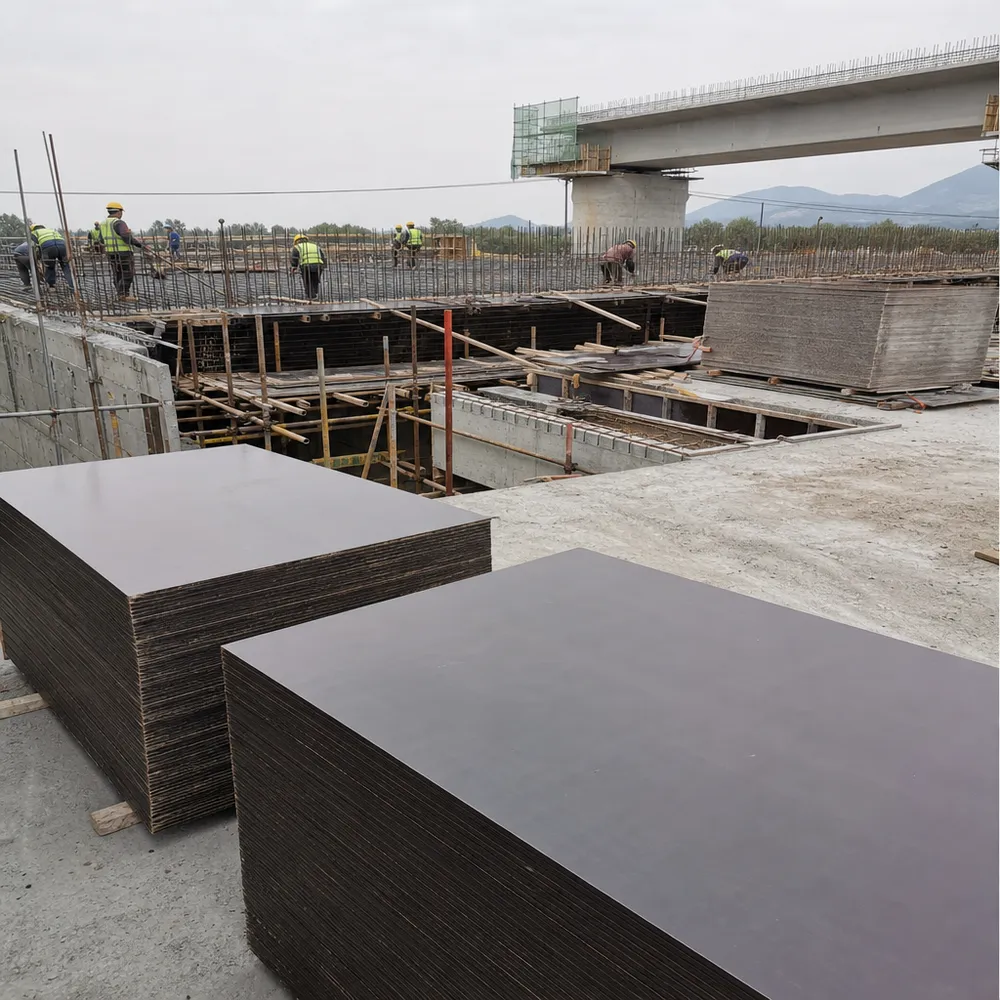
Infrastructure & Civil Construction
Bridge decks, tunnel linings, retaining walls, and foundation pours all require large quantities of formwork panels on predictable project timelines. Contractors on these projects typically specify panel thickness, film weight, and sometimes anti-slip surface texture for elevated formwork platforms.
Preferred thicknesses: 18mm and 21mm for heavy pours
Film weight specification: 200+ g/m² for extended reuse
Stocking recommendation: 18mm and 21mm in 200 g/m² film are the SKUs to prioritize
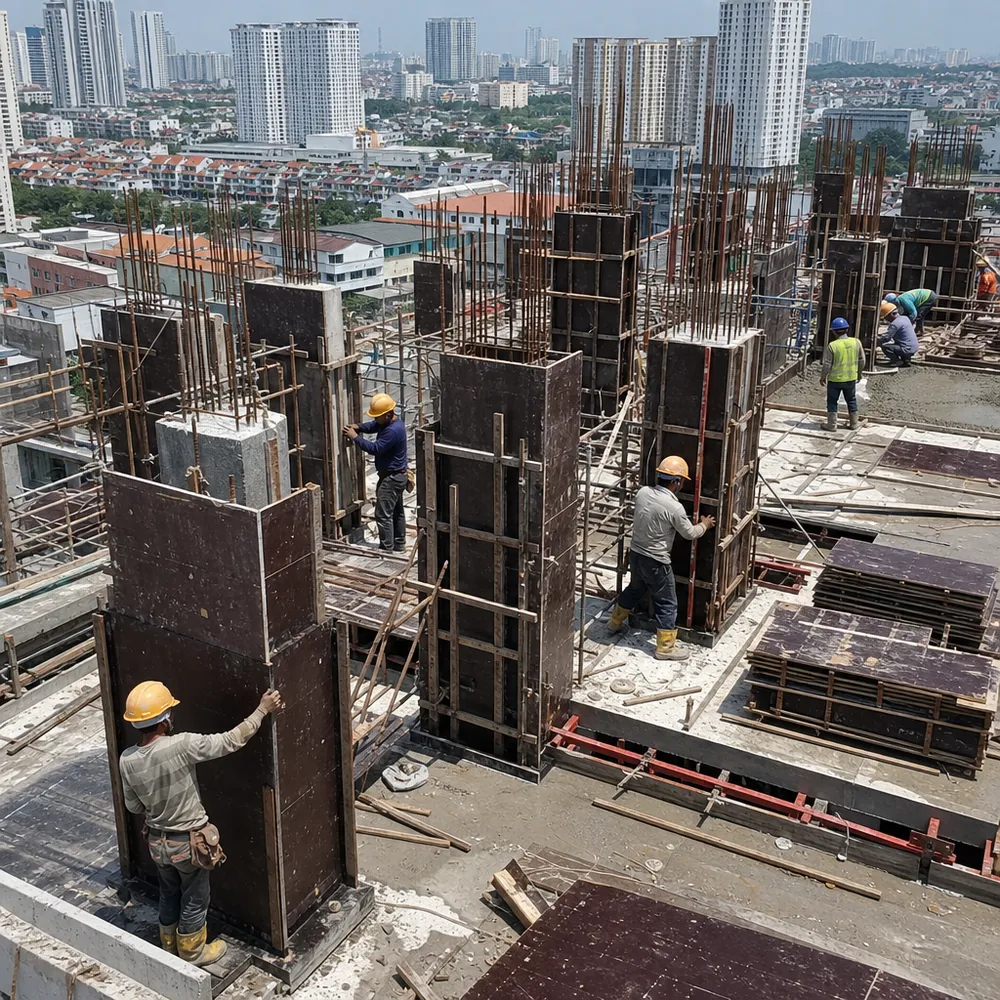
High-Rise Residential & Commercial Construction
Southeast Asia and the Middle East run almost entirely on brown film faced plywood. The construction pace in Vietnam, Indonesia, Malaysia, and the Gulf states means formwork panels turn over quickly, and distributors who can supply consistently build long-term contractor relationships.
Buyer pattern to understand: The typical order pattern is repeat monthly or quarterly orders once a contractor has qualified your product on a project. Getting the first container right is the entry point to a recurring revenue stream.
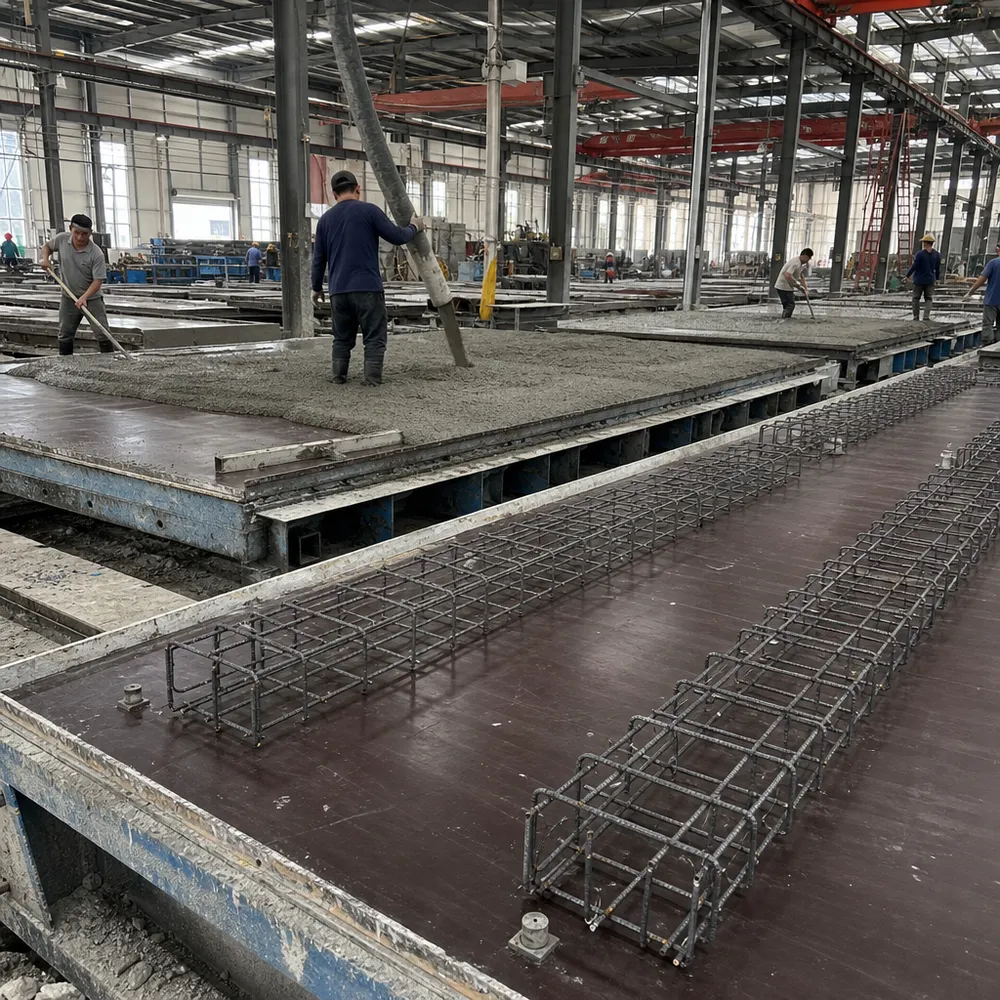
Prefabricated Concrete Panel Manufacturing
Precast factories use film-faced plywood as the mold surface for wall panels, floor slabs, and architectural concrete elements. The reuse requirements are higher than site formwork — a precast mold may be used 20–30 times before replacement.
Buyers specify heavier film weights: 200–220 g/m²
Tighter thickness tolerances required
Smaller volume per buyer, but higher-spec and higher-margin product
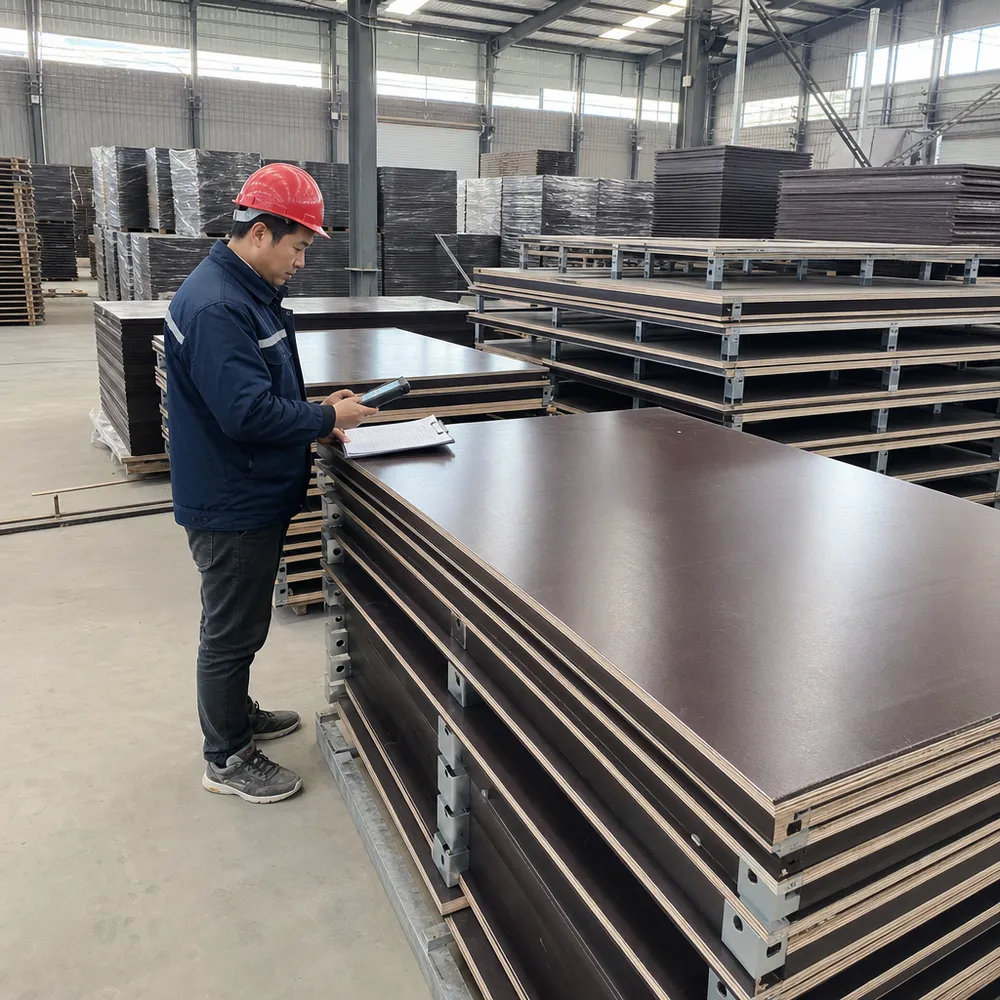
Rental Formwork Systems
Companies that own and rent formwork equipment to contractors buy in bulk, maintain their own inventory, and replace panels on a scheduled basis rather than project-by-project. They are a distinct buyer type with distinct criteria.
What rental operators prioritize:
Durability and consistency — panels must perform predictably across their fleet
Thickness tolerance uniformity — panel-to-panel consistency matters more than unit price
Film adhesion uniformity — inconsistent film bonding creates unpredictable fleet performance
Matching SKUs to Segments
Infrastructure and high-rise construction drive the highest volume. If you're building a stocking position, start with 18mm and 21mm panels in 200 g/m² film. For precast and rental formwork buyers, add 200–220 g/m² film weight options with tighter thickness tolerances to your offer.
Customization Options for Brown Film Faced Plywood
We handle OEM and custom specification orders on brown film faced plywood. The parameters below cover the most common customization requests — if your requirement falls outside these ranges, contact us to discuss feasibility.
Panel Dimensions
Standard is 1220×2440mm. Common alternates: 1250×2500mm and 915×1830mm.
Non-standard dimensions available on confirmed orders — plywood is cut-to-size, so custom dimensions are a yield and scheduling question, not a tooling cost.
Thickness
9mm through 25mm. Most common formwork thicknesses: 12mm, 15mm, 18mm, and 21mm.
Film Weight
Heavier film increases reuse cycles and unit cost. We'll recommend the right weight for your target application and price point.
Core Species
Core choice affects panel weight, bending stiffness, and price.
Higher bending strength
Lower cost
Eucalyptus face layers, poplar center — common cost-performance balance
Surface Texture
Smooth Face
Standard option
Anti-Slip Grid Pattern
Specified for elevated platforms and sloped formwork where worker safety is a consideration
Branding & MOQ
Custom brand stamps, color-coded edge paint, and private label packaging available on orders meeting MOQ thresholds. We've done private-label programs for distributors in Europe and the Middle East.
MOQ Note
Standard specifications ship from stock or with short lead times. Custom specifications typically require a minimum of one 20HQ container. Contact us to confirm MOQ for your specific configuration.
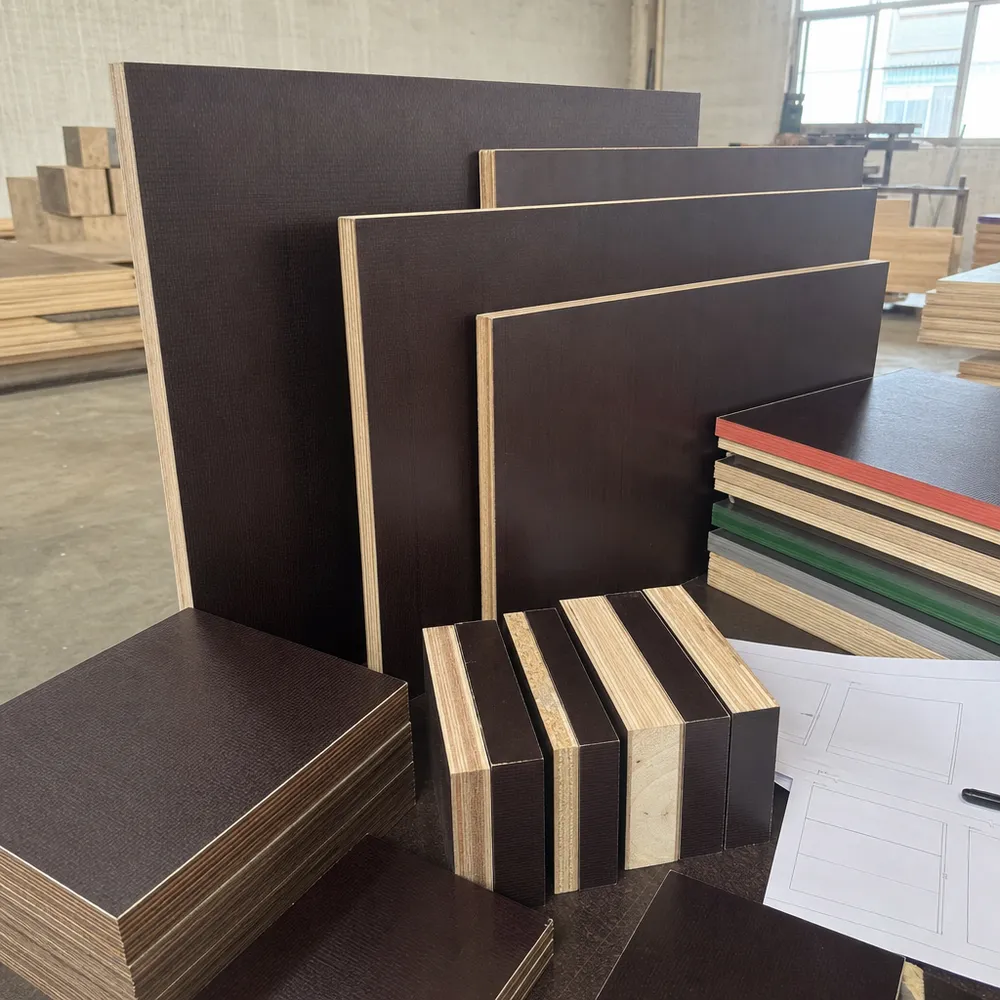
Building a Branded Formwork Product Line?
If you're building a branded formwork product line, we can discuss the specifics — private-label packaging, custom edge paint colors, and specification sheets under your brand. We've run these programs for distributors across Europe and the Middle East.
Non-standard dimensions are a yield and scheduling question, not a tooling cost — which means we can often accommodate unusual sizes without the lead time penalty you'd expect from a tooling-dependent process.
Discuss Your Custom SpecificationCertifications and Compliance for Your Import Markets
The certifications we hold on brown film faced plywood cover the key procurement gates in our main export markets.
ISO 9001:2015
Quality ManagementQuality management system certification covering the full production process. Audit reports available on request.
FSC Chain of Custody
SustainabilityWood fiber in our panels traces back to FSC-certified forests. Required by buyers with sustainability sourcing policies and increasingly by public procurement specifications in Europe and North America.
CARB P2
US MarketCalifornia Air Resources Board Phase 2 formaldehyde emission standard — the most stringent formaldehyde limit in the US market.
Standard Baseline — Not a Special Option
We formulate to CARB P2 across our film-faced range as the baseline. US-bound shipments include the full CARB documentation package as standard.
CE Marking
EU MarketEuropean construction product compliance. Relevant for buyers supplying into EU construction projects where CE marking is a procurement requirement.
Export Documentation — Prepared to Avoid Customs Delays
For buyers in markets with specific import documentation requirements — phytosanitary certificates, fumigation certificates, country-of-origin documentation — we prepare the full export documentation package as standard.
We've cleared enough customs cycles in North America, Europe, the Gulf, and Southeast Asia to know what documentation gaps cause delays, and we prepare to avoid them.
North America
Europe
Gulf Region
Southeast Asia
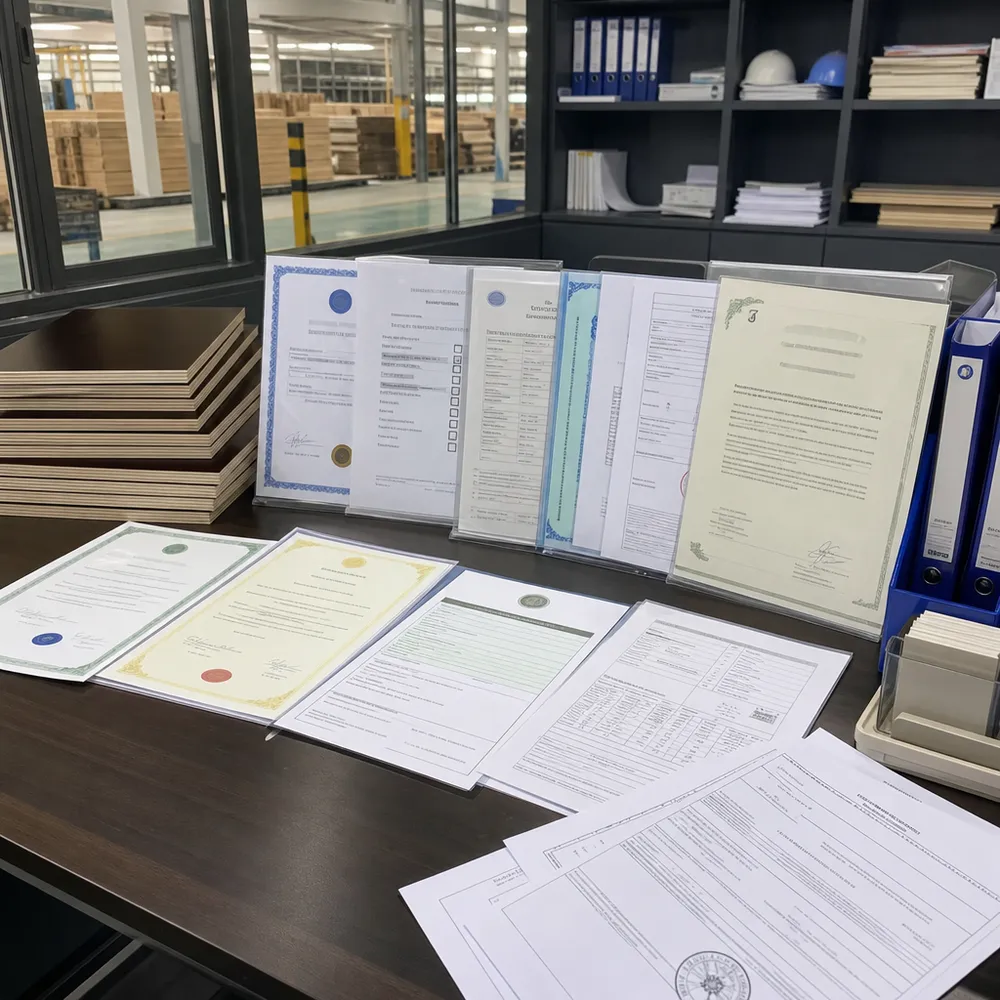
Certifications Held
Packaging and Container Loading for Export Orders
Brown film faced plywood ships in bundles of 50–100 sheets depending on thickness, strapped and edge-protected with corner boards. Export-grade packaging includes moisture-resistant film wrap on each bundle — relevant for ocean transit to humid destination ports where condensation inside the container is a real risk.
Bundle Marking (Each Bundle)
- Product specification and thickness
- Film weight
- Quantity and batch number
- Destination port
- Custom bundle marking for private-label orders
Transit Times from Xuzhou
Via Qingdao, Shanghai, or Lianyungang
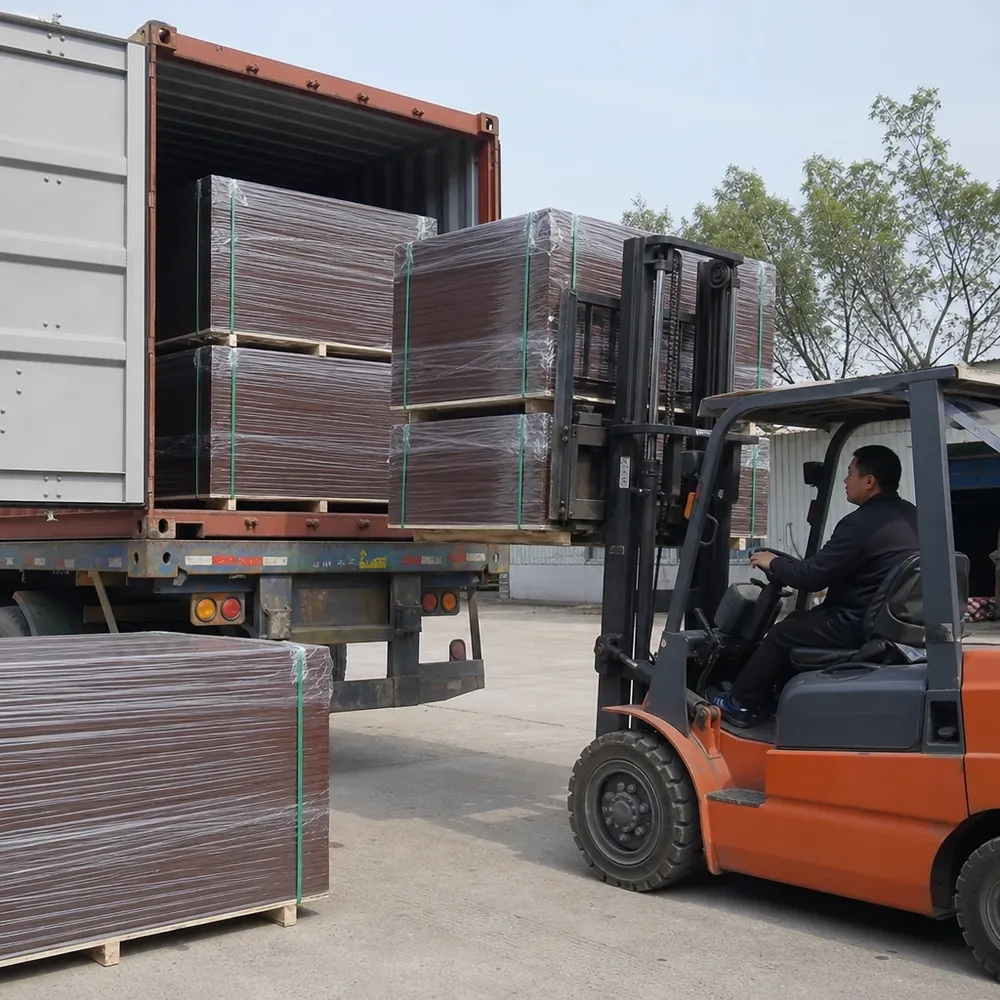
We provide a loading plan with each shipment so your receiving team knows the bundle configuration and stacking order. For mixed-thickness orders, we coordinate the loading sequence to maximize cubic utilization and simplify unloading at your warehouse.
Container Loading Reference
1220×2440mm panels, standard bundles
| Thickness | 20HQ (approx.) | 40HQ (approx.) |
|---|---|---|
| 12mm | 800–900 sheets | 1,700–1,900 sheets |
| 15mm | 650–750 sheets | 1,350–1,550 sheets |
| 18mm | 550–620 sheets | 1,150–1,300 sheets |
| 21mm | 470–530 sheets | 980–1,100 sheets |
Brown Film Faced Plywood vs. Other Film Faced Plywood in Our Range
Brown film faced plywood is one of several film-faced products we produce. Here's how to navigate the range — most of our distributors carry 2–3 SKUs from this list to cover different contractor requirements.
| Product | Best For | Key Difference |
|---|---|---|
| Brown Film Faced Plywood This page | Standard formwork in Southeast Asia, Middle East, Europe | Brown phenolic film; dominant specification in these markets |
| 18mm Film Faced Plywood | Heavy-pour formwork, structural applications | Thickness-specific sourcing; 18mm is the most common single-thickness order |
| 12mm Film Faced Plywood | Lightweight formwork, curved applications | Thinner panel for applications where weight and flexibility matter |
| Phenolic Film Faced Plywood | High-reuse, premium formwork systems | Heavier phenolic film specification; higher reuse cycle count |
| Waterproof Film Faced Plywood | Tropical and high-humidity site conditions | Enhanced moisture resistance specification |
| Birch Film Faced Plywood | European market premium specification | Birch core for higher bending strength and surface quality |
18mm Film Faced Plywood
Heavy-pour formwork & structural applications. Most common single-thickness order.
Phenolic Film Faced Plywood
Premium formwork systems requiring higher reuse cycle counts.
Birch Film Faced Plywood
European market premium spec. Birch core for higher bending strength and surface quality.
12mm Film Faced Plywood
Lightweight formwork and curved applications where weight and flexibility matter.
Waterproof Film Faced Plywood
Tropical and high-humidity site conditions. Enhanced moisture resistance specification.
View All Film Faced Plywood
Browse the full range. We can suggest a starter mix based on your target region.
Building a formwork product line for multiple markets?
Most of our distributors carry 2–3 SKUs from this range to cover different contractor requirements. We can suggest a starter mix based on your target region.
Frequently Asked Questions
Common questions from importers, distributors, and procurement teams sourcing brown film faced plywood.
The color difference is in the phenolic film, not the core construction. Both use phenolic resin film and WBP glue — the brown film uses a natural phenolic resin color, while black film uses a carbon-black pigmented resin. Performance characteristics are comparable at equivalent film weights.
The practical difference is market preference: brown is the standard specification in Southeast Asia, the Middle East, and most of Europe; black is more common in East Asian domestic markets. If you're sourcing for a specific market, match the color to what contractors in that region expect — switching colors mid-project creates site confusion even if the performance is identical.
Standard residential & commercial formwork
8–12 reuse cycles expected. Sufficient performance, keeps unit cost competitive.
Infrastructure, precast & rental fleets
15–25+ reuse cycles expected. Higher film weight, 2–3× the reuse cycle life.
The cost difference between 120 g/m² and 200 g/m² film is typically 8–15% per panel — but the reuse cycle difference can be 2–3×, which changes the total cost-per-pour calculation significantly for high-volume buyers.
For standard specifications (1220×2440mm, common thicknesses, standard film weights), we can supply from one 20HQ container. For custom specifications — non-standard dimensions, specific film weights, private label — MOQ is typically one 20HQ container per specification.
Contact us with your target spec and volume to confirm.
Delamination after delivery is almost always a site handling issue rather than a manufacturing defect — specifically: cutting panels with dull blades (which tears rather than cuts the film edge, allowing moisture ingress), storing panels without edge protection in rain, or using panels in direct contact with aggressive concrete release agents that attack the phenolic film.
Practical site guidance
- Re-seal cut edges with waterproof paint immediately after cutting
- Store panels flat and covered
- Use a release agent compatible with phenolic film surfaces
If you're seeing delamination on panels that haven't been cut or exposed to chemicals, that's a manufacturing issue — contact us with photos and batch numbers and we'll investigate.
Yes. We formulate to CARB P2 as the baseline across our film-faced range. US-bound shipments include the full CARB documentation package.
If your buyers require third-party test reports, we can provide SGS or Bureau Veritas test results — contact us to request the documentation for your specific order.
Standard Specifications
15–20 days
Production time from stock or near-stock, plus transit time to destination port.
Custom Specifications
20–30 days
Non-standard dimensions, specific film weights, or private label. Plus transit time.
Contact us with your target delivery date and we'll confirm feasibility.
Get a Quote for Brown Film Faced Plywood
Send us your target specification — thickness, film weight, panel size, quantity, and destination port — and we'll come back with a detailed FOB quote and the relevant certification documentation for your import requirements. Most inquiries get a response within 24 hours.
If you're new to sourcing brown formwork plywood from China and want to test the product before committing to a container, we can arrange a sample shipment. Most buyers in this category start with a sample evaluation before placing their first full order — it's a reasonable step and we're set up for it.
Phone / WhatsApp
+8615852005272Address
No. 88 Sanbao Industrial Park, Tongshan District, Xuzhou, Jiangsu Province, 221116, China
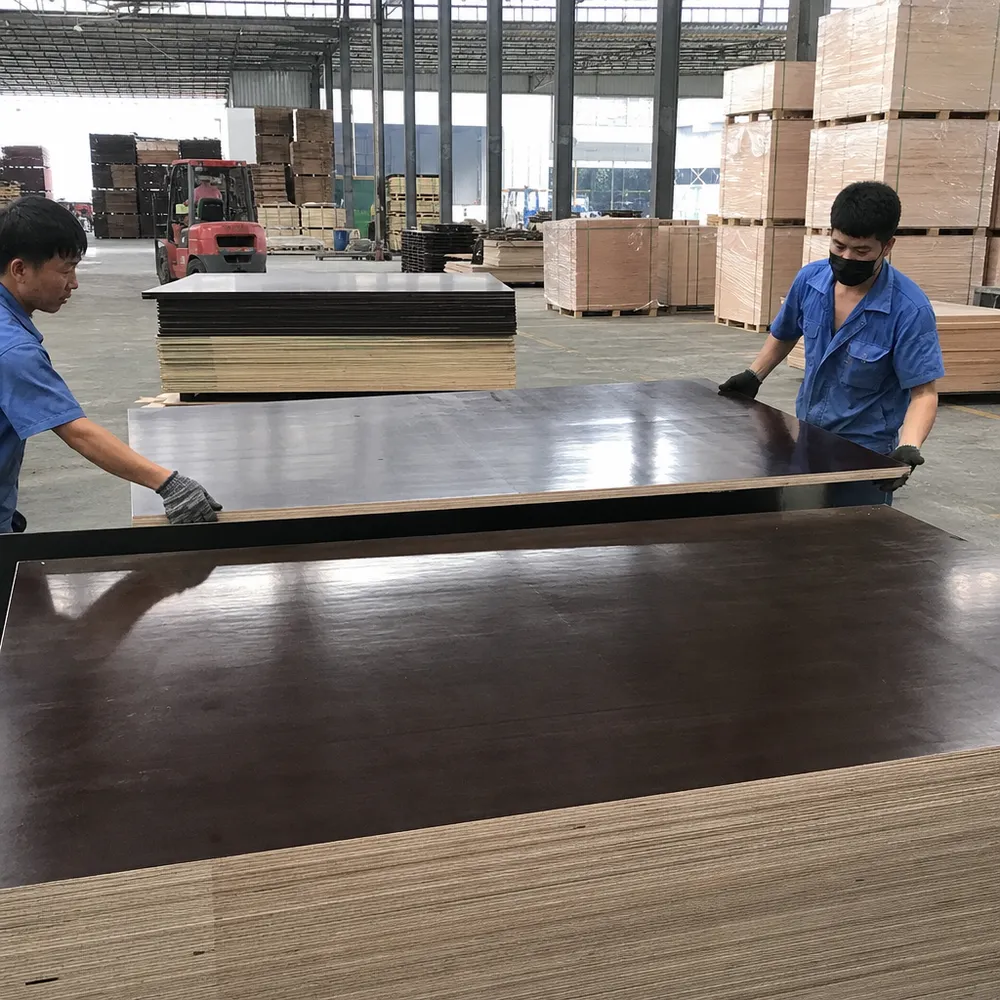
Xuzhou QD Wood Industry Co., Ltd.
18+
Years Manufacturing
50+
Export Markets
Explore More Film Faced Plywood
Other specifications in our film faced plywood range.
12mm Film Faced Plywood
Standard thickness for residential formwork
18mm Film Faced Plywood
High-load commercial and infrastructure formwork
Phenolic Film Faced Plywood
Premium phenolic resin film, extended reuse cycles
Waterproof Film Faced Plywood
WBP glue line, high-humidity and outdoor applications
Shuttering Film Faced Plywood
Concrete shuttering panels for site contractors
Birch Film Faced Plywood
Baltic birch core, premium European formwork standard
Black Film Faced Plywood
Black phenolic film surface, high reuse and release
All Film Faced Plywood
Browse the full range of specifications and formats