

Kitchen HPL Plywood
Manufacturer
Kitchen HPL plywood engineered for moisture, heat, and daily cleaning cycles — not just surface appearance.
0.8mm HPL surface on a moisture-resistant plywood core, WBP or MR glue, CARB P2 and FSC certified as standard. Built for kitchen cabinet manufacturers, fit-out contractors, and importers who need panels that hold up after installation.
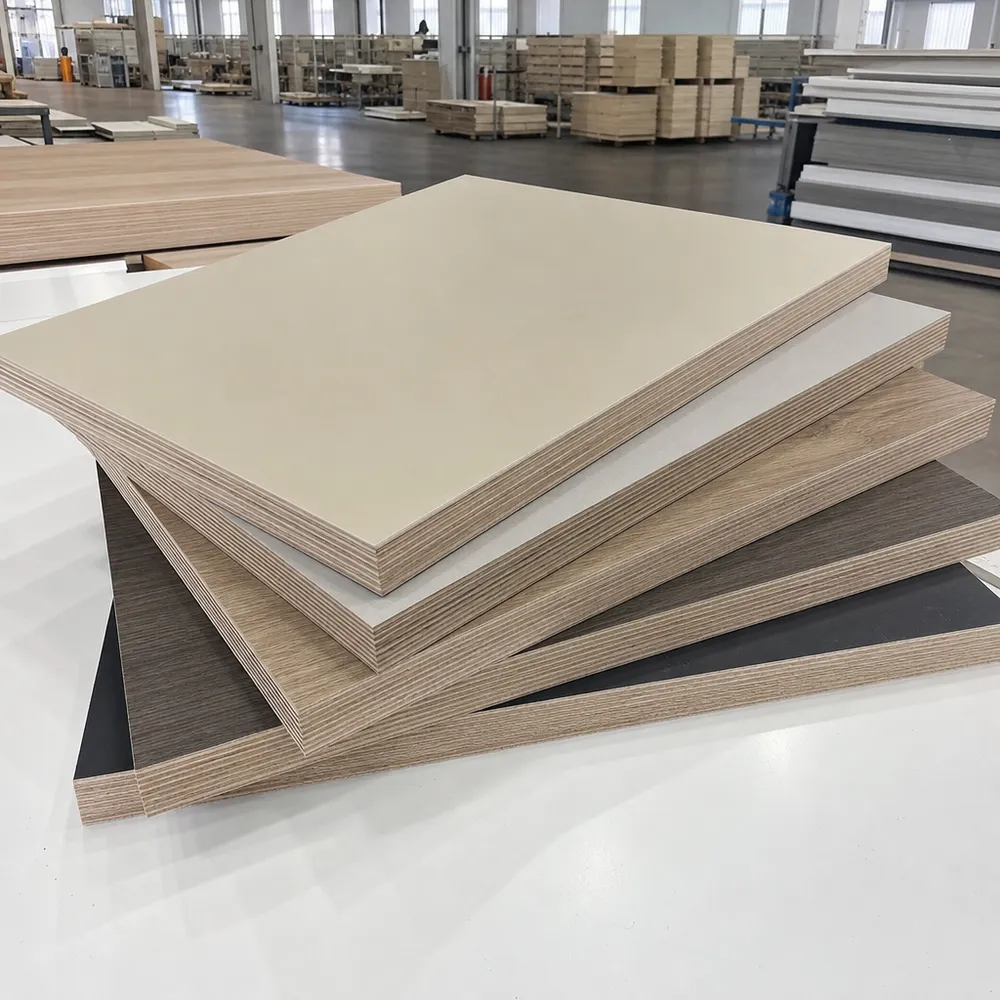
Why Kitchen Environments Disqualify Standard HPL Panels
Most HPL plywood on the market is built to a general commercial interior specification — 0.5mm laminate surface, standard MR glue, adequate for office furniture and retail fixtures. Put that panel in a kitchen and you're looking at warranty claims within two to three years.
The Predictable Failure Modes
Surface Wear at Cabinet Door Edges
Cleaning cloths make daily contact at door edges. A 0.5mm wear layer doesn't have enough depth — the substrate gets exposed within two to three years of normal use.
Laminate Lifting at the Toe-Kick
Floor mopping introduces repeated moisture at the toe-kick. Standard MR glue isn't rated for this exposure cycle — the laminate bond fails and lifting begins at the bottom edge.
Color Fade Near the Cooktop
Thermal cycling near the cooktop stresses the bond between laminate and substrate. Panels not rated for heat exposure show color fade and surface delamination in high-use zones.
We've been running this specification since buyers in Southeast Asia and the Gulf started coming back to us with delamination complaints on panels they'd sourced elsewhere. The failure pattern was consistent enough that we built the kitchen-grade spec as a distinct product line rather than a custom order.
If your buyers are kitchen cabinet manufacturers or fit-out contractors, this is the panel they need — and the spec difference is what protects your margin when their downstream customers don't come back with warranty claims.
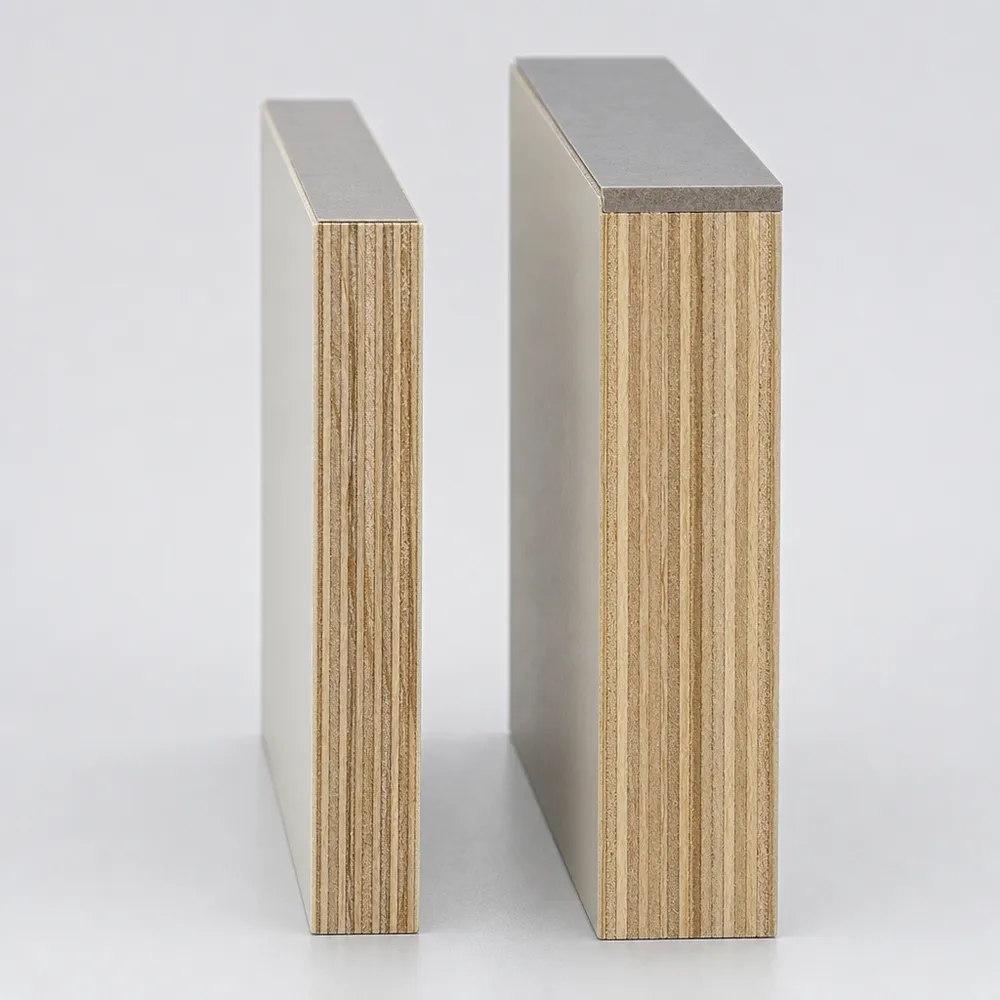
Standard HPL vs. Kitchen-Grade HPL
| Parameter | Standard HPL | Kitchen HPL |
|---|---|---|
| Laminate Thickness | 0.5mm | 0.8mm |
| Core Glue | MR (standard) | MR min / WBP available |
| Moisture Content | Variable | 8–12% (verified) |
| Formaldehyde | E1 (≤0.1 ppm) | CARB P2 (≤0.05 ppm) |
| Typical Application | Office, retail | Kitchen cabinets, fit-out |
| Warranty Risk | High in kitchens | Engineered to eliminate |
Exact Specifications for Kitchen HPL Plywood
Specifications shown are production-standard values for this product. Contact us for detailed data sheets and to confirm specifications for your specific application.
| Parameter | Specification |
|---|---|
| HPL Surface Thickness |
0.8mm kitchen-grade
standard HPL is 0.5mm
|
| Substrate | Hardwood core or combi core (hardwood face + poplar inner) |
| Thickness Options |
12mm 15mm 18mm 25mm
Custom thickness on confirmed orders
|
| Panel Size | 1220×2440mm standard; custom sizes available |
| Core Glue |
MR (E1, ≤0.1 ppm) standard
WBP (E0/CARB P2, ≤0.05 ppm) available
|
| Formaldehyde Emission |
CARB P2 ≤0.05 ppm E1 ≤0.1 ppm
|
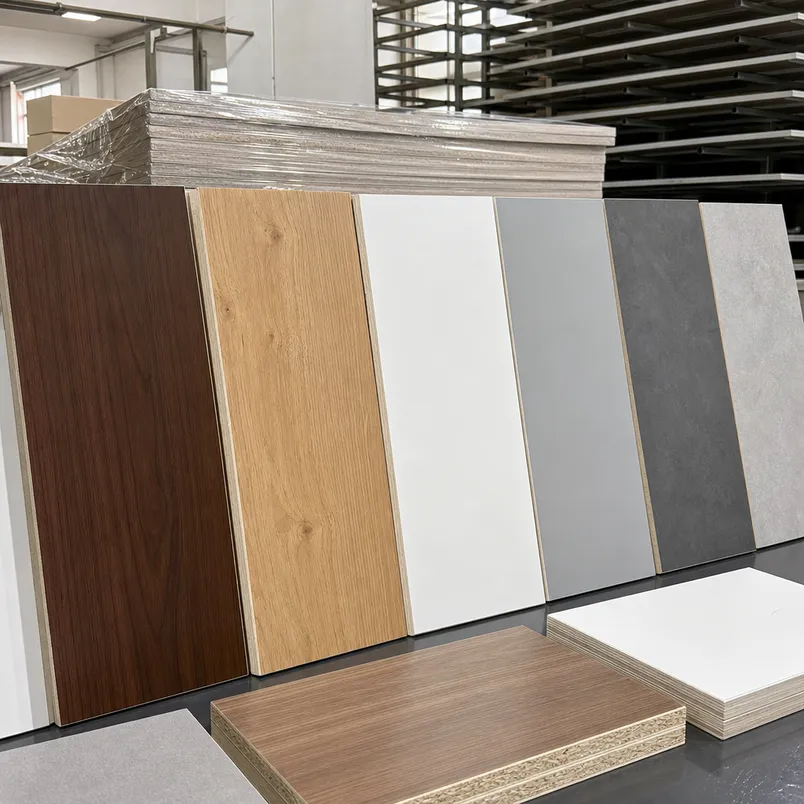
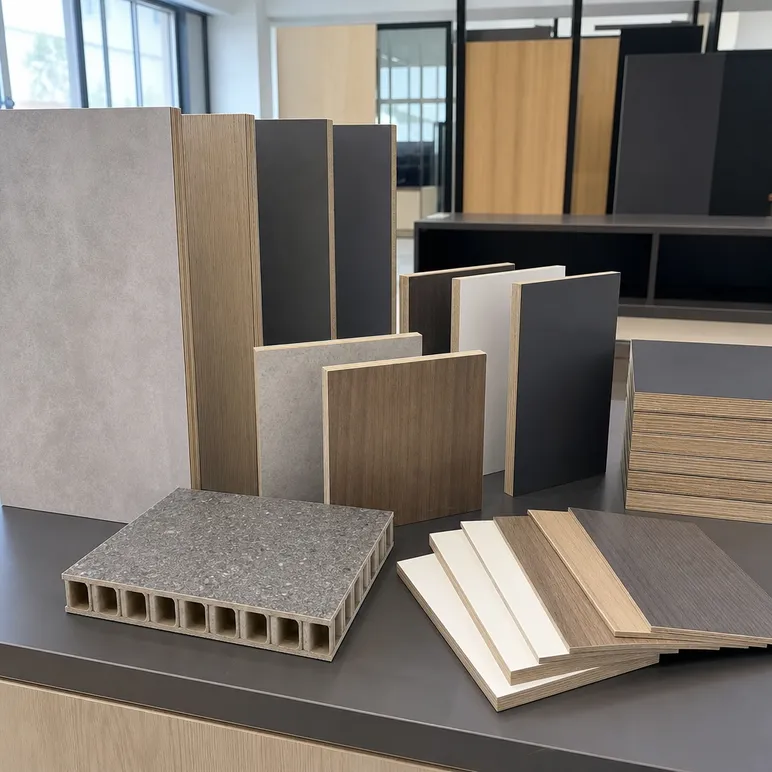
| Surface Finish | Matte, satin, gloss; solid colors, wood-grain, stone-effect textures |
| Face Configuration |
Single-face HPL (carcass panels)
Double-face HPL (door panels, visible sides)
|
| Surface Hardness | EN 438 compliant — abrasion, impact, and scratch resistance tested |
| Thickness Tolerance | ±0.2mm across the panel |
| Moisture Content | 8–12% (verified before lamination) |
| Certifications |
CARB P2 FSC E1 EN 438
|
| MOQ | 1×20ft container (mixed thickness/finish accepted) |
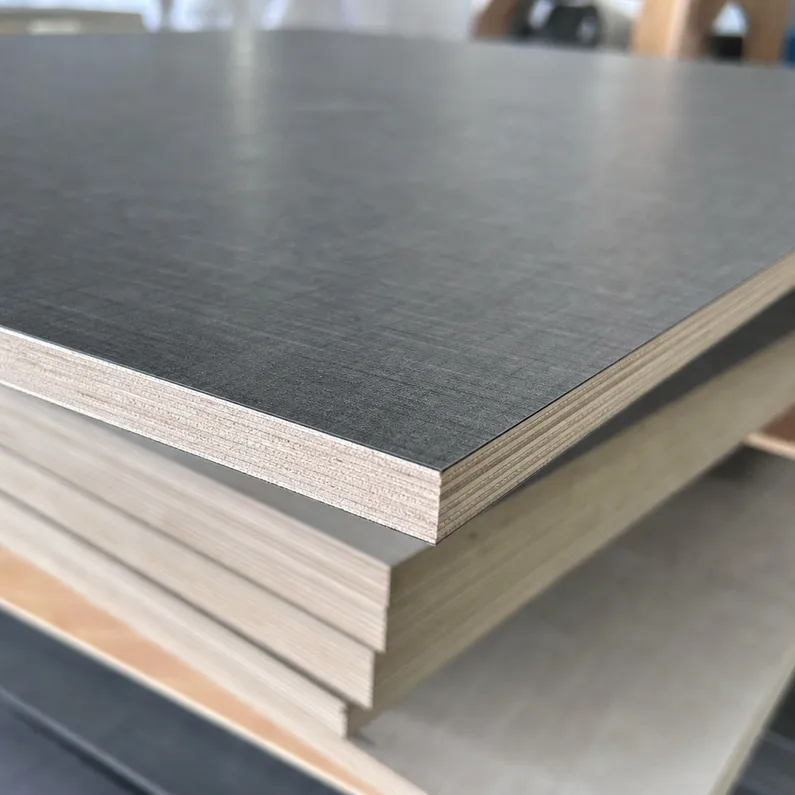
Custom Specifications Available
Thickness, panel size, face configuration, and glue type can be adjusted on confirmed orders. We can also supply third-party test reports for formaldehyde and surface hardness on request.
Why Kitchen Cabinets Fail — and How This Panel Prevents It
Most HPL plywood failures in kitchen environments trace back to three root causes. Here's what they are, why they happen, and what we changed in the spec to eliminate them.
Delamination at the Bond Line
Why it happens
Steam from cooking and dishwashers penetrates thin HPL (0.5mm) and reaches the adhesive layer. If core moisture content was high at lamination, the bond was already compromised before installation.
How we prevent it
0.8mm HPL creates a denser moisture barrier. Core MC is verified at 8–12% before lamination. WBP glue option available for high-humidity environments.
Edge Swelling and Panel Warp
Why it happens
Panels with inconsistent moisture content across the core expand unevenly when exposed to kitchen humidity cycles. Edges swell first, causing doors to bind and carcasses to rack.
How we prevent it
Controlled kiln-drying and MC verification before lamination ensures dimensional stability. Thickness tolerance of ±0.2mm across the panel eliminates stress differentials that cause warp.
Premature Surface Wear
Why it happens
Standard 0.5mm HPL has a thinner wear layer. In kitchens — where surfaces face daily cleaning, abrasion from utensils, and chemical exposure from cleaners — the decorative layer degrades within 2–3 years.
How we prevent it
0.8mm HPL provides a thicker wear layer tested to EN 438 standards for abrasion, impact, and scratch resistance — the same standard used for commercial kitchen surfaces.
The spec difference is the warranty difference
Every parameter in the kitchen-grade spec — HPL thickness, core MC, glue type, thickness tolerance — was chosen to address a documented failure mode. If your buyers are sourcing panels for kitchen cabinet production, the spec they use determines the warranty claims they'll face two years after installation.
Surface Finishes and Design Options
Kitchen-grade HPL plywood is available in a full range of surface finishes and decorative patterns. All finishes are applied at 0.8mm thickness — the kitchen-grade standard.
High-Gloss
Mirror-finish surface. Popular for contemporary kitchen door panels and visible carcass sides. Requires careful handling during installation to avoid micro-scratches.
Matte / Soft-Touch
Low-sheen surface that hides fingerprints and minor surface marks. The most specified finish for kitchen cabinet carcasses and interior panels in residential fit-out.
Satin
Mid-sheen finish that balances the visual depth of gloss with the practicality of matte. Common in hospitality and commercial kitchen fit-out where aesthetics and durability are both priorities.
Wood-Grain Textures most requested
Synchronised pore textures that replicate oak, walnut, teak, and wenge grain patterns. Widely specified for kitchen cabinet doors in Southeast Asian and Gulf residential projects.
Stone-Effect
Marble, concrete, and slate-effect surfaces for kitchen island panels, splashback cladding, and feature cabinet fronts. Provides the aesthetic of stone at a fraction of the weight and cost.
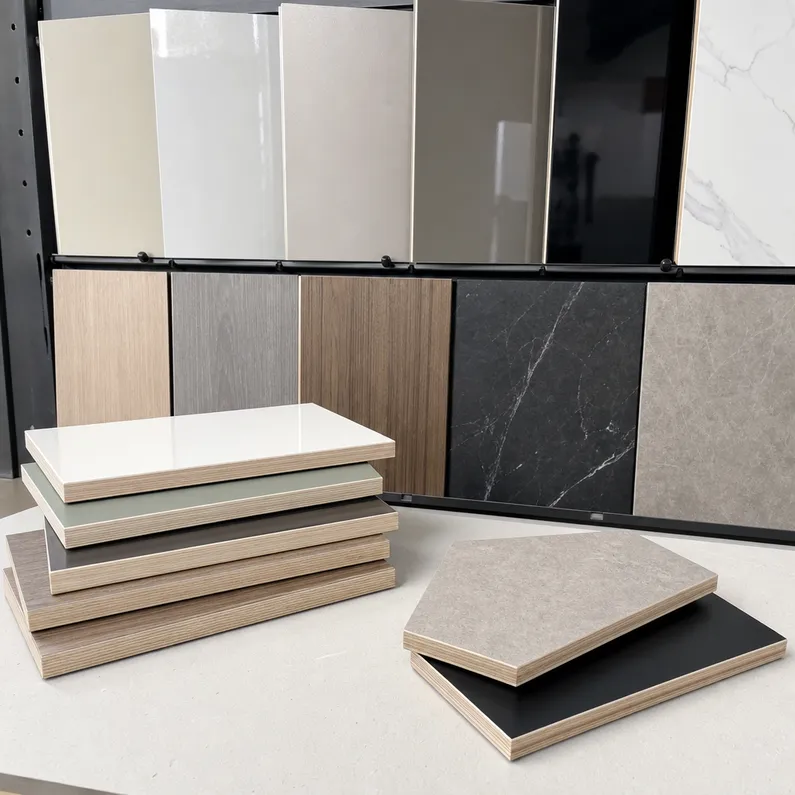
Single-Face vs. Double-Face
Need a specific finish or pattern?
We can match finish specifications to your buyer's design requirements on confirmed volume orders. Send us the finish reference or sample and we'll confirm availability.
Discuss finish requirementsThe Lamination Process Behind Kitchen-Grade Bond Strength
The difference between a panel that holds up in a kitchen and one that fails at the six-month mark comes down to press parameters, substrate preparation, and the steps most manufacturers skip to hit throughput targets.
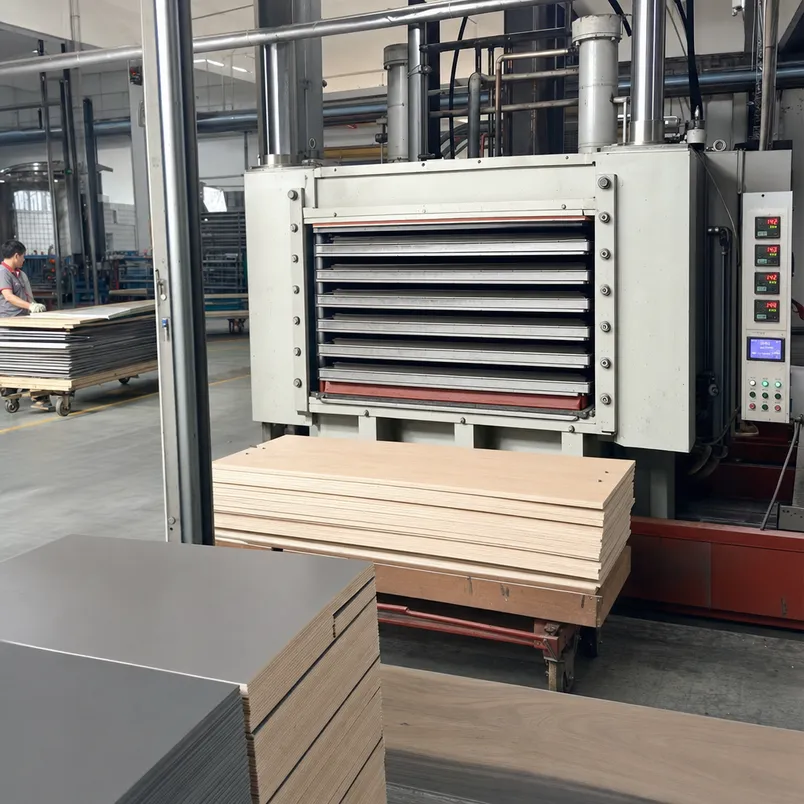
Why 0.8mm Requires a Dedicated Press Cycle
Thicker laminate requires longer press dwell time and tighter temperature control than 0.5mm standard HPL. The 0.8mm sheet has more mass to heat through, and if the press cycle is shortened to match the throughput rate of standard HPL production, the bond at the laminate-substrate interface is incomplete — it passes a surface check but fails under thermal cycling.
We run the kitchen-grade panels on a dedicated press cycle: higher dwell time, verified temperature uniformity across the platen, and a controlled cooling period before the panels move to trimming. Rushing the cooling step on 0.8mm panels produces micro-stress in the laminate that shows up as hairline cracking at the edges six months after installation — not a visible defect at the time of shipment, but a warranty claim waiting to happen.
Substrate Moisture Verification
Every panel going into the kitchen-grade lamination line is moisture-metered before it enters the press. We target 8–12% and reject panels outside that range back to the drying line. This adds time to the production cycle, but it's the step that prevents the edge-lifting failure mode — the most common complaint we hear from buyers who've switched to us from other suppliers.
Dedicated Press Cycle — Higher Dwell, Controlled Cooling
Kitchen-grade panels run on a separate press program: higher dwell time, verified temperature uniformity across the full platen surface, and a controlled cooling period before panels move to trimming. This is not the same cycle used for standard HPL production.
Post-Lamination Bond Inspection
Both faces of double-face panels are inspected by tapping — a hollow sound indicates a bond void, and those panels are pulled before packing. Surface inspection covers bubbles, delamination, color consistency, and edge trim quality.
Five-Point Thickness Measurement
Thickness is measured at five points per panel — center and four corners — and logged against the ±0.2mm tolerance. Measurement records are retained and available on request for incoming inspection documentation.
Full Process Overview
The category page covers our general HPL lamination process in detail. What's documented here is specific to kitchen HPL plywood: the substrate preparation steps and the press parameters we run for the 0.8mm laminate grade.
Market Segments Where Kitchen HPL Plywood Generates Margin
Four distinct buyer segments specify kitchen HPL plywood. Each has different volume patterns, performance requirements, and compliance gates — understanding which segment you're supplying determines how you position the product.
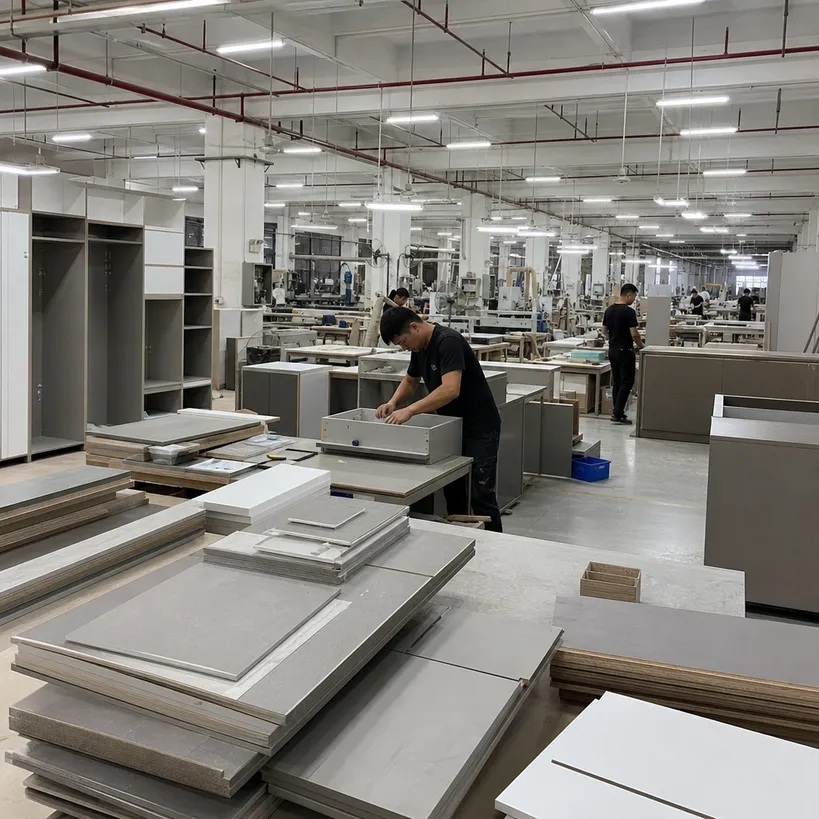
Residential Kitchen Cabinet Manufacturing
Cabinet manufacturers supplying mid-to-high-end residential kitchen lines need a panel that holds up to the performance claims they make to their retail customers. The 0.8mm kitchen HPL spec is what backs those claims — it handles the cleaning cycles, the steam exposure near the dishwasher, and the mechanical stress of hinge and drawer hardware installation without showing wear within the warranty period.
Buyer pattern: Annual volume contracts once a supplier is qualified, because color and texture consistency requirements make switching suppliers costly. Your first container is the audition for a long-term relationship.
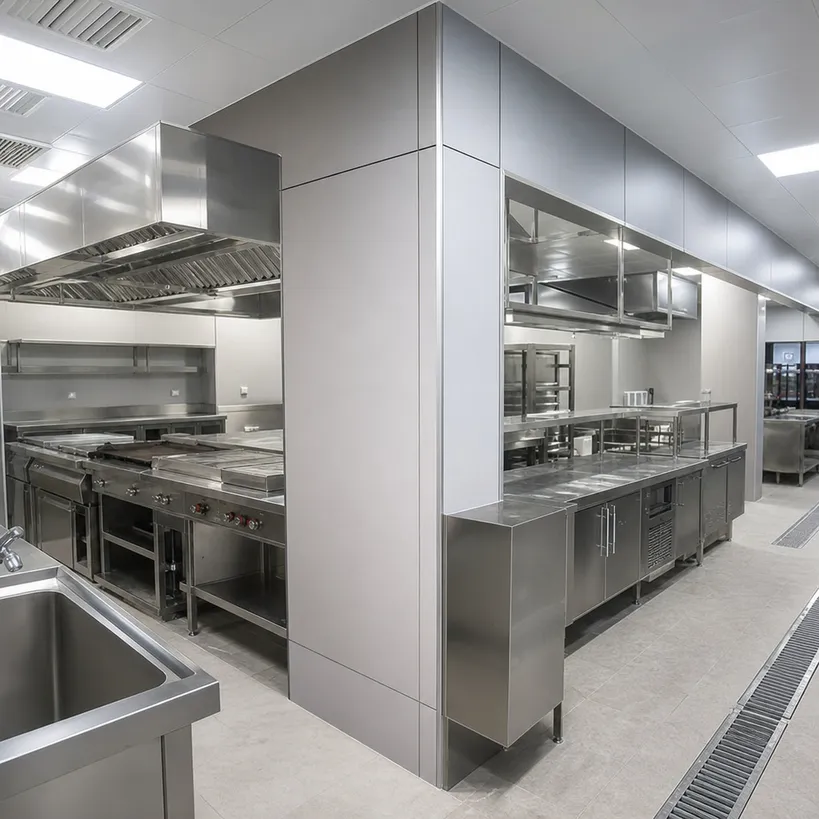
Commercial Kitchen Fit-Out
Restaurants, hotel kitchens, and institutional catering facilities specify panels that go beyond residential performance requirements. Commercial kitchens run cleaning cycles with industrial-grade chemicals, operate at higher ambient humidity, and see more mechanical abuse than residential installations.
Specification note: For this segment, specify WBP core glue rather than MR — the boil-proof bond is the right specification when panels are being cleaned with hot water and degreaser on a daily basis.
Projects typically run 100–500 panels per project, with repeat business from contractors who've established a reliable supply chain. This segment has grown significantly over the last three years — worth building into your product line if you're supplying fit-out contractors.
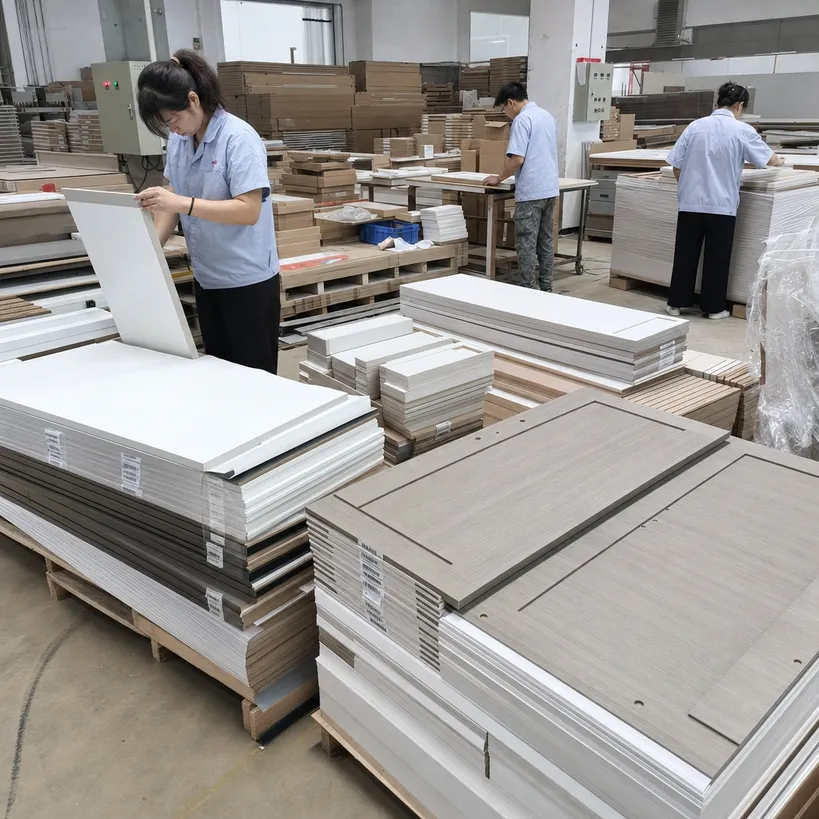
Kitchen Furniture Export
Manufacturers supplying European and North American retail chains with kitchen furniture collections use kitchen HPL plywood for cabinet doors, drawer fronts, and visible carcass panels. These buyers are sourcing to a retail chain's specification, which means the panel needs to pass the chain's incoming inspection and meet their sustainability documentation requirements.
Compliance coverage: Our CARB P2 and FSC documentation covers the compliance gates for both markets without requiring additional testing on your end. The margin profile on kitchen HPL panels is better than commodity plywood because the specification is differentiated — buyers can't substitute a cheaper panel without visible performance consequences.
Kitchen Renovation and Remodeling Supply
Distributors supplying renovation contractors and kitchen studios carry kitchen HPL plywood as a catalog item for cut-to-size supply. The 18mm thickness in 4–6 surface options covers the majority of residential renovation demand.
Reorder pattern: Predictable once the product is established. The panel's performance reputation drives repeat business from contractors who've had good results on previous projects — this segment builds itself once the first few projects are completed successfully.
Segment Quick Reference
Volume patterns, core spec, and compliance requirements by buyer type
| Segment | Typical Volume | Core Spec | Key Compliance | Reorder Pattern |
|---|---|---|---|---|
| Residential Cabinet Mfg. | Annual contracts | MR or WBP | CARB P2, FSC | High — color consistency locks supplier |
| Commercial Kitchen Fit-Out | 100–500 panels/project | WBP required | WBP bond certification | Project-based, contractor repeat |
| Kitchen Furniture Export | Container volumes | MR or WBP | CARB P2 + FSC mandatory | Chain spec-driven, stable |
| Renovation & Remodeling | Catalog / cut-to-size | MR standard | CARB P2 | Predictable once established |
Related HPL Plywood Products
Customization Parameters for Kitchen HPL Plywood Orders
Kitchen cabinet manufacturers and kitchen furniture exporters almost always have customization requirements. Here's what we can do and where the practical limits are.
Surface Color & Texture
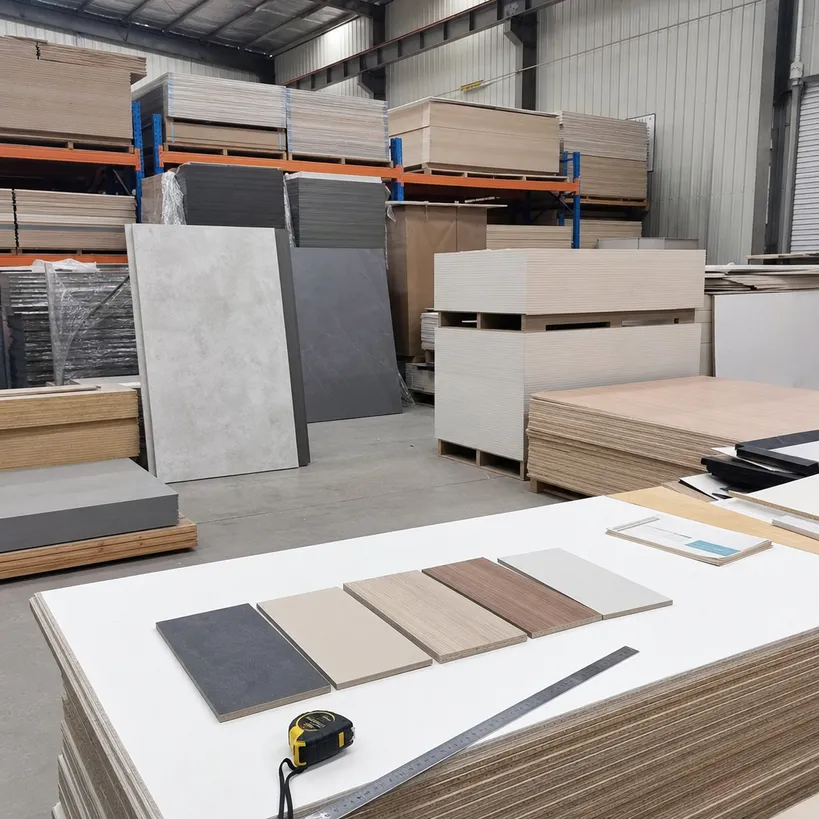
Standard catalog covers 40+ colors and textures: solid whites, greys, and beiges; wood-grain patterns in light and dark tones; stone-effect surfaces. Custom colors and textures are available on OEM orders — sourced from our laminate supplier's extended catalog or from buyer-supplied laminate on confirmed orders.
200–300 sheets to maintain batch consistency. Below that, laminate lot management doesn't make sense for either side.
Thickness
Any thickness from 12mm to 25mm in 1mm increments on confirmed orders.
Face Configuration
Single-face HPL with balancing paper back — for carcass panels where only one surface is visible.
Double-face HPL with matching or contrasting laminates — for door panels and visible side panels.
OEM branded lines — proprietary color on face with neutral back, handled through our OEM program.
Core Glue Specification
MR (E1) — standard residential applications.
WBP (E0 / CARB P2) — commercial kitchen applications and export to markets with strict formaldehyde requirements. Adds a modest cost premium but is the right call for commercial kitchen fit-out and for buyers supplying the US market where CARB P2 is a procurement gate.
Panel Dimensions & Branding
Non-standard sizes cut to your specification — no tooling cost, just a yield and scheduling consideration. Available on confirmed orders with minimum quantities.
Custom marking, labeling, and packaging for OEM programs. Full private-label kitchen panel programs handled from specification development through export documentation under your brand.
Lead time from specification confirmation to first production sample is 15–20 working days. Production lead time after sample approval is typically 25–35 days depending on order volume.
Compliance Documentation for Your Import Markets
Kitchen HPL plywood sold into North America, Europe, and Australia faces specific compliance requirements. Here's what we hold and what it covers.
| Certification | What It Covers | Markets |
|---|---|---|
| CARB P2 | Formaldehyde emissions ≤0.05 ppm (ATCM 93120) | US — de facto national standard |
| FSC Chain of Custody | Wood fiber traceable to certified forests | EU, North America (sustainability-audited buyers) |
| CE | Conformity with EU construction product regulations | European Union |
| ISO 9001:2015 | Quality management system | Global procurement qualification |
All Four Certifications — Factory Level
All four certifications are held at the factory level and apply to our kitchen HPL plywood production. For US-bound shipments, the CARB P2 documentation package is prepared as standard — you don't need to request it separately. For EU shipments, CE declaration of conformity is included. FSC chain-of-custody documentation is available for buyers with sustainability sourcing requirements.
Third-Party Pre-Shipment Inspection
Third-party pre-shipment inspection through SGS, Bureau Veritas, or your preferred agency can be arranged on request.
Important for US Market Buyers
CARB P2 compliance applies to the plywood substrate, not the laminate surface. The laminate itself is inert — the formaldehyde emission comes from the substrate's adhesive system.
When your downstream customers or their inspectors ask for CARB documentation, they need the certificate for the plywood substrate specifically, not a general formaldehyde test report. We provide the correct documentation as standard.
Certifications Held at Factory Level
Documentation packages prepared as standard for US and EU shipments. Available on request for all other markets.
Container Loading and Landed Cost Data
Accurate container utilization and transit data so you can model landed cost before requesting a quote.
18mm — 20GP Capacity
Standard 1220×2440mm panels
25mm — 20GP Capacity
Standard 1220×2440mm panels
Mixed Thickness Loads
Mixed thickness loads are available. We provide a detailed loading plan with every shipment so your freight forwarder has accurate CBM and weight data before booking.
Packaging & Export Protection
- Bundled in packs of 20–50 sheets depending on thickness
- Steel banding straps on every bundle for secure stacking
- Corner boards on all four edges to prevent transit damage
Kitchen HPL panels with 0.8mm laminate surfaces are susceptible to surface staining from condensation during ocean transit, particularly on routes through tropical ports. Moisture-resistant film wrap is applied as standard on all export shipments.
Transit Times from Xuzhou
Shipping through Qingdao, Shanghai, and Lianyungang ports.
Export Documentation Package
Selecting Between Kitchen HPL and Sibling Products
Kitchen HPL plywood is one of five variants in our HPL plywood line. Here's how to match the right product to what your buyers actually need.
Your buyers are in the kitchen segment and need daily moisture and cleaning chemical resistance. This is the panel.
Cabinet production covers multiple room types and kitchen-specific moisture performance isn't the primary requirement.
Buyers are countertop fabricators needing postforming flexibility for bullnose and curved edge profiles. 25–40mm substrate range.
Distributors stocking for resale to fabricators and fit-out contractors with a broad downstream application mix. Full thickness range.
Buyers whose market is commercial furniture — office furniture, retail fixtures, commercial shelving. 12–25mm. Not rated for kitchen environments.
Kitchen HPL Plywood
Your buyers are in the kitchen segment and need daily moisture and cleaning chemical resistance. If your buyers are in the kitchen segment, this is the panel.
Cabinet production covers multiple room types and kitchen-specific moisture performance isn't the primary requirement.
Countertop fabricators needing postforming flexibility for bullnose and curved edge profiles. 25–40mm substrate. Kitchen HPL at 25mm works for flat-edge applications, but this variant gives fabricators the profiled-edge flexibility they need.
Distributors stocking for resale to fabricators and fit-out contractors with a broad downstream application mix. Full thickness range. Right for stocking programs where kitchen-specific performance isn't the primary requirement.
Office furniture, retail fixtures, and commercial shelving. 12–25mm. Not the right specification for kitchen environments, but the right choice for buyers whose market is commercial furniture.
Not Sure Which Variant Fits Your Buyer's Spec?
The fastest way to confirm the right product is to share your buyer's end application — cabinet carcass, door panel, countertop substrate, or general fit-out. We'll confirm the correct variant and provide a loading plan with your quote.
Questions Buyers Ask Before Specifying Kitchen HPL Plywood
Specification decisions that affect warranty exposure, compliance, and long-term performance — answered directly.
What is the difference between 0.5mm and 0.8mm HPL surface thickness for kitchen applications?
The 0.5mm surface is adequate for general commercial interiors — office furniture, retail fixtures, hospitality furniture where the panel surface sees light contact. In kitchen environments, the wear layer on a 0.5mm surface is thin enough that daily cleaning with abrasive cloths or cleaning chemicals will show surface degradation within two to three years.
The 0.8mm surface has a wear layer that handles daily kitchen use without visible degradation over the product's expected service life.
- Office & retail furniture
- Light-contact surfaces
- Degrades in 2–3 yrs under kitchen cleaning
- Kitchen cabinet applications
- Daily cleaning & chemical exposure
- Full service life without degradation
The warranty claim difference is significant — a cabinet manufacturer whose panels show surface wear within the warranty period loses the customer and the reputation. Specify 0.8mm for any kitchen application.
Should I specify MR or WBP core glue for kitchen HPL plywood?
MR (moisture-resistant) glue is the minimum specification for kitchen cabinet applications in residential settings. It handles the ambient humidity and occasional moisture exposure of a residential kitchen without bond degradation.
WBP (waterproof, boil-proof) glue is the right specification for commercial kitchen applications — restaurants, hotel kitchens, institutional catering — where panels are cleaned with hot water and industrial-grade chemicals on a daily basis, and where ambient humidity is consistently higher than residential levels.
The cost premium is modest and the performance margin is meaningful. WBP covers both residential and commercial requirements and simplifies your procurement specification.
How do I verify that kitchen HPL plywood won't delaminate after installation?
Ask your supplier three specific questions before placing an order. The answers tell you whether they are running a controlled lamination process or guessing.
What is the substrate moisture content target before lamination, and how is it verified?
What press dwell time do they run for 0.8mm laminate versus 0.5mm standard HPL?
Do export panels receive edge sealing before ocean transit?
A supplier who can answer all three with specific numbers is running a controlled process. If they cannot give you a moisture content figure, a differentiated dwell time, or a clear answer on edge sealing, the bond quality is unverified.
We answer all three questions with specific process parameters and can provide press logs for any production run on request.
What is the MOQ for kitchen HPL plywood, and can I mix surface options?
Our MOQ is one 20GP container. Mixed surface options — different colors, textures, and thicknesses — are available within a single container order, subject to minimum quantities per SKU.
Typically 20–30 sheets per surface option to maintain batch consistency. This applies to each distinct color, texture, or thickness combination within your container order.
For buyers building a kitchen cabinet supply program, this surface mix covers the majority of residential kitchen demand in most markets:
Add the 25mm thickness for island top applications once you've established the base range. Island tops carry higher margin and the thicker substrate justifies a premium price point in most markets.
Does kitchen HPL plywood meet CARB P2 requirements for the US market?
Yes. Our kitchen HPL plywood is produced with CARB P2-compliant substrate adhesive systems, and we hold CARB P2 certification at the factory level. The CARB P2 documentation package — certificate, test reports, and chain-of-custody documentation — is prepared as standard for all US-bound shipments.
The laminate surface itself is inert and does not contribute to formaldehyde emissions; the compliance requirement applies to the plywood substrate's adhesive system, which is what our CARB P2 certification covers.
For buyers supplying the US market, this means your shipments clear customs without additional testing requirements on your end.
What causes kitchen HPL plywood to bubble or delaminate, and how do I evaluate a supplier's process?
Surface bubbling comes from incomplete bond formation during pressing — insufficient dwell time, uneven pressure distribution, or substrate moisture content that was too high at the time of lamination. Edge delamination has two main causes: substrate moisture above 12% at lamination, and insufficient glue spread at the panel edges.
The practical evaluation questions to ask any supplier:
Does the supplier verify substrate moisture before lamination — not just after pressing?
Do they run a longer press cycle for 0.8mm laminate than for 0.5mm standard HPL?
Do they inspect post-press panels by tapping for bond voids?
Do they apply edge sealing on export panels?
Controlled process: A supplier who can answer all four questions specifically is running a controlled lamination process.
Red flag: A supplier who says "we use quality materials" without specifics is not running a controlled process.
Get Pricing for Your Kitchen HPL Plywood Requirement
Send us your specification and we'll come back with a detailed quote and the relevant certification documentation within 48 hours.
What to Include in Your Enquiry
The more detail you provide, the faster we can return an accurate quote. Include the following in your message:
- Thickness — e.g. 18mm, 15mm, 12mm
- Surface finish — texture, gloss level, color reference
- Core glue type — MR (moisture-resistant) or WBP (waterproof boil-proof)
- Destination market — country and any import compliance requirements
- Target volume — container quantity or CBM estimate
If you're currently sourcing kitchen panels from another supplier and seeing warranty claims or surface performance issues, tell us what's failing — we'll identify the specification gap and recommend the configuration that solves it.
Start with a Sample Order
Most new buyers in this category start with a sample order to test with their own customers or run through their incoming inspection process. We can ship samples before you commit to a container.
48-Hour Quote Turnaround
We return a detailed quote and the relevant certification documentation within 48 hours of receiving your specification. No generic price lists — every quote is built to your exact configuration.
Xuzhou QD Wood Industry Co., Ltd.
- [email protected]
- +8615852005272
- No. 88 Sanbao Industrial Park, Tongshan District,
Xuzhou, Jiangsu Province, 221116, China
Explore Related HPL Plywood Products
HPL Plywood Sheet
Standard HPL sheet panels for general interior applications
HPL Plywood Cabinet Board
Cabinet-grade HPL panels optimized for furniture manufacturing
HPL Plywood Countertop
High-wear countertop panels with enhanced surface hardness
Furniture HPL Plywood
Furniture-grade HPL panels for residential and commercial fit-out