

MDF Board — Standard Medium Density Fiberboard for Interior Applications
General-purpose MDF board at 680–750 kg/m³ — the workhorse substrate for interior fit-out, shelving, door cores, and painted panel applications.
Produced at our Xuzhou facility under ISO 9001:2015, CARB P2, and FSC certification. Thickness 2.5mm–25mm, standard panel 1220×2440mm, E1 and CARB P2 emission options. Factory-direct from an MDF board manufacturer with 18+ years of export production.
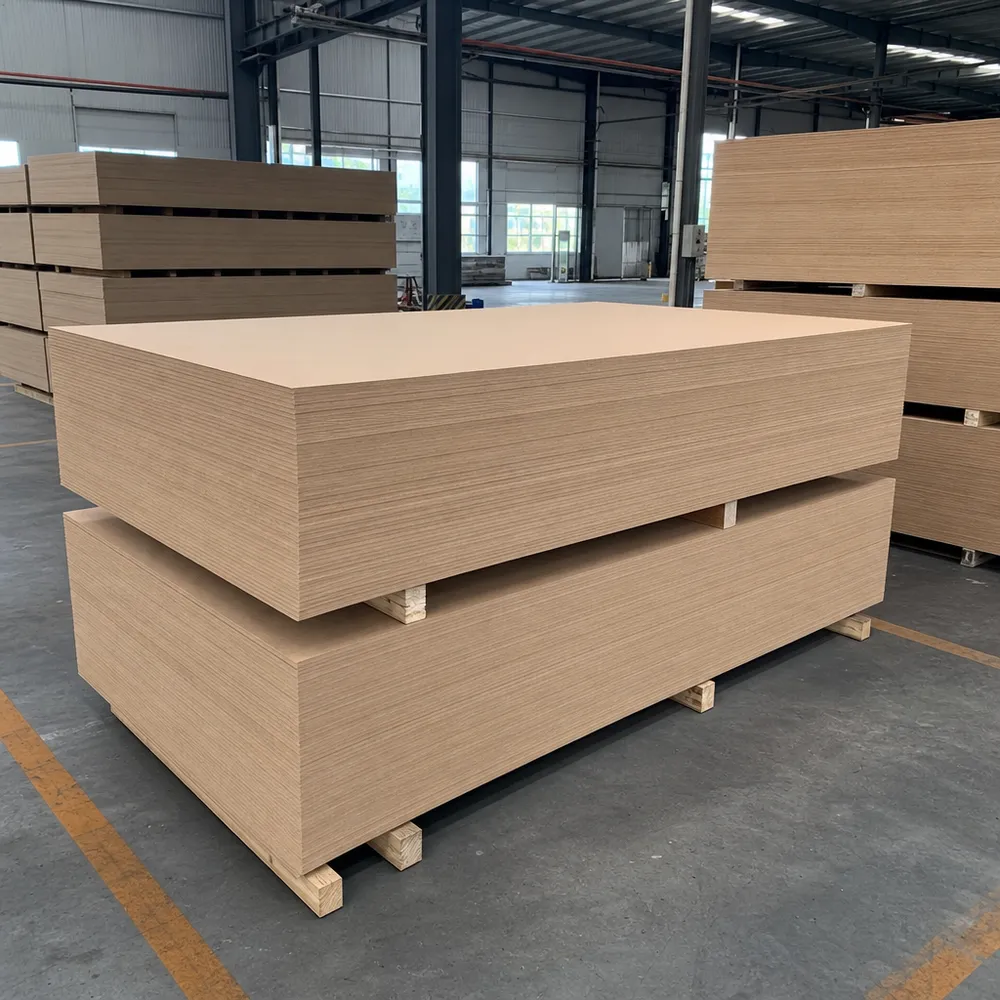
What This Product Is and Where It Fits in the MDF Range
Standard MDF board is the general-purpose line in our five-product MDF range — density 680–750 kg/m³, thickness 2.5mm to 25mm, sanded both sides to a consistent finish. It's the specification that covers the broadest range of interior applications: painted wall paneling, shelving carcasses, door core substrates, skirting boards, and decorative moldings. If your downstream customers need a flat, consistent, paintable panel that machines cleanly and takes primer without telegraphing surface texture, this is the line.
The positioning within our range matters for your sourcing decision. Standard MDF board sits below furniture-grade MDF (which runs Ra ≤ 1.6μm surface finish for lamination and foil applications) and CNC MDF (which is produced with tighter internal density uniformity for routing and carving). Standard board is the right specification when the surface will be painted, primed, or used as a substrate that gets further processed — not when it's going directly under thin foil or high-gloss lacquer.
Sourcing note for furniture factories
If you're supplying furniture factories running lamination lines, the furniture-grade line is the correct specification — the surface finish difference is real and it shows up in adhesion quality. Standard board is not the right call for thin foil or high-gloss lacquer applications.
View Furniture-Grade MDFThe category-level overview of our full MDF range — density comparisons, resin system options, and the decision logic for selecting between lines — is covered on the MDF product category page. This page focuses on the specific parameters, applications, and sourcing considerations for standard MDF board.
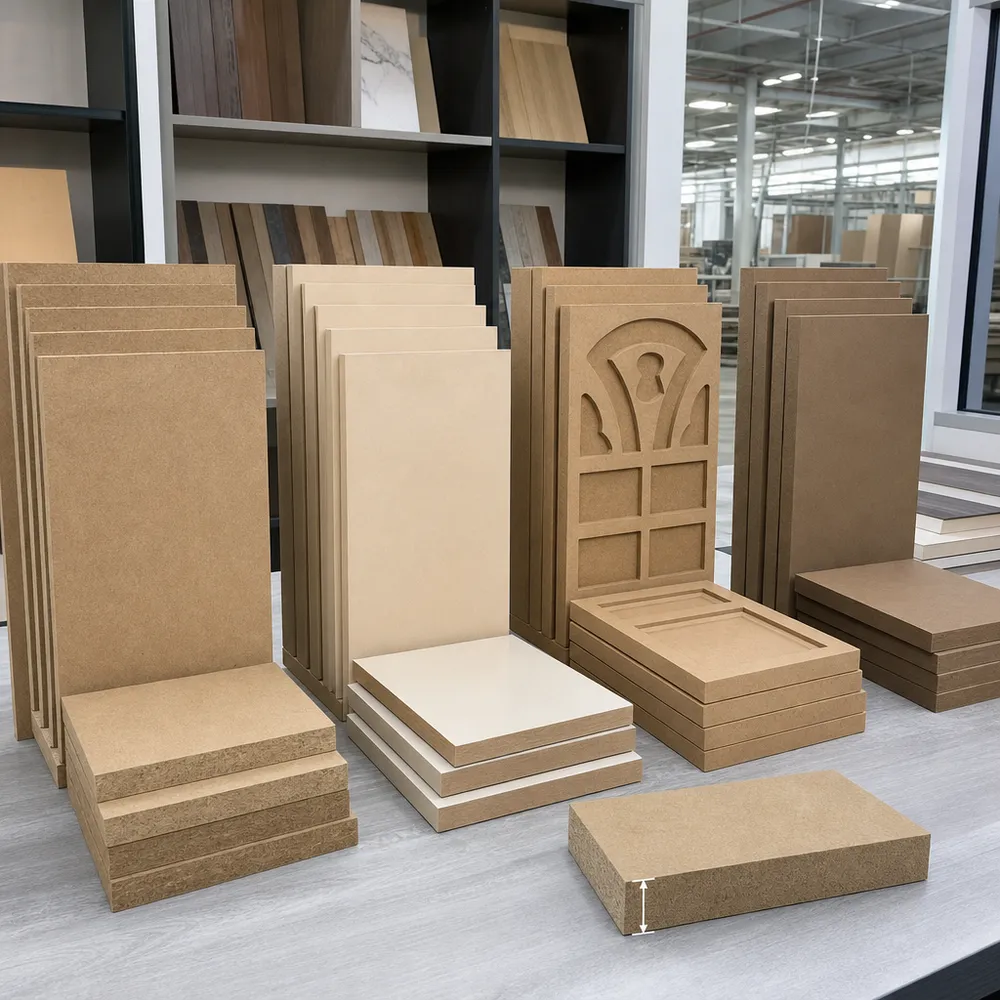
Where Standard MDF Sits in the Range
Technical Specifications
Specifications shown are industry-standard values for this product type. Actual specifications may vary by production batch. Contact us for detailed product data sheets and current test reports.
Standard MDF Board — Full Specification
Available Thicknesses
Panel Sizes & Custom Options
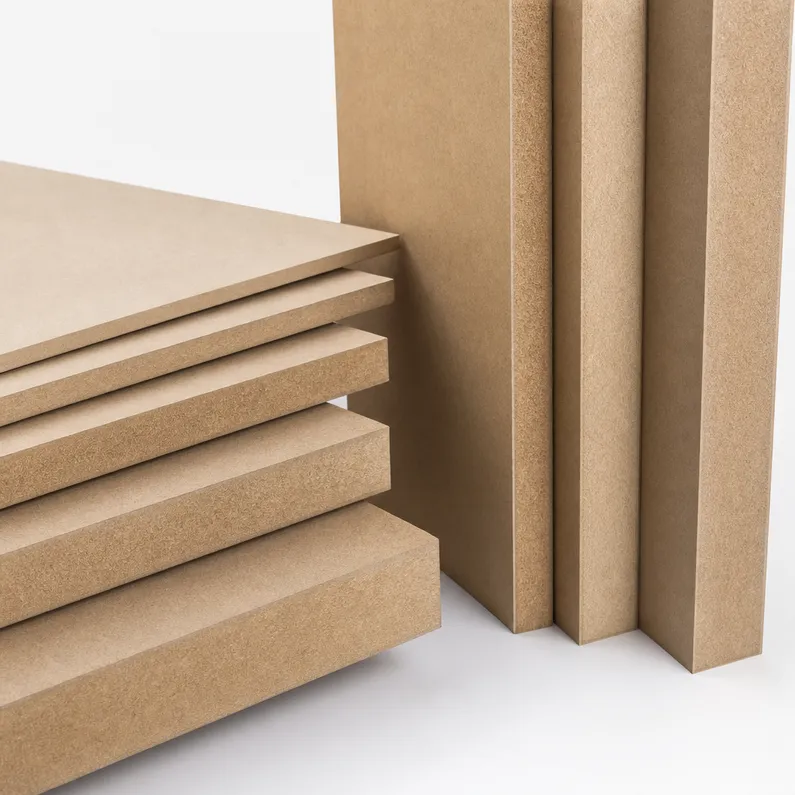
Applications of Standard MDF Board
Standard MDF is the go-to substrate wherever a smooth, stable, paintable surface is needed. Its consistent density and edge quality make it reliable across a wide range of interior applications.
Painted Joinery & Cabinetry
The smooth, closed surface of standard MDF accepts primer and paint without grain telegraphing. Widely used for cabinet doors, drawer fronts, and painted furniture carcasses.
Skirting, Architrave & Mouldings
Consistent density across the full panel allows clean profiling and routing. MDF mouldings hold paint finishes better than softwood and resist seasonal movement in interior environments.
Wall Panelling & Feature Walls
Used for flat-panel and grooved wall systems, MDF provides a stable substrate for paint, wallpaper, and decorative laminates. Suitable for residential and commercial interior fit-outs.
Retail Fixtures & Display Units
Retail shopfitters rely on MDF for shelving, display plinths, and point-of-sale units. The material machines cleanly and takes high-gloss lacquer finishes for premium retail environments.
Door Skins & Flush Doors
Thin MDF panels (3–6mm) are used as door skins over hollow-core frames. The flat, consistent surface ensures a smooth painted or veneered finish without telegraphing the core structure.
Substrate for Laminates & Veneers
MDF's flat, void-free surface is ideal as a substrate for HPL, melamine, and wood veneer. The stable core minimises telegraphing and ensures consistent adhesion across the full panel face.
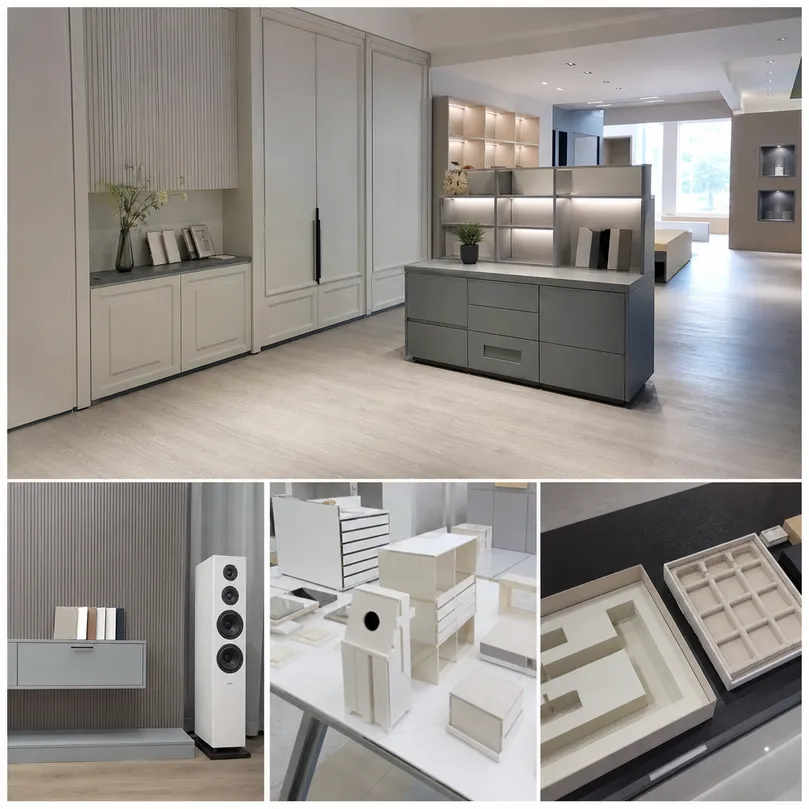
Additional Use Cases
Standard MDF is not moisture-resistant. It should not be used in bathrooms, kitchens (without full sealing), or any exterior application. For moisture-prone environments, specify moisture-resistant (MR) MDF grade.
Why Specify Standard MDF Board
Standard MDF has remained the dominant interior panel product for decades because it consistently delivers where it matters: surface quality, dimensional stability, and machinability at a competitive price point.
Dimensional Stability
Unlike solid timber, MDF does not expand, contract, or warp with seasonal humidity changes in controlled interior environments. This makes it reliable for precision joinery and fitted furniture.
Superior Surface Quality
Both faces are sanded to a consistent flatness. There are no knots, grain patterns, or voids to telegraph through paint or laminate finishes — a key advantage over plywood and particleboard.
Clean Machinability
MDF cuts, routes, and profiles cleanly with standard woodworking tooling. Edges are smooth and closed, accepting paint and edge banding without the voids or tearout common in particleboard.
Cost-Effective at Scale
Standard MDF delivers consistent quality at a lower cost per sheet than furniture-grade or CNC-optimised variants. For high-volume painted applications, it is the most economical choice.
Sustainable Fibre Sourcing
Manufactured from wood fibre including recovered and plantation timber. FSC-certified supply chains available. E1 and CARB P2 compliant grades minimise formaldehyde emissions in occupied spaces.
MDF vs. Alternatives — Quick Comparison
| Property | MDF | Plywood | Particleboard |
|---|---|---|---|
| Surface flatness | |||
| Edge quality | |||
| Paint finish quality | |||
| Structural strength | |||
| Moisture resistance | |||
| Cost per sheet |
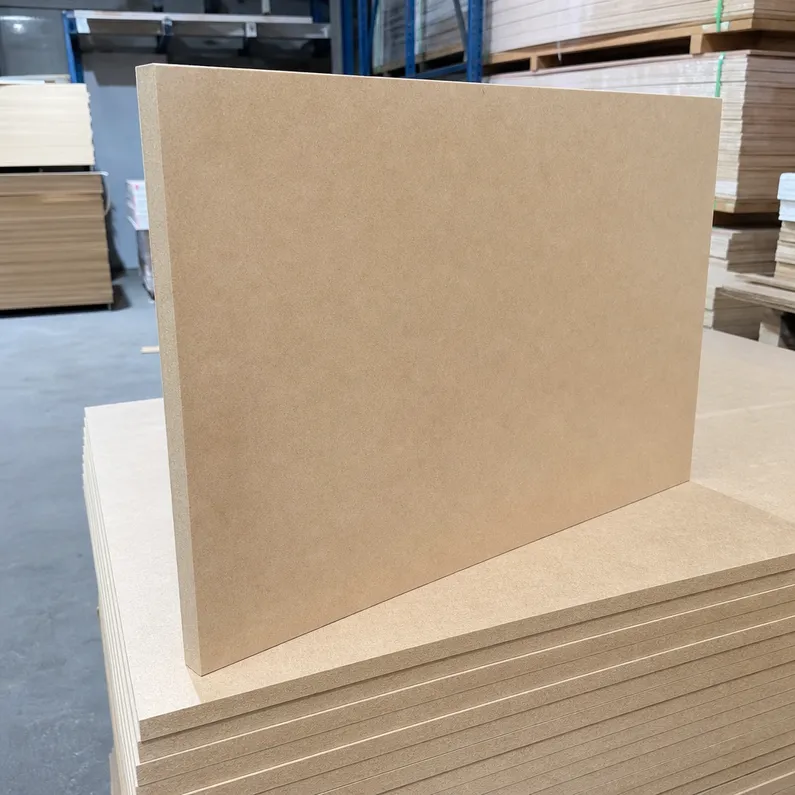
The Two Process Variables That Determine Whether Your Customers Have Problems
Most buyers evaluate MDF board on price and certification. The two variables that actually determine whether your downstream customers have production problems or warranty claims are thickness tolerance and formaldehyde emission consistency — and both are process-controlled, not just tested.
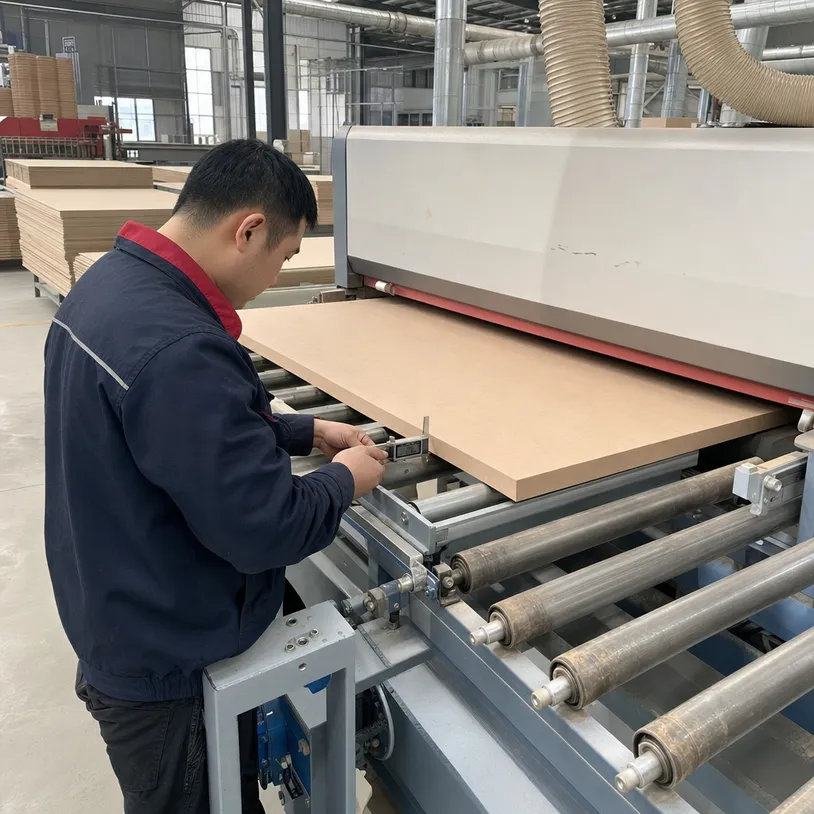
Thickness Tolerance
±0.2mm across full 1220×2440mm sheetThickness tolerance is the variable that creates downstream production problems. MDF going into automated lamination lines, cabinet assembly, or painted panel applications needs to run within ±0.2mm across the full 1220×2440mm sheet and be consistent across panels in the same batch.
Outside tolerance causes:
- Feed errors on automated cutting equipment
- Visible gaps at joints in cabinet assembly
- Adhesion failures on lamination lines calibrated to a specific panel thickness
Our QC Protocol
- Wide-belt sanding line calibrated at the start of each production shift
- Thickness checks run every 30 minutes during production
- Panels outside tolerance pulled before packing — not after

Formaldehyde Emission Consistency
CARB P2 — every production batchFormaldehyde emission consistency is the variable that creates compliance risk for your supply chain. CARB P2 compliance requires that the resin system and press conditions are engineered to hit the emission target across every production batch — not just the batch that got tested for certification.
Our Process Controls
- Automated resin mixing with batch-level logging
- Press temperature and time parameters recorded per production run
- CARB P2 test reports available for every production batch on request
US-Bound Shipments
For US-bound shipments, we include the CARB documentation package as standard. We've been through enough US port inspections to know what documentation gaps cause container holds — and we prepare the paperwork to avoid them.
We've had buyers come to us after a previous supplier's MDF caused reject rates on their customer's CNC line. The thickness tolerance issue is more common than most people expect — and it's entirely preventable with the right sanding line protocol.
Application Segments: Where Standard MDF Board Moves Volume
Standard MDF board is one of the most widely distributed engineered wood substrates globally. The segments below are where our buyers are currently moving volume — each represents a repeatable, commercially viable market for distributors and contractors.
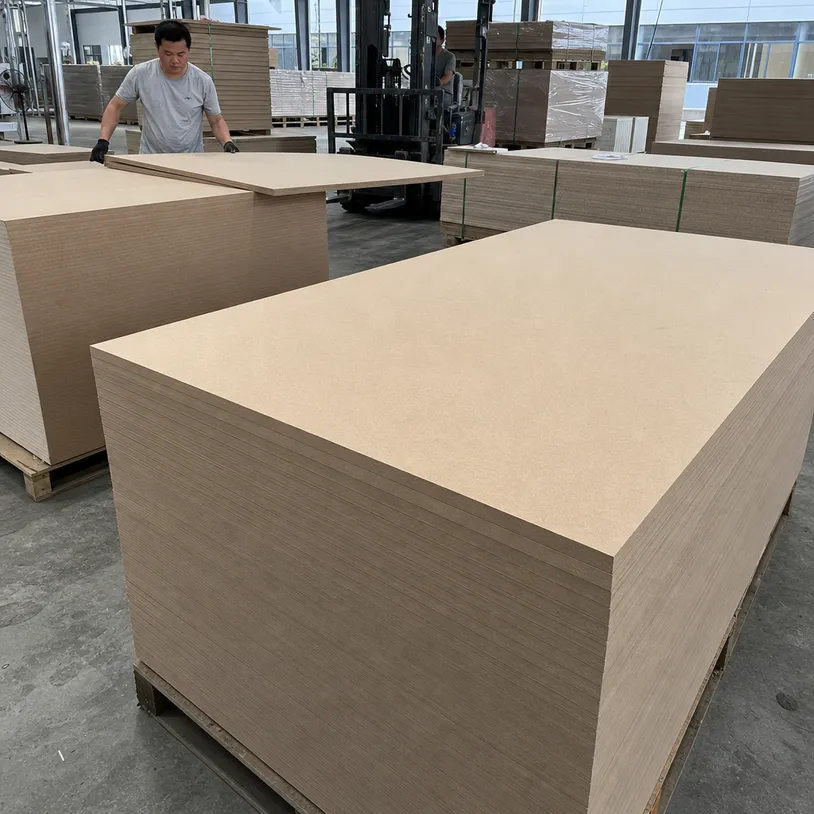
Interior Fit-Out and Construction Supply
Highest Volume SegmentThe highest-volume segment for standard MDF board. Wall paneling, ceiling tiles, door cores, skirting boards, and decorative moldings all run on standard MDF in commercial fit-out projects.
Buyer Profile
- Contractors and fit-out suppliers ordering 5–20 containers per project
- Repeat orders tied to project phases — predictable reorder patterns
- Standard E1 or CARB P2, sanded both sides, 1220×2440mm — efficient to stock
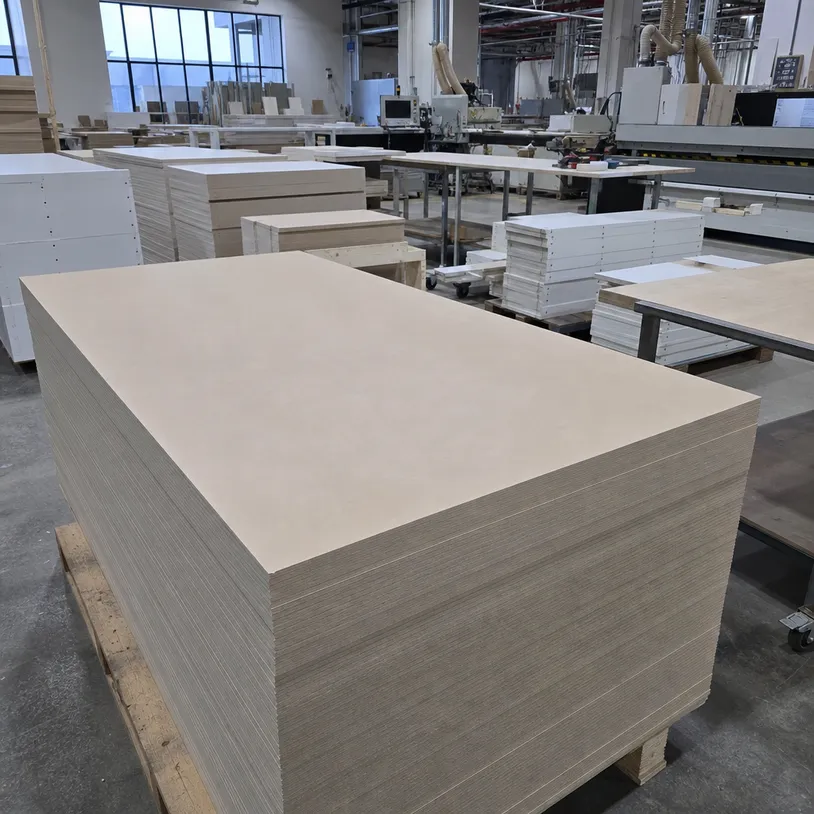
Shelving and Storage Manufacturing
High-Turnover SKUStandard MDF board is the primary substrate for painted and primed shelving systems. The consistent density and flat surface means paint and primer apply evenly without requiring additional surface preparation.
Key Markets
- Furniture manufacturers producing painted shelving, display fixtures, storage units
- Southeast Asia and Middle East — painted furniture is the dominant category
- Reliable, high-turnover SKU for distributors in these markets
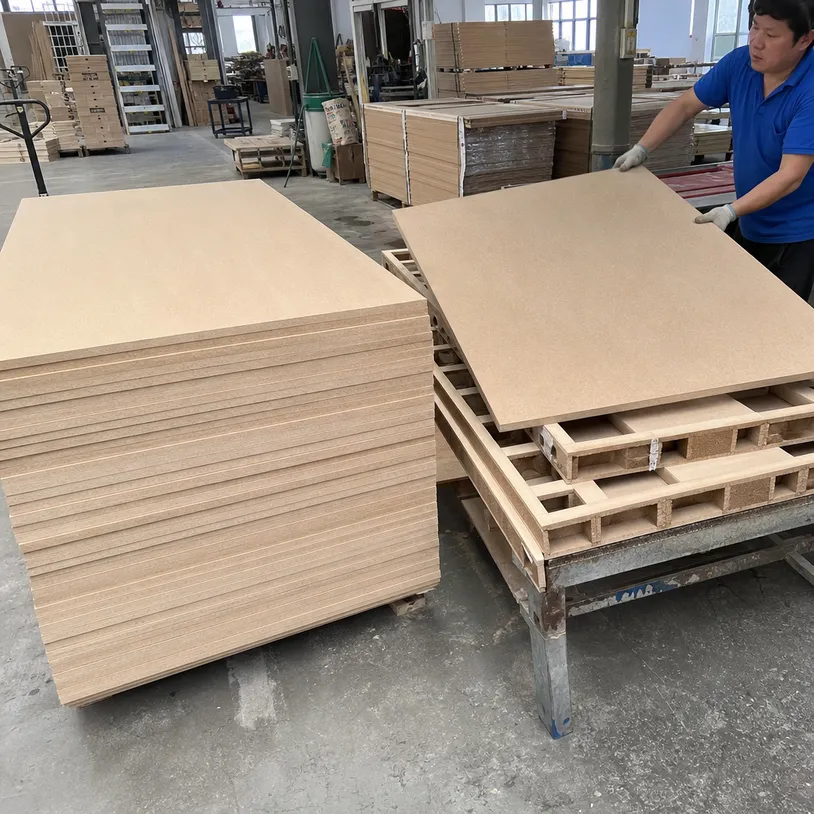
Door Core and Door Skin Substrate
Competes vs. Solid Timber & ParticleboardMDF door cores offer consistent density across the panel cross-section, which means the door face veneer or skin bonds evenly — without the density variation that causes adhesion failures over solid timber cores.
Specification & Buyers
- 35–45mm thickness for hollow-core interior door construction
- Produced by laminating thinner panels or ordering custom thickness
- Active buyers: door manufacturers in Southeast Asia and Eastern Europe
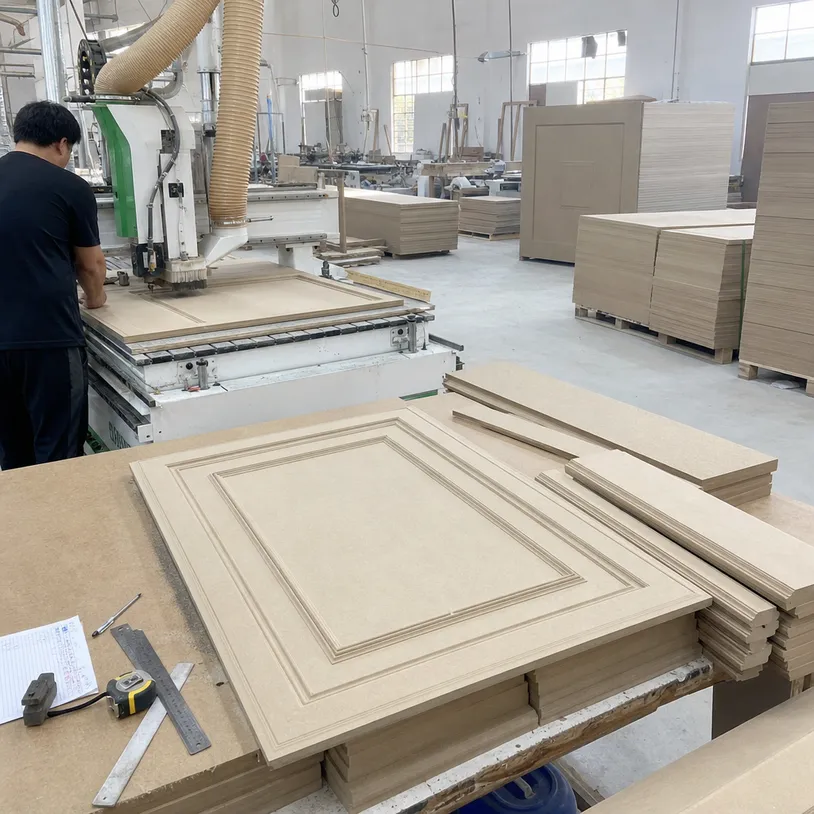
Painted Panel and Decorative Molding Production
Higher Margin SegmentManufacturers producing MDF-based decorative components — wall panels, wainscoting, picture frame moldings, and architectural trim. Standard MDF machines cleanly with router bits and profile cutters, and the consistent density means cut edges are smooth without fiber tear-out.
Segment Characteristics
- Smaller volumes with more specification variety than commodity panel supply
- Higher margins on finished decorative components justify the complexity
- Worthwhile for distributors building a differentiated product line
Discuss Your Target Market and Volume Requirements
Tell us which segment you're supplying and we'll confirm the right specification, certification, and container configuration.
Customization Parameters for Standard MDF Board
Custom production is standard practice here, not a special service. The variables we adjust on confirmed orders:
Thickness
2.5mm – 25mm range
Any thickness from 2.5mm to 25mm. The common stocked thicknesses (6mm, 9mm, 12mm, 18mm) are available with shorter lead times; non-standard thicknesses (10mm, 15mm, 17mm, 22mm) are produced to order.
No tooling cost — MDF thickness is a press and sanding parameter.
Green = stocked / shorter lead time · Grey = produced to order
Panel Dimensions
Default 1220×2440mm
Standard 1220×2440mm is the default. Custom sizes available on confirmed orders.
Formaldehyde Emission Specification
E1 standard · CARB P2 · E0 available
≤0.1 ppm — standard for interior MDF in European markets
Specify on your purchase order — documentation package included
≤0.05 ppm, MUF resin system — for markets with the strictest emission requirements
Surface Preparation
Sanded both sides by default
Both sides — general purpose applications
For lamination applications — foil or thin laminate downstream
For applications where the surface will be machined before use
Private Label and OEM Marking
Panels can be marked with your brand, specification, and destination market information. We handle the marking as part of the packing process — no additional lead time required for standard marking configurations.
Minimum Order Quantities
Compliance Documentation for Your Import Market
The certification stack we carry covers the primary import markets for MDF board:
CARB P2
US MarketCalifornia Air Resources Board Phase 2
Required for MDF sold in California and increasingly the de facto US national standard for major retailers and distributors. We carry CARB P2 certification and include the documentation package with every US-bound shipment.
FSC Chain of Custody
SustainabilityForest Stewardship Council
Required by buyers with sustainability sourcing policies and for supply into markets where deforestation-linked supply chains are a regulatory or reputational risk. FSC certification means the wood fiber in our panels can be traced to certified forests.
ISO 9001:2015
Quality ManagementProduction & QC Systems
Covers our production processes, QC procedures, and documentation systems.
CE Marking
EU MarketEuropean Construction Applications
Covers European construction and building material applications. Required for MDF used in certain construction applications in EU markets.
E1 / E0 Formaldehyde Emission
EU / GlobalInterior MDF emission standards
≤0.1 ppm — standard for interior MDF in European markets
≤0.05 ppm — available on request for the strictest emission requirements
Supplying Both US and European Markets?
For buyers supplying both US and European markets, we can produce to CARB P2 and E1 simultaneously — the two standards use different test methods, so both need to be specified on your purchase order. We carry both certifications and can provide documentation for each.
Learn more about our full certification and quality management processCertifications We Carry
Container Loading and Export Logistics
Standard MDF board ships efficiently in 20HQ and 40HQ containers. The 1220×2440mm panel dimensions are designed for container loading without cutting or reorientation.
Typical Loading Quantities
18mm MDF, 1220×2440mm panels — quantities vary by stacking configuration.
Thinner panels load at proportionally higher sheet counts — 9mm MDF loads approximately 560–640 sheets per 20HQ. We provide loading plans with each shipment so your receiving team knows the exact configuration.
Packaging for Ocean Transit
MDF is more sensitive to moisture ingress than plywood during transit. We standardized moisture-resistant wrapping after seeing edge swelling from condensation in containers early on — it's entirely preventable. Zero moisture-related claims since implementing this protocol.
Export Documentation
All documentation is prepared before container loading.
Transit Times from Xuzhou
Estimated sea freight transit to major destination ports.
Other MDF Product Lines Worth Evaluating
Standard MDF board is the right specification for painted interior applications. If your downstream customers have different requirements, these sibling products may be a better fit.
The correct specification for furniture factories running lamination lines, foil application, or high-gloss lacquer. If your customers are applying thin decorative films, standard MDF surface finish will telegraph through the finish.
Produced specifically for CNC routing, laser cutting, and decorative carving. If your customers are running CNC workshops, standard MDF is not the right specification — density variation across the cross-section causes inconsistent cut edges.
For flooring underlayment, door skins, and applications where surface hardness and screw-holding strength matter more than cost. Higher density than standard MDF across thinner gauges.
18mm stocked as a standard run for faster availability. If 18mm is your primary volume SKU and lead time is a priority, this is the line to start with.
Quick Specification Comparison
| Product Line | Density | Surface Finish | Primary Application |
|---|---|---|---|
| Standard MDF Board (this page) | 680–750 kg/m³ | Ra ≤ 2.0μm | Painted interior, cabinetry, shelving |
| MDF Furniture Board | 720–760 kg/m³ | Ra ≤ 1.6μm | Lamination, foil, high-gloss lacquer |
| CNC MDF Board | Uniform cross-section | Ra ≤ 1.2μm | CNC routing, laser cutting, carving |
| HDF MDF Board | 800–900 kg/m³ | High hardness | Flooring underlayment, door skins |
| 18mm MDF Board | 680–750 kg/m³ | Ra ≤ 2.0μm | High-volume specification, lead-time priority |
Not sure which specification fits your market?
Send us your downstream customer's application and we'll recommend the right line. We've been matching buyers to the correct MDF specification since 2008.
Frequently Asked Questions
Common questions from importers and distributors evaluating standard MDF board for their markets.
Request Samples or a Production Quote
Most buyers start with a sample order — 5–10 sheets of the specification they're evaluating — before committing to a container. We ship samples to your warehouse so you can test with your own customers or run the panels through your production equipment before placing a volume order.
Send us your target specification: thickness, emission standard (E1 or CARB P2), surface finish requirement, panel dimensions, and destination market. We'll come back with a detailed quote, the relevant certification documentation, and a sample shipment timeline.