

Furniture-Grade Hardboard
Manufacturer & Factory-Direct Supply
Furniture hardboard for cabinet backs, drawer bottoms, and bed boards — manufactured to specification, CARB P2 and FSC certified. We supply furniture OEMs, flat-pack distributors, and panel stockists who need consistent surface quality, tight thickness tolerance, and documentation that clears customs without delays.
What Furniture Hardboard Is and Where It Fits in Your Product Line
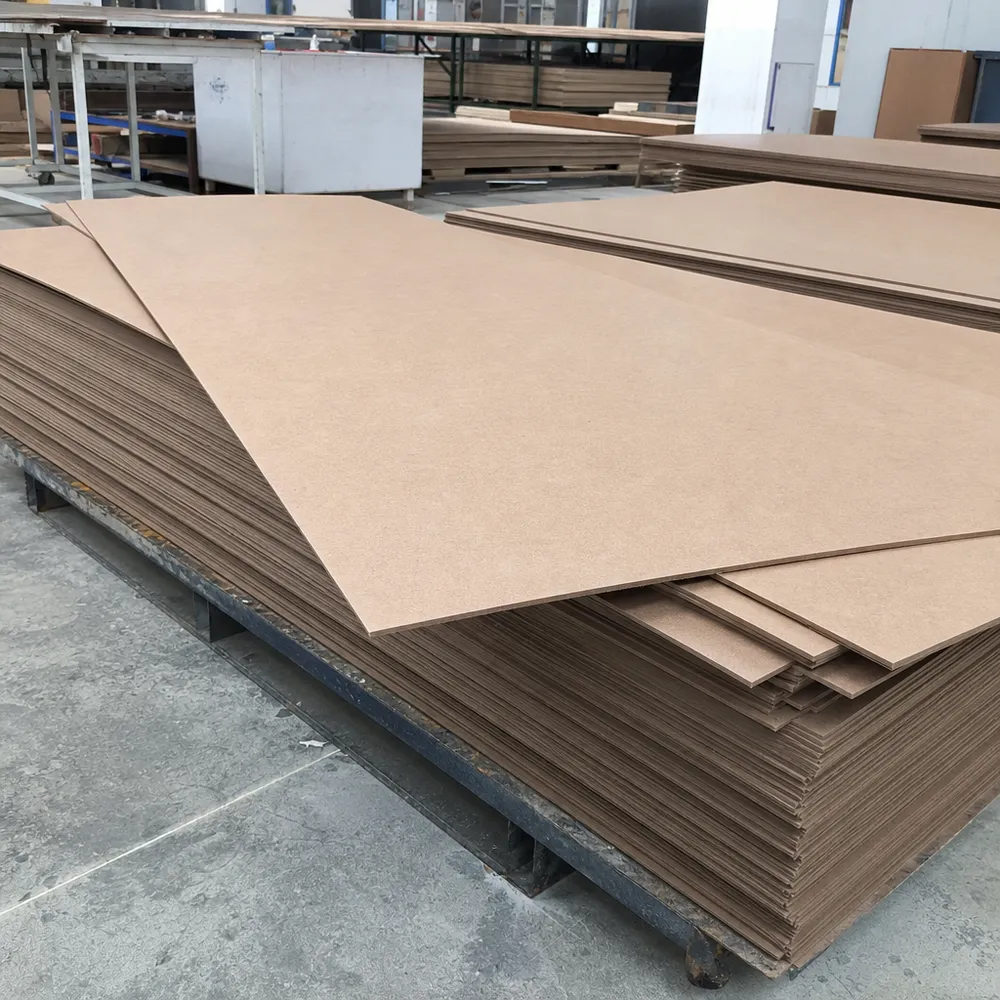
Hardboard furniture board is the thin, dense fiberboard panel that goes into the non-structural but visible components of furniture — cabinet backs, drawer bottoms, wardrobe backing panels, and bed board slats.
It's not the primary structural material in a piece of furniture; it's the component that keeps costs down, reduces weight, and still needs to look right when the end customer opens a drawer or looks at the back of a wardrobe.
The commercial logic for stocking furniture hardboard is straightforward: furniture manufacturers need it in volume, they reorder it on a predictable cycle, and they're buying it as a component alongside their main panel range. If you're distributing plywood, MDF, or melamine panels to furniture manufacturers, furniture hardboard is a natural add-on SKU that consolidates their sourcing with you. If you're a furniture OEM yourself, you already know the spec — the question is whether your current supplier is hitting it consistently.
We manufacture furniture hardboard at our 18,000 m² facility in Xuzhou, Jiangsu Province, as part of our broader hardboard range. The category page at /hardboard covers the full product line and manufacturing process in detail — this page focuses on the furniture-specific formats, specifications, and commercial considerations.
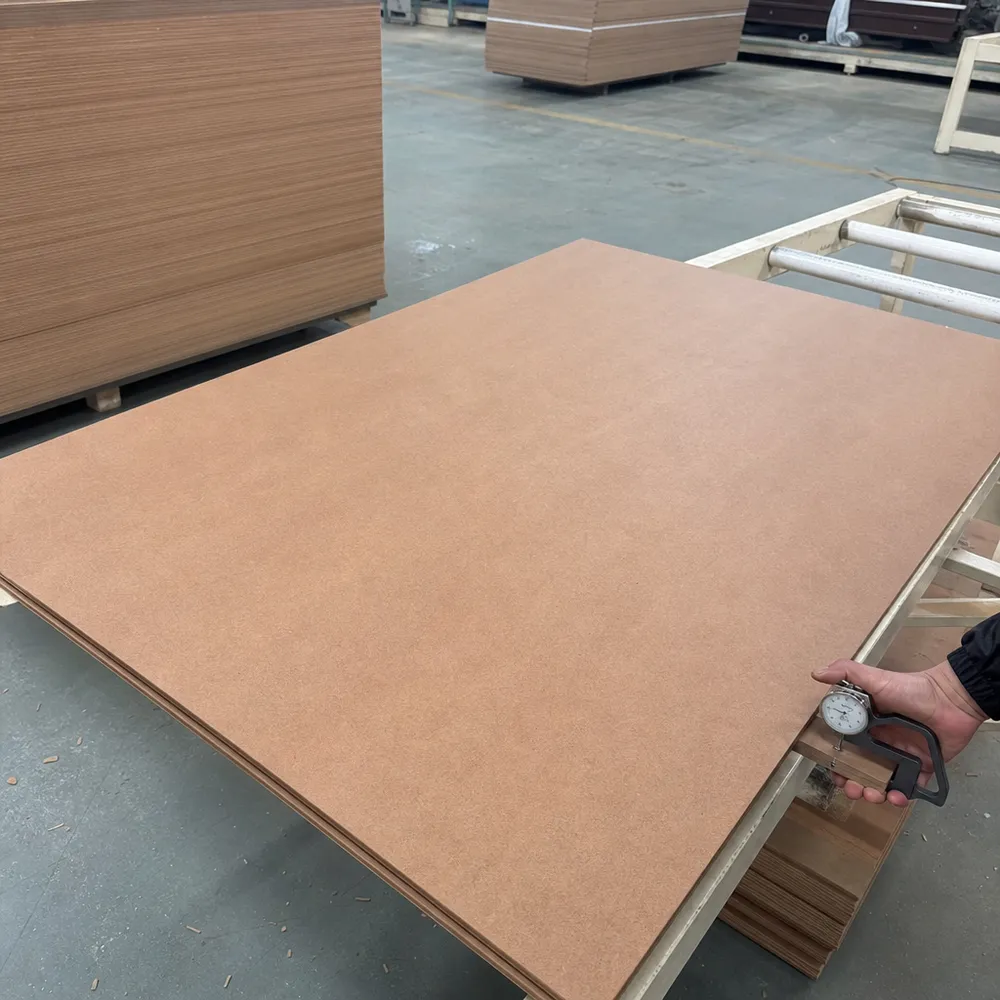
Cabinet Backs
Visible rear panels on kitchen and storage cabinets — surface finish and thickness consistency matter.
Drawer Bottoms
Load-bearing flat surface inside drawers — density and flatness are the critical parameters.
Wardrobe Backing
Large-format backing panels for wardrobes and shelving units — flat-pack friendly dimensions.
Bed Board Slats
Structural slat components in bed frames — density and moisture content control are essential.
Furniture Hardboard Specifications
These are the standard parameters for our furniture-grade hardboard. Exact values for your order depend on specification — contact us to confirm.
Standard Production Parameters
Specifications shown are standard production values. Contact us for exact parameters and to confirm availability for your target volume and destination market.
Why ±0.2mm Tolerance Matters
The ±0.2mm thickness tolerance is the spec that matters most for furniture applications. Cabinet back panels that vary in thickness cause visible gaps at the rabbet joint — the kind of defect that generates warranty claims from your downstream customers.
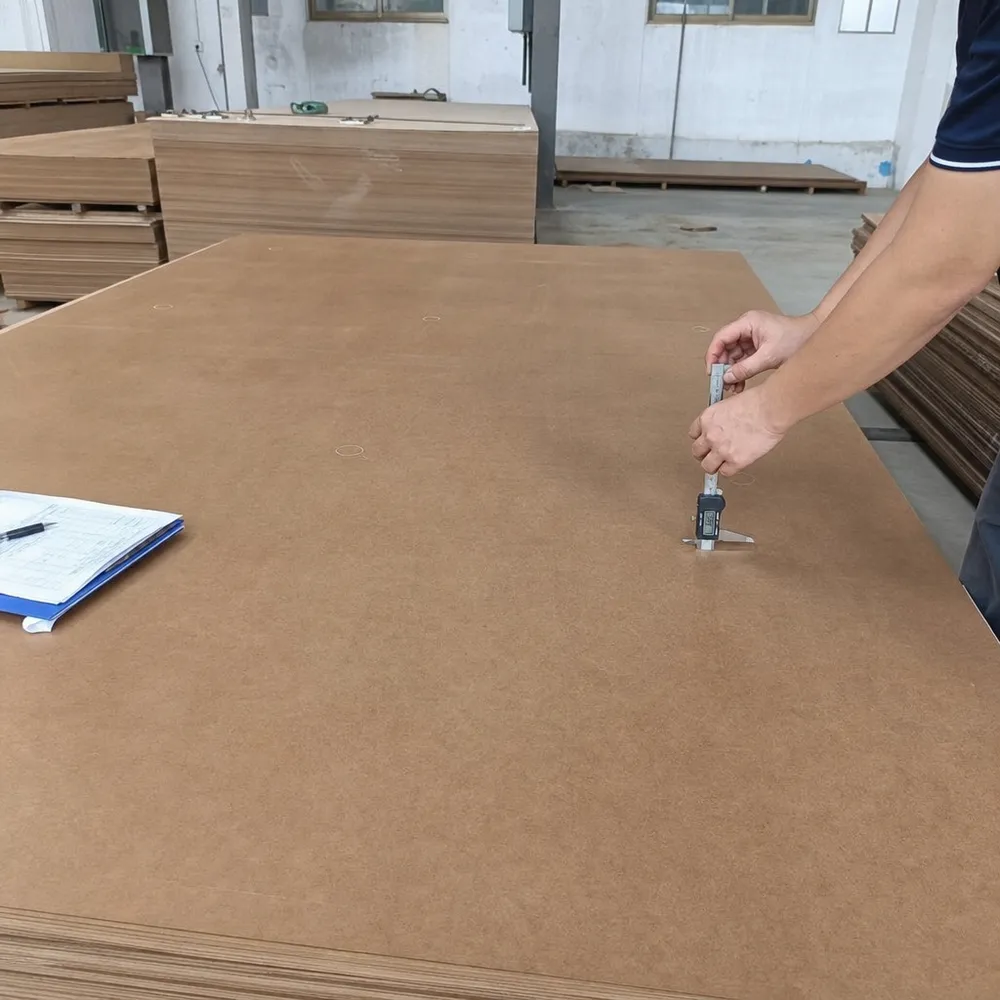
We measure thickness at multiple points across the panel, not just at the center, because edge-to-center variation is where most sanding lines fall short.
Available Finish Options
Standard surface for downstream lamination, painting, or direct use in concealed applications.
Factory-applied primer coat for furniture components that will be painted at the assembly stage.
Decorative or protective film applied at the factory — reduces downstream processing steps for OEMs.
Other Hardboard Products
The Three Main Furniture Applications and What Each One Demands
Furniture hardboard isn't a single-spec product — the requirements differ meaningfully depending on which furniture component you're supplying for. Here's how we think about each application.
Cabinet Backs
Most Common ApplicationSurface Quality and Consistent Thickness
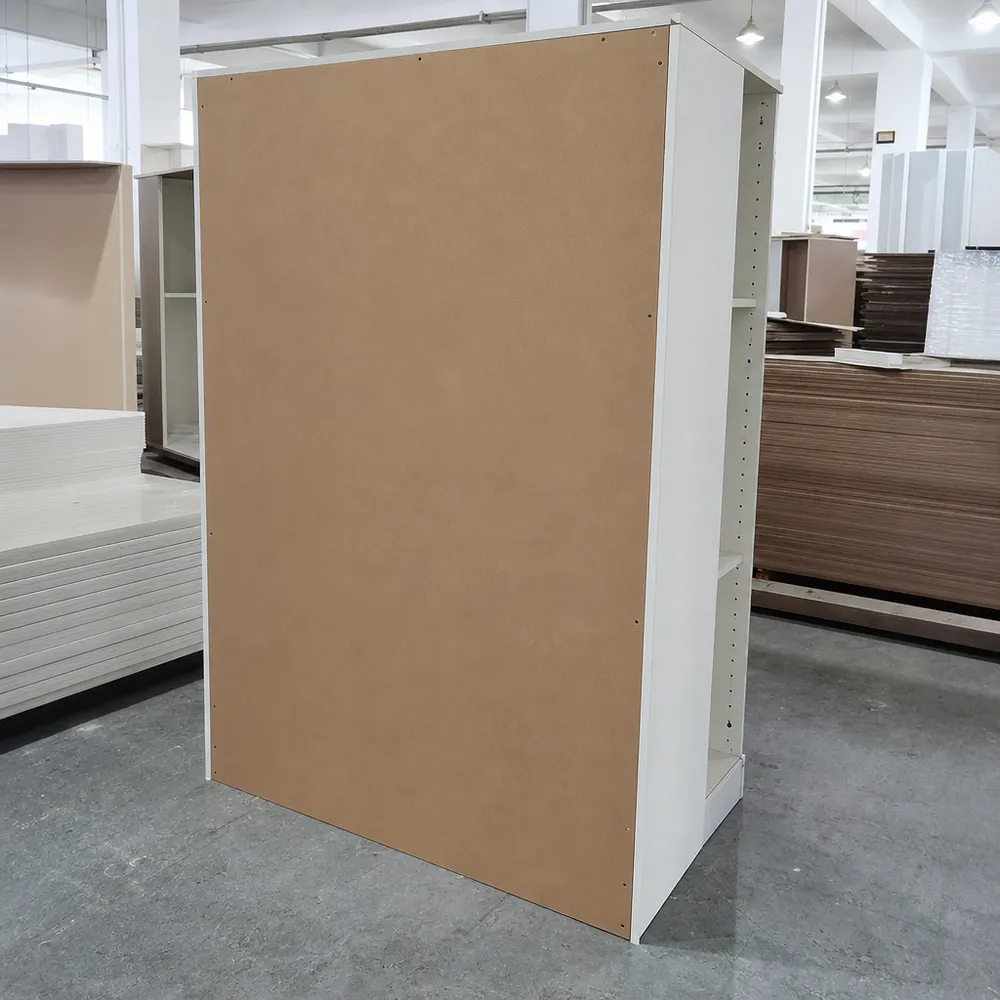
Cabinet backs are the most common application for furniture hardboard. In flat-pack furniture, the back panel is typically 3mm hardboard in S1S configuration — smooth face outward, textured reverse against the cabinet frame. The smooth face needs to be defect-free because it's visible when the cabinet is installed. Surface pits, fiber pullout, or sanding marks show through paint or veneer finishes and generate end-customer complaints.
We run the sanding line at calibrated settings for furniture-grade surface quality. The target is a surface that accepts paint or laminate without visible texture variation.
We've had buyers send us competitor panels where the sanding marks were visible through a single coat of white paint — that's a fiber density issue combined with inconsistent sanding pressure. It's the kind of defect that's invisible in a stack of panels but obvious once the furniture is assembled and finished.
For cabinet backs going into flat-pack furniture that ships internationally, the panel also needs to arrive flat. We target 5–9% moisture content at dispatch and wrap export bundles in moisture-resistant film. Panels that arrive outside that moisture range will move after they're cut to size, which causes fit problems at the assembly stage.
Drawer Bottoms
Load-BearingRigidity Under Load and Clean Cut Edges
Drawer bottoms take a different kind of stress than cabinet backs — they carry load, they flex when the drawer is pulled out, and they're cut to precise dimensions that need to fit the drawer frame without adjustment. The spec for drawer bottoms is typically 3mm or 3.2mm, with S1S or S2S surface depending on whether the underside of the drawer is visible.
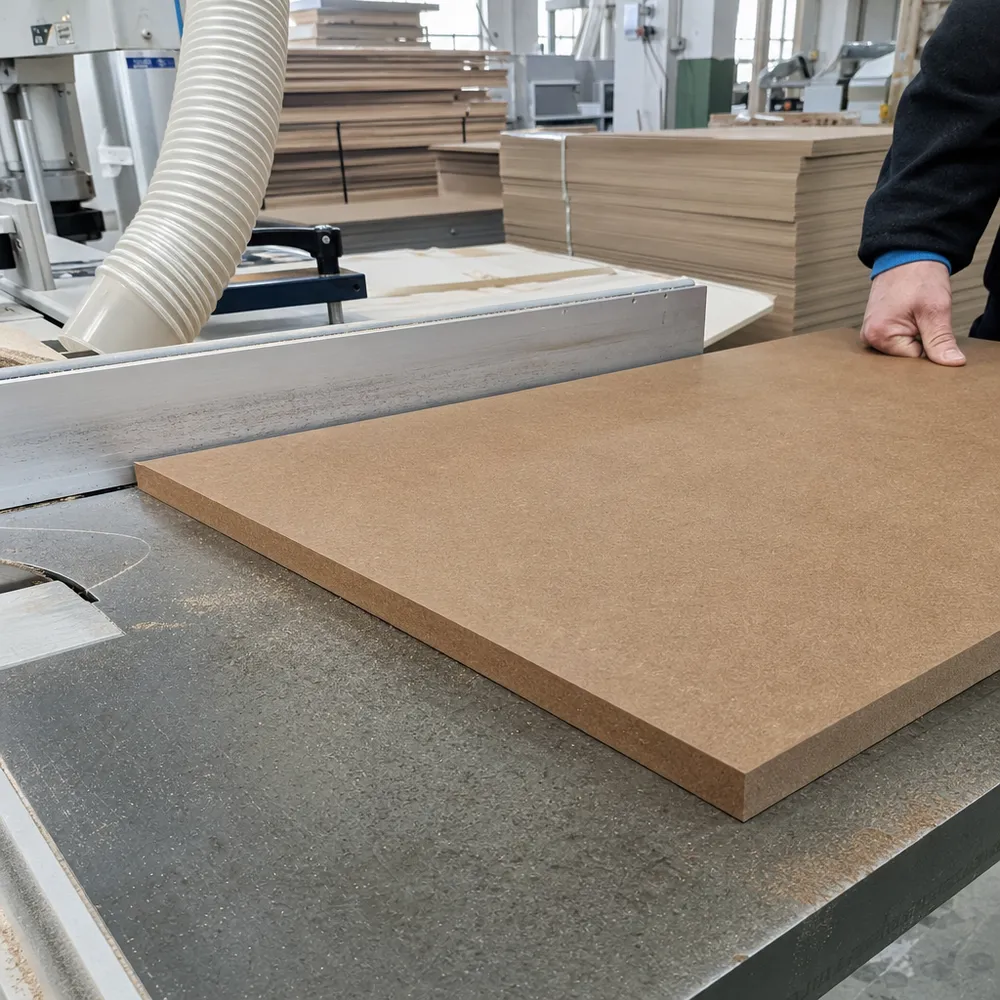
The critical performance parameter for drawer bottoms is edge quality after cutting. Furniture manufacturers cut hardboard to drawer dimensions on panel saws, and the cut edge needs to be clean — chipping or fiber pullout at the cut edge causes fit problems and looks poor on visible edges. Our panels hold consistent density across the full sheet, which means cut edges are clean with standard carbide tooling.
Inconsistent density — which happens when the fiber mat isn't uniform going into the press — produces panels that chip unpredictably at cut edges. For high-volume furniture manufacturers running automated cutting lines, thickness consistency is also critical: a panel that's 0.4mm thicker than spec will jam in a dado slot cut to 3mm — the kind of production stoppage that costs more in downtime than the panel itself is worth.
Hardboard Bed Boards
Structural + DecorativeFlat, Stable, and Dimensionally Accurate
Hardboard bed boards are a specific furniture application that sits between structural and decorative — the board needs to be flat enough to support a mattress, rigid enough not to flex visibly under load, and dimensionally accurate enough to fit the bed frame without shimming. The typical spec is 4mm or 5mm hardboard in S1S or S2S, cut to the bed frame dimensions.
The commercial opportunity in hardboard bed boards is in the mid-market furniture segment — beds sold through furniture retailers and online channels where the buyer expects a solid feel without paying for a solid wood or thick plywood base. Hardboard at 4–5mm provides that feel at a fraction of the material cost. Distributors supplying furniture manufacturers in this segment find that bed board hardboard is a consistent volume item with predictable reorder cycles.
For manufacturers who cut to size in-house. Full sheets dispatched in export-wrapped bundles.
Ready-for-assembly components on confirmed orders. See the customization section below for details.
| Application | Typical Thickness | Surface | Critical Performance Parameter |
|---|---|---|---|
| Cabinet Backs | 3mm | S1S | Defect-free smooth face; flat arrival at 5–9% MC |
| Drawer Bottoms | 3mm / 3.2mm | S1S or S2S | Clean cut edges; tight thickness tolerance for dado-slot fit |
| Bed Boards | 4mm / 5mm | S1S or S2S | Flat under mattress load; dimensional accuracy for frame fit |
Market Segments Where Furniture Hardboard Moves at Volume
The commercial value of furniture hardboard as a distribution SKU comes from its position in high-reorder supply chains. These are the segments where our buyers are moving consistent volume.
Flat-Pack Furniture Manufacturing
Largest VolumeCabinet backs · Drawer bottoms · Shelving units · Bed frames
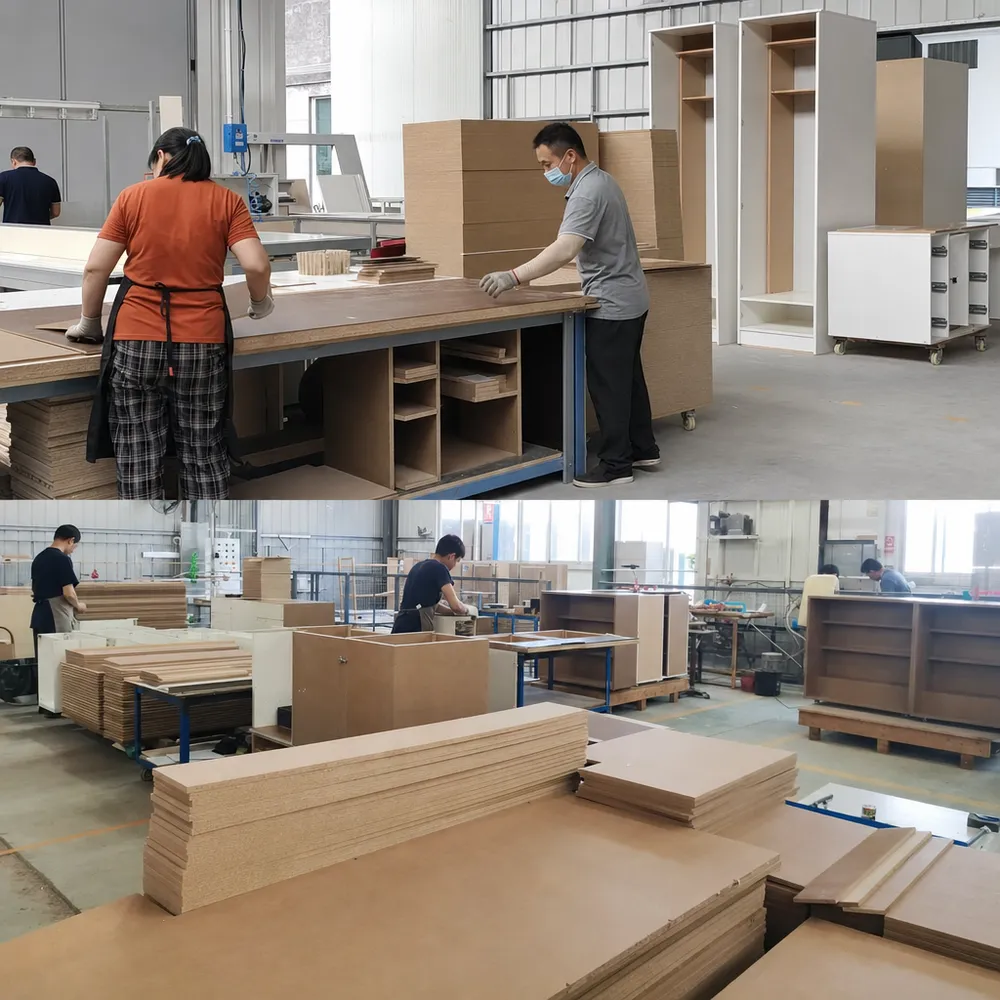
The largest volume segment for furniture hardboard globally. Manufacturers producing flat-pack wardrobes, cabinets, shelving units, and bed frames consume cabinet back and drawer bottom hardboard in quantities that run from 50,000 to 500,000+ sheets per year depending on production scale.
The material is a commodity component — manufacturers specify it by thickness, surface grade, and emission standard, then buy from whoever hits the spec consistently at the right price. If you're distributing to flat-pack furniture manufacturers, furniture hardboard is a high-reorder, low-complexity SKU that fits naturally alongside your main panel range.
Growth note: Furniture manufacturers in Southeast Asia and Eastern Europe are the fastest-growing buyers of our furniture hardboard — this segment has grown significantly over the last five years.
Furniture Component Distributors
North America · EuropePanel component range · CARB P2 · E1/E0 compliance
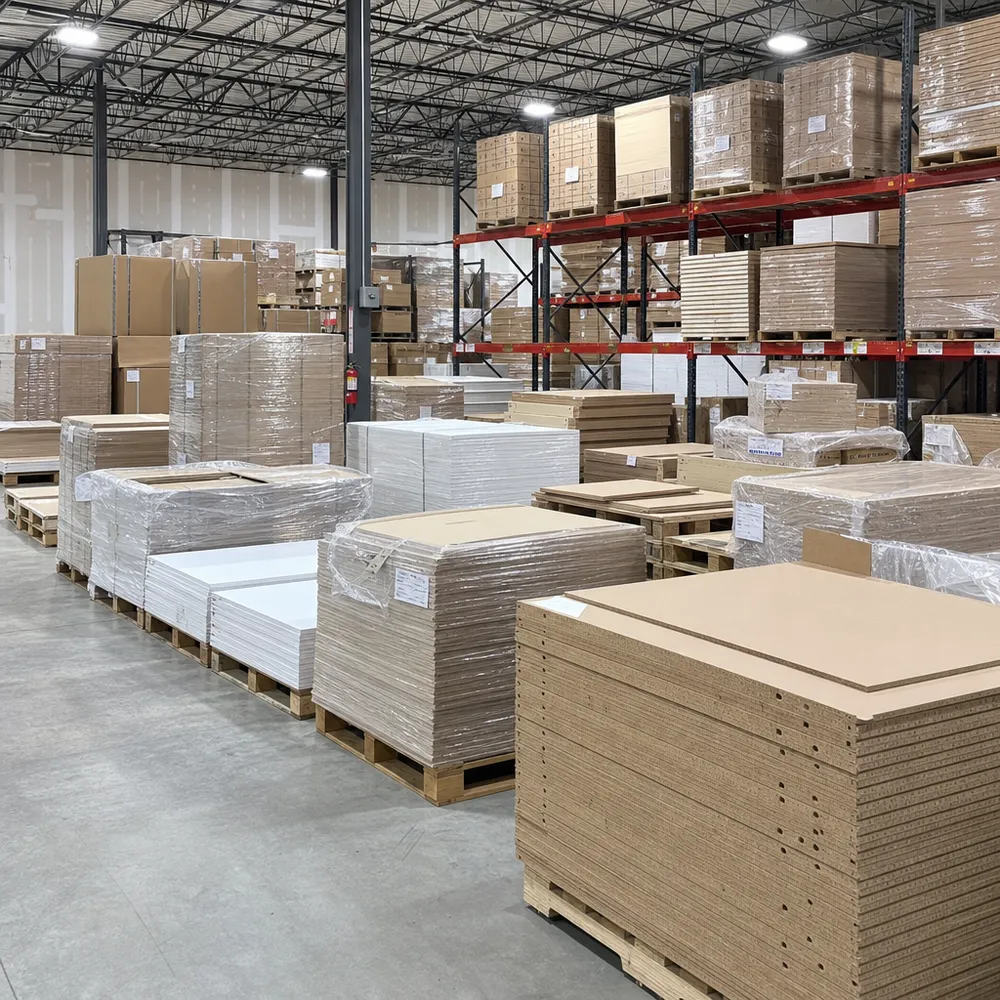
Distributors in North America and Europe stock furniture hardboard as part of a broader panel component range. The distribution model works because furniture manufacturers don't want to manage direct import relationships for every component — they'd rather buy from a local distributor who stocks the material and can deliver on short notice.
If you're building a furniture component distribution business, furniture hardboard is a foundational SKU: high reorder frequency, predictable demand, and a product category where documentation compliance is a real barrier to entry that protects your margin once you've qualified a reliable supplier.
Bed and Mattress Manufacturers
60–90 Day ReorderSoutheast Asia · Middle East · Eastern Europe
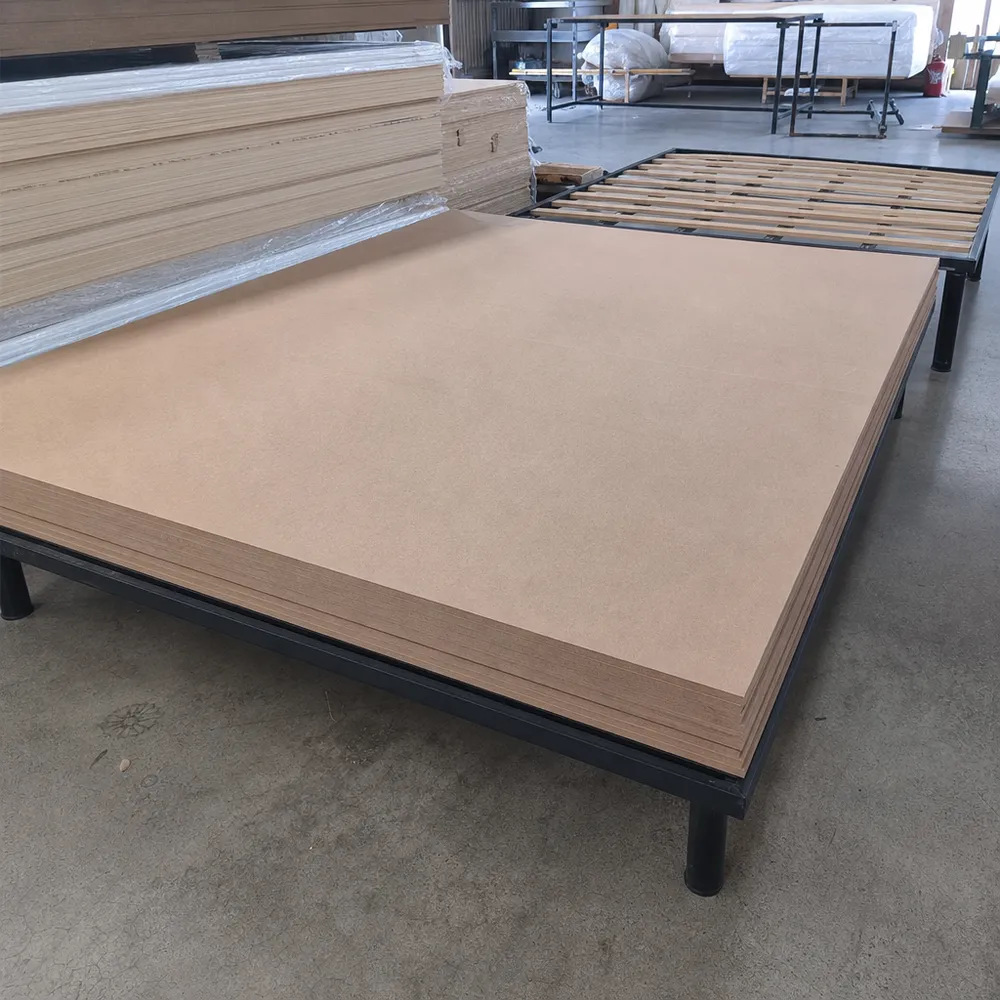
Hardboard bed boards serve as a cost-effective base layer in mid-market bed frames. The segment is large in Southeast Asia, the Middle East, and Eastern Europe, where mid-market furniture is growing faster than premium.
Manufacturers in these markets typically buy in container quantities and reorder on 60–90 day cycles. If you're supplying into these markets, bed board hardboard is worth adding to your range — the spec is simple, the volume is consistent, and the competition is mostly on price and documentation compliance.
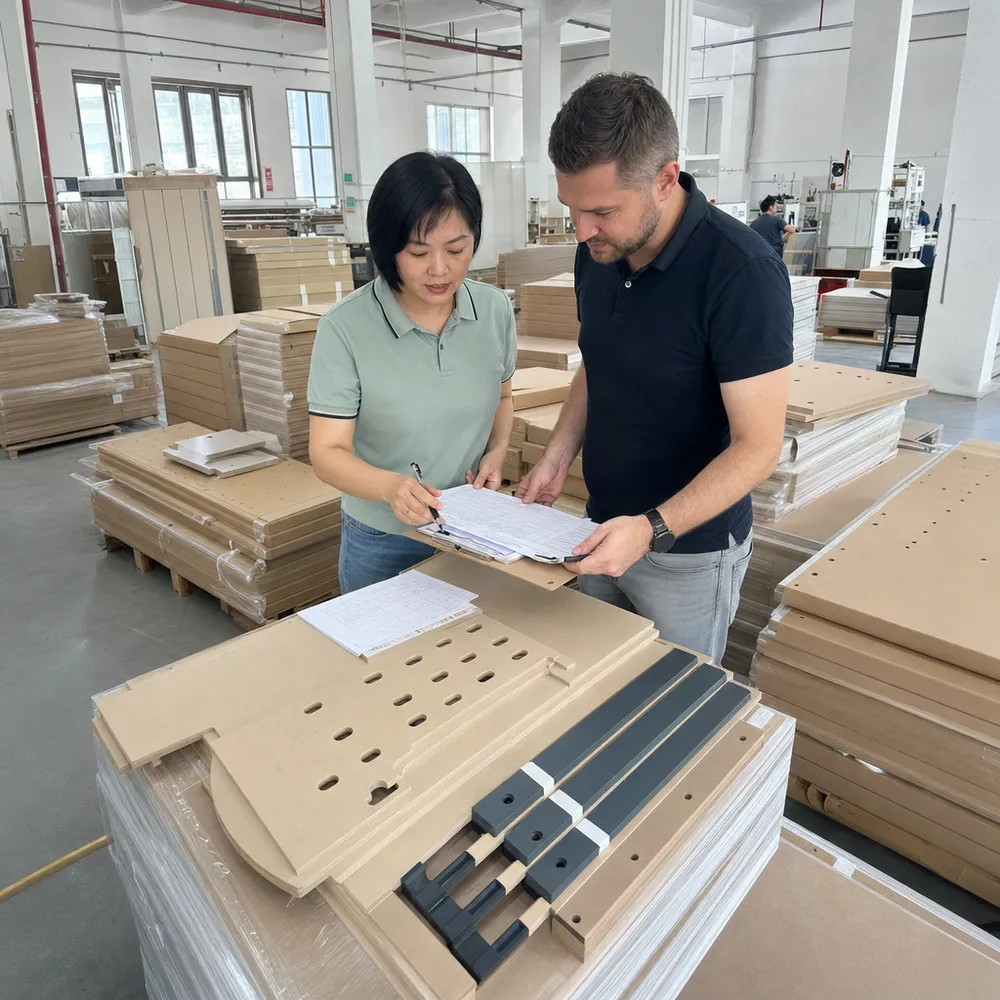
Online Retailers & Private-Label Brands
Emerging ChannelDirect sourcing · Full documentation stack · Zero returns
Online furniture retailers and private-label brands sourcing furniture components directly from manufacturers are an emerging channel. These buyers need CARB P2 documentation for US sales, FSC certification for sustainability-positioned brands, and consistent quality that doesn't generate returns.
We supply this channel directly and through distributors — the documentation stack we carry covers the compliance requirements without the buyer needing to qualify a separate supplier for each certification.
Documentation stack: CARB P2 test reports, FSC chain-of-custody certificate, and emission batch records — all available per shipment without separate qualification.
How We Produce Furniture-Grade Hardboard: The Process Details That Protect Your Margin
Furniture hardboard has tighter surface and dimensional requirements than general-purpose hardboard, and the production process has to be set up for those requirements from the start — you can't sand your way to furniture-grade surface quality if the fiber preparation and pressing aren't right.
Fiber Preparation
Where furniture-grade quality starts
We use eucalyptus and poplar fiber sourced through our FSC-certified supply chain, refined to a consistent fiber length before the forming stage. Fiber length consistency determines surface smoothness in the finished panel — long fiber fragments in the mat produce surface texture that shows through paint or laminate.
We run the fiber refiner at settings calibrated for furniture-grade surface output — tighter fiber length distribution than we'd run for general-purpose hardboard going into construction applications.
Mat Forming with Continuous Monitoring
Density variation prevention at source
The forming stage lays the fiber mat to a controlled thickness before pressing. We run continuous mat thickness monitoring — variation in mat thickness before pressing translates directly to density variation in the finished panel, which is the root cause of most surface quality and cut-edge problems in furniture hardboard.
Mat thickness target is set based on finished panel thickness and density specification, and checked continuously rather than sampled.
Hot Pressing and Conditioning
850–950 kg/m³ density target
Hot pressing runs at temperatures and pressures calibrated to the furniture-grade density target of 850–950 kg/m³. After pressing, panels go through a conditioning period before sanding — this is a step that some factories skip to increase throughput.
Why conditioning matters: Panels that skip conditioning continue to move dimensionally after they leave the press, causing thickness variation in the sanded panel. We condition for a defined period based on panel thickness before the sanding line.
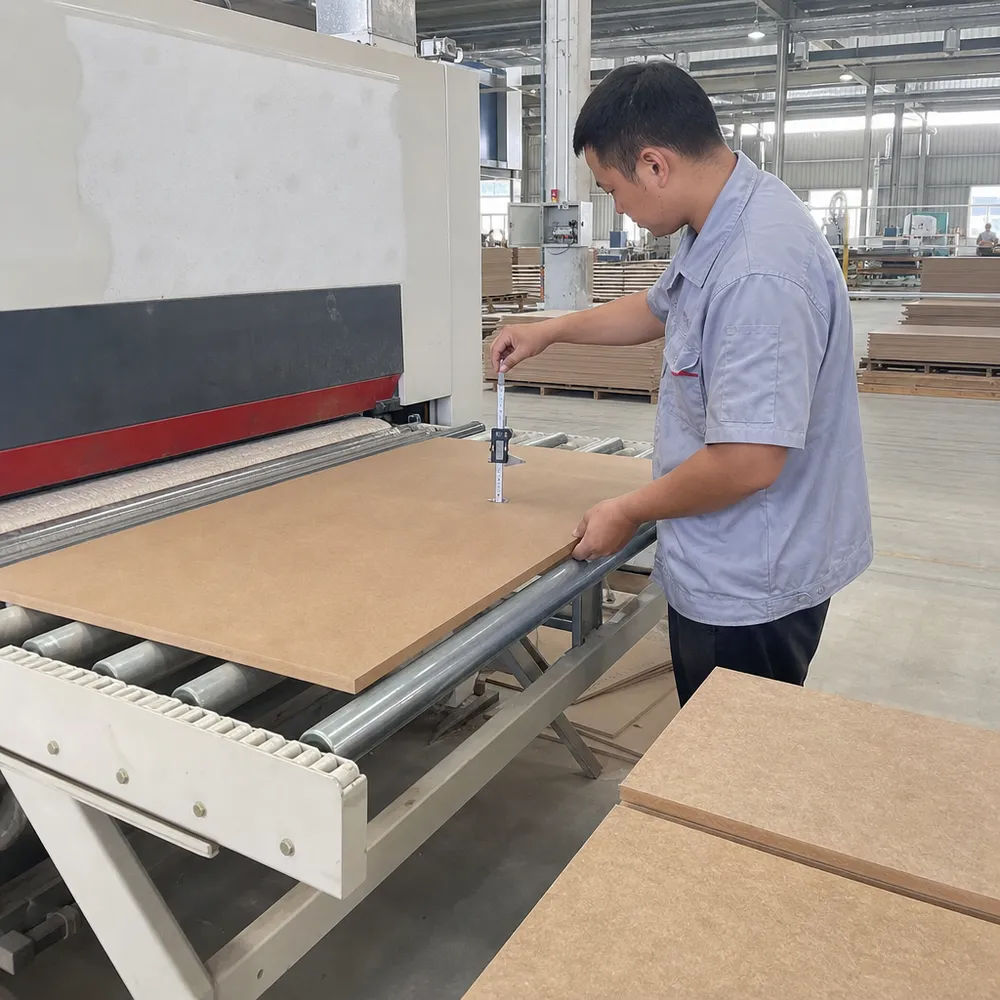
Precision Sanding: ±0.2mm Tolerance
Five-point measurement · Edge-to-center control
Sanding is calibrated to ±0.2mm thickness tolerance with surface quality targets set for furniture applications. We measure thickness at five points across the panel — center and four quadrants — because edge-to-center variation is the failure mode that causes problems in automated furniture manufacturing.
Critical failure mode: A panel that measures correctly at the center but is 0.3mm thicker at the edges will cause fit problems in dado joints and drawer frames. Five-point measurement catches this before dispatch.
CARB P2 Resin Formulation
Production-stage compliance · Batch-tested before dispatch
For furniture hardboard going to CARB P2 markets, the resin system is formulated to meet the emission standard at the production stage. This isn't a post-production treatment or a certification applied to a standard panel — the resin formulation is the CARB P2 formulation.
Every batch is tested before dispatch. Test records are available per shipment — no separate qualification required for the certification.
Why Process Discipline Protects Your Margin
Every step in our furniture hardboard production is set up for furniture-grade output from the start. The result is a panel that performs consistently in automated furniture manufacturing — no fit problems, no surface defects showing through laminate, no thickness variation causing rejects at the assembly line.
For distributors, this means fewer quality complaints from your customers and a supplier relationship you can rely on for consistent reorders. For manufacturers buying direct, it means a component that doesn't generate line stoppages or rework costs.
Request Spec Sheet & PricingProduction Quality Checkpoints
Furniture Hardboard: Full Specification Reference
Standard production parameters for our furniture-grade hardboard range. Custom thickness, size, and surface finish configurations available — contact us with your specific requirements.
Physical & Mechanical Properties
| Property | Value / Range | Standard |
|---|---|---|
| Density | 850–950 kg/m³ | EN 622-2 / ANSI A135.4 |
| Thickness Range | 2.0 mm – 8.0 mm | Custom available |
| Thickness Tolerance | ±0.2 mm | Five-point measurement |
| Modulus of Rupture (MOR) | ≥ 40 N/mm² | EN 310 |
| Modulus of Elasticity (MOE) | ≥ 3,500 N/mm² | EN 310 |
| Internal Bond (IB) | ≥ 0.8 N/mm² | EN 319 |
| Moisture Content | 4–9% | EN 322 |
| Thickness Swelling (24h) | ≤ 20% | EN 317 |
| Surface Roughness (Ra) | ≤ 1.5 µm (smooth face) | ISO 4287 |
Emission Compliance
Standard Sheet Sizes
Surface Finish Options
Select the surface configuration that matches your downstream process
Smooth face, textured reverse. Standard for drawer bottoms, cabinet backs, and laminate substrates where only one face is visible.
Both faces sanded smooth. Used where both sides are visible or where laminate or veneer is applied to both faces.
Factory-applied primer coat on smooth face. Reduces finishing steps for painted furniture components and interior door skins.
Standard hole patterns for retail display and storage applications. Custom hole spacing and diameter available on volume orders.
Common Thickness Applications
Quick reference — not exhaustive. Contact us if your application isn't listed.
| Thickness | Primary Applications | Notes |
|---|---|---|
| 2.0 mm | Door skins, thin panel inserts | Lightweight; requires frame support |
| 2.5 mm | Drawer bottoms, cabinet backs | Most common furniture grade; high volume availability |
| 3.0 mm | Cabinet backs, furniture panel inserts, door skins | Good stiffness-to-weight ratio for back panels |
| 4.0 mm | Heavier cabinet backs, display fixtures, shelving dividers | Increased rigidity; used where panel spans are wider |
| 6.0 mm | Structural furniture components, pegboard base, flooring underlayment | Higher load capacity; often used in commercial fixtures |
| 8.0 mm | Heavy-duty fixtures, industrial shelving, formwork | Available on order; lead time applies |
Customization Options for Furniture Hardboard
Standard furniture hardboard covers most applications, but buyers building private-label supply chains or supplying to manufacturers with specific requirements often need adjustments. Here's what we can adapt.
Custom Dimensions
We cut to non-standard sizes on confirmed orders. Common requests include half-sheet formats (1220×1220mm), custom-width strips for specific furniture frame dimensions, and long panels for wardrobe back applications.
No tooling cost — custom cutting is a scheduling and yield question. Minimum order quantities apply and vary by specification.
Custom Thickness
Standard furniture hardboard runs at 2.5mm, 3mm, 3.2mm, and 4mm. We can produce to specific thickness targets within the 2.5mm–6mm range for buyers with defined application requirements.
Note: Below 2.5mm the panel becomes fragile in handling; above 6mm, MDF is usually the more appropriate material for furniture applications.
Surface Treatments
Primed hardboard (white primer, one or both faces) is available for buyers whose customers want to skip the priming step. Film-overlaid options are available for specific decorative applications.
Custom primer colors or film textures require minimum quantities — the coating line setup cost needs to be spread across enough panels to make the per-unit economics work.
Formaldehyde Specification
CARB P2 is our standard baseline. E1 and E0 are available for buyers supplying into European markets or buyers with stricter indoor air quality requirements.
The specification is set at the resin formulation stage — confirm your target market's requirements when you inquire and we'll quote the appropriate specification.
Private Label and OEM Marking
Bundle marking, custom packing lists, and private-label documentation are available. We run OEM programs for distributors in North America and Europe who supply furniture hardboard under their own brand.
The process is straightforward once specifications are confirmed — we've done it enough times that the documentation workflow is well established.
Have a specific requirement?
Tell us your dimensions, thickness target, surface spec, and target market — we'll confirm feasibility and MOQ.
Compliance and Certification for Your Target Market
Furniture hardboard sold into regulated markets needs documentation that clears customs and satisfies your buyers' compliance requirements. The certifications we hold cover the main import markets without requiring you to qualify a separate supplier for each region.
CARB P2
US StandardCalifornia Air Resources Board Phase 2 formaldehyde emission standard. Required for composite wood products sold in California and effectively the standard for the broader US market.
We include the CARB documentation package as standard with US-bound shipments. Third-party test reports from SGS or Bureau Veritas are available on request.
FSC Chain of Custody
SustainabilityForest Stewardship Council certification covering the wood fiber supply chain. Required by buyers with sustainability sourcing policies and increasingly requested by online retailers and brands with environmental commitments.
FSC documentation is included for FSC-specified orders.
ISO 9001:2015
Quality SystemQuality management system certification covering our production and QC processes. Relevant for buyers whose procurement process requires supplier quality system certification.
CE Marking
EU MarketsEuropean conformity marking for construction and building material applications. Relevant for furniture hardboard going into European markets where CE marking is required.
E1 / E0
EU Emission StandardEuropean formaldehyde emission standards. Available as an alternative to CARB P2 for buyers supplying into European markets.
Confirm your target market's requirements when you inquire.
Single supplier, multi-market coverage
For buyers supplying into multiple markets, the certification stack we carry means a single supplier relationship covers your compliance requirements across regions.
Certifications We Hold
Full documentation packages are available for each certification. Third-party test reports from SGS or Bureau Veritas available on request for CARB P2.
Learn more about our certifications and quality processesContainer Loading and Export Logistics
Furniture hardboard ships efficiently in standard containers. Here's what to expect from loading configuration through documentation to your destination port.
Container Utilization
Standard 1220×2440mm panels, flat-stacked
Standard 1220×2440mm panels stack flat and load to high cubic utilization. A 40HQ container typically holds 800–1,200 sheets depending on thickness, stacked in bundles of 50–100 panels with edge protection and moisture-resistant wrapping.
Loading Plans Included
Pre-arrival visibility for your receiving team
We provide loading plans with each shipment so your receiving team knows the bundle configuration, stack count, and total panel count before the container arrives.
For mixed-product orders — furniture hardboard combined with plywood, MDF, or other panel types — we coordinate consolidated loads to reduce your per-unit freight cost.
Transit Times from Xuzhou
Via Qingdao, Shanghai, and Lianyungang ports
Standard Export Documentation
Included with every shipment
Port Routing
We route through Qingdao, Shanghai, and Lianyungang ports depending on your destination and schedule. Port selection is optimized per shipment — we'll confirm the routing when we confirm your booking.
Frequently Asked Questions
Answers to the specification, compliance, and logistics questions buyers ask most often before placing an order.
3mm is the most common thickness for cabinet backs in flat-pack and assembled furniture. 3.2mm is specified where slightly more rigidity is needed or where the back panel is visible and needs to resist flex under load.
For cost-sensitive applications, 2.5mm is used in lightweight furniture where the back panel is fully supported by the frame.
We hold 3mm and 3.2mm as standard production thicknesses with shorter lead times than non-standard dimensions.
For thin-gauge applications (3–4mm), hardboard is the standard choice over MDF. At 3mm, MDF is fragile and prone to edge chipping; hardboard at the same thickness holds a clean cut edge and has better surface hardness.
MDF becomes the better choice for thicker components (12mm and above) where its machinability for routed profiles and shaped edges is an advantage.
For cabinet backs and drawer bottoms specifically, hardboard is the industry-standard material — the density and surface hardness at thin gauge is what makes it the right choice, not just cost.
Yes. CARB P2 compliance is built into our resin formulation — it's not a certification applied after the fact to a standard panel. Every batch is tested before dispatch.
We include the CARB documentation package as standard with US-bound shipments. If your buyers require third-party test reports, SGS or Bureau Veritas documentation is available on request.
Standard MOQ is one 20HQ container for standard specifications (3mm or 3.2mm, standard sheet size, S1S surface).
For custom dimensions, custom surface treatments, or non-standard thicknesses, MOQ is higher — the specific quantity depends on the specification. Contact us with your target specification and we'll confirm MOQ and lead time.
Warping after delivery is almost always a moisture content issue — either the panel arrived too wet, or it was stored in conditions that allowed moisture absorption.
We target 5–9% moisture content at dispatch and wrap export bundles in moisture-resistant film. Panels stored flat in covered, ventilated conditions within that moisture range will stay flat.
Yes — 4mm and 5mm furniture hardboard is the standard specification for hardboard bed boards in mid-market furniture. The panel needs to be flat, dimensionally accurate, and rigid enough not to flex visibly under mattress load.
We supply bed board hardboard in standard sheet format for manufacturers who cut to size, and in custom-cut dimensions for buyers who want to supply the component ready for assembly.
Source Furniture Hardboard Direct from the Manufacturer
We've been manufacturing furniture hardboard since 2008 as part of our broader engineered wood panel range. Most buyers who source furniture hardboard from us also run plywood, MDF, or melamine-faced panels through the same supply chain.
Consolidated Supply Chain
Furniture hardboard, plywood, MDF, and melamine-faced panels through a single supplier relationship. Fewer vendors, fewer documentation sets, simpler procurement.
Landed Cost Clarity Before You Commit
Send us your target specification, destination market, and annual volume. We return a detailed quote, certification documentation, and a loading plan so you can calculate your landed cost upfront.
Market-Matched Format Guidance
New to this category or expanding your distribution range? Tell us your target market and furniture applications — we'll suggest the formats and thicknesses that move in that segment based on live shipping data.
What to Include in Your Enquiry
If you're evaluating furniture hardboard suppliers, send us the following and we'll come back with a detailed quote, the relevant certification documentation, and a loading plan.
- Target specification — thickness, surface grade, emission standard (CARB P2, E0, E1, or FSC)
- Destination market — country or region so we can confirm applicable certification and labelling requirements
- Annual volume estimate — container count or m³ per year so we can structure pricing tiers accurately
- Furniture applications — cabinet backs, drawer bottoms, bed boards, or other end uses your customers are running
Contact Us Directly
Explore More Hardboard Products