

High Gloss Melamine MDF — Mirror-Finish Panels
Factory-direct high gloss melamine MDF with a mirror-finish surface that holds up through downstream cutting, edging, and assembly — not just in the showroom photo.
Available in 6–25mm thickness, standard and custom dimensions, CARB P2 and E1 compliant. Direct from our Xuzhou facility — no trading company markup on your landed cost.
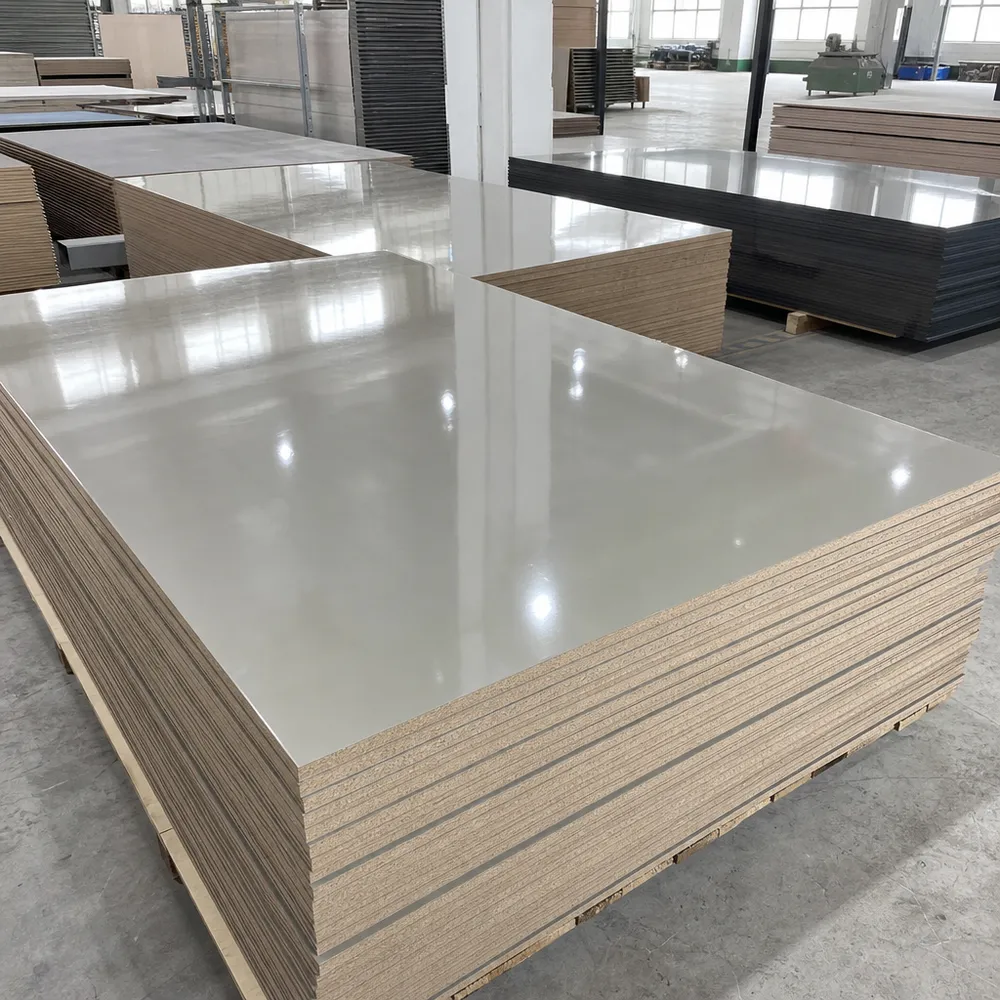
What Separates High Gloss Melamine MDF from Standard Melamine Board
High gloss melamine MDF is a specific product within the melamine-faced board family, and the distinction matters when you're sourcing for markets where surface appearance drives the sale. Standard melamine MDF uses a matte or satin-finish paper — functional, cost-effective, widely used in utility cabinetry. High gloss melamine MDF uses a high-density resin-impregnated paper with a mirror-polished pressing surface, producing a reflective finish that reads as premium to the end buyer.
The commercial implication is straightforward: the same cabinet box, faced in high gloss instead of matte, commands a meaningfully higher retail price in most markets. Furniture retailers in Europe, the Gulf, and Southeast Asia have been running this trade-up for years — the substrate cost difference between matte and high gloss melamine MDF is modest at the factory level, but the retail price gap is significant. That spread is your margin opportunity.
What makes this product technically distinct is the pressing process, not just the paper. The gloss level — typically measured at 80–100 GU (gloss units) at 60° — depends on the surface condition of the press plate, the paper resin content, and the press temperature and dwell time. A factory running standard melamine pressing parameters on high gloss paper will get a mediocre result: surface haze, micro-scratches, inconsistent sheen across the panel.
We run dedicated press plates for high gloss production, polished and inspected before each run, and we calibrate press temperature and cycle time specifically for the high gloss paper specification. We learned early on that reusing press plates past their service life is the fastest way to generate a batch of panels that look fine in the warehouse and disappoint the buyer when they're installed under showroom lighting.
This product sits in the melamine MDF family alongside our related products. If your market is primarily utility cabinetry or budget furniture, the standard melamine MDF board is the right fit. If you're targeting the mid-to-premium furniture segment where surface finish is a selling point, high gloss is the product.
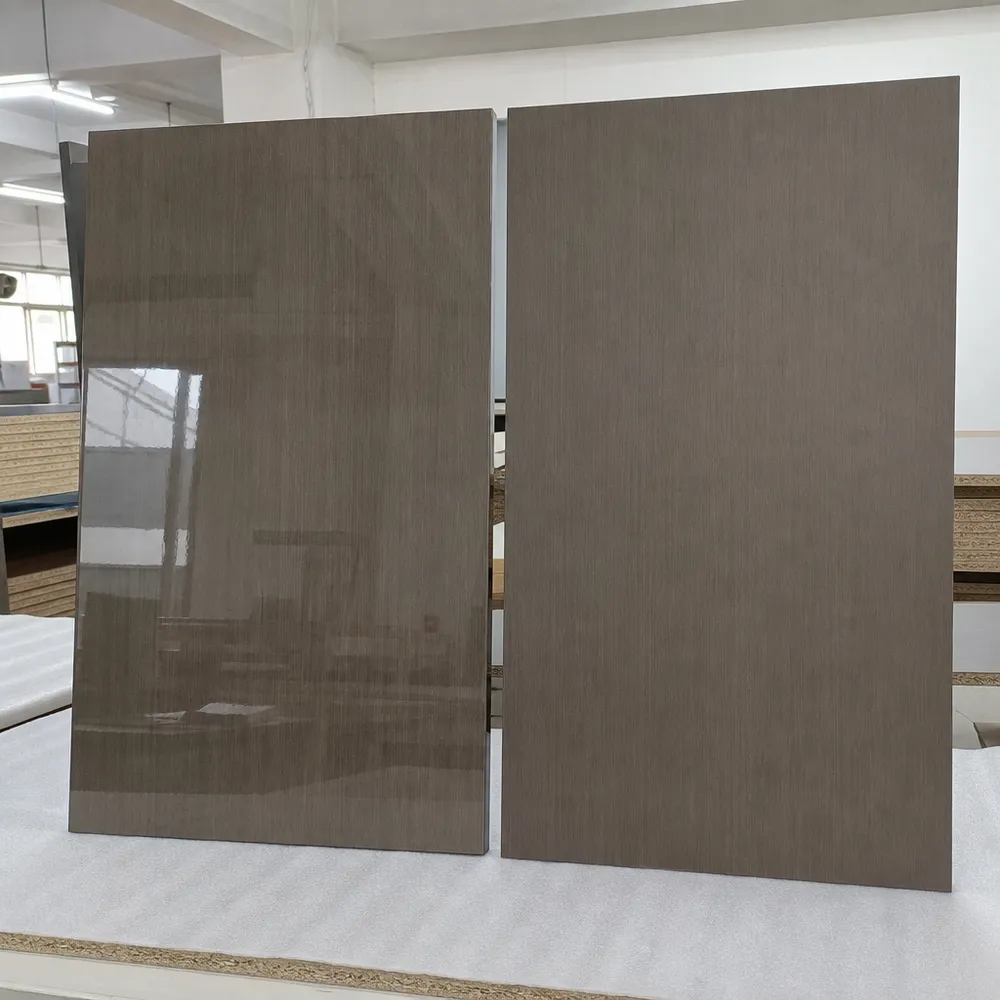
Standard Melamine MDF
- Matte or satin-finish paper
- Functional, cost-effective
- Widely used in utility cabinetry
- Standard pressing parameters
High Gloss Melamine MDF
- High-density resin-impregnated paper
- Mirror-polished pressing surface
- 80–100 GU reflective finish
- Dedicated press plates per run
- Calibrated temp & cycle time
The Margin Opportunity
The substrate cost difference between matte and high gloss melamine MDF is modest at the factory level. The retail price gap in European, Gulf, and Southeast Asian furniture markets is significant. That spread is your margin opportunity.
Technical Specifications
Specifications shown are industry-standard values for this product type. Actual specifications may vary by order. Contact us for detailed product data sheets and confirmation of exact parameters for your application.
High Gloss Melamine MDF — Full Specification Table
| Parameter | Specification |
|---|---|
| Surface finish | High gloss melamine paper, mirror-polished press plate |
| Gloss level | Typical 80–100 GU at 60° (industry standard measurement) |
| Core material | MDF (medium density fiberboard), E1 / CARB P2 grade |
| Standard thickness |
6mm 9mm 12mm 15mm 16mm 18mm 25mm
|
| Standard panel size | 1220 × 2440mm (4′ × 8′) |
| Density | Typical 680–750 kg/m³ (varies by thickness) |
| Moisture content | 8–12% (export-grade controlled drying) |
| Surface paper weight | Typical 80–120 g/m² (high-density resin impregnation) |
| Formaldehyde emission |
E1 ≤0.124 mg/m³ CARB P2 ≤0.11 ppm
|
| Face finish options | Single-face high gloss / double-face high gloss |
| Back face | Balancing paper (standard) or matching high gloss (on request) |
| Edge treatment | Raw MDF edge (standard) / PVC edge banding available on request |
| Color range | White, black, grey, and custom colors (minimum order quantities apply) |
| MOQ | Typically 1 × 20ft container per color/thickness combination |
| Lead time | 15–25 days production; varies by order volume and season |
| Packaging | Kraft paper interleaving + corner protection + pallet strapping |
| Standards compliance | EN 622-5, CARB Phase 2, FSC available on request |
All specifications are indicative. Actual values are confirmed at order stage. Third-party test reports available upon request for qualified buyers.
Gloss Level Reference
Measured at 60° per ISO 2813. Values above 70 GU are classified as high gloss in the furniture industry.
Thickness Availability
Compliance & Certifications
Applications & Market Fit
High gloss melamine MDF is specified wherever a premium visual finish is required at a competitive substrate cost. These are the segments where it consistently commands a price premium.
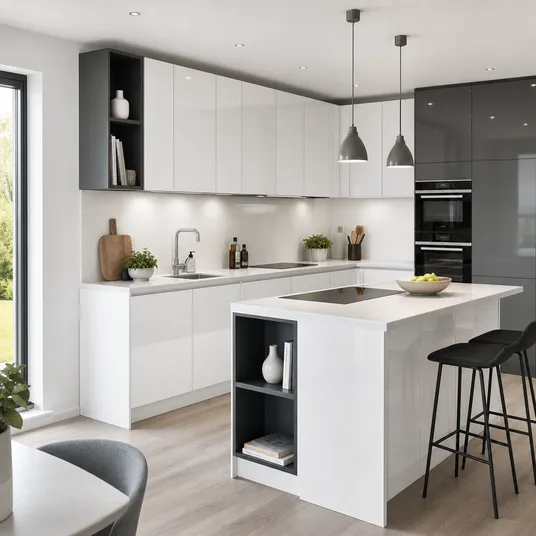
Kitchen Cabinet Doors
The dominant application. High gloss white and anthracite doors are the standard specification in mid-to-premium European-style kitchens across the Gulf, Southeast Asia, and Eastern Europe.
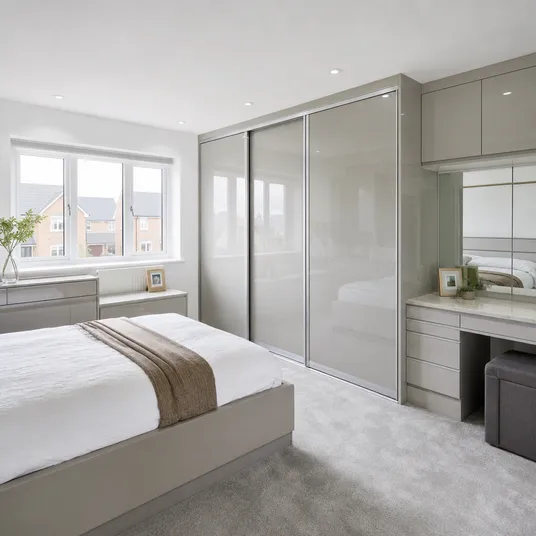
Wardrobe & Bedroom Furniture
Sliding wardrobe doors, fitted bedroom furniture, and headboard panels. The reflective surface adds perceived space in smaller rooms — a key selling point in apartment-heavy urban markets.
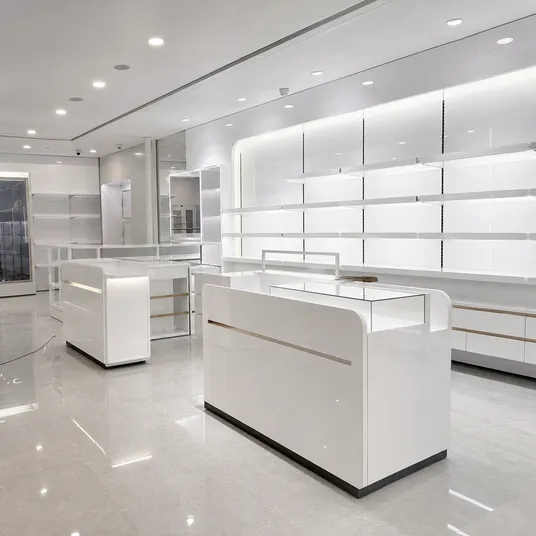
Retail & Display Fixtures
Shop fitting, display counters, and point-of-sale units where brand presentation matters. The gloss surface photographs well and holds up under retail lighting conditions.
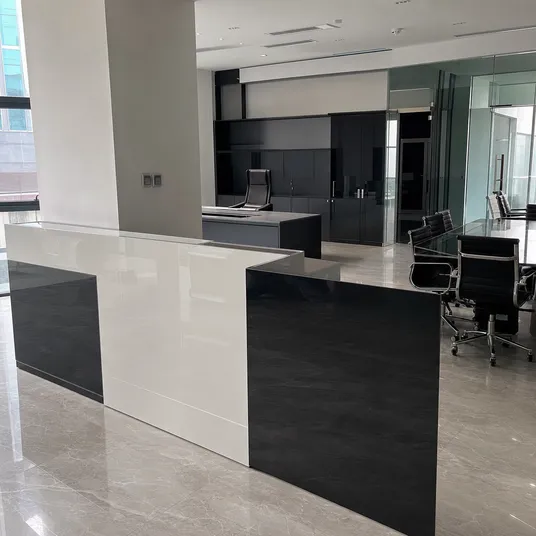
Office & Contract Furniture
Reception desks, executive office furniture, and boardroom cabinetry. High gloss black and white are the standard specification for premium contract interiors in the Gulf and Southeast Asia.
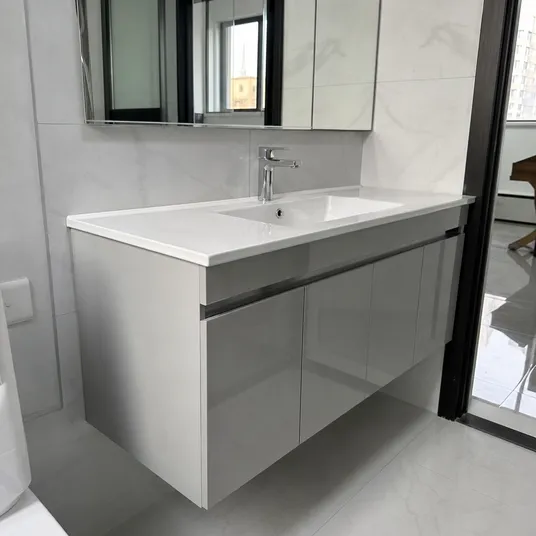
Bathroom Vanity Units
Vanity cabinet doors and side panels in moisture-resistant MDF grades. The sealed melamine surface resists splash and humidity better than raw MDF, making it suitable for bathroom environments with proper edge sealing.
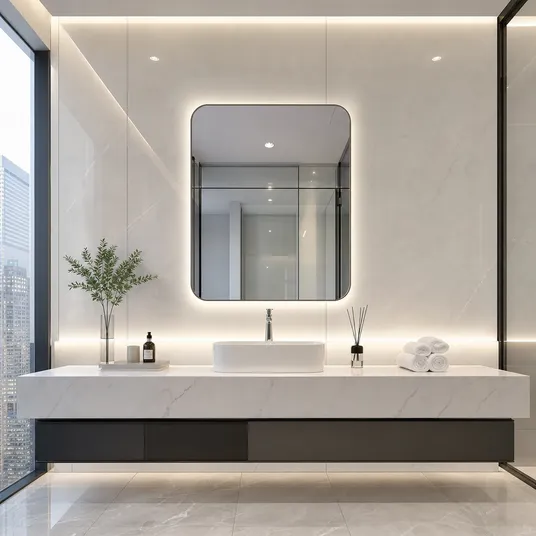
Interior Wall Panelling
Feature walls, wainscoting, and decorative panelling in hospitality and residential interiors. The large-format panel size minimises joints and the gloss surface amplifies light in interior spaces.
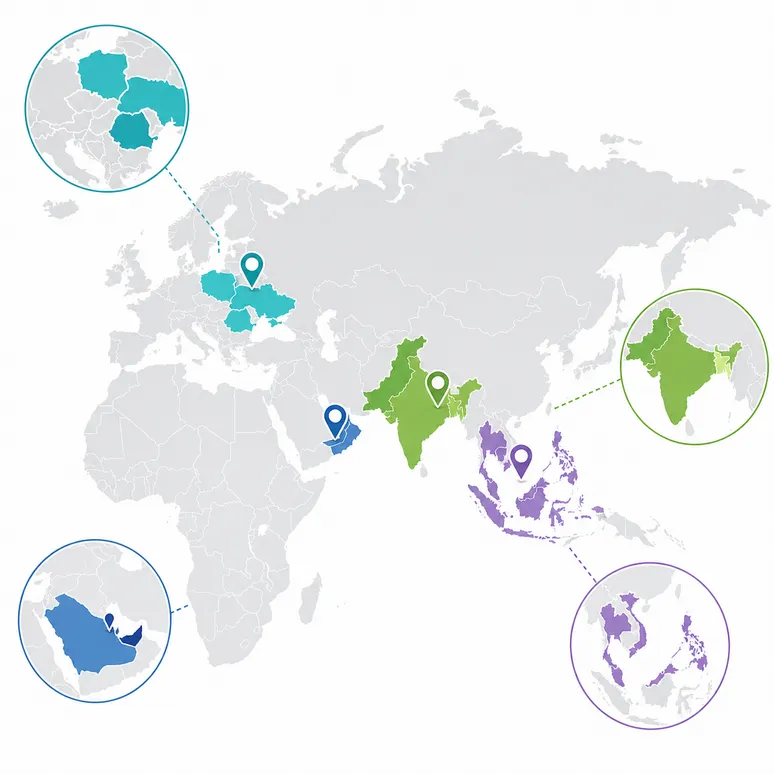
Key Export Markets
Demand for high gloss melamine MDF is concentrated in markets where European-style kitchen and bedroom furniture is aspirational. These are the regions where importers and distributors consistently report the strongest price premium over standard melamine MDF.
The Pressing Process Behind the Gloss —
Why It Matters for Your Returns Rate
Surface quality in high gloss melamine MDF is entirely a function of what happens in the press. This is where most quality variation in the market originates — and where we've invested to protect your downstream margins.
Dedicated Short-Cycle Press Line
We run a short-cycle press line dedicated to melamine-faced panels, with press plates maintained to a surface roughness specification that produces consistent gloss across the full 1220 × 2440mm panel area. Press temperature for high gloss paper runs at 180–200°C — higher than standard melamine — with dwell time calibrated to fully cure the resin without over-pressing.
Over-pressing causes surface micro-cracking that shows up as haze under raking light. That's a defect that passes warehouse inspection but fails the installed-product test.
Core Surface Tolerance: ±0.1mm
High gloss melamine paper is unforgiving of core surface defects. Any fiber bundles, density variation, or surface roughness in the MDF telegraphs through the paper after pressing. We use a sanded MDF core with surface density calibrated for melamine pressing — sanding tolerance on the core is ±0.1mm before the paper goes on.
A core out of tolerance by 0.2mm produces a panel where gloss level varies visibly across the surface. Invisible in a stack of panels. Obvious once the cabinet door is hung and lit.
Post-Press Inspection Under Angled Lighting
Each panel is checked under angled lighting for surface haze, orange peel texture, press plate marks, and paper joint lines. Panels that don't pass this check are pulled before packing.
This adds time to the process — we're not going to pretend otherwise. But it's the reason our high gloss panels don't generate the kind of surface complaints that create return freight costs for your business.
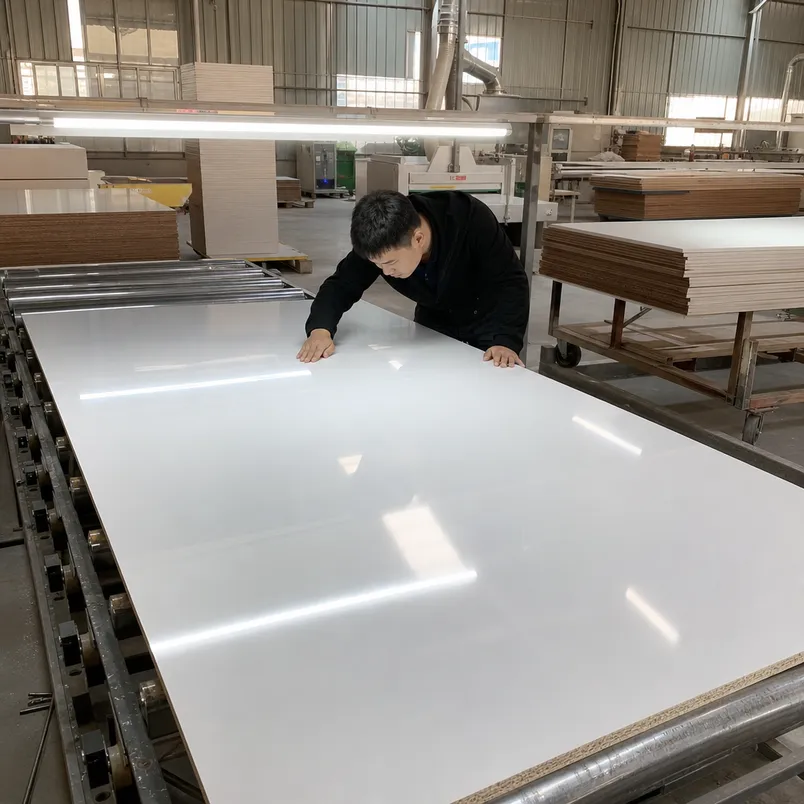
What the Process Protects
Your downstream customers — furniture manufacturers, cabinet shops, fit-out contractors — are cutting, edging, and assembling these panels. The surface needs to hold up through that process and look right when the finished piece is installed.
A panel that photographs well but shows micro-scratches after routing is a warranty problem for you. Our process is built around the installed result, not the warehouse photo.
Press Temperature Matters
High gloss paper requires 180–200°C — a higher range than standard melamine. Running at standard melamine temperatures produces under-cured resin that scratches easily in fabrication. Running too hot causes micro-cracking. The calibration window is narrow, which is why dedicated press lines outperform mixed-use lines for this product.
Market Segments Where High Gloss Melamine MDF Generates Margin
Four segments where the product's cost-to-finish ratio creates real pricing room — and what each segment requires from a supplier.
Flat-Pack & RTA Furniture
Mid-to-premium retail
The flat-pack furniture segment is the highest-volume application for high gloss melamine MDF globally. Retailers in Europe, Australia, and the Gulf have been shifting their mid-range cabinet and shelving lines from matte to high gloss finishes for the past decade — the consumer perception of value is higher, and the retail price premium is real.
For distributors supplying flat-pack furniture manufacturers, high gloss melamine MDF in 16mm and 18mm is a consistent, repeatable SKU. Order patterns in this segment tend to be container-level with 60–90 day reorder cycles, which makes it a predictable volume line rather than a spot-buy product.
Kitchen & Bathroom Cabinet Manufacturing
Mid-to-premium export production
Cabinet manufacturers sourcing for the mid-to-premium kitchen market use high gloss melamine MDF for door fronts, drawer fronts, and visible interior surfaces. The 18mm thickness is the standard for door construction; 12mm and 15mm are used for drawer boxes and interior panels.
This segment is particularly active in Southeast Asia — Vietnam, Malaysia, Indonesia — where furniture manufacturers are producing for export to Europe and North America. They need CARB P2 compliance for the US market and E1 for Europe, and they need consistent surface quality across production runs.
Batch consistency note: A cabinet manufacturer running 500 doors per day cannot afford surface variation between panels from different batches. Specify single-batch sourcing when placing large orders.
Hospitality & Commercial Fit-Out
Hotel, retail, office interiors
Hotel room furniture, retail display fixtures, and commercial office fit-out are segments where high gloss melamine MDF competes directly with lacquered MDF and acrylic-faced panels. The cost advantage over lacquered MDF is significant — the surface is applied at the panel level rather than post-fabrication, which eliminates the spray booth step for the furniture maker.
For contractors and fit-out companies sourcing panels for hotel projects, the typical order is 500–2,000 sheets per project, with tight color consistency requirements across the full order.
We can hold color consistency across a production run by sourcing paper from a single batch. Worth specifying when you send your inquiry if color matching across a large project is a requirement.
E-Commerce Furniture & DTC Cabinet Brands
Online-first, zero-warranty-claim requirement
This is a growing segment that most panel suppliers haven't fully addressed. Online furniture brands selling through Amazon, Wayfair, or their own DTC channels need panels that photograph well, ship without surface damage, and generate zero warranty claims from end customers.
High gloss melamine MDF fits this profile — the surface is durable enough for residential use, the appearance reads as premium in product photography, and the panel cost is competitive against acrylic alternatives.
For brands in this channel, packaging matters as much as the panel itself. We pack high gloss panels with interleaving paper between sheets and corner protection to prevent surface contact damage during ocean transit and last-mile delivery.
Discuss Your Market Requirements
Whether you're sourcing for flat-pack volume, a hotel fit-out project, or building a DTC furniture brand, the order parameters differ. Tell us your segment, target market, and compliance requirements — we'll confirm what we can supply and at what lead time.
Customization Parameters and What They Mean for Your Order
High gloss melamine MDF customization runs across four dimensions: thickness, panel size, color/finish, and compliance specification. Here's what's actually adjustable and where the constraints are.
Thickness
Standard production runs 6mm, 9mm, 12mm, 15mm, 16mm, 18mm, and 25mm. Non-standard thicknesses (e.g., 17mm, 20mm) are available on confirmed orders with a minimum quantity — the MDF core is produced to thickness, so non-standard dimensions require a dedicated production run rather than a cut-down from standard stock.
Panel Size
Standard is 1220 × 2440mm. We can produce 1220 × 2800mm and 1220 × 3050mm for markets where longer panels are standard (common in Australia and parts of Europe). Custom widths are possible but require minimum order quantities that make sense for a full production run — typically 500 sheets minimum for non-standard dimensions.
Color and Finish
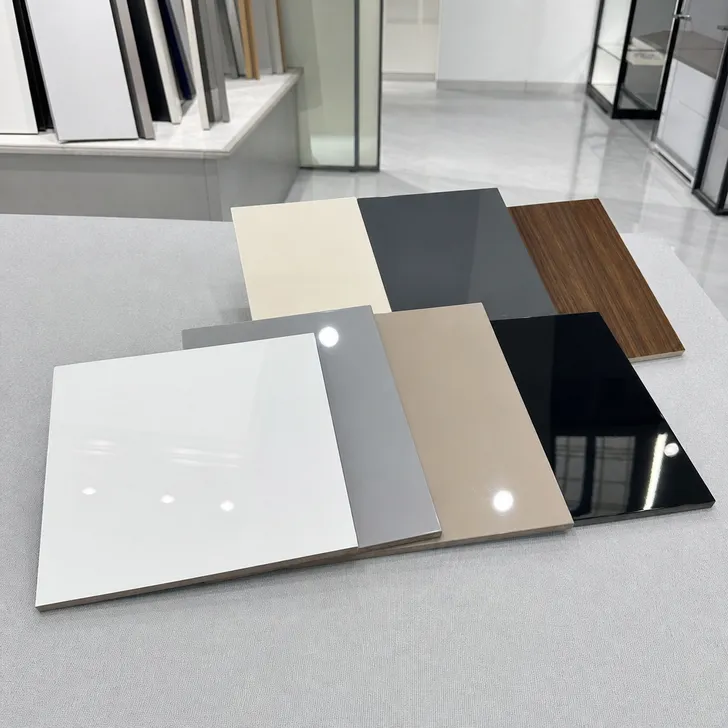
High gloss melamine paper is available in a wide color range — white (the dominant SKU globally), black, grey tones, solid colors, and some wood-grain patterns in gloss finish. We source paper from established suppliers and can match specific color references if you provide a sample or RAL/NCS code.
Color matching across multiple production runs requires sourcing paper from the same batch. If you're running a product line that needs consistent color over 12+ months, we can discuss paper inventory arrangements.
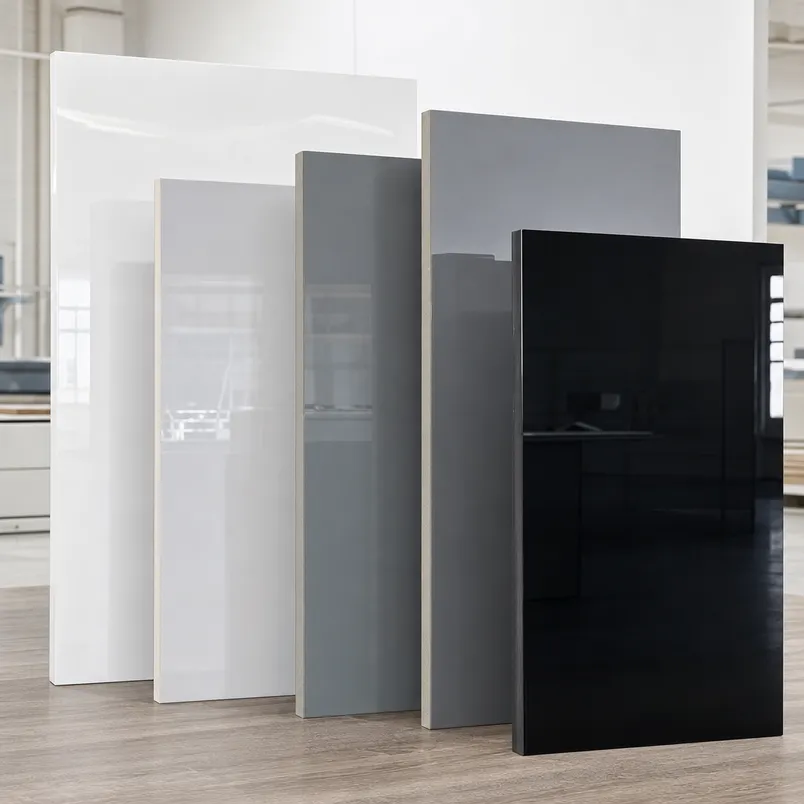
Single-Face vs. Double-Face
Standard production is single-face high gloss with a balancing paper back. Double-face high gloss — both faces pressed with high gloss paper — is available for applications where both sides are visible (open shelving, room dividers, display fixtures). Double-face adds cost and requires specific press setup; minimum quantities apply.
Compliance Specification
CARB P2 and E1 are both standard production options. If your market requires specific documentation — CARB attestation letters, FSC chain-of-custody certificates, CE declaration of conformity — specify this at the order stage and we prepare the documentation package as part of the shipment.
Compliance Coverage: CARB P2, E1, FSC, and What Each Means for Your Import
Formaldehyde emission compliance is the primary regulatory gate for melamine MDF in most export markets, and the requirements differ by destination.
CARB P2
California Air Resources Board Phase 2 is the standard for US-bound shipments. This is the most stringent formaldehyde standard in our export markets, and we formulate our MDF core resin to meet it as the baseline — not as a special option.
US Customs enforcement of CARB compliance has tightened significantly. Shipments without proper CARB documentation are subject to hold and testing. We prepare the CARB documentation package as standard for US-bound orders.
E1 / E0
E1 covers the EU market and most markets that reference European standards. Our standard production meets E1. For buyers supplying into Germany or other markets where E0 is increasingly specified for premium products, we can produce to E0 specification — confirm at the order stage as it requires a different resin formulation.
FSC Chain-of-Custody
FSC chain-of-custody certification means the wood fiber in the MDF core can be traced to certified forests. Relevant if your buyers have sustainability sourcing policies or if you're supplying into retail channels — particularly European — where FSC documentation is a listing requirement.
CE Marking
CE marking covers the EU construction products regulation. For melamine MDF used in construction applications — wall paneling, built-in furniture in commercial buildings — CE documentation supports your downstream compliance requirements.
Documentation Included With Every Shipment
All certification documents — test reports, attestation letters, chain-of-custody records — are included with the shipment documentation. We don't make buyers chase paperwork.
Compliance by Destination — Quick Reference
| Destination | Required Standard | Limit | Our Status |
|---|---|---|---|
| United States | CARB P2 | ≤0.11 ppm | Standard |
| EU / Europe | E1 | ≤0.124 mg/m³ | Standard |
| Germany (premium) | E0 | ≤0.05 ppm | On Request |
| EU Retail / Sustainability | FSC CoC | Traceability | Available |
| EU Construction | CE Marking | CPR | Available |
Container Loading and Export Packaging for High Gloss Panels
High gloss melamine MDF requires more careful packaging than standard melamine board — the surface is susceptible to contact scratching, and ocean transit involves vibration and humidity cycling that can damage unprotected panels.
Standard Export Packaging
Between every panel in the stack — prevents surface-to-surface contact scratching during transit.
On all four vertical edges of each bundle — protects against forklift and handling damage at port.
Over the full bundle — prevents humidity ingress during ocean transit, particularly relevant for shipments to humid destination ports.
Product specification, thickness, color, quantity, batch number, destination port, and certification marks printed on each bundle label.
For buyers supplying e-commerce or DTC furniture brands where panels may be drop-shipped or handled multiple times before reaching the end customer, we can discuss enhanced packaging options — individual panel wrapping, reinforced corner protection, or custom labeling for your brand. This is worth discussing at the order stage rather than after a damage claim.

Container Loading Capacity
Standard 1220 × 2440mm panels in 18mm thickness. Exact figures depend on panel weight and stacking configuration.
We provide a loading plan with each shipment so your receiving team knows the bundle count and configuration before the container arrives.
Sourcing High Gloss Melamine MDF vs. Glossy Melamine Plywood: Which Substrate Fits Your Application
Both high gloss melamine MDF and glossy melamine plywood deliver a reflective surface finish, but the substrate choice affects fabrication behavior, screw-holding, and end-use performance in ways that matter for your downstream customers.
| Factor | High Gloss Melamine MDF | Glossy Melamine Plywood |
|---|---|---|
| Surface Flatness | Excellent — MDF core is homogeneous | Good — minor grain telegraphing possible |
| Edge Machining | Clean, consistent — ideal for PVC edge banding | Visible veneer layers at edge — requires edge treatment |
| Screw-Holding (Face) | Good for standard furniture hardware | Better — plywood core holds screws more firmly |
| Screw-Holding (Edge) | Lower — MDF edge is weaker than plywood | Stronger — cross-grain plywood construction |
| Weight | Heavier per sheet at equivalent thickness | Lighter at equivalent thickness |
| Moisture Resistance | Standard MDF: moderate / Moisture-resistant MDF: good | Better inherent moisture resistance |
| Cost | Lower substrate cost | Higher substrate cost |
| Best For | Flat-pack furniture, cabinet doors, shelving, interior panels | Structural cabinet boxes, applications requiring edge screw-holding |
For door fronts, drawer fronts, and decorative panels where the surface is the product and edge screw-holding isn't the primary structural requirement, high gloss melamine MDF is the cost-effective choice.
For cabinet carcasses and structural components where screws go into the edge, glossy melamine plywood is the better fit.
Many furniture manufacturers use both substrates in the same product — MDF for the visible faces, plywood for the structural box. This approach optimizes surface quality and cost on the decorative elements while maintaining structural integrity where it matters.
Evaluating the plywood option for structural components?
View Glossy Melamine Plywood specificationsFrequently Asked Questions
Sourcing questions we hear from importers, distributors, and furniture manufacturers — answered with the specifics that matter for procurement decisions.
Our high gloss melamine MDF typically measures 80–100 GU (gloss units) at 60° angle, which is the industry-standard measurement method for panel surfaces. This range is what the market refers to as "high gloss" — it produces a clearly reflective, mirror-like surface visible to the eye.
Some suppliers quote gloss at 20° or 85° angles, which produce different numbers for the same surface. Always confirm the measurement angle when comparing specifications. If you need a specific gloss level for a product line, send us a reference sample and we'll confirm whether our standard production matches or discuss adjustments.
Yes. CARB P2 compliance is standard production for us, not a special option. We formulate the MDF core resin to meet the ≤0.11 ppm formaldehyde limit as the baseline.
For US-bound shipments, we prepare the full CARB documentation package — attestation letters, test reports — as part of the standard shipment documentation. If your importer or customs broker has specific documentation format requirements, let us know at the order stage.
White, black, common grey tones in 12mm, 15mm, 18mm — container-level orders, typically 280–300 sheets for a 20GP.
Custom colors, non-standard thicknesses, or double-face configurations require higher minimums due to dedicated production runs.
Send us your specification and target volume and we'll confirm the MOQ and lead time for your specific requirement.
Moderate moisture resistance — adequate for interior furniture in climate-controlled environments. Not suitable for wet areas (bathrooms, outdoor use).
Uses moisture-resistant resin formulation. Better dimensional stability in humid conditions. Recommended for Southeast Asia and Gulf markets where ambient humidity is elevated.
This is worth specifying if your downstream customers are reporting swelling or delamination issues with standard MDF panels. We can produce high gloss melamine MDF on MR core — specify this at the order stage.
Surface haze and orange peel are both press-related defects with distinct root causes:
Comes from press plate surface degradation — a plate used past its service life develops micro-scratches that transfer to the panel surface.
Comes from incorrect press temperature or dwell time for the specific paper being used.
- Maintaining press plates to a defined service life — not running them until they fail
- Calibrating press parameters specifically for high gloss paper
- Running post-press inspection under angled lighting to catch surface defects before packing
If you've had surface quality issues with previous suppliers, it's worth asking them specifically about their press plate maintenance schedule — that's usually where the problem originates.
Standard specification baseline: white or black, 18mm, CARB P2 or E1, standard 1220 × 2440mm — production lead time from order confirmation and deposit receipt. We'll give you a specific production and shipping schedule at the quotation stage.
Get a Quote for High Gloss Melamine MDF
Send us your specification and we'll return a price that protects your margin and meets your import requirements.
What to Include in Your Enquiry
The more detail you provide, the faster we can return an accurate price. At minimum, include:
-
ThicknessSpecify the panel thickness you need (e.g., 6mm, 12mm, 18mm, 25mm).
-
Panel SizeStandard 1220×2440mm or custom dimensions if your production line requires them.
-
ColorHigh gloss white, black, grey, or a custom color reference from your palette.
-
Compliance RequirementCARB P2, E1, or FSC — determined by your destination market and end application.
-
Target VolumeApproximate container quantity or cubic meters per order cycle.
Not sure which specification fits your market? Tell us your destination market and end application — we'll recommend the configuration that protects your margin and meets your import requirements.
Start with a Sample Order
Most buyers in this product category start with a sample order to test surface quality and confirm color before committing to container volume. We can arrange samples — ask about this when you reach out.
Contact Xuzhou QD Wood Industry Co., Ltd.
-
Email[email protected]
-
WhatsApp+8615852005272
-
Phone+8615852005272
-
AddressNo. 88 Sanbao Industrial Park, Tongshan District,
Xuzhou, Jiangsu Province, 221116, China
More Melamine MDF Products
Standard melamine MDF board for furniture, cabinetry, and interior fit-out applications.
View ProductClean white melamine surface on MDF core — the standard choice for kitchen and wardrobe interiors.
View Product18mm thickness — the most common structural gauge for cabinet carcasses and shelving systems.
View ProductMoisture-resistant melamine MDF specified for kitchen cabinet production and wet-area fit-out.
View Product