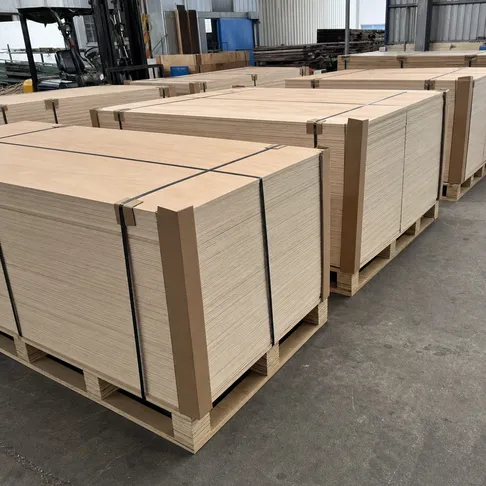
12mm Plywood Manufacturer —
Factory-Direct from QDPlywood.com
12mm plywood built for export — consistent bonding, controlled moisture, and the certifications your market requires. We've been manufacturing commercial-grade 12mm plywood since 2008. Six production lines, 450,000 m³ annual capacity, and a QC process designed around the failure modes that actually cost buyers money.
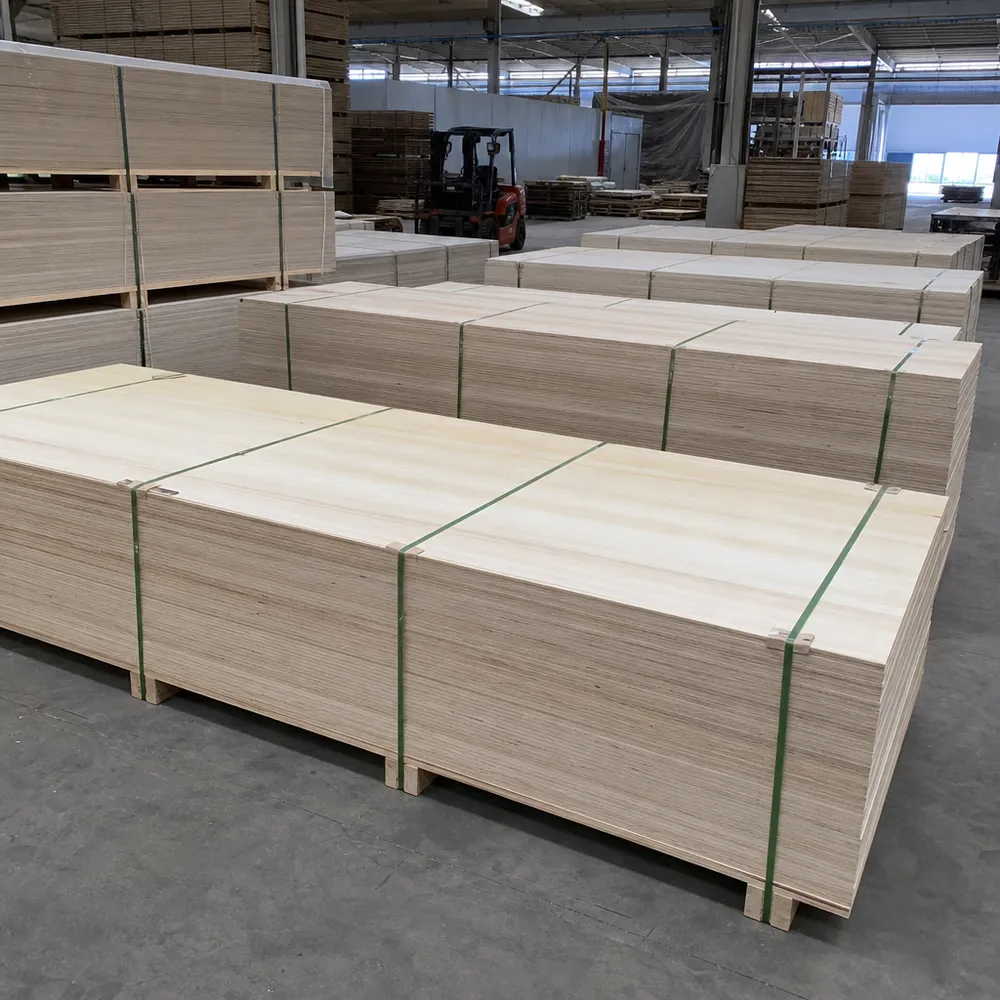
What 12mm Plywood Is Used For — and Why Thickness Matters to Your Sourcing Decision
12mm sits at the intersection of structural utility and weight efficiency. It's thick enough to carry real load in furniture carcasses, wall paneling, and light construction applications, but light enough that container utilization stays favorable compared to 15mm or 18mm panels.
That balance is why 12mm is one of the most consistently ordered thicknesses across our export markets — North America, Europe, the Middle East, Southeast Asia, and Australia all have active demand for it.
The commercial logic for your business depends on which segment you're supplying. Furniture manufacturers and cabinet shops use 12mm for drawer bottoms, back panels, and shelf dividers — components that need dimensional stability and consistent thickness for automated cutting lines. Construction distributors move 12mm into wall sheathing, hoarding panels, and site boarding applications where the weight-to-stiffness ratio matters. Importers supplying the fit-out and interior contracting market find 12mm covers a wide enough application range to stock as a core SKU rather than a specialty item.
We produce 12mm plywood in hardwood face grades (poplar core, eucalyptus core, and mixed hardwood core options), with face veneer species including birch, okoume, pine, and poplar depending on the target application and market. The standard panel size is 1220×2440mm, with 1250×2500mm available for European market orders. We also cut to custom dimensions on confirmed orders.
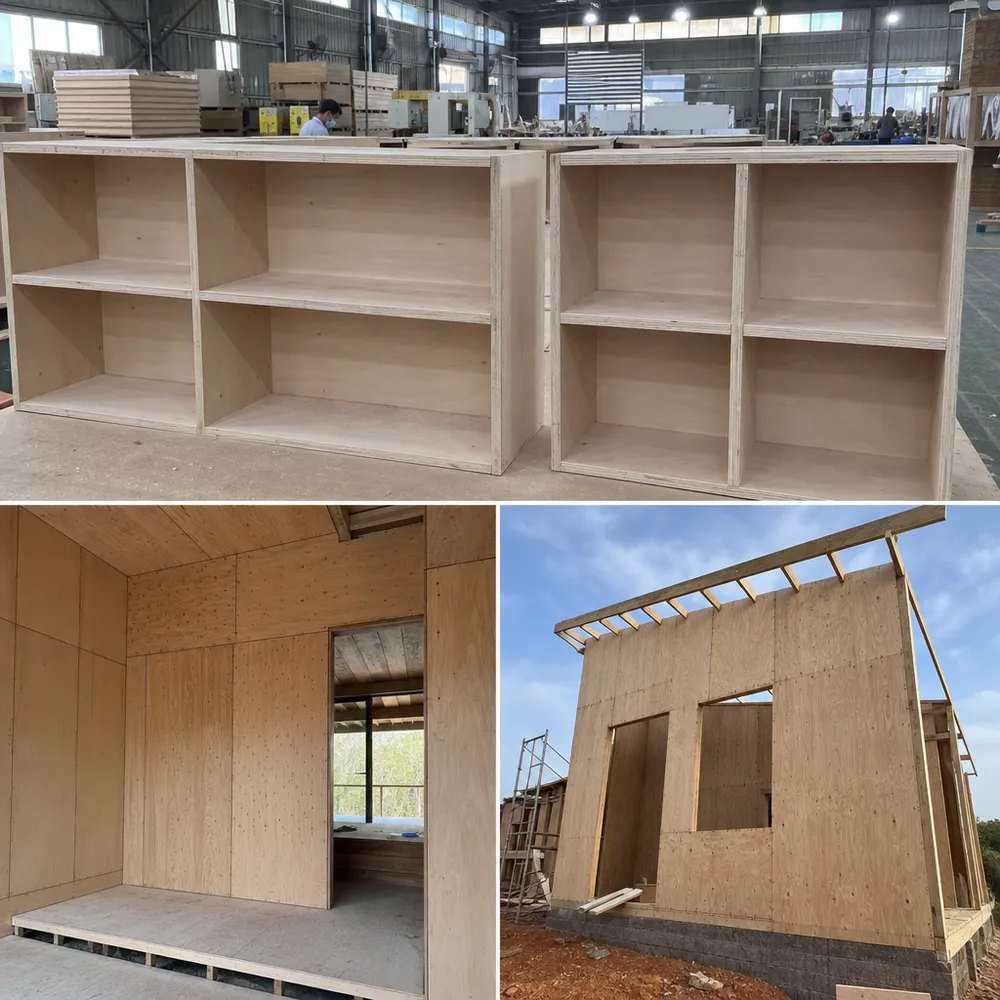
Furniture & Cabinetry
Drawer bottoms, back panels, and shelf dividers. Furniture manufacturers and cabinet shops rely on 12mm for dimensional stability and consistent thickness tolerance on automated cutting lines.
Construction & Distribution
Wall sheathing, hoarding panels, and site boarding. Construction distributors value 12mm for its weight-to-stiffness ratio — strong enough for structural use, light enough for efficient site handling.
Fit-Out & Interior Contracting
Importers supplying the fit-out and interior contracting market find 12mm covers a wide enough application range to stock as a core SKU rather than a specialty item — reducing inventory complexity.
Active Export Markets for 12mm Plywood
Consistent demand across North America, Europe, the Middle East, Southeast Asia, and Australia. Each market has specific grade, certification, and panel size requirements — we can advise on the right spec for your destination.
Technical Specifications
The table below reflects industry-standard values for commercial-grade 12mm plywood. Actual specifications are confirmed at order stage based on your grade, core species, and end-use requirements.
12mm Plywood — Standard Specification Table
| Parameter | Standard Value |
|---|---|
| Nominal Thickness | 12mm |
| Actual Thickness Tolerance | ±0.2mm (calibrated sanding) |
| Standard Panel Size | 1220 × 2440mm |
| Alternative Panel Size | 1250 × 2500mm (on request) |
| Number of Plies | Typically 9-ply (cross-grain construction) |
| Core Species Options |
Poplar Eucalyptus Mixed Hardwood
|
| Face Veneer Species |
Birch Okoume Pine Poplar
|
| Glue Type |
MR (moisture-resistant) WBP (waterproof boil-proof)
|
| Formaldehyde Emission | E1 standard CARB P2 available |
| Surface Grade Options |
BB/BB BB/CC BC CC/DD
|
| Approximate Weight | 7.5 – 9.5 kg/panel (species-dependent) |
| Density Range | 480 – 680 kg/m³ |
| Moisture Content | 6% – 14% at point of export |
| Sanding | Both faces sanded (S2S) |
| Applicable Standards |
GB/T 9846 EN 636 AS/NZS 2269
|
Values shown are indicative. Confirmed specifications, including third-party test reports, are provided with formal quotations.
9-Ply Cross-Grain Construction
Alternating grain direction across each ply distributes stress evenly, resisting warping and improving dimensional stability under load and humidity change.
(calibrated sanding)
for balanced strength
compliance options
glue available
Documentation Available
Mill test reports, phytosanitary certificates, fumigation certificates, and third-party inspection reports (SGS, BV) are available on request for all shipments.
Choosing the Right Grade for Your Market
Grade determines face veneer quality, permissible defects, and end-use suitability. For importers, grade selection directly affects resale margin and customer satisfaction — here's how the main options compare.
Grade Comparison — 12mm Plywood
| Grade | Face Quality | Typical Use | Market Fit | Price Tier |
|---|---|---|---|---|
| BB/BB | Both faces smooth, tight knots permitted, no open defects | Furniture, cabinetry, visible interior panels | Europe, North America, Australia |
|
| BB/CC | Good face, utility back — small knots and patches on reverse | Shelving, wall panels, one-sided visible applications | Middle East, Southeast Asia, general trade |
|
| BC | Paintable face, structural back — repaired knots acceptable | Construction sheathing, hoarding, site boarding | North America, UK, construction trade |
|
| CC/DD | Utility grade — open knots, splits, and patches permitted | Packaging, temporary formwork, concealed structural use | Price-sensitive markets, emerging economies |
|
Know Your End Customer's Tolerance
Retail and joinery customers typically require BB/BB or better. Construction and packaging buyers are more tolerant of surface defects — matching grade to end-use avoids over-specifying and protects your margin.
Destination Market Standards Vary
European buyers often reference EN 636 grade designations. North American buyers use APA or TECO standards. Middle Eastern and Southeast Asian markets are generally more flexible — we can advise on the right grade labelling for your destination.
Mixed-Grade Containers Are Possible
Importers serving multiple customer segments can consolidate BB/BB and BB/CC in a single container to optimise load value. Minimum quantities per grade apply — ask us about mixed-grade loading options.
Not Sure Which Grade Fits Your Order?
Share your destination market, end-use application, and target price point — we'll recommend the grade and species combination that gives you the best landed margin.
How We Manufacture 12mm Plywood — The Process Behind the Spec
The quality of a plywood panel is determined before it ever reaches the press. Here's what that means in practice, from veneer preparation through final QC.
Veneer Preparation & Sorting
Incoming veneers are sorted by species, moisture content, and surface grade before layup. Core veneers are dried to target moisture range; face veneers are graded separately for surface quality. We don't mix veneer grades within a panel unless the specification calls for it — a common shortcut that produces panels that look acceptable on the surface but have inconsistent internal structure.
Automated Glue Spreading
Glue spreading is automated, with spread weight checked against specification at the start of each production run. Too light and you get bond failure under load; too heavy and you get bleed-through on face veneers that shows up as surface staining after sanding. The target spread weight for 12mm panels is calibrated to the core species — poplar core absorbs differently than eucalyptus, and the glue line has to account for that.
Hot Press: Temperature & Pressure Control
The hot press runs at controlled temperature and pressure across the full 1220×2440mm panel surface. The critical variable in plywood bonding isn't just the resin formulation — it's the uniformity of heat and pressure distribution. Uneven press conditions produce panels that pass a surface check but delaminate under load or humidity cycling. Our press parameters are logged per batch, so if a bonding issue surfaces downstream, we can trace it back to the specific production run and identify whether it was a press parameter deviation or a veneer moisture issue.
Calibrated Sanding & Dimension Control
Post-press, panels go through calibrated wide-belt sanding to achieve the ±0.2mm thickness tolerance. That tolerance matters when your buyer is running panels through automated cutting equipment — thickness variation causes feed errors and increases waste. Panels are then trimmed to final dimensions on precision saws and edge-sealed for export-grade products to prevent moisture ingress during ocean transit.
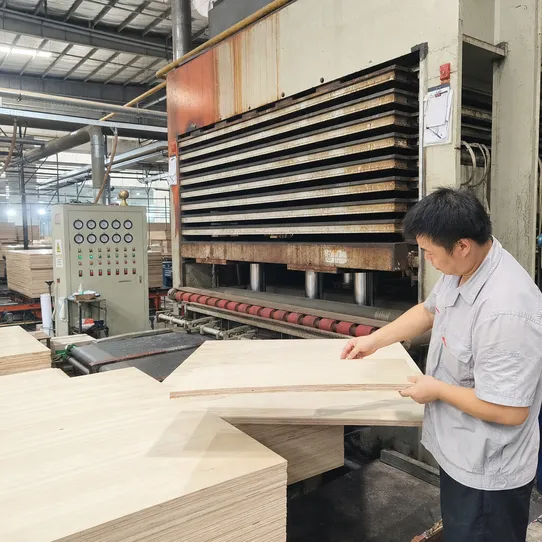
The Critical QC Gate
Post-press delamination check
The full QC process — incoming veneer inspection, in-process glue spread and post-press checks, and outgoing thickness, surface grade, and formaldehyde testing — is documented in our manufacturing overview. For 12mm panels specifically, the post-press delamination check is the critical gate: any panel showing a bonding defect is pulled before it reaches the sanding line, not after.
Batch-level traceability: Press parameters are logged per production run. If a bonding issue surfaces downstream, we can trace it back to the specific batch and identify whether it was a press parameter deviation or a veneer moisture issue.
Why ±0.2mm Thickness Tolerance Matters to Your Buyers
When your downstream buyers run panels through automated cutting equipment, thickness variation causes feed errors and increases waste. The ±0.2mm tolerance we hold on 12mm panels is a procurement-relevant spec, not a marketing claim — it's what separates panels that run cleanly through CNC lines from panels that require manual adjustment and generate offcuts.
Certifications That Clear Customs and Protect Your Compliance Position
We hold ISO 9001:2015, CE, FSC (Chain of Custody), and CARB P2 certification across our commercial plywood range, including 12mm panels.
CARB Phase 2
California's Air Resources Board Phase 2 standard sets the most stringent formaldehyde emission limits in the North American market. CARB P2 compliance is a procurement gate for most US distributors and retailers. We formulate to CARB P2 as the baseline for export-grade panels — it's not a premium option, it's how we run the line.
US-bound shipments
Documentation prepared as standard — no need to chase it
FSC Chain of Custody
Covers buyers with sustainability sourcing requirements or who supply into markets where deforestation-linked supply chains carry reputational or regulatory risk. The FSC certification means the wood fiber in our panels can be traced back to certified forests.
Sustainability-mandated procurement
Available on confirmed orders with FSC documentation
CE Marking
Applies to European construction and building material applications. For buyers supplying into EU construction projects or building product distribution channels, CE documentation is included with EU-bound shipments.
EU construction & building products
Included with EU-bound shipments as standard
ISO 9001:2015
Quality management system certification covering our full manufacturing process — from incoming veneer inspection through outgoing product release. The ISO 9001 framework is the documented backbone behind the batch traceability and in-process checks described in our manufacturing process.
Full manufacturing scope
Covers all commercial plywood including 12mm panels
Market-Specific Import Requirements
Beyond the standard certification stack
For buyers in markets with specific import requirements beyond these certifications — Australia's AS/NZS standards, Middle East municipal specifications, or specific VOC requirements — contact us with your market's documentation requirements and we'll confirm what we can provide.
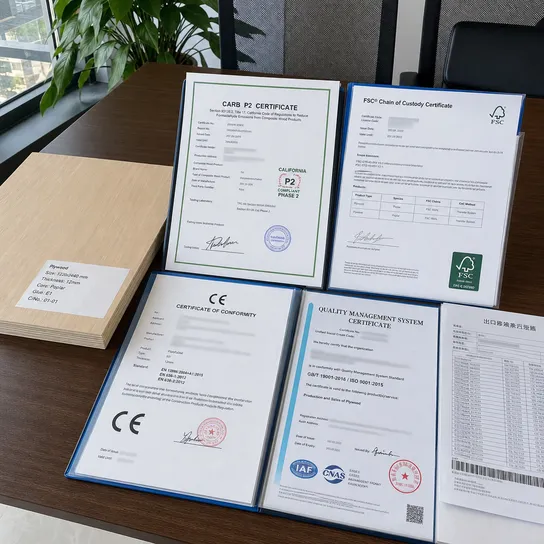
The documentation package for US shipments is prepared as standard. For other markets, confirm your requirements before order placement and we'll verify what's available.
Confirm Certification Documentation for Your MarketCertifications held across 12mm commercial plywood range
Market Segments Where 12mm Plywood Moves Consistently
Four segments account for the majority of recurring 12mm volume. Understanding which segment your buyers serve helps you position the right spec — and anticipate reorder cycles.
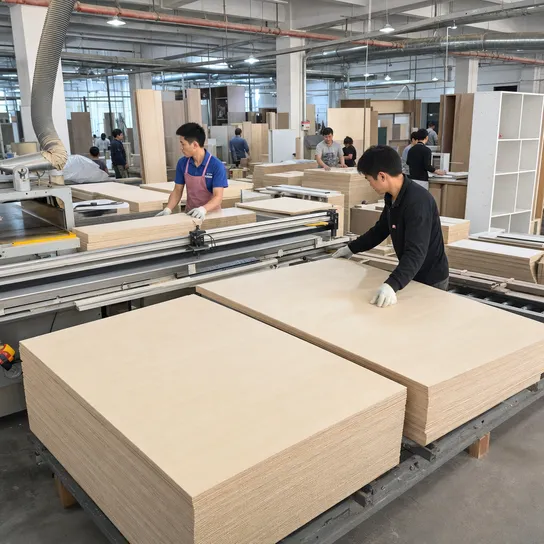
Furniture Manufacturing Supply
Recurring RevenueCabinet shops and furniture manufacturers use 12mm for back panels, drawer bottoms, and internal shelf components. The spec that matters here is consistent thickness tolerance — ±0.2mm — because automated cutting lines and CNC routers need predictable panel thickness to maintain cut accuracy across a production run.
Buyers supplying this segment typically order in full-container quantities on a regular replenishment cycle, making it a predictable, recurring revenue stream rather than a project-by-project sale.
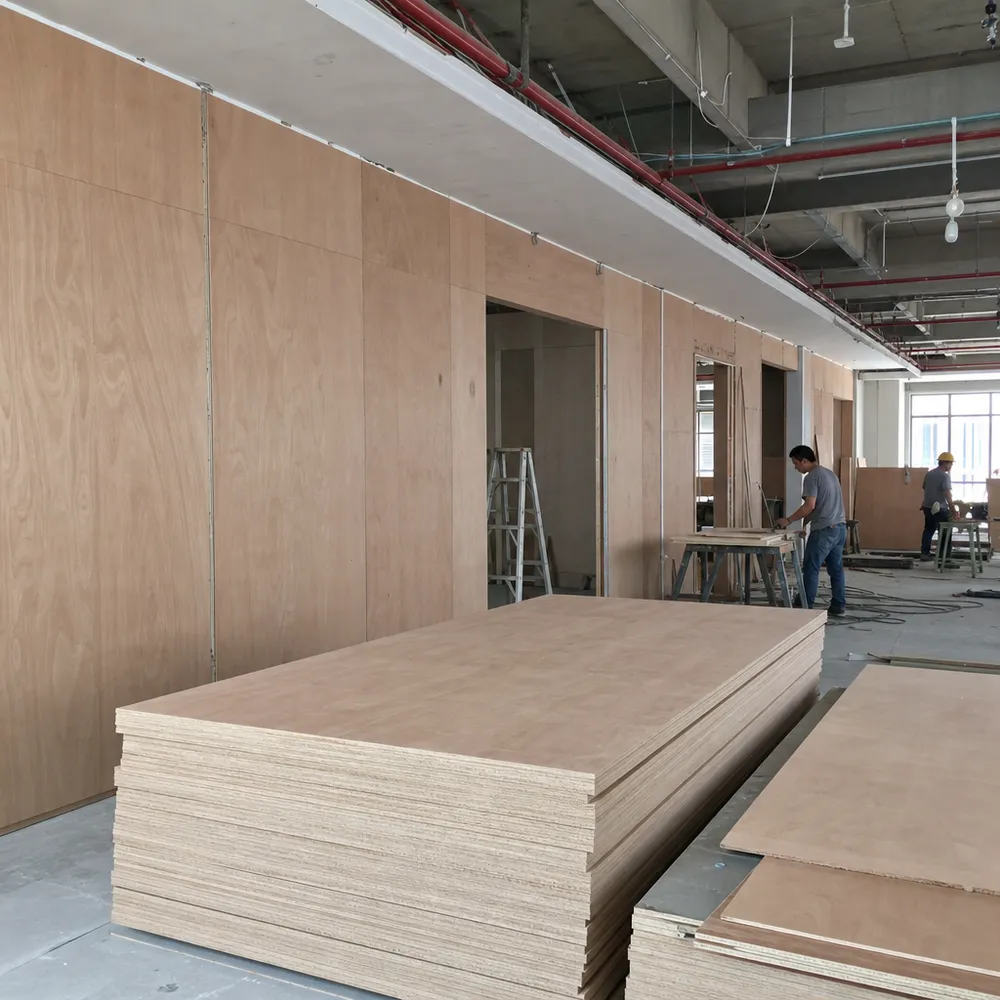
Interior Fit-Out & Construction Distribution
Core Distributor SKU12mm is a standard thickness for wall paneling, hoarding, and site boarding in commercial construction. Distributors supplying fit-out contractors and site managers find 12mm covers enough applications to justify stocking it as a core SKU. The WBP glue option extends the application range to semi-exposed environments where moisture resistance matters.
Gulf-region distributors move significant volume of WBP-bonded 12mm into site hoarding applications — the humidity tolerance reduces replacement frequency and the associated cost complaints from contractors.
Wholesale & Import Distribution
Range BuilderFor importers building a commercial plywood range, 12mm is typically one of the first thicknesses to add alongside 18mm. The weight-to-stiffness ratio makes it versatile enough to cover multiple end-use categories from a single SKU, which simplifies inventory management and reduces the number of line items you need to stock to cover your customer base.
Packaging & Industrial Applications
High VolumeHeavier-duty packaging, crating, and industrial panel applications use 12mm where thin panels lack rigidity but 15mm or 18mm adds unnecessary weight and cost. This is a lower-margin segment but a high-volume one.
What buyers in this segment prioritize:
- Consistent supply over surface grade
- Reliable moisture content control
- Rigidity without excess weight or cost
Our moisture control process is a direct fit for this segment's priorities — consistent MC reduces warping complaints and return freight costs.
Customization Parameters for 12mm Plywood Orders
We handle OEM and custom specification orders on 12mm plywood. The parameters below reflect what we can confirm without additional tooling or process changes.
Panel Dimensions
Plywood is cut-to-size, not molded — custom dimensions are a scheduling and yield question, not a capital investment. Higher MOQ applies for non-standard sizes.
Face Veneer Species
Core Construction
Glue Type
Moisture-resistant. Suitable for interior applications. Standard option.
Waterproof boil-proof. For semi-exposed and exterior applications. Extends application range significantly.
Surface Grade
Both faces clean. Visible applications.
One clean face, one utility face.
Utility grade, both faces. Industrial use.
Grade selection affects price and appropriate end-use. Specify based on your downstream customer's visibility requirements.
Branding & Marking
Specification confirmation to first production sample: 15–20 working days
Ready to specify your order?
Send us your target specification and volume — we'll confirm what's achievable and quote accordingly. Custom dimensions, OEM marking, and CARB P2 compliance are all handled on confirmed orders.
Container Loading and Export Logistics
12mm panels at 1220×2440mm load efficiently into standard containers. Here's what to expect from a typical export order — quantities, packaging, documentation, and transit.
Typical Loading Quantities
We provide loading plans with each shipment so your receiving team knows the exact stacking configuration and bundle count before the container arrives. For mixed-product orders — e.g., 12mm and 18mm panels in the same container — we coordinate the loading plan to maximize cubic utilization and minimize the per-unit freight cost.
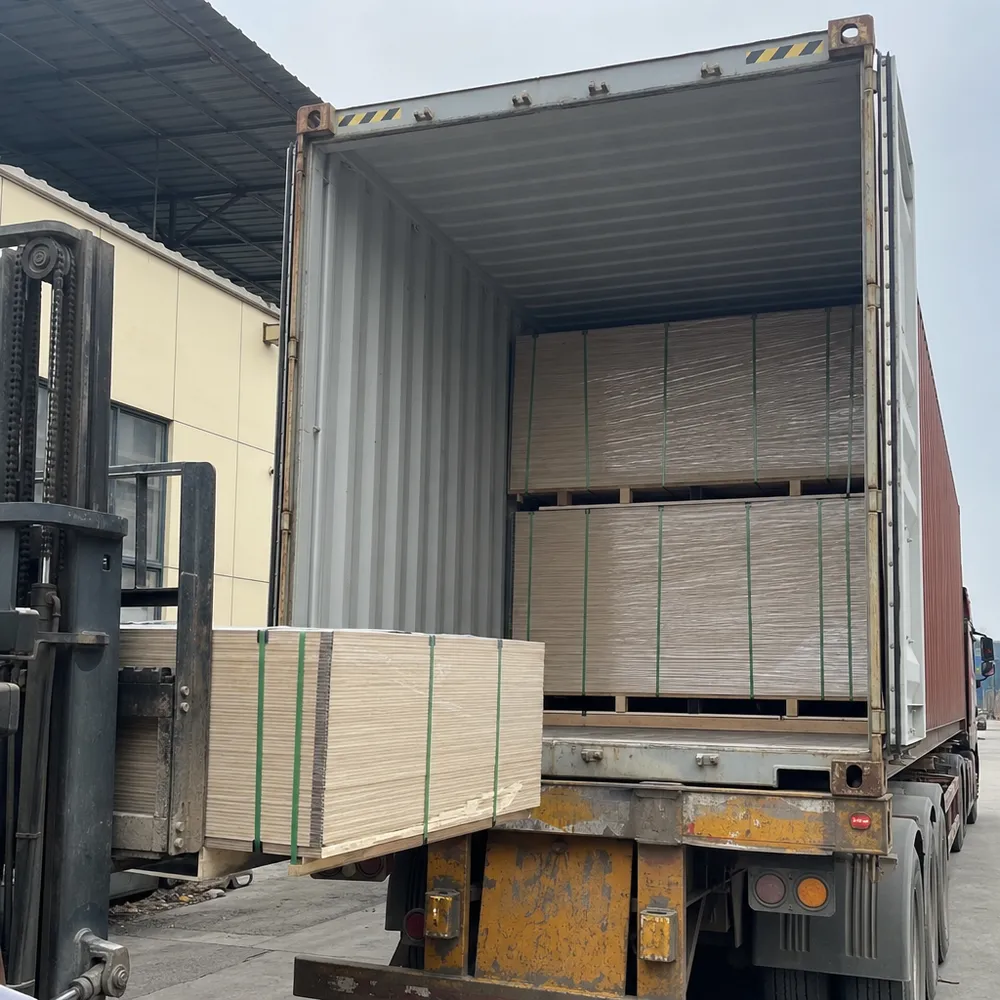
Export Packaging
Panels are prepared to survive ocean transit in full condition.
- Bundled and strapped with edge-protection corner boards
- Wrapped in moisture-resistant film
- Each bundle marked with product specification, quantity, batch number, and destination port
- Edge sealing applied on export-grade products to prevent moisture ingress during ocean transit — relevant for shipments to humid destination markets where transit time exceeds three weeks
Export Documentation
Prepared to avoid the documentation gaps that cause customs delays.
- Commercial invoice
- Packing list
- Bill of lading
- Certificate of origin
- Phytosanitary certificate (where required)
- Certification documents — FSC, CARB P2, CE as applicable
We've been through enough customs clearance cycles in North America, Europe, the Gulf, and Southeast Asia to know what documentation gaps cause delays. The paperwork is prepared to avoid them.
Port Access & Transit Times
Xuzhou connects to Qingdao, Shanghai, and Lianyungang ports. Transit times to major destination ports run 18–35 days depending on routing and destination.
Markets served include North America, Europe, the Gulf, and Southeast Asia. Documentation and packaging are calibrated to each destination's import requirements and climate conditions.
12mm vs. Other Thicknesses: Choosing the Right Panel for Your Market
If you're building a commercial plywood range or evaluating which thickness to stock, here's how 12mm positions relative to the adjacent options.
12mm vs. 18mm
18mm is the standard structural thickness for furniture carcasses, flooring underlayment, and load-bearing applications. If your buyers are building cabinets, shelving, or structural panels, 18mm is typically the primary SKU. 12mm complements it for back panels, drawer components, and lighter structural applications where 18mm adds unnecessary weight and cost. Most distributors stock both.
View 18mm plywood sheet options in our commercial plywood range12mm vs. 9mm / 8mm
Thinner panels (6mm, 8mm, 9mm) are suited for decorative overlays, drawer bottoms in lighter furniture, and applications where weight is the primary constraint. 12mm is the step up when you need more rigidity and screw-holding performance without moving to the heavier 15mm or 18mm range.
View 8mm plywood options12mm vs. 6mm
6mm is a specialty thickness for decorative paneling, backing boards, and applications where the panel is supported on all edges. 12mm is the general-purpose structural option when you need a panel that can span, carry load, and hold fasteners without full perimeter support.
View 6mm plywood options
Where 12mm Sits in the Range
Not sure which thickness mix fits your market?
Send us your customer profile and we'll suggest a starter SKU mix based on what's moving for our existing distributors in that region.
Discuss Your SKU MixExplore Other Thicknesses in the Commercial Plywood Range
Frequently Asked Questions
Sourcing decisions for 12mm plywood come down to a handful of specification and compliance questions. Here are the ones buyers ask most.
Commercial-grade 12mm plywood is typically constructed with 9 plies. Some manufacturers produce 12mm with 7 plies using thicker core veneers — this reduces veneer count and cost but weakens the cross-grain balance, which increases dimensional movement under humidity cycling.
For export-grade panels going into furniture manufacturing or construction applications, 9-ply construction is the standard to specify.
When evaluating suppliers, ask for the ply count and core veneer thickness — it's a quick way to identify whether the panel is built to export-grade standards or domestic-market cost targets.
For markets with high ambient humidity — Southeast Asia, the Gulf, coastal Australia — specify WBP (waterproof boil-proof) glue rather than MR (moisture-resistant). MR glue is adequate for interior applications in controlled environments, but in humid climates or applications with any moisture exposure, WBP bonding prevents delamination over the product's service life.
The price difference between MR and WBP on 12mm panels is modest; the warranty claim difference is not.
US Customs requires that composite wood products (including plywood) imported into the US comply with the TSCA Title VI / CARB P2 formaldehyde emission standard. The documentation package typically includes:
- The CARB P2 compliance certificate from the manufacturer
- Test reports from a CARB-approved third-party certifier
- A chain-of-custody declaration
We prepare this documentation package as standard for US-bound shipments. If your customs broker or importer of record has specific documentation format requirements, send them to us before the order ships and we'll confirm we can meet them.
For standard grades and dimensions (1220×2440mm, BB/BB or BB/CC, poplar or eucalyptus core), the typical minimum order is one 40HQ container — approximately 1,800–2,100 sheets depending on panel weight.
For custom dimensions, non-standard face veneer species, or OEM-branded orders, MOQ is higher and confirmed at the specification stage.
Sample orders (small quantities for testing and customer approval) are available before committing to a full container — contact us to discuss sample arrangements.
Plywood that arrives with moisture content outside the 8–12% export-grade range will continue to move dimensionally after delivery as it equilibrates to the local environment.
We verify moisture content at the outgoing inspection stage before packing. If your market has specific moisture content requirements outside this range, confirm them at the order stage.
Standard 12mm plywood with MR glue is not suitable for direct exterior exposure. For exterior applications, specify WBP-bonded 12mm with a weather-resistant face veneer (or film-faced overlay for maximum protection).
For fully exterior structural applications, consider our exterior plywood range which is specifically engineered for weather exposure.
If you're unsure which specification fits your application, describe the end-use environment and we'll recommend the appropriate grade.
Get a Quote for 12mm Plywood
We export 12mm plywood to North America, Europe, the Middle East, Southeast Asia, and Australia. Factory-direct pricing, no trading company layer.
To get a detailed quote, send us:
- Target grade and face veneer species
- Panel dimensions (standard or custom)
- Glue type (MR or WBP)
- Destination market and port
- Target volume (sheets or containers)
- Any certification requirements (CARB P2, FSC, CE)
We'll come back with pricing, lead time, and the relevant certification documentation for your import requirements.