

8mm Plywood —
Factory-Direct Panels
Factory-direct 8mm plywood with 5-ply construction, calibrated to ±0.2mm thickness tolerance and CARB P2 / FSC certified for North American and European import. Consistent bonding, controlled moisture content, and export-ready documentation — the spec details your procurement sheet needs before you send an inquiry.
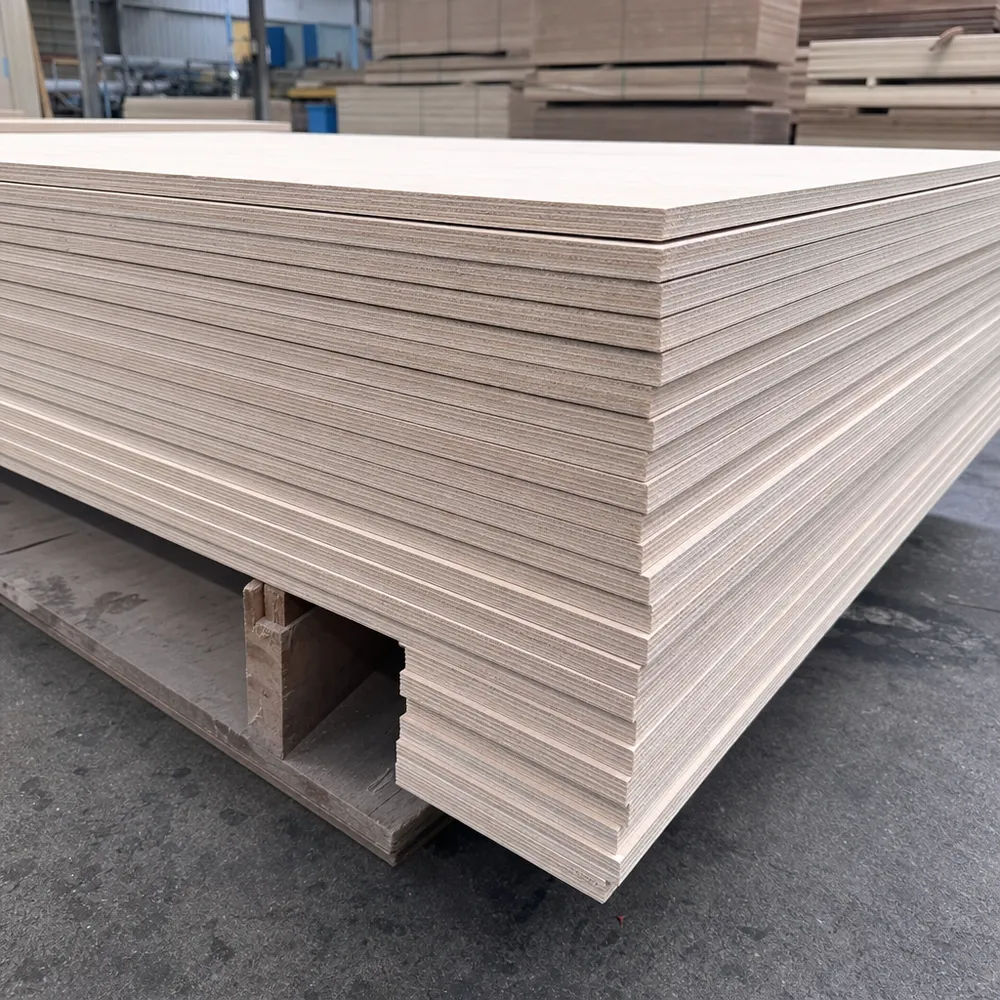
What 8mm Plywood Is — and Where It Sits in the Thickness Range
8mm plywood occupies a specific structural position in the commercial panel range: thicker than the 6mm sheets used for drawer bottoms and backing panels, but lighter than the 12mm and 18mm panels that carry structural loads. That positioning is not incidental — it's why 8mm has its own demand profile and its own buyer base.
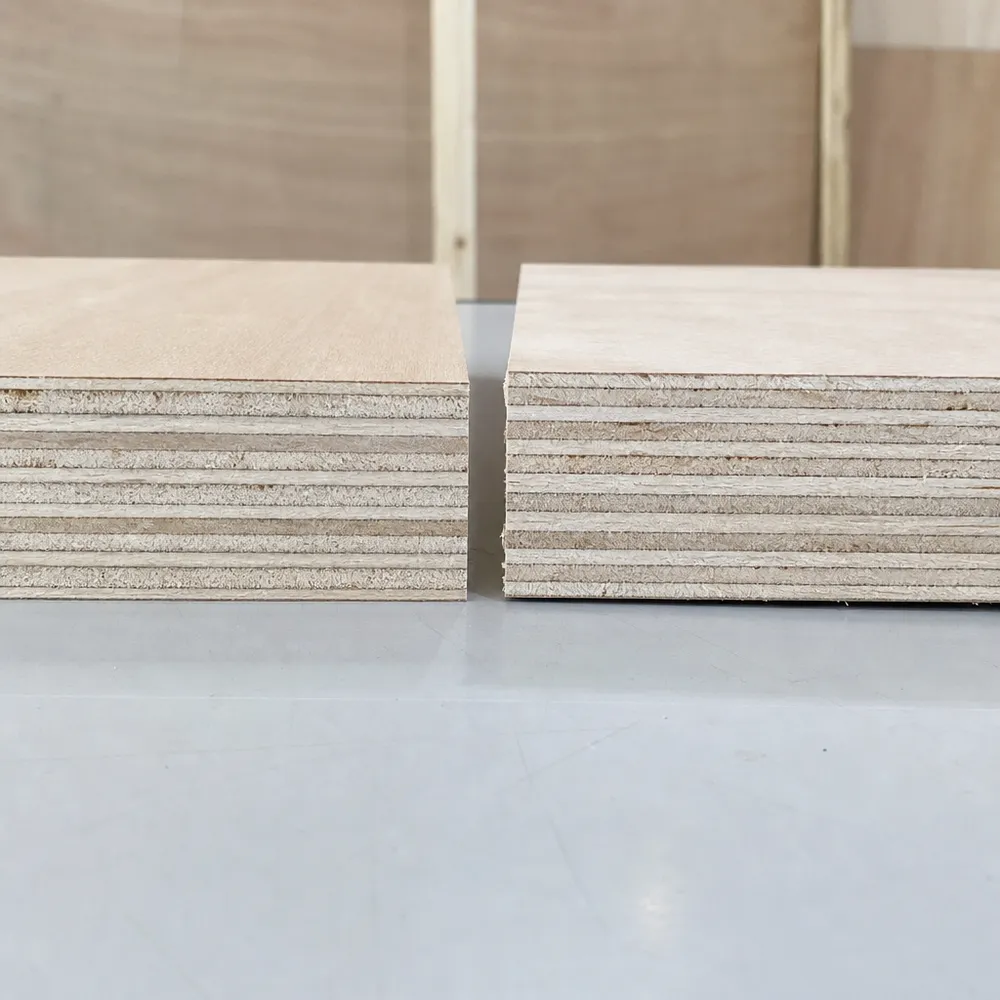
The standard construction is 5-ply: two face veneers, two cross-band veneers, and a center core. At 8mm, the cross-band veneers are thin enough that the panel stays light and workable, but the 5-ply layup gives it meaningfully better dimensional stability than a 3-ply panel of similar thickness. That matters when your downstream customer is running panels through automated cutting equipment or assembling flat-pack furniture where panel warp causes assembly rejects.
We produce 8mm panels in standard 1220×2440mm sheets, with face veneer options including poplar, eucalyptus, hardwood species, and birch on request. The core is typically poplar or eucalyptus depending on the target weight and bonding specification.
Freight cost note: Buyers supplying into the flat-pack furniture segment often prefer the lighter poplar core for freight cost reasons — a 10% weight reduction per panel adds up across a full container.
The 8mm thickness also sits at an interesting crossover point with 9mm plywood. Some markets — particularly in Europe and Australia — specify 9mm where others specify 8mm for the same application. We can produce both; if your market uses 9mm as the standard, that's a straightforward specification adjustment on confirmed orders.
Thickness Range Context
8mm sits between lightweight backing panels and load-bearing structural panels — its own demand profile, its own buyer base.
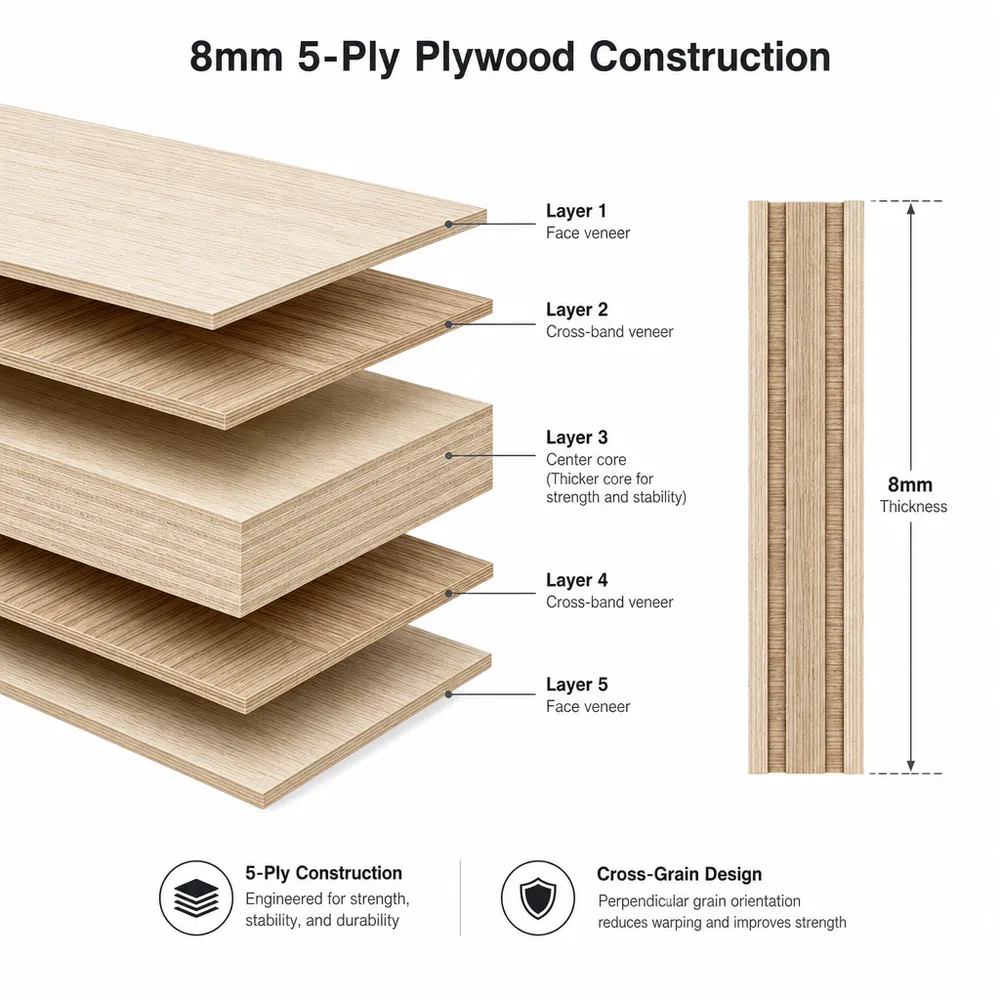
5-Ply Construction Breakdown
Better Stability vs. 3-Ply
5-ply layup delivers meaningfully better dimensional stability than a 3-ply panel of similar thickness — critical for automated cutting lines.
Freight-Efficient Weight
Lighter than 12mm+ structural panels. Poplar core option reduces weight ~10% per panel — meaningful savings across a full container.
8mm Plywood Specifications
The parameters your procurement sheet needs. All values are industry-standard for this product type — contact us for detailed product data sheets and confirmation of exact parameters for your application.
Full Specification Table
| Parameter | Specification |
|---|---|
| Nominal Thickness | 8mm (actual: 7.8–8.2mm typical) |
| Thickness Tolerance | ±0.2mm (calibrated sanding) |
| Panel Size | 1220×2440mm standard; custom sizes available |
| Construction | 5-ply cross-laminated |
| Face Veneer |
Poplar Eucalyptus Hardwood Birch (on request)
|
| Core Material | Poplar or eucalyptus |
| Glue Type | MR (moisture-resistant) standard WBP available |
| Formaldehyde Emission |
CARB P2 ≤0.05 ppm E1 ≤0.124 mg/m³
|
| Grade Options |
B/BB BB/CC CC/CC B/C
|
| Surface Finish | Sanded both sides (S2S); one side sanded available |
| Density | ~450–550 kg/m³ (core-dependent) |
| Weight per Panel | ~5.4–6.5 kg (1220×2440mm) |
| Moisture Content | 6–14% at time of manufacture |
| Certifications |
CARB P2 FSC® CE PEFC available
|
| MOQ | 1 × 20ft container (approx. 1,200–1,500 panels) |
Container Load Estimator
Rough guide for 20ft container planning
Actual figures vary by packing configuration and destination port requirements. Request a formal loading plan with your quote.
Why ±0.2mm Matters
CNC routers and automated panel saws are calibrated to tight tolerances. A ±0.5mm thickness variation across a pallet causes step-downs in nested cuts and increases waste. Calibrated sanding to ±0.2mm keeps your line running clean.
MR vs. WBP Glue
MR (Moisture-Resistant)
Interior use, protected environments. Standard for furniture and cabinetry.
WBP (Weather & Boil Proof)
Exterior-rated bond. Required for semi-exposed or humid applications. Available on request.
8mm Plywood Applications
8mm plywood occupies a specific niche: light enough to reduce material cost and weight, thick enough to hold fasteners and take edge treatment. Here's where buyers actually use it.
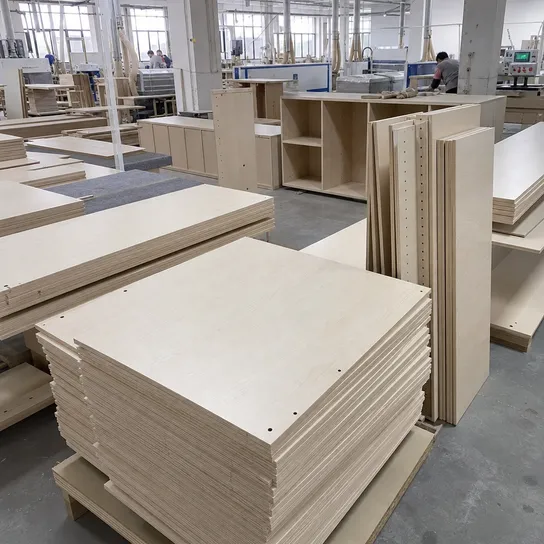
Furniture & Flat-Pack
Side panels, back panels, and internal dividers in flat-pack and RTA furniture. 8mm hits the weight-to-rigidity ratio that keeps shipping costs down without sacrificing structural feel.
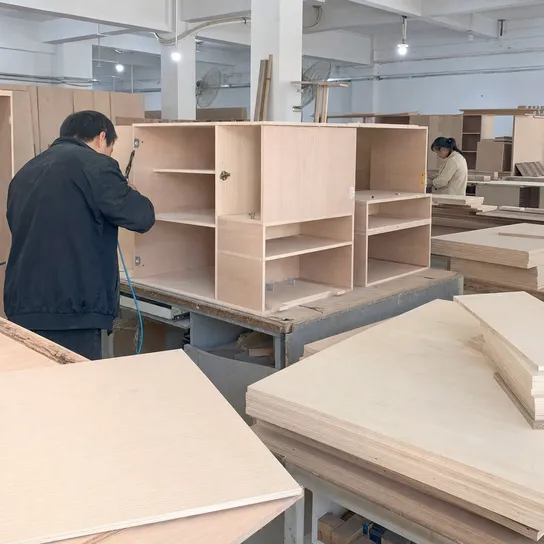
Kitchen & Bath Cabinetry
Cabinet carcass backs and internal partitions where 18mm would add unnecessary weight and cost. MR glue bond handles typical kitchen humidity; WBP available for higher-moisture zones.
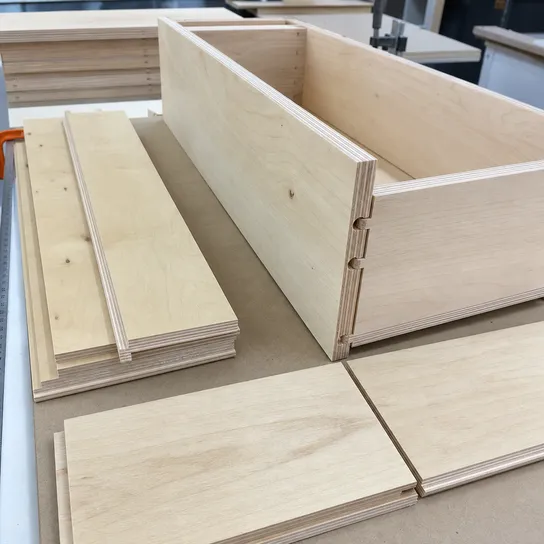
Drawer Boxes
Drawer sides and sub-fronts where 6mm is too thin to hold dowels reliably and 12mm adds unnecessary bulk. 8mm is the standard choice for mid-range and premium drawer box construction.
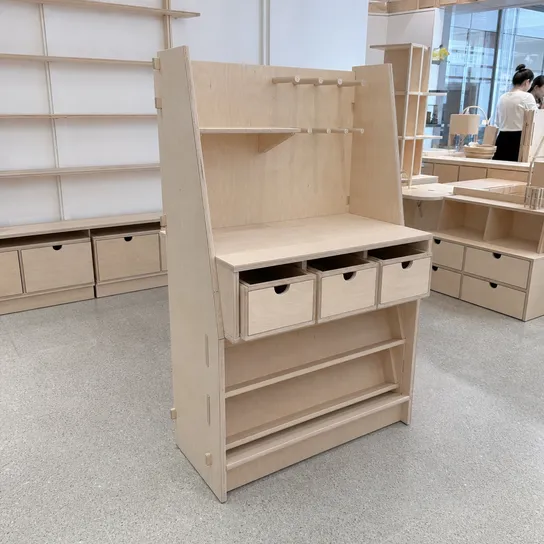
Retail Displays & Fixtures
Point-of-sale units, display shelving, and branded fixtures where panels are frequently replaced or reconfigured. Light weight reduces installation labour; consistent thickness ensures repeatable assembly.
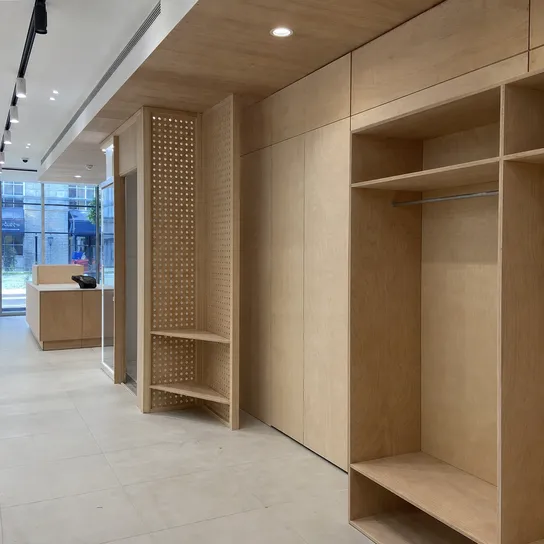
Interior Fit-Out
Wall panelling, decorative partitions, and ceiling linings in commercial interiors. 8mm keeps dead load low on suspended systems and reduces material cost per m² on large-area installations.
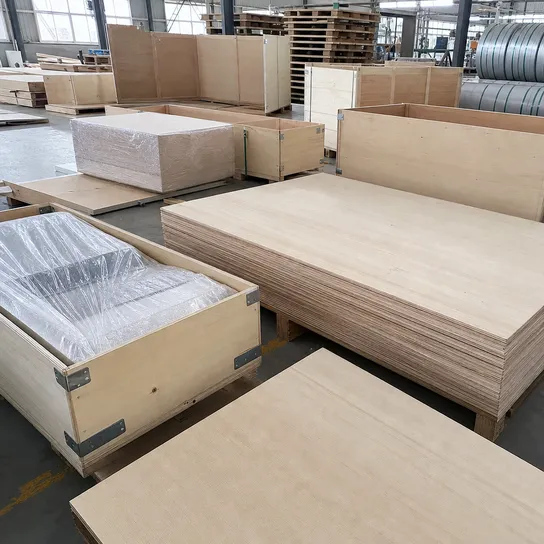
Packaging & Crating
Export crates, protective packaging, and pallet collars where panel rigidity matters but weight adds freight cost. 8mm offers a better strength-to-weight ratio than solid timber alternatives at this thickness range.
Is 8mm the Right Thickness for Your Application?
| Application | 8mm | 6mm | 12mm | Notes |
|---|---|---|---|---|
| Drawer sides | ✓ | ~ | ✗ | 6mm marginal for dowel joints; 12mm adds bulk |
| Cabinet backs | ✓ | ✓ | ✗ | Both work; 8mm preferred for rigidity |
| Structural shelving | ✗ | ✗ | ✓ | Load-bearing spans need 12mm minimum |
| Wall panelling | ✓ | ~ | ~ | 8mm optimal for weight and cost on large areas |
| Flat-pack furniture panels | ✓ | ✗ | ~ | 12mm overkill for non-structural panels |
| Export crating | ✓ | ✗ | ~ | 8mm balances rigidity and freight weight |
✓ Recommended · ~ Acceptable with caveats · ✗ Not recommended
How We Press 8mm Panels: The Process Details That Affect Your Batch Quality
At 8mm, the hot press parameters are more sensitive than at thicker gauges. The panel is thin enough that uneven pressure distribution across the press platen shows up as thickness variation — not dramatically, but enough to cause problems if your downstream customer is running the panels through a CNC router or automated edge-bander where feed rollers are calibrated to a specific thickness.
Press Temperature & Heat Distribution
We run multi-daylight hydraulic hot presses with press parameters logged per batch. For 8mm panels, we target a press temperature of 110–120°C with a press time calibrated to the glue formulation and veneer moisture content going in. The critical variable is not just temperature — it's the consistency of heat distribution across the full 1220×2440mm platen surface.
A press that runs 5°C cooler at the edges than the center will produce panels with weaker bonding at the perimeter — exactly where edge-banding adhesion failures show up later.
Veneer Moisture Content Control
Veneer moisture content before layup is checked and controlled. We target core veneers at 8–10% moisture before they go into the press. If the veneer is too wet, the press drives out steam unevenly and you get blister defects or localized delamination.
This is the failure mode we see most often when buyers switch from a lower-cost supplier and come to us after a container of rejects — the panels looked fine on the surface but delaminated at the glue line under humidity cycling.
Post-Press Calibration Sanding
Post-press, every panel goes through calibrated wide-belt sanding to bring the thickness to tolerance. The sanding step is not cosmetic — it's the final thickness calibration. We check thickness at five points per panel: four corners and center. Any panel outside ±0.2mm is pulled before it reaches the finishing line.
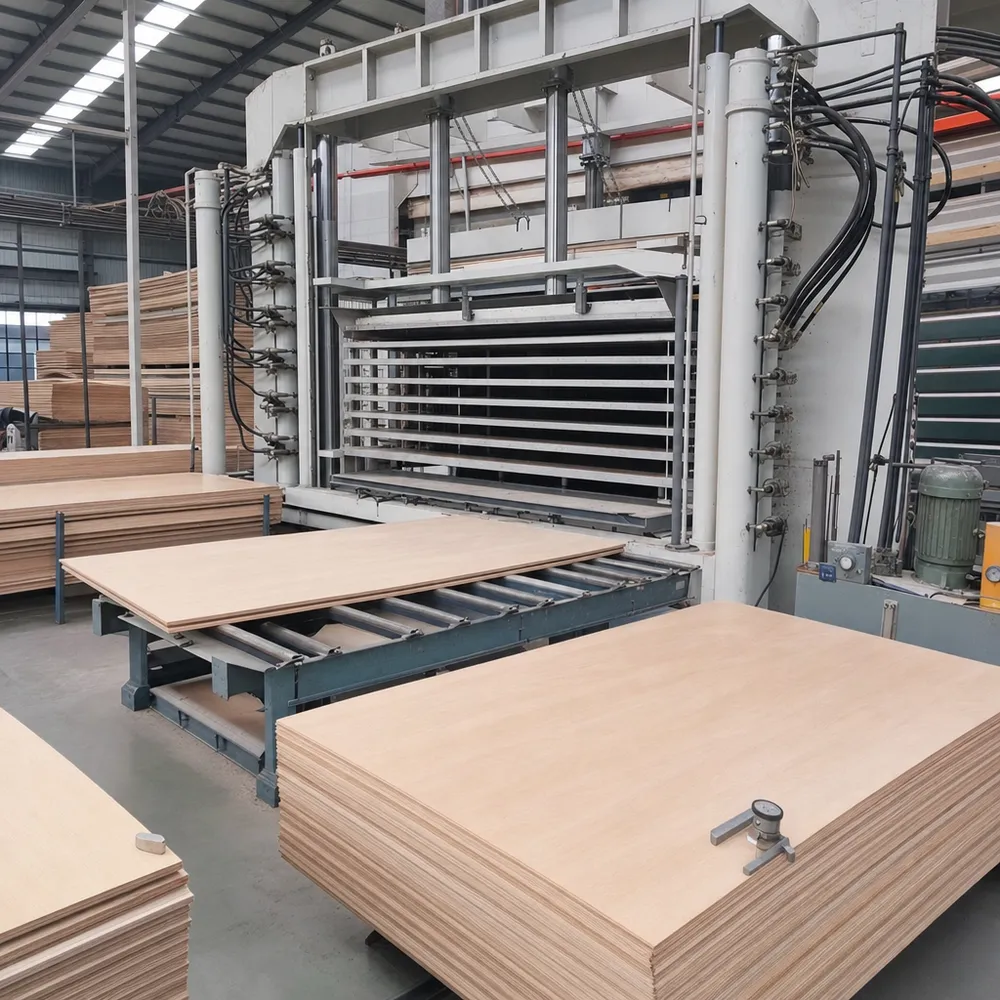
Press Parameter Summary — 8mm Panels
Parameters logged per batch. Press time calibrated to glue formulation and incoming veneer moisture content.
Market Segments Where 8mm Plywood Generates Repeatable Orders
8mm plywood sits at a useful intersection of weight, stiffness, and cost that makes it a core SKU across several distinct buyer segments. Understanding which segment you're supplying into determines the specification priorities that matter most.
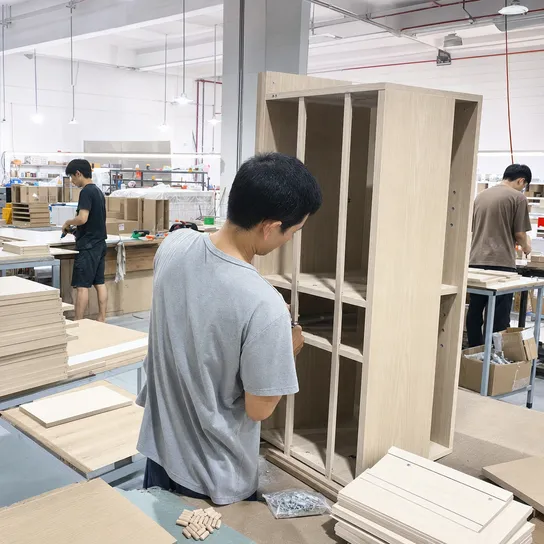
Flat-Pack & Ready-to-Assemble Furniture
Furniture factories supplying into the RTA segment use 8mm panels for side panels, shelving, and internal dividers in cabinets and wardrobes. The 5-ply construction gives better screw-holding than MDF at the same thickness, which matters for cam-lock fittings and dowel joints.
Furniture manufacturers in Southeast Asia and Eastern Europe typically order in container quantities — 20–40 containers per year is a normal run rate for a mid-size furniture factory.
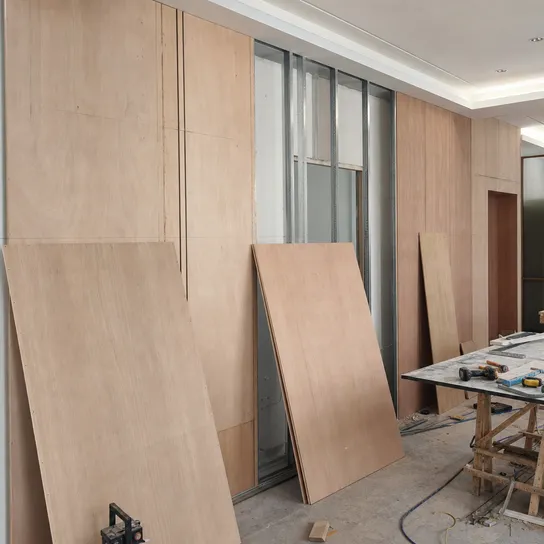
Interior Fit-Out & Joinery Supply
Contractors and joinery shops use 8mm plywood for wall paneling substrates, decorative panel backing, and lightweight partition infill. The panel is stiff enough to hold shape when face-veneered or laminated, but light enough that installers can handle full sheets without mechanical assistance.
Distributors supplying into the fit-out trade typically stock 8mm alongside 12mm and 18mm as a standard range. Buyers in this channel reorder on project cycles — consistent batch-to-batch quality is what keeps the account.
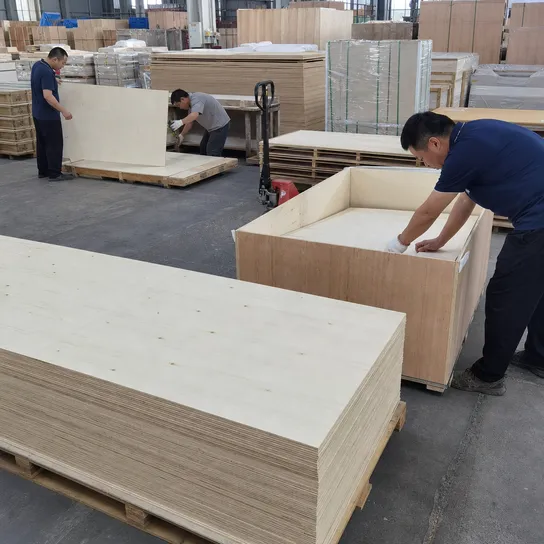
Packaging & Industrial Applications
8mm plywood is used for crate liners, pallet tops, and lightweight industrial packaging where the panel needs to be rigid but not heavy. This segment tends to order on shorter lead times and higher volumes.
Buyers here are often less specification-sensitive on surface grade but more sensitive on thickness consistency and moisture content — warped panels cause packing line problems. Our moisture content control (8–12% export standard) is directly relevant here.
E-Commerce & Retail Distribution
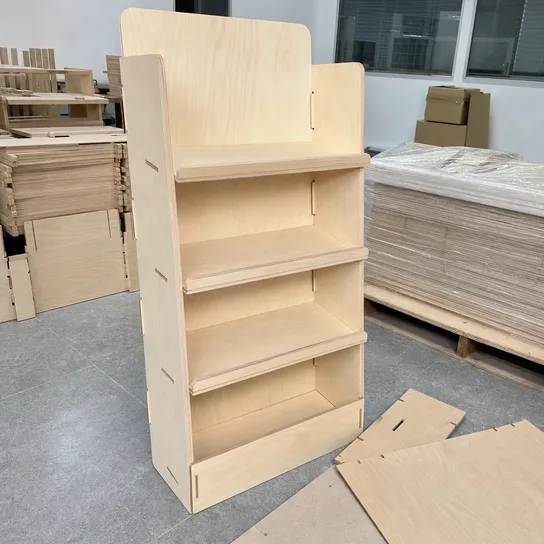
Buyers supplying into Amazon FBA or independent online retail often need panels cut to non-standard sizes for specific product applications. 8mm is a common thickness for display fixtures, point-of-sale units, and lightweight shelving sold through online channels.
If you're building a product line for this channel, the combination of consistent thickness tolerance and CARB P2 certification covers both the quality and compliance requirements for the US market.
Not sure which spec fits your target market?
Tell us your target market and volume — we'll suggest the right spec and surface grade for your application. Whether you're distributing into furniture manufacturing, fit-out trade, industrial packaging, or e-commerce retail, the right panel configuration makes a measurable difference in downstream performance.
Certification Coverage for Your Import Market
The certification stack on our 8mm plywood is designed around the documentation requirements of our main export markets, not as a marketing checklist.
US Market
California Air Resources Board
The most stringent formaldehyde emission standard in the US market. Our 8mm panels are produced to CARB P2 as the baseline, not as a premium option. CARB documentation package is prepared as standard on US-bound shipments.
Required for US customs and downstream buyers
Global
FSC Chain of Custody
Wood fiber in the panel can be traced to certified forests. Matters if your buyers have sustainability sourcing policies, or if you're supplying into retail channels where FSC labeling is a shelf requirement. The FSC certificate covers our full production, including 8mm panels.
Required for retail channels with sustainability policies
EU Market
European Construction Products
Covers European construction product regulations. For buyers importing into the EU, CE documentation is included with shipments.
Included with EU-bound shipments
Quality System
Quality Management System
Covers our quality management system — the process controls, inspection records, and corrective action procedures that sit behind the product certifications.
Process controls behind every product cert
Third-Party Inspection
Third-party inspection is available on request. We work with SGS and Bureau Veritas. If your procurement process requires independent pre-shipment inspection, we coordinate access.
Customization Parameters for 8mm Plywood Orders
8mm plywood is one of the more flexible products in our range for customization, because the panel construction doesn't require specialized tooling — adjustments are scheduling and material sourcing decisions.
Face Veneer Species
Material Selection
Standard options are poplar and eucalyptus. Hardwood face veneers (okoume, bintangor, meranti, birch) are available on confirmed orders with sufficient lead time for veneer sourcing.
If you need consistent grain matching across a product line — common for furniture manufacturers — specify the species and grade on your inquiry and we'll confirm availability.
Available Species
Surface Grade
Appearance Specification
The grade affects yield and price. If your application only requires one clean face, BB/CC is the more cost-efficient specification.
Both faces clean — for applications where surface appearance on both sides is critical.
One clean face, one utility face — more cost-efficient when only one face is visible in the finished application.
Utility grade — for applications where surface appearance is not critical.
Panel Dimensions
Size Options
Custom cut-to-size is available for orders with sufficient volume to justify the yield loss. Contact us with your target dimensions and we'll confirm feasibility and MOQ.
Available Formats
Glue Specification
Bond Type
Select based on your downstream application's moisture exposure requirements.
Urea-formaldehyde based. Standard for interior applications. Default specification unless otherwise requested.
Phenolic resin. For applications requiring higher moisture resistance — relevant if your downstream application involves intermittent moisture exposure.
Thickness Variants
8mm and 9mm
If your market specifies 9mm rather than 8mm, we produce both. The construction is the same 5-ply layup; the difference is in the veneer thickness and press parameters. Specify your target thickness on inquiry.
MOQ and Lead Times by Specification
Minimum order quantities and lead times vary by specification. Standard specifications (poplar face, BB/BB or BB/CC, 1220×2440mm) typically have shorter lead times than custom veneer species or non-standard dimensions.
Contact us with your full specification and we'll confirm MOQ and lead time for your exact requirements.
Container Loading and Export Logistics
From container configuration to customs documentation — what to expect when your 8mm plywood order ships from Xuzhou.
40HQ Container Capacity
Standard 1220×2440mm format, 8mm thickness
We provide a loading plan with each shipment so your receiving team knows the exact count and configuration before the container arrives. No surprises at the dock.
Ocean Transit Packaging
Standard export bundle specification
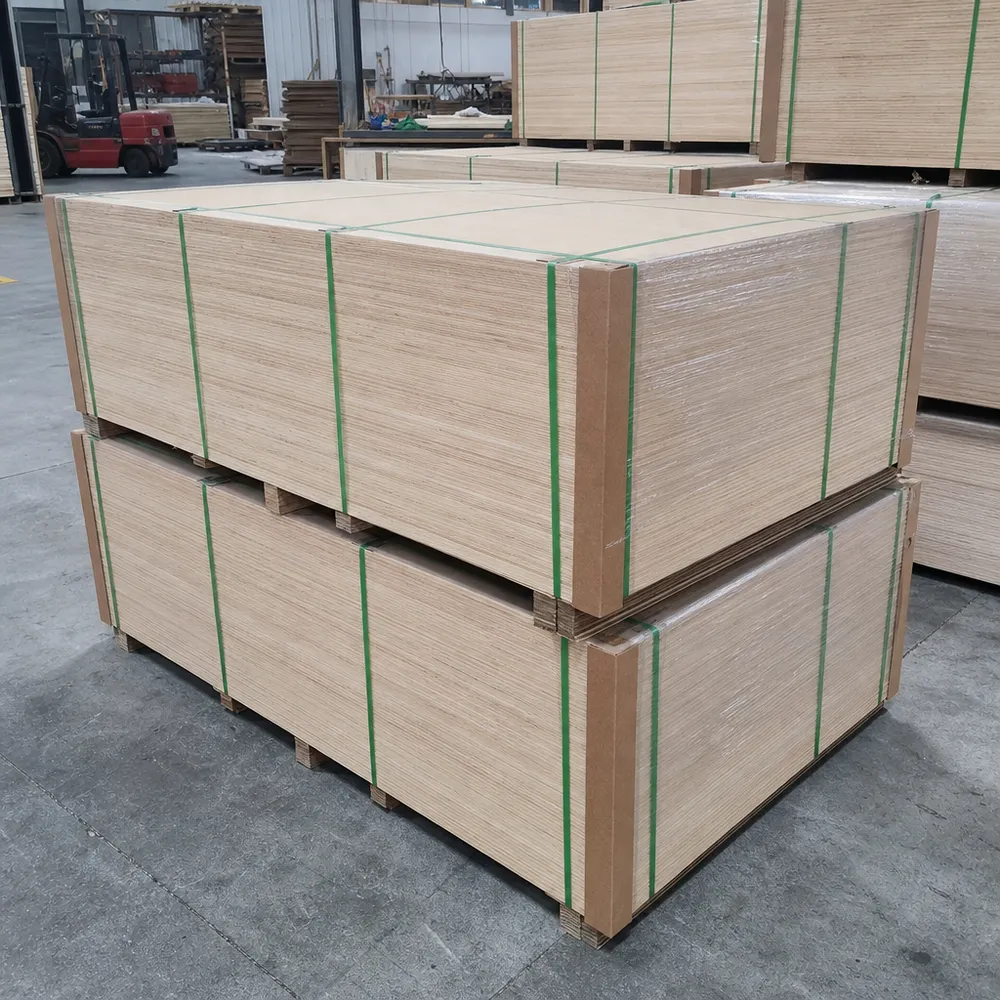
- Bundles of 50–100 sheets, strapped and edge-protected with corner boards
- Wrapped in moisture-resistant film for ocean transit
- Each bundle marked with product spec, quantity, batch number, and destination port
- Custom labeling available: FBA labels, private label markings, custom bundle sizes on confirmed orders
Export Documentation Package
We've been through enough customs cycles in North America, Europe, the Middle East, and Australia to know what documentation gaps cause delays. The paperwork is prepared to avoid them.
Standard trade document for all shipments
Bundle-level detail matching container loading plan
Issued by carrier upon container loading
Required for tariff classification at destination
Provided where required by destination country
CARB P2 package (US), CE declaration (EU), FSC chain-of-custody records
Transit Times from Xuzhou
Vessel transit estimates from Qingdao or Shanghai. Total lead time from order confirmation to container loading depends on production scheduling and your specification.
8mm vs. Sibling Thickness Options: Choosing the Right Panel for Your Application
8mm is not the right thickness for every application in the commercial plywood range. Here's where it fits relative to the other thickness options we produce.
Lighter, Thinner Panels
If your application needs a lighter, thinner panel — drawer bottoms, backing panels, decorative overlays — 6mm is the more appropriate specification. 6mm is typically 3-ply and carries less weight per sheet, which matters for freight cost on high-volume orders.
Balanced Rigidity and Weight
8mm is the right choice when you need a panel that's rigid enough to hold shape as a furniture component or wall panel substrate, light enough to keep freight costs manageable, and thin enough to fit within the dimensional constraints of the product design.
Structural Load Capacity
If your application needs structural load capacity — shelving under load, cabinet carcasses, flooring underlayment — 12mm is the standard specification. The additional thickness gives meaningfully better bending stiffness and screw-holding capacity for structural applications.
Stocking Multiple Thicknesses?
Same production facility, consistent quality across SKUs
If you're building a product range and need to stock multiple thicknesses, we can supply 6mm, 8mm, and 12mm from the same production facility with consistent veneer species and surface grades across the range. This simplifies your quality documentation and gives your downstream customers a consistent product appearance across SKUs.
Lightweight
Balanced
Structural
All three from the same facility — consistent veneer species and surface grades
Frequently Asked Questions About 8mm Plywood
Answers to the specification and sourcing questions we receive most often from importers, furniture manufacturers, and procurement teams.
Nominal 8mm panels typically measure 7.8–8.2mm after calibrated sanding. Our thickness tolerance is ±0.2mm, checked at five points per panel. If your application requires a tighter tolerance — for example, CNC routing where feed roller calibration is critical — specify this on your inquiry and we'll confirm what's achievable for your order volume.
For light-duty shelving with spans under 600mm and loads under 15kg, 8mm plywood performs adequately. For longer spans or heavier loads, 12mm is the appropriate specification. The 5-ply construction at 8mm gives better bending resistance than a 3-ply panel of the same thickness, but the panel is not designed for structural load-bearing applications. If you're specifying for a furniture product line, send us the span and load requirements and we'll confirm the right thickness.
The construction is the same — 5-ply cross-laminated. The difference is in veneer thickness and press parameters. Some markets (particularly Europe and Australia) specify 9mm where others specify 8mm for the same application. We produce both; if your market standard is 9mm, specify that on your inquiry. The price difference is marginal.
Yes. Our 8mm panels are produced to CARB P2 as the baseline specification — formaldehyde emissions ≤0.05 ppm. The CARB documentation package is prepared as standard on US-bound shipments. If you need test reports or certification documentation before placing an order, we can provide them on request.
MOQ varies by specification. For standard specifications (poplar face, BB/BB or BB/CC, 1220×2440mm), we can discuss order quantities starting from one container. Custom veneer species, non-standard dimensions, or special surface treatments typically require higher minimum quantities to justify the production setup. Contact us with your full specification and target volume for a specific MOQ and lead time.
Standard 8mm panels with MR glue are suitable for interior applications with normal humidity variation. They are not designed for prolonged moisture exposure or exterior use. If your application involves intermittent moisture exposure — kitchen cabinet interiors, bathroom vanity components — specify WBP glue on your inquiry. For applications requiring full moisture resistance, moisture-resistant plywood is the appropriate product.
Get a Quote for 8mm Plywood
Send us your specification — thickness, face veneer species, surface grade, panel dimensions, target volume, and destination market. We'll come back with a detailed quote, the relevant certification documentation for your import requirements, and a loading plan for your container configuration.
Most new buyers in this product category start with a sample order to verify thickness tolerance and surface grade against their own quality standards before committing to a full container. We can arrange samples; contact us to discuss.
- Thickness (8mm nominal, or specify tighter tolerance requirement)
- Face veneer species (poplar, birch, hardwood, or other)
- Surface grade (BB/BB, BB/CC, or custom)
- Panel dimensions (standard 1220×2440mm or custom cut-to-size)
- Target volume and destination market / port
- Certification requirements (CARB P2, FSC, E0, or other)
Explore More Commercial Plywood
Browse the full range of commercial plywood products from QDPlywood.com.
All Commercial Plywood