

6mm Plywood Manufacturer —
Thin-Panel Production Built for Export
Factory-direct 6mm plywood with controlled moisture, consistent thickness tolerance, and full export certification.
We've been producing thin-panel plywood since 2008. The 6mm range is where press calibration and veneer grading matter most — small thickness, zero margin for process error.
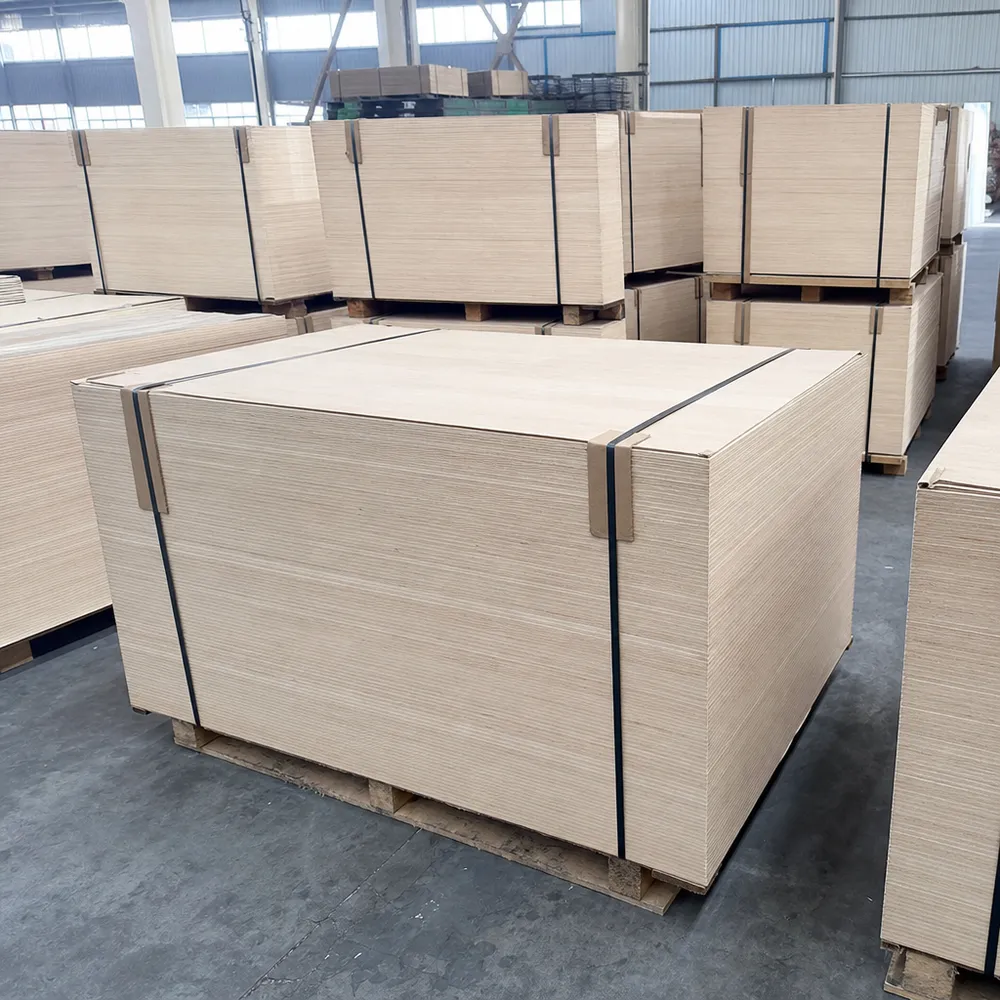
What 6mm Plywood Is — and Where It Sits in the Thin-Panel Range
6mm plywood is the workhorse of the thin-panel segment. At roughly 1/4 inch nominal thickness, it sits between the ultra-thin 3mm and 4mm decorative sheets and the mid-range 8mm and 12mm structural panels. That positioning matters commercially: 6mm is thick enough to hold fasteners in light-duty applications, thin enough to bend around curved forms, and light enough to keep freight cost per panel low on container loads.
We produce the full thin-panel range — 3mm, 4mm, and 6mm — under the same production process, but 6mm is the most requested thickness in this group. The reason is straightforward: it's the minimum thickness where you get reliable cross-grain stability from a 3-ply or 5-ply construction without the weight penalty of going to 9mm.
Buyers sourcing for furniture backs, cabinet panels, drawer bottoms, and lightweight wall cladding consistently land on 6mm as the default spec.
Many buyers come to us for 6mm and add thinner panels to the same container once they confirm the quality. We can accommodate mixed-thickness loads, which reduces your per-unit freight cost on thin-panel orders.
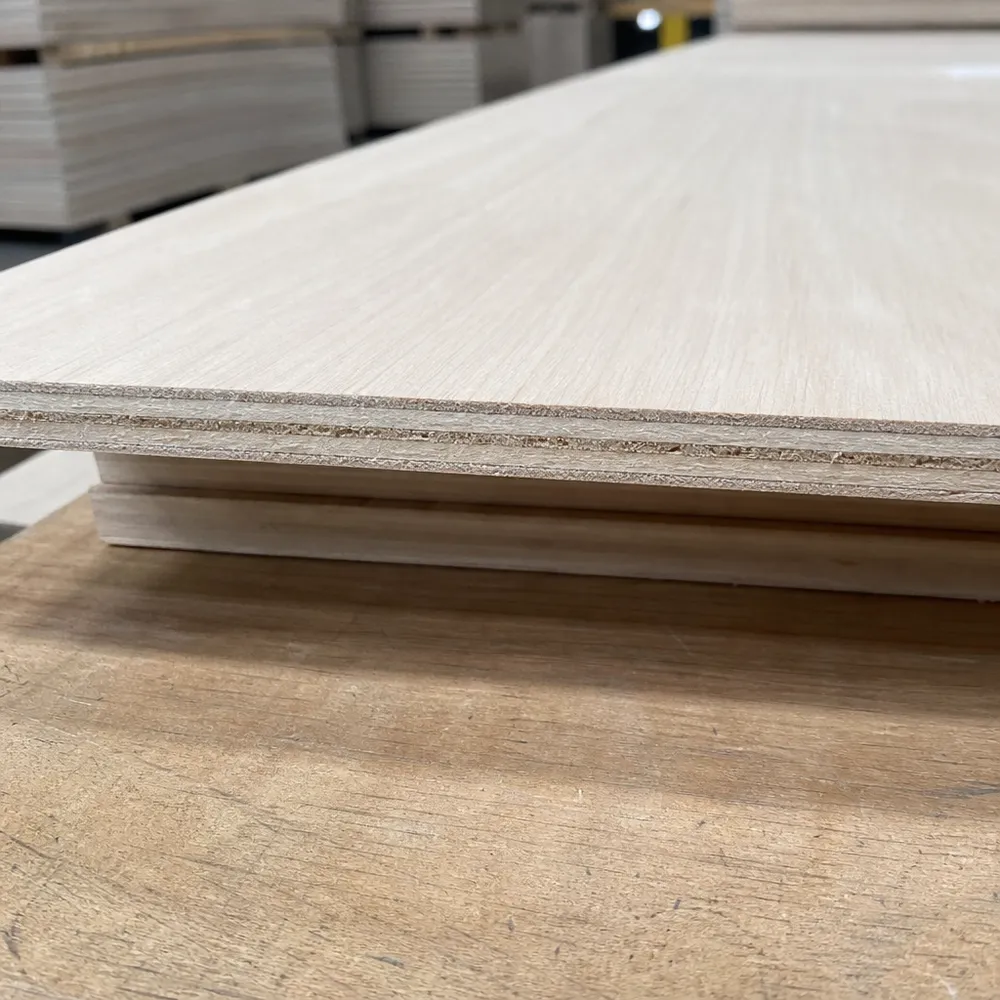
Thin-Panel Range — Thickness Positioning
Minimum thickness for reliable light-duty fastener retention
Thin enough to conform to curved forms and radius applications
Light enough to keep per-panel freight cost low on container loads
We produce 3mm, 4mm, and 6mm under the same production process. Many buyers add thinner panels to the same container once they confirm quality — reducing per-unit freight cost on thin-panel orders.
6mm Plywood Specifications
Industry-standard values for this product type. Contact us to confirm exact parameters for your application and receive a detailed product data sheet.
Full Specification Table
| Parameter | Specification |
|---|---|
| Nominal Thickness | 6mm (actual: 5.8–6.2mm typical) |
| Thickness Tolerance | ±0.2mm across panel surface |
| Standard Panel Size | 1220 × 2440mm (4' × 8') |
| Custom Sizes | Available on confirmed orders |
| Construction | 3-ply or 5-ply (species and application dependent) |
| Face Veneer Grade |
BB/BB BB/CC CC/CC specify on order
|
| Core Material |
Poplar Eucalyptus Mixed Hardwood
|
| Glue Type |
MR (moisture-resistant) WBP (waterproof) available
|
| Moisture Content | 8–12% (export standard) |
| Formaldehyde Emission |
E0 E1 E2 specify on order
|
| Surface Finish |
Sanded (S2S) Unsanded Film-faced available
|
| Density | 450–650 kg/m³ (species dependent) |
| Approx. Panel Weight | 3.2–4.8 kg per 1220×2440mm panel |
| Bending Radius | Min. ~300mm (along grain direction) |
| Squareness Tolerance | ≤ 1mm per 1000mm edge length |
| Warp / Bow | ≤ 0.5% of panel diagonal |
| Standard Certifications |
CARB P2 CE FSC available ISO 9001
|
| MOQ | 1 × 20ft container (mixed thickness/grade available) |
| Lead Time | 15–25 days after order confirmation |
Values above represent typical production ranges. Exact specifications are confirmed in writing on your purchase order. Request a product data sheet for third-party test reports.
Exact panel count depends on packing method and bundle configuration. We provide a detailed packing list with every shipment.
Request our 6mm plywood product data sheet including third-party test reports, mill certifications, and sample photos.
Request Data SheetFace Species & Core Options for 6mm
The right combination of face veneer and core material depends on your end use, surface requirements, and budget. Here's how the main options compare.
Core Material Comparison
| Core | Weight | Strength | Cost | Best Use |
|---|---|---|---|---|
|
Poplar Core
Most common
|
Light | Good | Low | Furniture, general interior |
|
Eucalyptus Core
Higher density
|
Medium-Heavy | Very Good | Medium | Structural, flooring substrate |
|
Mixed Hardwood Core
Variable species
|
Medium | Good | Low–Medium | General purpose, packaging |
Most buyers start with poplar face / poplar core for furniture and interior applications — it's the most cost-effective combination and covers the majority of 6mm use cases. If you need a natural wood finish or higher face grade, we'll recommend birch face. Tell us your end use and we'll suggest the right spec.
Discuss My ApplicationWhere 6mm Plywood Is Used
6mm sits at the intersection of structural adequacy and weight efficiency. These are the applications where buyers consistently specify it.
Furniture Backs & Drawer Bottoms
The single largest volume application for 6mm. Cabinet backs, wardrobe backs, and drawer bottoms all use 6mm as the standard spec — light, flat, and strong enough for the role.
Laser Cutting & CNC Routing
6mm is the go-to thickness for laser cutting and CNC work. Thin enough to cut cleanly at moderate power settings, thick enough to hold detail and structural integrity in finished parts.
Wall Panelling & Feature Walls
Interior wall cladding, acoustic panel substrates, and decorative feature walls. 6mm keeps weight low for large-format installations while providing a stable, flat surface for veneers or paint.
Retail & Display Fixtures
Shop fit-outs, display stands, and point-of-sale fixtures benefit from 6mm's combination of light weight and clean face. Easy to cut on-site and finish to a retail standard.
Packaging & Crating
Lightweight export crates, wooden gift boxes, and protective packaging for fragile goods. 6mm offers enough rigidity to protect contents without adding unnecessary shipping weight.
Model Making & DIY Projects
Architectural models, hobby projects, and small DIY builds. 6mm is easy to score, cut with hand tools, and glue — making it a staple for makers and designers working at smaller scales.
6mm is not suitable for load-bearing structural applications, flooring, or anywhere requiring significant spanning strength without additional support. For shelving, subfloors, or structural panels, consider 12mm, 15mm, or 18mm. If you're unsure whether 6mm is adequate for your load or span, contact us before ordering.
Grade Designations Explained
Plywood grades describe face quality and glue bond type. Understanding them helps you specify the right panel and avoid paying for quality you don't need — or under-specifying for a visible application.
Glue Bond Types
Formaldehyde Emission Standards
We supply test reports, mill certificates, and third-party inspection documentation for all standard grades. CARB Phase 2, FSC, and PEFC certified stock is available on request. Contact us to confirm certification availability for your specific order.
Request certification documentsWhy Thin Plywood Is Harder to Make Consistently Than Thick Panels
This is the part most suppliers don't explain — and it's worth understanding before you commit to a source.
The Veneer Layer Challenge
At 6mm, you're working with 3 or 5 veneer layers, each typically 1.2–2mm thick. The press has to bond those layers with enough heat and pressure to achieve full glue cure — but the thermal mass of a 6mm panel is a fraction of an 18mm panel.
The Narrow Press Window
The press window is narrower than for thick panels: too little heat and you get incomplete bonding; too much and you scorch the face veneer or drive out too much moisture, leaving a panel that's dimensionally unstable after it leaves the press.
Calibrated Thin-Panel Parameters
We run our hot press parameters specifically calibrated for thin-panel production. Press temperature, dwell time, and pressure are set differently for 6mm runs than for our 12mm or 18mm production. We don't just dial down the time and call it done — the pressure profile across the daylight platens is adjusted because thin panels are more sensitive to uneven pressure distribution than thick ones.
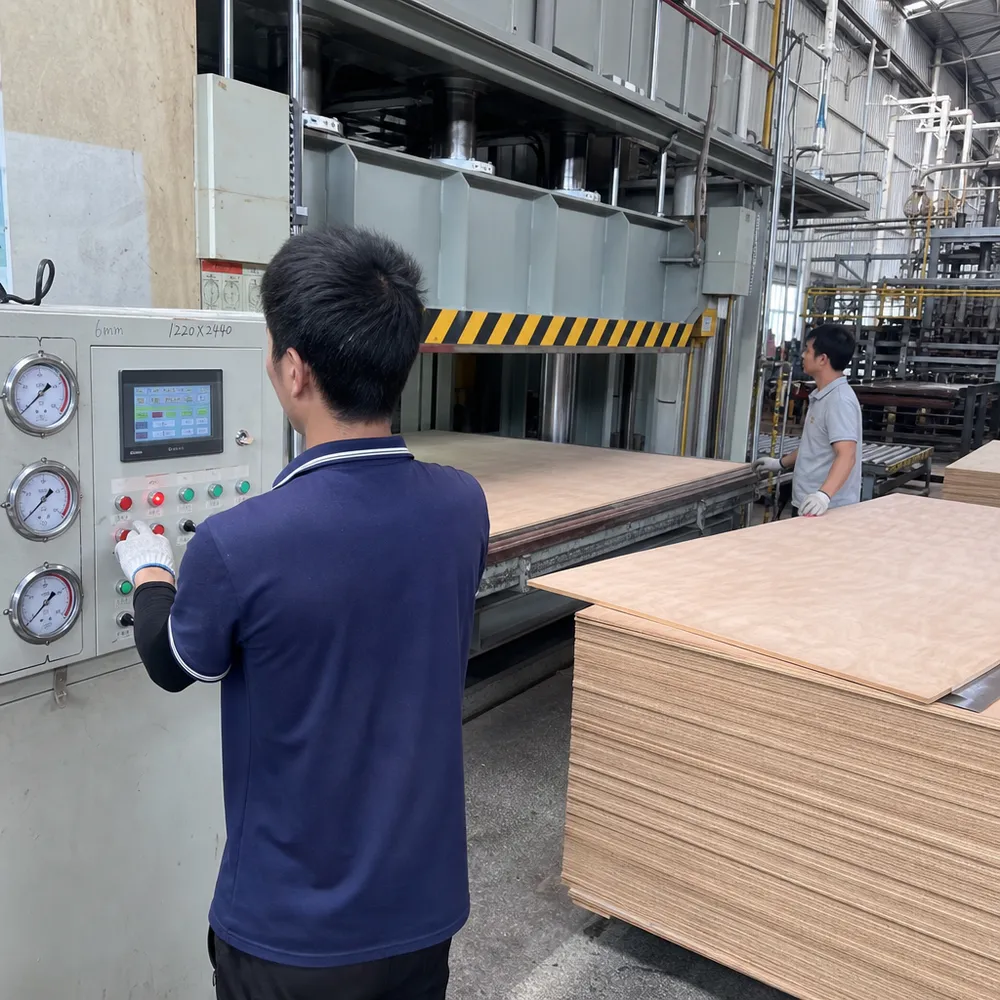
What Consistent Production Delivers
- Consistent bonding across the full 1220×2440mm surface — preventing the delamination and edge-lifting that thin plywood is notorious for when made carelessly
- Calibrated wide-belt sanding line holds ±0.2mm thickness tolerance across the panel surface
- Panels feed cleanly through CNC equipment — eliminating feed errors and machine downtime for your downstream customers
Why Thickness Tolerance Is the Spec That Matters Most
For buyers supplying furniture manufacturers or cabinet shops running CNC equipment, ±0.2mm tolerance is the difference between panels that feed cleanly and panels that cause feed errors and machine downtime. Your downstream customers notice — and they'll come back to you if the panels are consistent.
Market Segments Where 6mm Plywood Moves at Volume
Understanding where 6mm moves — and at what spec — helps you build the right SKU mix and set accurate buyer expectations from the first container.
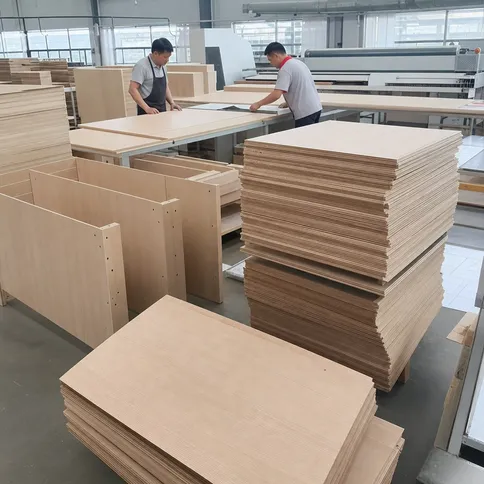
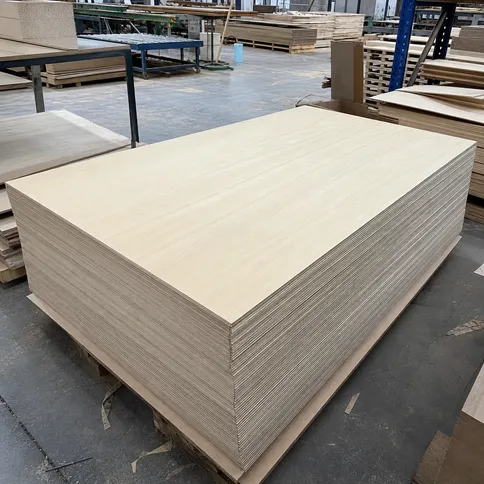
Furniture Backs & Cabinet Panels
Flat-pack furniture manufacturers and kitchen cabinet producers use 6mm as the standard back panel thickness. A single furniture factory running at volume can consume 5,000–15,000 sheets per month on back panels alone.
Key Spec Points
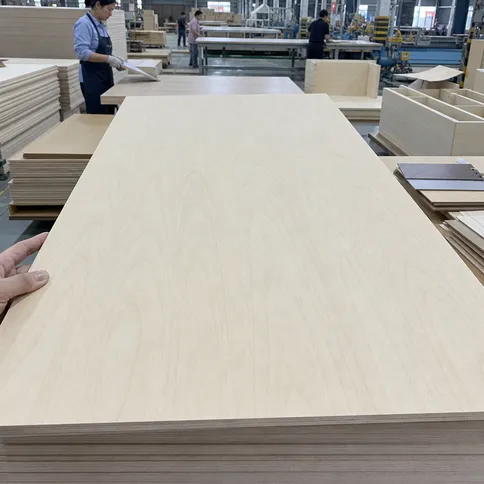
Drawer Bottoms & Interior Box Components
6mm poplar-core plywood is the industry default for drawer bottoms in mid-range and commercial furniture. The weight is low enough that it doesn't add meaningfully to the finished piece, and the cross-grain construction resists the racking loads that solid wood bottoms can't handle as well.
Key Spec Points
Lightweight Wall Cladding & Interior Paneling
Contractors and fit-out companies sourcing for hotel rooms, retail interiors, and commercial office fit-outs use 6mm as a substrate for decorative veneers, laminates, and wallcoverings. The flat surface from our sanding line gives laminate adhesive a consistent bond surface.
Key Spec Points
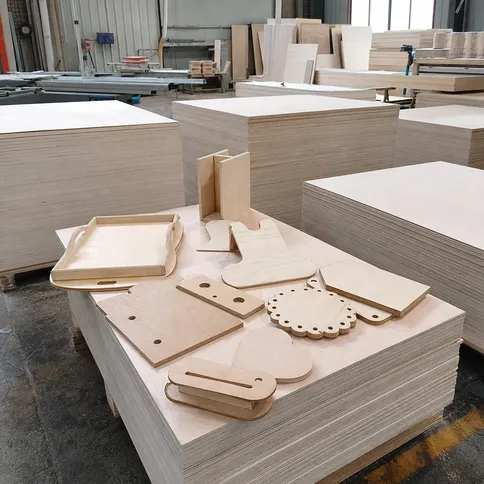
Craft, Display & Light Fabrication
Sign makers, display fabricators, and craft suppliers buy 6mm in mixed-grade lots for cutting, routing, and forming. Order patterns tend to be smaller and more frequent — 500–2,000 sheets per order — but reorder frequency is high and price sensitivity is lower than commodity furniture supply.
Key Spec Points
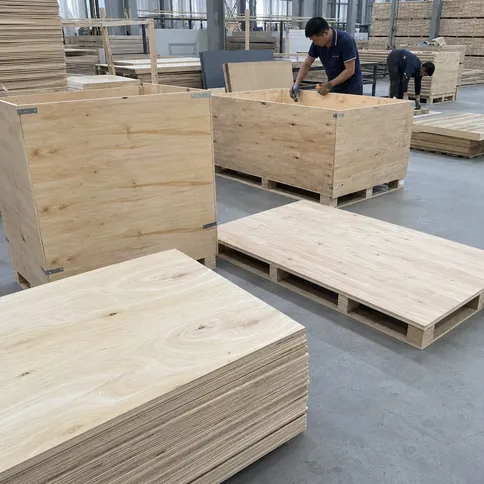
Packaging & Industrial Applications
Thin plywood is used in crate liners, pallet tops, and light-duty packaging where the combination of rigidity and low weight matters. This is a volume-driven segment with less surface grade sensitivity — CC/CC face grade is typically acceptable, which means you can move panels that don't meet furniture-grade surface standards into this channel without discounting.
Key Spec Points
Discuss Volume Requirements for Your Market
Tell us which segment you're supplying and we'll confirm the right face grade, core spec, and order structure for your buyers.
Segment Quick-Reference: Face Grade by Application
| Application Segment | Typical Face Grade | Order Pattern | Key Buyer Spec |
|---|---|---|---|
| Furniture backs & cabinet panels | BB/BB or BB/CC | 5,000–15,000 sheets/month | Surface grade + thickness tolerance |
| Drawer bottoms | BB/CC | High-volume SKU | Poplar core, low weight |
| Wall cladding & interior paneling | BB/BB | Project-based | Flat sanded surface for laminate |
| Craft, display & light fabrication | Mixed grade | 500–2,000 sheets/order | Routability, consistent thickness |
| Packaging & industrial | CC/CC | Volume-driven | Rigidity, low weight, price |
Customization Parameters for 6mm Plywood Orders
6mm plywood is one of the more customizable products in our range. Thin-panel construction allows flexibility in veneer species, core material, and surface treatment without the structural constraints that apply to thicker panels.
Panel Dimensions
Standard & Custom Sizes
Standard is 1220×2440mm. We cut to custom dimensions on confirmed orders — common requests include 1220×2135mm (for markets where 7-foot panels are standard), 915×1830mm (for smaller-format applications), and custom widths for specific machinery requirements.
Pricing note: Custom dimensions are a yield and scheduling question for us, not a tooling cost — so the premium is modest on reasonable order quantities.
Face Veneer Species
Standard & Decorative Options
Poplar face is standard. We can supply birch face, eucalyptus face, or hardwood face veneers (oak, walnut, cherry) for buyers targeting furniture or decorative applications where the face species matters to their downstream customers.
Lead time note: Hardwood face veneers add lead time for material sourcing — confirm availability when you inquire.
Core Construction
Density & Fastening Performance
Poplar core is the default for 6mm. Eucalyptus core is available for buyers who need higher density and screw-holding strength — relevant for applications where the panel will be fastened rather than glued. Mixed hardwood core is available for specific markets.
Glue Specification
Interior vs. Humidity Exposure
MR (urea-formaldehyde, moisture-resistant) is standard for interior applications. WBP (phenolic, waterproof) is available for applications with humidity exposure. Specify your end-use environment when you inquire — we'll recommend the appropriate glue system.
Formaldehyde Emission Grade
Market Compliance
CARB P2 is our baseline for export. E1 and E0 are available for markets with stricter requirements. All emission grades are tested and documented — we don't self-certify.
Surface Treatment
Finish & OEM Options
Sanded both sides (S2S) is standard. One-side sanded (S1S) is available for applications where only one face is visible. We can also supply with a paper overlay or melamine face on confirmed OEM orders.
OEM Branding & Marking
OEM labeling is available — your brand name, logo, and specification marking on the panel edge or bundle wrap. Minimum order quantities for OEM branding apply; confirm when you inquire.
Certification Coverage for Your Import Market
The certification stack we carry was built around the markets where documentation is a procurement gate, not an afterthought.
CARB P2
US MarketCalifornia Air Resources Board Phase 2
Covers formaldehyde emission limits for the US market. CARB P2 is the most stringent standard in North America — meeting it means your panels clear US customs without emission-related holds.
How we operate: We formulate to CARB P2 as the baseline across our export production, not as a special option. Every export batch is produced to the same emission standard — not a separate production run.
FSC Chain of Custody
EU / GlobalForest Stewardship Council Certified
The wood fiber in our panels can be traced to certified forests. If your buyers or their end customers have sustainability sourcing requirements — or if you're supplying into markets where deforestation-linked supply chains create regulatory or reputational risk — FSC documentation is included on request.
EUDR relevance: The EU Deforestation Regulation is tightening traceability requirements for wood products entering the EU. FSC chain-of-custody is one of the cleaner ways to satisfy that documentation burden.
CE Marking
EU MarketEuropean Construction & Building Materials
Covers European construction and building material applications. For buyers distributing into EU markets, CE declaration of conformity is included with shipment documentation.
ISO 9001:2015
QMSQuality Management System
Covers our quality management system — the process controls, inspection protocols, and documentation practices that produce consistent output across batches.
Audit reports are available on request.
Third-Party Pre-Shipment Inspection
Available through SGS, Bureau Veritas, or your preferred agency. We coordinate access — you arrange the inspector.
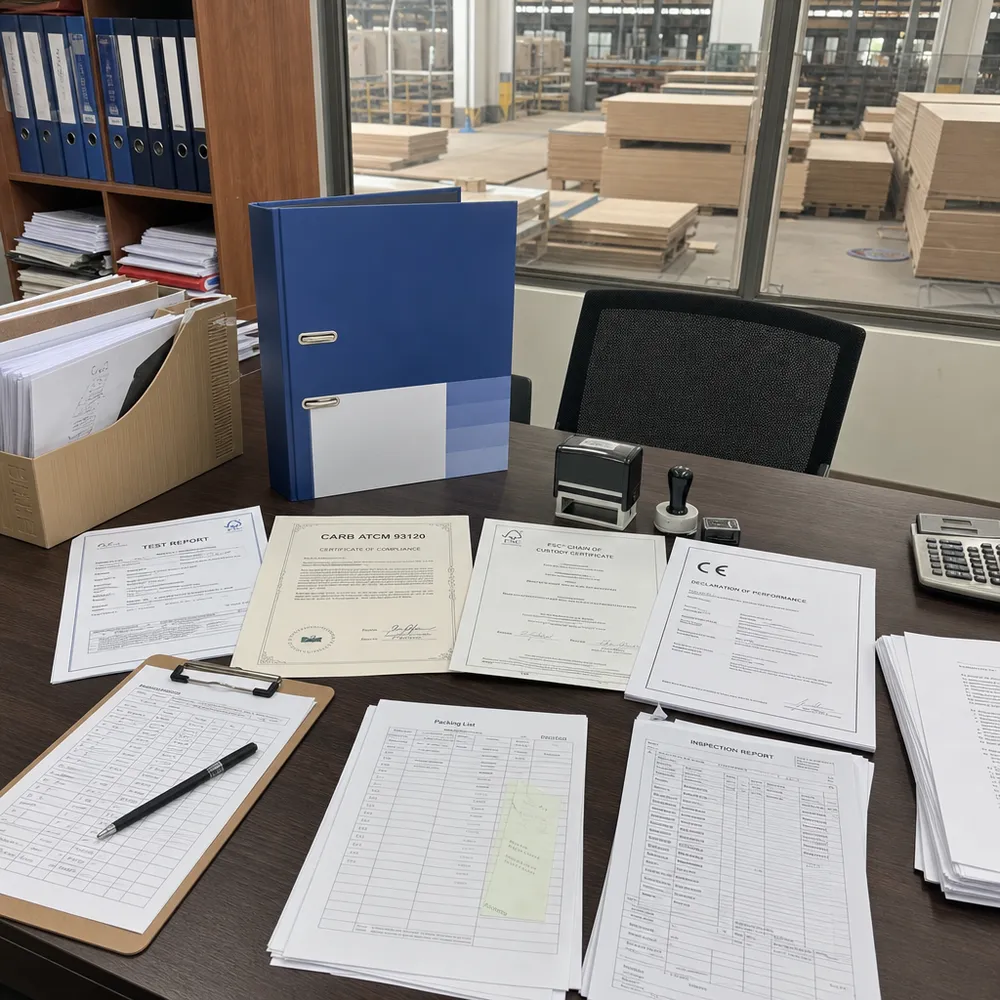
Documentation ready before your shipment leaves the factory
- CARB P2 test reports included with every export batch — not a separate production run
- FSC chain-of-custody documentation on request — supports EUDR traceability requirements
- CE declaration of conformity included with EU shipment documentation
- ISO 9001:2015 audit reports available on request
- Third-party inspection access coordinated through SGS, Bureau Veritas, or your agency
Container Loading and Export Logistics for Thin Plywood
Thin plywood has specific logistics characteristics that affect your landed cost calculation. Understanding them before you finalize your order volume helps you plan accurately.
Container Utilization
6mm panels at 1220×2440mm stack efficiently. A standard 40HQ container typically loads 1,800–2,200 sheets of 6mm plywood depending on stacking configuration and bundle dimensions.
Exact loading quantity depends on packaging method and any mixed-thickness loads — we provide a loading plan with each shipment. At that loading density, your per-sheet freight cost is lower than for thicker panels of the same face area.
Mixed-Thickness Loading
If you're sourcing 3mm, 4mm, and 6mm panels for the same market, we can consolidate into a single container. Mixed loads require careful stacking to prevent panel damage — we plan the load configuration and document it so your receiving team knows what to expect.
Packaging for Ocean Transit
Thin panels are more susceptible to moisture ingress and edge damage during transit than thick panels. Our export packaging for 6mm plywood uses:
- Moisture-resistant film wrapping
- Corner board edge protection
- Bundle strapping
- Bundle marking: specification, quantity, batch number, destination port
For buyers in humid destination markets (Southeast Asia, the Gulf, coastal Australia), we apply additional moisture barrier treatment on request.
Transit Times from Xuzhou Facility
We connect to Qingdao, Shanghai, and Lianyungang ports.
Transit times depend on routing. Contact us for current schedule estimates.
Export Documentation
Prepared as standard for every shipment:
Loading plan included with every shipment. We provide a documented load configuration with each order so your receiving team knows the exact stacking arrangement, bundle count, and specification breakdown before the container arrives.
6mm vs. 8mm vs. 12mm: Choosing the Right Thickness for Your Market
The commercial plywood range covers multiple thickness options. Here's how to think about the choice when building your SKU range or advising downstream buyers.
Thin-panel specialist
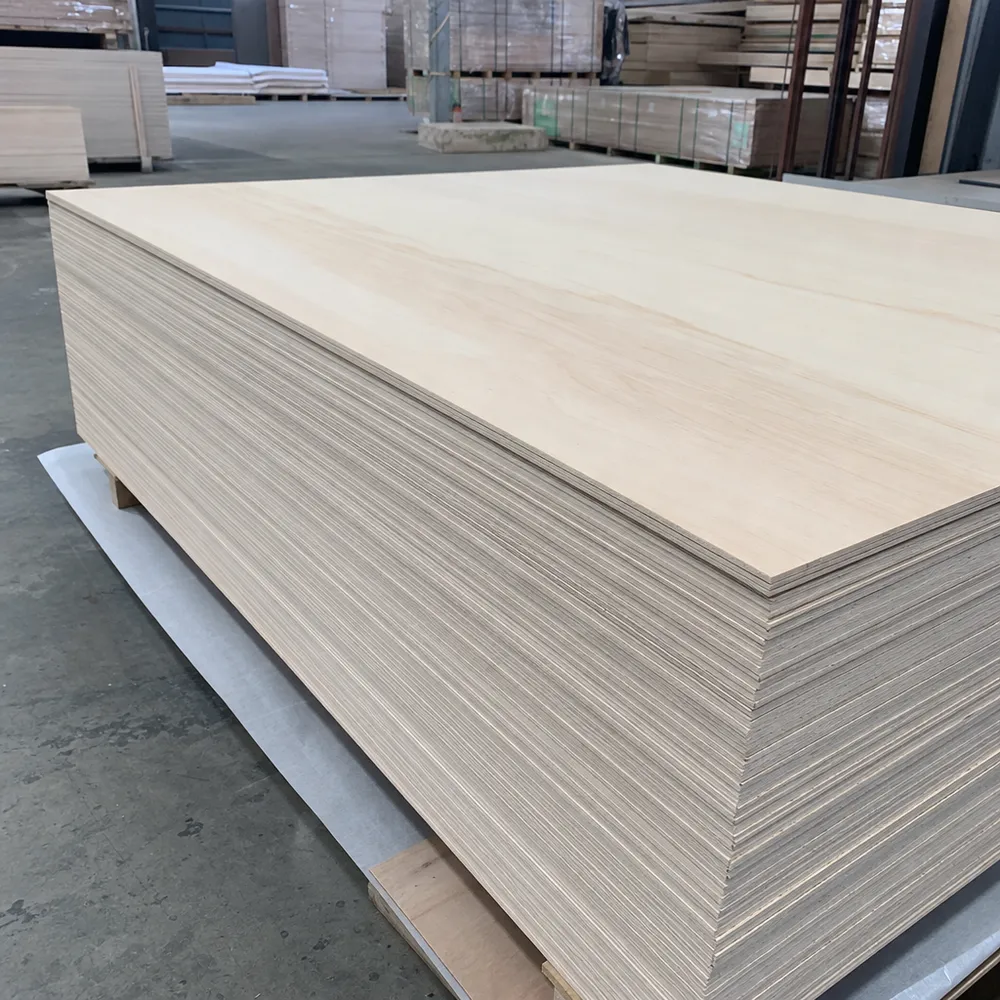
Right spec when:
- Weight and freight cost matter
- Application is non-structural: backs, bottoms, cladding substrates
- Downstream customers work with thin-panel fabrication: CNC routing, laminate bonding, bending
- Thinnest panel with reliable cross-grain stability in standard 3-ply construction
Structural light duty
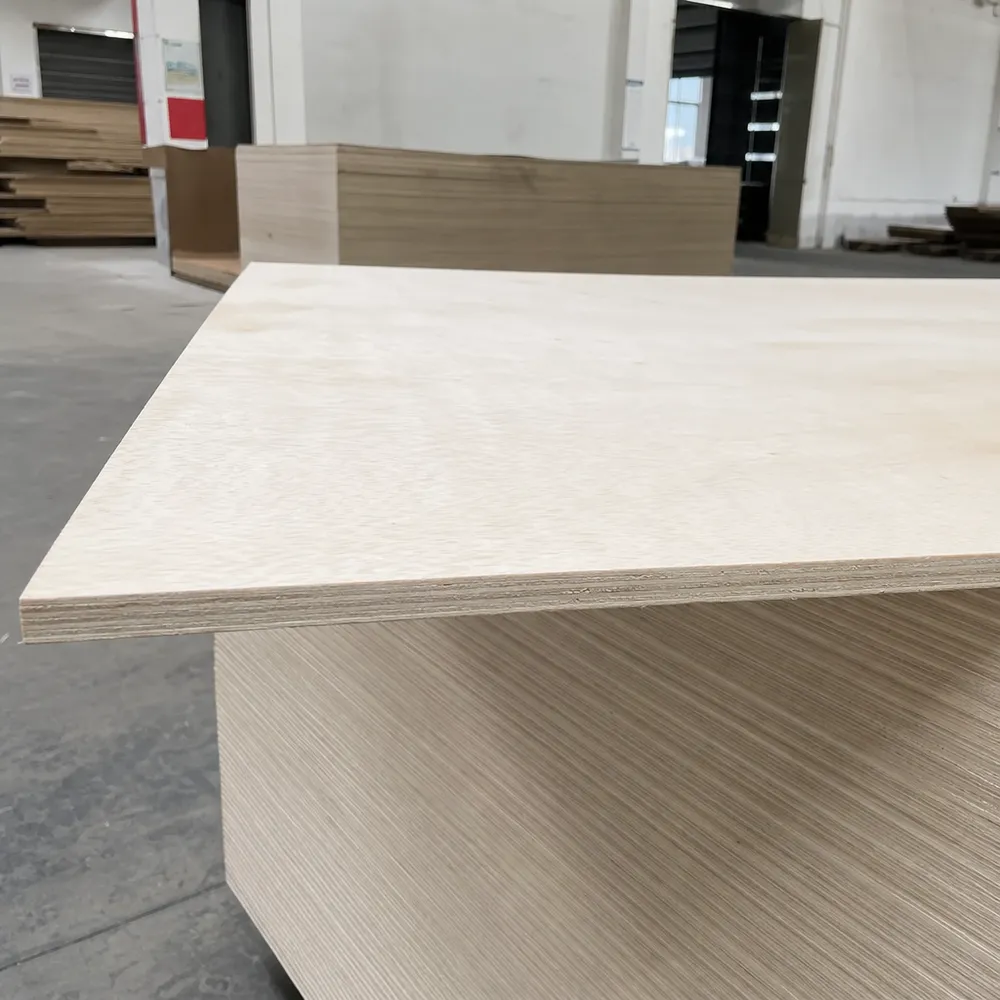
Right spec when:
- More rigidity needed without going to 12mm
- Shelving and light-duty flooring underlayment
- Panel spans a gap rather than being fully supported
- Buyers asking for something between 6mm and 12mm
Broadest market demand
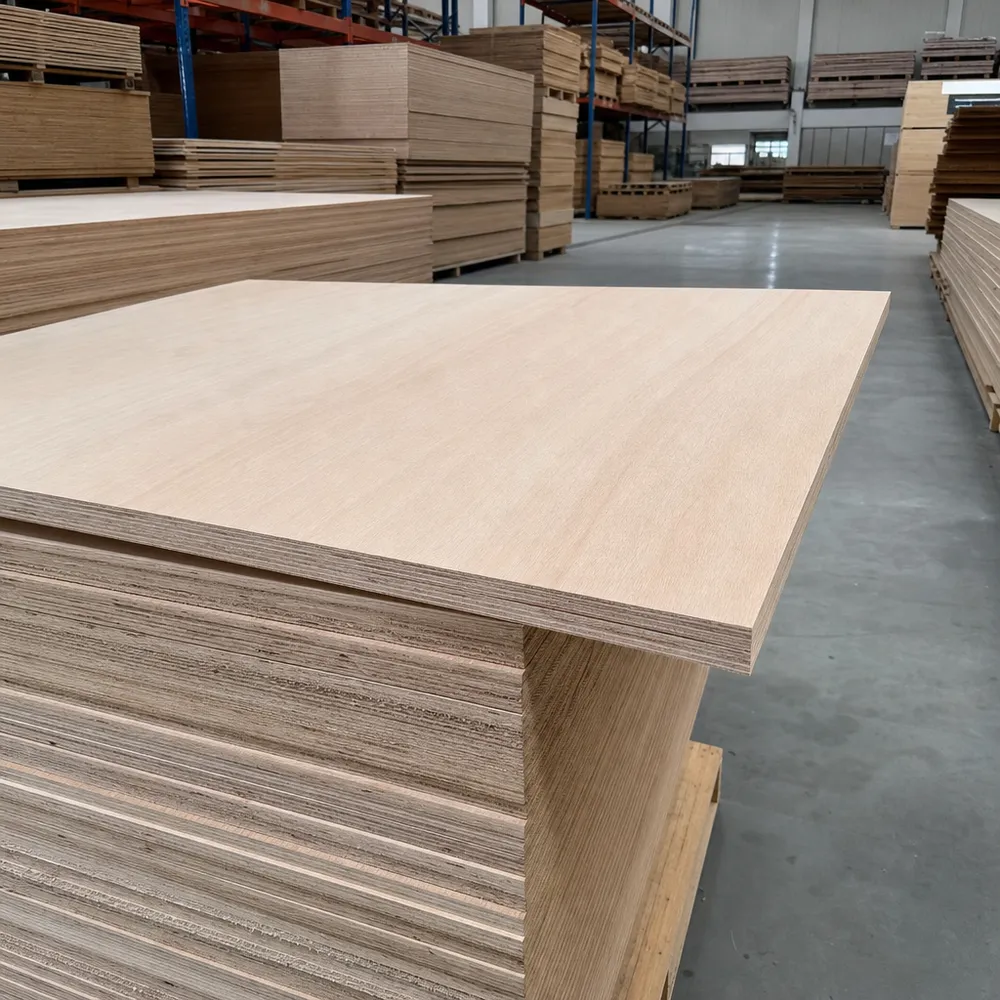
Right spec when:
- Standard structural thickness for furniture carcass construction
- Flooring and load-bearing applications
- Panel carries load
- Most widely specified thickness in commercial plywood — broadest market demand
Building a Thin-Panel SKU Range for Distribution?
The 6mm + 12mm combination covers the majority of market demand. Adding 8mm gives you a mid-spec option for buyers with specific requirements.
If you're building out a distribution range, we can supply all three thicknesses from the same facility with consistent face veneer grade, glue specification, and certification coverage — simplifying your supplier management and documentation.
Sourcing Thin Plywood: Questions We Get Asked
Direct answers to the questions importers, distributors, and OEM buyers ask most often before placing a 6mm plywood order.
MOQ varies by specification. Standard 6mm poplar-core in BB/BB or BB/CC grade: typically one container load (approximately 1,800–2,200 sheets in a 40HQ).
For custom dimensions, custom face veneers, or OEM branding, MOQ is higher — confirm when you inquire with your specific requirements.
We confirm lead time at order placement based on current production schedule.
Standard 6mm with MR glue is rated for interior use only. For exterior or high-humidity applications, specify WBP glue (phenolic resin) — this upgrades the panel to exterior-grade bonding.
The face veneer and core species remain the same; the glue system is what changes. Confirm your end-use environment when you inquire and we'll specify the correct glue grade.
Three thicker veneers (~2mm each). Lower cost. Standard option where cost is the primary driver.
Five thinner veneers (~1.2mm each). Better cross-grain stability and more uniform surface flatness. Specify for laminate bonding and CNC routing.
5-ply construction gives better cross-grain stability because the alternating grain directions are more evenly distributed through the panel thickness.
Yes — our export production is formulated to CARB P2 as the baseline. CARB P2 documentation is included with US-bound shipments as standard.
If you need E0 (ultra-low emission) for specific applications, that's available on request with appropriate documentation.
The 8–12% moisture content we target for export panels is the key variable. Panels shipped at higher moisture content will acclimate to lower humidity environments by releasing moisture — which causes shrinkage and potential warping.
Our pre-press drying and post-press moisture verification keeps export panels within the target range, so they arrive dimensionally stable.
For destination markets with high ambient humidity (Southeast Asia, the Gulf), we recommend storing panels in covered, ventilated warehouses rather than open yards.
Factory Background — Light Reference
We've been producing export-grade plywood since 2008 from our 18,000 m² facility in Xuzhou, Jiangsu. The thin-panel range — including 6mm — runs on the same hot press infrastructure as our full commercial plywood line, with press parameters calibrated specifically for each thickness.
Full commercial plywood line with press parameters calibrated specifically for each thickness in the thin-panel range.
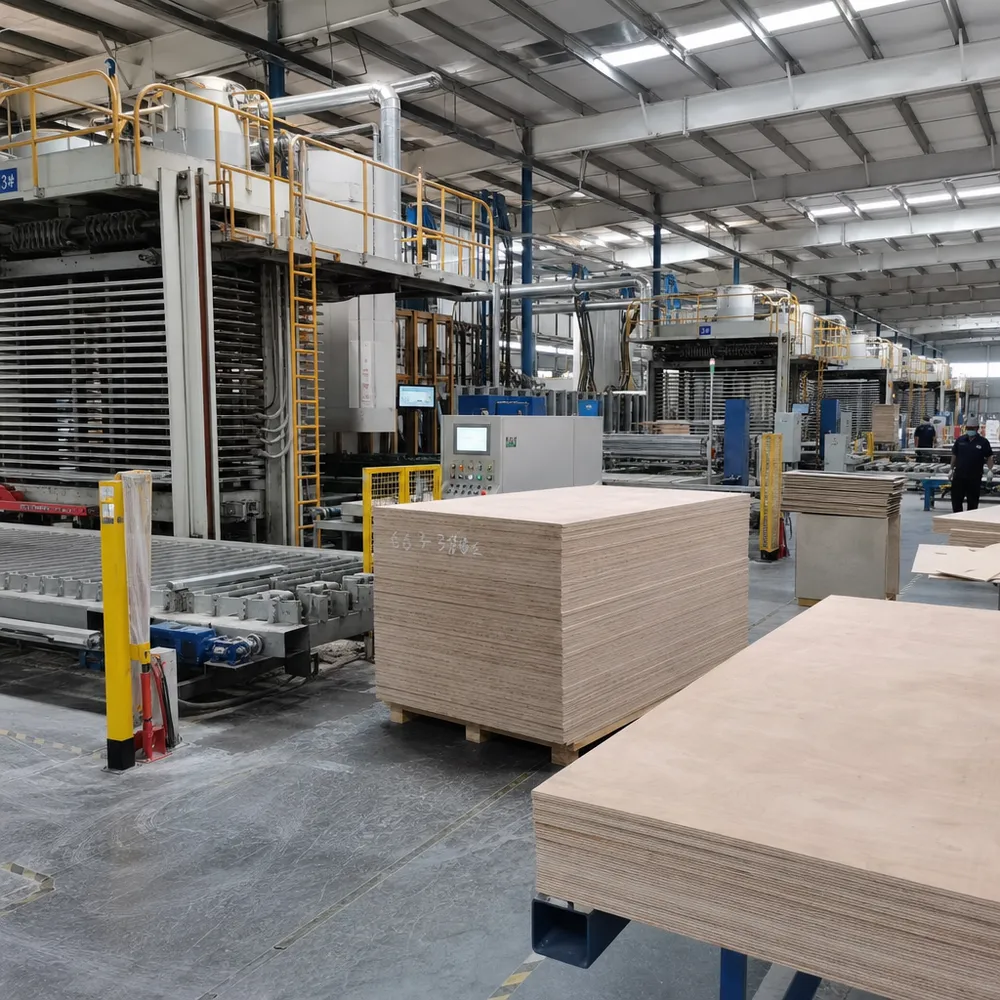
6mm panels run on the same hot press infrastructure as our full commercial line — press parameters calibrated specifically for each thickness.
8mm Plywood Manufacturer — next step up in the thin-panel range.
12mm Plywood Manufacturer — structural mid-range thickness.
WBP-bonded panels for high-humidity and exterior-adjacent applications.
Full commercial plywood range — marine, exterior, furniture, hardwood, structural.
Get a Quote for 6mm Plywood
Send us your target specification and we'll come back with a detailed quote, the relevant certification documentation for your import requirements, and a loading plan for your container.
What to Include in Your RFQ
-
Thickness & face grade
Confirm 6mm nominal; specify face/back grade (BB/BB, BB/CC, etc.)
-
Core species
Poplar, eucalyptus, combi, or hardwood face — each affects weight and price
-
Glue type
MR, WBP, or phenolic — determines moisture resistance and end-use suitability
-
Panel dimensions
Standard 1220×2440mm or custom cut-to-size requirements
-
Emission standard
CARB P2, E0, E1, or E2 — required for North American and EU import compliance
-
Destination market
Determines which certification documentation we prepare for your shipment
-
Target volume & timeline
CBM or container count, and your required delivery window
New to Sourcing Thin Plywood from China?
Tell us your target market and the applications your buyers are running — we'll recommend the right spec combination and suggest a starter order volume based on what moves for our existing distributors in that region.
Xuzhou QD Wood Industry Co., Ltd.
Xuzhou, Jiangsu Province, 221116, China
We typically respond to RFQs within one business day. For urgent inquiries, WhatsApp is the fastest channel.
Explore related thickness options and product categories from our factory.