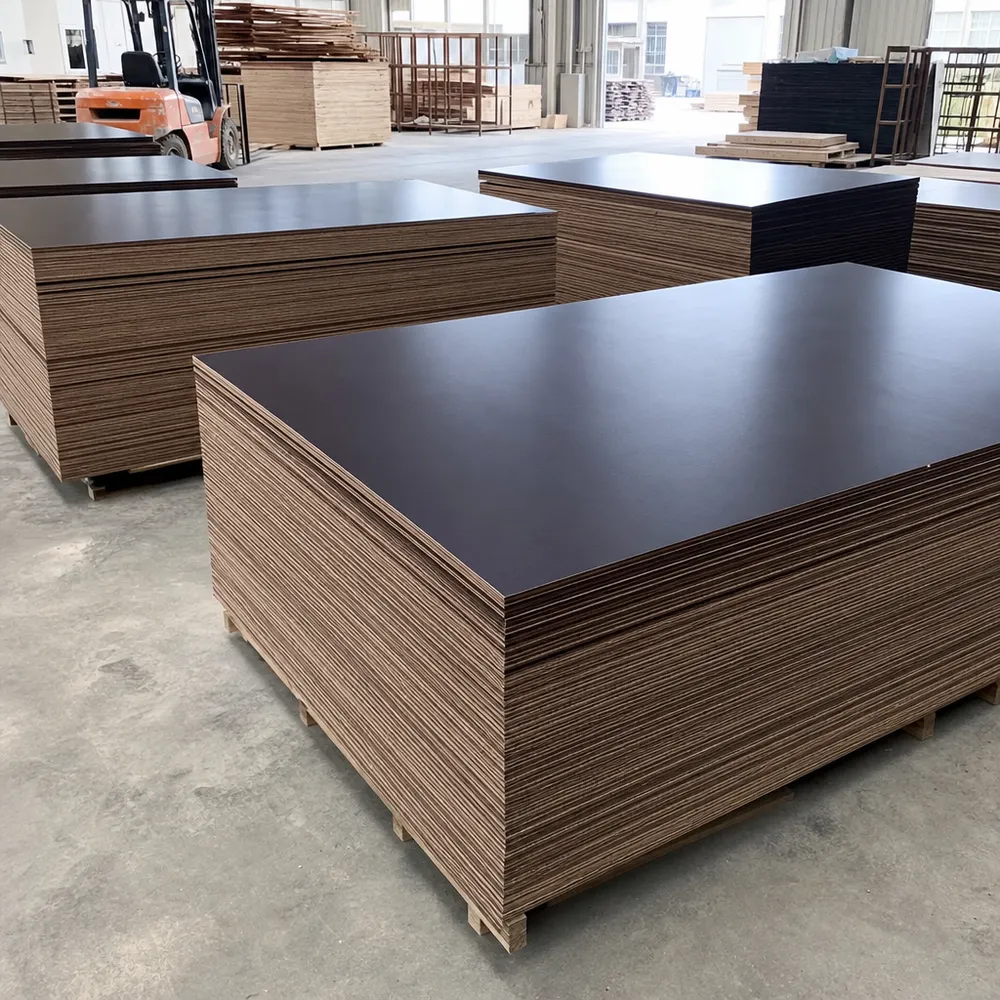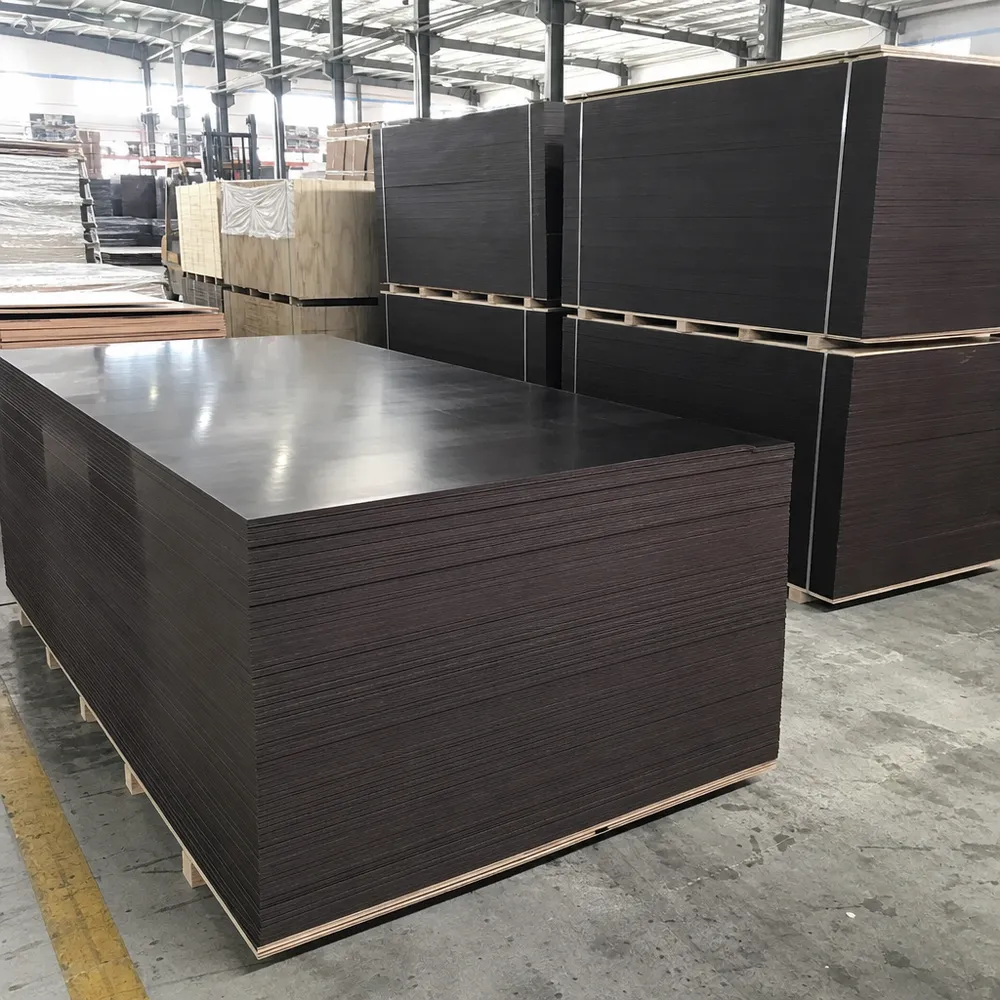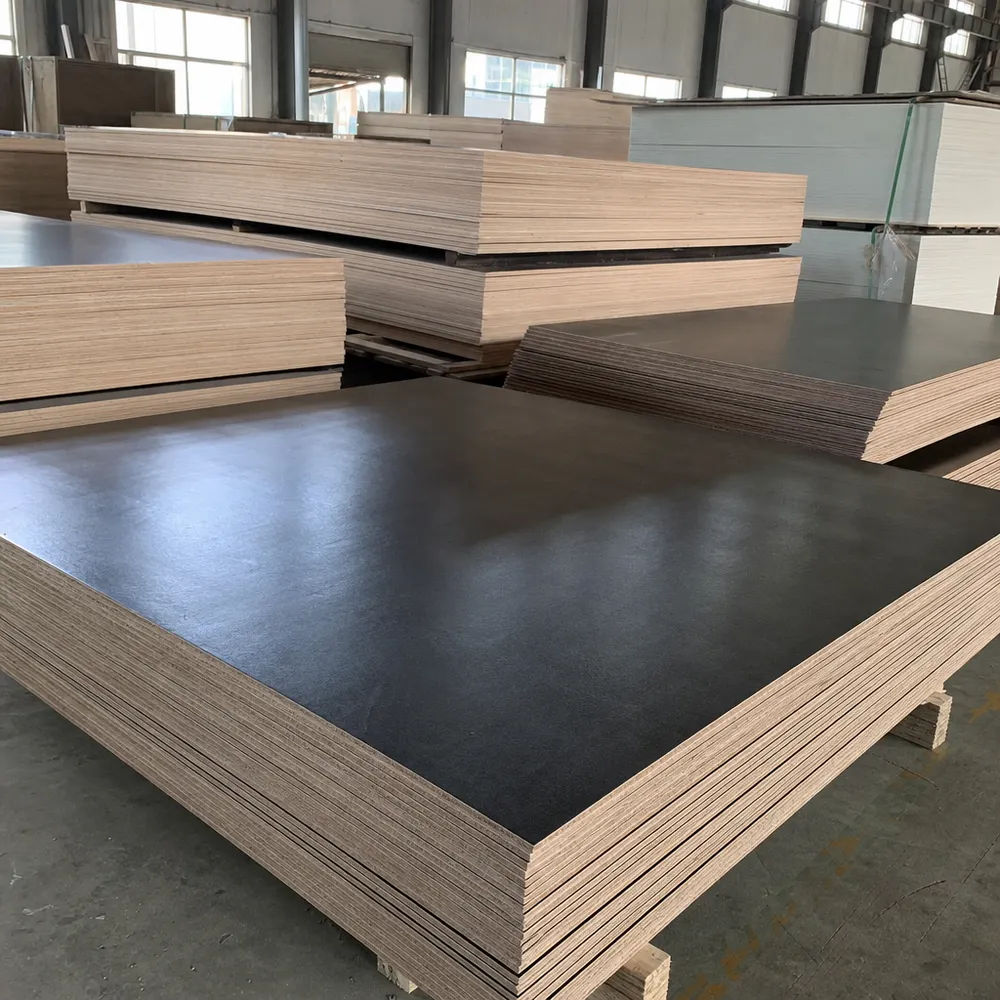
The US Film Faced Plywood Market Has a Structural Problem
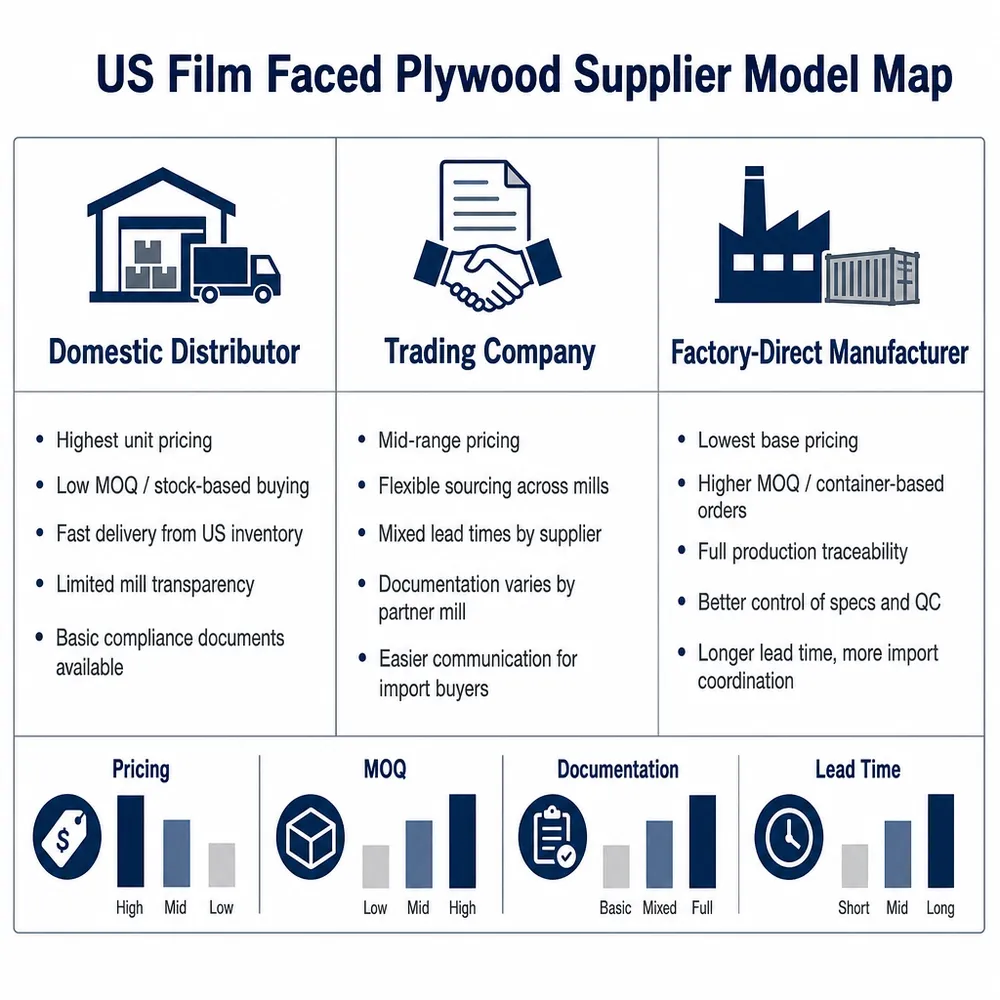
Most buyers searching for film faced plywood suppliers in the USA hit the same wall: a fragmented landscape of domestic distributors, regional lumber yards, and B2B marketplace listings that look like supplier options but aren't really comparable. Some carry a handful of film-faced SKUs alongside their general lumber inventory. Some are trading companies reselling imported panels with a US address. A few are genuine stocking distributors with real depth. And then there's the factory-direct import route, which most buyers don't seriously evaluate until they've been burned on price or documentation once or twice.
The problem isn't that good suppliers don't exist — they do. The problem is that the market doesn't make it easy to tell what kind of supplier you're actually dealing with, what their certification stack covers, or what the real landed cost looks like once you factor in freight, duty, and the documentation overhead that US customs and California's CARB P2 rules require.
This article maps the supplier landscape honestly. We cover 10 real companies operating in this market, explain what each supplier model is actually good for, and give you the evaluation framework to decide which sourcing route fits your volume, timeline, and compliance requirements.
One framing note before the list: this isn't a ranked competition. Film faced plywood suppliers in the USA operate across fundamentally different models — domestic stocking distributors, regional lumber yards, and factory-direct importers don't compete on the same terms. The value of this list is understanding which model fits your situation, not picking a winner from a fake ranking.

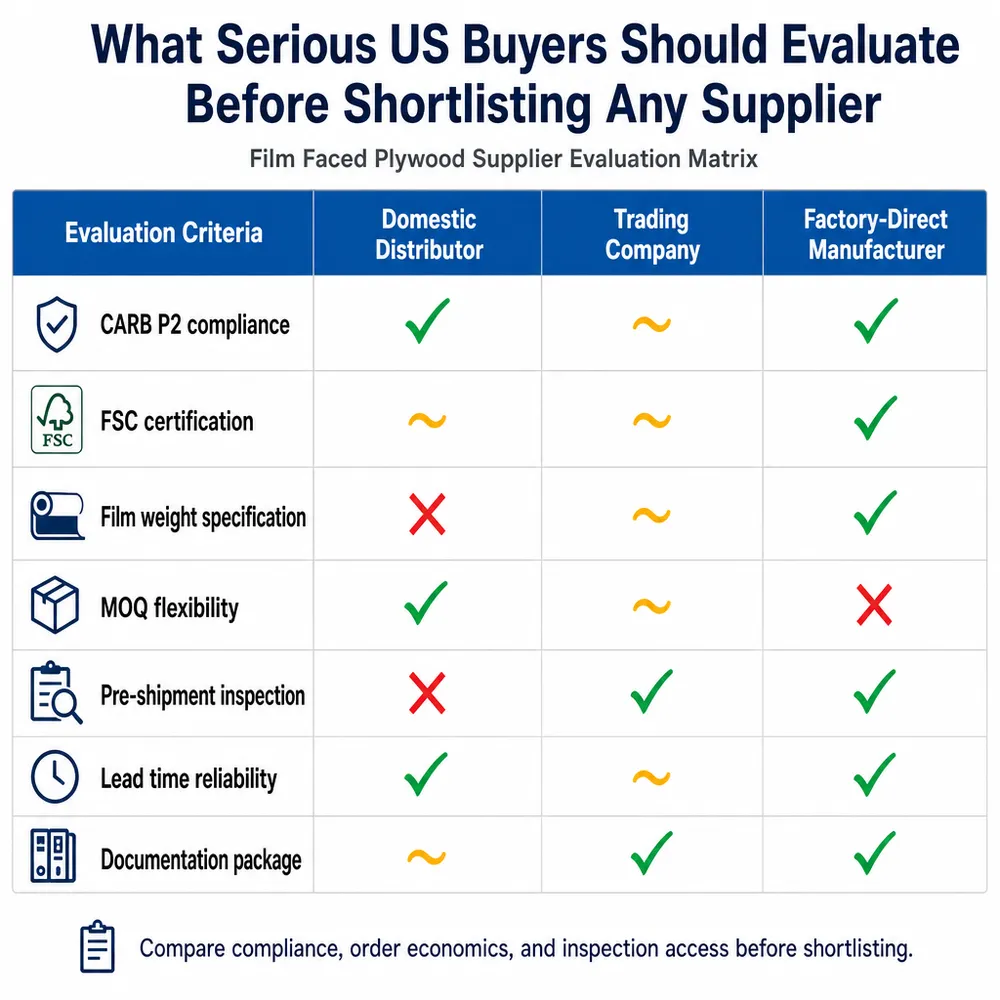
What Serious US Buyers Should Evaluate Before Shortlisting Any Supplier
Before the list, the criteria. These are the gates that separate a supplier who can actually execute your order from one who can take your inquiry.
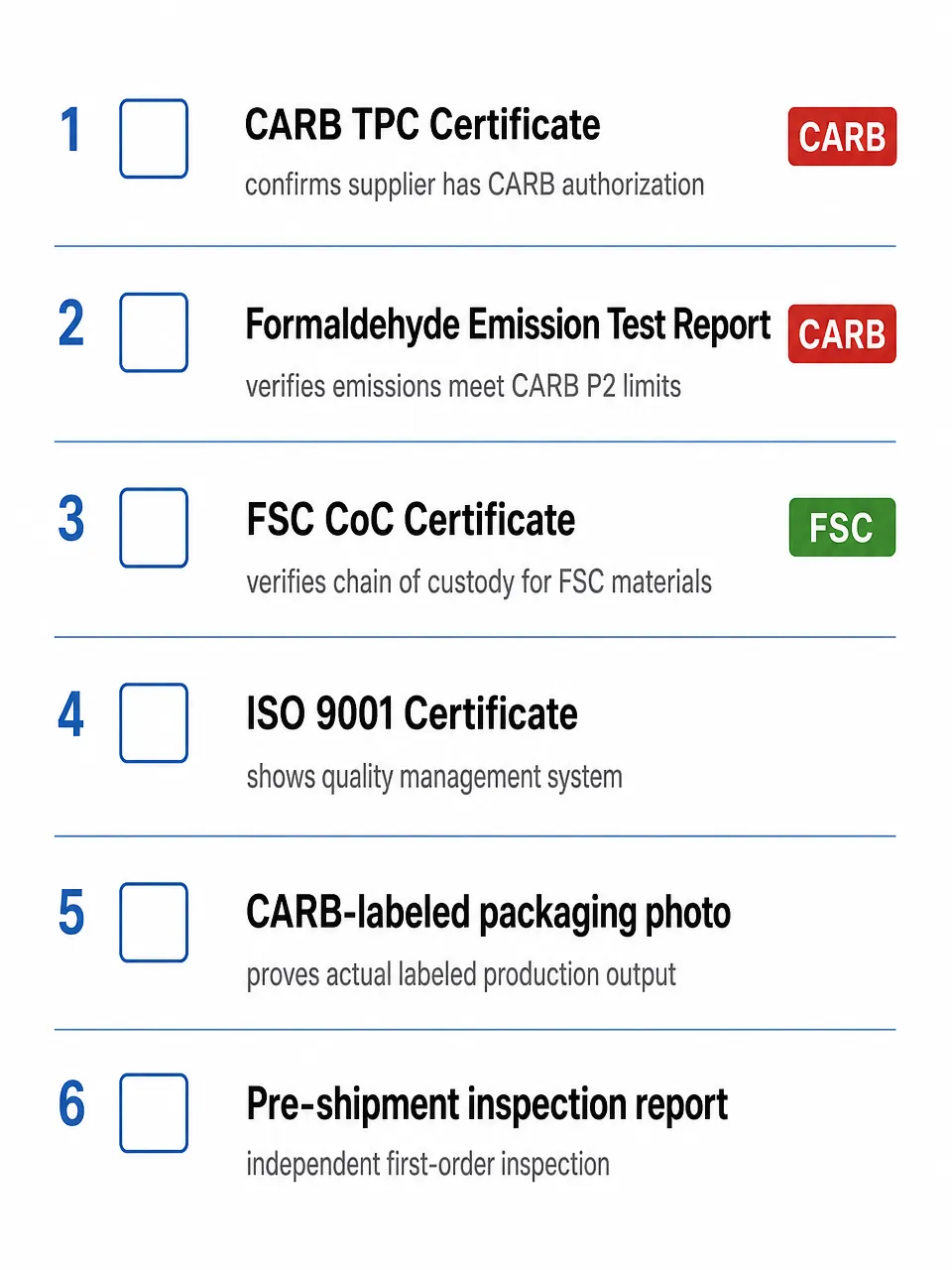
CARB P2 compliance is the first filter for any US buyer, not an optional add-on. California's Air Resources Board Phase 2 standard sets formaldehyde emission limits for composite wood panels — and while it's a California regulation, it's effectively a national procurement standard because most large distributors and construction buyers apply it across their supply chain rather than managing state-by-state compliance. A supplier who can't provide CARB P2 documentation is a compliance liability, not a sourcing option. (We've seen buyers get caught with non-compliant panels mid-project — the remediation cost makes the price savings look irrelevant.)
FSC chain-of-custody documentation matters if your downstream customers have sustainability sourcing policies or if you're supplying into institutional, government, or LEED-certified construction projects. Not every buyer needs it, but if you do need it, you need it from the source — you can't add FSC certification downstream.
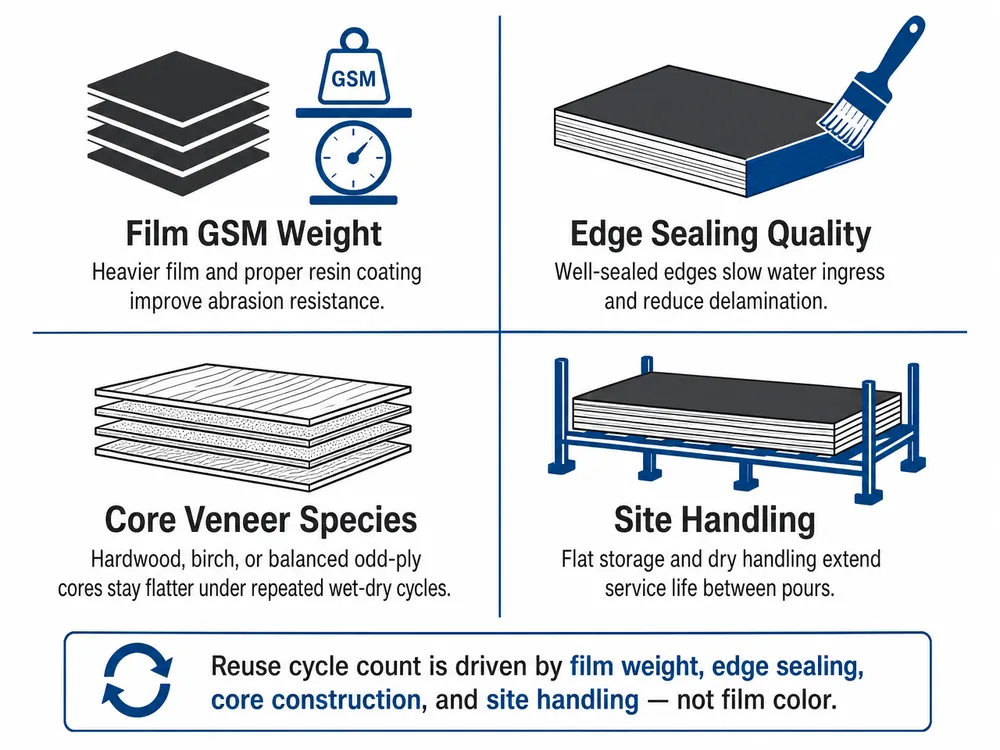
Film weight and phenolic grade determine reuse cycle performance on concrete formwork applications. The market sells panels labeled "film faced plywood" across a wide range — from 120g/m² standard film to 220g/m² heavy phenolic overlays. A 12mm panel with 120g/m² film and a 12mm panel with 200g/m² phenolic film are not the same product at different prices. They're different products for different pour frequencies. Any supplier who can't specify film weight and phenolic density in their product documentation is selling you a commodity, not a specification.
MOQ and container load planning separate stocking distributors from import-capable suppliers. If you're buying at volume — a full 20HQ or 40HQ container — the economics of domestic distribution versus factory-direct import shift significantly. A domestic distributor's convenience premium makes sense for spot orders of 50–100 sheets. It stops making sense when you're moving 500+ sheets per order and the per-sheet markup compounds across your annual volume.
Pre-shipment inspection access is a documentation and quality control gate for import orders. Can the supplier coordinate SGS, Bureau Veritas, or equivalent third-party inspection before the container is loaded? If not, your quality control happens at your receiving dock — after the freight cost is already spent.
Lead time reliability is different from quoted lead time. Ask for the supplier's on-time delivery rate, not just their standard lead time. A supplier quoting 25 days who ships on time 95% of the time is more valuable than one quoting 20 days who regularly slips.
The 10 Suppliers: What Each One Actually Is
1. UFP Industries (Universal Forest Products)
ufpindustries.com — Grand Rapids, MI
UFP Industries is one of the largest wood products distributors in North America, operating through a network of regional distribution centers and manufacturing facilities. Their building products division carries film-faced plywood alongside a broad structural panel range. The scale of their distribution network means regional availability is generally strong — if you're sourcing for a project with a tight delivery window and can't wait for an import cycle, UFP's stocking depth is a real operational advantage.
The trade-off: UFP is a distributor, not a manufacturer. Their film-faced plywood is sourced from multiple suppliers, which means specification consistency across orders isn't guaranteed the way it is when you're buying direct from a single factory. For buyers who need consistent film weight and core construction across repeat orders, that variability is worth factoring in.
2. Weyerhaeuser
weyerhaeuser.com — Seattle, WA
Weyerhaeuser is primarily a timberlands and engineered wood products company — their core business is structural lumber, OSB, and engineered wood systems. They carry plywood products through their distribution channels, but film-faced formwork plywood is not a core SKU for them. If you're sourcing film-faced panels specifically for concrete formwork applications, Weyerhaeuser's product depth in this category is limited compared to dedicated panel distributors.
Where Weyerhaeuser adds value: if you're already sourcing structural lumber and engineered wood from them and need to consolidate a supplier relationship, they can sometimes accommodate film-faced panel orders through their distribution network. Don't expect OEM capability or custom specification work.
3. Roseburg Forest Products
roseburg.com — Springfield, OR
Roseburg is a vertically integrated forest products company with manufacturing operations across the Pacific Northwest. Their panel products division covers plywood, MDF, and particleboard. Film-faced plywood appears in their product range, primarily targeting the construction and industrial panel market in the western US.
Roseburg's manufacturing integration gives them more process control than a pure distributor — they're not just reselling imported panels. For buyers in the western US who prioritize domestic supply chain and shorter transit times, Roseburg is a credible option. Their certification coverage for CARB P2 is solid given their California market exposure.
4. Boise Cascade Building Products
bc.com — Boise, ID
Boise Cascade operates one of the most extensive building products distribution networks in the US, with over 40 distribution centers nationwide. Their panel products division stocks film-faced plywood for the construction market. The distribution network depth means you can source regionally rather than managing a single national supplier relationship — useful if you have multiple project sites in different states.
The limitation is the same as other large distributors: Boise Cascade is moving product through a distribution layer, not manufacturing it. Custom specifications, non-standard dimensions, and OEM requirements aren't in their model. For standard commodity SKUs with fast replenishment, they're efficient. For specification-driven procurement, you're working around their catalog.
5. Timber Products Company
timberproducts.com — Springfield, OR
Timber Products is a privately held manufacturer and distributor of hardwood plywood, softwood plywood, and specialty panels. They have manufacturing operations in the Pacific Northwest and distribution reach across the US. Their specialty panel capabilities — including overlaid and film-faced products — are more developed than most general lumber distributors.
For buyers sourcing film-faced plywood for industrial or specialty applications, Timber Products' manufacturing background means they can engage on specification questions more substantively than a pure distributor. They're worth a direct conversation if your application has specific film or core requirements.
6. States Industries
statesindustries.com — Eugene, OR
States Industries focuses on hardwood plywood and specialty panel products, with manufacturing in Oregon. Their product range includes overlaid panels and specialty surfaces. Film-faced plywood for concrete formwork is adjacent to their core product focus, which is more oriented toward furniture and architectural panel applications.
If your film-faced plywood requirement is for architectural or decorative applications rather than heavy formwork, States Industries' surface quality focus is relevant. For high-cycle concrete formwork with heavy phenolic film requirements, their product depth in that specific segment is more limited.
7. Murphy Plywood
murphyplywood.com — Eugene, OR
Murphy Plywood is a specialty plywood distributor with a focus on hardwood and decorative panel products. They carry overlaid and film-faced panels for industrial and construction applications. Their specialty panel knowledge is deeper than a general lumber yard, and they can engage on product specifications more specifically.
Murphy is a regional player — strong in the Pacific Northwest, with more limited reach in other US markets. If you're sourcing for projects in the western US and want a distributor with genuine panel product expertise rather than a general lumber yard that happens to stock film-faced panels, Murphy is worth including in your shortlist.
8. Pacific Coast Building Products
pacificcoastbp.com — Sacramento, CA
Pacific Coast Building Products is a regional building materials distributor with strong coverage in California and the western US. Their panel products inventory includes film-faced plywood for the California construction market. Given their California base, CARB P2 compliance is a standard requirement in their supply chain — they're not going to stock non-compliant panels for a market where CARB enforcement is active.
The regional focus is both a strength and a limitation. Strong for California and western US projects; less useful if your distribution footprint extends to the Midwest or East Coast.
9. Patriot Timber Products
patriottimber.com — Greenville, SC
Patriot Timber Products is a southeastern US distributor of hardwood and softwood panel products, including film-faced plywood for the construction and industrial market. Their southeastern US coverage fills a geographic gap that Pacific Northwest-focused distributors leave open — if your projects or distribution network is concentrated in the Southeast, Patriot's regional positioning is relevant.
Their product range covers standard film-faced panel SKUs for formwork and industrial applications. For buyers in the Southeast who want a regional distributor relationship rather than managing a direct import program, Patriot is a practical option for standard volume orders.
10. Coastal Forest Resources
coastalforest.com — Weldon, NC
Coastal Forest Resources is a southeastern US wood products distributor covering plywood, lumber, and panel products for the construction and industrial market. Their geographic coverage in the Carolinas and mid-Atlantic region complements the Pacific Northwest-heavy distribution landscape for film-faced panels.
For buyers with project concentration in the mid-Atlantic or southeastern US, Coastal Forest provides regional stocking access without the lead time of a direct import program. Standard film-faced panel SKUs for construction formwork are within their product range.
What the Local Supplier Landscape Actually Costs You
The 10 suppliers above represent the real US market for film-faced plywood — a mix of large national distributors, regional specialists, and vertically integrated manufacturers. Each has genuine strengths. Before explaining where factory-direct import changes the economics, it's worth being direct about when local supply is the right answer.
Local supply makes sense when:
- You need panels within 5–10 business days for an active project
- Your order is under 100 sheets and doesn't justify import logistics
- You're in a market where a regional distributor has strong stocking depth
- You need emergency replacement panels mid-project
These are real scenarios, and no factory-direct supplier — including us — can compete with a local distributor's speed on a 50-sheet urgent order. That's not a trade-off worth pretending doesn't exist.
Where the economics shift is at repeat volume. A domestic distributor's margin on imported film-faced plywood typically runs 25–40% above the landed cost of a direct import order. On a 500-sheet order, that margin differential is meaningful. On an annual procurement program of 5,000+ sheets, it's a significant line item.
The other cost that doesn't show up in the per-sheet price is specification consistency. Most domestic distributors source from multiple suppliers across different production runs. The 12mm film-faced panel you bought in March may have a different film weight, core construction, or moisture content than the same SKU you buy in September — because the distributor's supplier changed, or they switched to a different import source. For buyers running concrete formwork programs where reuse cycle performance is a project cost variable, that inconsistency has a real dollar value.
(We've had buyers come to us specifically because they were getting inconsistent reuse cycles from panels that looked identical on the spec sheet. When we dug into it, the film weight was varying between 120g/m² and 160g/m² across different shipments from their distributor. That 40g/m² difference is the difference between 6 pours and 10 pours on a standard concrete wall form.)
FOB Pricing Context: What Film Faced Plywood Actually Costs at the Source
US buyers often don't have a clear reference point for what film-faced plywood should cost at the factory level. Here's a realistic FOB price framework based on current market conditions:
| Thickness | Film Weight | Core Species | FOB Price Range (per sheet, USD) |
|---|---|---|---|
| 12mm | 120g/m² standard | Poplar | $8–$11 |
| 15mm | 160g/m² phenolic | Poplar | $11–$14 |
| 18mm | 200g/m² phenolic | Poplar/Hardwood mix | $14–$18 |
| 21mm | 200g/m² phenolic | Hardwood | $17–$22 |
| 18mm | 220g/m² heavy phenolic | Hardwood | $18–$24 |
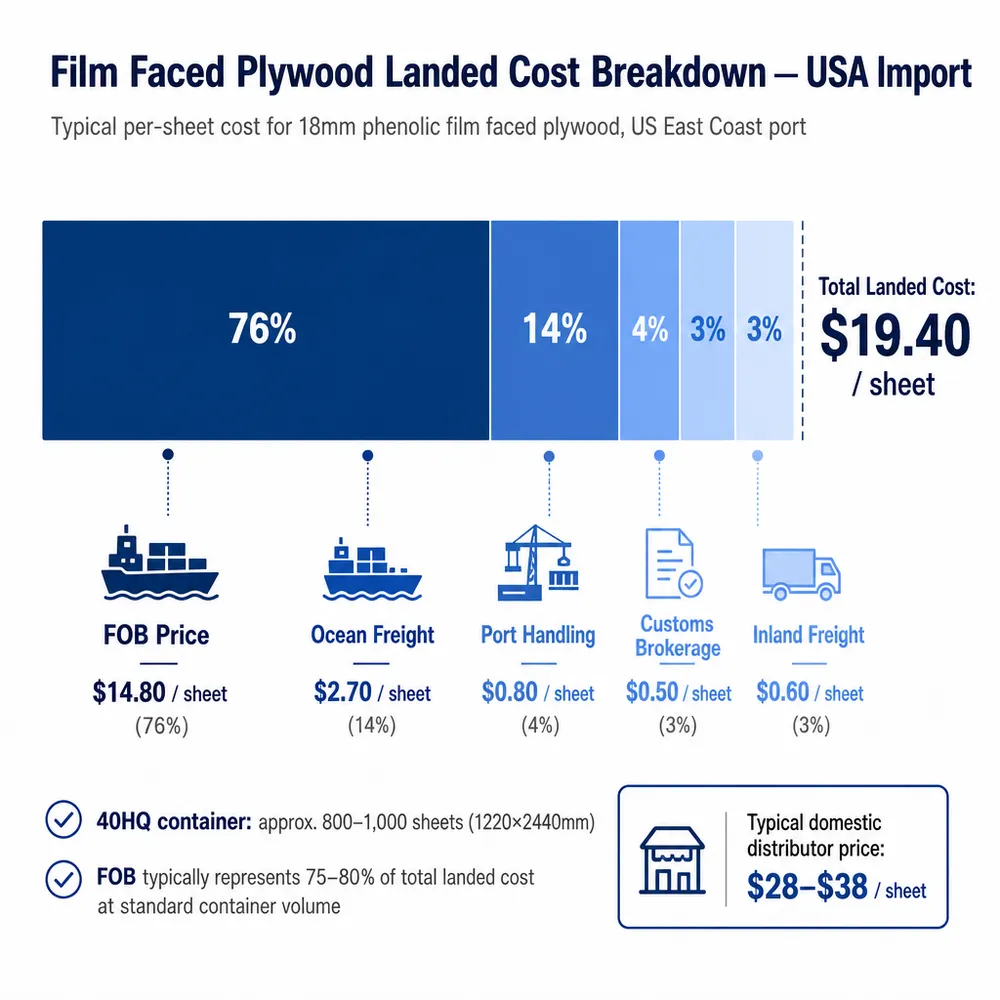
These are FOB Qingdao/Shanghai reference ranges — actual pricing varies with order volume, specification, and market conditions. To calculate landed cost to a US port, add:
- Ocean freight: approximately $1,800–$2,400 per 40HQ container (varies by destination port and market conditions)
- US import duty: 0% for most plywood under HTS 4412 (verify current rates — tariff schedules change)
- Port handling and inland freight: $300–$600 per container to your warehouse
- Customs brokerage: $150–$300 per shipment
A 40HQ container holds approximately 800–1,000 sheets of 18mm film-faced plywood (1220×2440mm), depending on stacking configuration. At that volume, the per-sheet freight and handling cost runs roughly $2.50–$3.50 — which means your total landed cost per sheet is typically $17–$22 for 18mm phenolic film-faced plywood, compared to $28–$38 for the same specification through a domestic distributor.
That $10–$16 per-sheet difference is the convenience premium you're paying for local stocking. On a 1,000-sheet annual program, it's $10,000–$16,000. On a 5,000-sheet program, it's $50,000–$80,000. Whether that premium is worth paying depends entirely on your order frequency, urgency profile, and whether your volume justifies building a direct import program.
CARB P2 Compliance: The Documentation Gate Most Buyers Underestimate
CARB P2 is not just a California issue. The California Air Resources Board's formaldehyde emission standard for composite wood panels has become the de facto national standard for US commercial construction and distribution because most large buyers apply it uniformly rather than managing state-by-state compliance. If you're distributing film-faced plywood to contractors, builders, or industrial buyers anywhere in the US, CARB P2 documentation is a procurement gate you'll encounter.
The compliance chain works like this: the panel manufacturer must be CARB-certified, the importer of record must be registered with CARB, and the documentation must follow the panel through the supply chain. A panel that was manufactured to CARB P2 emission standards but lacks the documentation trail is still a compliance liability — you can't retroactively certify a panel that arrived without the paperwork.
What this means practically: when you're evaluating film faced plywood suppliers in the USA or sourcing direct from a factory, the question isn't just "is this panel CARB P2 compliant?" It's "can you provide the complete CARB documentation package — manufacturer certification, test reports, and chain-of-custody records — in a format that satisfies US customs and downstream buyer requirements?"
Most trading companies and marketplace aggregators can't answer that question cleanly. They're reselling panels from factories they don't control, and the documentation trail is often incomplete or inconsistent. We've seen buyers clear customs with panels that had CARB documentation, then fail a downstream buyer's compliance audit because the documentation format didn't meet the buyer's internal standard. The paperwork has to be right, not just present.
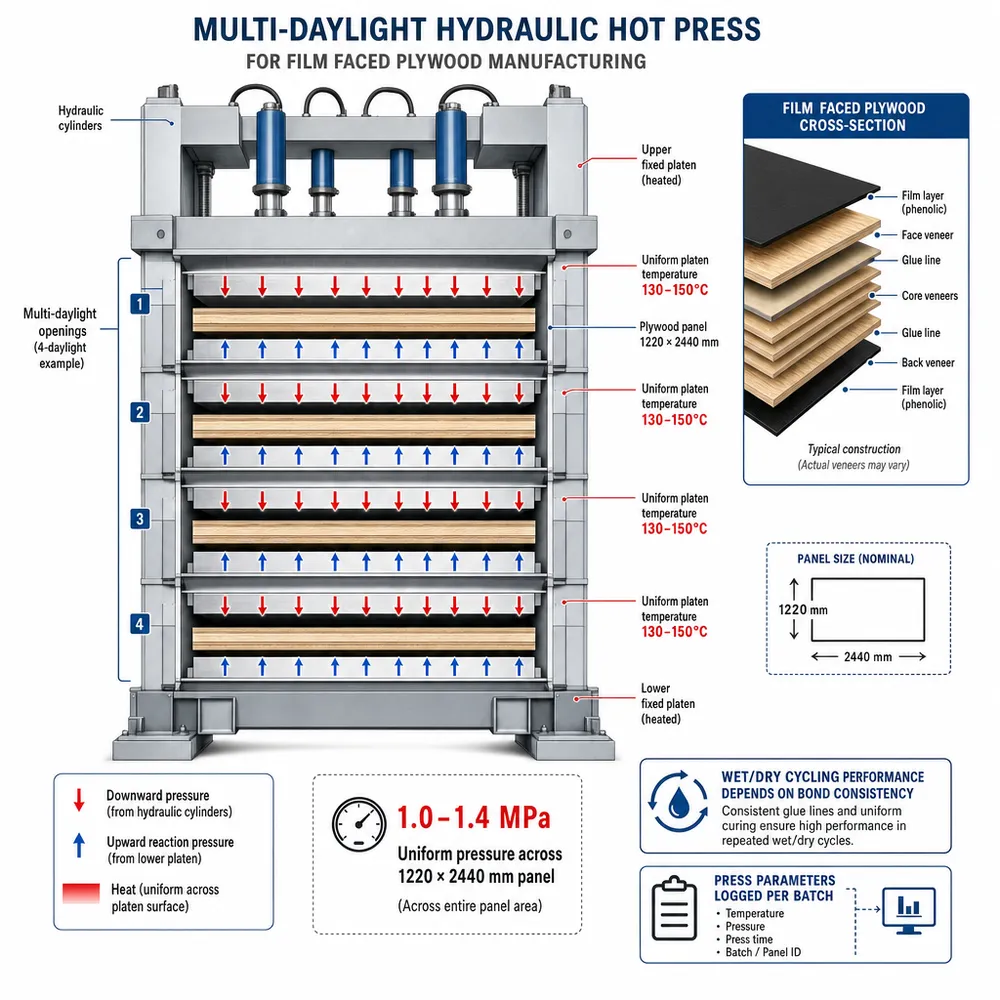
For phenolic film faced plywood specifically — the heavy-duty formwork grade — CARB P2 compliance is particularly important because phenolic resin systems can vary significantly in formaldehyde emission depending on resin formulation and press conditions. A panel that looks like a phenolic product isn't necessarily formulated to CARB P2 limits. The certification has to be tied to the specific production process, not just the product category.
Factory-Direct Import: Where QDPlywood Fits in This Landscape
We're not a US distributor. We're the factory — Xuzhou QD Wood Industry Co., Ltd., operating since 2008 out of Xuzhou, Jiangsu Province, with 6 production lines and 450,000 m³ annual capacity. We export directly to importers, distributors, and project buyers in North America, Europe, the Middle East, and Australia. No trading company layer between our production floor and your container.
The reason we belong in this list isn't to displace the domestic distributors above — they serve real needs that we can't match on speed and local availability. The reason we belong here is that for buyers running repeat-volume procurement programs, the factory-direct economics are materially different, and most buyers don't have a clear picture of what that difference actually looks like until they run the numbers.
Here's what the factory-direct model gives you that the domestic distribution channel doesn't:
Specification lock. When you buy from us, you're buying from the factory that makes the panel. The film weight, core construction, veneer species, and press parameters are fixed to your specification and documented per batch. If you order 18mm panels with 200g/m² phenolic film and poplar core in March, the panels you receive in September are made to the same specification — because we're running them on the same production line with the same process parameters. That consistency is what drives predictable reuse cycle performance on formwork programs.
CARB P2 as standard, not an add-on. Our CARB P2 certification covers our film-faced plywood production line as a standard certification, not a special-order option. The documentation package — manufacturer certification, emission test reports, chain-of-custody records — is prepared to US customs standard and included with every US-bound shipment. We've been through enough US customs cycles to know what documentation gaps cause clearance delays, and we prepare the paperwork to avoid them.
Full export documentation package. Every US shipment includes commercial invoice, packing list, bill of lading, certificate of origin, phytosanitary certificate, CARB P2 documentation, and FSC chain-of-custody records (for FSC-certified orders). Third-party pre-shipment inspection through SGS or Bureau Veritas is available on request — we coordinate access, you arrange the agency.
OEM capability without tooling overhead. Custom dimensions, film colors, core constructions, and panel markings are available on confirmed orders. Plywood is cut-to-size, not molded — custom dimensions are a scheduling and yield question, not a capital investment. If your downstream customers need panels marked with your brand or cut to non-standard dimensions, we can accommodate that without the tooling cost that would apply in other manufacturing categories.
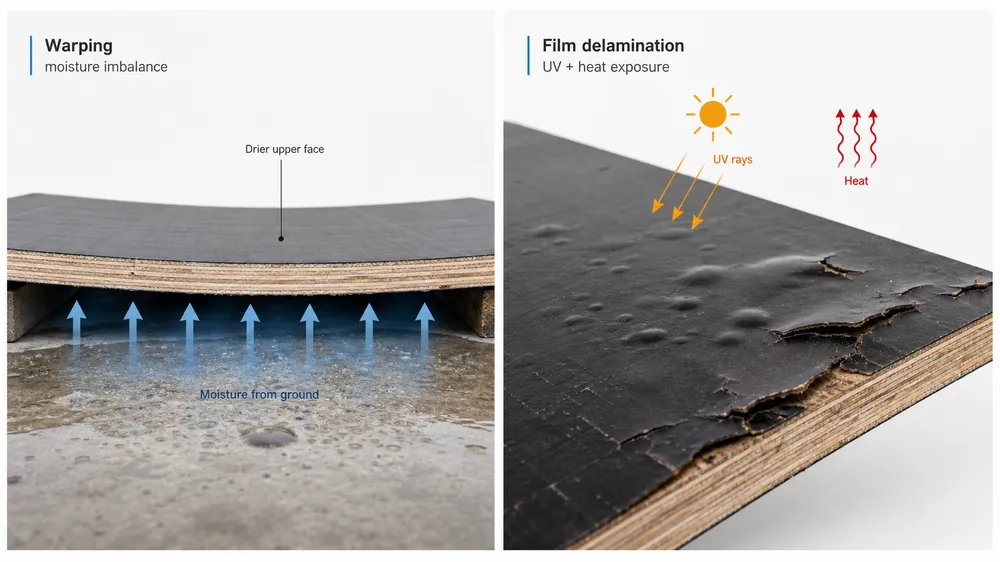
Moisture control built into the process. We target 8–12% moisture content for export-grade panels, achieved through controlled drying and pre-press moisture verification — not tested at the end and hoped for. Panels that arrive at your warehouse with moisture content outside that range warp, delaminate, or cause dimensional problems in downstream processing. We've been solving that specific failure mode since 2008, and it's why our panels arrive flat and stay flat.
Our facility covers 18,000 m² in Sanbao Industrial Park, Xuzhou — a well-established wood processing cluster with direct rail and road access to Qingdao, Shanghai, and Lianyungang ports. Transit time to US East Coast ports runs approximately 28–35 days; West Coast ports run 18–25 days. We provide container loading plans with every shipment so your receiving team knows exactly what's in the container before it arrives.
For buyers who want to understand the full film-faced plywood specification range — thickness options, film grades, core constructions, and application guidance — our category page covers the technical detail. If you're earlier in the evaluation process and want a structured framework for comparing specifications, the film faced plywood buying guide walks through the selection criteria in detail.
Which Sourcing Route Fits Your Situation
The honest answer is that the right sourcing route depends on three variables: order volume, urgency profile, and specification requirements. Here's how to think through it:
Use a domestic distributor when:
- Your order is under 200 sheets and you need delivery within 2 weeks
- You're sourcing for a single project with no repeat volume
- You need emergency replacement panels for an active job site
- Your specification is standard and the distributor's stocking SKUs match it exactly
Consider factory-direct import when:
- Your annual volume exceeds 500 sheets and you're placing repeat orders
- You need consistent specification across multiple orders — same film weight, same core construction, same moisture content
- CARB P2 and FSC documentation are procurement gates for your downstream buyers
- You want OEM capability — custom dimensions, film colors, or branded panels
- You're calculating landed cost and the per-sheet margin differential justifies the import logistics overhead
The hybrid model that works well for established importers: maintain a domestic distributor relationship for urgent spot orders and emergency replenishment, and run a direct import program for your planned volume procurement. The domestic distributor covers your speed requirement; the factory-direct program covers your cost and specification requirements. Most buyers who move to this model don't go back to pure domestic sourcing for their planned volume.
(One practical note on container planning: a 40HQ container of 18mm film-faced plywood represents roughly $14,000–$18,000 in FOB product value. If your annual volume is below that threshold, the import logistics overhead — freight, customs brokerage, port handling — may not justify a direct import program. Above that threshold, the economics typically favor direct import on planned volume.)
Frequently Asked Questions
What is the minimum order quantity for factory-direct film faced plywood from China?
Most factories, including us, work with a minimum of one full container — either a 20HQ (approximately 400–500 sheets of 18mm) or a 40HQ (approximately 800–1,000 sheets of 18mm). Some factories will accept smaller orders consolidated with other buyers' cargo (LCL shipments), but LCL adds handling cost and extends lead time. If your volume is below one container, a domestic distributor is usually the more practical option until your volume grows.
Does film faced plywood from China meet CARB P2 requirements for the US market?
It depends entirely on the specific factory and their certification status. CARB P2 certification is factory-specific — it's tied to the production process and resin system, not just the product category. A factory that is CARB-certified and can provide the complete documentation package (manufacturer certification, emission test reports, chain-of-custody records) meets the standard. A factory that claims CARB compliance without the documentation trail does not. Always request the CARB certification number and verify it against the CARB database before placing an import order.
What drives price variation in film faced plywood — why is there such a wide range?
Four variables drive most of the price spread: film weight (120g/m² standard vs. 200–220g/m² heavy phenolic), core species (poplar core vs. hardwood core vs. combi core), panel thickness, and order volume. A 12mm panel with 120g/m² standard film and poplar core is a fundamentally different product from an 18mm panel with 220g/m² phenolic film and hardwood core — the price difference reflects real material and process cost, not just margin. When comparing quotes, make sure you're comparing the same specification, not just the same nominal thickness.
How do I verify that a film faced plywood supplier's certifications are real?
For CARB P2: the California Air Resources Board maintains a public database of certified composite wood products manufacturers. Search by company name or certification number at arb.ca.gov. For FSC: the Forest Stewardship Council maintains a public certificate database at info.fsc.org — search by certificate code. For ISO 9001: certificates should include the issuing certification body (Bureau Veritas, SGS, TÜV, etc.) and a certificate number you can verify with the issuing body directly. If a supplier can't provide verifiable certificate numbers, treat the certification claim as unverified.
What's the typical lead time for a factory-direct film faced plywood order?
Production lead time from order confirmation to container loading runs 15–25 working days for standard specifications, depending on factory capacity and current order queue. Ocean transit to US West Coast ports adds 18–25 days; East Coast ports add 28–35 days. Total lead time from order to delivery at your warehouse is typically 45–65 days. Plan your procurement cycle accordingly — factory-direct import requires forward planning that domestic distribution doesn't.
What film weight should I specify for concrete formwork applications?
For low-cycle formwork (1–4 pours), 120–160g/m² standard film on a poplar core is cost-effective. For medium-cycle formwork (5–10 pours), 160–200g/m² phenolic film with a poplar or combi core is the standard specification. For high-cycle formwork (10+ pours), 200–220g/m² heavy phenolic film on a hardwood core is the right specification — the film weight and phenolic density are what determine how many pours you actually get before the surface degrades. Specifying by film weight rather than just "film faced plywood" is the difference between a predictable reuse cycle and a variable one.