

OEM Plywood Manufacturer
Custom Manufacturing & ODM Services
Factory-direct custom plywood — from specification to production sample in 15–20 working days. We've been running OEM and ODM plywood programs since 2008.
Veneer species, core construction, panel dimensions, surface treatment, and private-label packaging — all configurable on confirmed orders. No trading company layer, no spec translation loss.
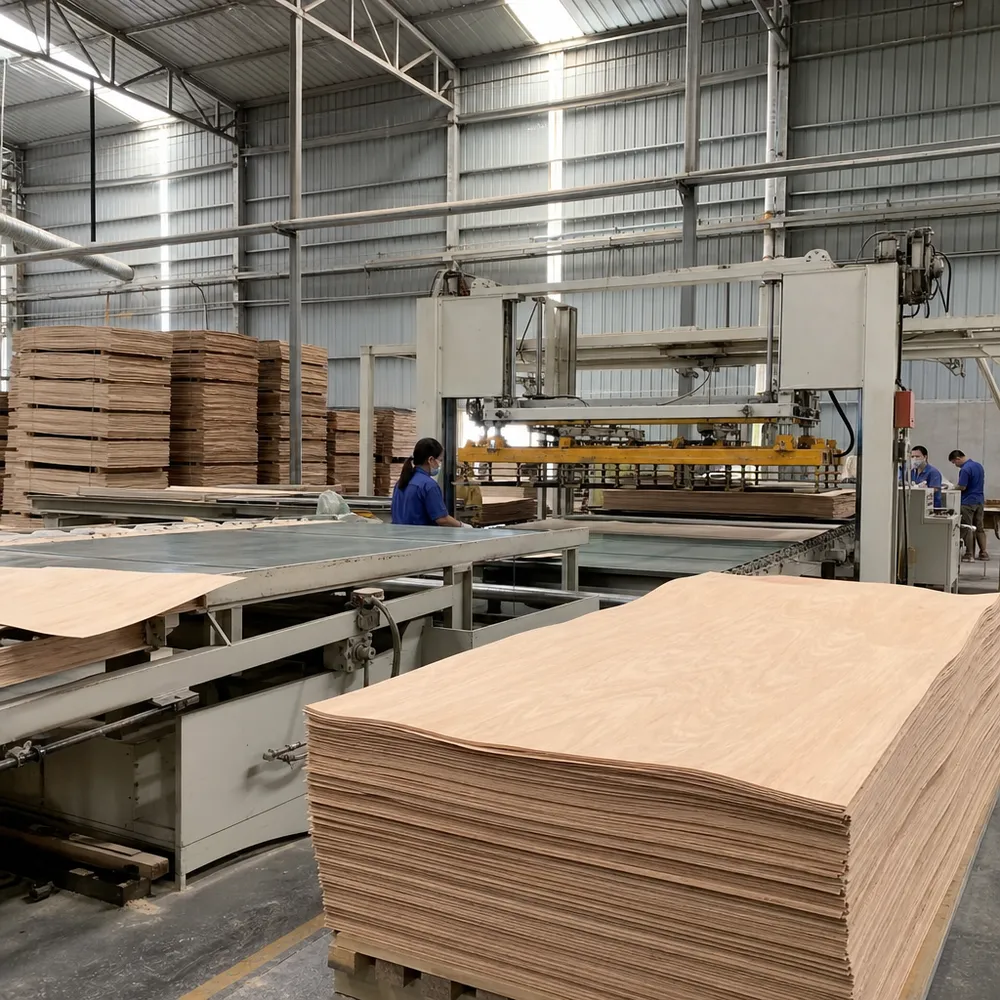
OEM vs ODM: Which Collaboration Model Fits Your Program
These two terms get used interchangeably, but they describe different starting points — and knowing which one applies to your project changes how we scope the work.
OEM — Original Equipment Manufacturing
You bring the specification. You have a target face veneer species, a core construction requirement, a thickness tolerance, a surface finish, and possibly a formaldehyde emission standard tied to your destination market. We manufacture to your spec, apply your brand or private label, and ship.
- Furniture manufacturers sourcing consistent grain-matched panels for a product line
- Distributors building a private-label plywood brand
- Project contractors with defined material specs from an architect or engineer
You have a finished specification. Send it to us and we scope from there.
ODM — Original Design Manufacturing
You start from a market requirement. You know your target segment, your price point, and your destination market — but you need us to recommend the right veneer species, core construction, and surface treatment to hit that position. We develop the specification, produce samples, and you apply your brand.
- Buyers entering a new product category without an internal spec
- Distributors expanding into a new market or geography
- Buyers looking to differentiate from commodity plywood without building an internal product development function
Tell us your target market and price point. We build the specification from there.
Most Programs Land Somewhere Between the Two
In practice, most programs land somewhere between OEM and ODM. A buyer might come with a partial spec — "18mm, hardwood face, CARB P2, for the US furniture market" — and need us to fill in the core construction and veneer sourcing details. We handle that as a joint development project.
The distinction matters mainly for scoping the first conversation. If you have a spec, send it. If you don't, tell us your target market and price point and we'll build one.
Quick Reference: OEM vs ODM at a Glance
| Dimension | OEM | ODM |
|---|---|---|
| Starting point | Your finished specification | Your target market & price point |
| Spec development | You own it; we execute | We develop it jointly with you |
| Branding | Your brand / private label applied | Your brand applied to our developed spec |
| Typical buyer profile | Furniture mfr, distributor, project contractor | New category entrant, market expander |
| First conversation | Send us your spec | Tell us your market & price point |
What We Can Customize: Capability Boundaries by Dimension
Vague "full customization" claims don't help you scope a project. Here's what we actually configure, and where the practical limits are.
Face and Back Veneer Species
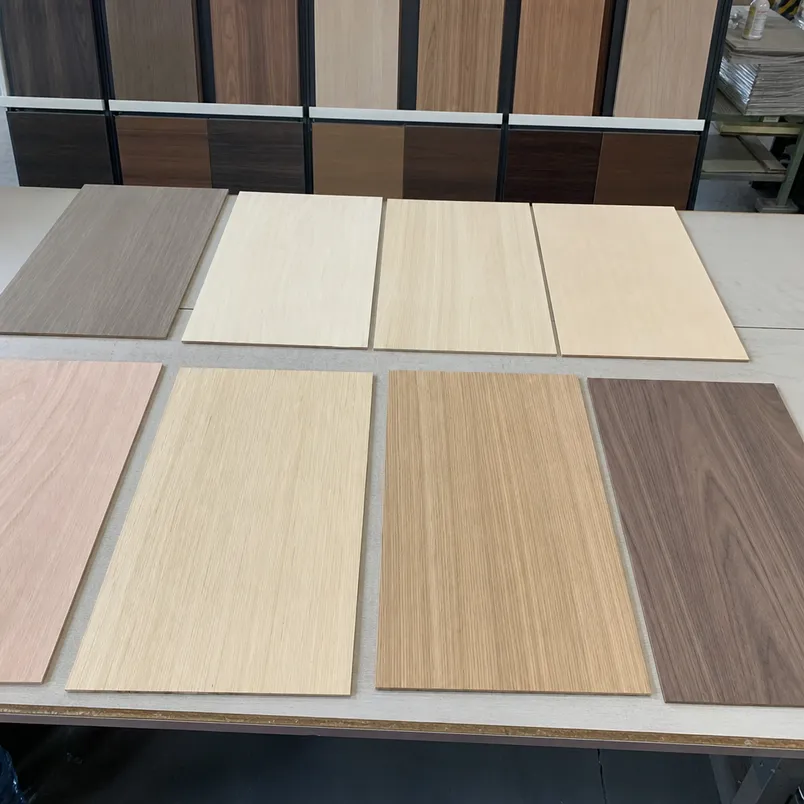
We run face veneers in eucalyptus, poplar, birch, okoume, pine, and hardwood species including oak, walnut, and teak on confirmed orders. Eucalyptus and poplar are our standard volume species — they're what we run daily and what gives you the tightest lead time.
Birch face is available for buyers targeting the European furniture market where birch grain is a recognized quality signal. Hardwood species (oak, walnut, teak) are available for premium furniture and joinery programs but require longer material sourcing lead times — factor that into your timeline.
Grain-Matching Programs
For furniture manufacturers who need consistent figure and color across a product line, we can source from the same veneer lot across multiple production runs. We can't guarantee perfect grain matching across separate lots, but we can hold back material from an approved lot for follow-on orders if you give us advance notice.
Standard Volume
- Eucalyptus
- Poplar
Tightest lead times. Run daily.
Market-Specific
- Birch (EU furniture)
- Okoume
- Pine
Premium Hardwood Species
Available on confirmed orders. Longer material sourcing lead times — factor into your timeline.
Core Construction
Full Poplar Core
Lightweight, consistent moisture control. Strong flatness performance when properly pressed.
Eucalyptus Core
Higher density and screw-holding strength. Suited for structural and load-bearing applications.
Combi Core
Alternating poplar and hardwood layers. Balances weight, stiffness, and cost for mid-range programs.
Blockboard Core
Solid timber strips bonded between veneers. High bending stiffness for door and shelf applications.
Tell us your end use and we'll recommend the right core. Core choice affects panel weight, screw-holding strength, and bending stiffness.
"Full hardwood core" doesn't automatically mean better performance.
Some buyers specify full hardwood core expecting better results, but for most furniture applications a well-pressed poplar core with consistent moisture content outperforms a poorly pressed hardwood core.
We've seen buyers pay a premium for hardwood core and get worse flatness because the supplier didn't control the moisture. Core species matters less than core quality — and core quality comes from the drying and pressing process, not just the species.
When evaluating core options, ask your supplier about their moisture content targets and press cycle controls — not just the species name on the spec sheet.
Core Performance Factors
-
Panel weight — relevant for shipping cost and handling
-
Screw-holding strength — critical for joinery and cabinet assembly
-
Bending stiffness — determines span capability in shelving and doors
-
Moisture content control — the real driver of flatness and long-term stability
Panel Dimensions and Thickness
Sheet Dimensions
Custom dimensions are cut on precision saws — it's a scheduling and yield question, not a tooling investment. Minimum custom dimension run is typically one full container load to make the yield loss worthwhile for both sides.
Thickness Range
±0.2 mm across the panel, maintained through calibrated wide-belt sanding.
If your downstream customer runs panels through automated cutting equipment, that tolerance matters — feed errors from thickness variation are a common complaint we hear from buyers switching suppliers.
Surface Treatment
Raw Sanded
Ready for painting or laminating. Clean surface, consistent finish.
Film-Faced
Phenolic or melamine film, multiple colors and textures. Film adhesion tested by cross-cut and peel before shipment.
Melamine Paper Overlay
Smooth, consistent surface for furniture and interior applications.
HPL Laminate
High-pressure laminate for demanding surface durability requirements.
Paper Overlay
Paintable surface for construction and concrete forming applications.
Custom Film Colors
For buyers building a branded construction system. Custom film sourced on orders above minimum run quantity.
Formaldehyde Emission Standard
Most stringent of the three. Formulated to meet it as standard, not as a premium option.
Standard for European and most other export markets.
Available for buyers targeting markets or applications with stricter indoor air quality requirements.
Important: Emission standard is set at the glue formulation stage — it cannot be changed after production. Specify your target standard at the inquiry stage.

Packaging and Private Label
We pack to your specification. For buyers building a branded plywood line, we apply your brand identity to all packaging and panel marking — no QDPlywood.com branding appears on the product unless you want it there.
Your brand on every panel, every bundle, every carton
The OEM Collaboration Process: Inquiry to Bulk Shipment
Buyers who haven't run an OEM program with a Chinese factory before often underestimate how much of the timeline is front-loaded in the specification and sample approval stage. Here's how the process actually runs.
Requirements Discussion
1–3 working daysSend us your specification, or your target market and application if you're starting from scratch. We'll come back with questions if the spec is incomplete, or with a recommended specification if you're in ODM mode.
What we need to scope the project:
The more complete your brief, the faster we can turn around a quotation.
Quotation and Specification Confirmation
3–5 working daysWe issue a detailed quotation covering unit price, MOQ, lead time, and the full production specification. At this stage we also flag any material sourcing requirements that could affect lead time — if you've specified a veneer species we don't run in standard volume, we'll tell you the sourcing lead time upfront rather than after you've placed the order.
Once you confirm the specification and commercial terms, we move to sample production.
Sample Production and Approval
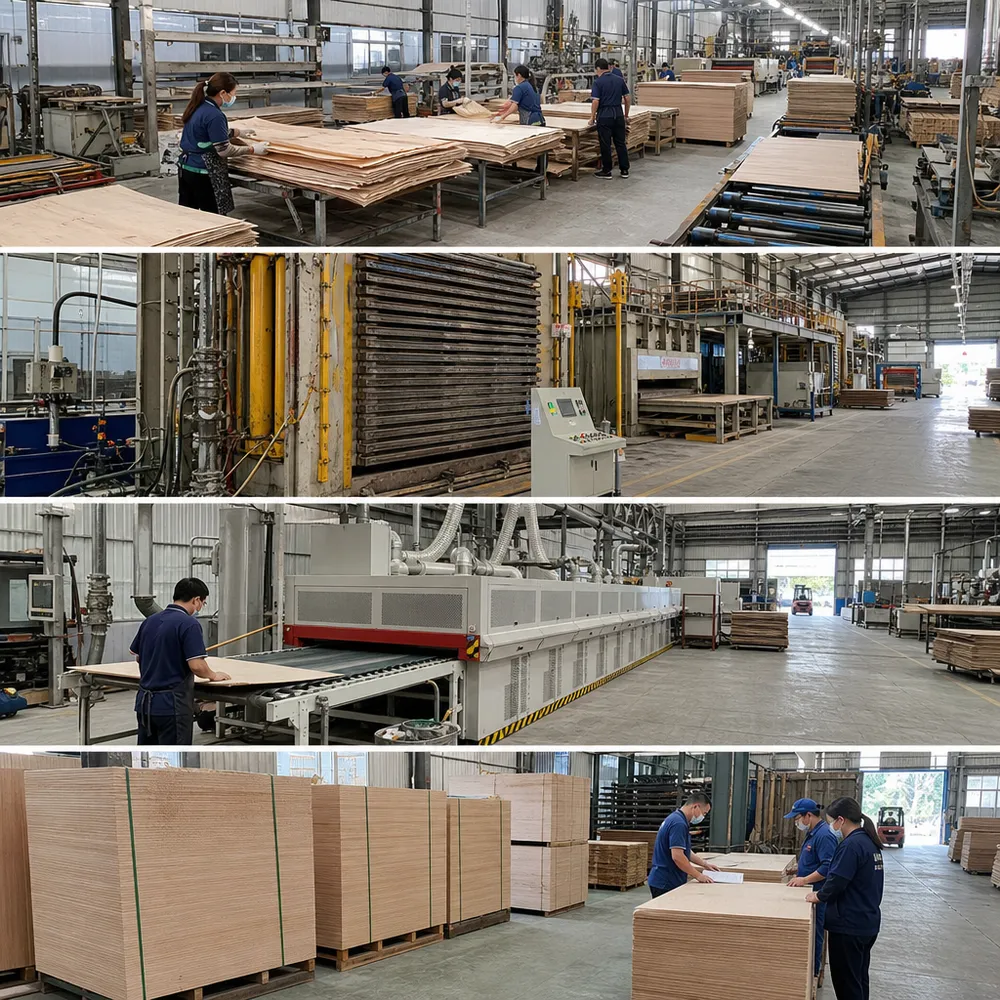
15–20 working days Most underestimated stageSample production runs through the full production process — veneer grading, layup, pressing, sanding, surface treatment — not a bench-made mock-up. We produce a small batch (typically 10–20 panels) to the confirmed specification, photograph the panels, and ship samples to your location.
You test against your requirements and either approve or request adjustments. If adjustments are needed, we revise the specification and produce a second sample run.
Typical sample round outcomes:
Most programs reach approval in one or two sample rounds
Complex programs with tight grain-matching or custom film requirements sometimes take three rounds
Mass Production
20–35 working daysOnce samples are approved and a purchase order is confirmed, we schedule production on the appropriate line. Your order runs as a dedicated batch — we don't mix OEM orders with standard production runs, because the specification control requirements are different.
In-Process Inspection
Runs at layup and post-press stages
Outgoing Inspection
Covers full panel specification before packing
Quality Inspection and Pre-Shipment
3–5 working daysWe photograph the packed bundles and provide an inspection report before the container is loaded. Third-party pre-shipment inspection is available — we work with SGS, Bureau Veritas, and similar agencies; coordinate through your preferred agency and we'll arrange access.
Outgoing inspection covers:
Shipment and Documentation
Export ports:
Transit times to major destination ports: 18–35 days depending on routing.
Export documentation package:
For US-bound OEM shipments, the CARB documentation package is prepared as standard.
MOQ and Lead Time: What to Expect
All lead times are subject to order confirmation and material availability. We'll give you a confirmed production schedule when we issue the purchase order acknowledgment — not an estimate, a scheduled start and completion date based on actual line availability.
Standard Specification
Face and core species we run in regular volume, standard dimensions, standard surface treatment
Minimum Order Quantity
1 × 20HQ
Typically 18–22 m³ depending on thickness
Lead Time (PO to container loading)
20–30 working days
Custom Specification
Non-standard veneer species, custom dimensions, custom film colors, non-standard core construction
Minimum Order Quantity
1 × 40HQ
To cover yield and setup overhead
Lead Time (PO to container loading)
30–45 working days
Depending on material sourcing requirements
Sample Production
For qualified buyers. Samples run through the full production process — not bench-made mock-ups.
Sample Quantity
10–20 panels
Shipped by express courier. Produced at cost.
Sample Lead Time
15–20 working days
From specification confirmation
Timeline at a Glance
From purchase order confirmation to container loading
Includes material sourcingand setup time
From specification confirmation to courier dispatch
What Starts the Clock
- Signed purchase order received
- Deposit payment confirmed (typically 30%)
- Final specification sheet approved by buyer
- Label artwork and branding assets confirmed (if applicable)
Factors That Can Extend Lead Time
- Rare or imported veneer species requiring procurement lead time
- Chinese national holidays (CNY, Golden Week) — plan 2–3 weeks buffer
- Third-party certification testing (CARB, CE) if not previously run
- Specification changes after production has started
Repeat Orders Move Faster
Once your specification is locked and your first production run is complete, repeat orders typically run 15–20% faster. Your spec sheet, QC benchmarks, and label files are already on file — we go straight to scheduling.
Certifications and Compliance Support
Market access depends on documentation. We maintain the certifications most commonly required by importers in North America, Europe, and the Asia-Pacific region — and we'll tell you upfront which ones apply to your specification.
CARB Phase 2
California Air Resources Board
Formaldehyde emission standard required for composite wood products sold into the US market. Mandatory for California; effectively the US national standard under TSCA Title VI.
Applies to
FSC Chain of Custody
Forest Stewardship Council
Certified chain of custody for responsibly sourced timber. Required by many European and North American retailers, and increasingly by commercial construction specifications.
Available for
CE Marking
EN 13986 / EN 636
Declaration of Performance under EN 13986 for structural and non-structural plywood sold into the European Economic Area. Covers mechanical properties, formaldehyde class, and moisture resistance class.
Emission classes
ISO 9001:2015
Quality Management System
Certified quality management system covering production planning, in-process control, non-conformance handling, and corrective action. Audited annually by an accredited third party.
Scope covers
PEFC Certified
Programme for Endorsement of Forest Certification
An alternative to FSC accepted by many European buyers and public procurement frameworks. Available on request for buyers whose supply chain requires PEFC rather than FSC documentation.
Accepted in
Third-Party & Buyer-Specified
SGS, Bureau Veritas, Intertek, and others
We support buyer-nominated inspection agencies and can arrange pre-shipment inspection, factory audits, and product testing through your preferred third-party body.
Supported services
Not sure which certifications your market requires?
Tell us your destination market and end-use application. We'll confirm which certifications are standard, which are available on request, and which require additional testing lead time — before you commit to an order.
Intellectual Property and Confidentiality
OEM programs involve your brand, your specifications, and sometimes your product development investment. We treat that information as confidential.
NDA Before Specification Discussions
We sign NDAs before specification discussions on request — standard practice for buyers who are developing a new product or entering a new market and don't want their specification visible to competitors.
Mold and Tooling Ownership
Mold ownership for any custom tooling — edge profiles, custom packaging dies — belongs to the buyer on confirmed payment. You paid for it; it's yours.
Design Files Used Only for Your Orders
Design files and specifications you provide are used only for your orders. We don't share them with other buyers or use them as the basis for our own product development.
Market Exclusivity Arrangements
For buyers concerned about exclusivity: we can discuss market exclusivity arrangements for specific product specifications on programs above a minimum annual volume. This is a commercial negotiation, not a standard term — but it's a conversation we're willing to have for buyers building a differentiated branded line.
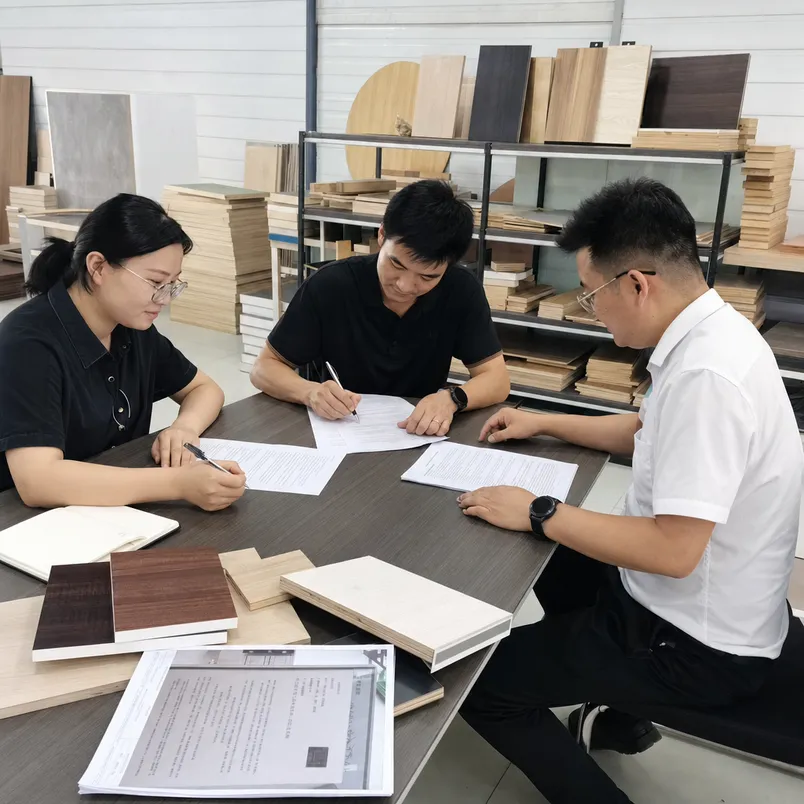
What "confidential" means in practice
- Your specification sheet is not shared with competing buyers in the same market
- Your brand artwork and label files are stored separately and not reused
- Custom tooling paid for by you is logged under your account and not offered to other buyers
- Exclusivity discussions are available for qualifying annual volume programs — ask during your initial inquiry
Ready to discuss your program? If you're at the specification stage and need an NDA in place before sharing details, flag that in your first message. We'll send a standard NDA for review before any technical discussion begins.
Request NDA & Start DiscussionMarket Segments Where OEM Plywood Programs Run
These are the segments where our current OEM buyers operate — useful context if you're evaluating whether your program fits our production profile.
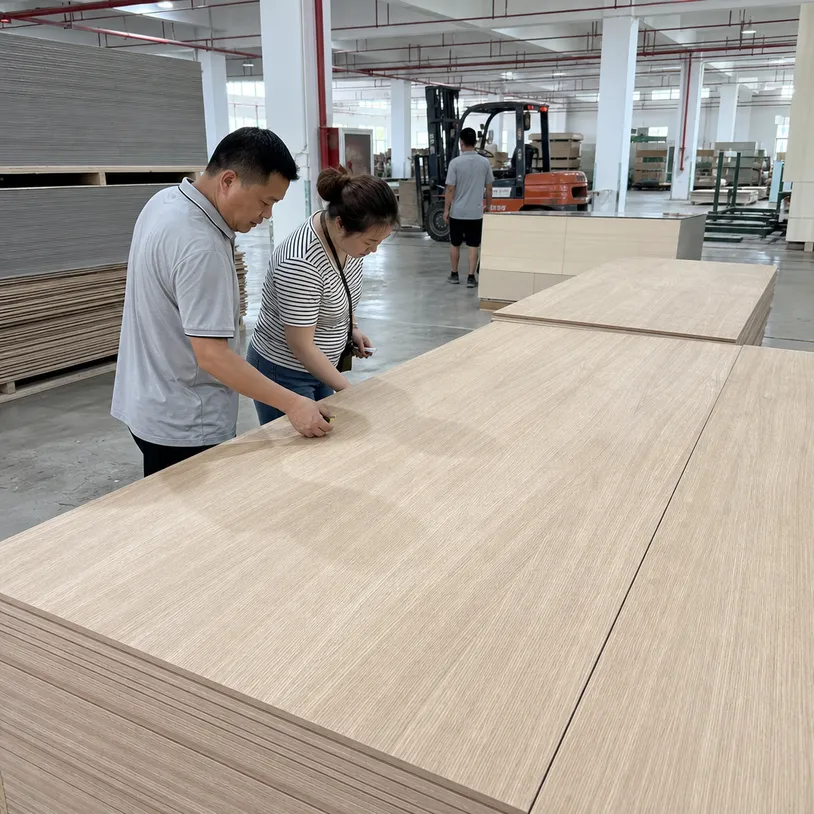
Furniture Manufacturing
Cabinet and furniture manufacturers sourcing consistent face veneer for product lines where grain matching across panels matters.
Typical OEM Requirements
- Specific face species: birch, oak, or eucalyptus
- Tight thickness tolerance
- E1 or CARB P2 emission standard
- Consistent surface grade across batches
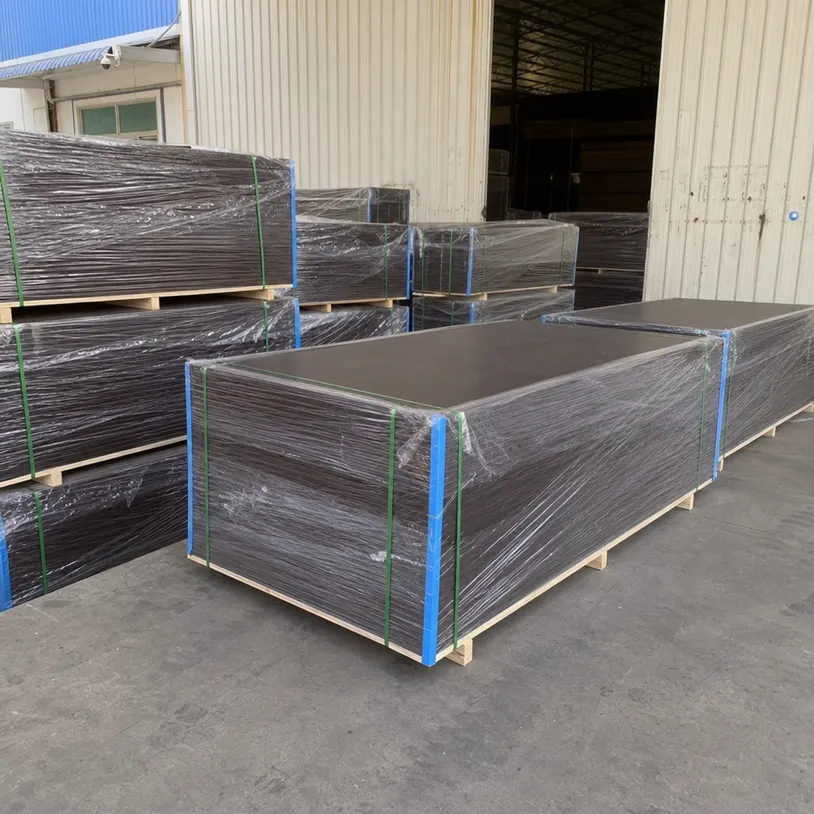
Building Materials Distribution
Distributors building private-label plywood brands for the construction trade.
Typical OEM Requirements
- Film-faced formwork plywood in branded colors
- Custom bundle marking
- CARB P2 or CE compliance documentation
The value for the distributor is margin protection — a branded product with documented compliance is harder to commoditize than a generic panel.
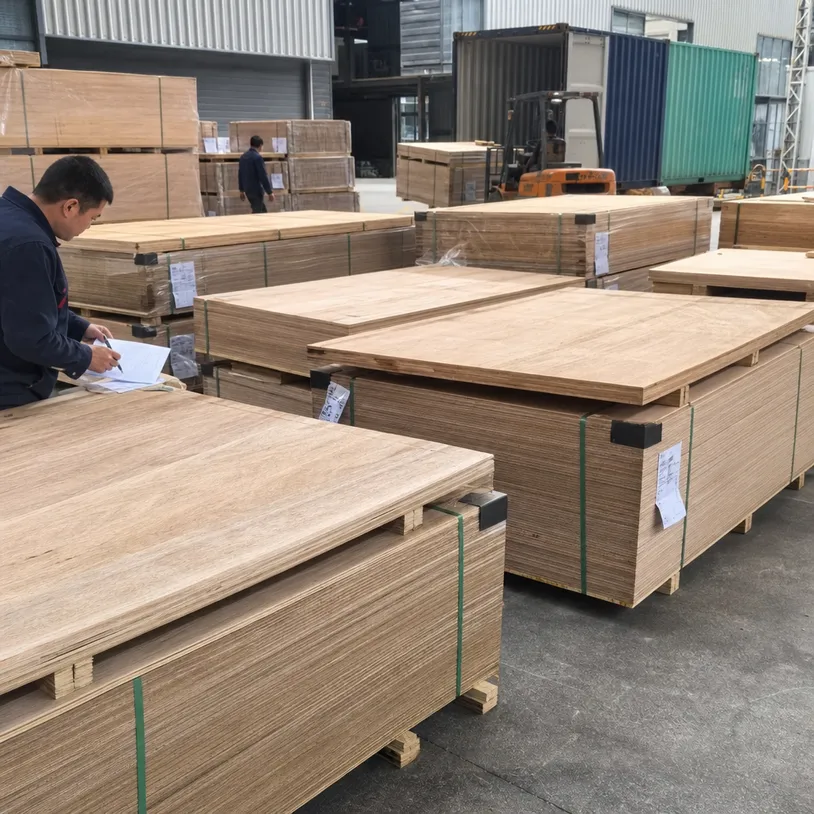
Project Supply
Contractors and project procurement teams sourcing to architect or engineer specifications for commercial construction, fit-out, or infrastructure projects.
Typical OEM Requirements
- Specific structural grade
- Defined emission standard
- CE or other market-specific compliance documentation
- Consistent batch quality across multiple container loads
Project supply programs often have tighter documentation requirements than standard distribution — we're set up for that, but flag it early so we can build the documentation package into the production schedule.
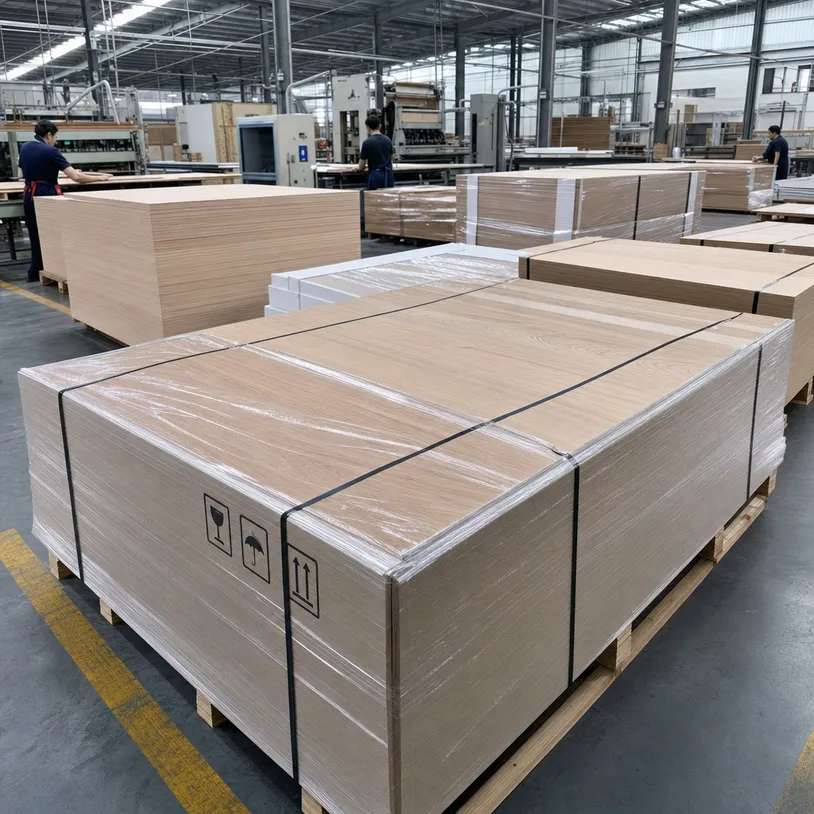
Retail and Home Improvement
Importers supplying branded plywood to retail channels.
Typical OEM Requirements
- Consumer-facing packaging
- CARB P2 compliance for US retail
- Consistent surface appearance across SKUs
Retail programs usually have stricter surface grade requirements than trade programs — we grade face veneers separately for retail-bound production.
Your segment not listed here?
The segments above reflect our current active OEM buyer base — not the full range of programs we can support. If your use case involves a different application or distribution channel, describe your specification requirements and we'll tell you directly whether it fits our production profile.
Why Factory-Direct OEM Matters for Your Landed Cost
Every layer between you and the factory adds cost and adds specification translation risk. Trading companies mark up the panel price and pass your specification through a communication chain — by the time it reaches the production floor, details get lost or approximated.
We Are the Factory
When you specify a veneer species, a core construction, and a thickness tolerance, the person reading that specification is the same organization running the press. There's no intermediary interpreting your requirements, no markup on the panel price, and no one to blame when something doesn't match spec except us. That accountability is built into the factory-direct model in a way it can't be in a trading company relationship.
Certification Stack for Multi-Market Programs
ISO 9001:2015, CARB P2, FSC chain-of-custody, and CE are in place for the markets that require them. The certification stack covers your key import markets without requiring you to qualify a separate supplier for each region — relevant if you're building a multi-market distribution program from a single source.
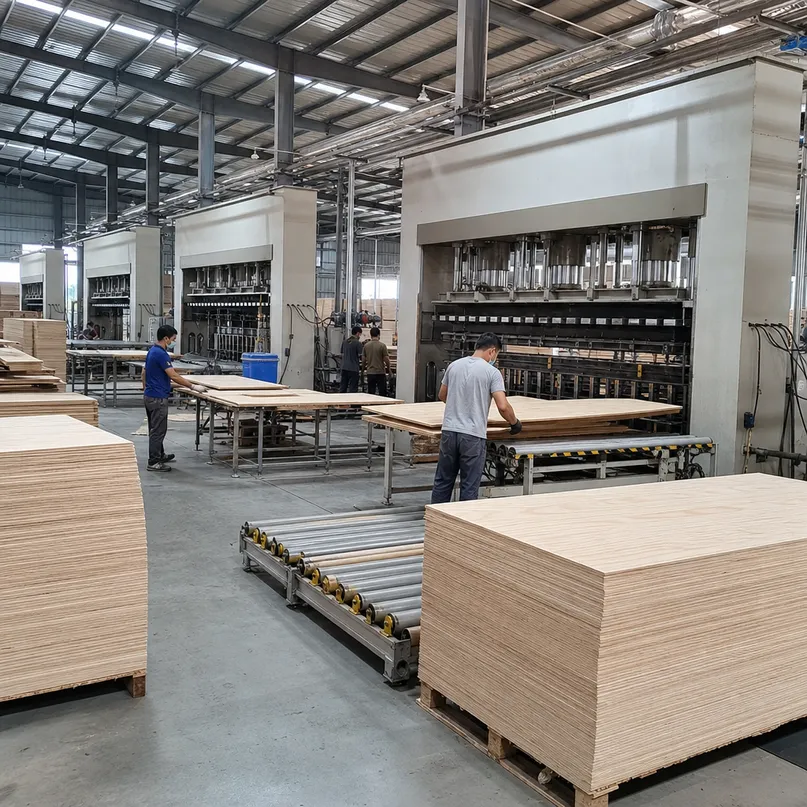
Scale That Works for Your Order Size
The engineering team — roughly 20 people covering product development, process engineering, and quality systems — manages specification development and first-article approval for new OEM programs. These aren't numbers we cite to sound large; they're the operational reality that determines whether your 500 m³ OEM order gets a dedicated production run or gets squeezed between other buyers' schedules. At our scale, your order gets its own run.
We've held ISO 9001:2015 since well before most of our export buyers started requiring it. The certification stack covers your key import markets without requiring you to qualify a separate supplier for each region.
For more on our quality control process and certification details, see our Certifications & Quality Standards page.
Frequently Asked Questions
Common questions from buyers evaluating a custom OEM plywood program. If your question isn't here, contact us directly.
For standard OEM products — face and core species we run in regular volume, standard dimensions — MOQ is typically one 20HQ container load (18–22 m³ depending on thickness). For custom specifications involving non-standard veneer species, custom dimensions, or custom film colors, MOQ is typically one 40HQ container load.
These minimums exist because custom runs require dedicated setup and yield management — below a container load, the per-unit cost of that overhead makes the program uneconomical for both sides.
Testing a new specification? For buyers testing a new specification before committing to a full container, we produce samples at cost.
15–20 working days for most specifications. Programs requiring non-standard veneer species sourcing or custom film procurement add 3–4 weeks to the front of that timeline.
Transparency on sourcing lead time: We'll tell you the sourcing lead time when we review your specification — before you confirm the order, not after.
AI (Adobe Illustrator) or PDF with embedded fonts for print-ready artwork. For panel stamps and bundle labels, we can work from a logo file and apply our standard label template if you don't have print-ready artwork.
Proof before production: We'll send a proof for approval before production begins.
Usually yes, if you can provide a sample panel and the specification sheet. We'll test the sample for thickness, moisture content, surface grade, and emission level, then develop a matching specification.
The first sample run confirms the match before you commit to a production order. This is a common entry point for buyers switching suppliers.
How to start: Send us a sample and we'll tell you whether we can match it and at what price.
Yes. We work with SGS, Bureau Veritas, and similar agencies. Arrange inspection through your preferred agency and we'll coordinate access to the production facility and the packed goods.
No charge for inspection access — it's part of the export process for buyers who require it.
We re-run the non-conforming panels at our cost. The production specification is locked at sample approval — if bulk production deviates from the approved spec, that's a production control failure on our side and we own it.
Why in-process inspection matters: We run in-process inspection at layup and post-press, not just outgoing inspection — catching a deviation mid-run is cheaper than re-running a full batch.
Let's build your specification together
Send us your requirements — dimensions, grade, volume, and destination — and we'll come back with a specification sheet and indicative pricing within two business days.
No commitment required. Sample orders available before full production.
Start Your Custom Plywood Program
Send us your specification — or your target market, application, and price point if you're starting from scratch. We'll come back with a recommended specification, a detailed quotation, and the relevant certification documentation for your import requirements.
New to OEM Sourcing from China?
Tell us your target market and volume expectations — we'll suggest a starting specification based on what's working for our existing buyers in that region, and walk you through the sample approval process before you commit to a production order.
- Specification recommendation based on your target market and application
- Detailed quotation with itemized cost breakdown
- Relevant certification documentation for your import requirements
- Guided sample approval process before production commitment
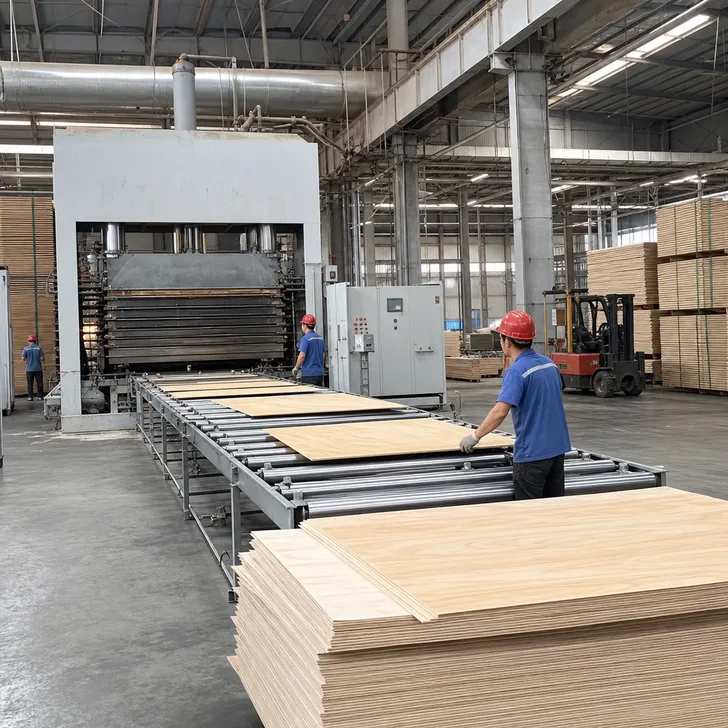
Xuzhou QD Wood Industry Co., Ltd.
Factory-direct OEM plywood manufacturer · Xuzhou, Jiangsu, China
Explore Our Product Range