

Primed Hardboard Manufacturer Paint-Ready Panels, Factory-Applied
Primed hardboard with factory-applied white primer — consistent adhesion, paint-ready surface, no on-site priming step. We apply primer in-line immediately after sanding, so the surface is mechanically active at the point of coating. That's the detail that determines whether your customers' paint finish holds or peels.
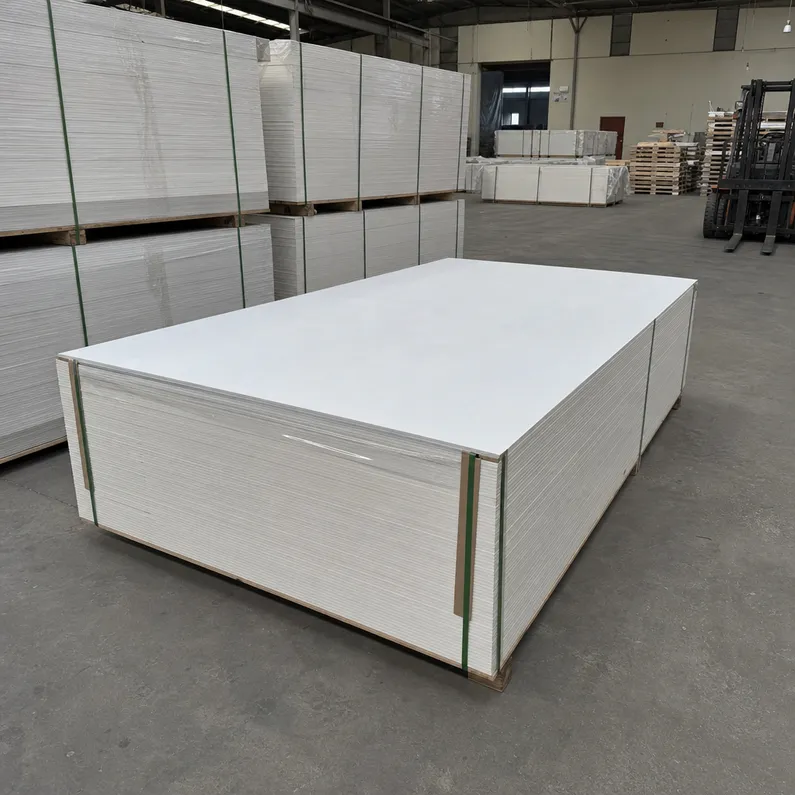
What Primed Hardboard Is and Where It Sits in the Hardboard Range
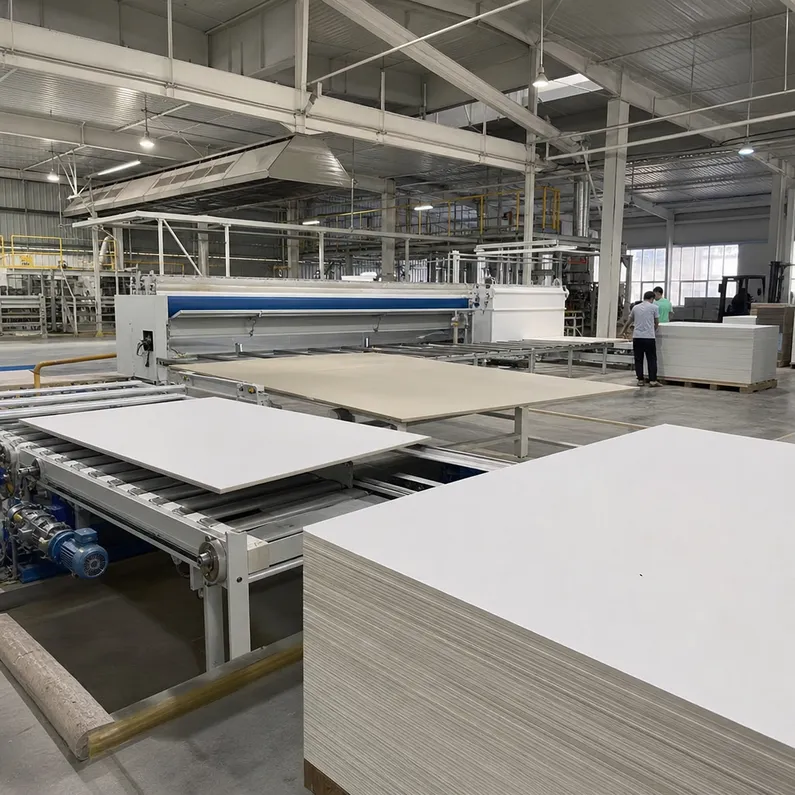
Primed hardboard is standard high-density fiberboard hardboard with a factory-applied white primer coat on one or both faces. The base panel is the same material as our standard hardboard sheet — wood fiber compressed to 800–1000 kg/m³ density, smooth-sanded surface, dimensionally stable — with one additional production step: primer application immediately after sanding, before the panel is bundled and packed.
That sequence matters more than it sounds. Hardboard surface chemistry changes after sanding — the mechanical activation that makes primer bond well is a time-sensitive condition. Panels that are sanded, warehoused, and primed later (whether at a downstream facility or on-site) have a surface that's been exposed to ambient humidity and handling, which reduces adhesion. We apply primer in-line on fresh-sanded panels, which is why our primed hardboard arrives with consistent adhesion across the full batch rather than the patchy results buyers sometimes see from panels primed off-line.
Within our hardboard product range, primed hardboard occupies the highest-value position in the standard format lineup. Standard hardboard sheet is the base product; primed hardboard is the format that commands a margin premium because it delivers a finished, ready-to-use surface. If your downstream customers are painting, laminating, or applying decorative finishes over hardboard, primed is the format that reduces their labor cost and eliminates the priming step from their workflow.
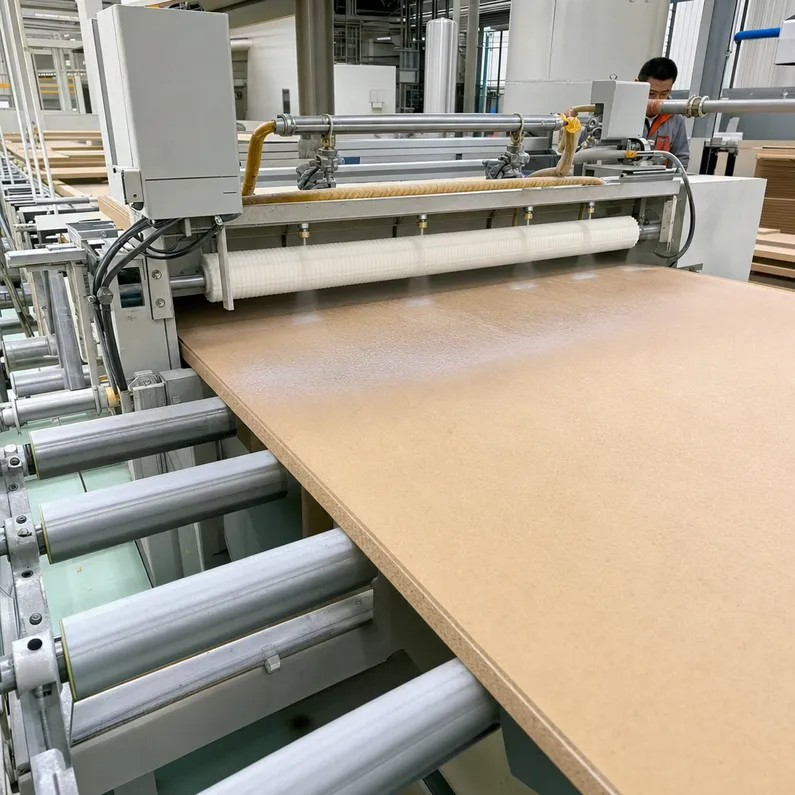
In-Line Application — The Critical Difference
Primer applied in-line on fresh-sanded panels bonds to a mechanically active surface. Panels primed off-line — after warehousing or on-site — have lost that activation window. The result is patchy adhesion that shows up as finish failures downstream.
Factory-primed, paint-ready. Eliminates on-site priming step.
Technical Specifications
Specifications shown are industry-standard values for this product type. Actual specifications may vary by order. Contact us for detailed product data sheets and confirmation of exact parameters for your application.
Primed Hardboard — Full Specification Table
| Parameter | Specification |
|---|---|
| Base Material | High-density fiberboard (HDF), wood fiber core |
| Density | 800–1000 kg/m³ (typical hardboard range) |
| Standard Thickness |
3mm 3.2mm 4mm 5mm 6mm
|
| Standard Sheet Size | 1220 × 2440mm (4×8 ft) |
| Custom Sizes | Available on confirmed orders |
| Primer Type | White water-based primer, factory-applied |
| Primer Coverage |
S1P — one side (standard) S2P — both sides (available)
|
| Primer Application | In-line, immediately post-sanding |
| Thickness Tolerance | ±0.2mm across panel |
| Moisture Content | 5–9% at dispatch |
| Formaldehyde Emission |
CARB P2 compliant E1 / E0 available
|
| Surface Finish | Smooth primed face; reverse may be textured (S1P) or smooth primed (S2P) |
| Certifications |
CARB P2 ISO 9001:2015 FSC CE
|
Why ±0.2mm Tolerance Matters for Automated Processing
The ±0.2mm thickness tolerance is the same standard we hold across our full panel range. For buyers whose customers run primed hardboard through automated cutting or laminating equipment, that tolerance is what keeps the process consistent — thickness variation causes feed errors and uneven laminate pressure that shows up as finish defects.
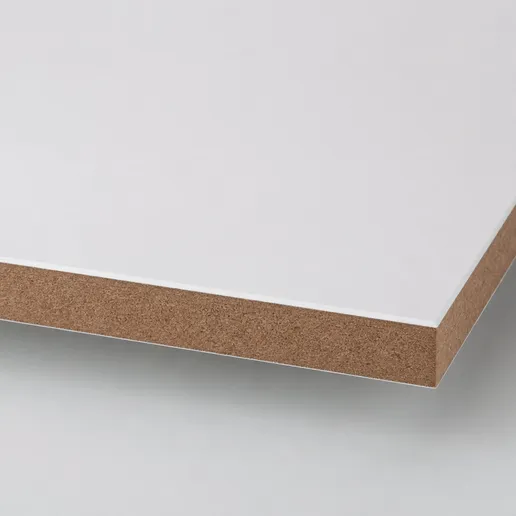
Density Range
High-density fiberboard core, same base as standard hardboard sheet
Standard Sheet
4×8 ft standard format. Custom sizes available on confirmed orders.
Thickness Range
Five standard thicknesses: 3, 3.2, 4, 5, 6mm. Custom on request.
Moisture Content
Measured at dispatch. Consistent moisture content reduces warping risk in transit.
Applications
Primed hardboard is specified wherever a smooth, paint-ready surface is needed at scale — from furniture manufacturing to retail display. The factory primer coat is what makes it a time-saving choice for high-volume buyers.
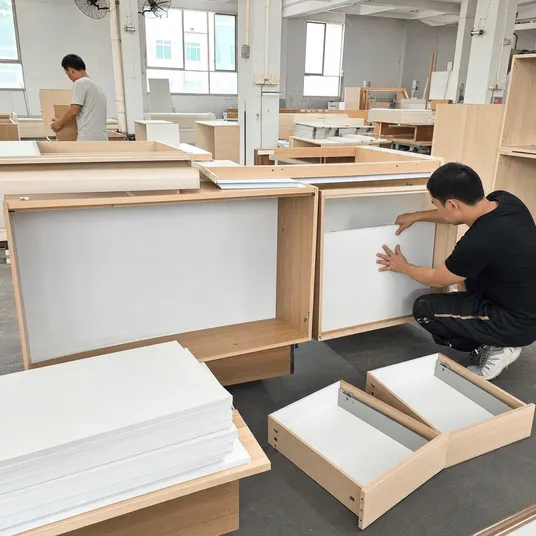
Furniture Backs & Drawer Bottoms
The most common use case. Primed hardboard provides a clean, paint-ready interior surface for cabinet backs and drawer bottoms — no on-site priming required before the topcoat is applied.
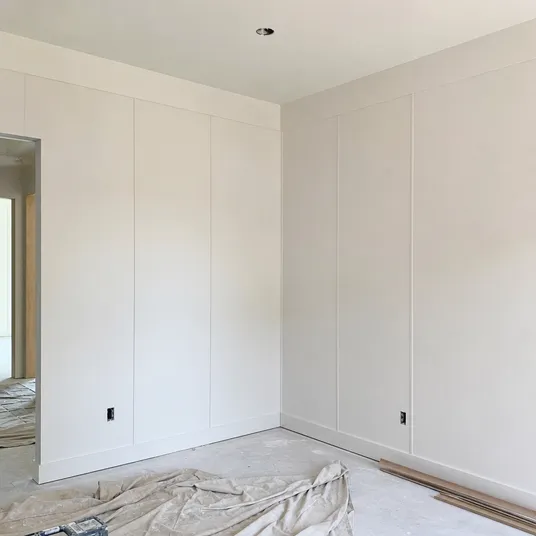
Interior Wall Panelling
Used in residential and commercial fit-out where a smooth, paintable wall surface is needed quickly. The factory primer coat means installers can go straight to topcoat on site.
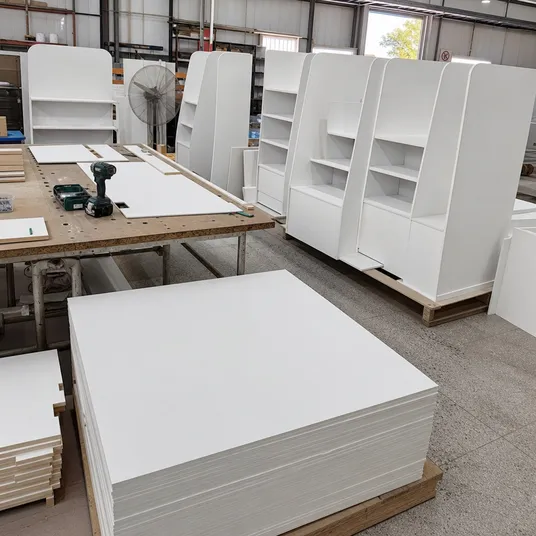
Retail Display & POS Fixtures
Display manufacturers specify primed hardboard for its consistent surface and fast paint turnaround. The smooth primer face accepts graphics-quality topcoats without additional surface prep.
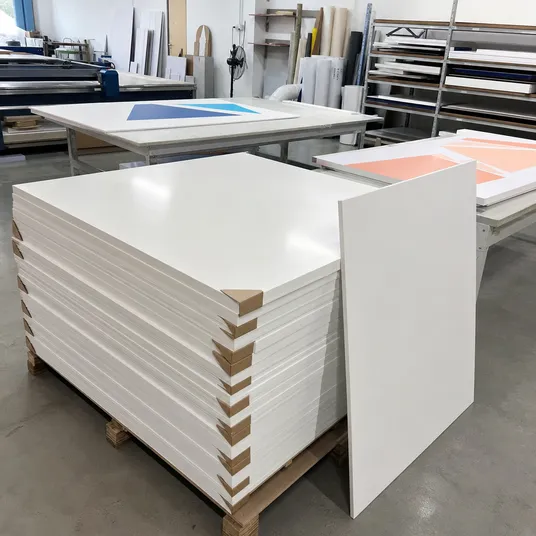
Signage & Printed Panels
The flat, sealed primer surface is well-suited to direct printing and hand-painted signage. Consistent density across the panel prevents uneven ink absorption.
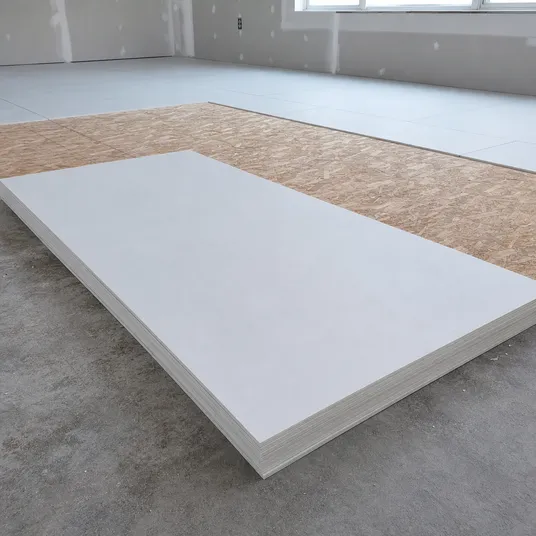
Underlayment & Flooring Substrate
Thin primed hardboard (3–4mm) is used as a smooth underlayment beneath vinyl and carpet in renovation projects. The primed face provides a sealed, stable base layer.
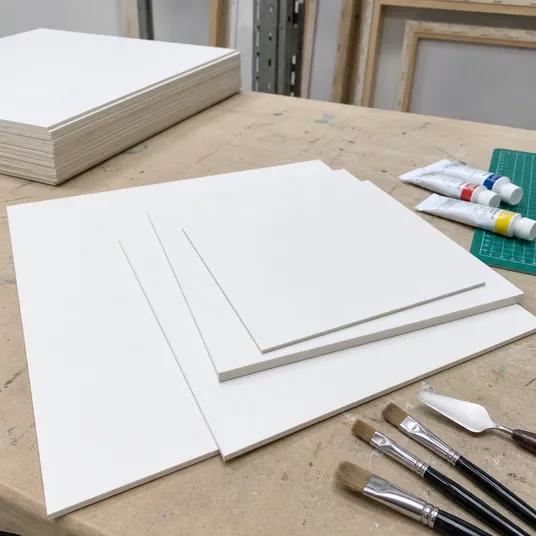
Craft, Hobby & DIY
Artists and hobbyists use primed hardboard as a rigid painting substrate. The factory primer coat eliminates the need for gesso or separate priming before acrylic or oil paint application.
Buying for a Specific Application?
Different applications have different requirements — thickness, primer coverage (S1P vs S2P), emission standard, or custom sheet size. If you're sourcing primed hardboard for a specific end use, tell us the application and volume and we'll confirm the right specification and lead time.
Discuss Your ApplicationPrimed vs Unprimed Hardboard
The decision between primed and unprimed hardboard comes down to where the priming step happens — factory or job site. Here's how the two compare across the factors that matter to buyers.
| Factor | Primed Hardboard | Unprimed Hardboard |
|---|---|---|
| Surface Ready for Paint | Yes — factory-applied | No — requires on-site priming |
| On-Site Labour | Reduced — skip priming step | Higher — priming adds time and cost |
| Primer Consistency | Uniform — in-line factory process | Variable — depends on applicator |
| Unit Cost | Slightly higher per sheet | Lower per sheet |
| Total Installed Cost | Lower when labour is factored in | Higher once priming labour is added |
| Best For | High-volume, paint-finish applications | Applications where surface will be laminated, veneered, or left unfinished |
| Automated Processing | Consistent thickness tolerance | Same tolerance, no primer layer variable |
Choose Primed When…
- The end product will be painted and a consistent primer coat is required
- You're buying at volume and on-site priming labour adds up
- Your customers run panels through automated finishing lines
- You need a paint-ready surface with no additional prep step
- Retail display or signage applications where surface quality is visible
Unprimed May Be Better When…
- The surface will be laminated, veneered, or covered — primer adds no value
- The application is structural or hidden and finish quality is not a factor
- You need the lowest possible unit cost and will prime in-house at scale
- The end use requires a specific primer type not compatible with the factory coat
Why In-Line Primer Application Changes the Commercial Equation
Primer adhesion is the question that comes back to haunt buyers who source primed hardboard from the wrong supplier. The mechanism matters — and so does the commercial consequence for your business.
The Surface Chemistry Problem
Hardboard surface after sanding has a specific texture and chemistry that accepts primer well. Leave that surface exposed for days or weeks — in a warehouse, in transit, on a job site — and it picks up dust, oils from handling, and moisture from ambient air. The surface that gets primed is no longer the surface that came off the sander.
We run primer application as the next step after sanding on the same production line. The panel goes from the wide-belt sander to the primer coating station without leaving the controlled production environment.
Adhesion is tested by cross-cut and peel on each production batch — we're looking for clean adhesion with no lifting at the cut edges. Batches that don't pass the adhesion check don't ship.
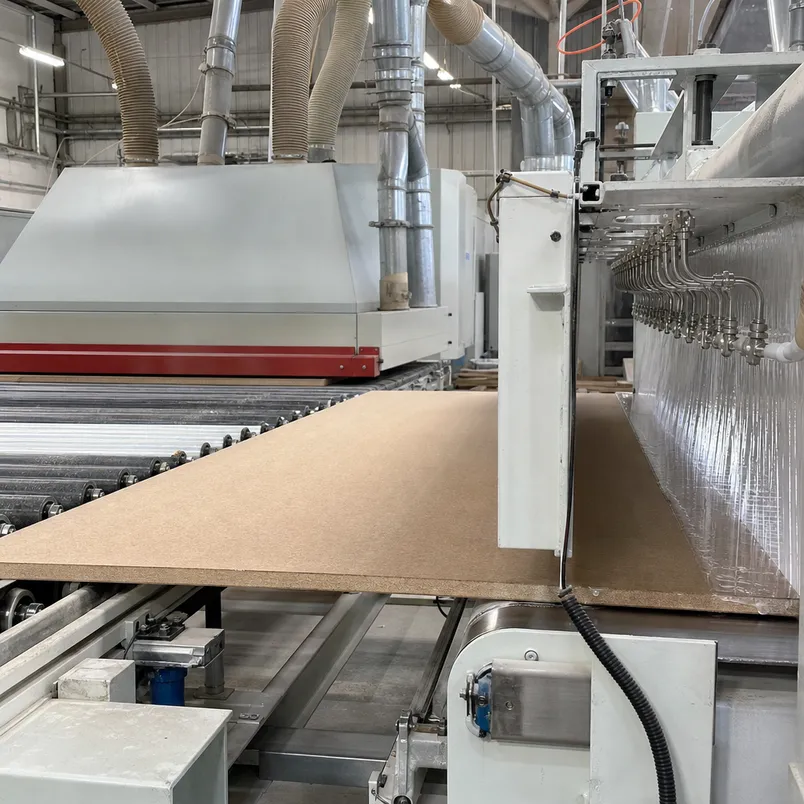
In-Line vs. Off-Line: What Actually Happens to the Surface
In-Line Application (Our Process)
- Panel moves directly from wide-belt sander to primer coating station — no gap, no exposure
- Primer contacts the freshly sanded surface chemistry — the surface that was engineered to accept it
- Controlled production environment — no dust, handling oils, or ambient moisture contamination
- Cross-cut and peel adhesion test on every production batch before shipment
Off-Line Application (Other Suppliers)
- Sanded panels sit in warehouse or transit for days or weeks before priming
- Surface picks up dust, handling oils, and moisture — the chemistry changes before primer is applied
- Adhesion failures don't appear immediately — they surface six months later when paint starts lifting at panel edges
- By the time the failure is visible, the product is installed — the claim is expensive
Zero Callbacks on Primer
Consistent primer adhesion means your customers' paint finish goes on cleanly and stays on. No peeling primer, no warranty claims from contractors who painted over your panels and had the finish fail.
Builds Your Reputation
In a distribution business, that's the difference between a product that builds your reputation and one that generates returns. Consistent adhesion is a commercial asset, not just a technical spec.
Batch-Level Adhesion QC
Cross-cut and peel testing on every production batch. We're looking for clean adhesion with no lifting at cut edges. Batches that don't pass the adhesion check don't ship — full stop.
The Failure Mode We've Seen From the Other Direction
We've had buyers switch to us after sourcing primed hardboard from a supplier who primed off-line. The adhesion issues don't show up immediately — they show up six months later when the paint starts lifting at panel edges. By then the product is installed and the claim is expensive. In-line application isn't a marketing claim; it's the mechanism that prevents that outcome.
Market Segments Where Primed Hardboard Moves Volume
Two buyer segments account for the majority of primed hardboard volume: interior fit-out supply chains and building products distributors in North America and Australia. The commercial logic differs by segment — here's how each one works.
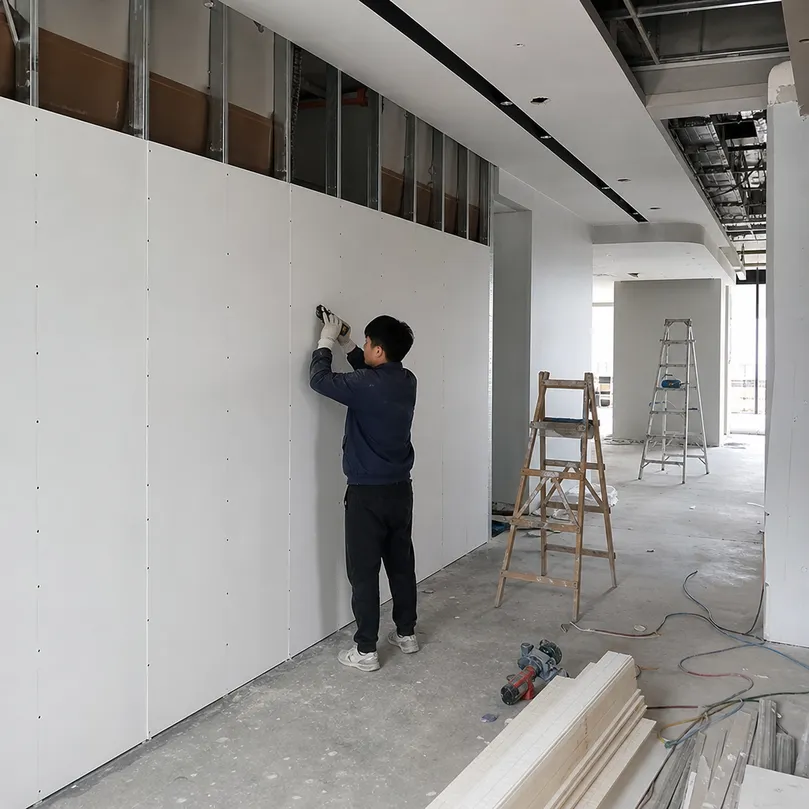
Interior Fit-Out and Renovation Supply Chains
Contractors and fit-out distributors supplying interior wall systems, ceiling panels, and decorative cladding are the primary volume buyers for primed hardboard. The commercial logic is simple: primed panels reduce on-site labor. A contractor installing 500 square meters of wall paneling saves a full day of priming work when the panels arrive paint-ready.
The Labor-Saving Argument
At commercial labor rates in North America, Europe, or Australia, the labor saving from arriving paint-ready is worth more than the price premium on primed versus standard hardboard. Distributors can position primed as a value-added product — not a commodity — and hold higher margin.
Reorder patterns in this segment are project-driven — a contractor wins a fit-out contract, places a single large order, and comes back for the next project. Consistent quality across batches is what keeps them coming back to the same supplier.
What Buyers in This Segment Prioritize
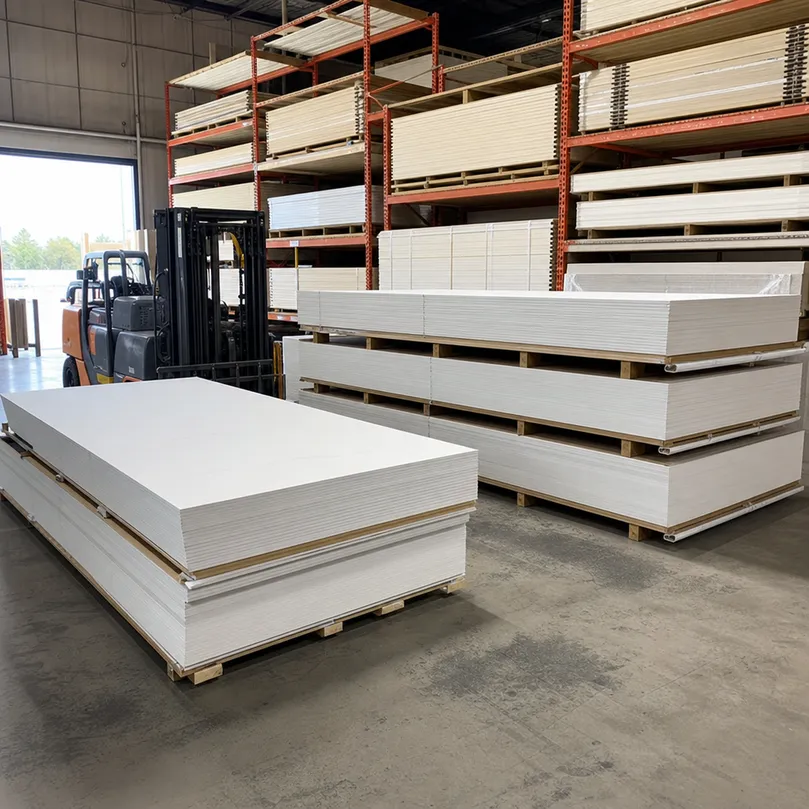
Building Products Distribution: North America and Australia
Primed hardboard has established distribution channels in North America and Australia, where it's a standard SKU in building products wholesale. The format moves through lumber yards, building supply distributors, and specialty panel distributors. In these markets, primed hardboard is a mature product category — buyers know what they want.
Selection Criteria in Mature Markets
For distributors entering or expanding in these markets, primed hardboard is a straightforward addition to a panel SKU mix. CARB P2 compliance is a procurement gate for US buyers — our standard certification covers this without requiring a separate qualification process.
Full CARB Package Included as Standard
North American building products distributors have been burned by suppliers who claimed CARB compliance but couldn't produce documentation at customs. We include the full CARB package as standard with US-bound shipments — no separate qualification process required.
Furniture Manufacturing: Cabinet Backs and Interior Panels
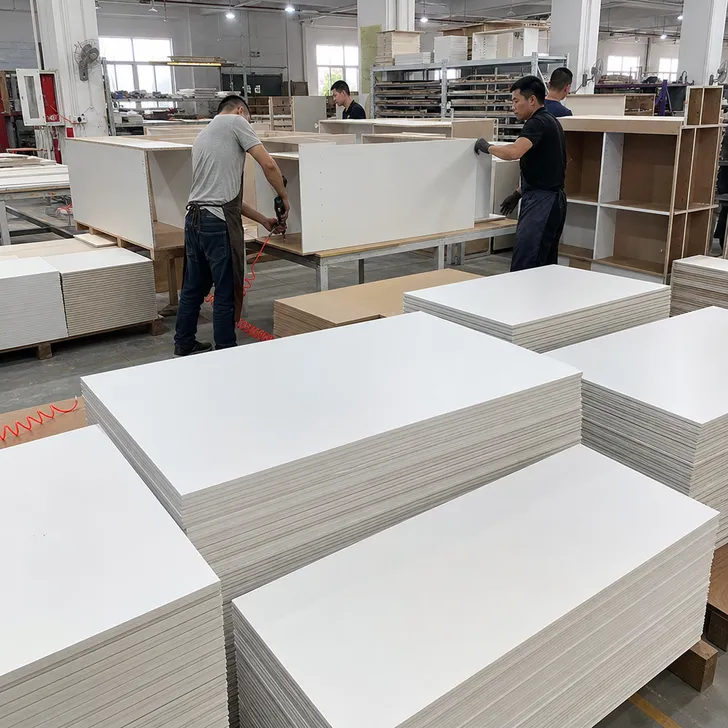
Furniture manufacturers who specify primed hardboard for cabinet backs and interior panels are buying for a specific reason: they want a surface that accepts paint or lacquer without a separate priming step in their production line. In a furniture factory running high volumes, eliminating one coating step per panel adds up to significant throughput improvement. The primed surface also provides a more consistent base for decorative finishes than raw hardboard, which can have minor surface variation that shows through thin paint coats.
This segment typically orders in container quantities — 50,000 to 150,000 sheets per year for a mid-size furniture manufacturer — and treats primed hardboard as a production input rather than a finished product.
Critical Requirement
Consistency across batches. If the primer color or texture shifts between orders, it affects the downstream finishing process. We hold primer formulation consistent across production runs, and batch records are maintained so any variation can be traced.
Display, Retail Fixture, and Point-of-Sale Manufacturing
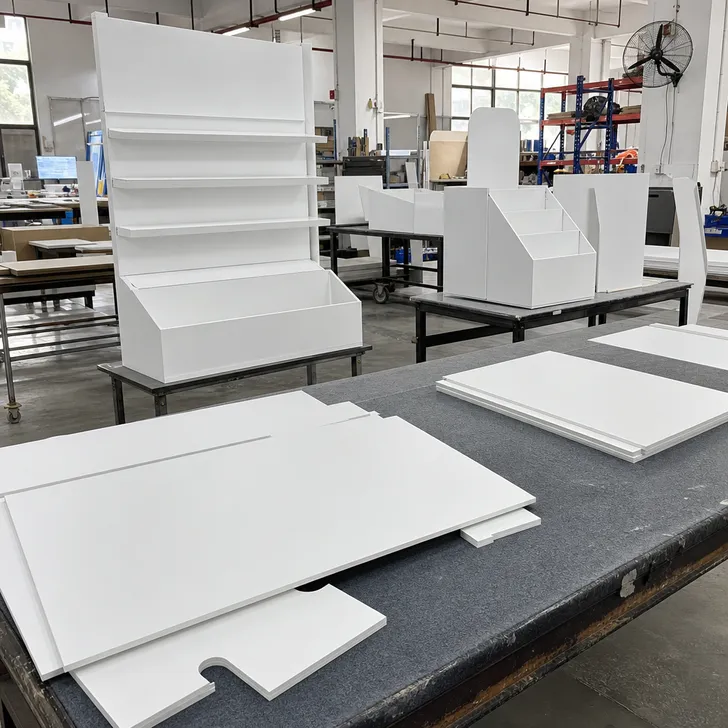
Display manufacturers and retail fixture fabricators use primed hardboard as a substrate for painted display panels, backing boards, and decorative elements in point-of-sale units. The primed surface accepts screen printing, digital printing, and hand-applied finishes without additional preparation. For display manufacturers running high-volume production, receiving panels that are already primed and ready for the print or paint step reduces handling and speeds throughput.
The 3mm thickness is the most common format in this segment — lightweight enough for display structures that need to be moved and repositioned, rigid enough to hold shape in a framed display unit.
Critical Requirement
Surface quality. Display manufacturers need a defect-free primed surface because any surface irregularity shows through the final printed or painted finish.
Across All Segments
The common thread: a production-ready surface that removes a step from your line.
Whether you're running cabinet backs at scale or producing display panels for retail rollouts, primed hardboard delivers a consistent, paint-ready substrate that integrates directly into your downstream finishing process — no additional primer application, no batch-to-batch surface variation.
Customization Options for Primed Hardboard
The standard product covers most applications, but we handle custom specifications regularly. Here's what's adjustable and what the practical limits are.
Primer Coverage
S1P (primed one side) is the standard format — the smooth face is primed, the reverse is left in the standard hardboard texture.
S2P (primed both sides) is available for applications where both faces will be visible or finished. S2P adds cost and is only worth specifying when the application actually requires it.
Primer Color
White is the standard. Off-white, grey primer, and custom tinted primers are available on minimum order quantities — the coating line setup cost needs to be spread across enough panels to make the per-unit cost reasonable.
For most applications, white primer is the right choice because it provides a neutral base for any topcoat color.
Thickness
Standard range is 3mm to 6mm. 3mm is the most common for furniture and display applications; 4mm and 5mm for paneling applications where more rigidity is needed.
Custom thickness targets within the 2.5mm–8mm range are available on confirmed orders.
Sheet Dimensions
Standard 1220×2440mm covers most applications. Custom dimensions — half-sheet formats, long panels for specific paneling runs, narrow strips for furniture component supply — are available on confirmed orders.
No tooling cost; minimum quantities apply based on run economics.
Formaldehyde Specification
CARB P2 is our standard baseline. E1 and E0 are available for buyers supplying into markets with stricter indoor air quality requirements.
This is a production-stage specification — the resin system is adjusted at manufacturing, not post-production.
Private Label & OEM Marking
Bundle marking, custom packing lists, and private-label documentation are available for buyers building their own brand.
We run OEM programs for distributors in North America and Europe who supply primed hardboard under their own brand.
Minimum Order Quantities
Minimum order quantity for standard specifications is one 20HQ container. Custom specifications — non-standard dimensions, custom primer color, non-standard thickness — carry higher MOQs. Send us your specification and we'll confirm the MOQ and lead time.
Primer Adhesion, Surface Quality, and What Our QC Actually Checks
The quality control process for primed hardboard has two layers: the base panel QC that applies to all hardboard, and the primer-specific checks that apply to this product.
Base Panel QC
Covers incoming fiber inspection, post-press panel check, and pre-sanding thickness measurement.
Incoming Fiber Inspection
Raw material quality verified before production begins.
Post-Press Panel Check
Density uniformity and surface defect rate assessed before the panel reaches the primer line.
Pre-Sanding Thickness Measurement
Thickness consistency confirmed before sanding and coating.
Key principle: A panel with density variation or surface defects doesn't get primed — it gets pulled at the post-press check. Priming over a defective panel doesn't fix the defect; it hides it until the buyer's customer finds it.
Primer-Specific QC
Runs after the coating step. Three core checks applied to every batch.
Cross-Cut Adhesion Test
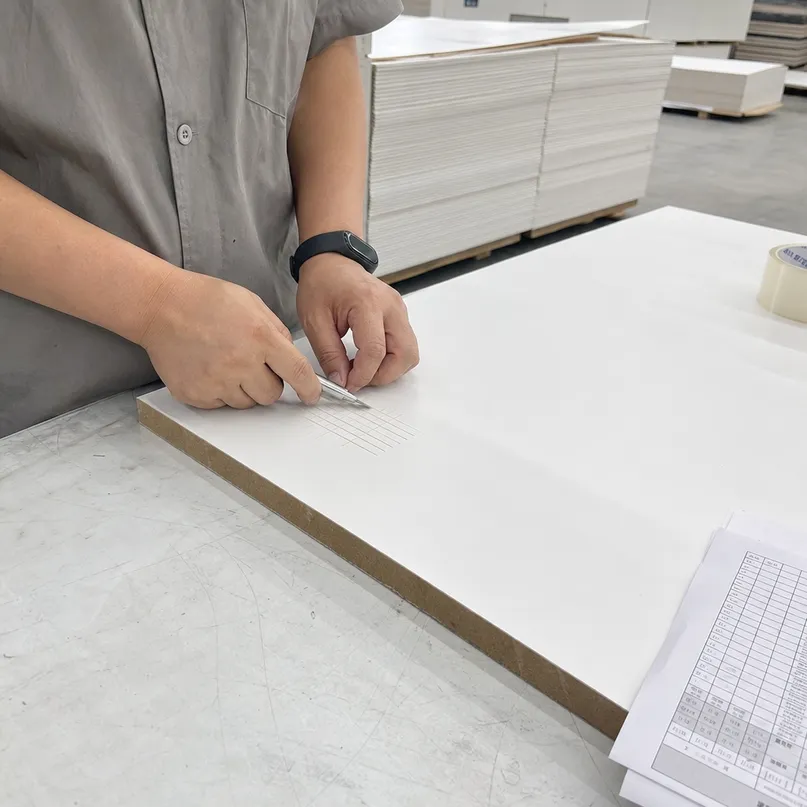
A grid pattern is cut through the primer to the substrate, tape is applied and pulled, and adhesion is assessed by the percentage of primer that lifts. We're looking for zero lifting — any batch that shows adhesion failure is held and investigated before it ships.
Coverage Uniformity Check
Checked visually and by film thickness measurement — targeting consistent coverage across the full panel surface, not just the center.
Color Consistency
Checked against the reference standard for the batch to ensure uniform appearance across panels.
Outgoing Inspection Before Packing
Thickness at Multiple Points
Multi-point measurement across the panel surface.
Surface Defect Assessment
Visual and tactile inspection of the primed face.
Primer Adhesion Spot-Check
Sampled from packed bundles before container loading.
Moisture Content
Verified within specification before packing.
Formaldehyde Emission Verification
Confirmed against CARB P2 / E1 / E0 as specified.
Documentation Package
CARB P2 docs for US shipments; CE declaration for EU shipments — prepared as standard.
Third-Party Inspection
Third-party inspection is available on request. We work with SGS and Bureau Veritas; buyers who require independent pre-shipment inspection can arrange it through their preferred agency.
Packaging, Container Loading, and Transit Protection
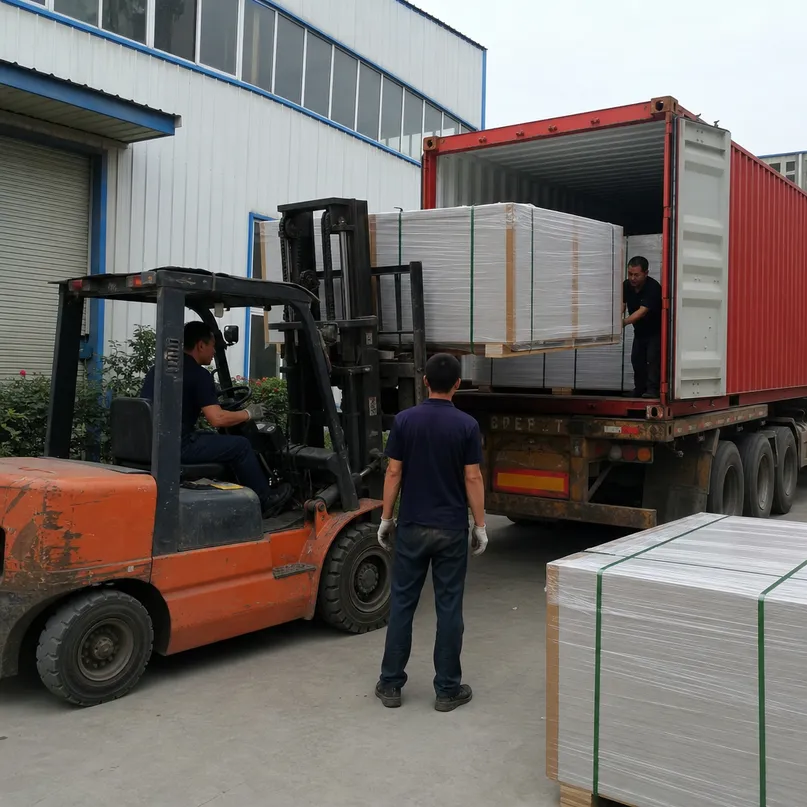
Primed hardboard requires more careful packaging than raw hardboard because the primed surface needs protection during transit. We bundle panels face-to-face or with interleaving paper between primed faces to prevent surface-to-surface contact that can cause primer transfer or surface marking. Bundles are strapped, edge-protected with corner boards, and wrapped in moisture-resistant film.
Standard 1220×2440mm panels load efficiently into 20HQ and 40HQ containers. We provide loading plans with each shipment — bundle configuration, stack count, and total panel count — so your receiving team knows exactly what to expect when the container arrives.
For mixed-product orders combining primed hardboard with other panel types from our range, we coordinate consolidated loads. Most buyers who source primed hardboard from us also run standard hardboard, MDF, or plywood through the same supply chain — consolidating into a single container reduces your per-unit freight cost and simplifies documentation.
Transit Times from Xuzhou
Primed Hardboard vs. Other Hardboard Formats: Choosing the Right Specification
If you're deciding between primed hardboard and other formats in our range, the selection logic is straightforward. Each comparison below maps the decision to the downstream application.
Right choice when your downstream customers will apply their own primer, or when the panel will be laminated rather than painted.
Right choice when your customers are painting directly over the panel. The factory primer eliminates their priming step and provides a more consistent base than raw hardboard. The price premium is typically recovered in labor savings downstream.
Cut to paneling dimensions and may include pre-finished or decorative surface options. Primed hardboard in standard sheet format is the substrate that paneling products are often built from. Choose paneling when your customers need a specific paneling dimension or a decorative finish beyond white primer.
Right choice when customers need a paint-ready substrate in standard sheet format.
Standard unprimed hardboard — the same base material without the primer coat. If your market uses "masonite" as the specification term and the application doesn't require a factory-primed surface, masonite hardboard is the more economical option.
Correct specification when the application requires a paint-ready surface.
A thickness-specific product covering the thin-sheet format used in furniture, display, and lightweight panel applications. Available unprimed.
Available in 3mm — if your application requires both thin gauge and a primed surface, specify 3mm primed hardboard. The two products overlap at that thickness.
Quick Selection Rule
If the downstream application involves painting directly over the panel, primed hardboard is the correct specification. If the panel will be laminated, re-primed by the end user, or used in a decorative paneling format, one of the other formats above is likely the better fit. When the application requires both thin gauge (3mm) and a factory-primed surface, those two specifications converge — order 3mm primed hardboard.
Frequently Asked Questions
Common questions from distributors and furniture manufacturers evaluating primed hardboard for the first time or expanding their panel SKU mix.
Water-based latex paints, oil-based paints, and solvent-based coatings all adhere well to our factory-applied white primer. The primer is formulated as a universal base coat — it's designed to accept the topcoat types that contractors and furniture manufacturers typically use.
For specialty coatings (UV-cured, two-component epoxy, or high-build industrial coatings), we recommend a small adhesion test before committing to a full production run, as compatibility depends on the specific coating formulation.
For most applications, no. The factory primer provides sufficient coverage and adhesion for direct topcoat application.
In high-demand applications — exterior-facing panels, high-humidity environments, or applications requiring a very smooth finish — a light sanding of the factory primer followed by a thin topcoat primer may improve the final result. Your customers' finishing specifications will determine whether additional priming is needed.
Stored correctly — flat, in a dry covered environment, away from direct sunlight and moisture — primed hardboard maintains primer adhesion and surface quality for 12–18 months from production.
The main risk is moisture absorption, which can cause the panel to swell and the primer to lose adhesion at the edges. We package export bundles in moisture-resistant film specifically to protect against this during ocean transit and port storage.
Standard MOQ is one 20HQ container for standard specifications (standard thickness, white primer, 1220×2440mm).
For custom specifications — non-standard dimensions, custom primer color, non-standard thickness — MOQ is higher. Contact us with your target specification and we'll confirm the exact MOQ and lead time.
No. Standard primed hardboard is not suitable for exterior or high-humidity applications.
The base panel will absorb moisture and swell, and the primer will lose adhesion. For exterior applications, film-faced plywood or exterior-grade panels with moisture-resistant resin are the appropriate materials.
If you have a semi-exposed application where some moisture resistance is needed, contact us — we can discuss what surface treatment options are feasible for your specific use case.
Primed hardboard and primed MDF both provide good painting surfaces, but they serve different applications.
- Denser: 800–1000 kg/m³
- Harder surface, thinner gauges available
- Preferred for cabinet backs, drawer bottoms, display panels
- Right choice for flat panel painting at thin gauge
- Density: 650–800 kg/m³
- Easier to machine for routed profiles
- Better for shaped or profiled components
- More practical when edge detail is required
Source Primed Hardboard Direct from the Factory
We've been manufacturing hardboard since 2008 as part of our broader engineered wood panel range. The primed hardboard product is part of a supply chain that most buyers expand over time — distributors who start with primed hardboard typically add standard hardboard, MDF, or plywood to the same container once they've seen how we handle documentation and logistics.
If you're evaluating primed hardboard suppliers, the questions worth asking are: where in the production sequence is the primer applied, what adhesion testing is done per batch, and what documentation comes with the shipment. We apply primer in-line on fresh-sanded panels, run cross-cut adhesion tests on every batch, and include full CARB P2 documentation as standard for US-bound shipments.
What to include in your inquiry:
- Target thickness and primer coverage (S1P or S2P)
- Sheet dimensions and annual volume
- Destination market and certification requirements
- What your customers are doing with the material
We'll come back with a detailed quote, the relevant certification documentation, and a loading plan so you can calculate your landed cost before committing.
New to sourcing primed hardboard or building out a panel distribution SKU mix? Tell us your target market and what your customers are doing with the material — we'll suggest the specification that fits based on what we're shipping to similar markets today.
Explore More Hardboard Products
Other hardboard specifications from the same factory