Brown vs Black Film Faced Plywood: Which Film Color Indicates Better Phenolic Resin Quality
The question comes up constantly: is black film faced plywood higher grade than brown? The short answer is no — and if you've been specifying one color over the other because you assumed it meant better resin quality, you've been making sourcing decisions based on a market myth.
Film color is a pigment choice. The phenolic resin chemistry underneath is the same. What actually determines whether a panel survives 6 pours or 20 is film gsm weight, resin content per square meter, WBP bond class, core veneer moisture, and edge sealing quality. None of those variables are visible in the color.
Here's the professional verdict upfront: brown and black film faced plywood can be identical in quality, or one can be dramatically better than the other — and the color tells you nothing about which is which. The specs tell you. This article explains what to look at instead.
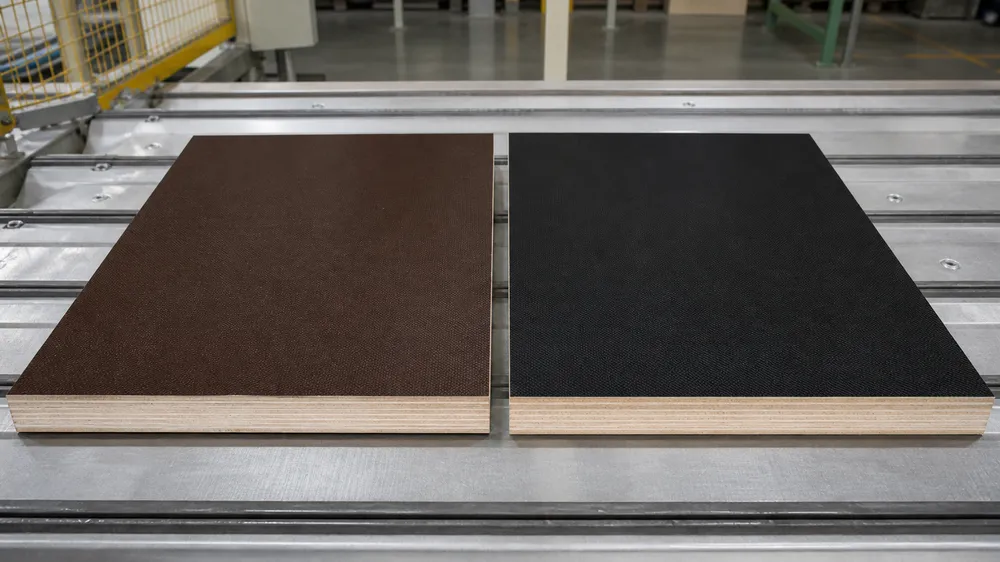
Film Color Is a Pigment Decision, Not a Resin Grade Signal
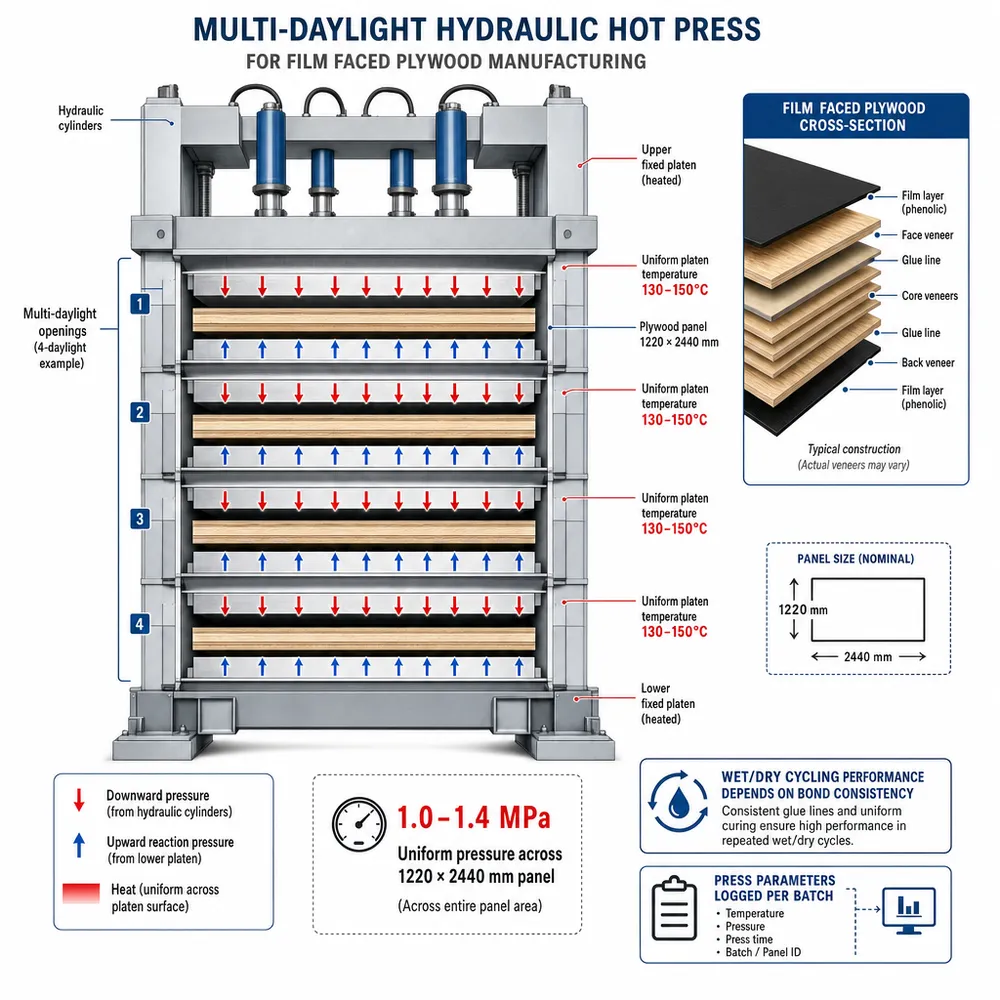
Phenolic film is made by impregnating kraft paper with phenol-formaldehyde resin, then pressing it onto the plywood surface under heat. The resin cures into a hard, waterproof surface layer. That process is the same whether the finished film is brown or black.
The color comes from one of two sources: either a pigment is added to the resin formulation before impregnation, or the resin itself is left at its natural color — which is typically amber-brown. Black film requires a carbon black or similar pigment additive. Brown film is often the natural resin color, though some manufacturers add pigment to standardize the shade across batches.
We run both colors on the same production lines here at QDPlywood. The press parameters, resin system, film weight specification, and WBP bond class are identical. The only variable that changes is the pigment in the film. A buyer who specifies black because they believe it's higher grade is paying for a color preference, not a performance upgrade — unless the supplier has actually built a quality difference into the spec, which some do, but that's a supplier decision, not a chemistry rule.
(We've had buyers insist on black film for projects in the Middle East where brown is the dominant market standard — and vice versa. The preference is almost always regional habit, not engineering logic.)
The practical implication: when you're evaluating a supplier's film faced plywood, asking "brown or black?" is the wrong first question. The right questions are about film gsm, resin content, and bond class — covered in the next section.
The Specs That Actually Determine Formwork Performance
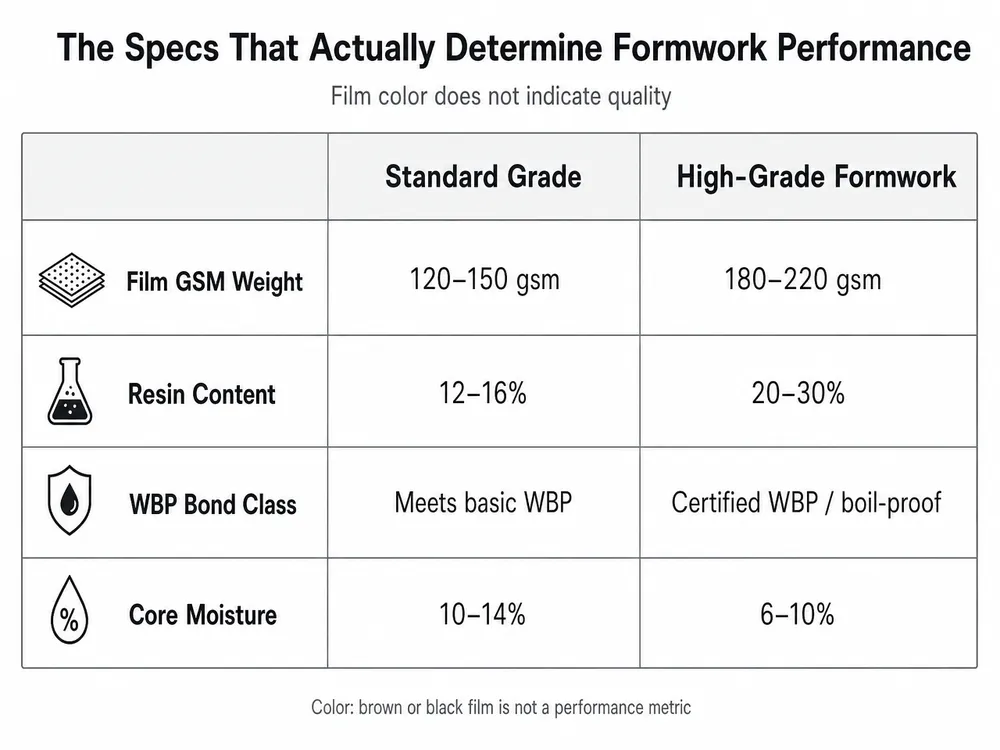
If color doesn't tell you quality, what does? Four measurable parameters separate a panel that delivers 15+ reuse cycles from one that starts delaminating after three pours.
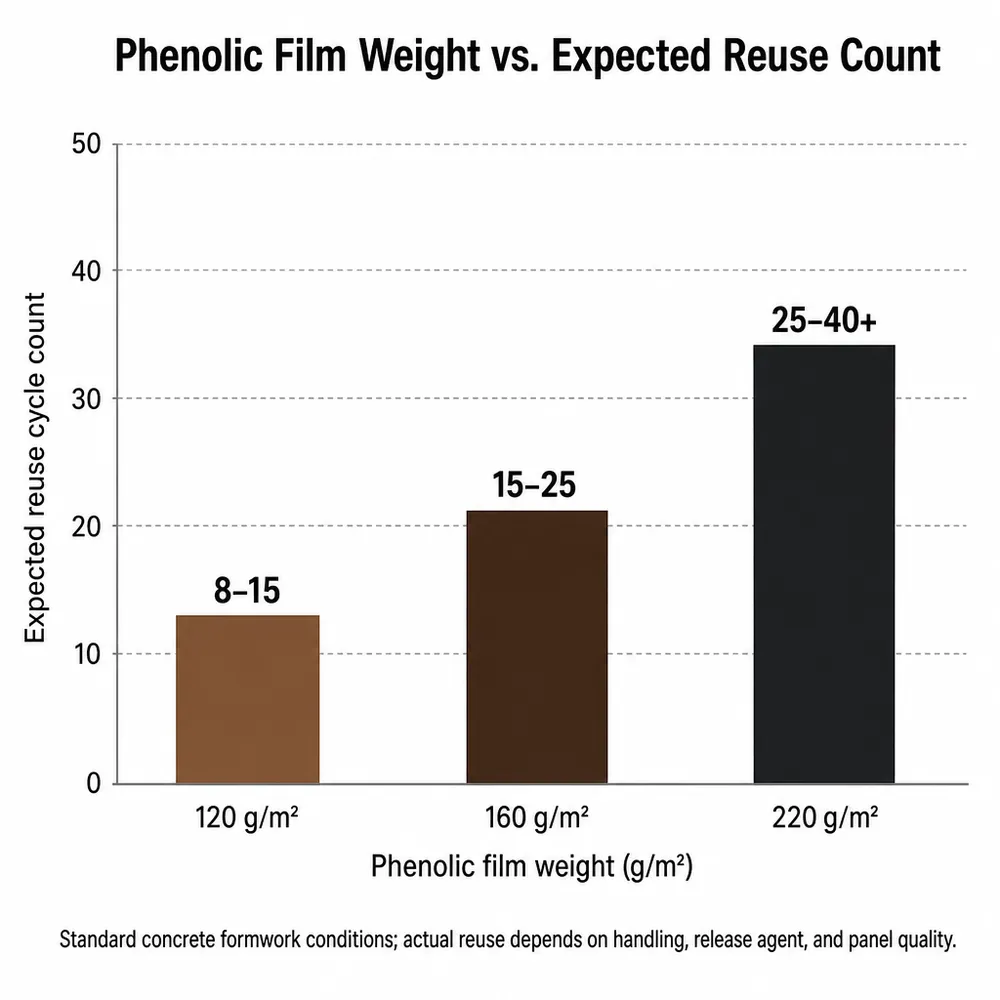
Film gsm weight is the most direct indicator of surface durability. Standard phenolic film runs 120–150 gsm. Higher-grade formwork panels use 160–200 gsm film, which means more resin per square meter, a thicker cured surface layer, and better resistance to abrasion from concrete aggregate and form release agents. A supplier quoting you "phenolic film faced plywood" without specifying gsm is leaving the most important variable undefined.
Phenolic resin content within the film — typically expressed as resin pickup percentage — determines how fully the kraft paper is saturated. Under-saturated film looks fine off the press but shows micro-porosity under magnification; concrete paste penetrates those pores during the first pour and the film starts lifting from the edges. We test film adhesion by cross-cut and peel on every production batch — a properly saturated film at the right press temperature bonds to the veneer surface and doesn't separate cleanly at the cut lines.
WBP bond class (Weather and Boil Proof) is the glue line specification, not the film specification. A panel can have excellent film and a weak core bond — and it will fail at the glue line, not the surface, when it's exposed to repeated wet-dry cycling on a formwork site. WBP bond class means the glue line survives a 6-hour boil test without delamination. Panels certified to CE EN 314-2 Class 3 or equivalent meet this standard. Panels that only meet interior bond class will delaminate in outdoor formwork conditions regardless of film color.
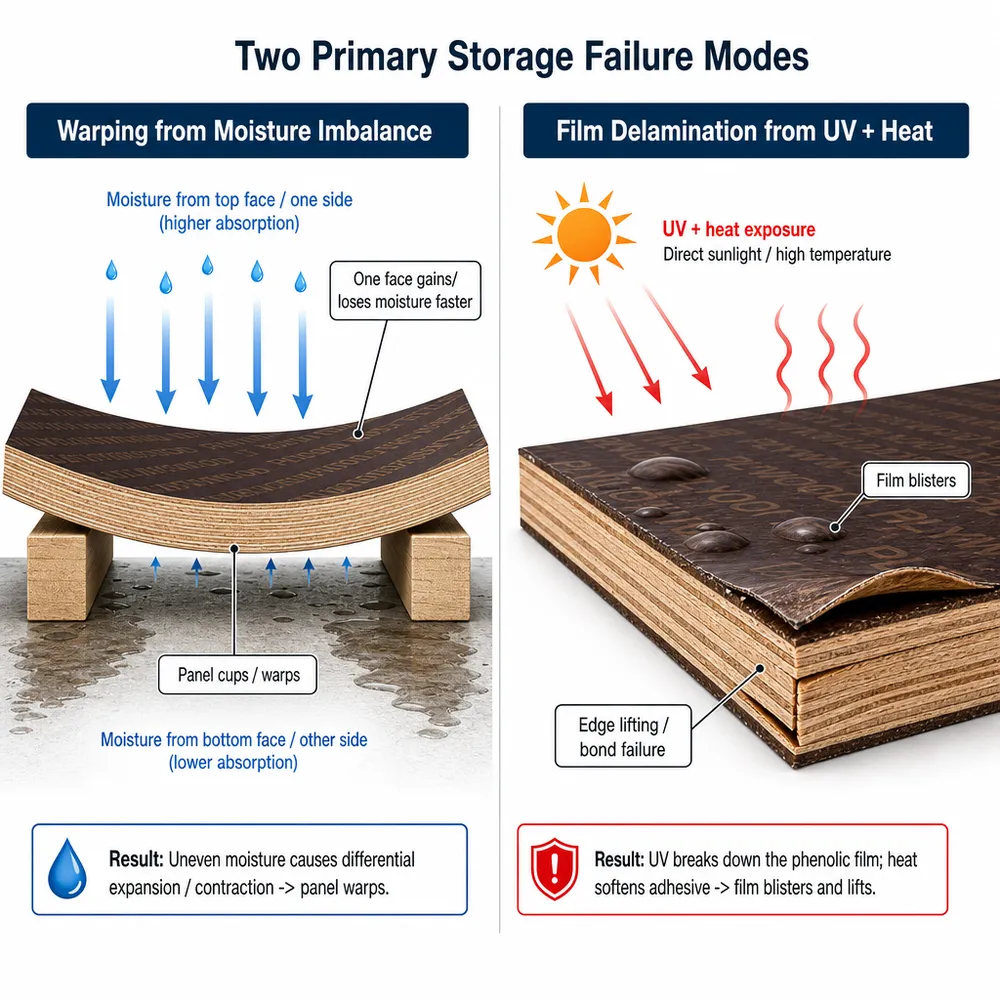
Core veneer moisture content at the time of pressing determines long-term dimensional stability. We target 8–10% moisture in core veneers before layup — above that range, the press drives out residual moisture unevenly, which creates internal stress that shows up as warping or edge lifting after the panel has been in service for a few weeks. This is the failure mode we see most often when buyers switch to a cheaper supplier and then come back to us after a bad project experience.
Head-to-Head: Brown vs Black Film Faced Plywood Specification Matrix
The table below compares brown and black film faced plywood across the dimensions that matter for sourcing decisions. The key point: where the specs are equal, performance is equal.
| Parameter | Brown Film Faced Plywood | Black Film Faced Plywood |
|---|---|---|
| Film chemistry | Phenolic resin (PF) | Phenolic resin (PF) |
| Film color source | Natural resin color or brown pigment | Carbon black or dark pigment additive |
| Standard film weight | 120–200 gsm (spec-dependent) | 120–200 gsm (spec-dependent) |
| WBP bond class | CE EN 314-2 Class 3 (when certified) | CE EN 314-2 Class 3 (when certified) |
| Reuse cycles (high-grade) | 15–25+ pours | 15–25+ pours |
| Reuse cycles (standard grade) | 6–10 pours | 6–10 pours |
| Surface release quality | Smooth, non-stick when properly sealed | Smooth, non-stick when properly sealed |
| Dominant export markets | Middle East, Southeast Asia, Australia | Europe, North America, some East Asia |
| Price differential | Baseline | Minimal to none at equivalent spec |
| CARB P2 / CE availability | Yes | Yes |
The reuse cycle ranges above assume equivalent film gsm, proper edge sealing, and correct site handling. A brown film panel at 160 gsm with WBP bond class will outlast a black film panel at 120 gsm every time — color has nothing to do with it.
Regional Market Preferences: Why Buyers Specify One Color Over the Other
The brown vs black split in global markets is almost entirely driven by regional convention, not engineering preference. Understanding this matters if you're an importer or distributor building inventory for a specific market.
Middle East and Southeast Asia predominantly use brown film faced plywood. The preference established itself through early Chinese export patterns — brown was the dominant color coming out of Chinese factories in the 2000s, and the market standardized around it. Construction contractors in these regions specify brown as the default; switching to black creates confusion on site even when the specs are identical.
Europe leans toward black film, partly because European-manufactured formwork panels (Finnish birch, Baltic birch) historically came in darker film colors, and partly because black film has a visual association with premium product in those markets. Some European buyers will reject brown film panels on sight without checking the spec sheet — a market perception issue, not a technical one.
North America is more mixed, with black film common in commercial construction and brown film appearing in residential and light commercial formwork. The US market is also more specification-driven than appearance-driven, so buyers who understand the spec sheet are less susceptible to the color-quality conflation.
Australia uses both, with brown film common in the residential construction segment and black film appearing in commercial projects. Australian buyers tend to be more technically literate about formwork specs than most markets we export to — they ask about film gsm and WBP class more consistently than buyers in other regions.
For distributors, the practical implication is straightforward: stock the color your market expects, specify the grade your application requires, and don't let the color choice drive the quality decision. We supply both colors to the same certified spec — CARB P2, CE, FSC — so your documentation package is identical regardless of which color you order.
Reuse Cycle Reality: What Drives the Number, Not the Color
Reuse cycles are the commercial metric that matters most for formwork buyers. A panel that costs 20% more but delivers twice the pours has a lower cost-per-pour — which is the number that actually affects your project economics.
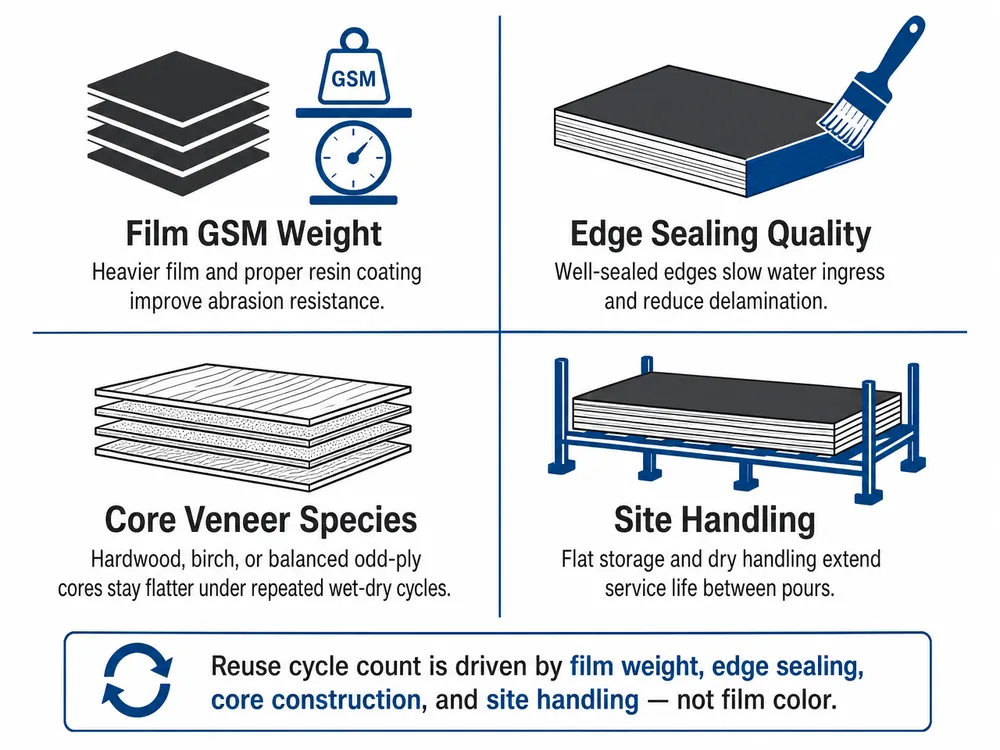
The variables that determine reuse cycle count, in order of impact:
1. Film gsm and resin saturation — the surface layer takes the mechanical abuse of concrete placement, vibration, and stripping. Heavier film with full resin saturation resists abrasion and surface cracking longer. We've seen 120 gsm panels start showing surface crazing by pour 8; 180 gsm panels on the same project still releasing cleanly at pour 18.
2. Edge sealing quality — the edges are where moisture enters and where delamination starts. Properly sealed edges (paint-sealed or PVC-banded on premium panels) prevent water ingress during the wet concrete phase. Unsealed or poorly sealed edges absorb moisture, the core swells, and the film lifts from the edge inward. This is the most common failure mode we diagnose when buyers send us photos of panels that "failed early."
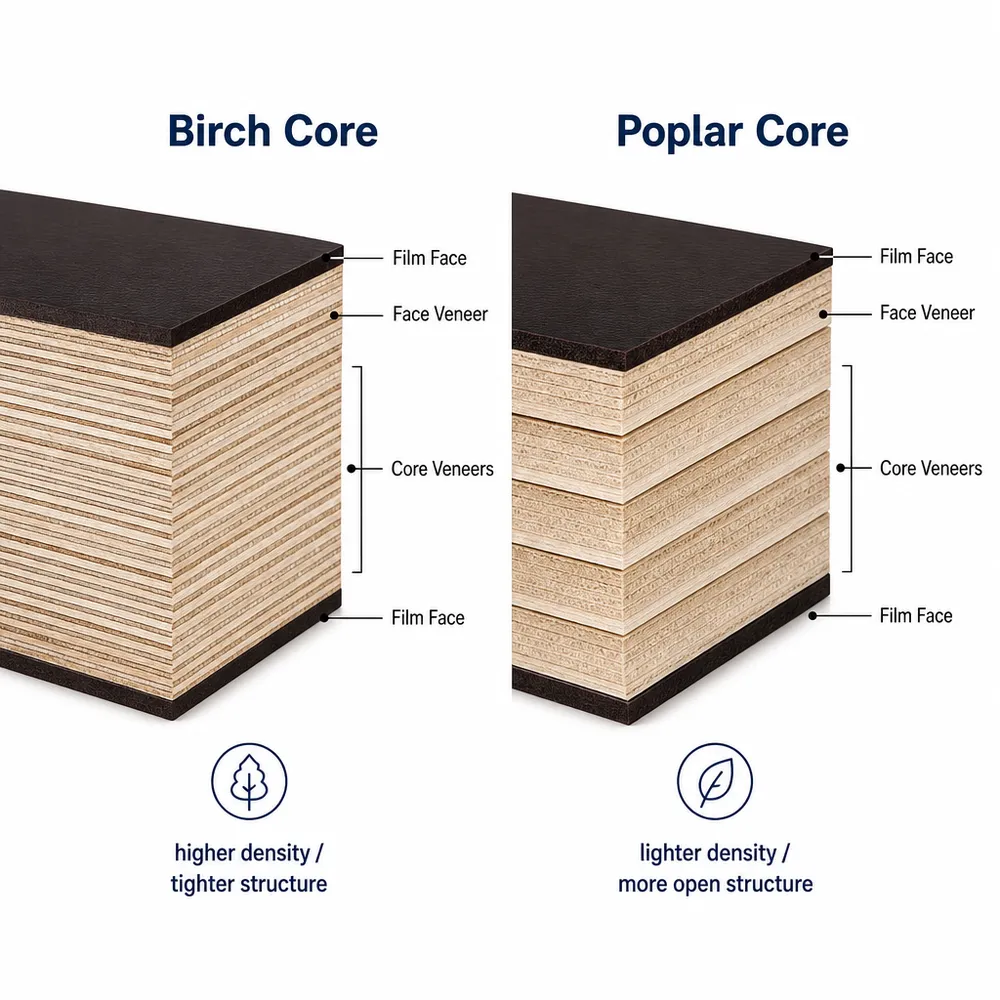
3. Core veneer species and construction — hardwood core (eucalyptus, poplar, or birch) with balanced odd-ply construction resists warping better than softwood core under repeated wet-dry cycling. Birch core is the premium option for high-reuse applications; poplar core is the standard for cost-sensitive markets. The core species affects stiffness, weight, and dimensional stability — all of which affect how the panel performs under load and how flat it stays between pours.
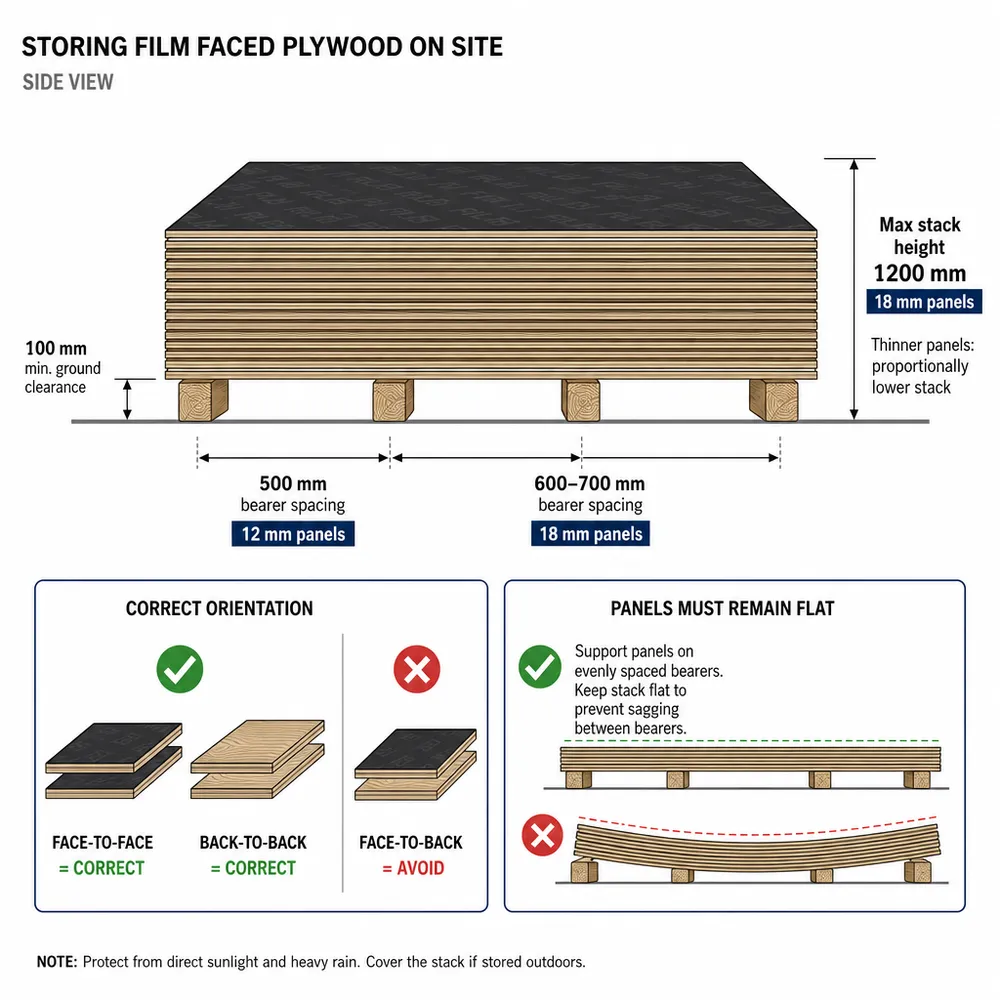
4. Site handling — panels stored flat, kept off the ground, and protected from direct sun between pours will outlast panels that are stacked on edge, left in standing water, or dragged across rough surfaces. This is outside the manufacturer's control, but it's worth noting in your technical documentation to downstream buyers.
Color contributes nothing to any of these four variables. A black film panel stored in standing water will fail faster than a brown film panel stored correctly — every time.
Application Scenarios: Which Color Wins, and Why
Scenario 1: High-Volume Concrete Formwork, Middle East Infrastructure Project
You're supplying formwork panels for a large infrastructure project in the Gulf — bridge decks, retaining walls, column forms. The contractor expects 15+ reuse cycles and is working in high-humidity, high-temperature conditions.
Winner: Brown film, 160–180 gsm, WBP bond class, eucalyptus or poplar core, paint-sealed edges.
Not because brown film is better — because brown film is what the regional market expects, and specifying black creates procurement friction on site. The spec is what delivers the reuse cycles; the color is what gets the order approved without pushback. At equivalent spec, either color performs identically.
Scenario 2: European Commercial Construction, Contractor Specifying by Appearance
A European general contractor is sourcing formwork panels for a multi-story residential project. Their site manager has specified "black film" based on past experience with Finnish-manufactured panels. They haven't provided a gsm spec.
Winner: Black film — but the real work is getting the gsm spec confirmed before you quote.
The color preference is legitimate for this market. The risk is that the buyer assumes "black film" means high-grade without specifying the film weight. If you supply 120 gsm black film against an expectation of 160+ gsm performance, you'll have a warranty conversation after pour 8. Get the film gsm and WBP bond class confirmed in writing before the order is placed.
Scenario 3: Distributor Building Inventory for Mixed Markets
You're an importer building a film faced plywood product line for distribution across Southeast Asia and Australia. You need one SKU that moves in both markets without color-related objections.
Winner: Brown film, 150 gsm minimum, WBP bond class, CE and CARB P2 certified.
Brown is the dominant color in Southeast Asia and is accepted in Australia. The 150 gsm minimum gives you a product that performs credibly in commercial formwork applications without the cost premium of 180+ gsm. The certification stack (CE, CARB P2) covers your documentation requirements for both markets and gives you a defensible quality story when buyers ask. (This is roughly the spec profile that most of our distributor accounts in these regions land on after their first order cycle.)
How to Write an RFQ That Gets You the Right Panel
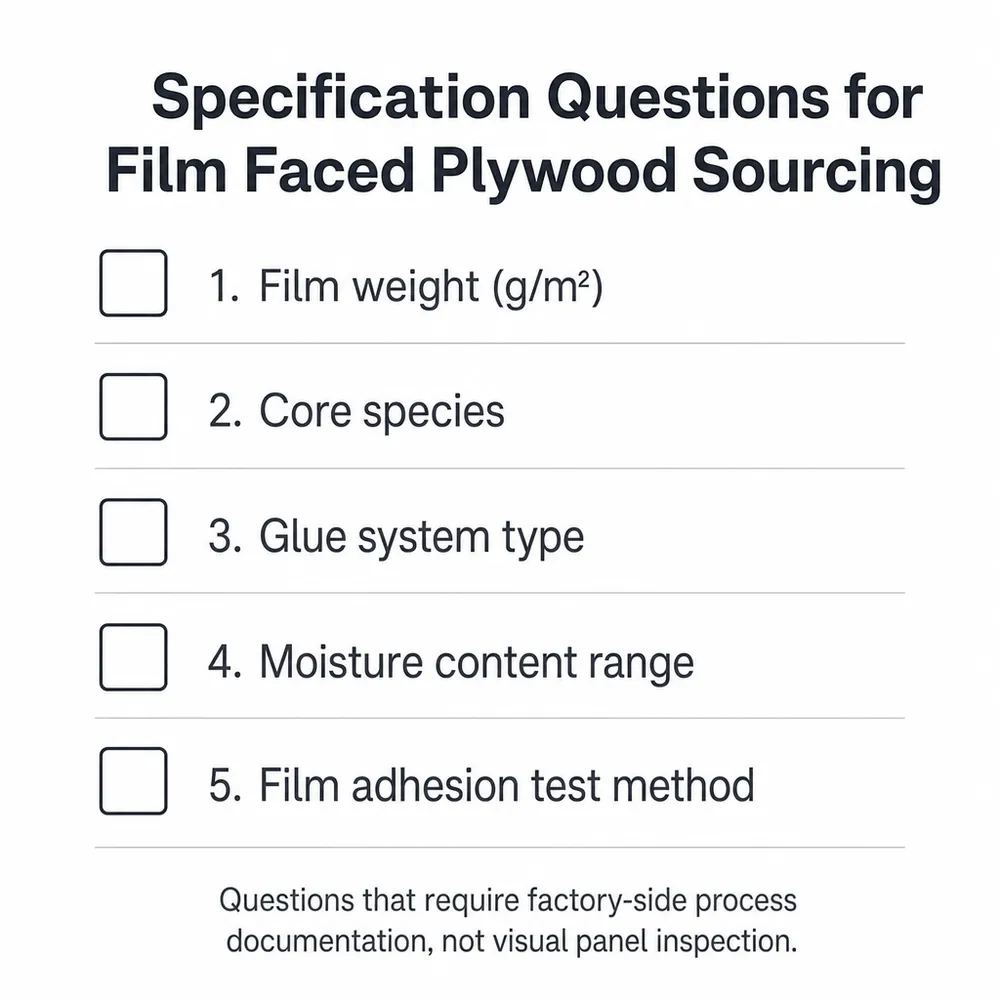
Most RFQ mistakes in this category come from specifying color and thickness without specifying the variables that actually determine performance. Here's what a complete RFQ for film faced plywood should include:
Film specification:
- Film color (brown or black — your market preference)
- Film gsm weight (specify minimum: 120, 150, 160, or 180 gsm)
- Film type (phenolic / WBP — not "waterproof" as a generic term)
Core specification:
- Core veneer species (poplar, eucalyptus, birch, or mixed hardwood)
- Panel thickness (with tolerance — specify ±0.2mm if your downstream use requires it)
- Ply count or construction (e.g., 9-ply 18mm)
Bond class and certification:
- WBP bond class (CE EN 314-2 Class 3 or equivalent)
- Required certifications (CARB P2, CE, FSC — specify which apply to your market)
- Formaldehyde emission standard (CARB P2, E1, or E0)
Dimensions and quantity:
- Panel size (standard 1220×2440mm or custom)
- Thickness
- Volume (m³ or sheets per container)
Edge treatment:
- Paint-sealed edges (standard for export)
- PVC-banded edges (premium option for high-reuse applications)
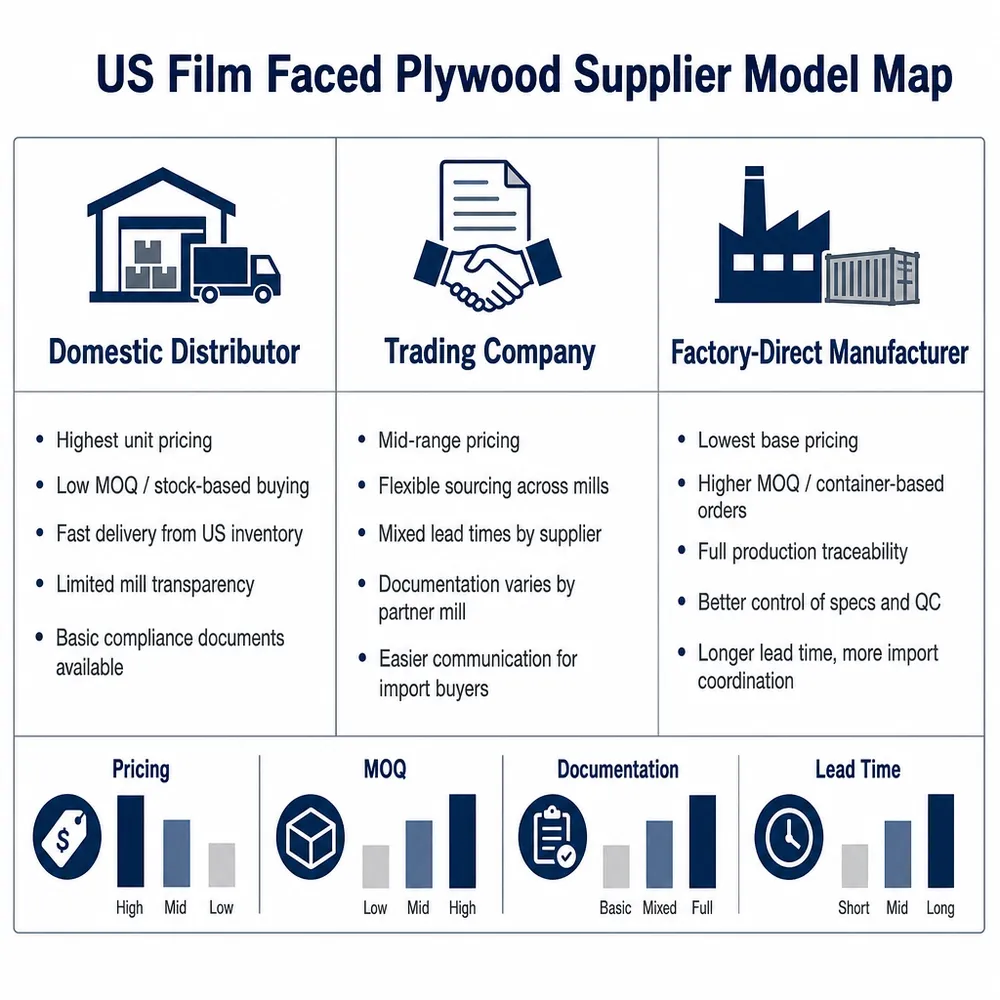
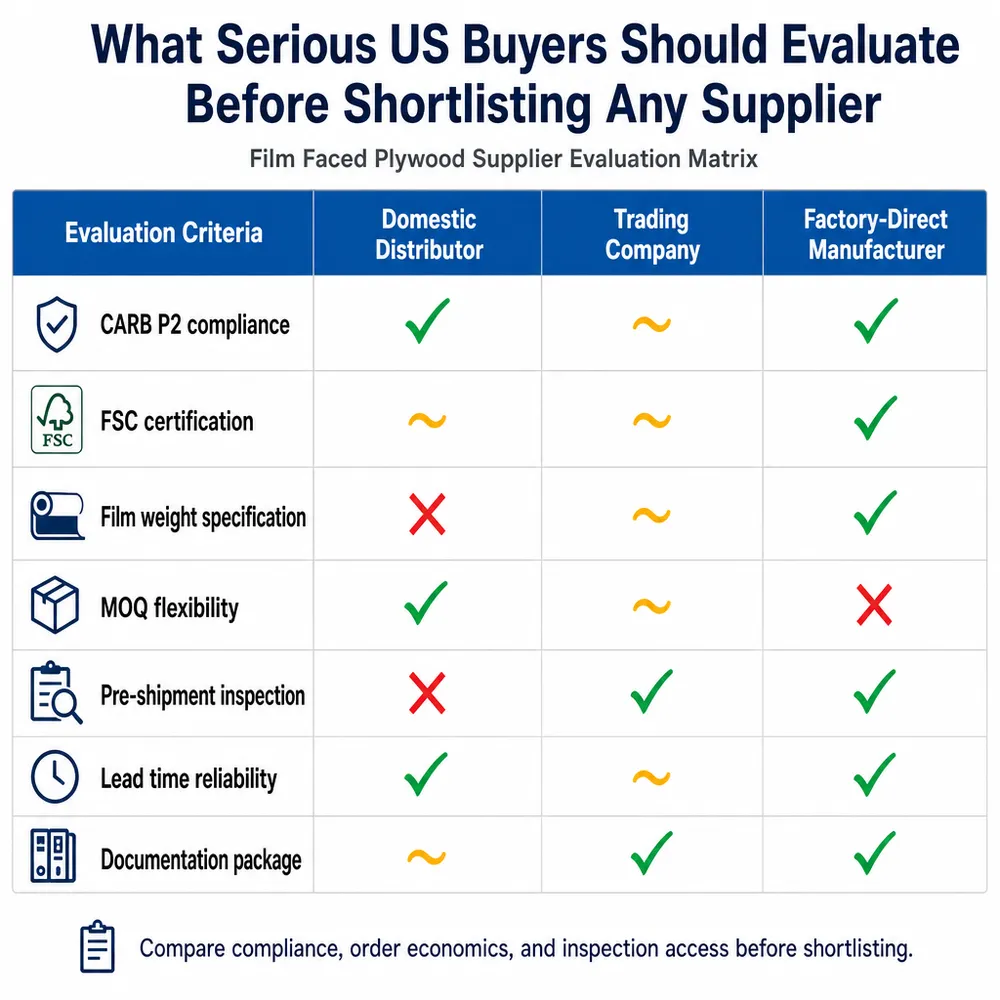
A supplier who can't answer all of these parameters in their quote is either a trading company without production visibility or a factory that doesn't control its own spec. Either way, that's a sourcing risk.
Sourcing Validation: What to Check Before You Commit
The film faced plywood market has a substitution problem. Panels quoted as "phenolic film" sometimes arrive with melamine-overlay film — which looks similar but has significantly lower moisture resistance and reuse cycle performance. Here's how to validate before you commit to a supplier.
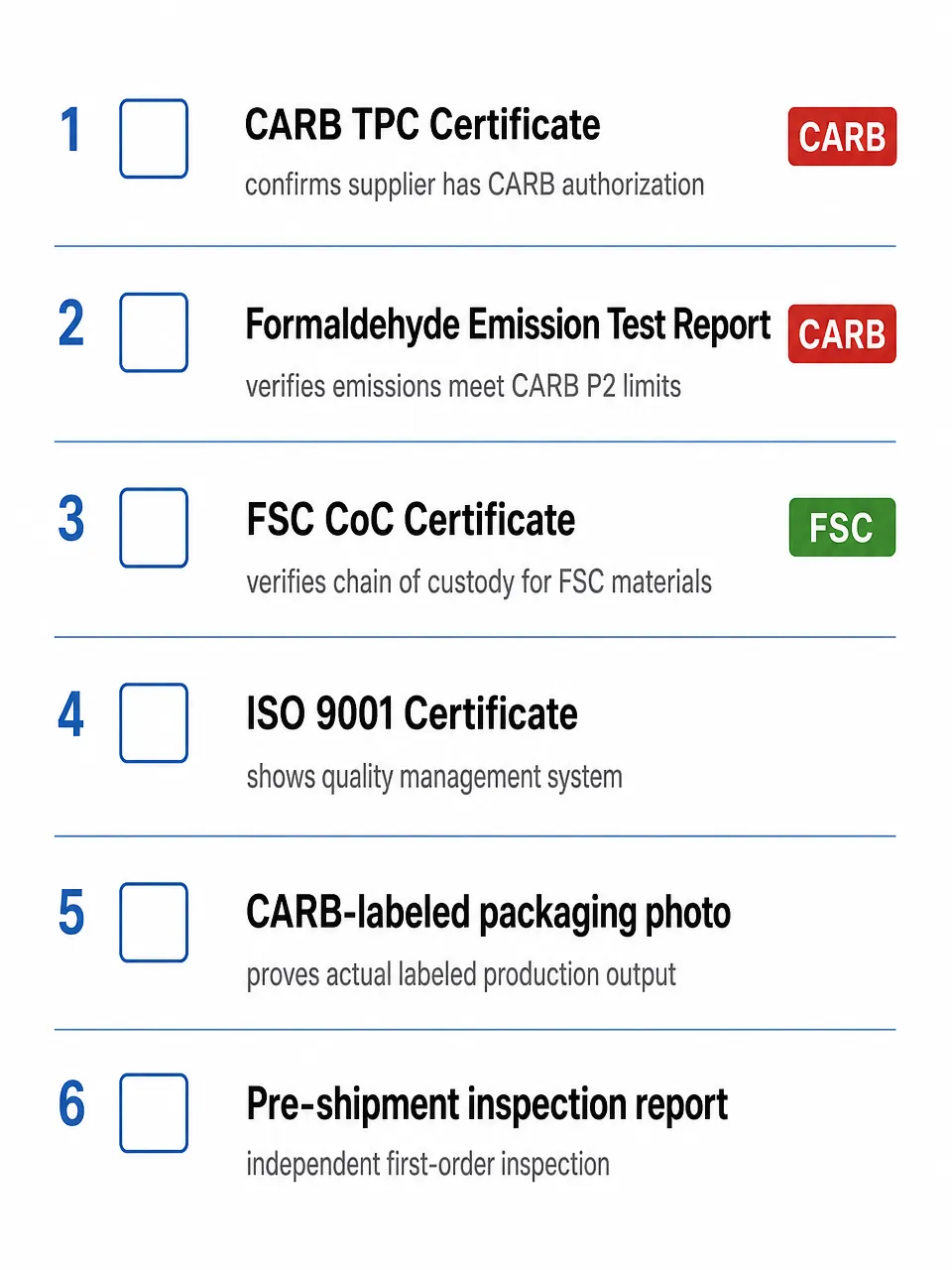
Request the film spec sheet. A legitimate manufacturer can provide the film supplier's technical data sheet showing gsm weight, resin content, and moisture resistance rating. If the supplier can't produce this document, the film spec is unverified.
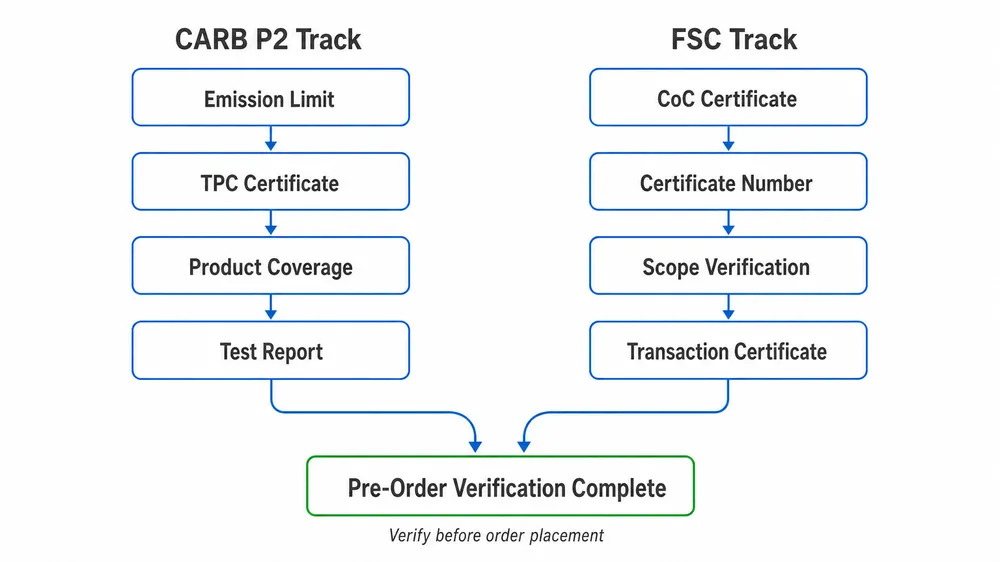
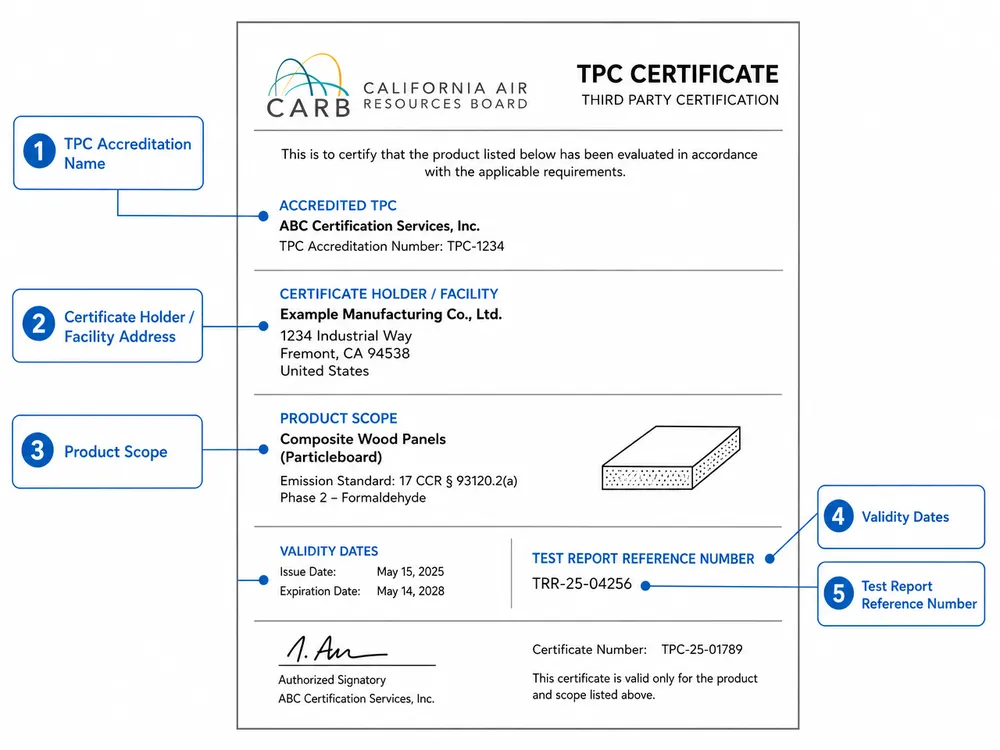
Check the certification documents. CARB P2 certification is issued to the manufacturer, not the product. Ask for the CARB certificate with the manufacturer's name and facility address — it should match the factory you're buying from. CE declaration of conformity should reference the specific EN standards the product is tested to.
Ask for a cross-cut adhesion test result. Film adhesion is tested by scoring a grid pattern through the film and applying adhesive tape — a properly bonded film shows no separation at the cut lines. We include this test in our outgoing QC for every export batch. If a supplier can't describe their film adhesion test protocol, that's a gap.
Request a sample panel before the first container order. Cut the sample panel, wet the edges, and leave it for 48 hours. Check for edge swelling and film lifting. This is a rough field test, not a lab test, but it will catch the worst-performing panels before you've committed to a full order.
We produce both brown and black phenolic film faced plywood on the same production lines with the same resin system, and we can provide the full documentation package — film spec sheet, CARB P2 certificate, CE declaration, FSC chain-of-custody — for either color. The spec is the same. The paperwork is the same. The color is your market preference.
Frequently Asked Questions
Is black film faced plywood always higher quality than brown?
No. Film color is determined by pigment, not resin grade. Black film requires a pigment additive (typically carbon black); brown film is often the natural phenolic resin color. A black film panel at 120 gsm with standard bond class is lower quality than a brown film panel at 180 gsm with WBP bond class. Evaluate film gsm, resin content, and bond class — not color.
What film gsm should I specify for concrete formwork?
For standard residential formwork with 6–10 reuse cycles, 120–150 gsm is adequate. For commercial formwork targeting 15+ reuse cycles, specify 160–180 gsm minimum. For high-abuse applications (tunnel formwork, bridge decks, column forms with tight surface finish requirements), 200 gsm with PVC-banded edges is the appropriate spec.
Why does the Middle East use brown film and Europe use black film?
Regional convention established through early trade patterns. Brown film dominated Chinese exports in the 2000s when Middle Eastern and Southeast Asian markets were developing their formwork supply chains. European markets had existing exposure to darker-film Finnish and Baltic birch panels. Neither preference has an engineering basis — it's market habit that has become a procurement standard in each region.
What certifications should I require for export film faced plywood?
For US-bound shipments: CARB P2 (formaldehyde emissions). For EU-bound shipments: CE marking with EN 314-2 Class 3 bond class. For buyers with sustainability sourcing requirements: FSC chain-of-custody. For Australian market: CE or equivalent bond class documentation is typically accepted. CARB P2 is the most stringent formaldehyde standard in our export markets — panels certified to CARB P2 meet or exceed the requirements of most other markets.
Can I order brown and black film faced plywood to the same spec from the same factory?
Yes — from a factory that controls its own film application process. We produce both colors on the same lines with the same phenolic resin system, same film gsm options, and same certification package. The spec sheet, CARB P2 certificate, and CE declaration are identical regardless of film color. If a supplier tells you the two colors require different production lines or different pricing tiers, ask them to explain the technical reason — there isn't one.
How do I verify that a supplier's "phenolic film" is actually phenolic and not melamine overlay?
Request the film supplier's technical data sheet. Phenolic film (PF resin) has a boiling water resistance rating and a specific resin content percentage. Melamine film (MF resin) has lower moisture resistance and will show surface degradation faster in wet formwork conditions. A cross-cut adhesion test and a 48-hour water soak of a sample panel edge will also reveal lower-grade film — phenolic film maintains adhesion; melamine film starts lifting at the edges under prolonged moisture exposure.
For brown film faced plywood or black film in any thickness from 12mm to 25mm, with film gsm options from 120 to 200 and the full CARB P2, CE, FSC certification package — send your spec to our team and we'll return a quote with the complete film spec sheet attached.